Nonresident Access to South Dakota Public Land
You've heard the whispers, seen the photos of endless pheasants, big deer, and wide-open spaces in South Dakota. But as a nonresident, the thought of actually finding a place to hunt can feel like trying to find a needle in a haystack, especially when so much of the best habitat is privately owned. It's a common frustration, but it doesn't have to be a barrier. This comprehensive guide is here to demystify nonresident access to South Dakota's public hunting land, giving you the tools and knowledge to confidently plan your next adventure.
Demystifying South Dakota's Public Access Programs for Nonresidents
South Dakota offers several fantastic programs and designations that open up hunting opportunities for everyone, including nonresidents. Understanding the nuances of each is crucial for maximizing your time afield and avoiding any unwelcome surprises. These aren't just generic patches of dirt; they represent a significant investment in wildlife and hunter access.
Walk-In Areas (WIAs): Your Footpath to Opportunity
The Walk-In Area program is a true gem in South Dakota. These are private lands that the state leases from landowners, paying them to allow public hunting access. It's a win-win: landowners get compensation, and hunters get more ground. As the name suggests, these areas are generally "foot traffic only," meaning you'll be leaving your vehicle at the designated parking areas.
The beauty of WIAs for nonresidents is that they are clearly marked with distinctive yellow signs. You'll often find them interspersed throughout prime pheasant and deer country, providing critical habitat corridors and direct access to otherwise private land. The South Dakota Game, Fish and Parks (GFP) publishes an annual Public Hunting Atlas, available online and often in print, which clearly outlines all WIA boundaries. This atlas is your Bible for planning a hunt here. You can literally scroll through it, pick out a block of yellow, and know that you have a legal place to walk and hunt. How South Dakota Walk-In Areas Work
However, it's important to remember that these are still technically private lands managed for public access. Always respect the property, leave no trace, and understand that you are a guest. The success of the WIA program relies heavily on hunter etiquette and cooperation. Don't assume you can drive into a field, even if it looks like a two-track. Stick to the posted rules and designated parking areas, and you'll keep this invaluable program strong for years to come.
Game Production Areas (GPAs) and Federal Lands: True Public Domain
Beyond the WIA program, South Dakota also boasts a network of permanently public lands that are owned and managed by state or federal agencies. These are different from WIAs in that they are actual public property, not just leased private land.
Game Production Areas (GPAs) are state-owned lands specifically acquired and managed by the South Dakota GFP for wildlife habitat and public hunting. These areas are typically maintained with an emphasis on prime cover, food plots, and water sources for various game species. They can vary in size from small, strategically placed parcels to sprawling tracts of land. You'll find GPAs scattered across the state, from the pheasant-rich eastern counties to the deer and antelope country out west. South Dakota Game Production Areas
Then there are the vast federal lands, which include the National Grasslands (like Buffalo Gap, Fort Pierre, and Grand River) and sections of the Black Hills National Forest. These are monumental tracts, covering hundreds of thousands of acres. Hunting on these lands provides a truly wild experience, often requiring more self-sufficiency and navigational skills. The rules for hunting on federal lands can sometimes differ slightly from state regulations, so always double-check with the specific managing agency (like the U.S. Forest Service or Bureau of Land Management) for any localized restrictions, especially regarding vehicle access or camping. National Grasslands Hunting in South Dakota
These federal lands are particularly appealing for big game hunters seeking mule deer, whitetails, antelope, or even elk in the Black Hills. They offer an incredible amount of space to roam, allowing for more solitude and the chance to truly earn your animal. However, with that vastness comes the challenge of finding game, as animals can spread out considerably. Black Hills National Forest Hunting
Navigating the Legal Landscape of Nonresident Access
Understanding where you can hunt is just one piece of the puzzle. As a nonresident, it's equally critical to be well-versed in the specific licensing requirements, access rules, and general landowner courtesies that prevail in South Dakota. Ignoring these details can quickly turn an exciting hunt into a frustrating, or even illegal, situation.
Understanding Licensing and Specific Nonresident Rules
First and foremost, you need the proper licenses. For upland birds, most nonresidents will need a nonresident small game license, often purchased in conjunction with a South Dakota Habitat Stamp. Unlike some states, South Dakota sometimes structures its nonresident pheasant season into specific time periods, often two five-day segments that you select at the time of purchase. This system helps manage hunting pressure and spreads out hunters across the season. South Dakota Nonresident Licence Costs
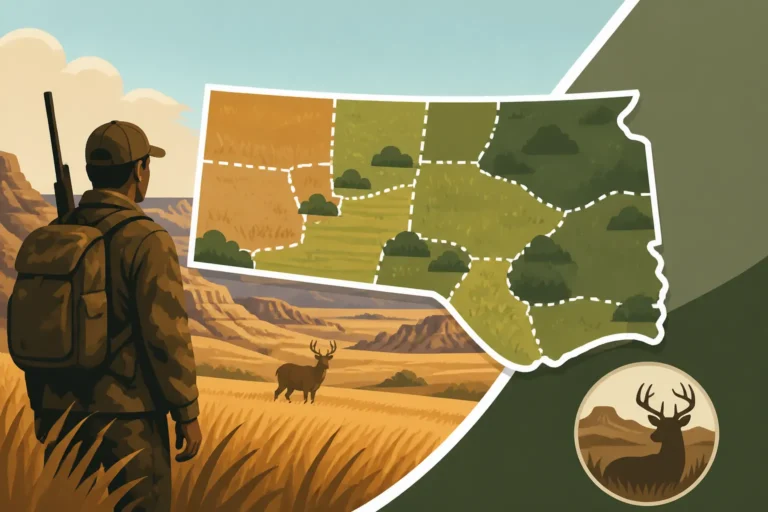
For big game, the situation for nonresidents is primarily draw-based, and obtaining a tag is far from guaranteed. While some archery deer or antelope tags might be available over the counter, the more coveted rifle deer and antelope tags, and certainly elk tags, are allocated through a lottery system. Nonresidents typically have specific quotas for these draws, which means competition can be stiff. It’s imperative to research the draw application deadlines well in advance and understand the preference or bonus point system if you plan on hunting big game in South Dakota consistently. South Dakota Deer Licence Types by Region
Regardless of the game you're after, always carry your licenses and stamps with you, along with a valid form of identification. Game laws are designed to protect the resource and ensure fair chase, and enforcement officers are diligent in upholding them. A quick check of the current hunting handbook will always provide the most up-to-date information on seasons, bag limits, and legal requirements.
Road Rights-of-Way and Landowner Courtesy
South Dakota's landscape is a mosaic of public and private property, and navigating this can be a real head-scratcher, especially concerning road rights-of-way. It's a common sight to see hunters walking ditches for pheasants, and often, this is perfectly legal. Generally, hunting within the road right-of-way is permitted if the road is open to public travel, and as long as you are not shooting from a vehicle or across a public road. However, this only applies to the public right-of-way itself, which can be a narrow strip.
The moment you step beyond that legal strip and onto the fence line or into a field, you are on private property. This is where landowner courtesy and the law truly intertwine. Never assume that just because you're in the ditch, you have permission to cross into an adjacent field, even to retrieve a downed bird. Retrieving game from private land without permission, even if you shot it legally from a public right-of-way, is trespassing. Always ask first. A simple knock on the farmhouse door or a call to the landowner can save a lot of headaches and keep you on the right side of the law and local sentiment. South Dakota Road Right-of-Way Hunting
A specific area of contention that has garnered national attention is "corner crossing" – the act of stepping from one piece of public land to another at a square intersection where only corners of private property touch. While some argue this is legal under federal law, South Dakota state law considers it trespassing if you contact private land. The safest and most respectful approach is to avoid corner crossing and instead seek out clear, unambiguous public access points. It’s always better to err on the side of caution and respect. Corner Crossing Rules in South Dakota
Posted Land and Permission
This might seem obvious, but it bears repeating: private land in South Dakota is just that—private. If a property is posted with "No Hunting" or "No Trespassing" signs, or even if it simply doesn't have public access signs, assume it's private and requires permission. Many landowners choose not to post their land but still expect their privacy and property to be respected.
The best practice is always to seek permission. Don't wait until the day of your hunt; try to contact landowners well in advance. Introduce yourself, explain what you'd like to hunt, and offer to share some of your harvest or help with a chore. A genuine, respectful approach can often open doors, even if it's just to retrieve a bird. Always remember that a verbal "yes" from a landowner is permission, but having it in writing, even a simple text message, can provide additional clarity and peace of mind. South Dakota Trespass Law and Posted Land
Even for retrieving game, the rule stands. If your pheasant sails over a fence onto private ground, you must get permission before crossing that fence. This might mean waving down the landowner working in the field, or if no one is around, making a note of the time and location and trying to contact them later. It's a matter of respect and adhering to the law.
Leveraging Technology and Strategy to Find Hunting Hotspots
In today's hunting world, technology has become an indispensable tool, especially for nonresidents trying to unravel the complex patchwork of public and private land. Combining digital resources with strategic scouting can dramatically increase your chances of finding unpressured game.
Digital Scouting with Mapping Applications (onX Hunt, GoHunt)
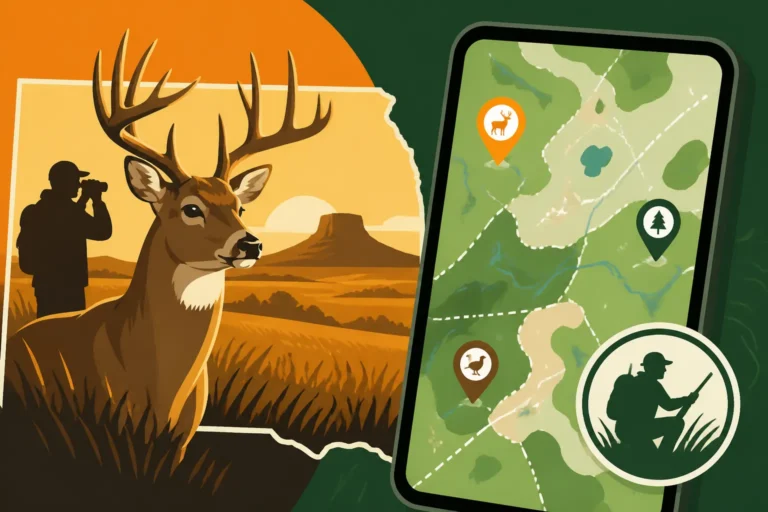
Forget the days of relying solely on paper maps that are often out of date. Modern mapping applications are a game-changer. Tools like onX Hunt have become invaluable for this, clearly delineating public and private land boundaries right on your phone or tablet. You can see Walk-In Areas, Game Production Areas, National Grasslands, and even School & Public Lands with a simple tap. The ability to instantly identify land ownership can prevent accidental trespassing and open up new areas you might have overlooked. onX Layers for South Dakota Land Status
These apps go beyond just boundaries. They often include satellite imagery, topographic maps, and even layers showing recent crop history or conservation easements. You can mark waypoints, track your movements, and measure distances, all critical for planning a strategic approach to a piece of ground. For big game hunters, features that show historical wildfire data, timber cuts, or even water sources can provide clues to where animals might be. Similarly, GoHunt offers robust mapping features and unit breakdowns that can be incredibly useful for planning big game draws and understanding specific unit characteristics. Leveraging these digital resources means you spend less time guessing and more time hunting effectively.
Before you even leave home, spend hours poring over these digital maps. Identify potential access points, pinpoint heavy cover, note changes in elevation, and mark areas that look like natural travel corridors for game. This kind of "e-scouting" is a powerful way to familiarize yourself with unfamiliar territory, giving you a significant advantage once you're on the ground. Using the South Dakota Hunting Atlas Online
Effective Pre-Season Research and On-the-Ground Scouting
Beyond the apps, good old-fashioned research still holds immense value. Start with the South Dakota GFP website. They publish annual hunting prospect reports, specific unit information for deer and antelope, and detailed maps for WIAs and GPAs. Learning about the general habitat types, historical weather patterns, and game trends in the region you plan to visit can give you a leg up. For instance, knowing that a particular area typically holds more pheasants in cattail sloughs during a dry year versus grassy draws in a wet one can influence where you focus your efforts. Reading Aerial Imagery for Cattail Cover
Once you arrive in South Dakota, make time for on-the-ground scouting, even if it's just driving around the block of public land you intend to hunt. This allows you to verify what you saw on your map, observe current conditions, and look for fresh sign. Drive the public roads bordering WIAs and GPAs. Look for recent tracks, droppings, and broken cornstalks. Pay attention to how the land lays out in person, which features might funnel game, and where other hunters might be parking or walking.
Even if you're primarily hunting pheasants, observing the terrain can help you adjust your strategy. You might notice a small patch of heavy switchgrass that didn't look like much on a satellite image but, in person, screams "rooster hideout." This combination of digital deep-dive and real-world observation is key to unlocking the potential of South Dakota's public lands. Scouting South Dakota Public Ground Before the Season
Hunting Smart: Strategies for Success on Public Ground
Public land, by its very nature, means shared resources. While this offers incredible opportunities, it also means you'll likely encounter other hunters. The key to success as a nonresident is to hunt smarter, adapting your tactics to account for pressure and focusing on less obvious areas.
Adapting to Hunting Pressure and Bird Behavior
South Dakota's public lands, especially Walk-In Areas and Game Production Areas, can see significant pressure, particularly during the pheasant opener or prime weekends. Roosters, in particular, become incredibly "educated" very quickly. They learn to run before they flush, to hold tight in the nastiest cover, and to escape out the back door when they sense a push. Hunting Pressure Patterns on Walk-In Areas
As a nonresident, arriving on a busy Saturday and just walking the obvious field edges or the easiest cover will often lead to disappointment. Instead, consider these tactics:
- Hunt Midday: Many hunters start early and quit by lunch. The birds that survived the morning push will often settle back into cover during the quieter midday hours. This is a great time to work overlooked pockets or take a slower, more methodical approach. Where Roosters Sit at Midday
- Go Deeper, Go Harder: Don't shy away from the nastiest, thickest cover – the dense cattail sloughs, plum thickets, or gnarly shelterbelts that others avoid. This is where pressured birds will hide. Be prepared for a tough walk, and dress accordingly. Late-Season South Dakota Pheasants in Heavy Cover
- Hunt Weekdays: If your schedule allows, hunting Monday through Friday will almost always mean significantly reduced pressure. The birds will be less skittish, and you'll have more ground to yourself. Weekday Versus Weekend Public Ground
- Utilize Blockers: If you're with a group, strategically placing blockers at the end of a field or along escape routes can be incredibly effective, especially when pheasants are running hard. Just ensure clear communication and strict safety protocols. How Many Blockers a Field Needs
For big game, pressure will push deer and antelope into thicker, more remote areas or onto neighboring private land. Focus your efforts on accessing parts of public land that are difficult to reach or require a long walk. Most hunters stick close to the roads, so going the extra mile, literally, can often put you into less disturbed pockets where mature animals feel safe. Finding Ground That Sees Fewer Hunters
Targeting Untapped Pockets of Habitat
When everyone is focused on the obvious fields, the smart nonresident hunter is looking for the less obvious, often ignored pockets of habitat. These can be goldmines for both birds and big game.
- Small, Isolated Cover: Look for tiny patches of cattails, a lone plum thicket surrounded by crop fields, or a small brushy draw that's disconnected from larger blocks of cover. Many hunters overlook these because they seem too small or too isolated. Often, a single rooster or a small covey of partridge will hold tight in these spots, waiting for the crowds to pass by.
- Odd-Shaped Areas: On maps, you might see public land blocks with strange, irregular shapes or narrow fingers. These can be tricky to hunt efficiently, so many hunters skip them. However, these irregularities often create natural pinch points or overlooked corners that game will use. A long, narrow strip of grass bordering a creek, for instance, might hold birds that have been pushed out of larger areas.
- Water Sources: Even in dry years, water is life. Look for stock dams, springs, or sloughs, especially in West River country. These areas draw game, and the surrounding cover can be excellent. Antelope, in particular, will often frequent waterholes, and observant hunters can find opportunities here. Finding Water in Dry West River Country
- Transition Zones: The edges where two different habitat types meet are always productive. Think where a CRP field meets a cornfield, or where a brushy draw transitions into open prairie. Game loves these edges, using them for travel, feeding, and security cover. Identify these on your maps and plan your approach accordingly.
By combining diligent pre-season scouting with an understanding of hunting pressure and a willingness to explore overlooked pockets of cover, nonresidents can absolutely find fantastic hunting opportunities on South Dakota's public lands. It takes a bit more effort, but the rewards—a hard-earned pheasant or a western South Dakota mule deer—are well worth it.
| Public Land Type | General Access for Nonresidents | Typical Game Species | Key Considerations for Nonresidents |
|---|---|---|---|
| Walk-In Areas (WIAs) | Excellent; clearly marked, foot traffic only. | Pheasants, whitetail deer, some waterfowl/grouse. | Respect private land rules, consult Public Hunting Atlas for boundaries. |
| Game Production Areas (GPAs) | Excellent; state-owned public land. | Pheasants, whitetail deer, waterfowl, various small game. | Vehicle restrictions often apply, check local signage/regulations. |
| National Grasslands | Excellent; vast federal land. | Mule deer, antelope, prairie grouse, whitetail deer. | Very large, requires extensive scouting, potential for dispersed camping. |
| Black Hills National Forest | Excellent; federal land, mountainous. | Elk, whitetail/mule deer, turkeys, some small game. | Terrain can be challenging, consult Forest Service maps for access. |
| School & Public Lands | Generally open, but check current status. | Variable, often agricultural areas. | Access can change; confirm with GFP or onX Hunt. |
Disclaimer
This article is for general informational purposes only and does not constitute professional advice. Laws, prices and regulations vary by location and change over time. Consult a qualified professional for guidance on your specific situation.