Baiting Rules on South Dakota Public Ground
The confusing world of baiting regulations can feel like a minefield for even the most seasoned hunter, especially when you're exploring new territory like South Dakota's vast public lands. Many of us arrive from states with entirely different rules, only to find ourselves scratching our heads over what’s allowed and what could land us in serious trouble. This guide is here to untangle the complexities of baiting rules on South Dakota's public ground, helping you hunt ethically and legally without fear of accidental violations.
The South Dakota Baiting Landscape: Understanding the Basics
Hunting in South Dakota offers incredible opportunities, but like any state, it comes with a set of regulations designed to manage wildlife populations, ensure fair chase, and prevent the spread of disease. Baiting is one of those areas that can be particularly nuanced, often causing confusion among hunters. It's not just about throwing out a pile of corn; the definition of bait can be much broader than you might expect.
Defining "Bait" in South Dakota Hunting Regulations
When South Dakota Game, Fish and Parks (GFP) talks about "bait," they're generally referring to any natural or manufactured substance that, when placed, used, or scattered, entices animals to an area for the purpose of hunting. This isn't just about food items. While obvious attractants like corn, oats, pellets, salt, or molasses are certainly on the list, the definition often extends to mineral blocks, liquid attractants, and even some food products like apples or pumpkins. The crucial element here is the intent behind placing the substance. If it's designed to draw an animal in for a shot, it's likely considered bait.
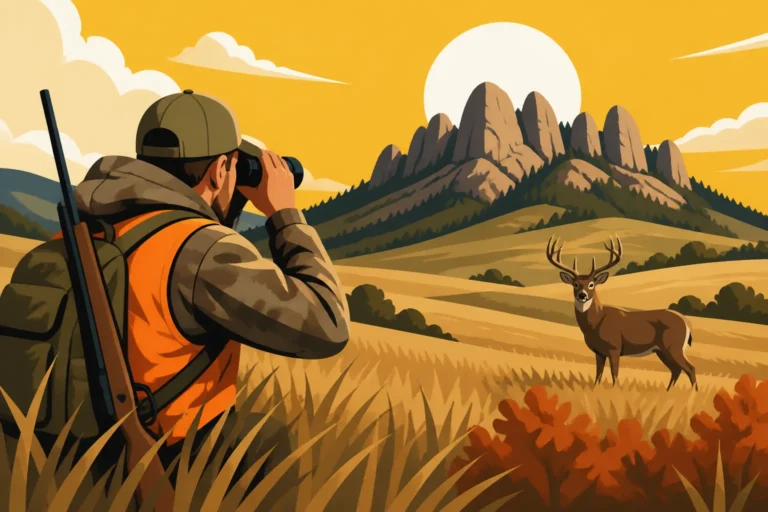
Imagine you're trying to pattern a whitetail buck in a specific corner of a woodlot. You might think, "Well, if I just put out some mineral blocks, I'm improving the habitat, not technically baiting." But if those blocks are strategically placed to bring that buck within range during hunting season, the state's regulations will likely see it as baiting. The distinction can feel frustratingly fine, but it’s rooted in the idea of fair chase – giving the animal a reasonable chance.
Why Baiting Restrictions Exist: Disease and Fair Chase
These restrictions aren't put in place just to make a hunter's life difficult. There are two primary reasons why baiting is heavily regulated, particularly in South Dakota: disease prevention and maintaining the principles of fair chase.
First and foremost is disease management, especially concerning Chronic Wasting Disease (CWD). CWD is a fatal neurological disease that affects deer, elk, and moose. It's highly contagious, spreads through direct animal-to-animal contact, and can also be transmitted indirectly through contaminated environments. When animals congregate at a bait site, the risk of CWD transmission skyrockets. Saliva, urine, and feces from an infected animal can contaminate the bait, feed, and surrounding soil, acting as a long-term reservoir for the disease. South Dakota's proactive approach to baiting restrictions aims to minimize these high-contact areas, thereby slowing or preventing the spread of CWD throughout the state's healthy deer and elk populations. Hunters might feel that these regulations are a bit overbearing, especially when they're simply trying to improve their odds, but the long-term health of the herd depends on these measures.
Secondly, baiting regulations uphold the long-standing tradition of fair chase. The concept of fair chase dictates that hunters should give game animals a reasonable chance to escape. Hunting over bait, for many, tips the scales too heavily in the hunter's favor, reducing the challenge and skill involved in locating, stalking, and ethically harvesting an animal. It's about respecting the quarry and the hunting tradition. While a hunter might argue that any advantage is fair in the pursuit of game, the broader hunting community and wildlife management agencies often view baiting as an unfair advantage that undermines the sporting aspect of the hunt.
Public Ground: A Strict No-Baiting Zone
Now, let's get down to the most critical distinction: baiting rules are very different depending on whether you're on private land versus public land in South Dakota. When it comes to public ground, the rules are clear, strict, and leave little room for interpretation.
The Absolute Prohibition on South Dakota's Public Lands
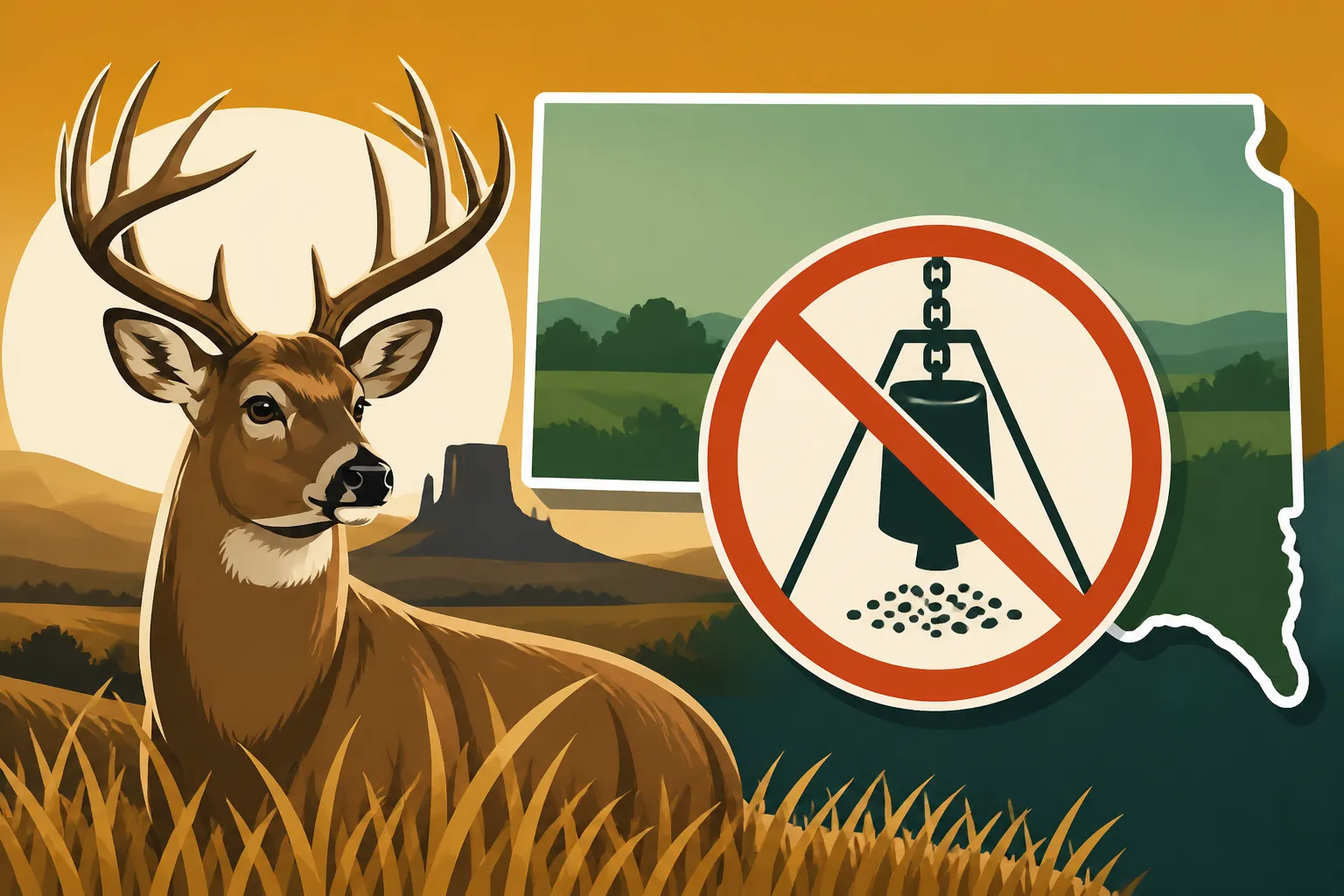
In South Dakota, it is absolutely prohibited to place or use bait for the purpose of hunting big game on any public land. This isn't a recommendation; it's a hard and fast rule. There are no exceptions for specific types of attractants that might be permitted on private land (which we'll cover in a moment, but even there, rules vary). If you're hunting deer, antelope, or elk on public ground, you cannot use any substance to attract them. This means no corn piles, no mineral blocks, no salt licks, no molasses, no food pellets – nothing. The intent is to remove any ambiguity and protect these shared resources.
This blanket ban simplifies things in one way, by removing the guesswork of "is this this type of bait or that type?" but it also means hunters accustomed to different rules in other states or even on private land back home need to be extra vigilant. Violations on public land are taken very seriously and can result in significant penalties. Imagine spending months planning your dream hunt for a West River mule deer, only to have it jeopardized by an accidental baiting violation because you weren't fully aware of the public land specifics. It's a tough lesson to learn the hard way.
Navigating Public Land Boundaries and Designations
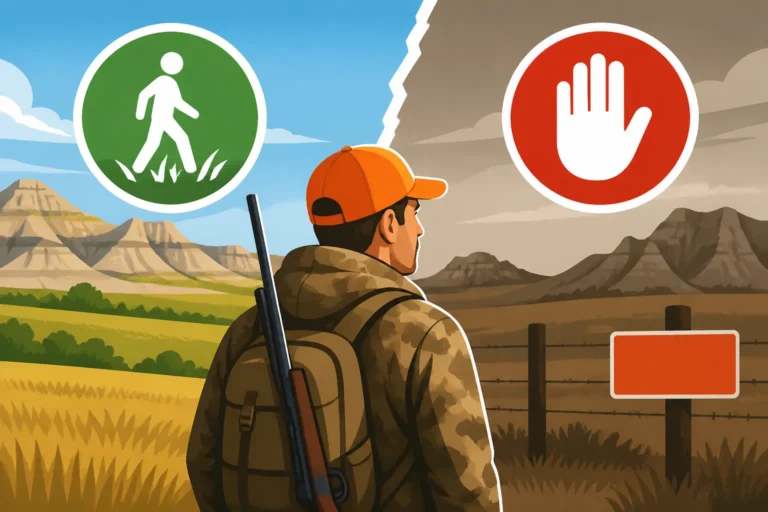
South Dakota boasts a fantastic array of public hunting opportunities, from vast National Grasslands to numerous state-managed areas. However, knowing exactly where these public lands begin and end, and thus where the baiting prohibition applies, is paramount. The state has various types of public access land, each with slightly different administrative rules, but the baiting prohibition for big game is universal across them all.
You’ll find Walk-In Areas (WIAs), often identifiable by specific yellow signs, which are private lands leased by the state for public hunting access. There are also Game Production Areas (GPAs), which are lands owned and managed by the GFP specifically for wildlife habitat and public hunting. Then there are the extensive National Grasslands like Buffalo Gap, Fort Pierre, and Grand River, managed by the U.S. Forest Service, which offer incredible open country hunting. Lastly, there are School and Public Lands, also open to hunting but with specific restrictions. For detailed information, you can always refer to resources like Using the South Dakota Public Hunting Atlas.
Understanding these various designations is crucial, and mapping tools have become indispensable. Tools like onX Hunt are an absolute game-changer for this. With onX Hunt, you can instantly see property lines, landownership, and public land boundaries right on your phone or GPS device. This feature alone can save you from accidental trespass or, in this case, from unknowingly placing bait on public ground that borders private land. Before you even set foot in the field, use these mapping applications to scout your planned hunting areas, verify landownership, and ensure you're well within legal boundaries. It’s the peace of mind that comes from knowing exactly where you are and what rules apply. Failing to know the exact boundaries can lead to heartbreaking situations, where a well-intentioned hunter finds themselves in violation simply because a fence line wasn't clear or a sign was obscured. Hunting South Dakota Walk-In Areas can be fantastic, but you need to confirm that you're indeed on WIA land and not venturing onto adjacent private ground without permission. Similarly, when hunting South Dakota Game Production Area Rules or exploring National Grasslands Hunting in South Dakota, always verify your position.
Distinguishing Legal Attractants from Illegal Bait on Public Ground
The term "attractant" often causes confusion because, broadly speaking, hunters use many things to attract game. Calls, scents, and decoys are all designed to attract. The critical distinction lies in whether the attractant is consumable and placed for the purpose of hunting big game.
Approved Scent Lures and Visual Decoys
While you absolutely cannot use consumable bait on public land, there are other methods of attraction that are generally permitted and widely used by ethical hunters. These fall into categories that do not involve providing food or minerals for consumption.
Scent lures are a primary example. These are typically non-ingestible liquids or gels that mimic the odors of deer, elk, or their predators, or even cover scents to mask human smell. You might hang a scent wick infused with an estrus doe urine or a buck lure to pique a deer's curiosity. These are used to draw an animal closer, not to feed it. Similarly, various calls – grunt tubes, rattling antlers, cow calls, or bugles – are perfectly legal and effective ways to attract game by mimicking their vocalizations or sounds. These are skills-based tactics that rely on a hunter's ability to interpret animal behavior and execute the call effectively.
Visual decoys are also generally permitted. Whether you're setting up a lifelike deer decoy during the rut to challenge a dominant buck or a pronghorn decoy to entice an antelope into range, these are considered legal tools. Decoys provide a visual stimulus, playing on an animal's territorial instincts or social curiosity. They do not offer any nutritional benefit and therefore don't fall under the definition of bait. Always double-check the South Dakota Hunting Handbook for any specific restrictions on types of decoys or their placement, but generally, if it's artificial and not edible, you're in the clear. Stalking a Bedded Mule Deer Buck or Decoying Antelope Over Water are common strategies that rely on such legal attractants.
The Status of Mineral Blocks and Supplemental Feeds
This is often where the line gets blurry for hunters, but it's crucial to understand: on South Dakota public lands, mineral blocks and supplemental feeds are prohibited if placed for the purpose of hunting big game. Even if your intention is to improve herd health or provide a beneficial supplement, the act of placing these items on public ground, especially during hunting season, is likely to be considered baiting.
Many states permit mineral licks or supplemental feeding outside of hunting season or with specific regulations, but South Dakota's public land rules are designed to prevent any potential for big game congregation around these sites, primarily due to CWD concerns. This means that even a "nutrition block" or a salt lick, which some hunters might argue is not "bait" in the traditional sense, is still forbidden if its purpose is to draw game. The state views anything that entices an animal through consumption as a form of baiting when associated with hunting.
So, while a rancher on private land might put out mineral blocks for livestock or even to assist deer nutrition outside of hunting activity, a hunter cannot replicate this on public land with the intent to attract game during the season. It’s a distinction that can be frustrating for hunters who see the potential benefits to deer health, but the overarching goal of preventing disease spread and maintaining fair chase on public ground takes precedence. If you're on public ground like the Black Hills National Forest Hunting, avoid any form of feed or mineral placement.
| Attractant Type | Legality on South Dakota Public Ground for Big Game Hunting | Legality on South Dakota Private Ground (with landowner permission and no local bans) | Key Distinction |
|---|---|---|---|
| Corn, Grain, Pellets | Prohibited | Generally Prohibited | These are consumable food sources. Even on private land, using them to hunt big game is generally illegal to prevent CWD spread and maintain fair chase. Always check local and county regulations, as well as statewide big game baiting bans, even for private land. |
| Mineral Blocks/Licks | Prohibited | Generally Prohibited | While not immediately consumed, these are designed to entice animals through ingestion of minerals. On public ground, they fall under the baiting ban. On private, they can still be considered bait for hunting purposes unless specifically exempted by regulation (rare for big game). |
| Scent Wicks/Lures | Generally Permitted | Generally Permitted | These are non-consumable. They attract through scent only, for curiosity or masking human odor. They do not provide food or minerals. |
| Decoys (Visual) | Generally Permitted | Generally Permitted | These are non-consumable, artificial representations of animals. They attract through visual stimulus, not by providing food or minerals. |
| Food Plots | Prohibited (as placement for hunting) | Permitted (as habitat improvement) | Food plots are planted crops. On private land, planting a food plot is usually considered a habitat improvement, not baiting, as the food grows naturally. Placing harvested crops or feeding on public land is prohibited. You can't plant a food plot on public land for your hunt. |
The Consequences: Why Adhering to Baiting Rules Matters
Knowing the rules isn't just about avoiding trouble; it's about being a responsible hunter and contributing to the health of South Dakota's wildlife and the future of hunting itself. The consequences of violating baiting regulations can be severe, extending far beyond a simple fine.
Penalties for Violating Baiting Regulations
Violating baiting regulations in South Dakota can carry significant penalties that will seriously impact your hunting future. It's not just a slap on the wrist. Depending on the severity of the offense and whether it's a first-time or repeat violation, you could face substantial fines, forfeiture of any game harvested, and even confiscation of your hunting equipment, including firearms. Imagine losing your prized hunting rifle over an ill-placed pile of corn.
Beyond the immediate financial and material losses, a baiting violation can also lead to the suspension or revocation of your hunting privileges, not just in South Dakota but potentially in other states as well, due to interstate wildlife violation compacts. This means that a mistake made on a South Dakota hunt could impact your ability to hunt anywhere for an extended period. Your hunting record would carry that mark, affecting future license applications and potentially even your ability to hunt with friends and family. It's a heavy price to pay for a moment of carelessness or ignorance. Therefore, it's absolutely vital to understand and respect these regulations. You can find more comprehensive details on general consequences in South Dakota Wildlife Violation Penalties.
Preserving Hunting Ethics and Wildlife Health
The importance of adhering to baiting rules extends beyond personal legal repercussions. It’s fundamentally about preserving hunting ethics and safeguarding the health of wildlife populations for generations to come. Every hunter has a responsibility to uphold the integrity of the sport. When baiting violations occur, it casts a negative shadow on the entire hunting community, fueling arguments from those who seek to restrict or end hunting altogether.
By avoiding baiting, especially on public lands, hunters actively participate in preventing the spread of diseases like CWD, which can decimate deer and elk herds. This responsible behavior is a testament to our commitment to wildlife conservation and sustainable management. It shows that we prioritize the long-term health of the ecosystem over short-term personal gain or an easy shot.
Furthermore, respecting these rules maintains the spirit of fair chase that is central to ethical hunting. It ensures that the challenge and skill of pursuing game remain intact, honoring the animals we hunt and the traditions passed down through generations. If you observe a baiting violation, responsibly Reporting Poaching in South Dakota is another way to uphold these crucial values and protect our shared wildlife resources. Ultimately, our adherence to these rules reflects our dedication to responsible stewardship, a cornerstone of the hunting heritage in South Dakota and beyond.
Disclaimer
This article is for general informational purposes only and does not constitute professional advice. Laws, prices and regulations vary by location and change over time. Consult a qualified professional for guidance on your specific situation.