South Dakota Road Right-of-Way Hunting
Hunting along South Dakota's roadsides can be a real head-scratcher, creating a lot of confusion and even frustration for hunters. You're out there, you see birds or deer close to the road, and you think, "Can I even touch that? Where does public land end and private begin?" It's a common dilemma, and one that often leads to misunderstandings, accidental trespass, or missed opportunities because nobody wants to break the law. This comprehensive guide is here to untangle the complexities of South Dakota's road right-of-way hunting, helping you understand the rules, identify the boundaries, and hunt legally and ethically.
Understanding the Legal Concept of a Road Right-of-Way
When we talk about a "road right-of-way" in South Dakota, it's easy to picture just the paved or gravel road itself. But legally, it's often much more than that. This concept is fundamental to understanding where you can and cannot hunt, and frankly, it's where most of the confusion arises.
Defining the Legal Strip
A right-of-way is essentially an easement—a legal right for the public to pass over land, even if that land is privately owned. For roads, this means the county or state has the right to build and maintain a road, and the public has the right to use it. The actual "right-of-way" typically extends beyond the shoulders of the road, encompassing a strip of land that can include the ditches, fences, and sometimes even a little beyond those natural features. The width of this strip isn't uniform across the state; it can vary depending on whether it's a state highway, a county road, or a minimum maintenance road. Often, on rural section-line roads, the right-of-way is considered to be 33 feet from the centerline of the road on each side, making a 66-foot-wide corridor. However, this is a general guideline, not a universal rule, and it's heavily influenced by how the land was originally surveyed and dedicated for public use. It's not uncommon to find a ditch that looks like prime pheasant cover, only for it to be legally part of a private field, or vice versa.
Distinguishing from Private Property
Here's where it gets tricky for hunters. While the public has a right to use the right-of-way for travel, whether they can hunt it depends on who owns the land underlying that right-of-way. In many cases, especially in rural areas, the adjacent landowner still owns the land underneath the road and its right-of-way. The public's right is for passage, not necessarily for hunting, unless the land itself is publicly owned or specifically designated for hunting. This distinction is crucial. If the land under the right-of-way is private, even if it's within the legal right-of-way boundaries, hunting on it without permission could still be considered trespass. Think of it like a public sidewalk running through someone's yard; you can walk on the sidewalk, but you can't necessarily set up a picnic on their lawn next to it without asking. The same principle applies here, but with firearms and wildlife, the stakes are much higher. Knowing South Dakota Trespass Law and Posted Land is incredibly important.
Historical Context of Easements
The concept of road rights-of-way and easements isn't new; it dates back to how townships and counties were laid out across the prairie. Early settlers and surveyors established these pathways to ensure access to property and promote commerce. Many roads simply followed section lines, and an easement for public use was implicitly or explicitly granted or taken for these corridors. This historical context explains why so many rural roads have a consistent, if sometimes unposted, right-of-way width. Over time, as land ownership changed hands, these easements remained. What might have been a simple track between two homesteads became a county road, and the associated right-of-way became a public thoroughfare, but not necessarily public hunting ground. This legacy creates the patchwork of access that hunters navigate today, where a ditch might look identical on both sides of a gravel road, but one side is legally huntable while the other is not.
Legal Nuances of Hunting Road Rights-of-Way
South Dakota has specific regulations that govern hunting along roadsides, and misinterpreting them can lead to serious consequences. It's not enough to know where the right-of-way might be; you need to understand the letter of the law.
The "Unoccupied Right-of-Way" Rule
South Dakota law states that a person may hunt game birds or small game on an "unoccupied right-of-way of a public highway" if the adjacent land is not lawfully posted. This is the core rule that allows for roadside hunting. However, that phrase "unoccupied right-of-way" is the pivot point. It means the ditch or strip of land along the road must not be part of an actively farmed field, pasture, or otherwise "occupied" in a manner that indicates private use. If a landowner has cultivated right up to the fence line, or if the ditch is clearly integrated into a livestock pasture, it's generally considered "occupied." Furthermore, the "not lawfully posted" clause is critical. If the adjacent private land is posted with "No Hunting" or "No Trespassing" signs, those signs typically extend to the edge of the private property, which often includes the ditch up to the road grade. This means even if you think the ditch is open, proper posting by the landowner overrides the general unoccupied right-of-way rule. Always assume posting covers the adjacent ditch unless it's explicitly clear otherwise. This also means you need to be familiar with South Dakota Road Hunting Laws beyond just this specific provision.
Discharging Firearms from a Vehicle
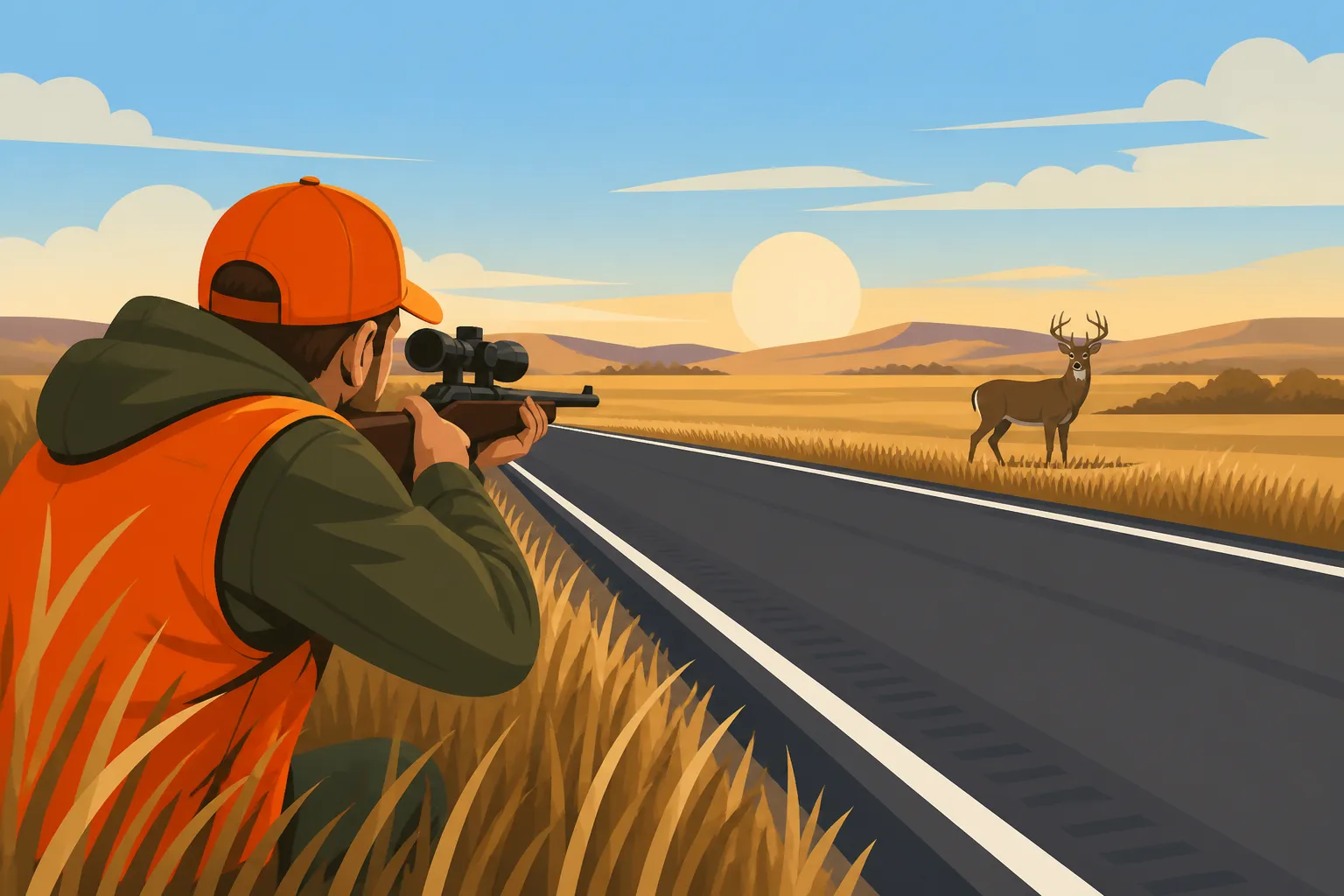
This is another huge point of confusion and a common violation. In South Dakota, it is generally illegal to discharge a firearm or bow and arrow from within a motor vehicle, or from across a public highway, or from within the right-of-way of a public highway when hunting big game. For upland game or small game, you can sometimes hunt from the right-of-way, but you still cannot shoot from within the vehicle or across the highway. The intent behind this rule is safety, both for other motorists and for hunters. Imagine a vehicle pulling over, a window rolling down, and a hunter taking a shot directly from the cab. That's a huge safety hazard. The law also prohibits shooting across a highway, meaning if your target is on the other side of the road, you cannot shoot at it from your side of the road, even if you are out of your vehicle and standing in a legal right-of-way. This requires hunters to exit their vehicle, cross the road (if safe and legal), and ensure their shot is not breaking the plane of the highway. It’s a strict rule designed to prevent dangerous situations, and wardens take it very seriously.
Retrieving Game from Private Land
Let's say you're hunting a legal right-of-way, a pheasant flushes from the ditch, and you make a clean shot. Great! But then the bird sails over the fence and lands 50 yards deep into a posted private field. Now what? You absolutely cannot enter that private land to retrieve your game without first obtaining permission from the landowner. South Dakota law is very clear on this. Even if you watched the bird fall and know exactly where it is, it's considered trespass to cross that property line without permission. This is often the most frustrating part of right-of-way hunting, but it's a non-negotiable legal boundary. Your options are to try to contact the landowner immediately, which can be difficult in remote areas, or to accept the loss of the bird. This highlights the importance of hunting with a dog that can quickly retrieve birds that fall close to the line, or simply being extremely mindful of shot placement and where birds are likely to fall. Knowing Asking a South Dakota Landowner for Permission before you hunt in an area is always a good idea.
Practical Considerations for Hunting Road Rights-of-Way
Beyond the legalities, there are practical and ethical considerations that every hunter needs to bear in mind when hunting South Dakota's roadsides. This isn't just about avoiding a ticket; it's about being a responsible, safe, and respectful hunter.
Safety for Yourself and Others
Roadside hunting, by its very nature, brings you into close proximity with traffic and potentially other hunters. Your utmost priority must be safety. This means wearing blaze orange, even when not legally required for your specific hunt, to be visible to motorists and other hunters. It means being acutely aware of your surroundings, checking for vehicles, homes, livestock, and people before every shot. Never shoot towards a road, dwelling, or livestock. A ricochet or a missed shot could have catastrophic consequences. Think about your backstop. Is there a hill or a dense patch of cover that will safely stop your pellets or bullet? Or are you shooting towards a flat horizon where your projectile could travel for miles? The presence of other hunters, especially during pheasant season, means extra vigilance. You might be working a ditch, and another vehicle pulls up 100 yards down the road with their own hunters and dogs. Communication, common sense, and extreme caution are your best friends in these situations.
Hunter Etiquette and Respect
Even if an unoccupied right-of-way is legally open to hunting, it's still adjacent to someone's private property, often their home or livelihood. Showing respect for landowners and other road users is paramount. This includes parking your vehicle safely off the main roadway, not blocking access to fields or driveways, and keeping your dog under control. If a landowner approaches you, even if you know you are legal, be polite and explain your actions. A good relationship with a landowner can go a long way, and a bad interaction can quickly lead to more "No Hunting" signs in the area. Remember that what might seem like an open, unclaimed ditch to you is part of someone's farm and livelihood. Leaving no trash, driving slowly on gravel roads to avoid dust, and generally being a good neighbor builds goodwill for all hunters. This extends to keeping hunting periods in mind, such as the later Why Pheasant Hunting Starts at Ten in South Dakota, which helps manage hunter pressure and bird behavior.
Vehicle Use and Parking
Your vehicle is a tool, but it also carries responsibilities. As mentioned, never shoot from within your vehicle. When you pull over to hunt a right-of-way, ensure your vehicle is completely off the traveled portion of the road. This means pulling onto the shoulder or into an access point if available, without blocking traffic or field entrances. If the ditch is soft or muddy, do not drive into it and risk getting stuck, as this can damage the right-of-way and annoy landowners. Be mindful of dust on gravel roads, especially when approaching homes or other vehicles. Excessive speed and dust clouds are a common complaint. While tempting to use your vehicle to scout, remember that "road hunting" in the sense of cruising and shooting from the truck is largely illegal and unethical. Use your vehicle for safe access and transport, not as a mobile blind or shooting platform.
Navigating the Complexities: Tools and Resources
Understanding the rules is one thing, but applying them accurately in the field can be challenging. Fortunately, there are modern tools and resources that can help you navigate the intricate landscape of South Dakota's hunting areas.
Mapping Apps: onX Hunt and GoHunt
These are invaluable tools for hunters looking to responsibly use road rights-of-way. Mapping applications like onX Hunt and GoHunt provide detailed satellite imagery overlaid with property lines, public land boundaries, and even specific Walk-In Area (WIA) information. This visual data can be a game-changer. With onX Hunt, for example, you can see exactly where a private property line ends and a potential public right-of-way begins, or where a posted field meets an unposted ditch. You can distinguish between federal, state, and private land with color-coded maps. GoHunt offers similar features, allowing you to mark waypoints, track your movements, and have a clear understanding of the land status in real-time. While these apps are incredibly helpful, they are not infallible. Always cross-reference with official signs on the ground and remember that satellite imagery can be slightly off. However, for a general understanding of Finding Property Lines in South Dakota and assessing whether a right-of-way is likely public or private, they are indispensable.
Understanding Property Boundaries
Even with mapping apps, it's essential to understand the nuances of property boundaries. Sometimes a fence isn't the true property line; it might be set back for a variety of reasons. The legal right-of-way for a public road, as discussed, usually extends a certain distance from the center of the road. This means that a strip of private land might exist between the public right-of-way and the landowner's fence line. This is where diligent scouting comes in. If you're unsure, err on the side of caution. Look for official boundary markers, survey stakes, or changes in land use that might indicate a line. A common scenario is where a landowner has planted trees or set up old machinery in the ditch, visually "claiming" that area. While this doesn't always make it legally theirs to hunt, it's a strong indication of private use and a signal to proceed with extreme caution or avoid it entirely to prevent conflict.
Interpreting South Dakota's Hunting Handbook
The South Dakota Game, Fish and Parks (GFP) hunting handbook is your official guide to all regulations. While mapping apps are great for visual context, the handbook provides the precise legal language. Every year, GFP publishes updates, so make sure you have the most current version. Pay close attention to sections on "Road Hunting," "Trespass," and "Methods of Take." These sections will detail specific distances from roads you must be to shoot certain game, rules about shooting across highways, and definitions of lawfully posted land. It's often worth reading and re-reading these sections, perhaps even highlighting key phrases. Don't rely on hearsay or what someone told you years ago; the rules can and do change. The handbook also provides information on South Dakota Hunter Education and Licensing requirements, which every hunter should be thoroughly familiar with.
| Action | Legality in South Dakota Road Right-of-Way | Important Caveats |
|---|---|---|
| Hunting Upland/Small Game | Potentially Legal | Only on "unoccupied" right-of-way, adjacent private land must NOT be lawfully posted. Always verify land status. |
| Hunting Big Game | Generally Illegal | Big game cannot be hunted from or within the right-of-way of a public highway. |
| Shooting from inside a vehicle | Illegal | Prohibited for ALL game species. Exit your vehicle to hunt. |
| Shooting across a public highway | Illegal | Prohibited for ALL game species. Your projectile must not cross the traveled portion of the road. |
| Retrieving game from private land | Illegal Without Permission | You MUST obtain permission from the landowner before crossing a private property boundary to retrieve game, even if you shot it legally from a public right-of-way. |
| Parking on the shoulder | Legal (with caution) | Park completely off the traveled portion of the road, do not block driveways or field access. Be mindful of soft ground. |
| Wearing Blaze Orange | Highly Recommended | While not always legally required for upland game, it's crucial for visibility and safety when hunting near roads or other hunters. |
Species Commonly Encountered and Tactics
Despite the restrictions, road rights-of-way can surprisingly hold various game species. Understanding what you might find and how to approach it legally and effectively is key to successful and ethical roadside hunting.
Upland Birds (Pheasants, Grouse)
The most common targets for roadside hunting in South Dakota are ring-necked pheasants and, to a lesser extent, sharp-tailed grouse or prairie chickens in the West River country. These birds often utilize the dense cover of ditches for roosting, feeding, and protection from predators and weather. During colder or harsher weather, the deeper, brushier ditches can be particularly attractive. Late-Season South Dakota Pheasants in Heavy Cover are prime candidates for ditch hunting. The tactic here is usually a slow walk along the ditch, often with a dog, to flush birds. It's not a "drive" in the traditional sense, but more akin to working a linear strip. Pay attention to how the ditch connects to adjacent fields – a small bottleneck or a turn in the road can concentrate birds. Always walk into the wind if possible, as it helps your dog scent birds and can make flushes more predictable. Be ready for quick shots and be very aware of your shooting lanes to ensure no houses, vehicles, or livestock are in the line of fire.
Small Game and Coyotes
Beyond upland birds, roadside ditches and adjacent sections of public land or unposted private ground can hold various small game. Rabbits, especially cottontails and jackrabbits, are frequently found in heavier cover along roads. Squirrels might also be present in areas with scattered timber or shelterbelts intersecting road corridors. For these species, a similar walking strategy applies, often requiring a good eye and quick reflexes. Coyotes are another animal that can be taken opportunistically from legal rights-of-way. They often use these linear features for travel or to hunt rodents themselves. If you're set up legally (out of your vehicle, not shooting across the road, and on unoccupied right-of-way with an appropriate backstop), a coyote might present a shot. Remember to confirm South Dakota Predator Hunting Licence Rules before heading out. The key is never to make an active "stand" or extensive calling setup that could be mistaken for big game hunting from the right-of-way. It's more about being prepared for an encounter while primarily focusing on other small game.
Big Game Considerations
While it's illegal to hunt big game from or within the right-of-way of a public highway, encounters with deer, antelope, or even elk (in specific areas like the Black Hills or some prairie units) are not uncommon. These animals often cross roads, browse in ditches, or seek cover along fencelines. If you see big game from a right-of-way, you generally cannot attempt to harvest it from that position. Your only legal option, if the adjacent land is public or you have permission to hunt the private land, would be to exit the right-of-way and move to legal ground, ensuring all other big game hunting regulations are followed. This includes ethical shot placement and making sure you are not shooting across a road. It's a tricky situation that requires strict adherence to the rules. Sometimes, the best course of action is simply to observe and enjoy the wildlife without taking a shot.
Potential Pitfalls and How to Avoid Them
Hunting road rights-of-way in South Dakota is fraught with potential missteps. Being aware of these common pitfalls can save you a lot of grief, legal trouble, and help maintain a positive image for all hunters.
Misinterpreting Boundary Lines
This is, by far, the most common mistake. Hunters often assume that if there's no fence, or if a ditch "looks" wild, it must be public or huntable. This is a dangerous assumption. As we've discussed, the legal right-of-way might be narrower or wider than it appears, and the underlying ownership can vary. A field might be posted a quarter-mile down the line, but those signs can legally apply to the entire length of the property, including the ditch adjacent to the road. Trusting only your eyes, or anecdotal information, is risky. This is where your mapping apps like onX Hunt and GoHunt become crucial. Use them to verify property lines and understand land ownership. If there's any doubt, assume it's private and seek explicit permission before hunting or even stepping foot on it. It's better to walk away from a potential bird than to face a trespass charge or alienate a landowner. Being able to read Reading Aerial Imagery for Cattail Cover can also help you identify huntable spots that are truly public.
Dealing with Landowner Conflicts
Even when you believe you are completely within your legal rights, you might encounter an irate landowner. This can be intimidating and frustrating. The worst thing you can do is escalate the situation or become confrontational. Even if they are mistaken about the law, politeness and respectful communication are your best tools. Calmly explain that you understand their concern, indicate that you are aware of the right-of-way laws, and perhaps even show them your location on a mapping app to demonstrate you are on legal ground. If they remain aggressive or demand you leave, it's often best to simply comply and report the incident to the South Dakota Game, Fish and Parks. They can investigate and clarify the legal standing. Causing a scene only reflects poorly on you and the entire hunting community. Remember, South Dakota Wildlife Violation Penalties can be severe, and avoiding any situation that could lead to one is always the smart play.
Ignoring Safety Regulations
In the excitement of a flush or a sighting, it's easy to momentarily forget about safety. But the consequences of ignoring shooting directions, backstops, or being too close to dwellings are dire. Always assume there might be another vehicle around the bend, a person walking on a distant property, or livestock out of sight behind a rise. The responsibility for every shot fired rests squarely on your shoulders. This also includes proper firearm handling outside of shooting, such as keeping firearms unloaded when transporting them in a vehicle and practicing safe muzzle control, especially if you're hunting with a group or using dogs. Roadside hunting puts hunters in a more public space, increasing the need for visible safety practices to protect yourself and to ensure non-hunters feel safe around hunting activities. A quick refresher on Safe Gun Handling on a Bird Drive principles is always a good idea before hitting the field.
Disclaimer
This article is for general informational purposes only and does not constitute professional advice. Laws, prices and regulations vary by location and change over time. Consult a qualified professional for guidance on your specific situation.