National Grasslands Hunting in South Dakota
Finding vast, open expanses of public land to hunt in South Dakota can feel like searching for a needle in a haystack, especially with so much acreage in private hands. It’s a common frustration for hunters, both resident and nonresident, who dream of chasing game across sweeping prairies without constantly worrying about boundary lines. This comprehensive guide is here to shed light on one of the state's most incredible—and often underutilized—public hunting resources: the National Grasslands. We're going to dive deep into what these lands offer, how to navigate them, and the specific strategies that will help you unlock their immense potential for your next hunting adventure.
Understanding South Dakota's National Grasslands
For many hunters, the concept of a "National Grassland" might be a bit fuzzy. It's not a National Park, nor is it a state Game Production Area, although it offers similar public access. These are truly unique landscapes, shaped by history and sustained by careful management, providing critical habitat and incredible hunting opportunities.
What Are National Grasslands?
National Grasslands are tracts of land, primarily in the Great Plains states, that were once failed agricultural lands during the Dust Bowl era of the 1930s. Decades of drought and unsustainable farming practices turned productive plains into barren dust bowls, forcing families off their land. In a visionary move, the federal government acquired these devastated lands, initiated massive rehabilitation efforts, and began restoring them to their natural prairie state. Today, they are managed by the U.S. Forest Service, often in conjunction with local ranchers through grazing permits, with a multi-use mandate that includes conservation, recreation, and, crucially for us, public hunting.
Unlike some national forests that are dominated by timber, National Grasslands are, as the name suggests, expansive areas of native and restored prairie grasses. You'll find everything from shortgrass to mixed-grass prairies, interspersed with sagebrush, occasional draws with scattered deciduous trees, and sometimes even dramatic badlands formations. The management philosophy aims to maintain a healthy ecosystem that supports both wildlife and responsible grazing, creating a dynamic landscape that changes with the seasons and the needs of its diverse inhabitants. They represent a testament to ecological recovery and a fantastic legacy for public land enthusiasts.
Why They're Crucial for South Dakota Hunters
South Dakota is famous for its incredible pheasant hunting, but a significant portion of the prime pheasant habitat is on private land. This can make finding consistent, quality public hunting ground a challenge, especially for those who prefer to DIY their hunts. This is where the National Grasslands truly shine as a crucial resource. They offer vast, contiguous blocks of public access, often hundreds of thousands of acres in size, giving hunters the space to roam and experience the prairie in its rawest form.
For nonresident hunters, in particular, the National Grasslands represent an unparalleled opportunity. While certain deer tags might be tougher to draw, the sheer amount of accessible ground for species like pheasants, prairie grouse, antelope, and coyotes is immense. These lands allow for true adventure hunting, requiring hunters to rely on their map-reading skills, physical endurance, and ability to read the landscape. You won't find manicured food plots or high fences here; instead, you'll discover a wildness that rewards effort and careful planning. They are also vital corridors for many migratory birds and resident game, acting as a massive biological engine on the prairie.
Key National Grasslands for Hunting in South Dakota
South Dakota is home to three main National Grasslands, each with its own unique character, terrain, and game populations. Understanding these differences can help you decide which one best suits your hunting aspirations.
Buffalo Gap National Grassland
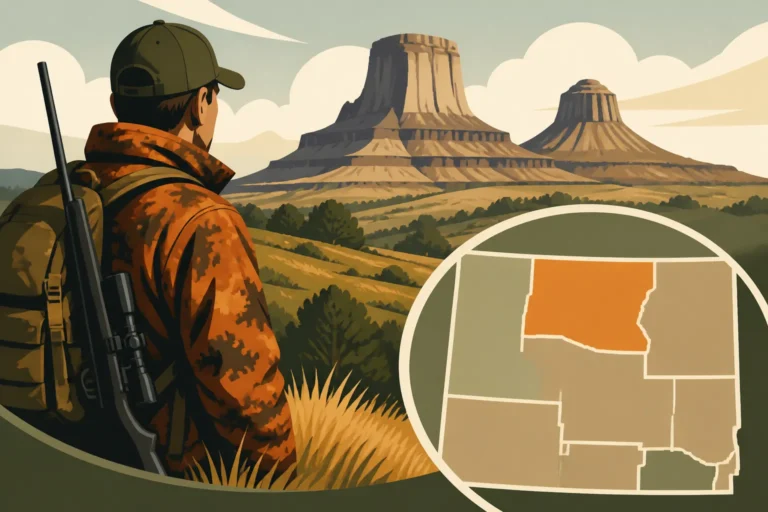
Spanning over 600,000 acres across southwestern South Dakota, the Buffalo Gap National Grassland is perhaps the most iconic, partly due to its proximity to Badlands National Park. It's a land of rolling hills, deep, eroded draws, scattered pine and juniper pockets, and dramatic badlands formations that create incredible breaks and cover. If you're looking for a challenging hunt in visually stunning country, Buffalo Gap is your spot.
This grassland is renowned for its Mule Deer on the West River Breaks. The broken terrain provides ideal habitat, allowing bucks to disappear into a maze of coulees and washes. Pronghorn Antelope on the South Dakota Prairie are also abundant, gracefully traversing the vast, open flats between the breaks. For bird hunters, you'll find pheasants concentrated in areas with thicker grass cover, often near private agricultural fields bordering the grassland, and good numbers of Sharp-Tailed Grouse and Prairie Chickens in South Dakota throughout the native prairie. Predators like coyotes are also common, offering year-round opportunities for those interested in Coyote Calling on Open Grassland. Access can sometimes be tricky, as public and private land can intermingle, so detailed mapping is essential.
Fort Pierre National Grassland
Located just south of Pierre in central South Dakota, the Fort Pierre National Grassland encompasses approximately 225,000 acres. This area is often characterized by its more classic, gently rolling prairie landscape, interspersed with large expanses of native grass, some cultivated fields (often privately owned inholdings), and strategic shelterbelts or tree rows planted for wildlife and erosion control. While less dramatic than Buffalo Gap, Fort Pierre is a powerhouse for upland birds.
The Fort Pierre Grassland is a premier destination for prairie grouse, holding excellent populations of both sharp-tailed grouse and greater prairie chickens. Their lekking grounds in the spring are a sight to behold, and in the fall, these birds provide a challenging hunt across endless grass. Pheasants also thrive here, particularly in the thicker cattail sloughs and heavier cover bordering crop fields, though they might be spread out. While not as famous for big game as Buffalo Gap, you'll still find good numbers of whitetail deer in the riparian areas and heavier draws, along with antelope in the more open sections. The relatively flat terrain here can sometimes make stalking big game a true test of stealth, as cover can be scarce.
Grand River National Grassland
Tucked away in the far northwestern corner of South Dakota, near the town of Lemmon, the Grand River National Grassland offers a different flavor of prairie hunting across its roughly 150,000 acres. This area features more broken country, with impressive buttes, river breaks along the Grand River, and more extensive timbered draws of ponderosa pine and cedar in some sections. It's generally considered more remote and sees less hunting pressure than the other two grasslands, making it an excellent choice for hunters seeking solitude.
The Grand River Grassland provides solid opportunities for both mule and whitetail deer, with the timbered draws and breaks offering great cover. Antelope are prevalent in the open prairie sections. Upland bird hunters can expect to find sharp-tailed grouse and pheasants, particularly where the grassland meets agricultural interfaces or in the more productive draws. The presence of greater tree cover in some parts also creates habitat for species less common in the purely open prairie. Hunters willing to drive a bit further and explore this rugged corner of the state are often rewarded with a more intimate and less crowded hunting experience.
Game Species You'll Find on the National Grasslands
The incredible diversity of habitats across South Dakota's National Grasslands means a wide array of game species call these areas home. From swift antelope to wily coyotes, these lands offer something for every type of hunter.
Big Game Opportunities
Hunting big game on the National Grasslands is often a commitment to vast landscapes and challenging conditions, but the rewards are truly memorable.
-
Mule Deer: Primarily found in the rugged breaks and draws of the Buffalo Gap and Grand River Grasslands, mule deer are the kings of this open country. They are masters of using terrain to their advantage, often bedding on a high point with excellent visibility or tucked into a deep coulee where they seemingly vanish. Hunting them requires keen glassing skills and the patience to execute a long stalk. Drawing a nonresident rifle tag for mule deer can be challenging, often requiring some preference points through the South Dakota Big Game Draws and How to Apply system. Archery tags tend to be more accessible. Understanding their patterns, especially during the rut, and knowing how to approach them in open terrain are critical for success. Reading Prairie Coulees for Mule Deer and Judging a Mule Deer Buck at Distance are crucial skills here.
-
Pronghorn Antelope: The speed demons of the prairie, pronghorn are abundant across all three National Grasslands, especially in the more open, rolling country. Their incredible eyesight makes them notoriously difficult to approach. Spot-and-stalk is the primary method, often involving long crawls and clever use of topography to get within range. Finding a water source during dry periods can be a game-changer for these animals. Like mule deer, nonresident antelope tags are typically part of a draw system, and while sometimes easier than certain deer tags, understanding South Dakota Preference Points Explained can be beneficial for increasing your odds. Ethical shot placement and quick field dressing are paramount for Pronghorn Antelope on the South Dakota Prairie due to their unique metabolism.
-
White-Tailed Deer: While mule deer dominate the broken West River country, whitetails can still be found on the National Grasslands, especially along riparian corridors, heavier draws with denser brush, or where the grasslands abut private agricultural fields with timbered shelterbelts. They are often more secretive than their mule deer cousins, sticking to the thickest cover available. Hunting whitetails on the grasslands often involves still-hunting pockets of brush or ambushing them near pinch points they use to travel between cover and food sources. Nonresident tags for whitetail deer can be more accessible than mule deer in some units, especially for archery.
Upland Bird and Predator Pursuits
The National Grasslands offer fantastic upland bird hunting and year-round predator opportunities that require different tactics but are equally rewarding.
-
Pheasants: While not the primary focus of all grassland, pheasants thrive in areas where the grasslands blend with agricultural fields or where dense, tall grass provides winter cover. You'll often find them in thicker draws, cattail sloughs (if present), or shelterbelts within or bordering the grassland. Hunting pheasants here involves covering a lot of ground, often with a good dog, working the edges and pockets of heavy cover. The classic pheasant drives you see on private land are less common here; instead, it's more about walking up birds in vast cover. Be mindful of property lines, as pheasants will frequently move between public grassland and private croplands.
-
Prairie Grouse: The National Grasslands are a stronghold for Sharp-Tailed Grouse and Prairie Chickens in South Dakota. These native prairie birds offer a unique hunting experience. Sharptails prefer more open, rolling grass, while prairie chickens often favor slightly taller, denser prairie habitat, though their ranges often overlap. Hunting them typically involves walking large tracts of ground, often in long lines with multiple hunters, or simply covering ground with a good bird dog. Early season hunts can find them scattered, while later in the season, they might gather in larger coveys. Listen for their distinctive chuckles as they flush.
-
Coyotes: For hunters seeking year-round action, coyotes are abundant across all National Grasslands. Their populations are healthy, and they offer a challenging quarry that demands stealth, good calling techniques, and precise shooting. Calling coyotes on the open prairie involves setting up with the wind in your favor, using electronic or hand calls to mimic distress sounds or coyote vocalizations, and being ready for a shot at various ranges. Coyote Calling on Open Grassland can be incredibly effective, especially in the winter months when their fur is prime. They are an essential part of the prairie ecosystem and provide excellent hunting sport.
Planning Your Hunt on National Grasslands
Success on the National Grasslands is less about luck and more about meticulous planning. These vast, often remote areas demand thorough preparation, from understanding land boundaries to knowing what to expect from the weather.
Navigating Access and Regulations
The first and most critical step in planning any grassland hunt is understanding where you can legally hunt and how to access it. South Dakota's National Grasslands are a patchwork, often interspersed with private land, state land, and other federal designations.
- Public vs. Private Land Identification: This is non-negotiable. You must know exactly where you are at all times. Mapping applications like onX Hunt are indispensable tools for National Grassland hunters. They overlay property boundaries, public land designations (like National Grassland, BLM, state trust land, etc.), and even features like roads and topographic lines directly onto satellite imagery. Relying solely on paper maps is often insufficient due to the sheer scale and complexity of land ownership. Before you even leave home, spend hours studying the maps, identifying large blocks of public ground, potential access points, and areas that might funnel game. Finding Property Lines in South Dakota is crucial.
- Motor Vehicle Use Maps (MVUMs): The U.S. Forest Service provides MVUMs for each National Grassland. These maps clearly designate which roads are open to motorized vehicles, which are closed, and which are seasonal. It's vital to download and understand these maps before your hunt to avoid trespassing, getting stuck, or violating federal regulations. Many roads are two-track trails that can become impassable after rain or snow, so plan your routes carefully and be prepared to walk long distances.
- South Dakota Licensing and Tags: Before you even consider setting foot on the grasslands, ensure you have all the necessary licenses and tags. For big game, this often means navigating the South Dakota draw system. Nonresident big game tags are typically limited and often require applying well in advance, sometimes accumulating preference points. For upland birds, a nonresident small game license and a habitat stamp are generally required. Be sure to check the latest South Dakota Game, Fish and Parks (GFP) regulations for season dates, bag limits, and specific unit boundaries for the areas you plan to hunt. Information on South Dakota Nonresident Licence Costs and South Dakota Deer Licence Types by Region is readily available through GFP.
E-Scouting and Boots-on-the-Ground Reconnaissance
Modern technology has revolutionized how we prepare for hunts, and nowhere is this more evident than on expansive public lands like the National Grasslands.
- Leveraging Satellite Imagery: Your computer or tablet can be your best scouting partner. Use mapping apps like onX Hunt to virtually explore the terrain. Look for drainages, isolated pockets of trees or brush, water sources (stock dams, windmills, natural springs), changes in vegetation, and areas where open prairie meets more rugged breaks. These are all potential areas where game might concentrate for food, water, or cover. Identify potential ambush points, glassing knobs, and safe routes for stalks. For antelope, pinpoint those subtle rises in terrain or cuts that might provide concealment. For birds, look for thicker grass, draws, or shelterbelts.
- Draw Odds and Unit Information: For big game hunters, services like GoHunt provide invaluable data on draw odds, success rates, and unit-specific information, helping you make informed decisions about where to apply your valuable points. This information, combined with your e-scouting, allows you to narrow down your focus to units that align with your goals and experience level. While this guide cannot provide specific current data, these resources are excellent for your research.
- The Value of Scouting: While e-scouting is powerful, nothing replaces boots-on-the-ground reconnaissance if possible. A pre-season trip allows you to verify what you saw on the map, understand the true scale of the terrain, and identify subtle features that satellite imagery might miss. Look for fresh sign: tracks, droppings, rubs, and active game trails. Pay attention to water sources and their reliability. If a physical scouting trip isn't feasible, plan to arrive a day or two early to drive roads, glass from high points, and get a feel for the country before your hunt begins.
Seasonal Considerations and Weather Preparedness
The prairie weather is famously unpredictable and can drastically impact your hunting plans and safety.
- Impact of Seasons: Early season hunts (late August, September) are often characterized by warm temperatures, requiring careful game care and prioritizing water sources for game. Mid-season (October) offers more moderate weather but can still bring rapid changes. Late season (November, December) means colder temperatures, often snow, which can improve visibility for tracking but also create treacherous road conditions and increase exposure risks. Hunting Late-Season Hunting in South Dakota Snow requires specialized gear and heightened awareness.
- Water Availability: In dry years or during warm months, water is a critical factor for all wildlife. Identifying reliable stock dams or natural springs can reveal game concentrations. Always carry ample water for yourself, and if hunting with dogs, plan for their hydration needs.
- Fire Danger: During dry periods, fire danger on the grasslands can be extreme. Always be aware of local fire restrictions and exercise extreme caution with any open flames or hot vehicle exhaust. A single spark can devastate thousands of acres and ruin a hunt.
- Road Conditions: Dirt and two-track roads on the grasslands can become impassable mud pits after rain or snow. Always check weather forecasts and road conditions before venturing deep into the grasslands. A four-wheel-drive vehicle with good tires, recovery gear (tow strap, shovel, traction boards), and a full tank of gas are necessities, not luxuries. Getting Stuck on a Prairie Two-Track is a common and dangerous occurrence.
| National Grassland | Primary Location | Key Terrain Features | Primary Game Species | Unique Aspects |
|---|---|---|---|---|
| Buffalo Gap | Southwestern SD | Rolling hills, badlands formations, rugged breaks | Mule Deer, Pronghorn, Pheasants, Prairie Grouse, Coyotes | Dramatic scenery, challenging stalking, proximity to Badlands. |
| Fort Pierre | Central SD (South of Pierre) | Gently rolling prairie, native grasses, shelterbelts | Prairie Grouse, Pheasants, Whitetail Deer, Pronghorn, Coyotes | Premier prairie grouse hunting, classic prairie landscape. |
| Grand River | Northwestern SD (near Lemmon) | Buttes, river breaks, timbered draws, broken country | Mule Deer, Whitetail Deer, Pronghorn, Pheasants, Prairie Grouse, Coyotes | More remote, less pressure, varied cover including timber. |
Hunting Strategies for the Open Prairie
Hunting the vastness of the National Grasslands requires specific strategies tailored to the open country and the behaviors of the resident game. What works in dense timber often won't cut it here.
Big Game Tactics
For mule deer and pronghorn, the name of the game is glassing, stalking, and patience.
- Spot-and-Stalk: This is the quintessential National Grassland big game strategy. It starts with spending significant time behind your optics (high-quality binoculars and a spotting scope are essential), systematically picking apart distant hillsides, draws, and sagebrush flats. You're looking for subtle signs: a patch of contrasting color, a horizontal line in a vertical landscape, or the flick of an ear. Once a target animal is spotted, the real work begins. You must meticulously plan your approach, using every fold in the terrain, every patch of cover, and the wind direction to your advantage to get within shooting range. This often involves long, low crawls and circuitous routes. Glassing South Dakota Breaks at First Light is key to finding them before they know you're there. And once you spot one, Using Terrain to Close on a Mule Deer becomes the art of the hunt.
- Patience at Waterholes: In dry conditions, particularly for antelope, water sources become magnets. Setting up a ground blind a safe distance from a known stock dam or natural spring can be an effective ambush strategy, especially during midday or afternoon when animals are most likely to seek water. Be aware of prevailing winds and choose a setup that minimizes your scent dispersal. This is a game of patience, but when an animal finally commits to water, the payoff can be immense.
- Still-Hunting Draws: While pronghorn prefer wide-open spaces, mule deer and whitetails often utilize the numerous draws and coulees that crisscross the grasslands. Still-hunting these drainages involves moving very slowly, pausing frequently to observe, and using the contours of the land to remain concealed. Focus on areas with thicker brush, scattered trees, or broken terrain that offers more cover. Deer will bed in these areas to escape the wind and sun, and moving through them quietly can lead to close-range encounters. Always hunt into the wind to keep your scent from blowing ahead of you.
Upland Bird and Predator Tactics
Bird hunting and predator calling on the grasslands are about covering ground, reading cover, and utilizing sound.
- Walking Large Expanses: For prairie grouse, and often for pheasants, the strategy involves covering vast amounts of ground. Whether alone with a dog or with a group of hunters walking a line, the goal is to systematically move through likely habitat, pushing birds to flush. This requires endurance and a willingness to put in the miles. Focus on areas of native grasses, especially those with varying heights and densities. Grouse will often hold tight, erupting unexpectedly.
- Hunting Edges and Cover: While large, open tracts are common, specific features concentrate birds. For pheasants, target the edges where grasslands meet agricultural fields, thicker shelterbelts, or dense cattail sloughs. These areas provide food, thermal cover, and escape routes. Even small, isolated pockets of heavy brush or tall grass can hold birds. For both pheasants and grouse, knowing Hunting Food Plots and Corn Edges can be a great tactic if public grassland borders private agriculture with these features.
- Calling for Coyotes: Predator calling is an active and exciting pursuit. After setting up in a location that offers good visibility and a clear shooting lane, use a call (electronic or mouth call) to mimic a distressed rabbit, fawn, or even coyote challenges. Pay close attention to the wind, as coyotes have an incredible sense of smell. Set up so the wind is blowing from where you expect the coyote to come from, across your position, and away from your intended shot lane. Be patient, but also be ready, as they can appear suddenly from seemingly nowhere.
Essential Gear and Safety Considerations
Hunting the National Grasslands is an immersive experience, but it also means being self-sufficient and prepared for anything. The remote nature of these lands leaves little room for error.
What to Pack for a Grassland Hunt
Your gear selection can make or break your trip. Prioritize reliability, versatility, and self-sufficiency.
- Optics: High-quality binoculars (10×42 or 10×50 are common) are your most important tool for big game. A good spotting scope (20-60x range) will allow you to scrutinize distant animals and judge trophy quality without having to walk miles. Rangefinders are also essential for accurate shots in open country.
- Navigation: While onX Hunt or similar apps on your phone or tablet are invaluable, always carry a backup. A dedicated GPS unit or a paper map and compass (and know how to use them!) can save you if your electronics fail or lose signal. Always mark your vehicle's location and potential extraction points.
- Water, Food, and First-Aid: Carry more water than you think you'll need, especially during warm weather. Dehydration is a serious risk. Pack enough high-energy food for each day, plus an extra day's worth. A comprehensive first-aid kit, tailored for backcountry use, should always be with you. This includes pain relievers, bandages, antiseptic wipes, moleskin for blisters, and any personal medications.
- Appropriate Clothing: The prairie is famous for its extreme temperature swings and relentless wind. Layering is critical. Think moisture-wicking base layers, insulating mid-layers (fleece or down), and a windproof, waterproof outer shell. Even on a sunny day, an unexpected cold front can blow in. Good boots, broken in and waterproof, are essential for covering many miles. Layering for South Dakota Wind is not just a comfort choice; it's a safety choice.
- Vehicle Preparedness: Your vehicle is your lifeline. A full-size spare tire (or two), a jack, tire repair kit, jumper cables, a tow strap, a shovel, and traction aids are crucial. Consider carrying extra fuel in approved containers, as gas stations can be far apart. Make sure your vehicle is in top mechanical condition before you leave.
Staying Safe in Remote Country
The vastness and solitude of the grasslands are part of their appeal, but they also demand a strong emphasis on safety.
- Communication: Cell phone service can be spotty to non-existent in many parts of the National Grasslands. Consider carrying a satellite communication device (like a Garmin inReach or a Zoleo) for emergency communication or to send check-in messages to loved ones. Always let someone know your exact hunting plans, including your route, where you'll be parked, and when you expect to return. Cell Coverage in West River Country is a real concern.
- Dehydration and Sun Exposure: The prairie sun is intense, even in cooler weather. Wear a wide-brimmed hat, sunglasses, and use sunscreen liberally. Drink water consistently throughout the day, not just when you feel thirsty.
- Wildlife Encounters: While rare, be aware of potential encounters with rattlesnakes (especially in warmer months), and in some areas, bison (which, though generally managed, can be dangerous if startled or approached too closely). Know how to react if you encounter wildlife.
- Firearm Safety: Always adhere to the highest standards of firearm safety. Be acutely aware of your muzzle direction, especially when walking in a group or when approaching game in thick cover. Identify your target and what's beyond it before taking a shot. When hunting with dogs, maintain strict muzzle control. Safe Gun Handling on a Bird Drive is critical for everyone's safety.
- Other Hunters: Expect to encounter other hunters, especially during peak seasons. Be courteous, give other parties plenty of space, and communicate if you're approaching an area they are already hunting.
Respecting the Land and Other Users
Hunting on the National Grasslands is a privilege that comes with a responsibility to be a good steward of the land and a respectful ambassador for hunters.
Practicing Ethical Hunting and Leave No Trace Principles
Our actions on public land leave a lasting impression, not just on the environment but also on how hunting is perceived by the broader public.
- Leave No Trace: This principle is paramount. Pack out everything you pack in, and then some. This includes all trash, spent shell casings, and any other litter you might find. Leave the land cleaner than you found it. Do not leave gut piles near roads or popular access points; move them into denser cover if possible.
- Respect Private Property Boundaries: As mentioned, the grasslands are often bordered by private property. It is your responsibility to know exactly where you are and to avoid trespassing. Even retrieving downed game from private land requires explicit permission from the landowner. Understand South Dakota Trespass Law and Posted Land before you hunt. A polite request to retrieve game is almost always honored, but crossing a fence without permission is illegal and harms hunter-landowner relations.
- Proper Game Care: Field dressing your animal quickly and efficiently, especially in warm weather, is crucial for preserving the meat. Get the hide off and the meat cooled as soon as possible. Carrying game bags and ice chests with ample ice is essential for the trip home. Field Dressing in Warm October Weather is a skill that directly impacts the quality of your harvest. If you harvest an animal, make every effort to recover it. Following up a marginal shot is an ethical imperative.
Sharing the Resource
The National Grasslands are multi-use areas, meaning hunters share them with a variety of other users and interests.
- Awareness of Other Users: You might encounter hikers, birdwatchers, photographers, campers, or equestrians. Be aware of their presence and adjust your behavior accordingly. A little courtesy goes a long way in fostering good relationships between different user groups.
- Respect for Ranching Operations: Remember that the National Grasslands are also working landscapes, supporting ranching communities through grazing permits. You may encounter livestock (cattle, horses) and ranching infrastructure (fences, gates, stock tanks). Leave gates as you found them (open or closed), avoid disturbing livestock, and drive carefully around working vehicles. These ranchers are often the first line of defense against wildfires and play a vital role in maintaining the prairie ecosystem.
- Minimizing Impact: Drive only on designated routes, and avoid creating new trails. Try to concentrate your hunting pressure in specific areas to allow other sections to rest. Be mindful of fragile ecosystems, particularly around water sources or unique geological formations. By acting responsibly and respectfully, we ensure these incredible public lands remain accessible and healthy for generations of hunters and outdoor enthusiasts to come.
Disclaimer
This article is for general informational purposes only and does not constitute professional advice. Laws, prices and regulations vary by location and change over time. Consult a qualified professional for guidance on your specific situation.