Hunting Pressure Patterns on Walk-In Areas
It's incredibly frustrating to spend hours scouting a promising South Dakota Walk-In Area (WIA) on your map, only to arrive on opening morning or a crisp Saturday, and find a dozen other trucks already parked, scattering birds and deer before you even step foot in the cover. This guide isn't about telling you to stay home; it's about understanding the invisible ebb and flow of hunting pressure on these accessible public lands so you can adapt, outsmart the crowds, and still find success.
Understanding South Dakota's Walk-In Areas
South Dakota's Walk-In Area program is truly a gift to hunters, opening up hundreds of thousands of acres of private land for public use. It’s a fantastic initiative, but its very success creates a unique challenge: managing expectations and navigating the reality of shared resources. These areas, easily identifiable by their bright yellow signs, are often the first stop for many hunters, especially those new to the state or without private land connections.
What Makes WIAs Unique and Popular
The beauty of WIAs lies in their simplicity. You pull up, see the sign, and know you have legal access. There’s no knocking on doors, no worrying about trespassing, just pure hunting opportunity. Many of these areas are specifically enrolled because they contain excellent habitat—dense cattail sloughs, CRP fields, shelterbelts, or prime agricultural edges that hold game, particularly pheasants and deer. This combination of great habitat and easy access makes them a magnet, attracting hunters from all walks of life, from seasoned locals to out-of-state visitors. The South Dakota Game, Fish and Parks (GFP) works hard to maintain these partnerships with landowners, ensuring a network of public access that is truly invaluable, but this very accessibility is what often leads to significant pressure, particularly during peak seasons.
The Double-Edged Sword of Accessibility
While WIAs provide critical access, their ease of entry often means they see intense hunting pressure, especially for popular species like pheasants. On a blustery November morning, you might find yourself sharing a relatively small block of cover with multiple groups, each working their dogs and trying to put up birds. This high traffic can make animals skittish, pushing them deeper into the thickest cover or off the WIA altogether onto adjacent private land. For a big game hunter, it might mean deer or antelope quickly learn to move only at night or take refuge in areas difficult for hunters to access. It forces us to think smarter, not harder, about when and how we approach these public gems. You might find that the best way to utilize these spots isn't always to charge in with the morning crowd.
Peak Pressure Times and Days
Understanding when hunting pressure is at its highest is the first step to avoiding the crowds and increasing your chances of success. It’s not just about what time of year, but what days of the week and even what hours of the day.
The Opening Weekend Rush
Let's be real, the pheasant opener in South Dakota is a cultural phenomenon. It's almost a holiday, and the excitement is palpable. Everywhere you look, hunters are buzzing, dogs are whining, and the air is filled with anticipation. This also means that opening weekend, particularly for pheasant season, brings the absolute highest hunting pressure to WIAs. Many hunters travel from out of state for this specific weekend, and WIAs are often their primary targets. Every easily accessible WIA will likely see multiple groups pushing through its cover, often simultaneously. This isn't necessarily a bad thing, as shared experiences can be part of the fun, but if your goal is to find unpressured birds, you’ll need to adjust your strategy significantly. If you're planning on South Dakota Pheasant Hunting Tactics for the Opener, expect company, and be prepared to work harder for your birds or consider alternative timing.
Weekend Warriors Versus Weekday Wanderings
Beyond opening weekend, the pattern generally follows the work week. Saturdays and Sundays will almost always be busier than weekdays. People have jobs, responsibilities, and families, and the weekend is often their only window to hit the fields. This means that if you have the flexibility to hunt during the week, even for just a half-day, you’ll encounter significantly less pressure. Tuesdays, Wednesdays, and Thursdays often present fantastic opportunities to hunt WIAs that were heavily worked over the previous weekend. The birds that survived the weekend will have had a few days to settle back into their routines, and with fewer hunters around, they might be a little less jumpy. Think about taking a "mental health day" from work; your chances of a more peaceful, successful hunt will thank you.
Holiday Pressure Points
Any national holiday that creates a long weekend—think Labor Day, Thanksgiving, or even Veterans Day—will see an uptick in hunting pressure, similar to a typical weekend, but sometimes even more concentrated. People use these extended breaks to travel and hunt, making WIAs prime destinations. The week of Thanksgiving, for instance, can be surprisingly busy, especially in areas closer to larger towns or popular tourist routes. Similarly, the period between Christmas and New Year's can see a spike, particularly if there's good snow on the ground, drawing hunters looking for late-season birds or deer. It's smart to mark these dates on your calendar and plan accordingly, perhaps looking for more remote WIAs or scheduling your hunts for the days immediately following the holiday rush.
Pressure Patterns Throughout the Day
Just as pressure fluctuates by day and week, it also changes hour by hour. Most hunters operate on a similar schedule, creating predictable periods of high and low activity that you can exploit.
Early Bird Gets the Worm and the Crowd
For pheasant hunters, the legal shooting hour for pheasants in South Dakota begins at 10:00 AM Central Time. This creates a fascinating dynamic. Many hunters, eager to be first in the field, will arrive well before 10 AM, setting up near WIA access points, chatting, and letting their dogs get excited. While you might think being there at 9:30 AM gives you an advantage, it actually means you’re often joining a surge of hunters who all hit the cover at the exact same moment. This initial wave can blow birds out of easily accessible areas faster than you can say "rooster." It can be incredibly disheartening to watch multiple vehicles pull up to the same entrance you’ve been eyeing. For big game, the earliest hours of dawn see similar rushes, as deer and antelope hunters try to catch animals moving from feeding to bedding areas. Knowing that many hunters will be Walking In Before Legal Shooting Time for pheasants can inform your plan; perhaps waiting until the initial wave has pushed through is a better strategy for you.
Midday Lulls and Opportunities
This is where the informed hunter can gain a real advantage. After the initial morning push, especially for pheasants, many hunters start to head out around noon or 1 PM for lunch, a break, or to move to another area. This creates a significant midday lull in pressure, often from about 1 PM to 3 PM. Pheasants, pushed hard in the morning, will start to filter back into cover, looking for a place to rest and feel secure. This makes the late afternoon an excellent time to re-hunt areas that were pounded earlier. The same applies to deer; after an early morning feed and bed down, they might shift within their bedding areas during midday, offering opportunities for a slow, methodical still-hunt or a strategic repositioning for an evening sit. Don't discount these "off-peak" hours; they can be incredibly productive for those willing to brave the less conventional schedule. Often, the best time to find a rooster is when they're looking for Where Roosters Sit at Midday.
Evening Roosts and Exiting Traffic
As the day winds down, pressure tends to pick up again, though usually not to the intensity of the morning rush. Hunters try to squeeze in one last push before legal shooting hours end, hoping to catch birds heading to their evening roosts. For big game, this is often the most active period as deer and antelope emerge from bedding to feed. However, many WIAs are relatively small, and this late push can still scatter game. As shooting hours approach, you’ll often see a flurry of activity as hunters exit the field. This isn't always the best time for a quiet, strategic hunt, but if you’re positioned well on the edge of a WIA that backs up to private feeding grounds, it can offer a brief window of opportunity as animals move. Be mindful of Evening Roost Hunting Ethics if you decide to hunt this window.
Reading the Landscape for Unpressured Spots
Even in heavily pressured WIAs, there are often pockets that see less hunter traffic. The key is to know what to look for and be willing to put in the effort to reach them.
Distance from Access Points
This is arguably the most critical factor in finding unpressured game on public land. Most hunters are inherently lazy (and who can blame them, after walking miles of thick cover?). They'll park at the most obvious access point—a gate, a parking pull-off, or a well-worn path—and hunt the easiest cover within a quarter to half-mile radius. This means the further you're willing to walk from a discernible access point, the exponentially lower the hunting pressure typically becomes.
Consider a WIA that’s a mile long. Many hunters will work the first 400 yards and then turn around. If you’re willing to walk that mile, pushing deep into the back forty, you’ll often find birds and deer that have been pushed there by other hunters, or simply haven’t been bothered. Look for WIAs with multiple access points, even if they're small, and choose the least obvious one. Sometimes, parking your truck away from the main cover and walking an extra ten minutes can make all the difference. This tactic aligns perfectly with the philosophy of Parking Away From the Cover You Hunt.
Navigating Difficult Terrain and Heavy Cover
Hunters, especially those with less-trained dogs or who are less physically capable, will often avoid the thickest, nastiest cover. This includes dense cattail sloughs, thorny stands of Russian olive, overgrown plum thickets, or areas with steep, broken terrain. While these areas can be a brutal workout, they are also prime sanctuaries for game that has been pressured. Birds will burrow deep into the impenetrable stuff, confident that most hunters won't follow. Deer will often bed down in these almost-impenetrable pockets during the day.
If you have a tough flushing dog and are willing to push through the briars and muck, you’ll often be rewarded. Think about areas that are hard to walk, require crossing water, or involve navigating dense, thorny brush. These spots are natural refuges. It might mean a scratched-up shotgun stock or a torn pant leg, but the reward of finding unpressured game is often worth the discomfort. For pheasants, especially late-season birds, the thick stuff is where they hide. When Late-Season South Dakota Pheasants in Heavy Cover are the target, you simply have to get into the really nasty spots.
Using Digital Tools to Find Seclusion
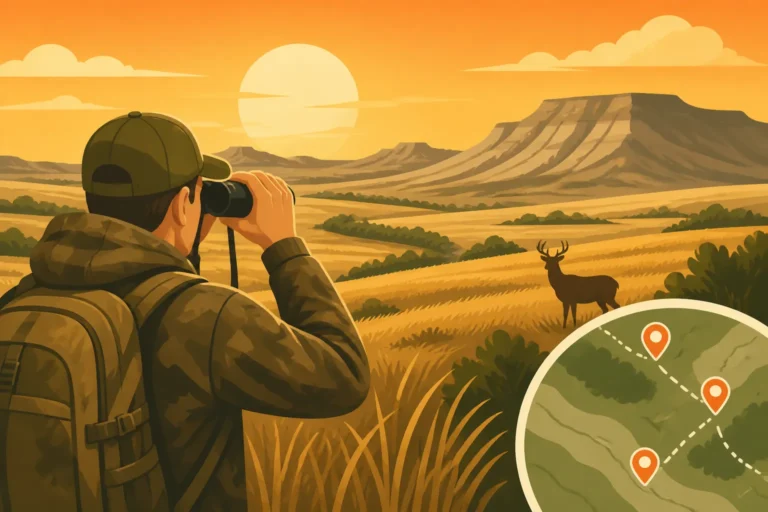
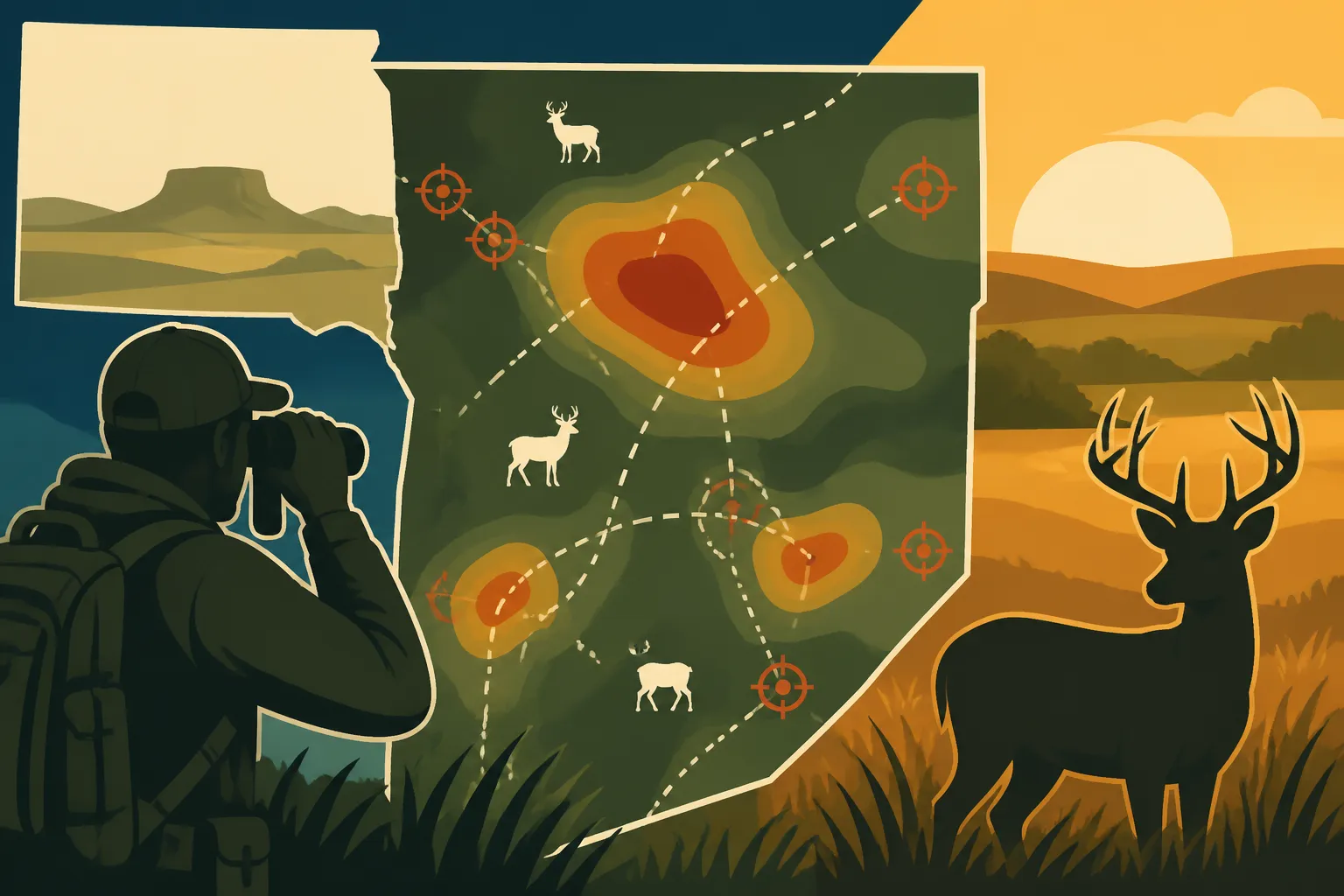
In today's hunting world, digital mapping tools are indispensable for identifying low-pressure areas. Platforms like GoHunt offer satellite imagery, landowner information, and often show public land boundaries, including WIAs. Before you even leave your couch, you can pour over these maps, looking for hidden corners.
Start by identifying WIAs that have limited road frontage or are bordered by difficult terrain. Look for small, unnoticeable parking areas, or even spots where you might have to walk in from a gravel road that isn't directly adjacent to the WIA. Use the aerial photos to pinpoint those dense, dark green patches of cover—cattail sloughs, shelterbelts, or plum thickets—that are far from any obvious access. Pay attention to contour lines for elevation changes; steep coulees or draws often deter casual hunters. You can also use GoHunt to scout for potential walk-in routes that avoid main trails, allowing you to approach a piece of cover from an unexpected direction. Think about how E-Scouting Walk-In Areas Before the Season can give you a significant leg up on the competition, helping you find those overlooked honey holes.
Adapting Your Tactics to Pressure
Knowing when and where pressure occurs is only half the battle. The other half is adapting your actual hunting tactics to these realities.
Counter-Intuitive Approaches on Busy Days
When every other hunter is driving a block of cover from one end to the other, perhaps it's time to do something different. On a heavily pressured WIA, game animals learn quickly. Pheasants become runners, often flushing far ahead or circling back behind the drive. Deer will use every scrap of cover to sneak out the back or hunker down.
Instead of joining the driving frenzy, consider still-hunting very slowly and quietly, focusing on small pockets of dense cover that drivers might overlook. For pheasants, this could mean working a dog meticulously through a small, isolated cattail patch adjacent to a larger field, rather than running the whole field. For deer, a slow, silent stalk into a known bedding area during the midday lull, using the wind and terrain to your advantage, can be incredibly effective. Sometimes, the best approach is to let other hunters do the work of moving the game, and then position yourself to intercept them as they try to escape. This requires patience and a willingness to break from traditional methods.
Leveraging Other Hunters' Movements
This strategy is often overlooked but can be highly effective. Other hunters, even if they're creating pressure, can actually work for you. Imagine a large WIA with multiple groups pushing through. Those groups are moving game. Pheasants will often flush wild and fly across property lines or circle into unpressured areas, or they might hole up in the thickest cover the drivers don't want to enter.
If you can anticipate the direction of a drive or the typical escape routes, you can position yourself strategically. For pheasants, this might mean setting up as a "blocker" on the downwind side of a large cattail slough that another group is pushing, or waiting for birds to pitch down into a smaller, adjacent patch of cover. For deer, if you know a particular draw or pinch point is a common escape route from a pressured area, you could set up a stand or ground blind quietly during the midday. This is about being smart and patient, understanding how game reacts to pressure, and using that knowledge to your advantage. It’s a nuanced approach to hunting that requires observing your surroundings more than just walking. You can learn a lot by paying attention to Hunting Pressure Patterns on Walk-In Areas and how game reacts to them.
Focusing on Overlooked Habitat
Every WIA has its prime cover—the big CRP field, the long shelterbelt, the obvious cattail slough. These are the areas that get hit hard. But what about the less obvious spots?
Look for small, isolated patches of cover, perhaps a fence line overgrown with weeds and brush, a small ditch, or a solitary plum thicket in the middle of a cut cornfield. These seemingly insignificant spots can hold surprisingly large numbers of pheasants, particularly after they've been pressured out of larger areas. For deer, look for dense brush in a less-than-ideal location, or a small pocket of timber far from water or typical food sources. These are the spots most hunters walk past. A good example is Shelterbelt Ends That Hold Late Birds. Sometimes, the best hunting isn't in the obvious "best" habitat, but in the small, ignored pockets where game feels secure from constant human intrusion. Using satellite imagery from GoHunt can help you identify these small, overlooked areas well before your hunt.
Long-Term Strategies for Consistent Success
While daily tactics are important, consistent success on South Dakota's WIAs often comes from a broader, more strategic approach.
Pre-Season Scouting Beyond the Obvious
The best time to understand pressure patterns and find unpressured spots is before the season even opens. Don't wait until opening morning. Spend time in late summer or early fall driving the gravel roads, identifying WIAs, and doing some serious e-scouting with tools like GoHunt. Look for WIAs that are landlocked by private land, requiring a longer walk, or those that have less-than-ideal parking. These are often indicators of lower pressure.
Walk the accessible edges of WIAs (if allowed and before season, respecting private property if bordering) to see how the cover lays. Note escape routes, potential bedding areas, and overlooked pockets. Pay attention to how the WIA connects to surrounding private land—game often uses WIAs as daytime cover but retreats to larger private fields for evening feeding. The more you know about an area before you hunt it, the better equipped you'll be to adapt to real-time pressure. Don't underestimate the power of Scouting South Dakota Public Ground Before the Season.
Diversifying Your WIA Portfolio
Don't put all your eggs in one basket. Instead of focusing on just one or two favorite WIAs, develop a "portfolio" of 10-15 different areas, ranging from small, easy-access spots to larger, more remote tracts. This diversity allows you to adapt to pressure. If you arrive at WIA #1 and it's already swarming with trucks, you can easily pivot to WIA #2, #3, or #4, which might be less pressured.
Having a range of options also allows you to hunt different types of cover. One WIA might be perfect for a quick afternoon hunt, while another requires a full day's effort. Some might be ideal for deer, others for pheasants. By spreading out your efforts and having backup plans, you significantly increase your chances of finding unpressured game, even on busy weekends. This means using the South Dakota Public Hunting Atlas to its fullest, identifying areas throughout a region, not just near one town.
Building Relationships
While the focus here is on public Walk-In Areas, the reality of hunting in South Dakota is that private land access is still king for many. Building relationships with local landowners, even if it's just for retrieving a bird or a deer that crosses onto their property, can be invaluable. Sometimes, these relationships can even lead to private land access down the road. But even if not, a good relationship means you might get insights into how game moves between their private land and an adjacent WIA, or if a particular WIA has seen a lot of recent pressure.
While it's outside the direct scope of WIA hunting, understanding the local dynamics, even through casual conversations at a gas station or diner, can provide critical information. Landowners are often happy to share general observations about game movement or local hunting pressure if you approach them respectfully and genuinely. It’s all part of becoming a more integrated and informed hunter in a region.
WIA Pressure Patterns & Counter-Tactics
| Pressure Pattern | Description | Counter-Tactic |
|---|---|---|
| Opening Weekend / Holidays | Highest hunter density, early morning rush, easily accessible areas quickly cleared. | Hunt midweek; target remote areas; enter late morning after initial rush; focus on difficult cover. |
| Weekend Rush (Saturdays/Sundays) | Consistent high pressure, especially near roads and easy access points. | Prioritize weekdays; walk further from access; target midday lulls; use digital maps (GoHunt) to find secluded spots. |
| Morning Push (10 AM Opener) | Hunters converge at legal shooting time, pushing game out of initial cover. | Wait for the first wave to pass; hunt areas that game will likely retreat to; focus on smaller, overlooked cover. |
| Midday Lull (1 PM – 3 PM) | Many hunters break for lunch or leave, reducing overall pressure. | Re-hunt previously pressured areas; still-hunt dense bedding cover; capitalize on returning game. |
| Evening Roost (Last Hours) | Hunters make final pushes, deer/antelope move to feed. Can be busy near feeding areas. | Position for escape routes; target dense security cover; hunt edges away from direct pressure. |
| Easy Access Points | Parking areas, obvious gates, well-worn trails attract most hunters. | Walk extra distance from any parking spot; find less obvious entry points; use terrain to your advantage. |
| Open/Easily Navigated Cover | CRP fields, thinner grass, accessible shelterbelts are popular and quickly worked. | Target dense cattail sloughs, plum thickets, thorny brush; brave difficult terrain; bring a tough flushing dog. |
Disclaimer
Hunting is an inherently unpredictable activity. This guide provides strategies based on observed patterns and common sense, but success is never guaranteed. Always prioritize safety, adhere to all South Dakota hunting regulations, and respect private property. Conditions can change rapidly due to weather, crop rotation, and game movement. Always verify specific WIA rules and access conditions before hunting.