Black Hills National Forest Hunting
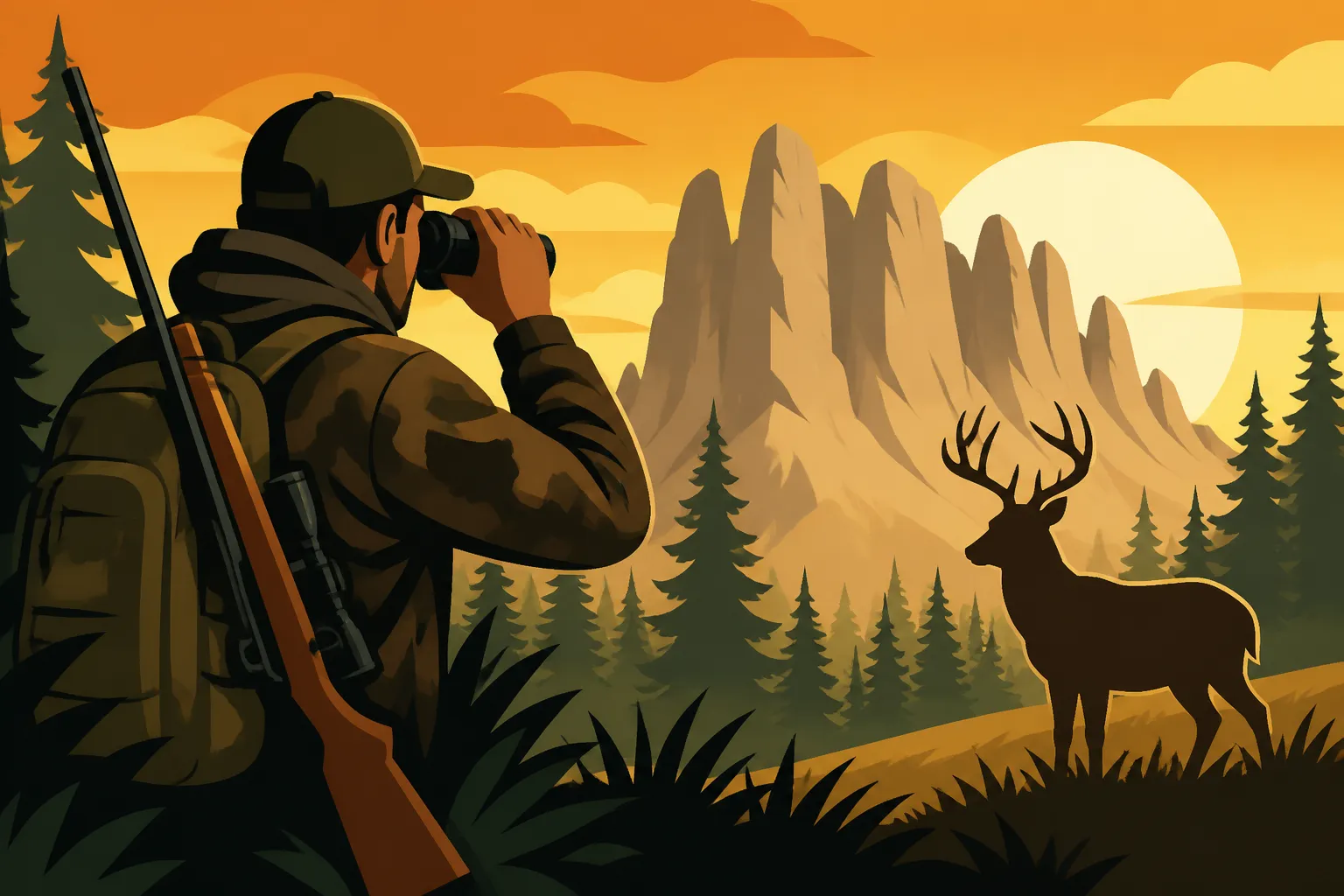
Hunting the Black Hills National Forest can feel like a completely different world compared to the vast, open prairies of South Dakota. Instead of endless grasslands and scattered sloughs, you're faced with dense Ponderosa pine forests, steep canyons, and winding mountain roads that can be both exhilarating and incredibly challenging to navigate. This unique environment requires a distinct approach, different gear, and a solid understanding of how game moves through timber and mountainous terrain. This comprehensive guide will walk you through everything you need to know to plan and execute a successful hunting trip in South Dakota's magnificent Black Hills.
Understanding the Black Hills National Forest Landscape
The Black Hills stand as an isolated mountain range rising abruptly from the surrounding plains, offering a dramatic shift in scenery and hunting opportunities. It's a truly special place, and understanding its distinct landscape is the first step to becoming a successful hunter here.
Geography and Terrain
Imagine trading the flat horizons of the prairie for rolling hills that quickly turn into steep, timbered slopes and deep, shadowed valleys. The Black Hills National Forest is predominantly covered in Ponderosa pine, creating a dense canopy that can make spotting game a real challenge. You'll encounter a significant difference in elevation, with some areas being relatively flat high plateaus, while others drop into rugged canyons and draws. This varied topography means you'll spend more time climbing, descending, and navigating thick timber than you would out east or west of the Hills. Knowing how to read these contours and use them to your advantage, whether for stalking or simply understanding game movement, is crucial. The ground itself is often rocky, uneven, and covered in pine needles, which can make for quiet walking if you're careful, but also tricky footing.
The western side of the Black Hills tends to be a bit drier and more open in spots, with some pockets of aspen and oak mixed into the pine, offering different habitat types. The central and eastern parts are generally denser with timber and steeper terrain. This difference can influence where certain game species prefer to spend their time, and it definitely impacts your access and visibility. Expect to work harder for your shots, but the reward of hunting in such a beautiful, rugged landscape is immeasurable.
Wildlife Diversity and Habitat
The Black Hills National Forest boasts a surprisingly rich diversity of wildlife, quite distinct from the prairie. While pheasants are king on the plains, here, you're looking at a big game hunter's paradise with strong populations of elk, both mule deer and white-tailed deer, and Merriam's wild turkeys. Beyond the popular big game, you also have opportunities for mountain lions and even some black bear. This incredible variety is directly tied to the diverse habitats within the forest.
The dense Ponderosa pine forests provide excellent cover and bedding areas for elk and deer, especially during the day. Interspersed within these vast timber stands are numerous meadows, clearings, and riparian zones along creeks and drainages. These open areas are crucial for grazing and foraging, drawing animals out, particularly during dawn and dusk. For elk, these clearings are often where you'll find them feeding, while the timber offers security. Turkeys utilize the pine forests for roosting and foraging for insects and seeds on the forest floor, and the scattered oak stands provide acorns, a vital food source. Understanding how these different habitat types are used by your target species throughout the day and across the seasons is fundamental to effective hunting.
Management and Zones
The Black Hills National Forest is managed by the U.S. Forest Service, which means it falls under federal land regulations in addition to state hunting laws. It's a large area, divided into several ranger districts, though for hunters, the more critical distinctions often come down to specific Game Management Units (GMUs) designated by the South Dakota Game, Fish and Parks (GFP). These units dictate specific season dates, tag allocations, and species availability.
For instance, elk hunting in the Black Hills is highly regulated, often requiring drawn tags for specific units. Deer hunting also has its own unit-specific rules, differentiating between East River and West River tags, even though the Black Hills technically sits on the "West River" side. It's vital to know which unit you're applying for and hunting in, as boundaries can sometimes be subtle on the ground, following ridges, roads, or even property lines. Always consult the current South Dakota GFP hunting handbook for precise unit descriptions and regulations before you head out. Understanding the general management philosophy – balancing timber harvest, recreation, and wildlife habitat – can also give you clues about where new clearings or dense regrowth might be holding game.
Navigating Access and Regulations
Hunting in a National Forest comes with its own set of rules and nuances, especially when it comes to vehicle access and camping. It’s not simply open range; careful planning is essential.
Motor Vehicle Use Maps MVUMs
If you're going to hunt in the Black Hills National Forest, consider the Motor Vehicle Use Map (MVUM) your bible. Seriously. These maps are absolutely critical for legal and responsible access. MVUMs show all the roads and trails that are legally open to motorized vehicles within the forest. What they don't show are the countless old logging roads, two-tracks, and ATV trails that might look like roads but are actually closed to public vehicle traffic. Driving on a closed road, even inadvertently, can result in a hefty fine and potential resource damage.
You can usually find free MVUMs online on the U.S. Forest Service website for the Black Hills or pick up paper copies at local Forest Service offices in towns like Custer or Spearfish. Study these maps meticulously before your trip, marking which roads are open and which are closed. This will guide your route planning and help you understand how far you might need to walk to access certain areas. Many hunters use mapping applications like onX Hunt, which often integrate MVUM data, allowing you to see your exact location relative to legal roads in real-time. This can be a lifesaver when you're deep in the timber and trying to decide if that faint track ahead is legal or not. Black Hills Forest Roads and Access
Dispersed Camping and Campgrounds
For many hunters, the appeal of the Black Hills is being able to truly immerse themselves in the wild, which often means camping right where they hunt. Dispersed camping, or "boondocking," is generally allowed in most areas of the Black Hills National Forest, offering a fantastic way to stay close to the action. However, there are rules. You typically need to be a certain distance from developed campgrounds, water sources, and paved roads. Always choose a campsite that has been used before, minimize your impact, and practice Leave No Trace principles. This means packing out everything you pack in, properly disposing of human waste, and leaving no trace of your presence.
Fire restrictions are also a serious consideration, especially during dry periods in late summer and fall. Check with the local Forest Service office for current fire danger levels and restrictions before lighting any campfire. There are also numerous developed campgrounds throughout the Black Hills National Forest that offer amenities like picnic tables, fire rings, and vault toilets, though these often require a fee and might be farther from prime hunting areas. Whether you opt for a rustic dispersed camp or a more amenities-rich campground, having a comfortable and legal camp setup is crucial for multi-day hunts. Black Hills Dispersed Camping Rules
General South Dakota Hunting Regulations
While you're within a National Forest, remember that all general South Dakota hunting regulations still apply. This isn't a free-for-all; you're bound by state laws concerning licensing, seasons, bag limits, tagging, and ethical hunting practices. For instance, blaze orange requirements are in effect for big game seasons, and knowing your legal shooting hours is non-negotiable.
It's easy to get caught up in the excitement of a hunt, but ignorance of the law is never an excuse. Always carry your valid South Dakota hunting license and any necessary tags. If you're a nonresident, ensure you understand the specific nonresident license costs and requirements. The South Dakota Game, Fish and Parks (GFP) website is an invaluable resource for current regulations, but a physical copy of the hunting handbook is often handy to carry in the field for quick reference. Make sure you understand how to properly tag an animal immediately after harvest and adhere to any carcass transport rules, especially related to CWD. South Dakota Hunter Education and Licensing
Key Game Species and Hunting Strategies
The Black Hills offers a diverse array of hunting opportunities, each demanding unique strategies tailored to the terrain and species behavior.
Elk Hunting in the Black Hills
Elk hunting in the Black Hills is arguably one of the most coveted experiences in South Dakota. Tags are highly sought after and often require years of building preference points or getting lucky in the draw. Once you secure a tag, the real work begins. Black Hills elk are notoriously tough to hunt due to the dense timber and steep terrain. They are experts at disappearing into the Ponderosa pines, often holding tight in thick cover.
Successful elk hunting here typically involves a combination of aggressive scouting, understanding elk vocalizations, and physical stamina. During the rut, calling tactics—bugling and cow calls—can be highly effective, especially in conjunction with strategic setups. You'll want to focus on areas with good feed (meadows, clearings) near dense bedding cover. Hiking ridgelines and glassing into drainages at first and last light can reveal feeding animals, but expect long stalks through challenging terrain once they retreat to the timber. Weather also plays a huge role; elk movement patterns can shift dramatically with changes in temperature or snowfall. It's a mentally and physically demanding hunt, but the thrill of hearing a bull bugle echo through the Black Hills timber is unmatched. Black Hills Elk Hunting Tactics and Calling Elk in Black Hills Timber
Deer Hunting Mule Deer and Whitetail
The Black Hills is unique in South Dakota for offering both mule deer and white-tailed deer hunting in the same general area, though their preferred habitats often differ. White-tailed deer tend to favor the denser timber, river bottoms, and draws, seeking cover and browse. They can be incredibly elusive in the thick pines, often requiring still-hunting techniques or setting up on well-used trails leading to and from feeding areas. Hunting the edges of clearcuts or natural openings can also be productive, particularly in the early morning or late evening.
Mule deer, while present, are less common in the deep timber and more often found on the more open, western fringes of the Black Hills, or in areas with patchy timber and sagebrush. They thrive in rugged, broken country where they can use their eyesight and impressive bounds to escape danger. Spot-and-stalk is a classic mule deer tactic, though glassing large areas can be challenging in the dense Black Hills timber. Focus on transition areas where timber meets more open country. Both species can be found utilizing similar food sources, but their comfort levels in dense cover versus open terrain will dictate your approach. Regardless of species, patience and a willingness to cover ground are essential for deer hunters in this rugged landscape. Black Hills and Custer State Park Deer
Wild Turkey Hunting
Wild turkeys, particularly the Merriam's subspecies, are abundant in the Black Hills, offering fantastic spring and fall hunting opportunities. These birds thrive in the Ponderosa pine forests, utilizing the tall trees for roosting and the forest floor for foraging. Spring turkey hunting is a popular pursuit, with hunters employing various calling techniques to lure in strutting gobblers. Locating roosted birds the evening before or early morning is often the key to success. You'll want to position yourself strategically before fly-down, often using terrain features and timber to conceal your approach.
Fall turkey hunting allows for either-sex tags and can involve different tactics, such as breaking up flocks and calling them back together, or simply patterning their feeding and travel routes. Turkeys in the Black Hills often stick to predictable patterns, moving between roosting areas, feeding grounds (often open clearings or areas with abundant acorns), and watering holes. Understanding these patterns and being able to imitate their calls effectively are the hallmarks of a successful Black Hills turkey hunter. The challenging terrain can make running and gunning difficult, so stealth and careful setup are often more effective. South Dakota Turkey Season Dates
Tools and Technology for Black Hills Hunters
Hunting in the Black Hills, with its complex terrain and federal land designations, practically demands the use of modern tools and technology to ensure a safe and successful trip.
Mapping and GPS Applications
Gone are the days when a paper map and compass were your only navigational aids. While those traditional tools are still vital backups, modern mapping and GPS applications have revolutionized hunting in places like the Black Hills. An application like onX Hunt is almost indispensable here. It provides detailed satellite imagery, topographic maps, and most critically, public/private land boundaries with different color overlays. This is invaluable for ensuring you're always on legal hunting ground, especially in areas where public and private parcels are intertwined.
Beyond land ownership, these apps typically show roads and trails, often including the MVUM data mentioned earlier, which is paramount for legal vehicle access. You can mark waypoints for your truck, camp, game sightings, or even a blood trail. The ability to track your movement and know your exact position in real-time, even without cell service, provides an immense safety net and strategic advantage in dense timber. Before heading out, download offline maps for your hunting area, as cell service can be spotty or non-existent in many parts of the Black Hills.
Essential Gear for Forest Hunts
Hunting in the Black Hills requires a gear list that’s adapted to the environment. Unlike the prairie where long-range optics and light layers might suffice, here, you'll need gear that stands up to varied conditions and dense cover. Layering is key for clothing, as temperatures can fluctuate wildly between early morning and midday, and the physical exertion of climbing can make you sweat even on a cold day. Expect to encounter brush and sharp branches, so durable, quiet outer layers are a must.
Your optics might differ too; while powerful spotting scopes are great for open country, a good pair of 8x or 10x binoculars with excellent light gathering capabilities will be more useful for picking apart thick timber and glassing smaller clearings. A quality backpack capable of carrying extra layers, water, food, and emergency supplies is non-negotiable. Don't forget a headlamp, fire starter, first aid kit, and an emergency shelter. Since elk and deer can be large animals, a robust game bag system and quartering tools are also crucial, especially if you're deep in the backcountry and need to pack out meat.
Scouting and Pre-Season Preparation
The Black Hills is not a place you want to show up to cold, especially if you're targeting big game. Pre-season scouting, both digital and on-the-ground, is absolutely vital. Start your e-scouting from home using online mapping tools. Look for areas with a good mix of timber, clearings, and water sources. Identify potential travel corridors, bedding areas on sheltered slopes, and feeding grounds. You can often spot old logging roads or clearcuts that might be holding deer or elk. Websites and tools like GoHunt provide valuable insights into draw odds and unit breakdowns, helping you pick areas with better success rates.
If possible, make a physical scouting trip before the season. Hike into areas you've identified, looking for actual game trails, rubs, scrapes, and droppings. Pay attention to water sources and natural funnels in the terrain. This not only familiarizes you with the topography but also helps you understand how animals are currently using the landscape. Scouting a South Dakota Unit From Home If an on-the-ground trip isn't feasible, spend even more time e-scouting and talking to other hunters who have experience in the area. The more intel you have before your boots hit the ground on opening day, the higher your chances of success.
Challenges and Considerations in the Black Hills
Hunting in the Black Hills offers incredible rewards, but it's not without its specific challenges. Being prepared for these hurdles will make your experience much more enjoyable and safe.
Navigating Steep and Timbered Terrain
One of the biggest differences between Black Hills hunting and prairie hunting is the physical demand. The terrain here can be genuinely steep, with significant elevation changes that will test your endurance. Add to that the dense Ponderosa pine forests, and navigation becomes a whole new ballgame. Visibility in thick timber is often limited to mere yards, making it easy to get disoriented, especially on overcast days or in unfamiliar areas.
You'll spend a lot of time walking uphill, side-hilling, and negotiating rocky, uneven ground. This demands sturdy, comfortable hiking boots with good ankle support. Planning your routes to minimize unnecessary elevation gain and using natural features like drainages or ridgelines as guides can help. Always pay attention to your surroundings, take note of distinct landmarks, and frequently check your GPS to maintain your bearings. Remember, getting a big game animal out of a steep, timbered canyon is often as challenging, if not more so, than taking it down. Proper planning for game retrieval is a must.
Dealing with Other Users and Pressure
The Black Hills National Forest is a popular recreational area, and during hunting season, you'll likely share it with more than just game animals. Hikers, mountain bikers, horseback riders, and other hunters all utilize the forest. This means you need to be extra vigilant about safety, identify your target positively, and understand that some areas, especially those easily accessible from main roads, will experience higher hunting pressure.
To mitigate this, many experienced Black Hills hunters are willing to walk farther, venture deeper into the backcountry, or explore less obvious access points. Hunting during weekdays or later in the season can also reduce encounters with other users. Always be courteous and respectful of others enjoying the forest. A friendly wave or nod goes a long way. If you find an area is already being hunted, it's generally good etiquette to move on and find another spot to avoid interfering with another party's hunt. Hunting Pressure Patterns on Walk-In Areas
Weather Variability and Safety
South Dakota weather is famously unpredictable, and in the Black Hills, this variability is amplified by the mountainous terrain. You can start your day in crisp, cool fall air and by midday be sweating in the sun, only for a sudden thunderstorm or snow squall to roll in an hour later. It's not uncommon to experience all four seasons in a single day during the fall hunting season.
This extreme variability necessitates meticulous preparation. Always pack layers of clothing, including waterproof and windproof outerwear. Carry extra food, water, and emergency fire-starting supplies. A sudden drop in temperature combined with rain or snow can quickly lead to hypothermia if you're not adequately prepared. Let someone know your hunting plan, including your exact location and expected return time. Cell service can be unreliable, so don't count on it for emergencies. A satellite messenger or personal locator beacon can be a worthwhile investment for safety in remote areas. Hypothermia Risk on Open Prairie
Specific Units and Hotspots General Guidance
While giving away secret hunting spots is against every hunter's code, we can certainly talk about general areas and types of terrain that tend to be productive within the Black Hills National Forest.
Common Hunting Units
The Black Hills National Forest is a large area, and South Dakota GFP divides it into specific hunting units for different species, particularly for big game like deer and elk. For deer, West River units like 402, 403, and 404 cover large portions of the Black Hills and often have tags available through the draw, with varying odds for residents and nonresidents. These units are characterized by their Ponderosa pine forests, steep canyons, and mixed timber, providing habitat for both whitetails and mule deer.
Elk hunting is even more unit-specific, with units like 401, 402, and 403 being the primary Black Hills elk units. These are highly competitive draws, reflecting the quality of the elk hunting. For turkeys, you'll often find that the entire Black Hills is considered a prime area, with birds distributed across most timbered zones. When planning, always refer to the latest GFP hunting handbook to confirm unit boundaries, season dates, and tag availability, as these can change year to year. Understanding the general character of each unit—whether it's more open, rugged, or densely timbered—can help you tailor your strategy.
Hunting Near Popular Towns
One of the benefits of hunting in the Black Hills is its proximity to charming towns that offer amenities and services. Towns like Custer, Hill City, and Spearfish are nestled within or very close to the National Forest boundaries. This provides easy access to supplies, lodging, and local expertise. However, this convenience also means that areas immediately surrounding these towns, especially those with good road access, tend to see higher hunting pressure.
If you're hunting near these population centers, consider venturing a bit farther off the beaten path. Look for areas requiring a longer walk-in or those accessible only by certain forest roads that might deter casual hunters. While a local diner can be a welcome treat after a long day in the woods, the solitude and success often come from seeking out the less-traveled areas. Use your mapping apps to find pockets of public land a few miles from the main highways or popular trailheads. Hunting Near Spearfish and Deadwood and Hunting Near Custer and Hill City Remember, just because an area is close to town doesn't mean it won't hold game; it just means you might need to work a little harder to find unpressured animals.
Black Hills Game Species and Hunting Tactics Overview
| Game Species | Primary Habitat | Common Hunting Tactics | Key Considerations |
|---|---|---|---|
| Elk | Dense Ponderosa Pine, clearings, riparian zones | Calling (bugling, cow calls), spot-and-stalk | Physical exertion, challenging draw odds, timber density |
| White-tailed Deer | Dense timber, river bottoms, thick draws | Still-hunting, stand hunting on trails, drives | Excellent cover, keen senses, often nocturnal movement |
| Mule Deer | Open fringes, patchy timber, rugged breaks | Spot-and-stalk, glassing clearings and slopes | Less common in deep timber, utilize vision for escape |
| Wild Turkey | Ponderosa Pine forests, oak stands, meadows | Calling (gobbles, yelps), roost hunting, patterning | Roosting trees, food sources, spring and fall seasons |
| Mountain Lion | Rugged, rocky areas, dense timber | Hounding (specialized), incidental encounters | Very elusive, highly regulated, specialized permits |
| Black Bear | Dense timber, berry patches, riparian areas | Baiting (specialized), spot-and-stalk | Opportunistic, highly regulated, draw tags |
Disclaimer
This article is for general informational purposes only and does not constitute professional advice. Laws, prices and regulations vary by location and change over time. Consult a qualified professional for guidance on your specific situation.