Corner Crossing Rules in South Dakota
One of the trickiest, most frustrating situations a hunter can face on the vast South Dakota landscape is standing at a public land corner, looking across private property to another piece of public ground, and wondering: "Can I just step over that fence? Is that corner crossing legal?" It’s a question that has plagued hunters for years, leading to confusion, fear of prosecution, and missed opportunities. This guide is here to break down the complexities of corner crossing rules in South Dakota, helping you understand the legal nuances and practical considerations so you can hunt confidently and ethically.
Understanding the "Checkerboard" Landscape and Corner Crossing
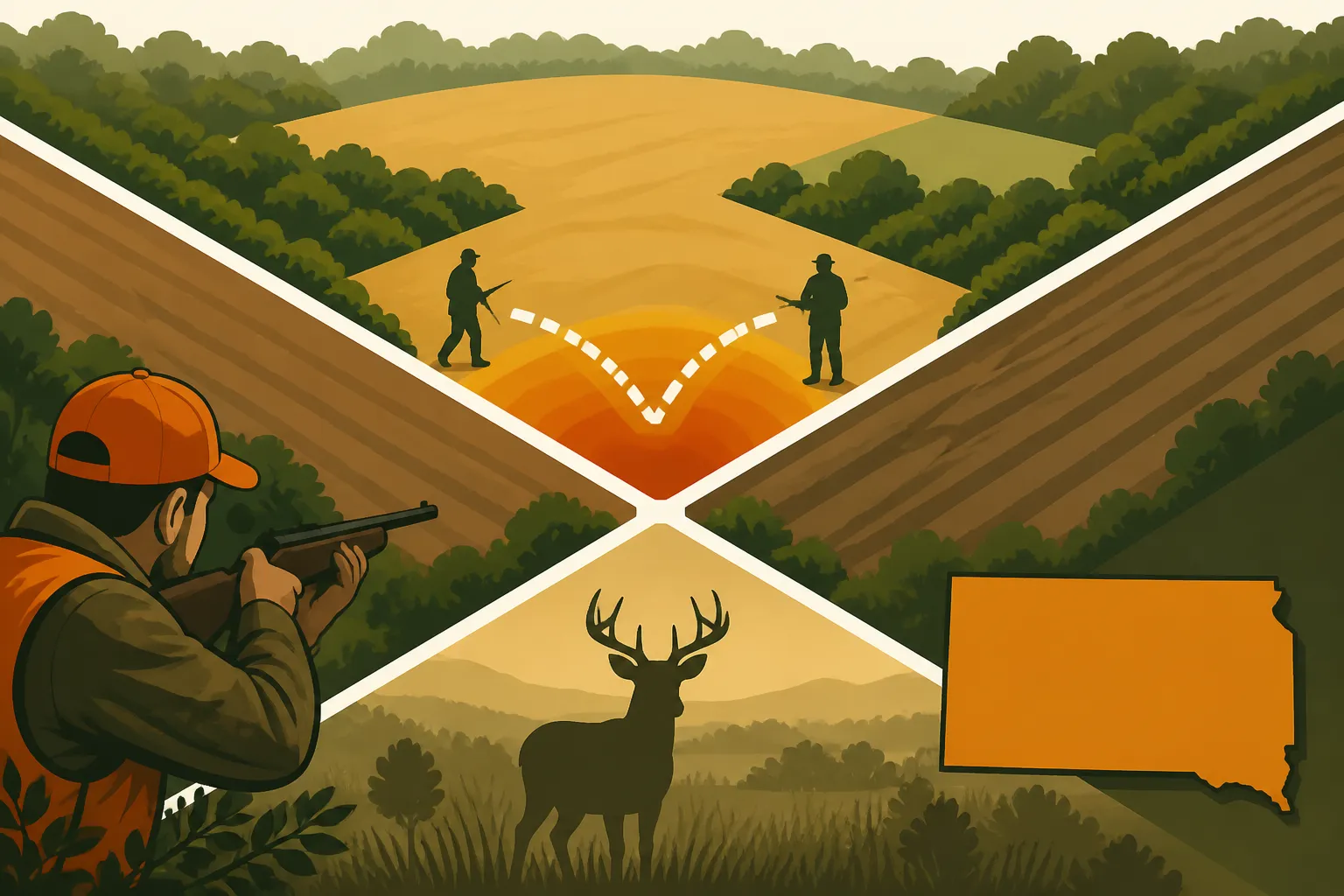
South Dakota, particularly in its western reaches, often presents a unique land ownership pattern that looks like a giant checkerboard. Picture a map with alternating squares of public and private land, often one square mile sections, touching at a single corner point. This isn't just a quirky geographical feature; it's a legacy of historical land grants and homesteading, designed to distribute land while reserving some for public use, like grazing or resource extraction. The problem arises when two pieces of public land meet at one of these corners, with private land bordering them. You might be standing on public land, seeing another public parcel just a few feet away across that corner, but without physically touching any private ground. This is the heart of the "corner crossing" dilemma.
The Nuance of Airspace and Ground Contact
The legal argument around corner crossing often revolves around a very specific point: whether traversing the "airspace" directly above the corner where public lands meet, without physically touching the private land, constitutes trespass. For many hunters, it seems intuitive—if your feet don't touch private soil, how can you be trespassing? Yet, traditional property law often extends ownership not just to the ground but also to the airspace above it, sometimes conceptually "to the heavens and to the center of the earth." This age-old legal principle is where the friction truly begins.
Imagine drawing an invisible line straight up from the corner post. If you swing your leg over that corner, even if you try to keep your boot from touching the soil on the private side, you are technically passing through the private landowner's airspace. This is a point of intense debate and legal scrutiny. Hunters feel like they're being denied access to public resources by a technicality, while landowners argue they have a right to control all aspects of their property, including the air above it. The frustration is palpable on both sides, and it makes accessing prime hunting ground feel like navigating a minefield.
Why Corner Crossing Matters So Much to Hunters
For hunters, especially those chasing big game in the vast expanses of the West River country, corner crossing isn't a minor inconvenience; it can be the difference between a successful hunt and a wasted trip. Often, these checkerboard patterns isolate large blocks of public land, making them practically inaccessible without crossing a corner or securing permission from a private landowner. Think about Reading Prairie Coulees for Mule Deer or Spot-and-Stalk Antelope on Open Prairie – these tactics often rely on covering significant ground, and being blocked by an inaccessible corner can cut off critical movement corridors or glassing points.
The alternative—asking for permission—isn't always feasible. Landowners might be absent, unwilling, or simply unreachable. This leaves hunters feeling stuck, with public land tantalizingly close but effectively off-limits. The stakes are high: unauthorized crossing, even if unintentional, can lead to charges, fines, and the loss of hunting privileges, which is a devastating prospect for anyone passionate about the outdoors. This legal ambiguity casts a long shadow over hunt planning and execution.
The Legal Landscape in South Dakota
South Dakota has been at the forefront of the corner crossing debate, with recent legal battles highlighting the complexities and lack of clear, universally accepted federal or state guidance. Unlike some states that might have specific statutes, the legal interpretation in South Dakota often falls back on general trespass laws and common law principles regarding property boundaries. It's not always a straightforward "yes" or "no" answer, which only adds to the anxiety for hunters.
South Dakota's Trespass Laws and Corner Crossing
In South Dakota, general trespass laws typically define what it means to unlawfully enter or remain on another's property. The issue with corner crossing is that it doesn't fit neatly into the typical definition of "entering or remaining." Instead, it hinges on whether the act of passing through the airspace over a private corner, without ground contact, constitutes a violation. South Dakota's laws, like many states, aim to protect private property rights, and without explicit legislation clarifying corner crossing, individual counties or even specific law enforcement officers might interpret the law differently. This inconsistency is a major headache for hunters trying to do the right thing.
The core of the legal question is often whether one has a reasonable expectation of privacy and control over the airspace immediately above their property at a corner where public lands meet. This isn't about jumping fences or driving across fields; it's about the mere act of stepping over an invisible boundary. The lack of a clear, bright-line rule from the state legislature or a definitive high court ruling specifically on South Dakota corner crossing makes it a gray area, leaving both hunters and landowners in a bind.
Practical Legal Realities for Hunters
The real-world consequence for a hunter is the risk of being cited for trespass, even if they believe they acted lawfully. Law enforcement, facing ambiguous laws, may err on the side of caution or local landowner sentiment. A citation can lead to court appearances, legal fees, and potential fines, not to mention the stress and time commitment involved in defending oneself. Even if a case is eventually dismissed, the process itself is a significant deterrent.
This legal uncertainty also influences access to public hunting lands. Many hunters, rather than risk a run-in with the law or an angry landowner, simply avoid sections of public land that require corner crossing, effectively reducing the amount of accessible public hunting ground. This dynamic puts a heavy burden on hunters, who often invest considerable time and money planning a South Dakota hunt, only to find their access curtailed by legal ambiguity. Hunting Pressure Patterns on Walk-In Areas already mean hunters are looking for less-trafficked spots, and corner-locked public land often falls into this category, but getting to it is the challenge.
| Aspect of Corner Crossing | Hunter's Perspective | Landowner's Perspective | Legal Status (General SD) |
|---|---|---|---|
| Physical Contact | "My feet didn't touch their land, so it's not trespass." | "They passed over my property, regardless of ground contact." | Ambiguous, often interpreted as trespass if airspace is crossed. |
| Airspace Rights | "Public land should be accessible at corners." | "My property rights extend vertically over my land." | Generally accepted, but specific application at corners is debated. |
| Intent to Trespass | "I was trying to stay legal and access public land." | "Their actions were a deliberate encroachment." | Intent can matter in court, but crossing itself may be seen as act. |
| Enforcement Risk | Moderate to High risk of citation due to ambiguity. | Potential for enforcement action if reported. | Varies by jurisdiction and law enforcement interpretation. |
| Impact on Access | Significantly limits access to public land. | Protects property from perceived intrusion. | Effectively limits public land access without clear rules. |
Practical Implications for South Dakota Hunters
The unresolved legal questions surrounding corner crossing create a minefield for hunters in South Dakota. It’s not just about avoiding a ticket; it's about navigating a complex ethical and practical landscape where the rules aren't always clear, and the consequences can be severe.
Navigating Access and Avoiding Conflict
The primary implication for hunters is the challenge of finding legal and ethical access to public land. When you’re planning a hunt, especially for species like pronghorn or mule deer that roam vast, open country, you're constantly looking at maps. You might spot what looks like a perfect piece of public land, only to realize it's surrounded by private property, with the only "access" being at a corner intersection. This forces a difficult decision: risk it, try to find the landowner, or simply give up on that piece of ground.
The smart hunter will always prioritize avoiding conflict. Confrontations with landowners can quickly escalate, ruining a hunt and potentially leading to legal trouble. It’s much better to exhaust all other options or find alternative public land than to push the boundary at a contested corner. This can mean driving further, walking longer distances into public ground that has clear access, or even completely changing your hunting plans. Hunting South Dakota Walk-In Areas or National Grasslands Hunting in South Dakota are fantastic resources for hunters to find clearly accessible public land, precisely because they mitigate these access headaches.
The Role of Mapping Technology
Modern mapping applications have become indispensable tools for hunters, and they are particularly relevant when dealing with checkerboard land ownership. Apps like onX Hunt and GoHunt provide detailed land ownership overlays, showing public and private boundaries with incredible precision. This technology is a game-changer because it allows you to visualize exactly where those tricky corners are. You can see public land, private land, and the specific property lines.
However, even with these powerful tools, the legal question of corner crossing remains. While onX Hunt might show you where the four corners meet, it can't tell you if crossing the airspace there is legal or illegal in South Dakota. What these apps can do is help you identify alternative legal access points, map out routes that completely avoid corner crossing, and confirm who owns the adjacent private parcels so you can attempt to seek permission if that's your chosen route. They prevent accidental trespass onto private ground you thought was public, but they don't solve the corner-crossing conundrum itself.
Finding Solutions: Asking Permission and Respecting Boundaries
Given the ambiguity, the safest and most respectful approach to corner crossing is to either avoid it entirely or seek explicit permission from the private landowner whose property forms the corner. This can be daunting, but it's often the most reliable way to gain access without fear of legal repercussions. It means doing your homework: identifying landowners via county records (which onX Hunt and GoHunt can assist with), making phone calls, or even knocking on doors.
Even if permission is denied, or if you can't reach the landowner, you've shown due diligence and respect. Remember, maintaining positive relationships with landowners is crucial for the future of hunting access. A bad experience with one hunter can sour an entire community on public access for everyone. Sometimes, respecting a boundary, even one that feels unfair, is part of being a responsible steward of the hunting tradition. It means looking for other public access points, even if they require Walking In Before Legal Shooting Time or Parking Away From the Cover You Hunt.
Navigating Corner Crossing Legally and Ethically in South Dakota
Dealing with corner crossing effectively means understanding the risks, utilizing your tools wisely, and adopting a proactive, ethical mindset. It’s about being prepared and making informed decisions rather than guessing.
The Importance of Due Diligence
Before you even head out to the field, thorough research is your first line of defense. Start by meticulously studying land ownership maps. The South Dakota Game, Fish and Parks (GFP) public hunting atlas is an excellent resource, often available online and as a downloadable app. Combine this with detailed satellite imagery and property line overlays from onX Hunt or GoHunt. Identify any potential corner-crossing scenarios on your planned route.
Once identified, make a plan. Is there another way around? Can you access the public land from a different side that has clear, legal entry? If corner crossing seems unavoidable for a particular parcel, try to identify the landowners of the adjacent private property. County assessor websites often have public records that can help you find names and contact information. Reaching out beforehand, explaining your intentions, and asking for explicit permission is always the best course of action. Even if you only plan to "step over" the corner, permission solidifies your legal standing.
Strategies for Lawful Access
When faced with a corner-locked public parcel, consider these strategies:
- Seek Direct Permission: As mentioned, this is paramount. A simple phone call or a polite visit can often unlock access. Be respectful, be brief, and be prepared for a "no." A "no" simply means you need to find another way.
- Utilize Designated Access Points: Look for Game Production Areas (GPAs) or Walk-In Areas (WIAs) that might be nearby. These are clearly marked and managed for public access, often avoiding the corner-crossing issue entirely. Even if it means a longer walk, it’s legal and hassle-free. Scouting South Dakota Public Ground Before the Season is key to identifying these.
- Explore Public Road Rights-of-Way: In some areas, public roads or section lines may provide an alternative. Research South Dakota's specific rules regarding hunting from or accessing land via road rights-of-way, as these can vary. While you can't typically shoot from a vehicle or the road surface, walking the unimproved right-of-way (the ditch or shoulder) to reach public land might be permissible, but this too has nuances and can be context-dependent.
- Avoid Ambiguous Corners Entirely: If you can't get permission and there's no clear, alternative legal access, the safest bet is to simply avoid that specific public parcel. It’s frustrating, but it’s better than risking a trespass citation. There's plenty of other public ground in South Dakota, such as National Grasslands Hunting in South Dakota, that offers clear access.
Upholding Ethical Hunting Standards
Beyond the legalities, there's an ethical component to corner crossing. As hunters, we are guests on the land, whether public or private. Our actions reflect on the entire hunting community. Pushing legal boundaries, or worse, intentionally trespassing, erodes trust with landowners and the non-hunting public. It fuels anti-hunting sentiments and can lead to even stricter access restrictions in the future.
By prioritizing ethical behavior, seeking permission, and respecting all property boundaries, even those that seem arbitrary, we demonstrate responsibility and professionalism. This not only safeguards our individual hunting privileges but also helps protect the future of hunting access for everyone. Remember, your actions in the field contribute to the perception of hunters as a whole. Being a courteous, informed, and law-abiding hunter helps build bridges, not burn them.
Disclaimer
This article is for general informational purposes only and does not constitute professional advice. Laws, prices and regulations vary by location and change over time. Consult a qualified professional for guidance on your specific situation.