Late-Season Hunting in South Dakota Snow
The first snowfall of winter in South Dakota, especially deep into the season, can feel like it slams the door shut on your hunting dreams. You’ve put in countless hours earlier in the fall, and now, with everything blanketed in white and temperatures plummeting, it’s easy to feel defeated, wondering if all the game has simply vanished. But here's the honest truth: late-season hunting in the snow isn't just possible, it often presents some of the most unique and rewarding opportunities for those willing to brave the elements and adapt their strategies. This guide will walk you through precisely how to tackle the challenges and capitalize on the hidden advantages that come with a South Dakota winter wonderland.
Understanding the Late Season Challenge
When the landscape transforms into a vast expanse of white, it's more than just a scenic change; it's a fundamental shift in the hunting game. Many hunters pack it in, assuming the deep cold and snow make success impossible, but they're missing out on a crucial understanding of how game animals react to these conditions. It's a time of true survival for wildlife, and their predictable patterns become both a challenge and an opportunity for the prepared hunter.
The Impact of Deep Snow on Game Movement
Imagine trying to navigate through knee-deep snow all day long. It's exhausting, right? The same goes for pheasants, deer, and even coyotes. Deep snow, especially the heavy, wet kind that piles up after a blizzard, significantly restricts the movement of all game animals. This isn't just about how fast they can run; it's about how far they're willing to travel for food, water, and shelter. Their energy expenditure skyrockets, forcing them to become incredibly efficient. You won't find deer randomly browsing across wide-open fields as much, nor will pheasants be flitting between scattered patches of cover. Instead, they’ll concentrate their activity into smaller, more protected areas where resources are readily available and travel is minimized.
This restriction in movement can be a huge advantage for hunters. Instead of having to cover vast tracts of land, you can focus your efforts on these bottleneck areas. Deep drifts can funnel animals into specific draws, along fence lines, or through narrow strips of cover, making their travel corridors much more predictable. For a hunter with a good map and an understanding of the terrain, like those found on the GoHunt platform, these snow-bound areas become a puzzle you can solve, rather than an insurmountable obstacle. The key is recognizing that "restricted" doesn't mean "absent"; it means "concentrated."
The Harsh Reality of South Dakota Winter Weather
Let’s be honest, South Dakota winters aren’t for the faint of heart. The cold is piercing, the wind can be relentless, and visibility can drop to near zero in a sudden squall. Beyond the deep snow, you're dealing with temperatures that can hover in the single digits, or even below zero, for days on end. Wind chills can make it feel thirty or forty degrees colder, biting through inadequate layers. This isn't a casual stroll; it's an expedition. Frostbite, hypothermia, and equipment failures are real threats if you're not prepared.
The psychological toll can be just as challenging. The sheer effort of walking through deep snow, the constant battle against the cold, and the often-sparse sightings can wear down even the most seasoned hunter. It takes a certain level of grit and determination to keep pushing when your fingers are numb, and your eyelashes are frosting over. But here’s the secret: the vast majority of other hunters are at home, warm and dry. This means less pressure on the game and potentially undisturbed areas ripe for the taking. The harsh conditions weed out the casual participants, leaving the dedicated to reap the rewards.
Why Birds and Bucks Change Habits
It’s not just about energy conservation; game animals fundamentally alter their daily routines and habitat choices when winter hits hard. For pheasants, the open fields they frequented in October are now death traps, offering no protection from raptors or the biting wind. They'll gravitate towards the thickest, densest thermal cover they can find – think massive cattail sloughs, dense shelterbelts, and unharvested standing corn that acts as a natural windbreak. Their feeding schedule might shift too, often coming out later in the morning after the sun has warmed the air slightly, and returning to cover well before dark. Understanding these shifts is crucial. For instance, rather than hitting fields at dawn like you might during South Dakota Pheasant Hunting Tactics for the Opener, late season demands a more tactical approach to prime habitat.
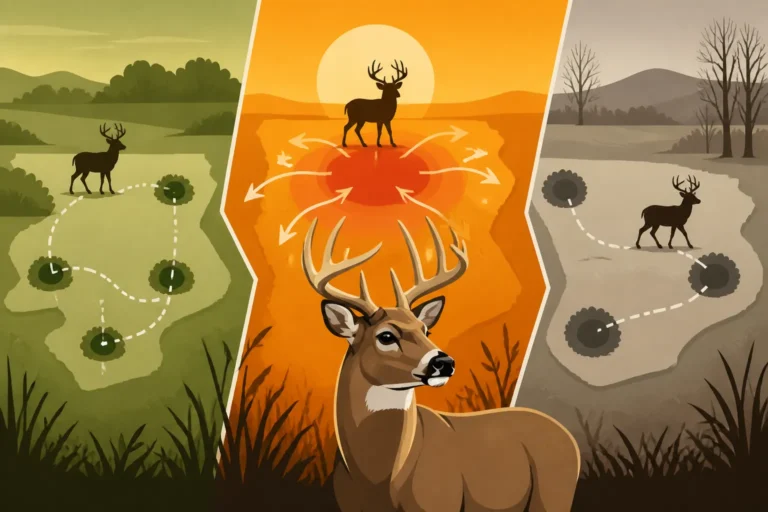
Deer, particularly whitetails, will seek out the shelter of river bottoms and deep draws, especially where there's timber or heavy brush to break the wind and provide browse. Mule deer, often found on the more open west river breaks, will still seek out coulees and south-facing slopes that get more sun and shed snow faster, but they'll become even more localized to areas with accessible forage. They’ll move less, conserving energy, often bedding down earlier and staying put longer. Their activity will revolve around food sources that are still accessible – alfalfa, corn, or even woody browse like dogwood and willow. These changes aren't random; they're driven by an instinct to survive, and by understanding them, you can dramatically narrow down your search areas.
Reading the Snow and Landscape
The snow, which initially seems like an impediment, actually becomes your most valuable scouting tool in late-season South Dakota. It's a fresh slate, a canvas upon which every animal leaves its story. Learning to read these clues can give you an incredible advantage, revealing secrets that are invisible in the green or brown landscape of earlier seasons.
Interpreting Tracks and Sign
Fresh snow is a tracking paradise. Every deer, pheasant, coyote, or rabbit leaves a clear, undeniable record of its passage. Your first job is to distinguish between old and fresh tracks. Fresh tracks will have crisp, sharp edges, whereas older tracks will be rounded by wind and sun. The depth of the track can also tell you about the animal's weight and the firmness of the snow. A deep, clear track often indicates recent activity. Pay attention to the direction of travel, but also the gait. Is the animal walking calmly, or did it bound away, indicating it was spooked?
Look for patterns. Are there multiple sets of pheasant tracks converging on a thicket? That's a strong indicator of a roosting area or a primary feeding spot. Are deer tracks crisscrossing a small draw, perhaps with rubs or browsed vegetation nearby? That’s a bedding or feeding area. The size of the track can give you clues about the animal itself – a huge pheasant track might indicate a mature rooster, while a larger deer track could belong to a significant buck. Don't just look for tracks, look for context. Scrapes under a tree, feathers near a cattail edge, or droppings along a game trail all paint a more complete picture of recent animal activity and where they're spending their precious energy.
Identifying Prime Winter Cover
In the late season, cover is not just cover; it's survival cover. Pheasants need dense, tall vegetation that provides thermal insulation from the bitter wind and snow, and overhead protection from aerial predators. Think tall, heavy cattail sloughs, especially those with some open water that creates a microclimate. Thick shelterbelts, particularly those with multiple rows of evergreens or dense shrubbery like cedar, honey locust, or plum, offer excellent windbreaks. Unharvested corn or milo fields become crucial sanctuaries, providing both cover and food. These are the places pheasants will gravitate towards, often holding tight rather than flushing wildly. Knowing how to effectively hunt these areas, such as Working South Dakota Shelterbelts for Roosters, becomes absolutely vital.
For deer, prime winter cover means areas that break the wind, offer some sunlight exposure, and provide accessible browse. South-facing slopes are gold because they catch more sun and often melt off faster, exposing forage. Dense timber, especially in river bottoms like those explored in South Dakota Whitetail Hunting in River Bottoms, provides excellent thermal cover. Deep draws and coulees with thick brush or pockets of trees also offer vital protection. Use topographical maps, perhaps from GoHunt, to identify these features, and then physically scout for sign. Don't underestimate the smallest patch of dense cover; in a brutal winter, even a small thicket can be a critical survival spot.
Using Topography to Your Advantage
Topography isn't just about hills and valleys; it's about how the land interacts with the wind, sun, and snow. In winter, this interaction dictates where game will be. Wind is a deer’s worst enemy, robbing them of precious body heat. They will always seek shelter from it. This means looking at the leeward side of hills, the downwind side of dense timber, or inside deep, winding coulees. When you're glassing for deer, especially with snow on the ground, focus on these protected areas.
Similarly, sun exposure is key. South-facing slopes absorb more sunlight, making them warmer and often melting off snow more quickly, exposing vegetation. This is why deer will often bed on these slopes during the day. As you plan your approach, consider how the sun will hit the land. When hunting pheasants, a sunny side of a cattail slough might be where they come out to sun themselves in the late morning. Use services like GoHunt or similar mapping tools to identify these features before you even step foot in the field. Understanding how terrain creates microclimates is a game-changer for Glassing South Dakota Breaks at First Light or any winter hunt.
Essential Gear for Cold Weather
Late-season hunting in South Dakota snow demands a gear strategy that goes beyond your typical early-fall setup. The wrong clothing or equipment isn't just uncomfortable; it can be dangerous. You need to be prepared for everything from single-digit temperatures to whiteout blizzards, ensuring every piece of gear serves a purpose in keeping you warm, dry, and safe.
Layering Systems for Extreme Cold
Forget your grandpa’s heavy wool coat as your only insulation; modern layering is about versatility and adaptability. The core principle is simple: trap air, manage moisture.
- Base Layer: This is your moisture-wicking layer, closest to your skin. Merino wool or synthetic fabrics are excellent as they pull sweat away, preventing that chilling effect when you stop moving. Avoid cotton at all costs; once wet, it loses all insulating properties.
- Mid-Layers: These are your primary insulation layers. Fleece jackets, down vests, or synthetic puffy jackets are perfect. You might wear one or two, depending on the temperature and your activity level. They trap warm air and provide significant warmth.
- Outer Shell: This is your protective barrier against wind, snow, and moisture. It needs to be waterproof and windproof, but also breathable to prevent sweat buildup. Gore-Tex or similar membrane fabrics are ideal. Look for features like pit zips for ventilation when you're exerting yourself.
The beauty of layering is the ability to adjust on the fly. As you start walking through deep snow, you might shed a mid-layer to prevent overheating and sweating. When you stop to glass or sit for a stand, you can quickly add it back. Don't forget extremities: a warm hat that covers your ears, insulated gloves or mittens (often a thin liner glove under a thick outer one), and a neck gaiter or balaclava are non-negotiable for Staying Warm in a December Blind.
| Item Type | Material Recommendation | Key Function | Why it's Critical |
|---|---|---|---|
| Base Layer | Merino Wool / Synthetic | Wicks Moisture, Light Insulation | Prevents chilling from sweat; regulates body temperature |
| Mid-Layer | Fleece / Down / Synthetic Insulation | Primary Warmth, Traps Air | Provides significant insulation; easily adjustable |
| Outer Shell | Waterproof/Windproof Breathable (e.g., Gore-Tex) | Protects from Elements | Keeps you dry and shielded from wind; essential for safety |
| Headwear | Insulated Beanie / Balaclava | Heat Retention | Prevents significant heat loss from the head |
| Gloves/Mittens | Insulated, Waterproof | Hand Warmth, Dexterity | Protects against frostbite; crucial for gun handling |
| Footwear | Insulated, Waterproof Boots | Foot Warmth, Dryness, Support | Prevents frostbite; maintains comfort and performance |
Footwear and Traction in Snow
Your feet are your foundation, and in deep snow, they face a double threat: cold and wet. Insulated, waterproof boots are non-negotiable. Look for boots with at least 800 grams of Thinsulate, and for really brutal conditions, 1200-1600 grams might be more appropriate. Ensure they are tall enough to prevent snow from coming over the top, or pair them with gaiters. The waterproofing needs to be robust, whether it's a Gore-Tex liner or another proprietary membrane. Nothing ends a hunt faster than cold, wet feet.
Traction is equally important. Icy patches hidden under fresh snow, or steep, snow-covered coulees, can lead to dangerous slips and falls. Boots with aggressive tread patterns are a must. Consider adding slip-on traction devices like Yaktrax or Microspikes for truly treacherous conditions, especially when navigating steep terrain or icy approaches. And don't forget good quality wool or synthetic blend socks – multiple pairs are often wise, keeping one dry set in your pack. For prolonged walking in heavy snow, like when you're Walking and Blocking South Dakota Cattail Sloughs, the right footwear makes all the difference in your comfort and endurance.
Optics and Electronics for Winter Hunting
Winter conditions can be tough on your gear. Fogging binoculars, frozen rangefinders, and dead phone batteries are common frustrations. Invest in quality optics that are purged with nitrogen or argon to prevent internal fogging. Keep lens covers on until the moment you need to use them, and store binoculars inside your jacket when not in use to keep them warm. A compact, powerful pair of binoculars is key for scanning those vast, snow-covered plains or picking apart dense cover for a glimpse of game.
Electronics require special attention. Cold drains batteries rapidly. Always carry spare batteries for your headlamp, GPS, and rangefinder, and keep them in an inner pocket close to your body heat. Your smartphone is a critical safety tool, offering maps, communication (where Cell Coverage in West River Country allows), and emergency functions. Keep it in a waterproof case and close to your body heat. A portable power bank is also a wise investment. Consider using a dedicated GPS unit in areas with spotty cell service, as relying solely on your phone can leave you stranded if the battery dies. Apps like GoHunt are invaluable for navigating and identifying public vs. private land, even in whiteout conditions, but they too depend on a charged device.
Tactics for Pheasants in Deep Snow
Pheasant hunting in late-season snow is a different beast entirely. The birds are smarter, tougher, and significantly more concentrated. You can’t just walk through stubble fields hoping for a flush; you need a strategic approach that leverages their survival instincts.
Focusing on Heavy Thermal Cover
When bitter winds howl and snow piles up, pheasants abandon less protected areas for the thickest, densest cover available. This means focusing your efforts almost exclusively on large cattail sloughs, particularly those with standing water that provides a warmer microclimate. These are the fortresses where roosters will hold tight, often until you're right on top of them. Other prime locations include massive shelterbelts with several rows of trees and dense undergrowth, unharvested standing corn, and thick, brushy creek bottoms. These areas offer both protection from predators and insulation from the cold.
Hunting these dense covers requires a methodical approach. Don't be afraid to work slowly and thoroughly. Birds often won't flush until they absolutely have to, sometimes even running ahead of dogs for considerable distances. If you're working a smaller patch of cover, ensure you have blockers strategically positioned at the escape routes. For larger areas, like a vast cattail slough, you might need a team to push it effectively. Remember, late-season birds are primarily concerned with warmth and safety, so they will be found where these needs are best met. For more specifics on these types of areas, look into guides on Late-Season South Dakota Pheasants in Heavy Cover.
Driving Pheasants in Cattail Sloughs
Driving cattail sloughs in the snow is arguably the most effective late-season pheasant tactic. The snow provides clear evidence of bird entry and exit points, helping you to position your hunters. A good strategy involves having drivers slowly push through the densest part of the slough, while blockers are set up downwind at the end, covering potential escape routes. The key is to maintain a consistent, slow pace, allowing dogs to work thoroughly and ensuring birds don’t slip past the sides.
Communication is paramount during a drive. Use radios to coordinate movements, especially in large sloughs where visibility can be limited. Anticipate where birds are likely to flush – often at the very end of the cover, or where the cover thins out. Be prepared for birds to get up quickly and fly with the wind, making for challenging shots. The deep snow can make walking incredibly strenuous, so pace yourself and take breaks. This is where your physically fit hunting partners and well-conditioned dogs truly shine. For a deep dive into successful slough tactics, check out Pushing a Cattail Slough With Blockers.
Working Food Sources and Shelterbelts
While thermal cover is king, pheasants still need to eat. In snowy conditions, they will gravitate towards accessible food sources that are close to their heavy cover. This often means unharvested standing corn, milo fields, or even CRP fields where enough residual grain or seeds remain. The edges of these food plots, particularly where they meet a dense shelterbelt or slough, are high-traffic areas. Pheasants will often move from their thermal cover to feed in the late morning or early afternoon when temperatures are at their highest.
When working shelterbelts, particularly those adjacent to food sources, pay close attention to the ends and any internal breaks or thick pockets. These are prime holding spots for cunning roosters trying to evade pressure. Again, slow and steady is the name of the game. For shelterbelts that are multiple rows deep, you might consider having a few hunters walk the middle, while others cover the outer edges, especially if birds are known to run ahead. These birds have survived weeks of hunting pressure and harsh weather, making them exceptionally wary. Tactics like those described in Working South Dakota Shelterbelts for Roosters become invaluable here.
Deer Hunting in Winter Conditions
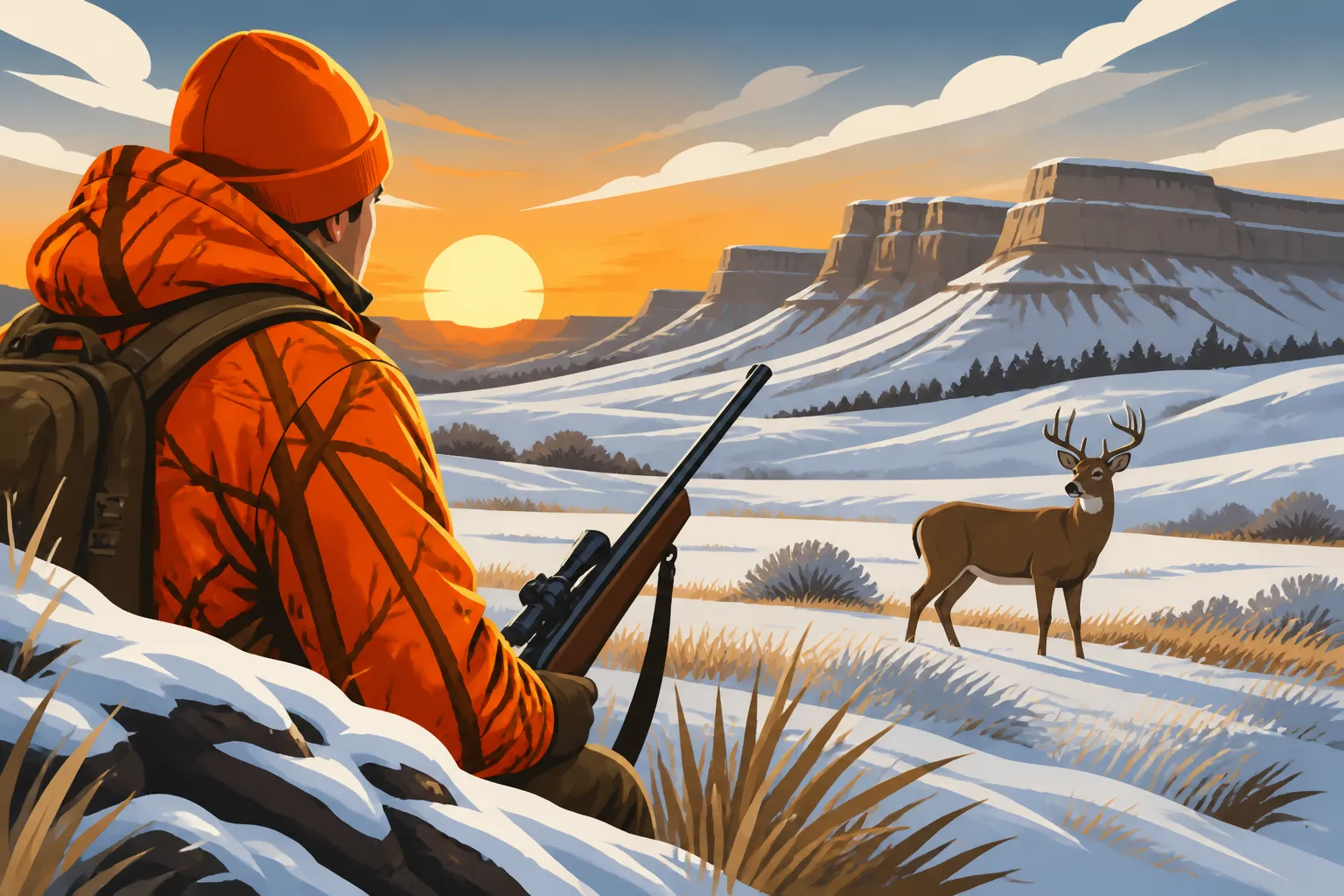
Deer hunting in South Dakota snow requires a complete shift in strategy from the early season. Forget the wide-ranging patterns of the rut; winter deer are focused on survival, and their movements become far more predictable once you understand their basic needs: food, cover, and energy conservation.
Locating Winter Deer Yards and Concentrated Areas
As snow deepens and temperatures drop, deer will congregate in specific areas that offer the best chance of survival. These are often referred to as "wintering areas" or "deer yards." For whitetails, these are typically dense timber blocks, usually in river bottoms or deep creek drainages, that provide excellent thermal cover and some available browse. The key is protection from the wind and heavy snow. For mule deer, you'll find them concentrated in deep, brushy coulees, on south-facing slopes, or in areas with thick sagebrush that offers some shelter and forage.
E-scouting with tools like GoHunt is incredibly effective for identifying these areas before you even leave home. Look for the densest timber, the deepest draws, and the steepest south-facing slopes. Once on the ground, scout for concentrations of tracks. If you find multiple fresh deer tracks converging and staying within a relatively small area, you've likely found a wintering spot. These areas are critical because deer are expending so much energy just to move that they won't travel far from their food and bedding.
Stalking Deer in the Snow
Snow is both a blessing and a curse for still-hunting and stalking. The blessing: it amplifies sound and shows you exactly where the deer have been. The curse: it also makes you incredibly noisy and visible. To stalk effectively in snow, timing is everything. A fresh, light snowfall that silences your footsteps is ideal. If the snow is crunchy or icy, you might need to adapt your strategy to a more stationary approach, waiting in known travel corridors.
When stalking, move incredibly slowly, pausing frequently to scan. Use your binoculars to pick apart every shadow, every clump of brush, looking for the tell-tale horizontal line of a deer's back or a flick of an ear. Deer will often bed down in sheltered spots with a good vantage point, so approach from downwind and try to use terrain features to your advantage. If you spot a bedded deer, plan your final approach meticulously, using draws or rises to conceal your movement. Sometimes, you'll only see a small portion of the deer, requiring patience to wait for a clear shot. Remember that the white landscape makes everything stand out, including you. When stalking, remember the principles of Stalking a Bedded Mule Deer Buck.
Understanding Whitetail Versus Mule Deer Behavior in Snow
While both deer species adapt to winter, their specific behaviors can differ, influencing your hunting strategy.
- Whitetails: In deep snow, whitetails in South Dakota tend to become incredibly cover-dependent. They'll stick to the densest timber in river bottoms or major creek drainages, often not moving far from these sanctuaries. They are masters of using terrain and brush to remain unseen. When pushed, they often prefer to run through thick cover rather than exposing themselves in the open. Hunting them often involves carefully picking apart these thickets or setting up stands along known travel routes within these sheltered areas. Their behavior is often more focused on immediate, thick cover.
- Mule Deer: Often found in the more open, broken country west of the Missouri River, mule deer are also affected by snow but might use the landscape differently. While they will seek out sheltered coulees and south-facing slopes, they might not stick to timber as religiously as whitetails. They are more likely to bed where they can see danger coming from a distance. Their "bouncing" gait through snow can cover ground quickly when alarmed. When hunting mule deer in snow, glassing is still a primary tactic, focusing on those sunny, sheltered slopes, but be prepared for longer shots if they decide to put distance between you and them. Their preference is often for visibility combined with wind protection, rather than extreme concealment.
Waterfowl and Predators When it's Cold
Late-season snow doesn't just impact upland birds and big game; it also creates unique conditions for waterfowl and predator hunting, often presenting some of the most exciting opportunities of the year.
Finding Open Water for Ducks and Geese
As winter settles in, most small potholes and shallow marshes freeze solid, forcing ducks and geese to concentrate on larger bodies of open water. This includes major rivers like the Missouri, large reservoirs (Oahe, Sharpe, Francis Case), and any springs or agricultural runoff areas that remain unfrozen. Finding these limited pockets of open water is the key to late-season waterfowl success. Scouting from vehicle or using online satellite imagery (GoHunt can be helpful here for identifying potential areas) to locate open water is critical.
Once you find open water, you're likely to find concentrations of birds. Mallards and Canada geese are often the last to leave. Setting up decoys near these open water refuges, or along their flight paths to agricultural fields where they feed, can be incredibly productive. Be prepared for extreme cold in your blind or layout blind, and ensure your decoys are weighted and set to withstand potential ice formation. Remember that ducks and geese are constantly looking for food and open water, so their movements will be directly tied to these resources. For specific tactics, consider how this contrasts with Decoying Ducks on a South Dakota Prairie Pothole during warmer weather.
Calling Coyotes on Fresh Snow
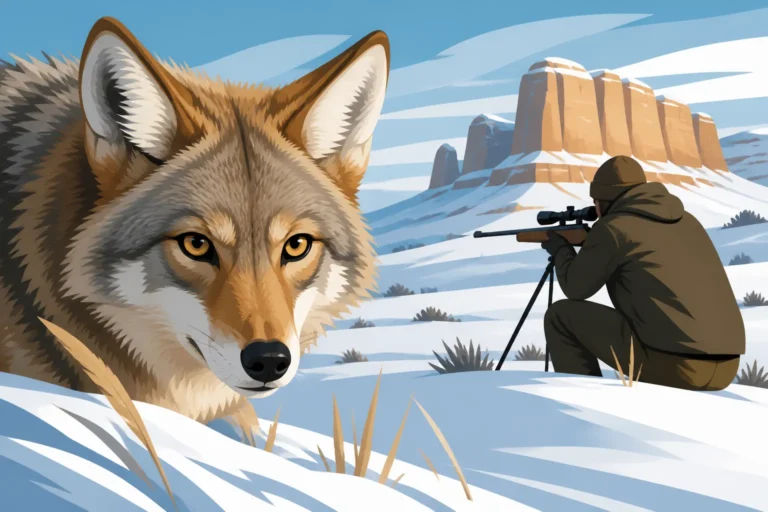
Fresh snow is a predator hunter's dream. It visually exposes coyotes against the white background, and it makes their tracks incredibly easy to read. This allows you to scout for fresh sign, identify travel corridors, and pinpoint potential denning areas. But the biggest advantage is sound. Snow dampens sound, but when you're calling, that silence can work in your favor by making your distress calls stand out even more.
Coyotes become increasingly bold in winter as food sources become scarce. A well-placed distress call, mimicking a rabbit or fawn in distress, can bring them running. Set up on the downwind side of a large open area, using topography or a small clump of brush for concealment. Let the call run for several minutes, then pause, scanning constantly for movement. Coyotes often approach from downwind to use their sense of smell, so be prepared for a wide circle. In deep snow, they often stick to roads, fence lines, or frozen creek beds for easier travel. This is a fantastic time for Coyote Calling on Open Grassland because they stand out so well.
Trap Lines and Furbearer Opportunities
For those interested in furbearers, late-season snow offers prime opportunities. The pelts of coyotes, foxes, and raccoons are at their prime in the deep winter, thick and luxurious. Snow not only makes scouting for sign easier, but it also provides a clean slate for setting traps and snares. Dirt hole sets are still effective, but modifying them to account for snow depth is important. Setting snares along known travel corridors, like fence lines, game trails, or frozen creek beds, can be highly productive.
Careful attention to detail is crucial when trapping in snow. Ensure your traps are completely free of human scent and are blended perfectly into the snowy environment. Checking your traps daily is not just ethical, it's often legally required. The severe cold can be hard on captured animals, so prompt removal is essential. Furbearer hunting and trapping can be a rewarding way to extend your time outdoors, provide valuable wildlife management, and even yield some income if you choose to market the furs.
Safety and Survival in Harsh Conditions
Hunting in South Dakota's late-season snow is not without its risks. The extreme cold, unpredictable weather, and remote locations demand meticulous preparation and a vigilant mindset. Neglecting safety can turn an enjoyable hunt into a life-threatening ordeal.
Mitigating Hypothermia and Frostbite Risks
Hypothermia and frostbite are real and present dangers in the South Dakota winter. Hypothermia occurs when your body loses heat faster than it can produce it, leading to a dangerously low core body temperature. Frostbite is the freezing of body tissue.
- Prevention: The best defense is a strong offense. Layering properly, as discussed earlier, is paramount. Stay dry at all costs – waterproof outerwear is non-negotiable. Carry extra layers, especially a dry hat and gloves, in a waterproof bag. Stay hydrated and fueled; your body burns more calories keeping warm. Avoid alcohol and caffeine, which can impair your body's ability to regulate temperature.
- Recognition: Be aware of the early signs. For hypothermia, these include shivering, confusion, slurred speech, clumsiness, and apathy. For frostbite, look for cold, numb, white, or waxy skin, especially on fingers, toes, ears, and nose.
- Action: If you suspect hypothermia, get the person to shelter, remove wet clothing, and provide warm, dry layers and warm (not hot) non-alcoholic drinks. For frostbite, gently warm the affected area, but do not rub it. Get medical attention immediately. Remember the critical advice on Hypothermia Risk on Open Prairie and take it seriously.
Vehicle Preparedness and Emergency Kits
Getting stuck on a remote two-track in deep snow is a very real possibility in South Dakota. Before you head out, ensure your vehicle is winterized: good tires (preferably winter-rated or all-terrains), a full tank of gas, and fresh fluids. Always carry a comprehensive emergency kit in your vehicle.
- Vehicle Essentials: Jumper cables, a shovel, tire chains or traction mats, a tow strap, a small bag of sand or cat litter for traction, and a working flashlight with extra batteries.
- Personal Survival Kit: Beyond your hunting gear, this should include a fire starter, extra warm clothes (dry), high-energy snacks, plenty of water (store it insulated to prevent freezing), a first-aid kit, a whistle, a charged power bank for your phone, and a physical map/compass (even if you have a GPS). A space blanket or bivy sack could be a lifesaver.
- Communication: Always tell someone where you're going and when you expect to return. This "trip plan" is your most crucial safety net. Even if Cell Coverage in West River Country is spotty, you might find a signal on higher ground.
Navigating Whiteouts and Blizzards
South Dakota is famous for its sudden, fierce blizzards and whiteout conditions. Visibility can drop to mere feet in minutes, making navigation impossible and travel extremely dangerous.
- Monitor Forecasts: Always check the weather forecast before and during your hunt. If a blizzard is predicted, it's better to postpone or end your hunt early. No game is worth risking your life.
- Situational Awareness: Always know your surroundings. Pay attention to landmarks, vehicle tracks, and compass headings. If a whiteout starts, stop moving immediately. Trying to push through can lead to disorientation and getting hopelessly lost.
- Shelter in Place: If caught in a blizzard, your vehicle is often your safest bet. Run the engine periodically for heat, but crack a window to prevent carbon monoxide poisoning. If on foot, seek natural shelter (a dense cedar break, a deep coulee) and use your emergency kit to build a fire and signal for help. Survival is about making smart decisions before the crisis hits.
Post-Hunt Care and Logistics
The hunt doesn't end when the shot is fired, especially in late-season snow. Recovering, field dressing, and transporting your game in freezing conditions presents its own unique set of challenges that need careful planning.
Field Dressing in Freezing Temperatures
Field dressing an animal in sub-zero weather can be a miserable task if you’re not prepared, but it's crucial for meat quality. Unlike Field Dressing in Warm October Weather, where quick cooling is the primary concern, in winter, you're fighting stiffening carcasses and numb fingers.
- Gloves, Gloves, Gloves: Wear rubber gloves under a pair of warm, insulated outer gloves. You'll likely need to switch to a thinner pair for delicate knife work, so have warm chemical hand warmers ready to quickly warm your hands afterwards.
- Work Quickly and Efficiently: Have a sharp knife and know your cuts. The sooner you get the entrails out, the better, though the cold helps preserve the meat, it also makes it harder to work with.
- Consider the Elements: If possible, try to work out of the wind. A small tarp can act as a windbreak. Keep your headlamp handy, as daylight fades quickly in winter. The cold will naturally begin to cool the carcass, which is a good thing for meat preservation.
Transporting Game Out of Remote Areas
Deep snow can turn a short drag into an epic struggle. A sled is an invaluable tool for recovering deer, especially in heavy snow. Whether it's a dedicated deer sled or a heavy-duty plastic toboggan, it can save you hours of back-breaking work, particularly if you're alone or in a small group. Quartering the animal in the field can also make transport significantly easier, especially for larger deer or if you're packing it out of a steep draw, as described in Getting a Deer Out of a South Dakota Coulee.
If you're hunting pheasants, having a waterproof bag or cooler to keep birds clean and separate from other gear is helpful. In freezing weather, birds will chill quickly, which is great for meat quality. Just ensure they are tagged immediately and correctly as per South Dakota regulations. For big game, once the animal is field dressed, try to get it to your vehicle as quickly as feasible, but don't rush so much that you risk injury.
Meat Care and Processing Considerations
The cold works to your advantage when it comes to preserving meat. Unlike warmer weather where you're racing against the clock, winter temperatures will naturally chill the carcass. However, don't let it freeze solid too quickly, as this can prevent proper aging. If you can hang the carcass in a cool (35-40°F), dry place for a few days, it can greatly improve tenderness and flavor. A shed or unheated garage often works well in South Dakota's winter.
If you plan to take it to a processor, make sure to call ahead, especially during the late season, to confirm their hours and availability. Many processors are extremely busy during peak deer season, but may have more flexibility later in the year. If processing yourself, ensure you have a clean, warm workspace and all your tools ready. The hard freeze will protect the meat for the journey home, but proper handling from the moment of harvest ensures the best possible table fare.
Disclaimer
Hunting involves inherent risks, including but not limited to adverse weather conditions, hazardous terrain, and the use of firearms. Always prioritize safety, adhere to all local and state regulations, and ensure you are properly trained and equipped for the conditions you may encounter. The information provided in this guide is for informational purposes only and should not replace professional guidance, thorough personal research, or adherence to official South Dakota Game, Fish and Parks guidelines. Stay safe and hunt responsibly.