Hunting Food Plots and Corn Edges
There’s nothing quite like pulling up to a promising hunting spot, seeing a lush green food plot or a towering wall of standing corn, and feeling that surge of optimism. You just know the deer are in there, or at least using it regularly. But then reality sets in: how do you actually hunt these areas effectively without spooking every animal within a mile? It's a common frustration, and this guide is here to walk you through the nuanced strategies for successfully hunting food plots and corn edges in South Dakota, turning that initial optimism into tangible results.
The Irresistible Pull of Food Plots and Corn Edges
For deer, especially the whitetails that populate much of South Dakota’s landscape, food plots and cornfields are more than just a buffet; they're vital resources. They offer high-energy forage, cover, and a sense of security, making them natural magnets. Hunters, in turn, are drawn to these locations because they concentrate game, seemingly simplifying the hunting equation. However, this concentration also makes deer hyper-aware and sensitive to pressure. Understanding why these areas are so attractive to deer is the first step in figuring out how to hunt them smartly.
Why Deer Gravitate Towards These Resources
Deer are creatures of habit and efficiency. When a food source provides ample nutrition and is conveniently located near good bedding cover, they'll use it extensively. Food plots, by design, offer highly palatable and nutritious forage that can sustain deer, helping them pack on fat for the winter or recover from the rut. Crops like alfalfa, clover, brassicas, or winter wheat are specifically chosen for their attractiveness and nutritional value. For a hunter using a platform like GoHunt, understanding the various food plot plantings and their seasonal appeal can give you a significant advantage in predicting deer movement.
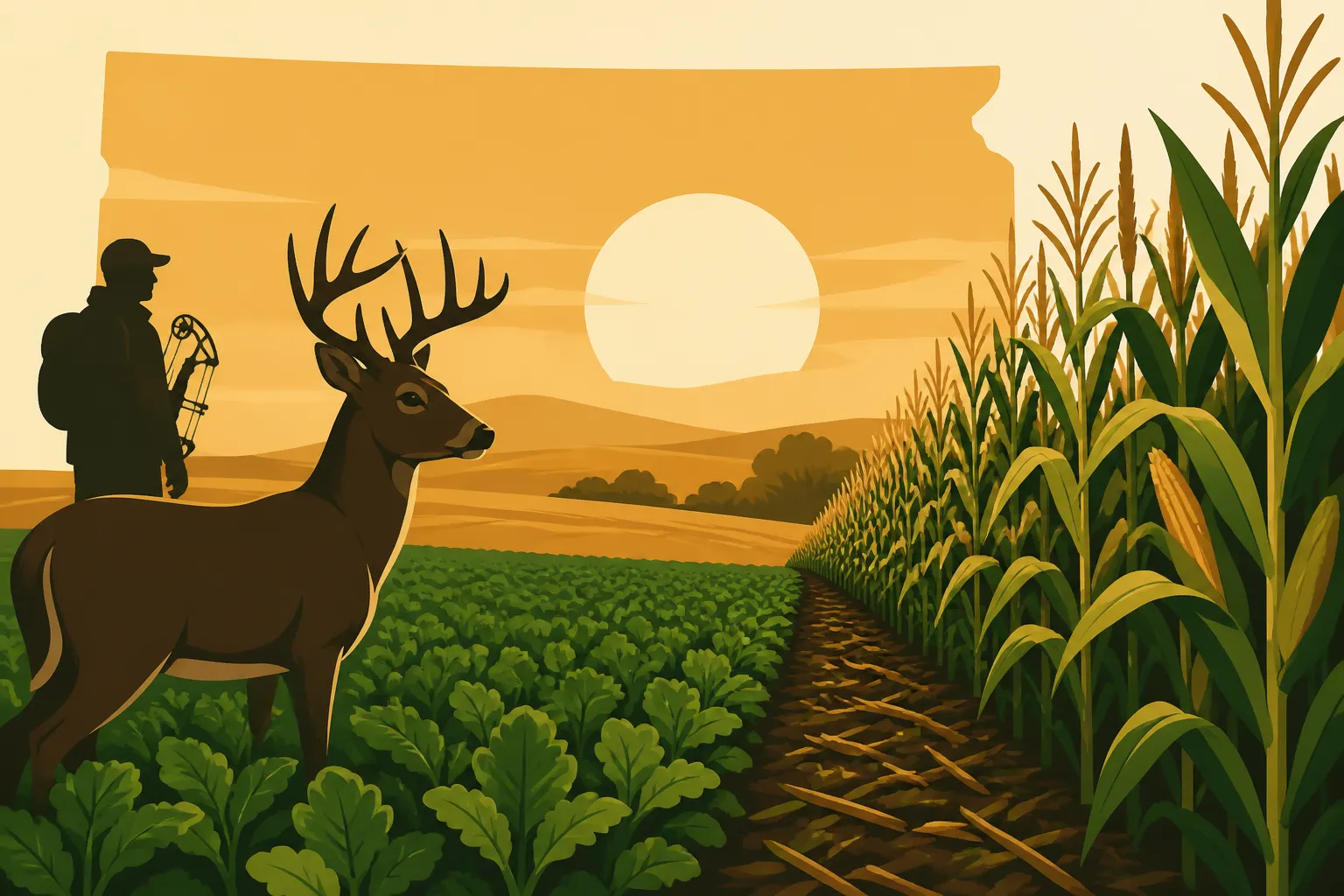
Corn, on the other hand, provides a double whammy: food and cover. A standing cornfield, especially late in the season, is an impenetrable fortress from a deer's perspective. It offers thermal cover from harsh South Dakota winds, visual cover from predators (including humans), and an abundant food source all in one package. Deer can literally live inside a cornfield for weeks without ever having to expose themselves, making hunting these specific spots incredibly challenging yet potentially rewarding. The sheer scale of many South Dakota cornfields means they can hold dozens, if not hundreds, of deer.
The Hunter's Dilemma: Opportunity Meets Challenge
The allure for hunters is obvious: find the food, find the deer. But this simplicity is deceptive. High deer traffic around food plots often means a higher potential for human disturbance. A single wrong move, a gust of wind carrying your scent, or an improperly placed stand can educate an entire herd, sending them to more secluded areas. The challenge lies in exploiting the concentration of deer without alerting them to your presence.
Corn edges, while offering fantastic cover, present their own set of hurdles. Deer can appear and disappear as if by magic, making shot opportunities fleeting. The rustling stalks can mask sounds, both yours and theirs. Furthermore, the sheer density of a cornfield often means you're hunting only the periphery, hoping to catch a deer transitioning in or out. Without a solid strategy, you're essentially playing a frustrating game of hide-and-seek. It takes patience, careful planning, and often a bit of luck to capitalize on these prime locations.
Key Considerations for Hunting Food Plots
Food plots come in all shapes and sizes, and what works for a small half-acre clover plot might not work for a sprawling brassica field. The type of crop, the size, the surrounding cover, and even the plot's orientation all play a crucial role in how you should approach hunting it.
Plot Size, Shape, and Crop Type
The dimensions of a food plot directly influence how deer use it and how you should hunt it. Smaller plots, say under an acre, often act as staging areas or quick feeding stops. Deer might only spend a short time here before moving to larger fields or bedding. For these, a strategic ambush from the edge, focusing on entry and exit trails, is usually best. Larger plots, however, can be fed in throughout the day, especially in low-pressure situations or during the rut. Hunters often find success by setting up at bottlenecks or pinch points within these larger plots.
The shape of the plot matters, too. Irregularly shaped plots with fingers or points extending into cover create natural funnels and ambush opportunities. A long, narrow plot might be best hunted from the middle, giving you shots down both lengths. Conversely, a wide, open square plot can be difficult to hunt without spooking deer crossing the open expanse.
Crop type dictates attraction and timing.
- Clover/Alfalfa: These are perennial favorites, offering consistent attraction throughout spring, summer, and fall. They're particularly effective early in the season and again during the rut.
- Brassicas (Turnips, Radishes, Rape): These become highly palatable after a few hard frosts, making them dynamite late-season food sources. Deer will hammer these plots as temperatures drop.
- Winter Wheat/Rye: Often planted in the fall, these provide early season attraction and can be great during the late season when other food sources are depleted.
- Soybeans/Corn: These are high-energy plots. Soybeans provide excellent forage through the summer, and the pods are a late-season draw. Corn is a classic late-season magnet, offering both food and cover.
Knowing what's planted and when it's most attractive helps you time your hunts perfectly. You can often learn about a plot's contents by simply observing or, if on private land, asking the landowner.
Integrating Surrounding Cover and Bedding Areas
A food plot isn't an island; its effectiveness as a hunting location is directly tied to the quality and proximity of surrounding cover. Deer rarely feed far from security. Look for thickets, dense timber, cattail sloughs, or even CRP (Conservation Reserve Program) fields adjacent to the plot. These are your bedding areas, and understanding the routes deer take between bedding and feeding is paramount.
Often, deer will stage in thick cover just before entering a food plot, especially during daylight hours. This "staging area" can be an even better ambush point than the plot edge itself. They'll spend time here, scent-checking, observing, and feeling secure before committing to the open. This is where scouting, both on foot and via tools like GoHunt's satellite imagery, really pays off. You can identify subtle trails, dense pockets of cover, and natural funnels that dictate deer movement. When you're scouting, pay attention to the prevailing wind directions in relation to these staging areas and the food plot. A well-placed stand in a staging area, especially if it allows you to get in and out undetected, can be incredibly effective. Consider how you'd approach a scenario like Hunting Whitetails in South Dakota's Missouri River Timber if that timber bordered a prime food plot – the principles of access and wind would remain critical.
Mastering Corn Edge Tactics
Hunting the edges of standing cornfields presents a unique set of challenges and opportunities. The sheer density and height of corn stalks create an almost impenetrable fortress for deer, allowing them to move unseen and unheard. Successful hunting here requires a different mindset and specific strategies compared to open food plots.
Reading the Cornfield: Entry and Exit Points
Deer don't just randomly burst out of a cornfield; they typically use established trails or subtle funnels. Your job is to find these preferred entry and exit points. Look for worn-down paths leading from the corn into adjacent timber, shelterbelts, or other food sources. These trails will often be more defined where the corn meets a distinct change in habitat, such as a creek bottom or a fence line.
Pay close attention to "corners" or "fingers" of cornfields, as these often concentrate deer movement. A small point of corn extending into a grassy area can act as a natural funnel. Also, look for low spots or depressions in the field where deer might find easier passage or prefer to bed. The use of aerial imagery, which tools like GoHunt provide, is invaluable here. You can often spot these subtle terrain changes and potential travel corridors from above, helping you pinpoint high-traffic areas without physically disturbing the field. Remember that the wind will play a huge role in how deer use these edges, so consider Wind Direction on a Prairie Stalk as you analyze these travel lanes.
The Art of a Cornfield Drive
Sometimes, waiting on the edge isn't enough, especially if the deer are holding tight deep inside a massive cornfield. This is where a strategic cornfield drive, often with a group of hunters, can be incredibly effective. This isn't about aimlessly walking through; it's a coordinated effort to push deer out to waiting shooters.
The key to a successful cornfield drive lies in understanding how deer react. They will often try to run the rows, circle back, or sneak out the sides.
- The Drivers: These hunters walk through the corn, spaced out, moving slowly and deliberately. Their goal isn't to blast through, but to gently push the deer. They should make some noise, but not so much that deer panic and burst out too early.
- The Blockers/Shooters: These hunters are strategically positioned along the downwind edge of the field, or at known escape routes and corners. They must remain absolutely still and silent, ready for a quick shot.
- Communication: A clear plan and constant communication (via radios or hand signals) are vital to ensure everyone knows their role and the direction of the drive.
For safety, clear shooting lanes are paramount, and everyone must be aware of each other's positions. This tactic is best employed with a trusted group and a solid understanding of the terrain and deer behavior. It can be a very exciting and productive way to hunt those stubborn cornfield deer, particularly in the late season when they are hunkered down.
Strategic Stand Placement and Wind Management
You can have the best food plot or corn edge in South Dakota, but without proper stand placement and meticulous wind management, your efforts will likely be in vain. Deer rely heavily on their sense of smell, and any whiff of human presence will send them packing.
Positioning for Success: Overlooking the Action
When choosing a stand location, whether it's a tree stand, ground blind, or even a natural hide, you need to consider three primary factors: visibility, shot angles, and access/egress.
- Visibility: You need to see the deer before they see you. This often means placing your stand higher in a tree or in a blind that offers good concealment. Look for natural breaks in the terrain or vegetation that allow you to observe key areas like trails, staging zones, and the plot/corn edge itself. For hunting South Dakota Whitetail Hunting in River Bottoms, the same principles apply for elevation and concealment.
- Shot Angles: Anticipate where deer will likely appear and position yourself to get a clean, ethical shot. Trim branches if necessary (always check local regulations and landowner rules first!) to ensure clear lanes. If hunting a food plot, consider which way deer are likely to enter and how they might move within the plot. For corn edges, focus on clear lanes where deer might step out for a moment.
- Access and Egress: This is often overlooked but is absolutely critical. You need to be able to get to and from your stand without spooking deer. This means using natural cover, choosing routes that avoid active deer areas, and ideally, approaching and leaving under the cover of darkness or during times of low deer activity. A good E-Scouting tool like GoHunt can help you plot these stealthy routes, identifying ditches, draws, or timber lines that offer concealment. Think about how you would navigate Treestand Setups on Narrow River Timber to avoid detection – the principles are interchangeable.
The Unforgiving Reality of Wind Direction
Wind is king in deer hunting, especially in the open prairie environment of South Dakota. Your stand must be positioned so that your scent is carried away from where you expect deer to approach or be. A slight shift in wind can ruin an entire hunt.
- Multiple Stand Options: Smart hunters often have several stand locations for a single food plot or corn edge, each chosen for a different prevailing wind direction. If the wind is consistently out of the west, you need a stand that puts that west wind in your face as deer approach from the east. If it switches to the north, you need another stand. This flexibility is crucial.
- Micro-Thermals: In areas with varying topography, like river bottoms or breaks near a food plot, pay attention to thermals. In the morning, cool air sinks, carrying scent downhill. In the evening, warm air rises, carrying scent uphill. These micro-thermals can override the prevailing wind in certain situations, especially during the first and last hours of daylight.
- Scent Control: While no amount of scent elimination products can completely negate a bad wind, they can certainly help. Use scent-free detergents for your hunting clothes, store them in airtight containers, and apply scent eliminators before heading into the field. This, combined with careful stand placement, gives you the best chance. Remember, even if deer don't smell you directly, they might smell where you walked, so consider your entry and exit paths in relation to the wind and current deer locations.
Timing Your Hunt for Success
Deer behavior around food plots and corn edges isn't static; it changes with the season, time of day, and hunting pressure. Knowing when to be in your stand is just as important as knowing where to put it.
Seasonal Shifts and Deer Movement Patterns
South Dakota's deer, particularly whitetails, have predictable seasonal patterns that heavily influence their use of food plots and cornfields.
- Early Season (September-October): During the archery season, deer are often still on a fairly regular summer pattern, frequently visiting food plots and corn edges in the evenings as they transition from bedding areas. The focus is on high-protein, palatable forage like alfalfa or early brassicas. Morning hunts can be effective near bedding, but evening hunts on food sources are often more productive.
- The Rut (Late October-Mid November): This is when all bets are off, but food plots and corn edges still play a significant role. Bucks will cruise these areas looking for does. While does might still feed, the primary action is often bucks scent-checking, chasing, and looking for receptive mates. During the peak of the rut, bucks can appear at any time of day, making all-day sits worthwhile. Consider tactics like Rattling and Grunting During the South Dakota Rut near these food sources, as bucks might investigate. This is also when bucks are most susceptible to being seen in the open.
- Late Season (Late November-December): Once the rut winds down and winter sets in, deer shift back to a survival mentality, prioritizing high-calorie food sources. Standing corn, soybeans, and brassica plots become absolute magnets. Deer will often feed more during daylight hours to pack on reserves, especially on cold, sunny days. This is a prime time for morning and midday hunts as deer move from deep cover to feed. Heavy snow cover can make these food plots even more critical, concentrating deer movement. Understanding Late-Season Hunting in South Dakota Snow can provide additional insights for this period.
Midday Lulls and Strategic Breaks
While all-day sits are often advocated, especially during the rut, it's also important to recognize when deer activity naturally wanes. Midday, typically from 10 a.m. to 3 p.m., can be notoriously slow, especially outside the peak of the rut or extreme cold. During these times, deer are often bedded down, digesting, and conserving energy.
Instead of burning yourself out sitting in a dead zone, consider using the midday lull strategically:
- Relocate: If your morning spot wasn't productive, this might be a good time to quietly move to a different stand setup for the afternoon hunt.
- Scout: If you have permission and are careful, a quiet midday scout of nearby bedding areas or transition zones can reveal fresh sign without disturbing deer that might be heading to your evening food source. Just be hyper-aware of your scent and noise.
- Rest and Recharge: Sometimes, a break to eat a warm meal, stretch your legs, and mentally recharge can make you a more effective hunter for the evening push.
However, it’s also important to understand that midday activity isn't zero. If hunting pressure is high, or if it's the peak of the rut or extremely cold, deer will move at midday. Analyzing How Buck Movement Changes Through the Rut will show that bucks are much more active seeking does during those midday hours. The key is to read the conditions and the specific behavior of the deer you are pursuing.
Reading Sign and Adjusting Your Strategy
Hunting food plots and corn edges isn't a static activity; it's a dynamic chess game. Deer patterns can change overnight due to weather, pressure, or even new food sources emerging. Being able to read the subtle clues they leave behind and adjust your strategy accordingly is what separates successful hunters from those who consistently come up empty.
Fresh Tracks, Rubs, and Scrapes
Deer leave a wealth of information for the observant hunter. Before every hunt, especially if you haven't been in the area for a few days, take a few minutes to check for fresh sign around the periphery of your food plot or cornfield.
- Tracks: Look for fresh tracks in soft soil, mud, or frost. Larger tracks, especially those with splayed toes, indicate a bigger, heavier deer. Tracks leading into or out of the food source give you valuable intel on entry and exit points. Are they coming from a particular woodlot? A dense cattail slough? Freshness is key: sharp, well-defined edges mean recent activity.
- Rubs: These are areas where bucks have rubbed their antlers against saplings or small trees, leaving behind scuff marks and sometimes broken branches. Rubs communicate a buck's presence and dominance. A "rub line" – a series of rubs leading in a particular direction – is a major indicator of a buck's travel corridor. Look for rub lines leading from bedding cover directly to the food source.
- Scrapes: Scrapes are bare patches of ground, often under an overhanging branch (the "licking branch"), that bucks create by pawing away leaf litter and urinating on them. These are communication hubs, especially during the pre-rut and rut. Finding fresh scrapes, particularly those with a strong musky odor, indicates recent buck activity. Setting up on a scrape line near a food plot can be incredibly effective, especially if you find one that's consistently being worked.
Combining these signs with your e-scouting on platforms like GoHunt, which can help you understand terrain features and cover from afar, provides a powerful scouting advantage. It can literally tell you where to hang your stand.
Adapting to Pressure and Changing Conditions
Deer are highly adaptable, and so must you be. Hunting pressure, weather, and the maturation of crops can all drastically alter their behavior around food plots and corn edges.
- Hunting Pressure: If a food plot or corn edge sees a lot of hunting pressure, deer will quickly become nocturnal or shift to more secluded, less accessible food sources. On public land, this is especially true. If you're seeing heavy pressure, consider hunting farther back from easy access points, or focus on midday movements when other hunters are taking a break. You might even want to explore adjacent public lands using resources like the South Dakota Hunting Atlas or investigate Hunting Pressure Patterns on Walk-In Areas for insights into how deer react to crowded conditions.
- Weather Changes: A sudden cold snap will send deer flocking to high-calorie food sources like corn or brassicas. A warm front might slow daytime movement. Rain can make deer move more actively in low-light conditions, or hunker down. Snowfall often concentrates deer, making food plots crucial. Always check the forecast and adjust your timing and stand location accordingly.
- Crop Maturation: As corn dries down and is eventually harvested, its appeal as cover diminishes, though its food value remains. This shifts deer behavior from living in the corn to feeding on the corn stubble or moving to other cover. Likewise, as a brassica plot matures or gets heavily browsed, deer might move on to other food. Stay updated on agricultural activity in the area; knowing when a cornfield is being harvested can be a game-changer for your hunting strategy, suddenly exposing deer that were previously invisible.
Being flexible and willing to change your approach based on real-time observations and current conditions is the hallmark of a truly skilled hunter.
Strategic Food Source Hunting: Comparing Options
To put it all together, let's look at the key differences and considerations for hunting food plots versus corn edges. While both concentrate deer, their inherent characteristics demand distinct tactics.
| Feature | Food Plots | Corn Edges |
|---|---|---|
| Primary Appeal | Concentrated, high-quality forage | Food and dense security cover combined |
| Visibility | Generally open, good visibility of deer movement | Limited visibility into field; deer appear/disappear |
| Cover for Hunter | Often requires elevated stands or well-camouflaged blinds | Can use natural edge cover; dense corn helps mask noise |
| Deer Behavior | Feed openly, often stage at edges; can be nocturnal under pressure | Hold tight, feed within field; use trails to enter/exit |
| Optimal Timing | Early season (clover/alfalfa), Rut (all), Late season (brassicas/grains) | Primarily late season (standing corn), but also transitions |
| Hunting Method | Ambush from stands/blinds on edges or travel corridors | Ambush on trails, strategic drives (group effort) |
| Scent Control | Paramount, as deer are often in the open | Critical, as deer are close and can circle back |
| Pressure Impact | Deer go nocturnal or abandon plot quickly | Deer hold tighter, may be harder to extract |
Understanding these distinctions allows you to tailor your approach more effectively.
Final Thoughts on Hunting Food Plots and Corn Edges
Hunting food plots and corn edges in South Dakota offers some of the most exciting and rewarding opportunities for deer hunters. However, it's never as simple as just "sitting on the food." The deer are smart, constantly adapting, and highly sensitive to pressure. Success hinges on a thoughtful combination of meticulous scouting, strategic stand placement, unwavering wind management, and the flexibility to adapt your plans as conditions change.
Always respect the land and the landowner's wishes, especially if hunting private ground. Do your homework, scout effectively (digital tools like GoHunt are your friend here!), and remember that every hunt is a learning experience. With patience and persistent effort, you'll be well on your way to punching your tag on a South Dakota deer that's been feasting in those prime food plots and cornfields.
Disclaimer
Hunting is an inherently dangerous activity. Always prioritize safety, follow all local and state regulations, and obtain proper landowner permission before entering private property. This guide provides general information and recommendations; individual hunting conditions and regulations may vary. Always consult the latest South Dakota Game, Fish and Parks regulations handbook before your hunt.