Slim Buttes and Harding County Access
Hunting in the rugged, remote reaches of Slim Buttes and Harding County in South Dakota can feel like stepping back in time, a true frontier experience that many dream of. But let's be honest, dreaming of it and actually figuring out where you can legally hunt, let alone finding good ground, are two entirely different things. The checkerboard of public and private land, combined with the intimidating vastness of West River country, can leave even seasoned hunters feeling a bit lost. This guide is here to untangle that complexity, giving you a clear path to accessing these unique hunting grounds and making your dream hunt a reality.
Understanding the Unique Landscape of Slim Buttes and Harding County
Before you even think about throwing a rifle in the truck or loading up the dog, it's crucial to wrap your head around what makes Slim Buttes and Harding County so special, and frankly, so challenging for hunters. This isn't your typical East River pheasant country with neat sections and obvious roads. This is big, wild country, defined by dramatic geological features and a mix of vast rangeland.
Geographical Features and Their Impact on Hunting
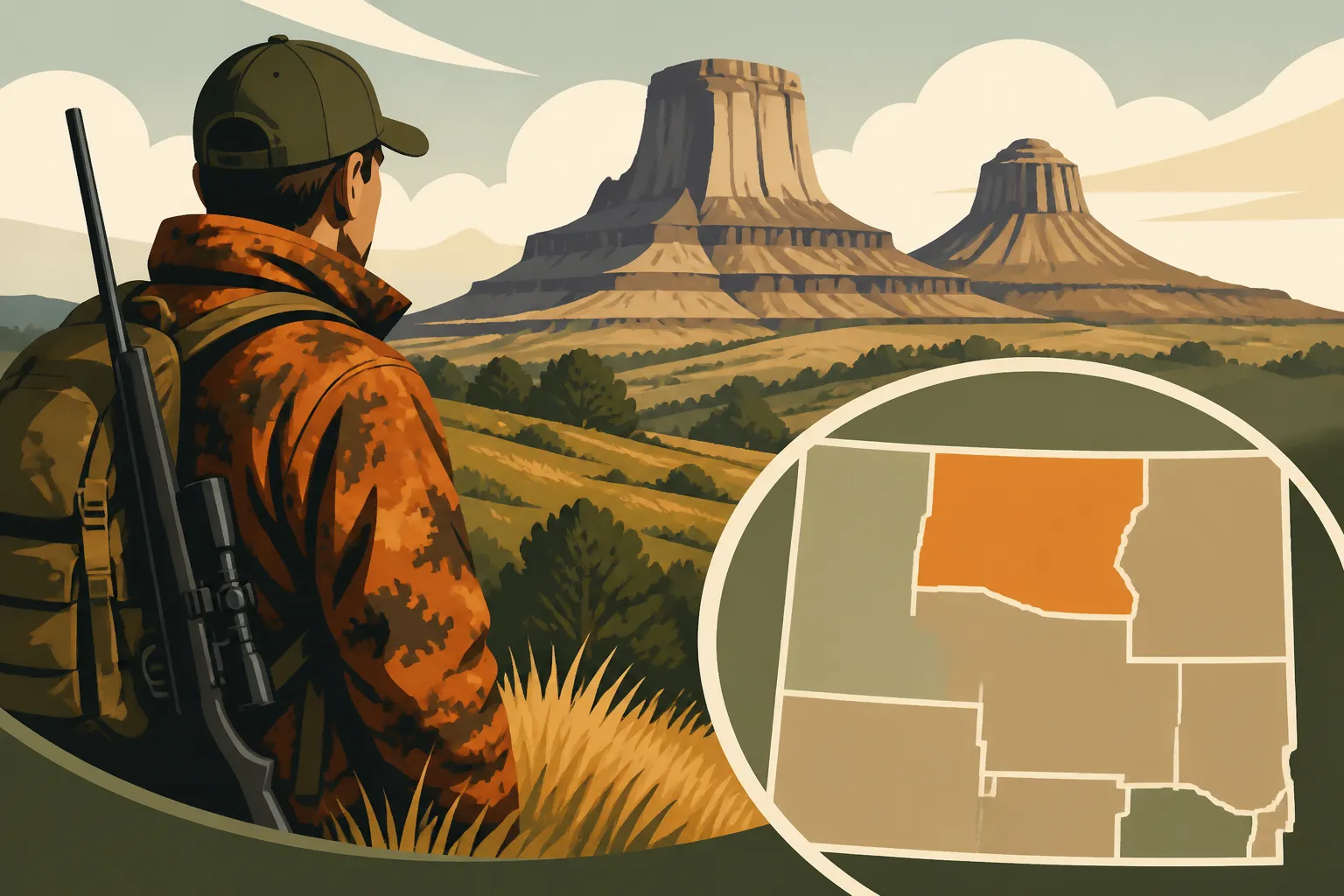
The Slim Buttes themselves are truly a sight to behold, rising abruptly from the surrounding prairie. These aren't mountains, but rather a series of pine-clad plateaus and eroded canyons that offer incredible cover and elevation changes. This rugged topography creates natural funnels and bedding areas for big game, especially mule deer. You'll find pockets of ponderosa pine, juniper, and various brush species that provide thermal cover in winter and shade in warmer months. Water sources, often seasonal stock dams or natural seeps, become critical focal points.
Harding County, as a whole, embodies the classic West River landscape – rolling prairie, deep coulees, and expansive vistas. The sheer scale can be overwhelming, but it's also what holds the unique appeal for those chasing antelope, mule deer, and even prairie grouse. The changes in elevation, even subtle ones, create excellent glassing opportunities and define how animals move. Understanding these features isn't just about admiring the view; it's about predicting where the game will be, how they'll react to pressure, and how you can approach them without being spotted. It’s a completely different game than still-hunting timber or driving a cornfield.
Primary Game Species and Their Habitat Preferences
When you talk about Slim Buttes and Harding County, you're primarily talking about mule deer and pronghorn antelope. This is quintessential mule deer country, with the rough breaks and pine pockets of the buttes providing perfect habitat for these majestic bucks. They thrive in the broken terrain, using the contours and vegetation for concealment. You'll often find them bedding on north-facing slopes to escape the summer sun or tucked into a pine draw to avoid the biting winter wind. Mule Deer on the West River Breaks delves deeper into the specifics of this sub-species.
Antelope, on the other hand, prefer the wide-open prairie. They are creatures of speed and vision, and the vast plains of Harding County suit them perfectly. You'll spot them grazing in grasslands, often near water sources, and their keen eyesight makes stalking them a true test of skill. While less common than in some other parts of the state, prairie grouse like sharp-tailed grouse can also be found in certain areas, particularly in undisturbed native prairie with good forb and grass diversity. Understanding these species' habitat preferences is your first step in narrowing down where to focus your scouting and hunting efforts within this expansive region. Pronghorn Antelope on the South Dakota Prairie offers a great overview of these incredible animals.
Navigating Public Land Opportunities: National Grasslands and Beyond
The beauty and the beast of hunting in Slim Buttes and Harding County often come down to public land access. It's there, but it's not always easy to identify or reach. Knowing your options and how to navigate them is paramount.
Grand River National Grassland
The Grand River National Grassland is the dominant public land feature in Harding County and surrounding areas, including parts of Slim Buttes. Managed by the U.S. Forest Service, these lands offer significant hunting opportunities for big game and upland birds. Unlike a National Forest, which is heavily timbered, the Grasslands are primarily expansive rangeland, often interspersed with pockets of timber in the draws and buttes. This creates incredible, diverse habitat.
Hunting on the Grand River National Grassland requires you to understand the regulations specific to Forest Service lands, as well as South Dakota's general hunting laws. Vehicle use might be restricted to designated routes, and knowing where you can drive and where you must go on foot is critical. The best approach is often to find access points off county roads, then use foot power to get into the more remote draws and hills. National Grasslands Hunting in South Dakota provides a broader context for hunting on these federal lands across the state. Always remember to pack enough water and supplies, as you'll often be far from any services.
Other Public Access Lands: State & School Trust Lands
Beyond the National Grasslands, South Dakota also has other types of public access land, though they are often smaller parcels and can be more fragmented.
- State Game Production Areas (GPAs): While not as numerous or large in Harding County as in the East River, there are some GPAs that offer hunting. These are managed specifically for wildlife habitat and public recreation. Look for these on state hunting atlases.
- School and Public Lands: Scattered throughout the county are tracts of land managed by the Office of School & Public Lands. These lands are open to public hunting unless specifically posted otherwise. The trick here is that they can be landlocked by private property, meaning legal access may not exist, or you might need landowner permission to cross private ground to reach them. Always verify access before planning a hunt on these parcels. School and State Trust Land in South Dakota offers detailed guidance on navigating these specific land types.
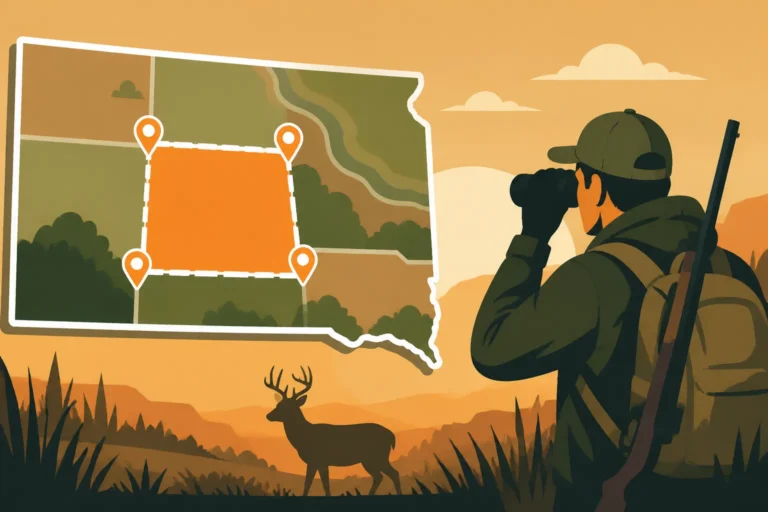
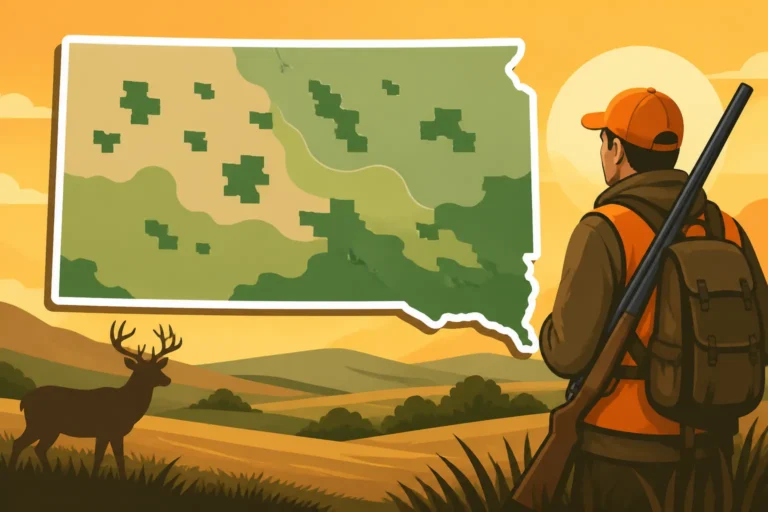
When dealing with these different land types, it's not uncommon to find a complex patchwork. One section might be National Grassland, the next private, and the one after that a state school section. This is precisely where modern mapping tools become indispensable.
Leveraging Technology for Access: Tools for the Modern Hunter
Gone are the days when a crumpled paper map and a compass were your only allies in big country. Today's hunter has an array of technological marvels at their fingertips, and in a complex area like Slim Buttes and Harding County, these tools aren't just convenient – they're essential for successful and ethical hunting.
Using Mapping Apps for Land Ownership and Navigation
The single biggest game-changer for hunting public land in checkerboard country like West River South Dakota is a good mapping app. Companies like onX Hunt have revolutionized how hunters understand land ownership. With a mapping app on your phone, you can instantly see property boundaries, identify public versus private land, and even distinguish between different types of public land (National Grassland, state land, etc.).
Imagine you're driving a dusty two-track in Harding County. Without a mapping app, you might see a promising draw, but have no idea if it's public or private. With onX Hunt, you simply glance at your phone, and the color-coded map immediately tells you: "Ah, that's National Grassland. I can access that." This capability is invaluable for scouting, planning stalks, and ensuring you don't inadvertently trespass. It also helps you locate legal access points to otherwise landlocked public parcels. For instance, you might see a small, seemingly insignificant road or easement that leads directly to a large block of huntable public ground that's otherwise surrounded by private holdings.
E-Scouting and Planning with Digital Tools
Before you even leave your living room, digital tools can help you plan your hunt with incredible detail. Websites and apps often provide topographic maps, satellite imagery, and even historical weather data. You can "walk" the terrain virtually, identify potential bedding areas, glassing points, and travel corridors. This is especially useful for a vast area like Slim Buttes where covering ground in person can be time-consuming and arduous.
GoHunt, for example, offers not just mapping but also data on draw odds, unit breakdowns, and harvest statistics, which can be immensely helpful when you're deciding which unit to apply for a big game tag in. You can cross-reference areas with good public access with areas known for strong game populations. By looking at aerial imagery, you can pick out the subtle changes in vegetation that indicate a deep coulee or a stand of pines, even if you’ve never set foot there. This pre-planning allows you to maximize your time in the field, focusing your efforts on the most promising areas rather than blindly driving around. Think of it as your virtual boots-on-the-ground scout before you commit to the real thing. E-Scouting Walk-In Areas Before the Season provides more insight into these modern scouting techniques.
Here’s a quick overview of how different mapping features can help in Harding County:
| Feature | Benefit in Harding County | Key Use Case |
|---|---|---|
| Public/Private Land Overlay | Instantly identifies legal hunting ground vs. private property | Avoid trespassing, find access points for specific parcels |
| Topographic Maps | Shows elevation changes, draws, and buttes | Plan stalks, identify hidden travel routes, find bedding areas |
| Satellite Imagery | Reveals vegetation type, road networks, water sources | Locate timber pockets, identify sparse cover, find stock dams |
| GPS Tracking | Records your path, marks waypoints, shows current location | Navigate complex terrain, retrace steps, mark game sightings |
| Weather Overlays | Provides wind direction, precipitation, temperature | Plan approaches based on wind, anticipate animal movement |
Respecting Private Land: The Art of Asking for Permission
Despite the significant public land available, it's often surrounded by or interspersed with private ranchland in Slim Buttes and Harding County. And sometimes, the best hunting spots are indeed on those private parcels. Getting access to them often comes down to one thing: respectfully asking for permission.
The Importance of Good Landowner Relations
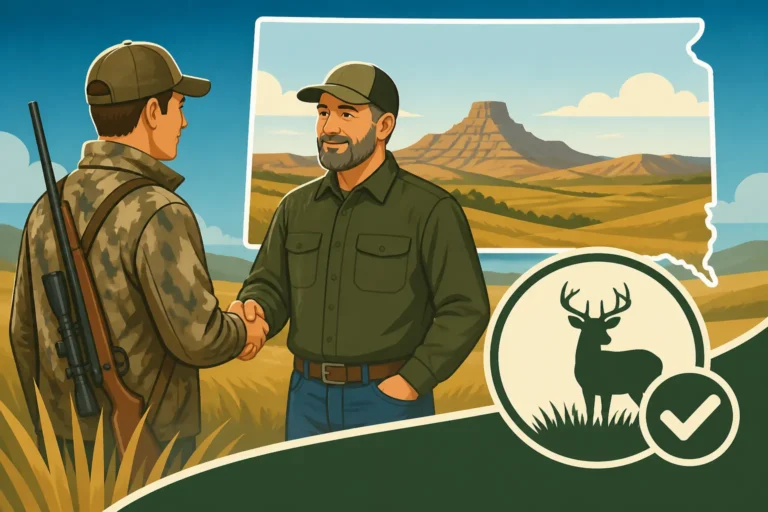
South Dakota has a strong tradition of private land ownership, and many of the large ranches in Harding County have been in families for generations. Approaching these landowners with respect and genuine courtesy is non-negotiable. Remember, they are under no obligation to grant you access, and a polite "no" should be accepted gracefully. A bad impression made by one hunter can ruin opportunities for countless others. Finding Private Land Access in South Dakota goes into greater detail about navigating these interactions.
Many landowners have dealt with hunters who don't respect property, leave gates open, or drive off-road. You are trying to overcome those negative experiences. Show up presentably, have a clear plan, and be ready to offer something in return, even if it's just offering to shut gates or report cattle issues you might notice. Building a relationship, even if it just leads to a "maybe next year," is always better than burning a bridge.
Best Practices for Seeking Permission
Asking for permission isn't just about knocking on a door; it's about strategy and etiquette.
- Timing is Everything: Don't show up on the morning of the pheasant opener or during branding season. Try to visit before the season or during a less hectic time of year. Mid-week, mid-day is often better than a busy Saturday morning.
- Be Prepared: Have a clear map (like your
onX Huntapp) showing the specific parcel you're interested in, know the landowner's name if possible, and be ready to state exactly what you want to hunt and for how long. "Can I just hunt anywhere?" is not going to get you far. "I'm hoping to chase a mule deer buck in that draw on the north quarter section of your land next Tuesday and Wednesday" is much more specific. - Dress Respectfully: While you don't need a suit, don't show up covered in mud and camo unless you're coming straight from the field (and even then, apologize for your appearance). Look neat and tidy.
- Offer Something in Return: This doesn't have to be money. Offer to help with chores, check fences, or share some of the game meat if you're successful. A small gift (a gift certificate to a local store, a bottle of good coffee) as a thank you, whether you get permission or not, can go a long way.
- Leave Your Dog in the Truck (Initially): While a good dog is invaluable for bird hunting, bringing it to a landowner's door uninvited can be a turn-off, especially if they have livestock or their own dogs. Ask if it's okay to bring a dog after permission has been granted.
- Follow Through: If you get permission, stick to every agreement you make. Leave gates as you found them (or as instructed), don't leave trash, and report back to the landowner, especially if you had success. Even better, bring them a photo or some cleaned game if offered.
Hunting in Slim Buttes and Harding County offers some of the most authentic and challenging experiences South Dakota has to offer. With a solid understanding of the terrain, smart use of mapping technology, and a respectful approach to private land, you'll be well on your way to a memorable hunt in this wild, beautiful corner of the state.
Disclaimer
This article is for general informational purposes only and does not constitute professional advice. Laws, prices and regulations vary by location and change over time. Consult a qualified professional for guidance on your specific situation.