Cell Coverage in West River Country
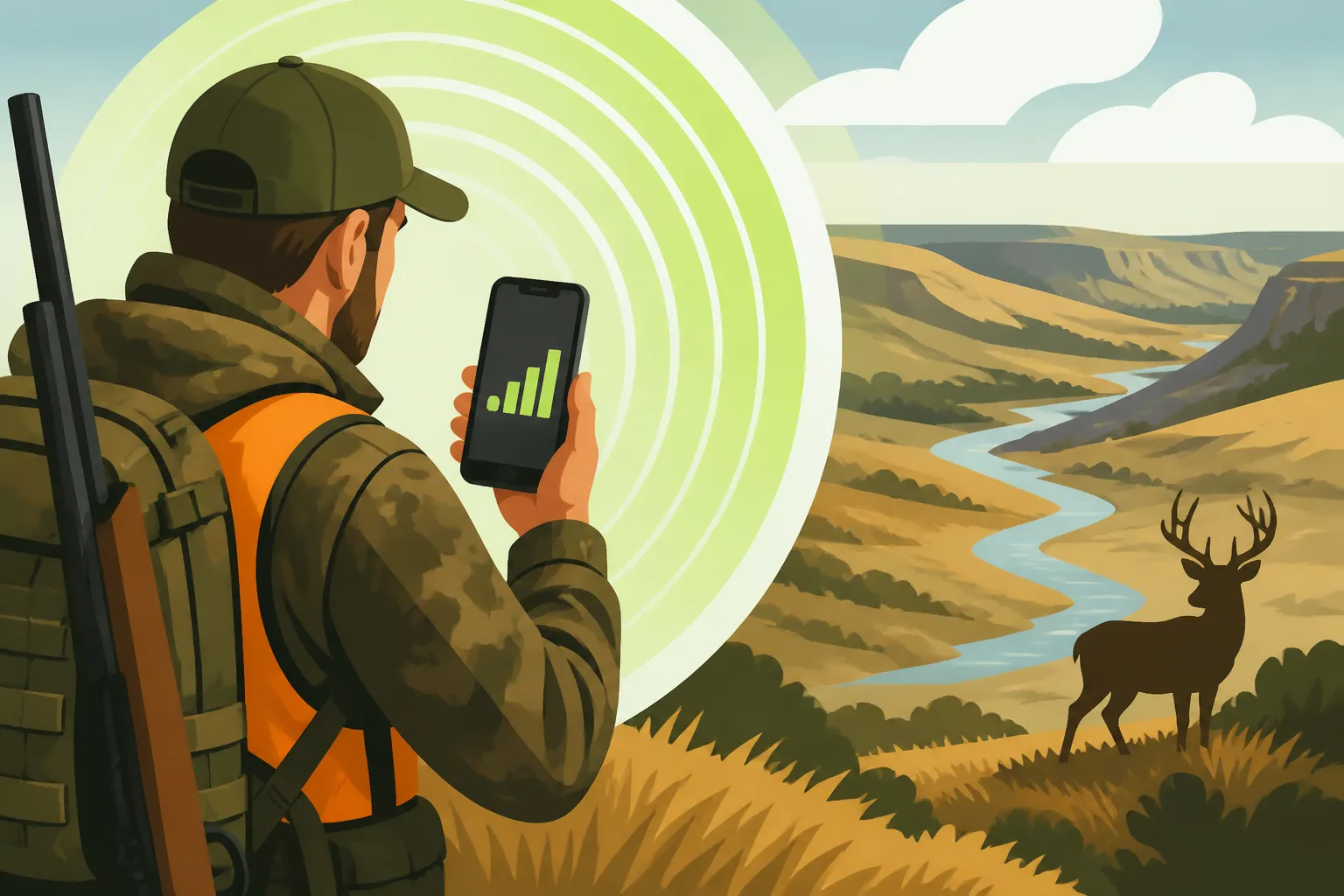
Heading out to hunt the vast, beautiful expanse of West River South Dakota is an incredible experience, but anyone who’s spent time out there knows the familiar frustration of pulling out your phone only to see "No Service." It's a common and often dangerous reality for hunters relying on modern communication. This guide is dedicated to giving you a realistic picture of what to expect regarding cell coverage in West River country, how to mitigate the risks, and smart strategies for staying connected or, more importantly, staying safe when you can't be.
Understanding the West River Landscape and Its Impact on Cell Service
The beauty of West River South Dakota is undeniable, with its sweeping prairies, dramatic breaks, and winding river systems. But these very features, which make it prime hunting country, are also the biggest enemies of consistent cell service. It’s not like the East River side, where population centers are more frequent, and the terrain is generally flatter. Out west, things are different, and understanding why your phone might be a brick out there is the first step to being prepared.
The Vastness of West River's Terrain
Imagine standing on a high point in the Buffalo Gap National Grassland, looking out over miles of rolling hills, deep, brushy coulees, and the distant ribbon of the Cheyenne River breaks. This isn't flat, open ground where signals can travel unimpeded. The undulating topography, with its sudden drops into draws and the significant elevation changes along river valleys, acts like a natural signal blocker. Radio waves, which is what your cell phone relies on, don't bend around hills very well. They need a clear line of sight to a cell tower.
Take, for example, the rugged Badlands or the steep breaks leading down to the White River. You might have a bar or two on a ridge, but drop into a draw just a few hundred yards away, and that signal can vanish entirely. The sheer scale of the landscape means cell towers are few and far between, designed to cover massive areas rather than provide dense, consistent coverage in every pocket. This is especially true when you're deep into areas like the Fort Pierre National Grassland or the Slim Buttes area of Harding County, where solitude is the main draw, not connectivity.
Network Infrastructure Challenges
The simple truth is that telecommunication companies are businesses. They invest in infrastructure where there’s a sufficient population density to justify the expense and generate revenue. West River South Dakota, with its vast tracts of land and relatively sparse population, doesn't always present the most compelling business case for building an extensive network of cell towers. Even with federal programs designed to expand rural broadband and cell service, progress is often slow, and the most remote hunting areas remain underserved.
What this means for you, the hunter, is that even the largest carriers, like Verizon and AT&T, have significant coverage gaps. While they might boast broad coverage maps, these often represent theoretical outdoor coverage, not the kind of reliable signal you need to make a call from a deep coulee or send a text from a shelterbelt far from any town. While roaming agreements can sometimes kick in, allowing your phone to use another carrier's tower, this is often unreliable, particularly in areas where no carrier has strong infrastructure. Don't count on it as your primary backup plan.
Major Carrier Coverage and Hotspots
When you’re planning a hunt in West River, it's natural to wonder which carrier stands the best chance of keeping you connected. While no single provider offers bulletproof coverage everywhere, some generally perform better in these sprawling landscapes than others.
Verizon, AT&T, and T-Mobile Realities
Generally speaking, Verizon often has the most extensive coverage footprint in rural South Dakota, including many parts of West River. This doesn't mean it's perfect, far from it, but if you're going to have any signal at all in a remote area, Verizon often has the slight edge. Areas along Interstate 90, around major towns like Rapid City, Wall, Kadoka, and Murdo, tend to have decent Verizon service. However, once you venture off the main highways and into the true backcountry, especially areas like the Buffalo Gap National Grassland or the more remote Black Hills units, even Verizon can drop off dramatically.
AT&T typically comes in second. You’ll find service in most larger towns and along main transportation corridors, but its rural reach diminishes faster than Verizon's in the really wild parts of West River. If you're hunting closer to the Black Hills or major population centers, AT&T might serve you well, but deep prairie hunts might be a challenge.
T-Mobile, while having made significant strides in urban areas, still struggles the most with consistent coverage in the remote, sparsely populated regions of West River South Dakota. Outside of Rapid City and a few other larger communities, you should assume T-Mobile service will be spotty to non-existent.
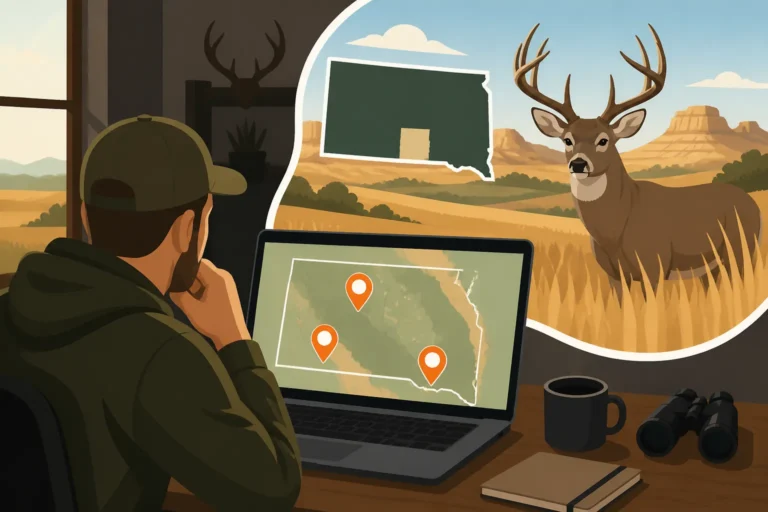
It's crucial to remember that these are general observations. Before your hunt, always consult current coverage maps from each provider for your specific hunting area, but take them with a grain of salt. For a more ground-truthed perspective, consider using mapping platforms like GoHunt, which often integrate community-reported data or allow you to scout terrain features that might block signals. This kind of detailed E-Scouting Walk-In Areas Before the Season can give you a better idea of where you might find a high point that offers a fleeting signal.
Spotty Service and "Dead Zones"
The most frustrating aspect of West River cell coverage isn't just a complete lack of service; it's the maddeningly spotty nature of it. You might have three bars one minute, just enough to quickly check your email or send a text, only for it to disappear completely when you move a few feet. This is the reality of "dead zones." These are pockets, often in coulees, behind ridges, or within dense timber, where the signal simply can't penetrate.
Sometimes, a slight elevation change, like climbing to the top of a small knoll, can briefly restore service. Hunters often learn to identify these "hotspots" in their usual hunting grounds—a particular rise, a specific section of a road, or even the roof of their truck—where they know they might get enough signal to connect. However, relying on these fleeting moments for critical communication is a recipe for anxiety. This is where Glassing South Dakota Breaks at First Light might not only help you spot game but also potentially spot a high point that could offer a momentary connection.
Given this reality, downloading offline maps of your hunting area is non-negotiable. Tools like GoHunt or onX Hunt offer offline map capabilities, ensuring you can still navigate, mark waypoints, and find property lines even when your phone is completely out of service. This is especially vital when you’re trying to find Finding Water in Dry West River Country or navigating complex land boundaries.
Strategies for Staying Connected or Safe
Since reliable cell service is often a luxury, not a given, in West River South Dakota, a multi-faceted approach to communication and safety is essential. It's about combining preparation, technology, and old-fashioned common sense.
Pre-Trip Planning and Research
The most valuable tool for dealing with poor cell coverage is knowledge gained before you even leave home. Start by thoroughly researching your hunting unit. Don't just look at carrier coverage maps; cross-reference them with topographical maps. High ridges and open plains might offer better chances for a signal, while deep river bottoms or dense, timbered draws are almost guaranteed dead zones.
Consider reaching out to local contacts if you have them – outfitters, Game, Fish and Parks staff, or even just folks who live in the area. They can often provide the most accurate, real-world insight into where service might be available. Beyond that, the importance of offline mapping cannot be overstated. Apps like GoHunt and onX Hunt allow you to download detailed satellite imagery and property line information directly to your device. This means even if you have no signal, you can still navigate, identify onX Layers for South Dakota Land Status, and avoid trespassing. Always remember to charge your phone fully and pack an external battery bank or a car charger.
Crucially, make sure you Leaving a Trip Plan Before a Hunt with someone trustworthy back home. This plan should include your exact hunting location, your expected return time, and who to call if you don't check in.
Satellite Communication Devices
For true peace of mind and, frankly, for serious safety in West River's remotest corners, a satellite communication device is an invaluable investment. These devices, such as Garmin inReach, Zoleo, or Spot, operate independently of cell networks, sending and receiving messages via satellite. This means they work essentially anywhere with a clear view of the sky.
A satellite messenger is not a phone replacement, but it's a lifeline. Most offer two-way text messaging, allowing you to communicate with loved ones or send critical updates. The most important feature, however, is the SOS button. In a genuine emergency—a severe injury, a lost hunter, a broken-down vehicle far from help—pressing that button connects you directly to a 24/7 emergency response center. They can pinpoint your location and coordinate rescue efforts, which could be the difference between a bad situation and a catastrophic one, especially if you're dealing with something like Getting Stuck on a Prairie Two-Track in bad weather.
These devices often come with tracking features, allowing designated contacts to follow your progress online. This isn't just for safety; it's a great way to let family know you're okay even when you can't text regularly. While there's a subscription cost involved, many seasoned West River hunters consider it non-negotiable for solo trips or when venturing into the truly wild sections of Public Hunting Land in South Dakota.
Cell Boosters and External Antennas
If your goal is to make the most of whatever faint cell signal might be available, a cell booster can be a game-changer. These devices work by amplifying weak signals from a distant cell tower and rebroadcasting them within your vehicle or camp. Brands like weBoost (now Wilson Electronics) and SureCall are popular choices.
It's important to understand their limitations: a cell booster can't create a signal where absolutely none exists. It needs some detectable signal, even if it's just a whisper, to amplify. But in those fringe areas where you might get one bar, a booster can often turn that into two or three usable bars, allowing for calls or data transmission. Vehicle-mounted boosters are common for those hunting out of their truck, while portable versions can be used in camp. Pairing a booster with an external antenna, often mounted on your vehicle, further enhances its ability to grab those distant signals. This combination can turn an otherwise "no service" situation into a "barely usable service" situation, which can still be incredibly helpful for short check-ins or quick navigation updates.
Power Management
When cell service is unreliable, your phone’s battery drains much faster as it constantly searches for a signal. If you do find a brief moment of connectivity, you want enough battery to use it. Therefore, diligent power management is crucial. Always start your day with a fully charged phone. Bring multiple external battery banks, ensuring they are also fully charged. A car charger is indispensable for topping up your phone while driving between hunting spots.
Consider putting your phone in airplane mode when you know there's no service. This prevents it from wasting battery constantly searching. You can still use its GPS and downloaded maps in airplane mode. Only switch off airplane mode when you're in a known service area or when you want to try and grab a signal. Treat your phone battery like a precious resource, conserving it for when it truly matters.
Preparing for Limited or No Service
Beyond gadgets and technical solutions, the most fundamental aspect of hunting in West River with spotty cell service is your mindset and preparedness. You must assume you won't have service and plan accordingly.
Communication Plan
Before you ever leave for West River, sit down and create a concrete communication plan. This isn't just about packing a satellite device; it's about establishing clear expectations and protocols with family or friends. Tell them exactly where you're going, your planned route, and when you expect to be in and out of service. Agree on specific check-in times. For instance, "I'll try to text you every evening around 7 PM, but if you don't hear from me by 9 PM, wait until morning. If you still haven't heard from me by noon the next day, start reaching out to local authorities."
Having a detailed trip plan that includes your vehicle description, license plate number, and the names of anyone else in your party is vital. If you’re not using a satellite communicator, consider leaving written notes in your vehicle that indicate your intended direction and expected return, especially if you're venturing far from the truck. This old-school method is a crucial backup if something goes wrong and search and rescue needs to know where to begin looking.
Always carry physical maps of the area, even if you have digital ones downloaded. A good compass and the knowledge to use it are also non-negotiable. Technology can fail, but a map and compass generally don't. Learn how to Reading Aerial Imagery for Cattail Cover on your physical maps to anticipate terrain and potential areas of interest.
Emergency Preparedness
When cell service is absent, you are your own first responder. A comprehensive emergency kit is paramount. This should include:
- First Aid Kit: A well-stocked First Aid Kit for a Prairie Hunt that goes beyond band-aids. Include items for serious injuries, snake bites, allergic reactions, and pain relief.
- Water and Food: Carry more water than you think you'll need. Dehydration can set in quickly on the exposed prairie. Pack high-energy snacks or emergency rations.
- Warmth and Shelter: Even on a mild day, temperatures can drop drastically after sunset. Carry extra layers, including a waterproof outer shell, and consider a space blanket or emergency bivvy. Understand the very real threat of Hypothermia Risk on Open Prairie, especially if you're injured or stranded.
- Fire Starter: Waterproof matches, a lighter, or a ferro rod can be critical for warmth, signaling, or cooking.
- Signaling Devices: A loud whistle and a signal mirror can help attract attention if you're lost or need help.
- Vehicle Preparedness: Ensure your vehicle is in top mechanical condition. Check tires, fluids, and battery. Carry a full-size spare, a jack, tire repair kit, jumper cables, and a basic toolkit. A shovel, tow strap, and traction boards can be invaluable if you get stuck on muddy roads or in soft ground.
- Lighting: Headlamps with fresh batteries and backup flashlights are essential.
The remote nature of West River means that help can be hours away, even if you can eventually make a call. Without a signal, those hours can stretch indefinitely. Being self-reliant and prepared for contingencies is not just smart; it's absolutely necessary for a safe and enjoyable hunt.
Communication Method Comparison
Here's a quick overview of different communication tools and their typical effectiveness in remote West River South Dakota.
| Communication Method | Reliability in West River (Remote) | Primary Use Case | Pros | Cons |
|---|---|---|---|---|
| Cell Phone (No Booster) | Very low to none | Basic calls/texts near towns/highways | Universal, easy to use, multi-functional | Unreliable, battery drain, useless in dead zones |
| Cell Phone (with Booster) | Low to moderate | Boosting weak signals in fringe areas | Improves existing signal, uses own phone | Needs some signal, still not 100% reliable, power draw |
| Satellite Messenger | High (with clear sky view) | Emergency SOS, 2-way texting, tracking | Works globally, critical safety, reliable | Subscription cost, slower texting, not a phone replacement |
| Satellite Phone | High (with clear sky view) | Voice calls anywhere, advanced communication | True global voice communication | Very expensive, bulky, high call rates |
| VHF/UHF Radio (FRS/GMRS) | Low (line of sight limited range) | Short-range communication with party | No subscription, simple, rugged | Very limited range, needs direct line of sight |
| Physical Maps & Compass | 100% | Navigation, orientation, backup | Reliable, no power needed, durable | Requires knowledge to use, no communication, no real-time updates |
Disclaimer
The information provided in this article is for general guidance and informational purposes only. Hunting and outdoor activities inherently carry risks. Always prioritize safety, adhere to all local, state, and federal regulations, and exercise good judgment in the field. Conditions can change rapidly, and individual experiences with cell coverage may vary. It is your responsibility to research and prepare thoroughly for any hunting trip.