Mule Deer on the West River Breaks
Hunting mule deer in South Dakota's West River Breaks is a challenge unlike any other, often leaving hunters frustrated by the vast, open country and the seemingly invisible bucks that inhabit it. This guide is designed to peel back the layers of this unique hunting experience, offering in-depth insights into the habitat, mule deer behavior, and proven tactics to increase your chances of success in this rugged, beautiful landscape.
Understanding the West River Breaks Environment
The West River Breaks are a truly iconic part of South Dakota, an expansive, often unforgiving landscape that shapes everything about the mule deer living within it. This isn't your typical whitetail woods; it's a world defined by its openness, its dramatic terrain, and its sometimes harsh climate. To effectively hunt mule deer here, you first need to truly understand the ground they call home.
Defining the Unique Landscape
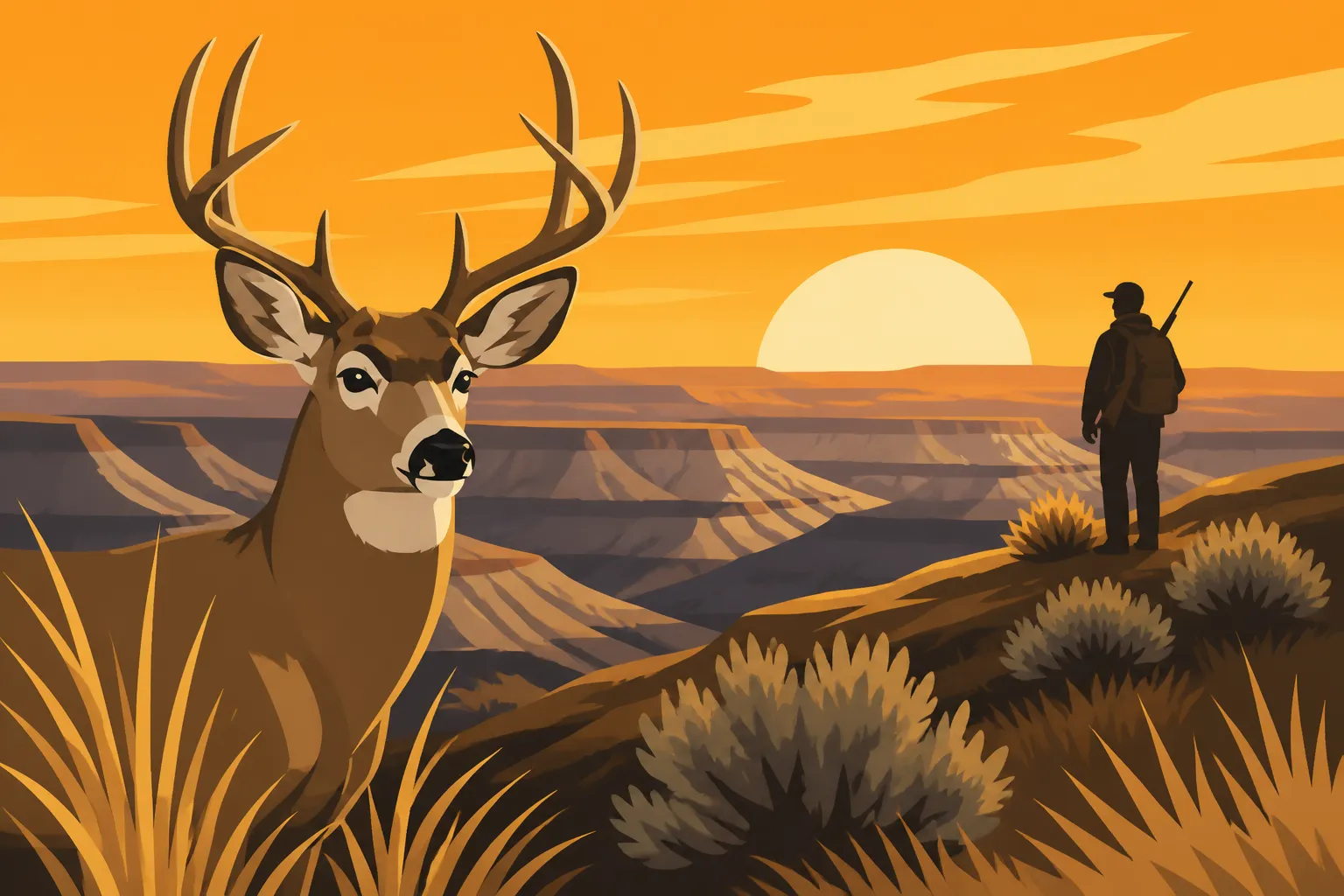
When we talk about the "West River Breaks," we're referring to the vast expanse of western South Dakota that lies west of the Missouri River. This region is characterized by rolling prairies interspersed with deeply incised coulees, draws, and steep, eroded hillsides – the "breaks" themselves. These features are often carved by ancient water flow, creating a complex tapestry of ridges, canyons, and hidden pockets. The geology here is a mix of shale, sandstone, and clay, which erodes easily into the distinctive badlands-like formations in some areas. What makes these breaks special for mule deer is precisely this ruggedness; it provides incredible concealment in an otherwise open world. The sheer scale and undulations of the terrain allow deer to disappear with remarkable ease, often just by dropping into the nearest fold in the land. Water sources, though sometimes scarce, typically funnel into these draws, creating ribbons of denser vegetation that act as critical travel corridors and bedding areas. Understanding these intricate systems of cuts and rises is paramount, as they dictate how deer move and where they choose to hide from both predators and hunters.
Climate and Its Impact on Deer
The climate in the West River Breaks swings from one extreme to another, and these fluctuations profoundly impact mule deer behavior and survival. Summers can be scorching hot and incredibly dry, pushing deer to seek out any available shade in the deeper coulees or along limited riparian zones. Water becomes a critical limiting factor, and deer will often concentrate near isolated stock ponds or natural springs during these times. Then, the winters can be brutally cold with heavy snowfalls and fierce winds that scour the open plains. These conditions force deer to expend massive amounts of energy just to survive, often pushing them to seek shelter in the densest thickets within the breaks, along river bottoms, or in the protected lee sides of hills. Mild springs, conversely, can lead to a flush of new growth, providing abundant forage and helping does recover from winter and fawns to thrive. However, a late-season blizzard or an early, hard freeze can be devastating. These yearly climatic shifts mean that mule deer populations are in a constant state of flux, and their movement patterns can change dramatically based on current weather conditions. A good hunter pays close attention to these environmental cues.
Key Forage and Habitat Components
Mule deer in the West River Breaks are generalist browsers, meaning they'll eat a variety of plants, but they do have their favorites and depend on specific habitat components. Sagebrush, silver buffaloberry, serviceberry, and various forbs are critical parts of their diet, especially during the colder months when other vegetation is scarce. They also browse on young shoots of cottonwood and willow in riparian areas. Grasses are less important for mule deer compared to whitetails, but they will graze on tender new growth. When it comes to cover, the deeper coulees and draws, especially those with pockets of dense shrubbery or scattered junipers, provide essential bedding and escape cover. North-facing slopes often hold more moisture and thus denser vegetation, making them prime spots for deer to bed during hot days. Conversely, south-facing slopes, catching more sun, can be critical for warmth during winter. Understanding these forage preferences and cover types allows hunters to narrow down potential deer locations significantly. You'll often find mule deer utilizing the very tops of the breaks for glassing, then dipping down into the cuts to feed or bed, always mindful of escape routes.
Mule Deer Biology and Behavior in the West River Breaks
To truly become a successful mule deer hunter in the West River Breaks, you need to think like a mule deer. Their biology and behavior are finely tuned to this specific environment, and understanding these nuances will give you a significant advantage. They are not simply larger versions of whitetails; they are creatures of the open country, built for evasion and survival in a landscape of vast horizons.
Physical Adaptations for Arid Landscapes
Mule deer possess several key physical adaptations that set them apart from their whitetail cousins and make them perfectly suited for the often-arid, broken country of the West River. Their most distinctive feature, of course, is their large ears, which swivel independently, allowing them to pinpoint sounds from great distances across open terrain. This enhanced hearing is crucial where visual obstructions are minimal. Their coloring, typically a reddish-brown in summer fading to a grayish-brown in winter, blends seamlessly with the rocky, sage-dotted hillsides, providing excellent camouflage. Perhaps most notably, their method of locomotion – the "pronk" or "stotting" gait – is a high, bounding leap with all four feet landing simultaneously. This isn't just for show; it's an incredibly efficient way to cover broken, uneven ground quickly and visually assess threats while moving. While a whitetail typically runs low and fast, weaving through dense cover, a mule deer bounds over obstacles, designed to escape across wide-open spaces and through deep coulees. Their larger body size also helps them retain moisture and cope with temperature extremes, both hot and cold, which are common in this region. Knowing these physical traits helps you understand how they react to pressure and what kind of terrain they excel at traversing.
Seasonal Movements and Patterns
Mule deer in the West River Breaks exhibit distinct seasonal movement patterns, largely dictated by forage availability, breeding cycles, and human pressure. In the late spring and summer, after fawning, does and fawns often spread out across the landscape, seeking rich forbs and security cover. Bucks, often still in velvet, tend to be more solitary or form small bachelor groups, utilizing pockets of dense cover in secluded draws to grow their antlers. As fall approaches and the hunting season opens, deer patterns shift. They become more focused on feeding, bulking up for winter, and bucks begin to rub velvet and spar. When hunting pressure ramps up, especially on public lands or easily accessible areas, deer will quickly adapt. They'll become nocturnal, move into the thickest, nastiest cover available, or migrate to private land where they feel safer. This is why understanding "Hunting Pressure Patterns on Walk-In Areas" is so crucial; deer don't just stay in one spot. Post-rut, as winter sets in, deer may consolidate into larger herds, seeking out thermal cover and areas with reliable forage. These seasonal shifts are dynamic, and a successful hunter constantly monitors conditions to anticipate where the deer will be.
Rutting Behavior and Peak Activity
The mule deer rut in the West River Breaks typically kicks into high gear from mid-November through early December, though pre-rut activity can start weeks earlier. This is arguably the most exciting time to hunt these magnificent animals, as their focus shifts dramatically from survival to breeding. During the peak rut, mature bucks become significantly less cautious, actively seeking out does. They'll cover vast amounts of country, often traveling between different groups of does, making them more visible and vulnerable during daylight hours. You'll often see them pushing does, chasing rivals, and making impressive displays of dominance. The signs of rut activity are abundant: fresh rubs on sagebrush and small trees, deep scrapes where bucks scent-mark, and the telltale swollen neck of a rutting buck. This increased activity means that areas that might have been devoid of bucks earlier in the season can suddenly come alive. For hunters, this translates into opportunities to glass bucks moving during midday, or even catch them in the open breaks as they scent-check draws. However, it's a short window, and understanding when that peak occurs, often influenced by weather, can make or break a late-season hunt.
Population Dynamics and Management
Hunting mule deer in South Dakota's West River Breaks isn't just about understanding the individual animal; it's also about appreciating the broader health and trends of the population. Mule deer numbers can fluctuate significantly due to a variety of factors, and the South Dakota Game, Fish and Parks (GFP) works hard to manage these herds sustainably. As a hunter, being informed about these dynamics helps you set realistic expectations and contribute to conservation.
Current Herd Status and Trends
The status of mule deer herds in South Dakota's West River Breaks is a topic of constant discussion among hunters and wildlife managers. Historically, mule deer populations have seen their ups and downs. Unlike whitetails, which thrive in agricultural and fragmented habitats, mule deer rely heavily on the integrity of large, open rangelands. Recent estimates indicate that the mule deer population, while not as abundant as pheasants, is generally stable in many West River units, though specific numbers can vary year to year and unit to unit. Some years, severe winters can cause localized declines, especially for fawns and older animals, but with good recruitment years, the herds can bounce back. The South Dakota GFP regularly conducts aerial surveys and other data collection methods to monitor population trends, fawn recruitment rates, and buck-to-doe ratios. Understanding these trends, often published in GFP reports, is invaluable for hunters, influencing draw odds and tag allocations for the upcoming season. You can often find summaries of this data on the GFP website or through resources like GoHunt, which compiles state-specific hunting information.
Factors Affecting Population Health
Several interconnected factors play a crucial role in the overall health and size of the West River mule deer population. Habitat availability and quality are paramount. While the breaks themselves provide good cover, ongoing land use changes, such as conversion of native prairie to cropland, can reduce vital winter range and fawning cover. Severe weather events, as discussed earlier, are major determinants. A particularly harsh winter with deep snow and prolonged cold can lead to significant winter kill, especially if deer are already in poor condition. Droughts, on the other hand, can reduce forage quality and water availability, impacting fawn survival and overall deer health. Predation, primarily from coyotes and occasionally mountain lions, also plays a role, particularly impacting fawn recruitment. While these predators are a natural part of the ecosystem, heavy predation combined with other stressors can suppress populations. Diseases like Chronic Wasting Disease (CWD) are a growing concern in some areas of South Dakota, and EHD (Epizootic Hemorrhagic Disease) can cause localized die-offs, especially during hot, dry summers. The complex interplay of these factors makes mule deer management a delicate balancing act. Learning about "Mule Deer Fawn Recruitment in Dry Years" highlights how critical these environmental factors are.
GFP Management Strategies
The South Dakota Game, Fish and Parks (GFP) employs a suite of management strategies designed to maintain healthy and huntable mule deer populations in the West River Breaks. Their primary tools include setting annual tag allocations, establishing specific hunting units with varying quotas, and adjusting season dates. These decisions are based on the latest population data, harvest reports from previous seasons, and biological objectives for each unit. For instance, if fawn recruitment has been low in a particular unit, GFP might reduce the number of antlerless tags to allow the herd to recover. The goal is to balance hunter opportunity with the long-term sustainability of the resource. They also monitor habitat conditions and work with landowners on habitat improvement projects. Furthermore, GFP actively monitors for diseases like CWD, often requiring mandatory testing in specific areas to track prevalence and prevent spread. Hunters play a vital role in this management by accurately reporting their harvest and participating in surveys. Understanding the "South Dakota Deer Licence Types by Region" and how draws work is essential for anyone hoping to hunt these areas.
Scouting the West River Breaks for Mule Deer
Hunting mule deer in the expansive West River Breaks without proper scouting is akin to finding a needle in a haystack. The sheer scale of the landscape can be overwhelming, but with modern tools and time-tested techniques, you can drastically increase your efficiency and chances of success. Scouting, both from afar and on the ground, is the foundation of a productive hunt.
Utilizing Topographical Maps and Aerial Imagery
Before you even think about lacing up your boots, you need to spend significant time studying topographical maps and high-resolution aerial imagery. This is where you begin to decipher the land's secrets. Topo maps reveal elevation changes, showing you the steepness of slopes, the depths of coulees, and the general flow of the terrain. Look for areas where multiple draws converge, creating natural travel bottlenecks, or where a deep, winding coulee offers extensive cover. Aerial imagery, found on platforms like Google Earth or specialized hunting apps, takes this a step further. You can identify specific vegetation types – stands of sage, thicker riparian growth, or isolated pockets of junipers – that might not be obvious on a topo map. Look for darker green patches, which often indicate denser cover that deer will use for bedding. Pinpoint potential water sources like stock ponds or springs, especially in dry country, as these will be magnets for deer. Pay attention to how the sun hits different slopes throughout the day; south-facing slopes warm up earlier and can be great for bedding in winter, while north-facing slopes stay cooler and hold deer on hot days. By meticulously analyzing these maps, you can identify likely bedding areas, feeding zones, and the travel corridors mule deer will use to move between them, all before you step foot in the field.
E-Scouting and Digital Tools
In today's hunting world, e-scouting has become an indispensable tool, especially for vast, open landscapes like the West River Breaks. Digital mapping applications, such as onX Hunt or GoHunt, allow you to overlay private and public land boundaries, landowner names, and various habitat layers directly onto aerial imagery and topo maps. This is incredibly powerful for identifying legal access points and understanding the land ownership puzzle. For instance, if you're planning on "Hunting South Dakota Walk-In Areas", e-scouting allows you to see the exact boundaries of these public-access parcels and plan your approach routes without trespassing. You can drop pins on potential glassing knobs, likely bedding areas, and escape routes. GoHunt's Insider platform, for example, provides detailed draw odds, unit breakdowns, and harvest data, allowing you to choose your units wisely and understand the pressure they might receive. These digital tools also allow you to save waypoints, measure distances, and track your movements in real-time while in the field, making navigation and documentation much easier. It's truly a game-changer for efficiently breaking down huge chunks of country and focusing your efforts on the most promising areas. Learning to use tools for "E-Scouting Walk-In Areas Before the Season" can save you countless hours of unproductive hiking.
Boots-on-the-Ground Scouting Techniques
While e-scouting is crucial for narrowing down areas, nothing beats actual boots-on-the-ground scouting to confirm your theories and get a real feel for the terrain. The best time for physical scouting, if possible, is outside of hunting season, when deer are less pressured and you won't disturb them. Look for fresh deer sign: tracks in dusty trails or soft earth, particularly larger, more defined tracks that indicate a mature buck. Scats can tell you what they're eating and how recently they've been in the area. Most importantly, look for rubs on trees and bushes, where bucks have scraped their antlers to mark territory or remove velvet. Large, deep rubs indicate a mature buck has been in the vicinity. Shed antlers, found in late winter or early spring, are also a fantastic indicator of buck presence and can even give you an idea of antler size. As you walk, pay attention to the wind, noting how it swirls and funnels through the coulees – this is critical for planning your approach during the hunt. Identify specific bedding areas, often sheltered spots on ridges or in thickets, that offer deer a commanding view of their surroundings with a good escape route. Scouting also allows you to find water sources, like where "Finding Water in Dry West River Country" becomes critical, and confirm if they're still active. This direct observation helps build a mental map of the deer's movements and habits in that specific location, invaluable come hunting season.
Effective Hunting Tactics for West River Mule Deer
Hunting mule deer in the vast, open expanses of the West River Breaks demands a blend of patience, persistence, and strategic thinking. Unlike hunting whitetails in dense timber, where quick shots and close encounters are common, mule deer hunting here is often a game of long distances, meticulous observation, and carefully executed stalks.
Glassing and Spot-and-Stalk Approaches
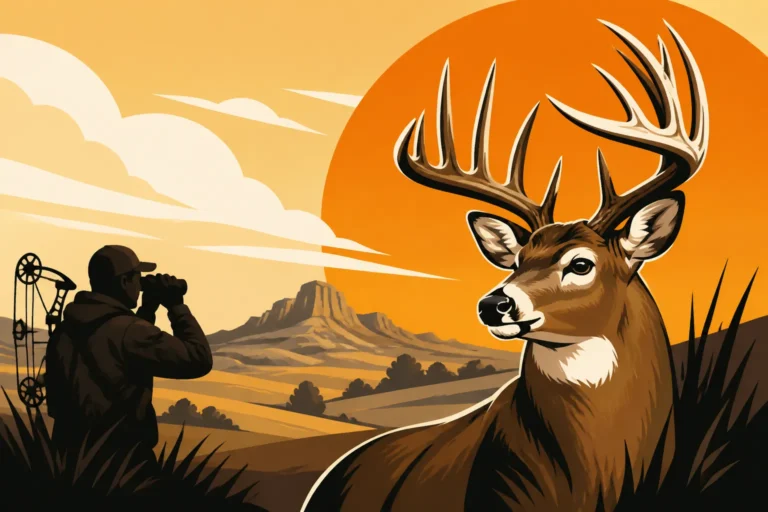
The spot-and-stalk method is, without a doubt, the quintessential tactic for hunting mule deer in the West River Breaks. The sheer openness of the country means that covering ground on foot without first locating deer is largely unproductive and often results in spooking unseen animals. Instead, you'll spend the vast majority of your time glassing. This involves finding a high vantage point – a prominent ridge, a knob, or even the roof of your vehicle (if legal and safe) – and systematically sweeping the landscape with high-quality binoculars or a spotting scope. The key is to be incredibly patient and thorough. Don't just glance; pick apart every shadow, every cluster of sagebrush, every fold in the terrain. Look for subtle movements, horizontal lines that don't belong, or the tell-tale flicker of an ear or tail. Early morning and late evening are prime glassing times when deer are often most active, but don't discount midday; bucks will often bed in visible spots, soaking up the sun or finding shade. Once a deer is spotted, the real chess match begins. This is where you might employ tactics like "Glassing South Dakota Breaks at First Light" to catch them moving. The challenge then becomes planning a stalk that keeps you out of sight and downwind, utilizing every bit of terrain for cover.
Using the Terrain to Your Advantage
The broken topography of the West River Breaks, which can seem daunting at first, is actually your greatest ally in a spot-and-stalk hunt. The numerous coulees, draws, and ridges provide crucial concealment that allows you to close the distance on a spotted buck. Once you've located a deer, carefully study the intervening terrain. Plan a route that keeps you below ridge lines, in the bottoms of draws, or behind hills, using every available dip and rise to remain out of sight. The goal is to get within comfortable shooting range without the deer ever knowing you're there. This often means taking a circuitous route, sometimes doubling back or moving in an opposite direction from the deer to gain a better angle or reach a more favorable approach. Wind direction is critical; always approach from downwind, as a mule deer's nose is incredibly keen. Be mindful of thermals in the mornings and evenings, which can carry your scent up or down draws. Learning to read "Reading Prairie Coulees for Mule Deer" and understanding how they funnel wind and provide cover is a skill that takes practice but pays huge dividends. The best stalks are often the longest, most deliberate ones, sometimes taking hours to complete.
Still-Hunting and Ambush Opportunities
While spot-and-stalk is king, there are times when still-hunting or setting up an ambush can be effective in the West River Breaks, especially during specific conditions or in particular types of habitat. Still-hunting, which involves slowly and quietly moving through an area, pausing frequently to observe, can be productive in denser pockets of cover, such as thick river bottoms, stands of juniper, or expansive areas of tall sagebrush where glassing is difficult. This method is all about stealth and patience, moving only when necessary and taking advantage of any available cover. Look for fresh sign as you go, always expecting a deer to be just around the next bend. Ambush opportunities can arise around reliable water sources, especially during dry periods. Setting up a ground blind or finding natural cover overlooking a stock pond or spring can be effective, particularly in the afternoons when deer often head to water. Similarly, during the peak of the rut, bucks will move significant distances between doe groups. Positioning yourself in a natural travel corridor between known bedding and feeding areas, or along the edges of larger breaks, can provide an opportunity to intercept a cruising buck. This might involve carefully chosen blind setups, using the terrain to break up your silhouette, and a good understanding of "Wind Direction on a Prairie Stalk" to avoid detection.
Gear and Preparation for a West River Hunt
A successful mule deer hunt in the West River Breaks isn't just about knowing the deer and the land; it's also about being properly equipped for the challenging conditions. The right gear can make the difference between a miserable trip and a memorable experience, ensuring your comfort, safety, and effectiveness in the field.
Essential Optics and Their Importance
In the vast, open landscapes of the West River, optics are not just an accessory; they are your primary hunting tool. A high-quality pair of binoculars is non-negotiable. Aim for 10×42 or 12×50 power for optimal balance of magnification and field of view. Look for binoculars with excellent low-light performance, crisp edge-to-edge clarity, and durable construction. Brands like Vortex, Leupold, and Zeiss are popular choices among serious Western hunters. A spotting scope, usually 15-45x or 20-60x, mounted on a sturdy tripod, is equally critical. This allows you to scrutinize distant animals, confirm antler size, and even distinguish a bedded deer from a rock. Without a spotting scope, you'll be making many unproductive, long stalks on false positives. The tripod is essential for steady glassing, reducing eye fatigue during hours of observation. A rangefinder is the final piece of the optics puzzle, absolutely vital for accurately judging distances in a country where judging yardage is notoriously difficult. Knowing the exact distance to your target is crucial for making ethical shots at longer ranges. Good optics are a significant investment, but they pay dividends in identifying game and making successful stalks.
Rifle and Ammunition Considerations
Hunting in the West River Breaks often involves long shots, so your rifle and ammunition setup needs to be up to the task. Flat-shooting calibers are preferred, such as .270 Win, .30-06, 7mm Rem Mag, .300 Win Mag, or 6.5 Creedmoor. The key is to choose a caliber you shoot accurately and confidently. Practice extensively at extended ranges, mimicking field positions as much as possible. A good quality scope with clear glass, reliable turrets, and sufficient magnification (e.g., 3-9x, 4-16x, or 5-25x) is essential. Zero your rifle for 200 yards, and know your bullet's trajectory out to 400-500 yards, or even further if you're proficient. Premium hunting ammunition with good ballistic coefficients and reliable terminal performance is a must. Nosler AccuBond, Barnes TTSX, and Hornady ELD-X are excellent choices that perform well at various ranges. While long-range shooting can be tempting in open country, always strive to get as close as ethically possible, and only take shots within your effective maximum range. Always consider the "Rifle Choice for West River Mule Deer" and how it matches your skill level.
Clothing, Footwear, and Survival Gear
The weather in the West River Breaks can be incredibly unpredictable, often swinging from warm and sunny to cold, windy, and even snowy within a single day. Layering is therefore crucial. Start with a moisture-wicking base layer, add insulating layers like fleece or down, and top it off with a waterproof and windproof outer shell. Choose quiet fabrics that won't rustle as you stalk. Durable, comfortable hiking boots with good ankle support are non-negotiable, as you'll be covering many miles over uneven, sometimes rugged terrain. Break them in well before your hunt to avoid blisters. Beyond clothing, a sturdy backpack is essential to carry water (at least 2-3 liters per day, as water sources can be sparse), high-energy snacks, a first-aid kit, a headlamp, navigation tools (GPS or mapping app on your phone with downloaded maps), and emergency fire starters. A basic knife, game bags, and rubber gloves for field dressing are also must-haves. Given the vastness of the country and limited cell service in some areas, carrying a satellite communication device like a Garmin inReach or Zoleo can be a lifesaver for emergencies. Preparation for the elements and potential emergencies is paramount for a safe and successful hunt.
Field Care and Recovery
Taking down a mule deer in the challenging West River Breaks is just the beginning of another critical phase of the hunt: ethical recovery and proper field care. The vastness of the terrain, combined with potentially warm temperatures, means you need to be prepared to act quickly and efficiently to ensure the meat is not wasted and the animal is recovered respectfully.
Shot Placement and Tracking Challenges
Making an ethical shot is paramount, and in the open country of the West River, this often means considering factors like wind, bullet drop, and the animal's exact position. Aim for the classic shoulder or lung shot for the quickest, most humane kill. Due to the propensity for longer shots, practicing your prone and kneeling positions with shooting sticks or a bipod is crucial. Even with a well-placed shot, mule deer can cover significant ground, especially when adrenaline is pumping. Tracking in the sparse vegetation and hard-packed earth of the breaks can be incredibly challenging. Blood trails may be minimal or non-existent in rocky terrain or tall, dry grass. If a deer takes off after the shot, immediately mark the exact spot where the deer was standing and where you last saw it. Then, slowly and methodically search for sign: tracks, broken vegetation, hair, or blood. If the blood trail is scarce, expand your search pattern in the direction the deer was heading, keeping an eye out for any sign of a downed animal. Be patient, take your time, and if daylight is fading, consider backing out and returning at first light to avoid pushing a potentially wounded animal further into the darkness. Learning about "Following Up a Marginal Shot in Grass" can be invaluable in these situations.
Field Dressing and Meat Preservation
Once you've recovered your mule deer, swift and thorough field dressing is critical, especially if temperatures are mild or warm, which is often the case during early season hunts in October. The goal is to cool the carcass as quickly as possible to prevent spoilage. Remove all the internal organs immediately. If you're physically able, prop the chest cavity open with a stick to allow air circulation. In areas with challenging terrain or long pack-outs, quartering the deer in the field is often the most practical approach. This involves skinning the deer and removing the four quarters, backstraps, and tenderloins. Place these cuts into breathable game bags immediately. Quality game bags are essential as they protect the meat from flies, dirt, and debris while allowing air to circulate. Never use plastic bags, as they trap heat and moisture, accelerating spoilage. If you're concerned about heat, especially on a sunny day, try to get the meat into the shade as soon as possible. Even covering the game bags with a space blanket (shiny side out) can reflect some heat. The sooner you get the meat cooled, the better its quality will be. This attention to detail ensures that the "Why Antelope Meat Gets a Bad Name" isn't repeated with your hard-earned venison.
Getting a Buck Out of a Coulee
The challenge of getting a mule deer out of a deep coulee or up a steep hillside after a successful hunt is often underestimated. These deer are heavy, and the terrain is unforgiving. If you have hunting partners, teamwork is essential. Utilize a game cart if the terrain allows for it, though many West River coulees are simply too rugged. Often, it comes down to old-fashioned muscle and smart planning. If the deer is intact, dragging it can work for shorter distances over relatively flat ground, but it's incredibly taxing. Quartering the deer in the field, as mentioned, into manageable pieces is usually the most efficient and least physically demanding way to extract it. Each quarter, along with the backstraps and tenderloins, can then be loaded into a sturdy backpack designed for packing out game. Distribute the weight evenly, adjust your pack correctly, and take frequent breaks. Plan your route out carefully, trying to find the path of least resistance, even if it's a bit longer. Knowing how to expertly perform "Getting a Deer Out of a South Dakota Coulee" is a rite of passage for West River hunters and a testament to your preparation and determination. Once out, get the meat into coolers with ice, but ensure the ice isn't directly touching the meat to avoid waterlogging; use dry ice or keep it in sealed bags if possible.
Disclaimer
The information provided in this guide is for general informational purposes only and does not constitute legal advice or endorsement of any specific hunting practice. Hunting regulations, seasons, and licensing requirements in South Dakota can change frequently. It is the responsibility of every hunter to consult the most current South Dakota Game, Fish and Parks (GFP) regulations and ensure full compliance with all applicable laws before and during any hunting activity. Always prioritize safety, ethical hunting practices, and respect for wildlife and private property.