Getting Stuck on a Prairie Two-Track
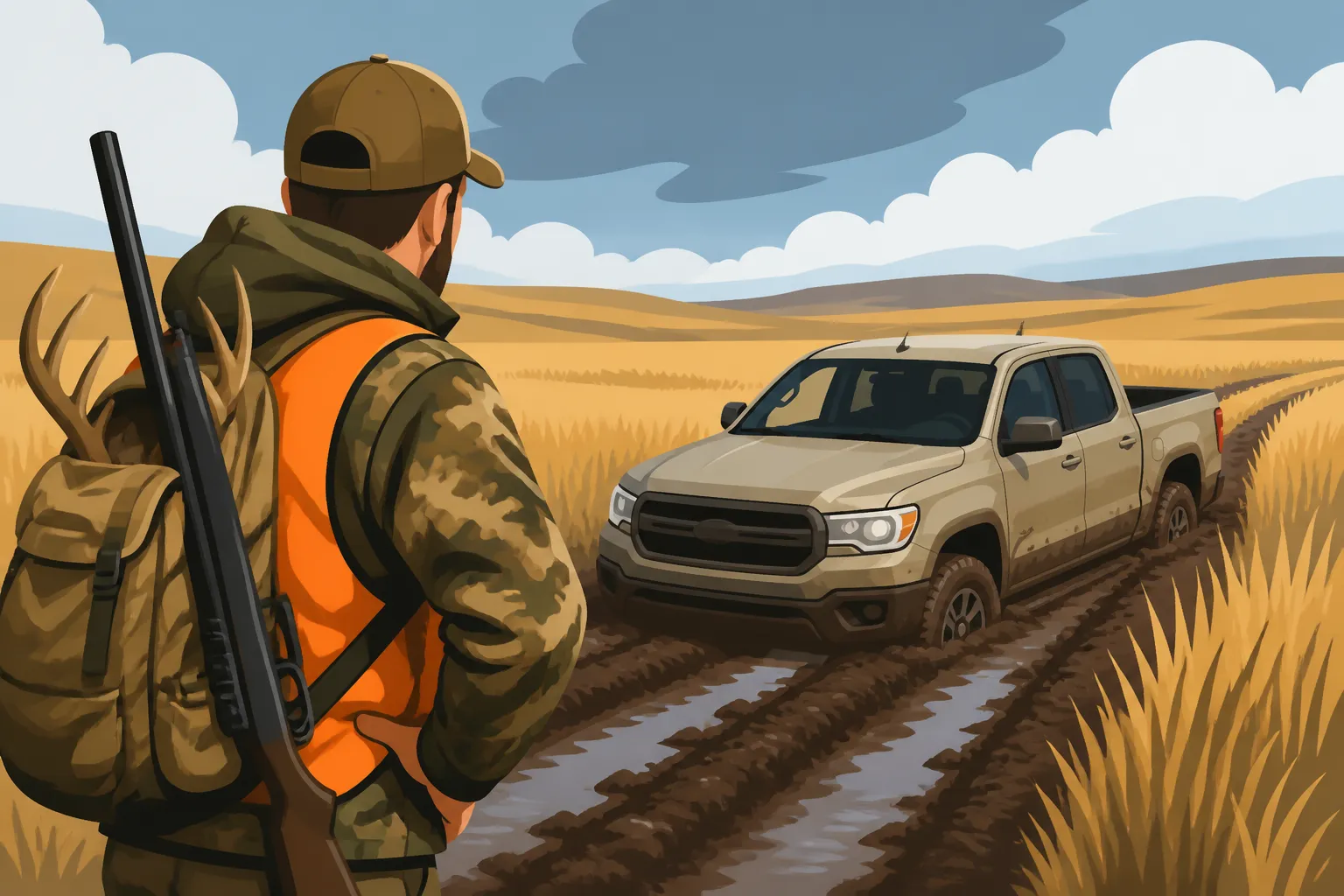
There’s nothing quite like the heart-sinking feeling of your tires losing traction, the engine revving, and the smell of burning clutch as your rig settles deeper into the gumbo or a snowdrift on a remote South Dakota two-track. It’s a rite of passage for many hunters, but it’s never fun when you’re miles from the nearest paved road. This guide will walk you through preparation, prevention, and practical recovery steps to get you unstuck and back to the hunt, because getting stranded deep in the vast prairie is a situation no one wants to face.
Understanding South Dakota Two-Tracks and Their Hazards
Ah, the humble two-track. For many of us who hunt South Dakota, these faint paths are our gateways to hidden pheasants, elusive mule deer, or a strategic waterfowl pothole. They promise adventure, but they also carry their own unique set of risks, often turning a smooth drive into a serious predicament without much warning. It's a classic South Dakota experience, and often a frustrating one.
The Nature of Prairie Roads
Most two-tracks aren't officially maintained roads; they're simply routes carved out by repeated vehicle use across private farmland, ranch property, or public ground like the Fort Pierre National Grassland or Buffalo Gap National Grassland. They often have a strip of grass growing down the middle, acting as a deceptive green carpet that hides whatever treacherous conditions lie beneath. These tracks can be fantastic for getting away from the crowds and accessing pristine hunting spots, but their unmaintained nature means they're subject to the whims of weather and heavy use. One minute you're cruising, the next you're in a mess.
Because they aren't graveled or paved, these tracks can transform dramatically with even a slight change in conditions. A sunny day following a week of rain might seem fine, but that top layer can be a thin crust over deep, sucking gumbo. Similarly, a light snowfall can quickly become deep, hidden drifts overnight, especially in areas exposed to the relentless South Dakota wind. There’s also the issue of remoteness; many of these tracks are far from any towns, and often out of reliable Cell Coverage in West River Country, making a simple tow call a major challenge.
Common Sticking Scenarios
When you find yourself stuck on a South Dakota two-track, it usually falls into one of a few common categories, each requiring a slightly different approach. Knowing what kind of sticky situation you're in is the first step toward getting out.
The Infamous Gumbo Mud
This is perhaps the most notorious culprit. South Dakota gumbo is a unique blend of dense, clay-rich soil that, when wet, becomes incredibly slick and sticky. It clings to tires, fills up wheel wells, and can literally suck a vehicle down to its frame. You'll feel your tires spinning, the truck sliding, and then suddenly, you're not moving forward (or backward) at all. This often happens after a substantial rain, turning what looked like a solid path into a viscous trap. As any hunter who's been out after a deluge knows, a beautiful prairie morning can quickly be ruined by a track that turns into a quagmire after a Mud Roads After a Prairie Rain. It’s a humbling experience to realize how quickly seemingly solid ground can betray you.
Sneaky Snowdrifts and Ice
Winter hunting, particularly for predators or late-season pheasants, often leads us down snowy two-tracks. The danger here lies in judging the depth of the snow. What looks like a manageable dusting can hide a deep, hard-packed drift, especially in cuts or behind shelterbelts. You might be driving along, thinking all is well, and then suddenly your momentum dies, and your vehicle is buried up to the axles. Ice, especially black ice under a layer of snow, can also be a silent killer, offering zero traction. Many a hunter has found themselves unexpectedly halted while trying to navigate a faint trail during Winter Predator Hunting on Snow, only to realize the snow was far deeper than it appeared.
Powdery Sand Pits
While not as common as mud or snow across the entire state, certain areas, particularly in West River country around sandy draws or river beds, can have stretches of deep, loose sand. This is especially true after a long dry spell. Unlike mud, which can sometimes offer a little purchase, fine sand just lets your tires dig in deeper and deeper with every spin. You'll feel the vehicle sink quickly, and before you know it, your tires are buried past the tread, and your frame might be resting on the sand, too. These patches can be notoriously hard to spot until you're already in them.
The High-Centering Hazard
This happens when the middle of your vehicle's underside, usually the frame or differential, gets hung up on a raised obstruction, lifting your drive wheels off the ground. On a two-track, this can often be the grassy crown in the middle of the path, a hidden rock, or a log. You might be trying to carefully straddle a deep rut, or navigate a particularly uneven section, and suddenly, you feel a jolt and then a sickening lack of forward motion, even though your tires might be spinning freely in the air. This situation often leaves you completely immobile, as your vehicle's weight is no longer distributed on the wheels.
Essential Gear for Self-Recovery
Getting stuck is inevitable if you hunt remote South Dakota long enough. The key isn't necessarily avoiding it altogether, but being prepared to deal with it when it happens. Having the right gear can turn a potential disaster into a minor delay. This isn't just about getting your vehicle unstuck, it's about staying safe and minimizing the time you're exposed to the elements or isolated from help.
Vehicle-Specific Tools and Supplies
Your truck or SUV is your lifeline in the backcountry, and equipping it properly for self-recovery is paramount. Think of this as your survival kit for your rig.
First and foremost, invest in proper recovery straps (sometimes called kinetic ropes or snatch straps) and shackles. These are specifically designed to stretch and then contract, smoothly pulling a stuck vehicle out without the jarring impact of a tow chain. Never, ever use a tow chain for vehicle recovery, as they can snap under tension and become deadly projectiles. Ensure your shackles (D-rings or soft shackles) are rated for your vehicle's weight and compatible with your vehicle's dedicated recovery points.
A sturdy shovel is absolutely non-negotiable. While a collapsible army shovel is better than nothing, a full-sized, heavy-duty shovel will be your best friend when digging out from gumbo or deep snow. You'll need to clear mud or snow from around your tires and, often, from beneath your frame and differentials.
Traction aids like recovery boards (MaxTrax, TRED, etc.) are incredibly effective. These plastic boards wedge under your tires to provide grip on slippery surfaces. In a pinch, even old floor mats or sturdy branches can offer a bit of extra traction. An air compressor and tire deflator are also invaluable. Letting a small amount of air out of your tires increases their contact patch, significantly improving traction on soft surfaces like mud or sand. Just remember to re-inflate them to proper road pressure once you're free.
Don't forget a Hi-Lift jack or a robust bottle jack with a solid base. These are crucial for high-centering situations, allowing you to lift your vehicle and fill the void beneath the tires. And of course, always have functioning jumper cables or a portable jump starter. Cold South Dakota mornings can be tough on batteries, and you don't want a dead battery adding to your woes. A basic tool kit for minor repairs and a tire plug kit can also save the day.
Personal Preparedness Items
Beyond your vehicle, your personal well-being is critical, especially when you might be waiting for help for hours in challenging conditions. South Dakota weather is famously unpredictable; a warm autumn day can turn into a freezing gale quickly. Always have extra, warm clothing layers in your vehicle, especially preparing for Layering for South Dakota Wind. Hypothermia is a real risk.
Carry plenty of water and some non-perishable food in case you’re stuck longer than expected. A well-stocked First Aid Kit for a Prairie Hunt is essential for any cuts, scrapes, or other injuries that might occur during recovery. A fully charged cell phone is a given, but since service is often nonexistent, a satellite messenger or Personal Locator Beacon (PLB) is a wise investment for communicating in emergencies. A good headlamp or flashlight is also crucial, as recoveries often stretch into the evening.
Finally, a crucial piece of "gear" is a good plan and effective communication. Always tell someone your exact route and expected return time. This is part of Leaving a Trip Plan Before a Hunt and ensures that if you don't check in, someone knows where to start looking. On top of that, consider using a mapping application like GoHunt. Downloaded for offline use, it allows you to view detailed topographic maps, private and public land boundaries, and even historical satellite imagery, which can be invaluable for identifying potential routes or even escape options when you're in a bind and beyond cell service.
Step-by-Step Recovery Strategies When You're Stuck
The moment you realize you're stuck, a wave of frustration or even panic can set in. But how you react in those first few minutes can make all the difference between a quick recovery and an hours-long ordeal. Remember, patience and a clear head are your best tools.
Initial Assessment and Action Plan
Before you even think about putting it in reverse and flooring it, take a few deep breaths and truly assess the situation. The worst thing you can do is dig yourself deeper or damage your vehicle unnecessarily. First, determine the type of terrain you're in: mud, snow, sand, or a high-center situation. Next, assess how deep you are. Are your tires just spinning, or is your frame resting on the ground? Look under the vehicle to see what might be caught or where the deepest part of the bog is.
If you have passengers, make sure everyone is safe. If you need to work under the vehicle, ensure it is properly supported and stable – never rely solely on a jack without additional support. This initial assessment also involves looking for potential anchor points if you have a winch. Are there any sturdy fence posts (be mindful of property and damage), large rocks, or other vehicles nearby? Having a reliable mapping application like GoHunt downloaded for offline use on your phone can be a real lifesaver here, allowing you to re-evaluate your position, identify alternative routes, or even spot potential distant anchor points on the landscape.
Recovering from Mud or Snow
These two scenarios often share similar recovery techniques, centered on improving traction and clearing obstructions.
Your first step should always be to clear around your tires and any part of your frame that might be bogged down. Grab your shovel and dig out as much mud or snow from in front of and behind your drive tires as possible. Pay special attention to the area around your differential, which can often be the lowest point and get hung up first. This is where the South Dakota gumbo truly tests your resolve!
Once cleared, it's time to add traction. Place your recovery boards firmly under the drive tires, pointing them in the direction you want to go. If you don't have recovery boards, use your floor mats (carpet side down for better grip) or sturdy branches. If you have an air compressor and deflator, this is the ideal time to air down your tires slightly. Reducing your tire pressure by 10-15 PSI can significantly increase your tire's contact patch, giving it more surface area to grip the soft ground. Just remember to reinflate them once you're back on solid ground.
With traction aids in place, try a gentle rocking motion. Put the vehicle in a low gear (4-Low if you have it) and gently apply power, trying to rock the vehicle forward a few inches, then backward. Avoid spinning your tires excessively, as this will only dig you deeper. The goal is to build momentum slowly and consistently. If you have a winch, use a proper recovery strap to a secure anchor point. Never use a chain, as it can be incredibly dangerous if it breaks under tension. When winching, ensure bystanders are clear and that your anchor point is solid and won't be damaged.
Dealing with High-Centering or Sand
These situations require slightly different tactics, though some principles remain the same.
If you're high-centered, meaning your frame is resting on an obstacle and your wheels are off the ground or have no traction, your shovel and jack become paramount. You need to lift the vehicle off the obstruction. Use your Hi-Lift jack or bottle jack, ensuring it's on a stable base and engaging a solid jack point on your vehicle (like the frame or a rock slider). Once lifted, use your shovel to clear the obstruction and then fill the void under your tires with rocks, logs, or even compacted mud to build up the ground. The goal is to lower your vehicle back onto solid ground beneath the tires.
For sand, airing down your tires is perhaps the most critical step. Lowering your tire pressure can make a monumental difference in getting enough floatation over the soft sand instead of digging into it. Once aired down, gently try to drive out. Avoid sudden bursts of throttle, which will only cause your tires to spin and dig in. Try to maintain steady momentum and keep your wheels as straight as possible. Recovery boards are excellent here, giving your tires something firm to climb onto. If you start to dig in, stop, back up a little if possible, and try again. Sometimes, it’s about making slow, incremental progress.
| Recovery Item | Purpose | Notes |
|---|---|---|
| Recovery Strap (Kinetic) | Pulling vehicle from mud/snow | NEVER use chains for vehicle recovery; kinetic straps absorb shock |
| Soft Shackles / D-Rings | Connecting strap to vehicle's recovery points | Ensure rated for vehicle weight and inspect for wear |
| Shovel (Folding or Full) | Digging out mud, snow, or sand | Essential for clearing around tires and under the frame |
| Traction Boards (MaxTrax) | Providing grip under spinning tires | Can be costly but highly effective; use with gentle throttle |
| Hi-Lift Jack | Lifting vehicle for high-centering, tire changes | Requires solid jack points; can be dangerous if misused |
| Tire Deflator / Air Comp. | Adjusting tire pressure for traction, re-inflating | Lower PSI for soft ground, higher for rocks; re-inflate for road use |
| Jumper Cables / Jump Pack | Starting dead battery | Cold weather saps batteries quickly, especially overnight |
| Basic Tool Kit | Minor repairs, tightening loose parts | Always good to have for unexpected issues or minor adjustments |
| First Aid Kit | Treating injuries | A well-stocked First Aid Kit for a Prairie Hunt is non-negotiable |
| Satellite Communicator | Emergency communication beyond cell service | Crucial in remote areas lacking Cell Coverage in West River Country |
| Extra Clothing | Staying warm if stranded | Prepare for changing conditions with proper Layering for South Dakota Wind |
| Water & Snacks | Sustenance if delayed | Especially important if recovery takes hours or overnight |
Preventing Future Mishaps and Staying Safe
Being stuck once is usually enough to teach a hunter a valuable lesson, but applying smart driving techniques and thorough trip planning can significantly reduce your chances of a repeat performance. The South Dakota prairie is beautiful, but it's also unforgiving, and your best recovery tool is prevention and preparation.
Smart Driving Techniques on Rough Terrain
Knowing how to drive off-road isn't just about having 4WD; it's about understanding the terrain and your vehicle's capabilities. Scout ahead whenever possible. If you're approaching an unknown section of a two-track that looks suspicious—deep ruts, standing water, or unusually deep snow—it's always best to get out and walk it. Look for the deepest points, the softest spots, or any hidden obstacles. This simple act can prevent hours of digging.
On soft ground, whether it's mud or sand, try to maintain a steady, moderate momentum. Don't go too fast, which can lead to losing control, but don't go too slow, which allows your tires to sink. Avoid stopping in the middle of a soft section if you can help it. Know your vehicle's limits: understand your 4WD system (when to use 4-High vs. 4-Low), your ground clearance, and your approach/departure angles. These figures will tell you what your vehicle can realistically handle. The type of tires you run also makes a massive difference; all-terrain or mud-terrain tires with aggressive tread patterns will always outperform street tires in adverse conditions.
Perhaps the most crucial safety tip for driving on remote two-tracks is to drive with a buddy. Two vehicles are always safer than one. If one gets stuck, the other can assist with recovery or go for help. If you absolutely must go alone, ensure someone knows your plan, as outlined in Leaving a Trip Plan Before a Hunt.
Trip Planning and Communication
Even before you leave your driveway, solid trip planning can save you a world of hurt. Always inform a friend or family member of your exact hunting area, your planned route, and your expected return time. This isn't just a suggestion; it’s a critical safety protocol, especially in areas with spotty cell service.
Check the weather reports religiously. South Dakota weather is infamous for its rapid changes. A clear, crisp morning can quickly give way to a whiteout blizzard or a torrential thunderstorm, turning dry tracks into mud pits in a matter of hours. Being aware of approaching weather allows you to adjust your plans or delay your trip.
Utilize modern E-scouting tools. Applications like GoHunt are invaluable for studying aerial imagery of your target area. Before you ever hit the road, you can identify low-lying areas that might hold water and turn to gumbo, observe old trails that might be less used (and therefore more overgrown or rutted), and even spot potential escape routes. This proactive approach to E-Scouting Walk-In Areas Before the Season or simply Reading Aerial Imagery for Cattail Cover or potential Finding Water in Dry West River Country can give you an edge by anticipating problematic areas. Download these maps and satellite images for offline use on your device, because once you’re out there, cell signal is a luxury, not a guarantee. Remember, even knowing how Reading Snow for Deer and Predator Sign can sometimes give you a hint about underlying terrain conditions or recent traffic.
Finally, ensure your vehicle is in good working order before you venture off the pavement. Basic maintenance like checking tire pressure, fluid levels, and battery health can prevent many common breakdowns that lead to being stranded. Remember that the ultimate goal is not just to get unstuck, but to avoid getting stuck in the first place, ensuring a safer and more enjoyable hunt on the beautiful South Dakota prairie.
Disclaimer
The information provided in this guide is for general informational purposes only and does not constitute professional advice. Off-road driving and vehicle recovery can be dangerous. Always exercise caution, adhere to local regulations, and prioritize personal safety. It is recommended to seek professional training for advanced recovery techniques.