Safe Gun Handling on a Bird Drive
Heading out for a bird drive in South Dakota is an exhilarating experience, but the excitement can sometimes overshadow the crucial need for constant vigilance when firearms are involved. The reality is, with multiple hunters, often-unpredictable pheasants, and perhaps even some excited bird dogs, the chances for an accident increase if strict safety protocols aren't followed. This guide is here to walk you through the essential gun handling practices to ensure everyone comes home safe and sound after a memorable day in the field.
Understanding the Unique Dynamics of a Bird Drive
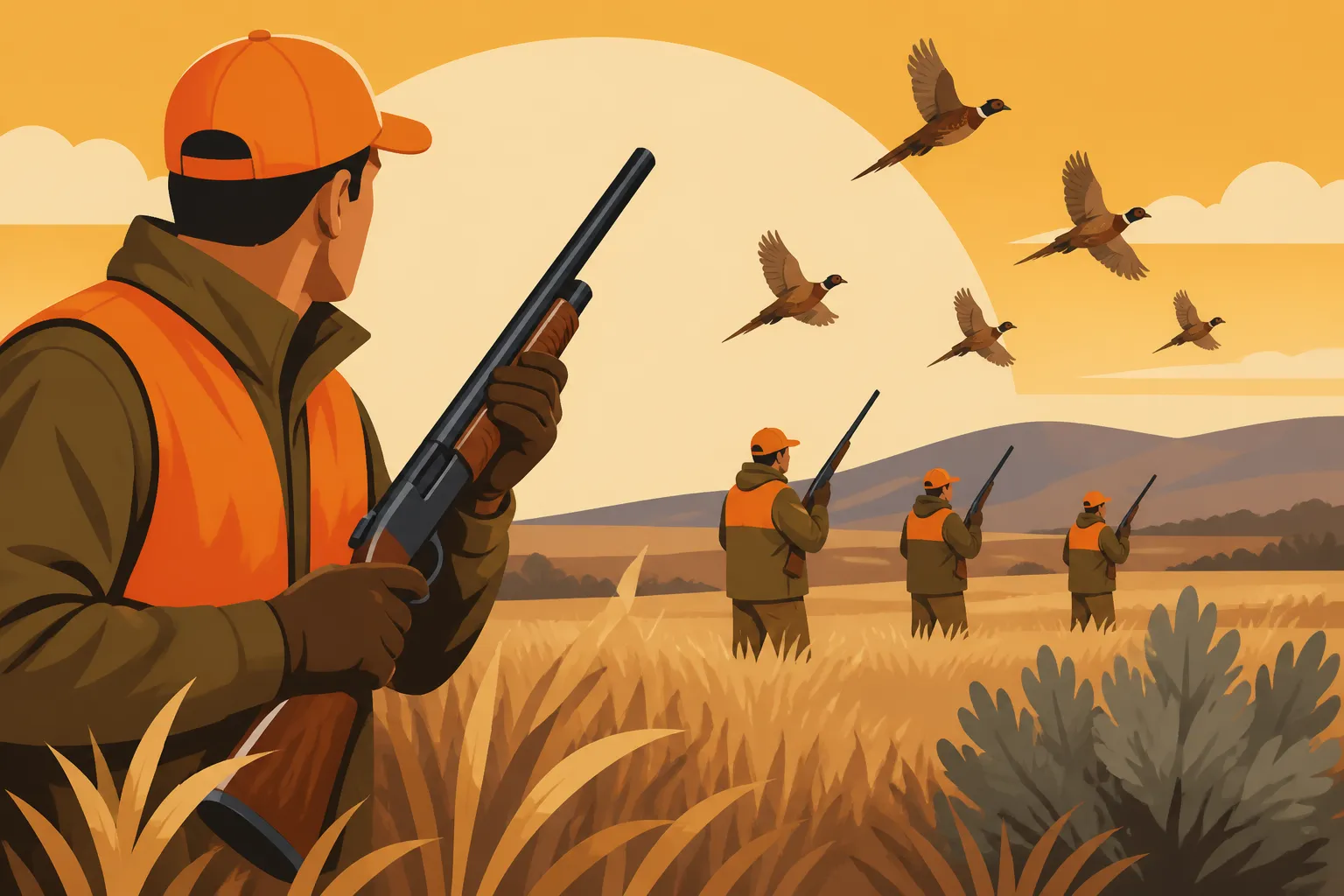
A South Dakota pheasant drive isn't just a walk in the park; it's a coordinated effort, often involving several hunters and their dogs, moving through dense cover like cattail sloughs, shelterbelts, or cornfields. The very nature of a drive, with birds flushing at unexpected angles and the constant movement of the line, introduces variables that demand an elevated level of awareness.
The Role of Walkers, Blockers, and Dogs
Typically, a bird drive involves "walkers" who push through the cover and "blockers" who are positioned at the end or sides of the cover to intercept birds trying to escape. This setup immediately creates complex zones of fire. Walkers are moving forward, guns ready, while blockers are stationary, waiting for birds to come to them. Then you add the dogs – tireless retrievers, flushers, or pointers – weaving through the cover, sometimes ahead of the hunters, sometimes ranging wide. Their presence means a hunter always needs to be aware of where their dog, and other dogs, are at all times, not just their fellow hunters. A gun pointed at a running dog, even inadvertently, is an accident waiting to happen. The chaotic nature of a flush, with multiple birds exploding from cover, can further complicate decision-making, especially if hunters get tunnel vision on a rooster.
Terrain and Visibility Challenges
South Dakota's diverse pheasant habitat brings its own set of safety challenges. Imagine pushing a dense cattail slough where visibility can be limited to just a few feet. Or working through tall, standing corn where you can hear your hunting partners but rarely see them. Even open grass fields can have subtle dips and rises that hide hunters or dogs. These variable conditions mean that assumptions about where others are located can be incredibly dangerous. It's not like a deer hunt where you might be in a fixed position with a clear shooting lane. Here, your field of vision, your shooting lanes, and the location of your hunting partners are constantly changing. Add to that the wind, which can make it hard to hear instructions or even approaching birds, and you have a recipe for miscommunication if you're not proactive about safety. Many hunters use tools like onX Layers for South Dakota Land Status to understand terrain features before a hunt, which can certainly help visualize potential hazards, but nothing replaces real-time awareness in the field.
Core Principles of Firearm Safety on a Drive
Before you even step foot in the field, a firm grasp of basic firearm safety is non-negotiable. On a bird drive, these principles become even more critical, requiring constant, conscious application.
Always Control the Muzzle
This is the golden rule, and it's especially vital during a bird drive. Your muzzle must always be pointed in a safe direction, meaning a direction where an accidental discharge would cause no harm. On a drive, this typically means downrange, towards the direction of the push, or safely skyward when not actively shooting.
Think about it: you're walking, sometimes stumbling, through thick cover. A root, a hidden hole, a dog crossing your path – any of these could cause a momentary loss of balance. If your muzzle is sweeping across another hunter or a dog, that brief loss of control could be catastrophic. When you’re walking, keep the gun either broken open (for break-action shotguns), the action open (for pump or semi-autos), or at the very least, pointed safely at the ground in front of you, finger off the trigger, with the safety engaged. Even when pausing to chat or retrieve a bird, always be conscious of where that muzzle is pointing. The article on Muzzle Discipline With Blockers Ahead delves deeper into this critical topic.
Treat Every Firearm as if it Were Loaded
This principle isn't just for when you're handling your gun at home; it applies 100% in the field, even when you know it's "empty." This mindset ensures you maintain the highest level of respect for the firearm's potential. Imagine you're taking a break, leaning your shotgun against a fence post. If you approach it with the assumption it might be loaded, you'll naturally check the action, keep your finger off the trigger, and ensure the muzzle is pointed safely before handling it. This habit prevents complacency, which is often the root cause of "unloaded gun" accidents. It's about instilling a perpetual sense of caution, recognizing that a moment of forgetfulness can have permanent consequences.
Be Sure of Your Target and What Is Beyond It
This rule might seem obvious, but on a bird drive, it’s deceptively complex. A pheasant can flush low, high, directly away, or quartering. In the heat of the moment, with adrenaline pumping, it’s easy to focus solely on the bird. However, you must identify your target clearly as a legal bird (a rooster in most South Dakota situations) and, just as importantly, be absolutely certain of what lies beyond it.
- No ground swatting: Never shoot a bird on the ground if there's any chance a pellet could ricochet or hit a person, dog, or even livestock. Many seasoned hunters will tell you that a bird flushing is part of the sport; shooting a running bird on the ground is rarely a safe or ethical choice on a drive.
- Identify your fellow hunters: Are they in your line of fire? Remember, shotgun pellets spread. A safe shot at 25 yards might still pepper a hunter 50 yards behind the bird.
- Consider blockers: If you're walking, you never shoot birds flying back over the line of walkers towards where you just came from, especially if there are blockers behind you. Your line of fire is forward, towards the blockers. Blockers, conversely, are typically shooting birds flying away from them, but they too must be aware of walkers still in the field or other blockers on their flanks.
- Know where your dogs are: This cannot be stressed enough. A dog's enthusiasm can put them right in harm's way. If a bird flushes low and your dog is running under it, you cannot take that shot. It’s better to let a bird fly than risk injuring your best hunting partner. Before the hunt, mapping out the area using resources like GoHunt can help identify potential safe shooting lanes or areas where caution needs to be heightened due to surrounding features.
Keep Your Finger Off the Trigger Until Ready to Shoot
This rule directly addresses accidental discharges. Your finger should remain outside the trigger guard, resting along the frame of the gun, until your sights (or point of aim) are on the target and you have made the conscious decision to shoot. On a bird drive, where you might be constantly moving and encountering varying footing, this practice prevents an involuntary twitch or a snagged finger from pulling the trigger prematurely. It’s a physical discipline that, when consistently practiced, becomes second nature and is one of the most effective ways to prevent negligent discharges.
Practical Application: Drills and Communication
Knowing the rules is one thing; applying them flawlessly in the field is another. This requires practice, clear communication, and a shared commitment to safety among the entire hunting party.
Establishing Safe Zones of Fire
Before the drive begins, and especially if you're hunting with new partners, take a few minutes to talk through the plan and define everyone's zone of fire.
- Walkers: Generally, walkers will shoot birds flushing forward or quartering away from the line. Shots directly sideways might be okay if there's significant distance to the next hunter and clear visibility, but never shoot towards the person next to you. Shots backward over the line are almost always unsafe. When pushing through a field, the goal is often to push birds towards blockers, so a shot at a bird trying to escape back through the line of walkers means the bird has done exactly what you didn't want it to.
- Blockers: Blockers are positioned to intercept birds escaping the cover. Their zone of fire is typically out in front of them, over the field or open area where birds will fly once they leave the primary cover. They must be acutely aware of how far the walkers are from the end of the cover. A good rule of thumb is that blockers should never shoot at birds until they are well clear of the cover and a safe distance from the walking line.
A good way to visualize this is to imagine a line connecting each hunter. No one should ever shoot across this imaginary line. When driving a narrow cover, like working South Dakota shelterbelts for roosters, these zones can become very tight, demanding even greater care.
Here's a simple table to help visualize typical safe shooting zones:
| Hunter Role | Primary Zone of Fire | Shots to AVOID | Key Considerations |
|---|---|---|---|
| Walker | Forward, quartering away | Backward over line, directly across line at another hunter | Other walkers, dogs, blockers (if close) |
| Blocker | Out over open field, away from cover | Into the cover where walkers/dogs are, back towards other blockers | Walkers, dogs, other blockers, property lines |
Clear and Constant Communication
Verbal communication is your best friend on a bird drive. It might feel like you're over-communicating, but it's always better to be safe than sorry.
- "Hunter!" or "Man!": If a hunter gets ahead of the line, falls, or is in an unexpected position, yell "Hunter!" to alert everyone.
- "Dog!": Call this out if a dog runs into a potentially dangerous area or is between a bird and another hunter.
- "Bird!": A simple call to alert others to a flush, but always follow up with location if you can, e.g., "Bird, left!" or "Bird, high!"
- "Stop!" or "Hold!": If something feels unsafe, or you need to re-establish the line, use these commands clearly.
- Pre-set signals: Before the hunt, agree on non-verbal signals for "stop," "go," or "bird sighted" if noise (wind, distant shots) makes verbal commands difficult.
Remember, even with good communication, maintain visual contact whenever possible. If you lose sight of your hunting partners, slow down or stop and call out to re-establish positions. This is particularly important when Pushing a Cattail Slough With Blockers where visibility is inherently poor.
Loading and Unloading Protocols
This might seem basic, but it's where many mistakes happen.
- Load only when entering the field: Never load your shotgun until you are at the designated hunting area and the drive is about to begin.
- Unload immediately when stopping: As soon as the drive is finished, or you are getting back into a vehicle, or crossing a fence, immediately unload your firearm. Confirm the chamber is empty and the action is open.
- Crossing fences or obstacles: Never cross a fence or ditch with a loaded firearm. Break open your shotgun, open the action, or pass it to a partner who is already safely on the other side. This is crucial for safety and a common area for accidents.
- Vehicle transport: Guns must always be unloaded and preferably cased when transported in a vehicle. It's not just a good idea; it's often a legal requirement in South Dakota.
What to Do in Unexpected Situations
Even the most prepared hunting party can encounter unexpected events. Being mentally ready to react safely is paramount.
When a Bird Changes Direction Suddenly
Pheasants are masters of evasion. A bird might flush straight away, only to hook hard left or right, or even circle back towards the drive line. In these moments of high adrenaline, it's easy to swing wildly. This is where your pre-established zones of fire and unwavering muzzle control come into play.
If a bird suddenly veers into an unsafe direction of fire – meaning it's now flying towards or over another hunter or dog – you must hold your shot. It's hard to do, especially when a beautiful rooster is airborne, but it's the safest choice. Let the bird go. A lost bird is a small price to pay for preventing an injury. Encourage this mindset among your entire group. There will be other birds, and you can always adjust your South Dakota Pheasant Hunting Tactics for the Opener to find more opportunities.
Hunter or Dog Unexpectedly Enters Your Zone
Despite the best communication, a dog might range farther than expected, or a hunter might stumble and end up in a position that slightly infringes on your perceived shooting lane. The moment you become aware of this, the shot must be withheld. Even if the bird is perfectly centered, if there's any doubt about the location of a person or dog, do not shoot. Again, clear communication helps here; yelling "Dog!" or "Man!" immediately alerts everyone to the potential hazard. Ensure everyone in the group is wearing proper Blaze Orange Rules on a Bird Hunt to maximize visibility, especially in dense cover.
Dealing with a Malfunction or Obstruction
It happens. A shell might not feed properly, or a barrel could get clogged with mud or snow if you stumble. If your firearm malfunctions or you suspect an obstruction:
- Stop and point the muzzle in a safe direction. This means away from everyone, preferably towards the ground.
- Keep your finger off the trigger.
- Clear the malfunction or obstruction. If it's a simple jam, attempt to clear it. If it's a barrel obstruction, do not attempt to fire. This is incredibly dangerous and can result in the gun exploding. You'll need to safely unload the gun and physically clear the obstruction from the barrel.
- Communicate with your partners. Let them know you're having an issue, especially if you need to step away from the line to resolve it.
Having a clean, well-maintained firearm significantly reduces the chance of malfunctions, but knowing how to safely handle them if they occur is a vital skill for every hunter. Before heading out, taking the time for Sighting In Before the Opener ensures your equipment is in top working order, which indirectly contributes to safety by preventing frustration and fumbling during critical moments.
Ultimately, safety on a bird drive isn't just about knowing the rules; it's about making them an instinctive part of your hunting behavior. It’s about cultivating a deep respect for your firearm, your hunting partners, and the experience itself. By prioritizing safety, you ensure that every South Dakota pheasant drive creates lasting memories, not tragic regrets.
Disclaimer
The information provided in this article is for general guidance and informational purposes only, and does not constitute legal, safety, or professional advice. Always consult with official South Dakota Game, Fish and Parks regulations and consider seeking professional firearm safety training before engaging in any hunting activities. Hunting inherently carries risks, and individual judgment and adherence to all safety protocols are paramount.