Judging a Pronghorn Buck in the Field
Hunting pronghorn in South Dakota is an incredible experience, but nothing throws a wrench into the excitement quite like trying to field judge a buck at a distance. You spot what looks like a giant, your heart starts pounding, and then you second-guess yourself, wondering if it's truly a shooter or just an optical illusion on the prairie. This guide will walk you through the nuances of accurately judging a pronghorn buck in the field, helping you make informed decisions when that moment of truth arrives.
The Unique Challenges of Field Judging Pronghorn
Let's be honest, pronghorn are fast, often seen at vast distances, and when the adrenaline hits, every buck can look like a record breaker. It’s a common frustration, especially for those new to hunting these incredible animals. The open prairie, combined with their unique horn structure, creates a perfect storm for misjudgment.
The "All Bucks Look Good" Phenomenon
You've been glassing for hours, maybe days, scanning the endless horizons of western South Dakota. Finally, a herd appears, and there, among the does, is a buck. To an eager hunter, especially one who hasn't seen many pronghorn up close, that first buck often looks like an absolute monster. Their sleek bodies, striking black facial markings, and those unique, backward-curving horns just scream "trophy!" It's a mental hurdle we all face, where excitement can easily override objective assessment. You might think, "This is it, he's definitely 14 inches!" only to discover later, after the shot, that he's a much smaller animal. This initial excitement is a huge part of the fun, but it's also your biggest enemy when trying to accurately judge a buck. You need to train your eye to look past the initial impression and focus on specific, measurable features.
Distance and Mirage Distortions
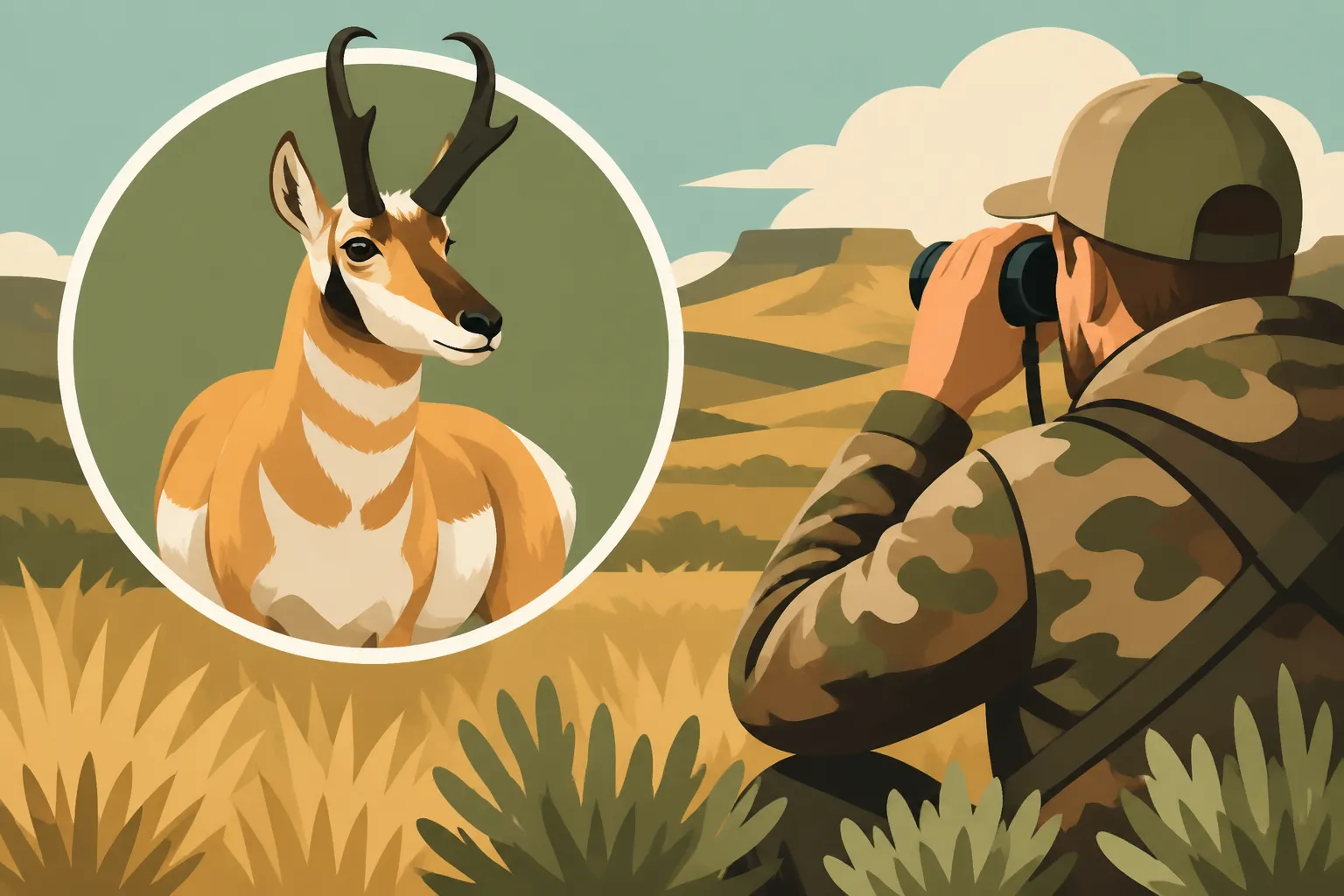
South Dakota's wide-open spaces, particularly in the West River region, mean you’ll often be spotting pronghorn at truly incredible distances. We're talking hundreds, sometimes even a thousand yards or more. At these ranges, the very air between you and the animal can work against you. Heat mirages, common on sunny days, cause light to bend and distort, making horns shimmer, appear taller, shorter, or even wider than they actually are. A buck that looks thick and tall through your binoculars at 800 yards might shrink considerably as you close the distance. This effect is compounded when you're glassing from different elevations or across varying terrain. It’s crucial to understand that what you see through your optics at extreme distances is rarely the full, true picture. Always try to get closer, use higher-quality optics, and observe from multiple angles if possible to minimize mirage distortion.
Speed and Movement Issues
Pronghorn are often called the fastest land animal in North America for a reason. They don't just run; they fly across the prairie. A herd can cover hundreds of yards in a matter of seconds. This constant movement makes field judging incredibly challenging. You might catch a glimpse of a buck's horns as he jogs along, but getting a steady, prolonged view to assess all the critical features is tough. They rarely stand perfectly still, broadside, in good light, waiting for you to appraise them. More often, you're trying to judge a buck that's trotting, quartering away, or nervously scanning its surroundings. This dynamic environment means you have to make quick, yet accurate, assessments. Learning to quickly pick out key features like horn length relative to ear length, mass below the prong, and the presence of good cutters while the animal is moving is a skill developed over time and through focused practice.
Understanding Pronghorn Horn Anatomy for Judging
To accurately judge a pronghorn, you need to become intimately familiar with the specific parts of their horns. Unlike deer or elk antlers, which are bone and are shed annually, pronghorn have true horns composed of a bony core with a keratinous sheath that is shed each year. Understanding these components is critical for effective field judging.
Main Beam Length and Mass
The main beam of a pronghorn horn is probably the most obvious feature, and often the first thing hunters look at. You're typically looking for length, generally measured from the base of the horn to its tip. A good reference point is the ear. A pronghorn's ear is roughly 5-6 inches long. So, if a buck's horn is barely above its ear, you're likely looking at a younger, smaller buck, probably in the 8-10 inch range. For a truly respectable buck, you want horns that extend well beyond the ears – 13 to 15 inches is considered a solid animal, and anything over 16 inches is entering trophy territory.
But length isn't everything; mass is equally, if not more, important. Mass refers to the thickness or circumference of the horn. A common mistake is to see a long, slender horn and assume it's a big buck. What you're really looking for is mass that carries from the base of the horn all the way up. Pay close attention to the base of the horn where it meets the head. Does it look like it's growing straight out of a large "golf ball" on its head, or does it seem to taper quickly? Then, look at how that mass carries up the horn, especially below the prong. A buck with good mass will often have horns that look "heavy" or "robust" even from a distance. A buck with great mass might have horns that carry their thickness almost all the way to the tip, rather than quickly becoming spindly. This consistent mass adds significant points to a score and is a strong indicator of a mature animal.
The Critical Role of Cutters
Often overlooked by less experienced hunters, the "cutter" is arguably the most important feature for determining a trophy pronghorn. The cutter is the forward-projecting point on the horn, located roughly halfway up the main beam. It's called a cutter because, historically, these were the points that pronghorn would use in territorial fights, often "cutting" their opponents. For scoring purposes, the length and shape of the cutter are paramount. You want a cutter that is long, sharp, and ideally, projects forward or slightly upward. A truly impressive buck will have cutters that are 4-6 inches long or even more, curving distinctly out from the main beam.
Many younger bucks, or those with less genetic potential, will have very small, almost vestigial cutters, or cutters that are barely noticeable "bumps" rather than distinct points. Sometimes, the cutter will be flat against the main beam, or even project backward, which isn't ideal for scoring. As you practice Judging Pronghorn Horn Length you'll learn that a buck with excellent cutters can often outscore a buck with slightly longer but less impressive main beams. When glassing, make a conscious effort to find and evaluate the cutters on both horns. Are they prominent? Do they appear sharp and long? Do they match in size and shape on both sides? This detail can often separate a good buck from a great one.
Pronghorn Prongs and Their Impact
The prong itself is the backward-pointing fork that gives the pronghorn its name. It's a defining feature, and while critical for identification, its direct contribution to the overall score can sometimes be overemphasized in field judging. The prong's length is measured from the tip of the prong to the front edge of the horn. For a good buck, you're looking for prongs that are at least 3-4 inches long. However, what really makes a prong exceptional is its width and how it contrasts with the main beam.
Some bucks will have very narrow prongs that don't add much visual appeal or score. Others will have wide, paddle-like prongs that create an impressive profile. Look for prongs that have a distinctive, almost club-like appearance at the tip. Also consider the spread of the horns – while not directly measured by the prong, the angle and length of the prong can contribute to the overall visual width of the rack. A common mistake is to be overly impressed by a buck with long prongs but lacking in main beam length or mass. Remember, the prong is one component, and it needs to be balanced with the other features. A buck with long prongs but weak cutters and poor mass will still be a lesser animal than one with slightly shorter prongs but excellent mass and cutters.
Key Metrics and Visual Cues for a Trophy Buck
Developing a mental checklist and understanding visual thresholds is crucial for quickly and accurately assessing a buck. When you’re Spot-and-Stalk Antelope Hunting in South Dakota, you often don’t have unlimited time. Practice these visual cues so they become second nature.
The 13-14 Inch Visual Threshold
For many hunters, a buck with horns in the 13 to 14-inch range is considered a really solid, respectable animal, especially if it carries good mass. This is a common benchmark for a "shooter" buck. How do you estimate this in the field? Again, the ear length is your best friend. A pronghorn ear, from base to tip, is typically around 5-6 inches. So, if a buck's horn looks twice the length of its ear, you're probably in the 10-12 inch range. If the horn extends significantly beyond two ear lengths, getting closer to three ear lengths, then you’re likely in that 13-14 inch, or even 15+ inch territory.
Another helpful trick is to look at the horn relative to the head and neck. A 13-inch horn will look substantial, extending well above the top of the buck's head and often appearing to reach down to its mid-neck when viewed from certain angles. A mature buck will also have a thicker neck and a more robust body compared to a younger animal. While not a direct horn measurement, this overall body size can help you confirm the age class of the buck and, by extension, its horn potential. Don't just focus on the tip; consider the whole horn and how it integrates with the buck's overall frame.
Mass Beyond the Prong
We've talked about overall mass, but let's dive deeper into "mass beyond the prong." This is a crucial element in Boone and Crockett scoring and a key visual indicator of a truly mature buck. When you look at the horn, notice how thick it is above the prong, moving towards the tip. Many bucks will have decent mass at the base and even carry it well up to the prong, but then the horn rapidly tapers, becoming pencil-thin above the prong. This is a red flag if you're looking for a high-scoring buck.
A true trophy pronghorn will carry significant mass past the prong. The horn should look thick and robust for a considerable distance after the prong, only tapering slightly as it approaches the very tip. This "carry-over" mass demonstrates a buck with superior genetics and age. It often gives the horn a much more powerful, blocky appearance. So, when you're sizing up a buck, don't just look at the length or the prong itself; critically assess how much girth those horns maintain in their upper sections. This is a detail that separates an average buck from one that truly stands out.
Symmetry and Overall Appearance
While not directly related to length, mass, or cutters, the symmetry and overall aesthetic appeal of a buck's horns play a significant role in how we perceive a "trophy." A truly impressive buck will often have horns that are well-matched in length, mass, and prong/cutter development on both sides. Perfect symmetry is rare in nature, but a noticeable difference between the left and right horns can detract from the overall impression and score.
When you’re glassing, try to get a full view of both horns. Are they balanced? Does one side look significantly longer, thinner, or have a weaker cutter than the other? Also, consider the spread – the width between the horn tips. While scoring systems like Boone and Crockett measure inside spread, the overall visual width contributes to the buck's impressive appearance on the prairie. A wide-flared buck can look magnificent. Finally, consider the character of the horns. Do they have good texture? Are they dark and polished? These subtle cues, while not strictly measurable, contribute to the overall trophy quality and the satisfaction of taking a truly outstanding animal. This is where tools like GoHunt can be invaluable in pre-scouting and identifying areas known for producing high-quality bucks, allowing you to focus your efforts.
Practical Field Judging Techniques and Tools
Becoming proficient at field judging pronghorn is a learned skill that requires practice, patience, and the right equipment. Don't get discouraged if it doesn't click immediately; it's something every experienced hunter continuously refines.
Using Body Cues and Ratios
Beyond just the horns, the buck's overall body size and characteristics can give you crucial clues about its age and maturity, which directly correlates to horn development. Younger bucks, typically 1.5 to 2.5 years old, will appear more slender, with thinner necks and a more juvenile look. Their horns might be long for their age, but will generally lack the mass and prominent cutters of an older animal. A mature buck, 3.5 years old and up, will have a much more robust body, a thick, muscular neck, and a more pronounced Roman nose. They’ll carry a heavier body weight and often have a sag to their belly.
One common ratio trick is to compare the horn length to the ear length, as mentioned before. Another is to look at how the horn length compares to the distance from the top of the head to the eye. An average buck might have horns that are just a bit longer than this distance, while a truly big buck's horns will be significantly longer. Look at the base mass in relation to the eye – does the horn base appear as thick as the buck’s eye, or even thicker? A great resource for studying these ratios and understanding Pronghorn Horn Growth and Shedding can be found through wildlife agency data. Remember, these are rough guidelines, but they provide quick visual reference points when you’re trying to make a decision in the field.
Optics and Their Importance
You absolutely cannot effectively field judge pronghorn without high-quality optics. This is not the place to skimp on gear. A good pair of 10×42 binoculars is a bare minimum for spotting animals at distance, but for detailed judging, a spotting scope is almost essential. A 15-45x or 20-60x spotting scope will allow you to zoom in and pick out the intricate details like cutter length, mass above the prong, and the overall horn shape that are simply impossible to see with binoculars alone, especially with the mirage.
When selecting optics, consider clarity, light gathering capabilities (important for early morning and late evening), and field of view. Brands like Kowa, Vortex, and Swarovski are popular choices among serious western hunters, but there are many excellent options across different price points. Invest in a stable tripod for your spotting scope; trying to hand-hold it at high magnification is a recipe for frustration and inaccurate judging. Practice using your optics well before your hunt, becoming comfortable with quickly locating and focusing on distant objects. This familiarity will pay dividends when a big buck steps into view. Using a platform like GoHunt can also help you research and compare optic brands and models, ensuring you're making an informed decision about your gear.
Mental Checklists and Practice
The best way to become a proficient field judge is through practice. Even when you're not hunting, take your binoculars or spotting scope out to a local field or park and practice judging inanimate objects at various distances. Better yet, spend time observing deer or other horned/antlered animals. Over time, you’ll develop a mental checklist that you can quickly run through when you spot a buck:
- Length: How many ear lengths above the head? Does it clear the jawline when viewed from the side?
- Mass at Base: Is it thick, golf-ball-like, or slender?
- Cutter: Is it present? How long and sharp is it? Does it project forward?
- Mass Beyond Prong: Does the horn carry its thickness past the prong, or does it taper quickly?
- Prong: Is it distinct, wide, and well-defined?
- Symmetry: Do both sides look similar in all features?
- Body Size: Is it a mature, thick-necked animal?
Another excellent way to practice is by studying Boone and Crockett or Pope and Young score sheets for pronghorn. Understand where the measurements are taken and what constitutes a good score. Look at photos of harvested bucks with their scores. This mental database will help you put real numbers to your visual observations. Remember that Rangefinding Across Open Ground is also a crucial part of the scouting and judging process, as knowing the exact distance can help calibrate your visual estimations.
Common Mistakes and How to Avoid Them
Even seasoned hunters can make mistakes when judging pronghorn. These animals are masters of illusion on the prairie. Being aware of common pitfalls can help you avoid passing on a great buck or, conversely, shooting a younger one you might regret.
Rushing the Decision
This is perhaps the biggest mistake hunters make. The excitement, the ticking clock, the fear that the buck will disappear – all contribute to rushing the judgment. You spot a buck, get a quick look, and decide "he's the one!" without truly taking the time to confirm all the critical features. This is particularly true when you’ve been on a tough hunt, or if it’s your first time hunting pronghorn. The pressure to fill your tag can lead to impulsive decisions.
To combat this, force yourself to slow down. Take a deep breath. Even if the buck is moving, wait for him to pause, or try to anticipate where he might stop. If possible, try to move to a different vantage point to see him from a different angle. Use your spotting scope to truly pick apart his horns. Remind yourself of your personal minimums for a "shooter." It's better to let a buck walk and perhaps regret it later than to harvest an animal you're not fully satisfied with. Patience is a virtue in all hunting, but especially when Stalking a Bedded Mule Deer Buck or trying to judge fast-moving pronghorn.
Judging Only One Feature
Another common error is getting fixated on a single feature, like horn length, and ignoring everything else. You see a buck with what looks like incredibly long horns and immediately decide he's a shooter. However, those long horns might be very slender, lack good mass, or have tiny cutters. Similarly, a buck with thick bases might have very short main beams or weak prongs.
A trophy pronghorn is a sum of its parts. You need to consider all the key metrics: length, mass, cutters, and prongs, and how they balance each other out. A buck with slightly shorter horns but exceptional mass and cutters will almost always score higher and be a more impressive animal than one with long, thin, poorly formed horns. Develop a holistic judging approach, looking at the entire horn structure on both sides before making a final call. Always try to look for the "whole package."
Misinterpreting Antler Wear and Damage
Just like deer antlers, pronghorn horns can show signs of wear and tear, or even damage. Occasionally, you might see a buck with a broken horn tip, a chipped prong, or an odd growth. In the heat of the moment, particularly with poor lighting or a significant mirage, these irregularities can be misinterpreted. A broken tip might make a horn appear shorter than it actually is, or a unique growth could be mistaken for an exceptional cutter.
Always try to get the clearest possible view and observe the buck for as long as you can. Pay attention to the symmetry between the two horns; if one side looks unusually short or oddly shaped compared to the other, it's worth considering that there might be damage. It's also important to remember that pronghorn shed their horn sheaths annually, and sometimes parts of the previous year's growth or new growth can look a little unconventional. Unless you are certain, err on the side of caution. It's often best to wait for a different buck if you're unsure about damage, especially if you're after a specific score. For more details on the characteristics of these remarkable animals, check out South Dakota Pronghorn Population Estimate.
Ethical Considerations and Enjoying the Hunt
Ultimately, hunting is about more than just the score of an animal. While field judging is a valuable skill, it's important to keep the broader picture in mind. South Dakota offers fantastic opportunities for Pronghorn Numbers Across South Dakota, and every hunt is a privilege.
Respecting the Animal and the Opportunity
As hunters, we owe it to the animals we pursue to make ethical decisions and to ensure a quick, clean harvest. If you've put in the time and effort to learn Decoying Antelope Over Water or master the art of the spot-and-stalk, that respect should extend to the decision-making process in the field. Don't take a shot you're not confident in, especially if you're struggling to judge the animal clearly. It's far more respectful to let a buck walk and try again another day than to take a marginal shot or shoot an animal you're not truly happy with, simply because of "trophy fever."
The opportunity to hunt pronghorn in South Dakota is a special one, whether you're a resident or traveling long distances. Each hunt provides lessons, memories, and a deeper connection to the landscape. While a trophy buck is certainly a wonderful achievement, the experience itself – the stalk, the challenge of the prairie, the camaraderie with hunting partners – often holds more long-term value. Focus on becoming a better hunter, a more ethical outdoorsman, and a more skilled field judge, and the trophies will follow. The South Dakota Department of Game, Fish and Parks sets regulations to ensure healthy populations, and by respecting these animals and the land, we contribute to that conservation effort.
Balancing Trophy Hunting with the Experience
For many, hunting is a blend of seeking a challenging animal and simply enjoying the journey. There's nothing wrong with wanting to harvest a magnificent trophy pronghorn; it's a testament to your skill and persistence. But don't let the pursuit of a specific score overshadow the fundamental joy of being in the field. The smell of sagebrush on the wind, the incredible speed of a running herd, the solitude of the prairie – these are all integral parts of a South Dakota pronghorn hunt.
If you find yourself constantly stressing over inches and points, take a step back. Sometimes, just finding an older, mature buck that represents a challenge and provides excellent table fare is a reward in itself. Every buck presents a unique story and a unique set of memories. By becoming proficient at judging, you empower yourself to make informed choices, whether that choice is to hold out for a truly exceptional animal or to take a mature buck that simply makes for an unforgettable hunt. Remember, the best trophy is the one that comes with the best story.
| Feature | Young Buck (1.5-2.5 years) | Average Buck (3.5 years) | Trophy Buck (4.5+ years) |
|---|---|---|---|
| Main Beam Length | Barely clears ears (8-11 inches) | 12-14 inches (well above ears) | 15+ inches (significantly long) |
| Mass at Base | Slender, tapers quickly | Good, carries halfway up | Very thick, golf-ball like |
| Cutter | Small bump or absent | Distinct, 2-3 inches, often blunt | Long (4-6+ inches), sharp, forward-projecting |
| Mass Beyond Prong | Tapers quickly, spindly | Thins out somewhat | Carries substantial mass to tip |
| Prong Length | Short, narrow (1-2 inches) | 2-3 inches, modest width | 3-4+ inches, wide, distinct |
| Overall Body | Slender, thin neck | Filling out, thicker neck | Robust body, thick neck, mature build |
Disclaimer
The information provided in this guide is for general educational and informational purposes only. Hunting regulations, seasons, and licensing requirements can change frequently. Always consult the official South Dakota Game, Fish and Parks (GFP) regulations and current proclamations before planning or engaging in any hunting activities. It is your responsibility to understand and adhere to all applicable laws. Hunting is an inherently risky activity, and proper safety precautions, equipment, and training are essential.