Spot-and-Stalk Antelope Hunting in South Dakota
The vast, open landscapes of South Dakota, particularly west of the Missouri River, are an incredible place to pursue pronghorn antelope. However, many hunters find themselves frustrated by these incredibly wary animals, struggling to get within range on such exposed terrain. This comprehensive guide will meticulously break down the intricacies of spot-and-stalk antelope hunting, providing you with the strategies and insights needed to successfully tag a prairie speedster.
Understanding the Pronghorn's Unique Adaptations
Before you even think about loading a rifle or lacing up your boots, it's vital to truly understand the animal you're pursuing. Pronghorn are not deer; they are a species unto themselves, uniquely evolved for survival on wide-open plains. Their incredible adaptations are precisely what makes them such a challenge and, ultimately, so rewarding to hunt. They possess senses that are nothing short of phenomenal, allowing them to detect danger long before a hunter ever knows they're there.
The Pronghorn's Incredible Senses
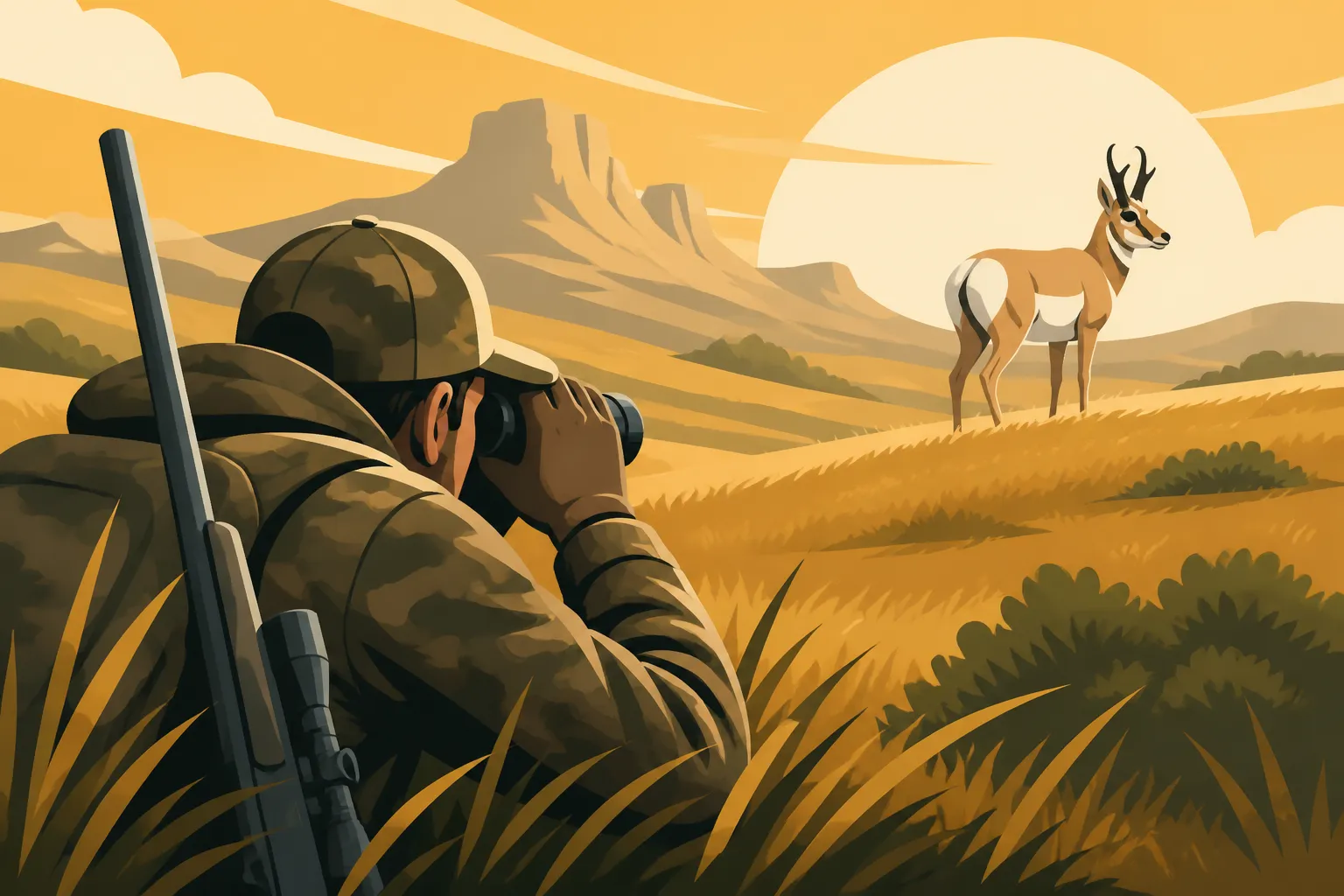
Let's be blunt: a pronghorn's eyesight is legendary for a reason. Imagine looking through 8x binoculars, all the time, effortlessly scanning the horizon. That's essentially what a pronghorn is doing, and some experts suggest their vision is equivalent to an 8-power binocular for humans, giving them an advantage over nearly anything that moves on the prairie. They can detect movement at astonishing distances, often spotting you miles away before you've even recognized them as anything more than a pale speck. This means that any approach you make must be incredibly stealthy and well-thought-out, minimizing your profile and using every scrap of cover available. It also means that simply seeing an antelope isn't enough; you need to evaluate its awareness of its surroundings.
Beyond their eyesight, pronghorn also possess a keen sense of smell, though perhaps not as acute as a whitetail deer. The ever-present South Dakota wind, however, makes their noses a formidable defense. They will use the wind to their advantage, often grazing or bedded with the wind at their back, allowing their vision to cover the front and their nose to detect anything approaching from behind. Ignoring the wind direction during your stalk is a surefire way to have a herd bolt at top speed, leaving you in their dust. You simply cannot afford to get downwind of a pronghorn, especially when trying to close the last few hundred yards.
Their hearing, while perhaps less of a primary defense than sight or smell, is also very good. The rustle of tall grass, the crunch of gravel underfoot, or a misplaced whisper can easily alert these animals. On the wide-open prairie, sound travels much farther than you might expect, especially on calm days. This reinforces the need for a slow, deliberate, and quiet approach, paying attention to every step and movement you make.
Typical Antelope Behavior Patterns
Pronghorn behavior is largely dictated by their open-country environment. They are typically most active in the early morning and late evening, when temperatures are cooler. During these times, you'll often find them grazing, moving between feeding areas and water sources. Midday, especially during the warmer months of the season, they tend to bed down. These bedded periods present some of the best opportunities for a stalk, as they are stationary, though still incredibly vigilant. However, don't assume a bedded antelope is an unaware antelope; they will often bed in a spot that gives them a commanding view of their surroundings.
They are herd animals, and while you might occasionally see a lone buck, it's more common to find them in small groups or larger herds. Within these groups, there's often a dominant buck, a few other bucks, and multiple does and fawns. The more eyes and ears there are, the harder the stalk becomes. When one animal spots danger, the entire herd is usually alerted instantly, and they'll quickly decide whether to flee or simply move a safe distance away. Learning to read these group dynamics – identifying which animals are most vigilant and where their attention is focused – is crucial for a successful approach.
Pronghorn are also creatures of habit to some extent. They'll often use the same travel corridors, waterholes, and bedding areas, especially if undisturbed. Scouting can help you identify these patterns, giving you a predictive edge. Understanding their daily routines can help you anticipate their movements and position yourself for an ambush or a more advantageous starting point for a stalk. For instance, if you've seen them watering at a particular tank every morning, knowing that might help you plan your approach to that area.
Preferred South Dakota Habitat
South Dakota's western half is prime pronghorn country. This region, often referred to as "West River," is characterized by vast, undulating grasslands, sagebrush flats, and rolling hills. The best antelope habitat is usually characterized by expansive, uninterrupted views that allow them to utilize their exceptional eyesight. They thrive in areas with short to medium-height grasses interspersed with forbs and low-lying brush like sage, which provides both food and minimal cover for bedding. You'll find them gravitating towards subtle rises and coulees that offer slight protection from the wind and a vantage point without obstructing their vision too much.
Water is also a critical factor. While pronghorn are incredibly efficient at utilizing moisture from the vegetation they consume, they still need to drink, especially in arid conditions. Stock dams, windmills, and natural springs become magnets for antelope, making them key areas to observe and plan your hunt. When you're glassing, look for these features, as they often concentrate animals. Understanding how Finding Water in Dry West River Country plays into their daily movements can significantly boost your scouting efforts.
You'll encounter pronghorn across much of the Buffalo Gap National Grassland, Fort Pierre National Grassland, and vast tracts of private ranch land. They particularly favor areas where agricultural fields meet open prairie, sometimes utilizing alfalfa or wheat fields for grazing, though they rarely spend extended periods in dense crop cover like corn. Look for the subtle features on the landscape – a low draw, a patch of slightly taller sage, or a break in the terrain – as these are the exact spots an antelope will use for concealment or a quick escape.
Gear Essentials for the Open Prairie
Hunting pronghorn in South Dakota is a gear-intensive endeavor, not because you need an endless supply of gadgets, but because the right equipment is absolutely critical for success in such a demanding environment. The open prairie leaves no room for gear failure or inadequacy. Every item you carry, from your optics to your rifle to the clothes on your back, needs to be reliable and perfectly suited for the task at hand. Skimping on quality here can mean the difference between a successful hunt and a long, frustrating day of stalks that end prematurely.
Crucial Optics for Spotting and Ranging
On the open prairie, your binoculars and spotting scope are arguably more important than your rifle. You're trying to locate an animal that could be miles away, discern if it's a shooter buck, and then plan an elaborate stalk. Good glass is non-negotiable. I recommend high-quality 10x or even 12x binoculars for general scanning. Brands like Vortex, Leupold, and Nikon offer excellent options that provide clarity and light gathering capabilities crucial for those early morning and late evening hours. You'll be spending hours behind your glass, so comfort and optical quality are paramount. A tripod for your binoculars is also incredibly useful for stable, fatigue-free glassing, especially when trying to pick apart distant details.
A spotting scope, typically in the 20-60x range, is equally vital. Once you've spotted potential antelope with your binoculars, the spotting scope allows you to verify it's a buck, judge its size, and determine if it's worth pursuing. This saves you countless wasted stalks on does or smaller bucks. When you're trying to determine Judging a Pronghorn Buck in the Field, a clear, steady image from a spotting scope can make all the difference in accurately assessing horn length, mass, and prong development. Mount your spotting scope on a sturdy tripod that allows for easy adjustments to track moving animals or scan a wide area.
Finally, a quality rangefinder is an absolute must-have. On the flat, featureless prairie, judging distance accurately is incredibly difficult, and misjudging by even 50 yards can mean a missed shot or, worse, a wounded animal. A rangefinder with extended range capabilities (1,000+ yards) and angle compensation is ideal. Practice using it regularly so that ranging a target becomes second nature when the moment of truth arrives. Knowing your exact distance to target is critical for making an ethical shot.
Rifle and Ammunition Considerations
When it comes to your rifle, precision and flat trajectory are the names of the game for South Dakota antelope. These animals are often taken at longer ranges than deer, simply due to the nature of the open terrain and their incredible wariness. A rifle capable of consistent sub-MOA (minute of angle) accuracy is highly recommended. Calibers like .25-06 Remington, .270 Winchester, 6.5 Creedmoor, and .308 Winchester are all excellent choices, known for their flat-shooting characteristics and sufficient energy for pronghorn. However, the best Rifle Calibers for South Dakota Antelope are really the ones you shoot most proficiently.
Pair your rifle with high-quality, high-ballistic-coefficient (BC) ammunition. Controlled expansion bullets are vital to ensure clean, ethical kills on these relatively thin-skinned animals. Look for bullets designed for long-range performance that retain energy and expand reliably. Zero your rifle for a longer distance than you might for deer, perhaps 200 or 250 yards, to minimize holdover at extended ranges. A good quality scope with a ballistic reticle or turrets that you are intimately familiar with is also essential. Remember, practice is key. Spend ample time at the range shooting from various field positions, especially prone, which is often the most stable position available on the prairie.
Don't forget accessories like a good bipod or shooting sticks. The open country often provides no natural rests, and a solid rest is crucial for accurate shooting at longer distances. A simple bipod or a set of adjustable shooting sticks will dramatically improve your stability and confidence when it's time to take the shot. They are light, easy to deploy, and can make all the difference in delivering an accurate shot when you're huffing and puffing after a long stalk.
Clothing and Footwear for Prairie Conditions
The South Dakota prairie can be notoriously fickle when it comes to weather. Mornings can be chilly, midday can be scorching, and the wind can blow relentlessly from any direction. Layering is your best friend. Start with a moisture-wicking base layer, add a mid-layer for warmth, and top it with a windproof and water-resistant outer shell. Opt for subdued, natural colors that blend with the prairie, like tans, browns, and sage greens. Many hunters prefer a lightweight camouflage pattern, but solid earth tones work just as well as long as they don't contrast sharply with the landscape. Avoid anything bright or reflective.
Comfortable, supportive, and broken-in footwear is non-negotiable. You'll be doing a lot of walking, often over uneven ground, through short grass, and potentially across rocky areas. Lightweight hiking boots with good ankle support are ideal. Ensure they are waterproof or at least water-resistant, as early morning dew or unexpected rain can quickly soak your feet. Blisters are the quickest way to ruin a hunt, so wear socks that wick moisture and prevent friction, and consider bringing an extra pair to change into midday.
Finally, consider the smaller, often overlooked items. A wide-brimmed hat or a baseball cap will protect your face from the sun and help cut glare. Gloves can protect your hands from harsh sun, thorns, or cold wind. And always, always carry plenty of water. Dehydration can creep up quickly on the prairie, especially when you're exerting yourself under the sun. A small backpack or daypack is perfect for carrying these essentials, along with snacks, extra ammo, and a small first-aid kit. Prepare for both extremes of weather, as the prairie can switch gears in an instant.
Scouting and Locating Antelope
Finding antelope in the vast expanses of South Dakota can feel like searching for a needle in a haystack, especially if you're unfamiliar with the area. However, with systematic scouting, both digital and on-the-ground, you can significantly increase your odds of success. Antelope are creatures of habit to some degree, and understanding their preferred areas and travel patterns is the first step in putting together a viable hunting plan. Don't just show up on opening day and expect to find them; put in the time beforehand.
Pre-Season Digital and On-the-Ground Scouting
Before you even leave your couch, modern technology offers powerful tools for pre-season scouting. Start with online mapping platforms that provide satellite imagery, topo maps, and land ownership overlays. Services like GoHunt's Insider platform, for example, allow you to identify potential antelope hotspots from your computer. Look for large expanses of grassland, areas with rolling terrain that offer natural funnels or subtle draws, and especially any visible water sources like stock ponds or small creeks. Identifying areas where South Dakota Walk-In Areas Explained overlap with good antelope habitat is crucial, as public access is key for many hunters. Pay attention to how the land lays, noting any potential ridges or depressions that could offer cover for a stalk.
Once you have a few promising areas identified digitally, it's time for some on-the-ground reconnaissance, if possible. Even if you're not able to visit weeks in advance, driving the area a day or two before your hunt can be invaluable. Drive slowly on public roads, observing from a distance with your binoculars. Look for actual antelope, but also look for sign – tracks around waterholes, fresh droppings, or even just well-used trails. Take notes on where you see animals, at what time of day, and what they're doing. This helps establish patterns. Are they grazing near a certain alfalfa field in the evenings? Watering at a specific pond in the mornings? This real-world intel is gold.
During this phase, it’s also important to locate all legal access points for public land, like Game Production Areas or National Grasslands. Understand the boundaries thoroughly. Nothing is worse than planning a perfect stalk only to realize your target is just across a private land boundary where you don't have permission. Use your mapping app to drop pins for potential parking spots, glassing knobs, and escape routes.
In-Season Glassing Strategies
Once the season is open, your primary method of locating antelope will be intense, systematic glassing. This isn't just a casual glance around; it's a patient, methodical process that requires discipline. Find a high vantage point that offers expansive views of the surrounding country. Set up your binoculars on a tripod, or brace yourself against a vehicle or fence post for stability. Begin by slowly scanning the nearest terrain, then progressively work your way out to the furthest visible points. Don't just look for an entire antelope; look for parts of an antelope – a white patch, a horn tip, a dark body shape against the horizon.
Employ a grid pattern when glassing. Start at one edge of your viewing area, move your binoculars slowly across, then drop down a few degrees and scan back the other way. This ensures you cover every inch of ground thoroughly and don't miss anything. Pay particular attention to areas where antelope might be bedded during the mid-day: small depressions, the leeward side of a rise, or under isolated clumps of sagebrush. Also, keep an eye on water sources. Knowing How Close You Can Stalk a Pronghorn often starts with how well you've glassed the area and determined their position relative to cover.
Antelope are often well-camouflaged by their environment, especially when bedded. Their tan and white coats blend surprisingly well with the dry grasses. Be patient. Many hunters make the mistake of glassing too quickly and missing animals that are simply not moving. Let your eyes relax, and periodically take breaks to prevent eye strain. Sometimes, after staring at the same landscape for a long time, an antelope you previously overlooked will suddenly appear as your eyes re-adjust. It’s also wise to glass during prime activity hours, like early morning and late evening, when animals are more likely to be up and feeding.
Utilizing Mapping Tools and Resources
In today's hunting world, digital mapping tools are invaluable, especially for antelope in South Dakota. An app like the one offered by GoHunt, or other similar mapping services, allows you to have detailed topographical maps, satellite imagery, and critical land ownership information right in the palm of your hand. Before and during your hunt, use these apps to study the terrain. Identify draws, ravines, and rolling hills that could provide crucial cover for a stalk. Mark waypoints for sighted antelope, potential stalking routes, and exit points. This detailed information is far superior to relying solely on paper maps, especially for real-time adjustments.
Many of these apps also include layers for public land, such as South Dakota Game Production Areas, National Grasslands, and Walk-In Areas. This is absolutely critical for avoiding trespass. The ability to see exactly where you are in relation to property boundaries can save you a lot of headache and potential legal trouble. Some apps even show areas where Camping on South Dakota Public Land is permitted, which can be useful if you're planning an extended hunt. Being able to visualize the contours of the land, measure distances, and track your own movement ensures you stay on track and don't get disoriented in vast, similar-looking terrain.
Beyond land ownership, these mapping tools can help you plan your approach to a spotted animal. You can use the topo lines to find the lowest points of elevation, allowing you to stay out of sight as much as possible. You can measure the distance to your target, and identify natural features that will hide your movement. In a landscape where cover is at a premium, precise navigation and route planning are crucial. Using your phone or a dedicated GPS unit with these apps can turn what seems like an impossibly open landscape into a series of manageable, hidden corridors.
The Art of the Stalk
This is where the rubber meets the road. Spotting an antelope is one thing; successfully closing the distance on these super-sighted animals on wide-open terrain is another beast entirely. It requires patience, strategic thinking, and often, a good dose of physical effort. Many stalks fail not because the hunter made a glaring mistake, but because they simply didn't understand the nuances of the prairie environment and the antelope's defenses.
Reading the Wind and Thermals
The wind is your most critical ally or your most formidable enemy on an antelope stalk. As mentioned, pronghorn have a great sense of smell, and a shift in wind can instantly give away your position. Before you even take your first step, you absolutely must know the wind direction. Use a wind checker (a small bottle of powder or milkweed down works great) frequently. Antelope will almost always have the wind at their back or crosswind, allowing their eyes to cover the open ground in front of them while their nose alerts them to anything behind. Your stalk must take this into account, ensuring you stay downwind or crosswind, never upwind.
Complicating matters are thermals, which are localized air currents caused by temperature differences. In the morning, as the ground heats up, air typically rises, creating an updraft. In the evening, as the ground cools, air sinks, creating a downdraft. While less pronounced on flat prairie than in mountainous terrain, these subtle shifts can still be enough to carry your scent to a wary antelope, especially in draws or coulees. Pay attention to how the terrain might be influencing the wind, and use your wind checker constantly, especially as you get closer to your target. Wind Direction on a Prairie Stalk is not something you can guess at; it must be monitored meticulously throughout the entire approach.
If the wind shifts unfavorably during your stalk, you have two choices: either abandon the stalk and try to reposition, or wait it out, hoping for a return to favorable conditions. Pushing forward with an unfavorable wind is almost always a guaranteed bust. Sometimes, a slight shift in your approach angle, using a ridge line or a change in elevation, can be enough to stay in the clear. But always, prioritize remaining undetected by scent.
Leveraging Terrain for Concealment
The key to a successful pronghorn stalk is finding and utilizing every scrap of available cover. On the seemingly flat South Dakota prairie, this can be challenging, but subtle terrain features become your best friends. Look for draws, coulees, creek beds, fence lines with taller vegetation, or even just slight rises and depressions. Any feature that can hide your silhouette or break up your form is valuable. Plan your route to move from one piece of cover to the next, even if it means taking a longer, more circuitous path. Never walk directly towards an antelope in open country if you can help it.
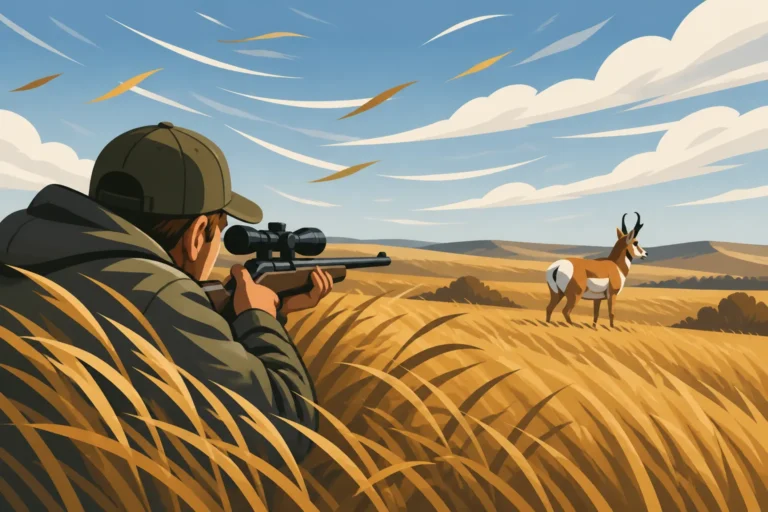
When moving, stay as low as possible. This often means crawling, army-crawling, or even belly-crawling for extended distances. It’s hard work, dusty, and sometimes prickly, but it’s often the only way to remain unseen. Take your time. Move slowly and deliberately, especially when you're on a crest or transitioning between cover. Pop up slowly to check the antelope's position, then drop back down. Use your binos to confirm they haven't moved or become alert. A successful stalk might take hours and cover miles for just a few hundred yards of forward progress. Remember, the antelope has all the time in the world.
Don't forget about the smaller details. Your shadow, a glint from your rifle scope, or even the color of your clothing against the sky can blow your cover. Try to keep the sun at your back or side, avoiding situations where your shadow extends towards the antelope. If you're on a ridge, stay just below the crest, looking over it only when necessary. If there are other animals or structures in the area, try to use them as a "screen," making your movement less noticeable against a more prominent backdrop. This is truly where Using Draws to Hide a Stalk becomes an art form.
The Final Approach and Shot Setup
As you get closer, typically within a few hundred yards, every move becomes exponentially more critical. The antelope’s senses are at their peak for detecting immediate threats. Slow down even further. Watch the animals intensely for any signs of agitation – head raises, nervous stomping, or twitching ears. If they seem uneasy, freeze. Give them time to settle back down before proceeding. Your final approach needs to be excruciatingly slow and deliberate.
When you've closed the distance to what you consider your comfortable shooting range (which for antelope is often 200-400 yards, depending on your skill and equipment), it's time to set up for the shot. Ideally, you want to be prone, as this offers the most stable shooting platform on the prairie. Use a bipod, backpack, or even your boots to create a solid rest. If prone isn't an option due to terrain or vegetation, quickly assess if kneeling or sitting with shooting sticks provides sufficient stability. This is where those hours of practice at the range in various field positions really pay off.
Before taking the shot, re-range the animal one last time. Confirm the wind direction. Take a deep breath, control your heartbeat, and focus on a clean, ethical shot. Don't rush. Wait for the animal to present a broadside or slightly quartering-away shot. Ensure there are no obstructions between you and the target. This moment is the culmination of all your effort and planning, so execute it flawlessly.
Shot Placement and Follow-Up
The shot on a pronghorn is a high-pressure moment, often taken at a distance. Because of their relatively small body size and incredible speed, precise shot placement is paramount for a clean, ethical kill. A marginal hit on an antelope, especially in the vastness of South Dakota, can lead to a long and often unsuccessful tracking effort. Hunters must be prepared to make the best possible shot and know exactly what to do afterward.
High-Percentage Shot Opportunities
For pronghorn, the most ethical and highest-percentage shot is typically a broadside or slightly quartering-away shot, targeting the vital organs. Aim directly behind the front shoulder, about one-third of the way up the body. This region encompasses the heart and lungs, which are surprisingly small targets within their chest cavity. A bullet placed here will incapacitate the animal quickly, preventing prolonged suffering and ensuring a speedy recovery. Avoid head-on or steeply quartering-to shots, as these present much smaller vital targets and a higher risk of non-lethal wounding.
While the prairie often lends itself to longer shots, it's crucial to know your personal limits and the effective range of your rifle and ammunition. Just because your rifle can shoot 500 yards doesn't mean you should attempt it under field conditions. Wind drift becomes a massive factor at extended ranges, and even a slight gust can push a bullet off target. Reading Wind at Four Hundred Yards or more requires significant practice and understanding of ballistic charts. If you're not confident in making a precise shot at a given distance, try to close the distance further. Patience here is a virtue.
Always be aware of the background. On open prairie, bullets can travel for miles. Ensure that in the event of a miss or pass-through, your bullet will safely impact the ground or a safe berm, not a road, building, or livestock in the distance. Safety should always be your number one priority, even when focused on the shot.
Tracking and Recovering Game on Open Ground
Even with a perfect shot, an antelope might run a short distance before falling. This is where the challenge of Following Up a Marginal Shot in Grass or even a good one, truly begins. On open prairie, a downed animal can disappear surprisingly quickly in even short grass or a slight depression. After taking the shot, immediately reload your rifle and keep your eyes fixed on the animal. Watch its reaction and mark the precise spot where it was standing when you shot, and the direction it ran. Identify a landmark in that direction – a distant fence post, a unique bush, or a change in terrain. This is crucial.
If the animal runs, give it a few minutes, especially if you believe it was a solid hit. Then, approach the last spot you saw it. Look for any signs of a hit: hair, bone fragments, or most importantly, blood. Pronghorn often don't leave a heavy blood trail initially, so you might need to proceed slowly, looking for very small drops or smears on grass blades. If you find blood, note its color and consistency (bright red and frothy often indicates a lung hit; darker blood might be a liver or muscle hit).
If the trail is sparse, or if the animal disappeared over a rise, expand your search. Walk in ever-widening circles from the last known point. Pronghorn, even when mortally wounded, often try to rejoin their herd or seek what little cover they can find. They can cover an amazing amount of ground quickly. If you lose the trail, back up to the last confirmed sign and restart. Don't give up too quickly. If it's getting dark, mark your last sign with a piece of flagging tape, and return in the morning with fresh eyes, and perhaps a tracking dog if permitted and available.
Ethical Considerations for Long Shots
The unique environment of South Dakota antelope hunting, with its long distances and open country, often tempts hunters into taking shots at ranges they might not consider for other species. While modern rifles and optics are incredibly capable, the hunter's skill and ethical responsibility must always be the limiting factor. An ethical long shot is one that you can consistently make in field conditions, not just on a calm day at the shooting range. This requires extensive practice and a deep understanding of external ballistics—bullet drop, wind drift, and even spin drift.
Consider the animal's demeanor. Is it calm and stationary, offering a good target? Or is it nervous, moving, or facing an unfavorable direction? It’s far more ethical to pass on a questionable shot, even if it means going home empty-handed, than to risk wounding an animal. Patience is not just for the stalk; it's for the shot itself. Wait for the absolute best opportunity.
Another aspect of ethical hunting is using appropriate calibers and bullet construction. Ensure your chosen cartridge has sufficient energy to cleanly dispatch a pronghorn at your maximum ethical range. Using a bullet designed for rapid, controlled expansion on thin-skinned animals will maximize your chances of a quick kill. Ultimately, the responsibility lies with the hunter to ensure every shot taken is as humane and lethal as possible, regardless of the distance.
Field Care and Preservation
Harvesting an antelope on the vast South Dakota prairie is an accomplishment, but the job isn't done when the animal hits the ground. Proper field care, especially in the often-warm early fall weather, is absolutely critical to ensuring the meat is high quality and doesn't spoil. Neglecting this step can turn a hard-earned trophy into wasted effort.
Rapid Field Dressing Techniques
Antelope meat, while delicious, has a reputation for being strong or "gamey" if not handled properly. This reputation often stems from improper field care, primarily allowing the carcass to cool down too slowly. Your number one priority after the shot is to field dress the animal as quickly as possible. Every minute counts, especially on a warm day. Get the entrails out to allow the body cavity to begin cooling immediately. Pronghorn are relatively small animals, making this process quicker than with a deer.
Start by making an incision from the sternum to the pelvis, carefully cutting around the anus. Cut through the diaphragm and reach into the chest cavity to sever the windpipe and esophagus. Roll the animal onto its side, or prop it up, to allow the entrails to spill out cleanly. Inspect the liver and other organs for any signs of disease or abnormalities. Once the entrails are removed, wipe the cavity clean with a dry cloth or paper towels, or rinse it with water if you have some and can thoroughly dry it afterward. The goal is a clean, dry cavity that can shed heat efficiently.
If you plan on a shoulder mount, be mindful of where you make your initial incisions. Make sure to leave plenty of hide for the taxidermist. When in doubt, make your cuts further back from the shoulders. The most important thing is speed; the quicker you can get the body cavity opened and cooling, the better the meat will be. Don't waste time admiring your trophy until the critical field dressing is complete. For a detailed guide, refer to Field Dressing an Antelope Fast.
Keeping Meat Cool in Warm Weather
South Dakota antelope season often falls in late September or early October, when daytime temperatures can still be quite warm, sometimes reaching into the 70s or 80s Fahrenheit. These temperatures are detrimental to fresh meat. After field dressing, your next challenge is to get the carcass cooled down rapidly. If you're near your vehicle, load the animal quickly. Do not transport it on the hood of a hot engine or in the bed of a pickup truck exposed to direct sunlight for extended periods.
Quartering the animal in the field is often the best option. Break the animal down into its four quarters, backstraps, and tenderloins. This allows for much faster cooling than an intact carcass. Place the meat in game bags – breathable cloth bags are superior to plastic, as they allow air circulation while protecting the meat from dirt and flies. Hang the bagged meat in the shade if possible, allowing air to circulate around it. If you have access to ice, pack the quarters directly into coolers with ice. Ensure the meat doesn't sit in melted water; use raised racks or drain plugs to keep it dry.
Even a slight breeze can help dissipate heat. If you're a long way from your vehicle, you might need to carry the quarters out in game bags. Once at your vehicle, get the meat into a cooler with ice as soon as possible. The aim is to drop the internal temperature of the meat quickly to below 40°F (4°C). This rapid cooling is the secret to preventing spoilage and ensuring delicious, tender antelope meat. Without proper attention to cooling, even a perfect shot can lead to a less-than-ideal culinary outcome. This attention to detail is Why Antelope Meat Gets a Bad Name is often due to hunter error, not the animal itself.
Caping for Taxidermy
If you've harvested a buck and wish to preserve it for a shoulder mount, proper caping is essential. A good taxidermist can work wonders, but they need enough hide to do their job properly. The general rule of thumb is to cape well behind the front shoulders, leaving ample hide for the taxidermist to work with. If you're unsure, it's always better to leave too much hide than too little. You can always trim it later, but you can't add it back.
Begin by making a circular cut around the animal's body, typically 6-8 inches behind the front legs. Then, make a cut up the back of each front leg to meet this circular cut. Next, make a cut along the spine from this circular cut up to the base of the skull. From the base of the skull, make two "Y" shaped cuts that go behind each ear and continue down to the corners of the mouth and eyes. Carefully peel the hide back, working slowly around the head, ears, and eyes, being especially cautious around the antlers.
Keep the cape clean and cool. Once separated, roll it up with the hair side out, or flesh side out with some salt applied, and place it in a separate cooler on ice. Do not allow the cape to freeze solid if you plan on getting it to a taxidermist within a few days, but keep it very cold. If you won't be able to get it to a taxidermist quickly, consider salting it thoroughly or freezing it solid after drying the flesh side. Communicate with your chosen taxidermist beforehand for their specific caping and preservation instructions.
Navigating Public and Private Land
South Dakota offers diverse hunting opportunities, but understanding where you can legally hunt, and how to gain access to prime areas, is paramount. The state has a mix of public and private lands, and knowing the difference, along with the rules for each, will make your antelope hunt far smoother and more successful. Ignoring these rules can quickly turn an exciting hunt into a frustrating, or even legal, headache.
Understanding South Dakota Public Access
South Dakota prides itself on its public hunting access, primarily through its extensive Walk-In Area (WIA) program and numerous Game Production Areas (GPAs), as well as federal lands like National Grasslands. These lands are invaluable for antelope hunters. The South Dakota Game, Fish and Parks (GFP) publishes an annual Public Hunting Atlas, available online and often in print, which is your go-to resource for identifying these areas. Using a mapping app like GoHunt with its integrated public land layers is also highly recommended, providing real-time location tracking against these boundaries.
Walk-In Areas are private lands leased by the GFP from landowners, specifically for public hunting access. These areas are typically well-marked with yellow WIA signs. It's crucial to understand that these are often "foot traffic only" areas, meaning vehicles are prohibited beyond designated parking. Respecting these rules is vital for the program's continued success. GPAs are state-owned public lands managed for wildlife, also clearly marked and open to hunting. National Grasslands, like Buffalo Gap and Fort Pierre, are federal lands that offer expansive hunting opportunities, often requiring hunters to check specific US Forest Service or BLM regulations in addition to state laws. Learning about Hunting South Dakota Walk-In Areas is a game-changer for nonresident hunters.
Always check for any specific regulations pertaining to the particular public land you're on. Some areas may have restrictions on camping, vehicle access, or even hunting hours. It's your responsibility to know and abide by these rules. Treat public land with respect, pick up any trash, and leave it better than you found it. This helps ensure these invaluable resources remain open for future generations of hunters.
Seeking Private Land Permission
While public lands offer great opportunities, vast amounts of South Dakota's prime antelope habitat lie on private ranches. Gaining permission to hunt these private lands can unlock incredible hunting experiences, but it requires effort and respectful engagement with landowners. The golden rule is simple: always ask for permission. Hunting on private land without explicit permission is trespassing and can lead to serious legal consequences.
Start by identifying potential private land parcels adjacent to public ground or in areas you've scouted. Use your mapping app to find landowner names and addresses if possible. A polite letter introducing yourself and your intentions, followed by a phone call or an in-person visit (at a respectful time, often in the late afternoon or evening), is the best approach. Be clear about what you're asking for – whether it's a day hunt for antelope, or if you're willing to help with other tasks on the ranch. Be prepared for a "no," and accept it graciously. Many landowners receive numerous requests, and some simply don't allow hunting for various reasons.
If you do secure permission, be an exemplary guest. Ask about any specific rules they might have (e.g., no driving off-road, specific gates to use, areas to avoid). Offer to share some of your harvest. Leave no trace, and consider sending a thank-you note or even a small gift after your hunt. Building a good relationship with a landowner can lead to future opportunities, not just for you, but for other ethical hunters as well. For more on navigating this, read Asking a South Dakota Landowner for Permission.
Respecting Boundaries and Regulations
Respecting property boundaries is absolutely non-negotiable in South Dakota. On the open prairie, where fences can be sparse or difficult to see, it's easy to inadvertently cross onto private land. This is precisely why a reliable GPS unit or a mapping app on your phone with accurate land ownership layers is so critical. Constantly monitor your position relative to known boundaries, especially when stalking an animal that might lead you across property lines.
South Dakota law is quite clear on trespass. Landowners are not required to post their property; if it's private, it's presumed closed unless you have permission. However, much land is clearly posted with "No Hunting" or "No Trespassing" signs, often in bright orange or yellow. These signs should be heeded without question. Even if you have permission for one parcel, it doesn't extend to adjacent private lands.
Additionally, always adhere to all state hunting regulations, including season dates, bag limits, shooting hours, and tagging requirements. Ignorance of the law is not an excuse. Keep your physical license and any required tags with you at all times. Being a responsible and ethical hunter not only keeps you out of trouble but also helps maintain a positive image for the hunting community as a whole. Your actions reflect on all hunters, so make them count positively.
| Aspect of Access | Public Land (WIA/GPA) | Private Land (with permission) |
|---|---|---|
| Identification | Marked with GFP signs, on Public Hunting Atlas | No specific public markings, requires landowner contact |
| Vehicle Access | Often "Foot Traffic Only" beyond parking | Varies; follow landowner's specific rules |
| Permission | Not required for hunting, but abide by WIA/GPA rules | Absolutely required, obtain before hunting |
| Boundaries | Clearly defined on maps; monitor GPS | Crucial to respect; confirm with landowner |
| Etiquette | Leave no trace, respect other users | Follow all landowner rules, offer thanks/gift |
| Tools Needed | SD GFP Public Hunting Atlas, mapping app (e.g., GoHunt) | Mapping app for landowner info, direct communication |
Common Challenges and How to Overcome Them
Antelope hunting in South Dakota is rarely a walk in the park. The environment itself presents a unique set of challenges that can test the patience and resolve of even the most seasoned hunter. From relentless winds to deceptive mirages, being prepared for these hurdles is as important as having the right gear or a solid stalking plan.
Dealing with Constant South Dakota Wind
Ah, the South Dakota wind. It's practically a state landmark, and it will be a constant factor in your antelope hunt. It can make glassing difficult, obscure sounds, intensify cold, and most critically, play havoc with your bullet trajectory. You absolutely cannot ignore the wind. When glassing, a strong wind can cause your binoculars or spotting scope to shake, making it hard to hold a steady image. Use a sturdy tripod and position yourself to block some of the wind if possible.
During a stalk, the wind is a double-edged sword. While it can help mask your sound, it also means that your scent is being carried far and wide. You must use it to your advantage, always staying downwind or crosswind of the antelope. A sudden shift in wind direction, which is common on the prairie, can instantly blow your meticulously planned stalk. This is why a wind checker is your best friend; use it every few minutes, especially as you near your target. If the wind changes unfavorably, you may need to abandon the stalk and try to circle around, or wait for the wind to stabilize. For tips on how to handle the wind when shooting, check out Practicing Prone Shots on the Prairie, as a steady rest is crucial.
When it comes to shooting, wind is the ultimate ballistic challenge. Even a moderate crosswind can push your bullet several inches, or even feet, off target at longer ranges. You need to know your rifle's ballistic performance in wind and practice shooting in windy conditions. Learn to read the wind by observing grass movement, mirage, and even the direction of dust. Hold your rifle firmly, take a deep breath, and time your shot between gusts if possible. Sometimes, holding off for a lull in the wind is the smartest move.
Managing Heat and Dehydration
Early season antelope hunts in South Dakota can often coincide with unseasonably warm weather. Temperatures in the 70s or 80s Fahrenheit are not uncommon in September, and combined with physical exertion from stalking, this can quickly lead to heat exhaustion and dehydration. This isn't just uncomfortable; it can be dangerous and impair your judgment, which is critical for safe and ethical hunting.
The key to managing heat is proactive hydration and smart clothing choices. Start hydrating days before your hunt, and continue to drink water throughout the day, even if you don't feel thirsty. Carry more water than you think you'll need; a gallon per person per day is a good starting point, especially if you're far from your vehicle. Consider electrolytes to replenish what you lose through sweat. Dress in lightweight, breathable, moisture-wicking layers that can be shed as the day warms up. A wide-brimmed hat and sunglasses are essential for sun protection.
Pace yourself during stalks. Don't push so hard that you become overheated and breathless, which will make a steady shot impossible. If you start to feel dizzy, nauseous, or get a headache, stop immediately, find some shade (which can be hard to come by), and rehydrate. Take breaks when necessary. Your physical condition directly impacts your ability to effectively hunt and make good decisions. Keeping a dog cool on an early opener also applies to yourself; understand the risks and be prepared.
When Antelope Run the Second You See Them
It's a common scenario: you spot a beautiful buck, begin your stalk, only for the entire herd to blow out and disappear over the horizon the moment you pop your head up. Pronghorn are incredibly wary, and their initial reaction to perceived danger is often to run at incredible speeds. This can be incredibly frustrating and disheartening, but it's part of hunting these animals. The key is to learn from these experiences and adapt.
First, reassess your initial spotting. Were they already alert when you first saw them? Did you expose yourself too quickly? Did your vehicle spook them even from a distance? Sometimes, you might be seeing an animal that has already been pushed by other hunters or predators. Second, don't immediately give up hope. While pronghorn can cover ground quickly, they often don't run endlessly. They might stop a mile or two away and resume grazing, especially if they haven't pinpointed the source of the danger. This presents an opportunity for a second stalk, albeit a much longer one, or to try and intercept them if you can predict their travel path.
If you find yourself constantly spooking animals, it’s a sign to adjust your tactics. Perhaps you need to start your stalks from much further away, or be even more meticulous about using every dip and rise for concealment. It might mean accepting that your approach will take longer, or even that a particular animal is simply un-stalkable in its current position. Sometimes, the best strategy is to back off entirely, find another group of antelope, or wait for them to move into a more favorable position later in the day. Learning How Far Roosters Fly When Pushed also applies to antelope; they often won't stop for miles if they feel truly threatened. Patience and persistence are the hunter's greatest virtues when dealing with these prairie speedsters.
Disclaimer
Hunting is an inherently dangerous activity. This guide provides general information and recommendations. Always consult the official South Dakota Game, Fish and Parks regulations and laws before hunting. The author and publisher are not responsible for any accidents, injuries, or legal issues that may arise from following this advice. Hunt safely, ethically, and responsibly.