Stalking a Bedded Mule Deer Buck
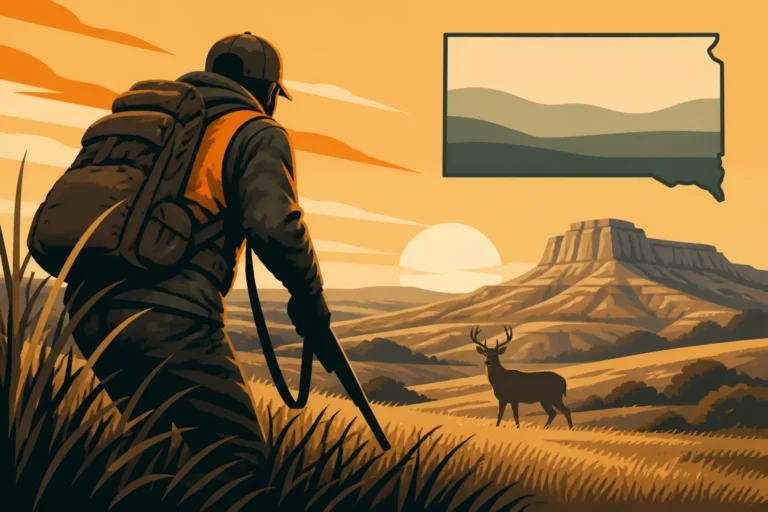
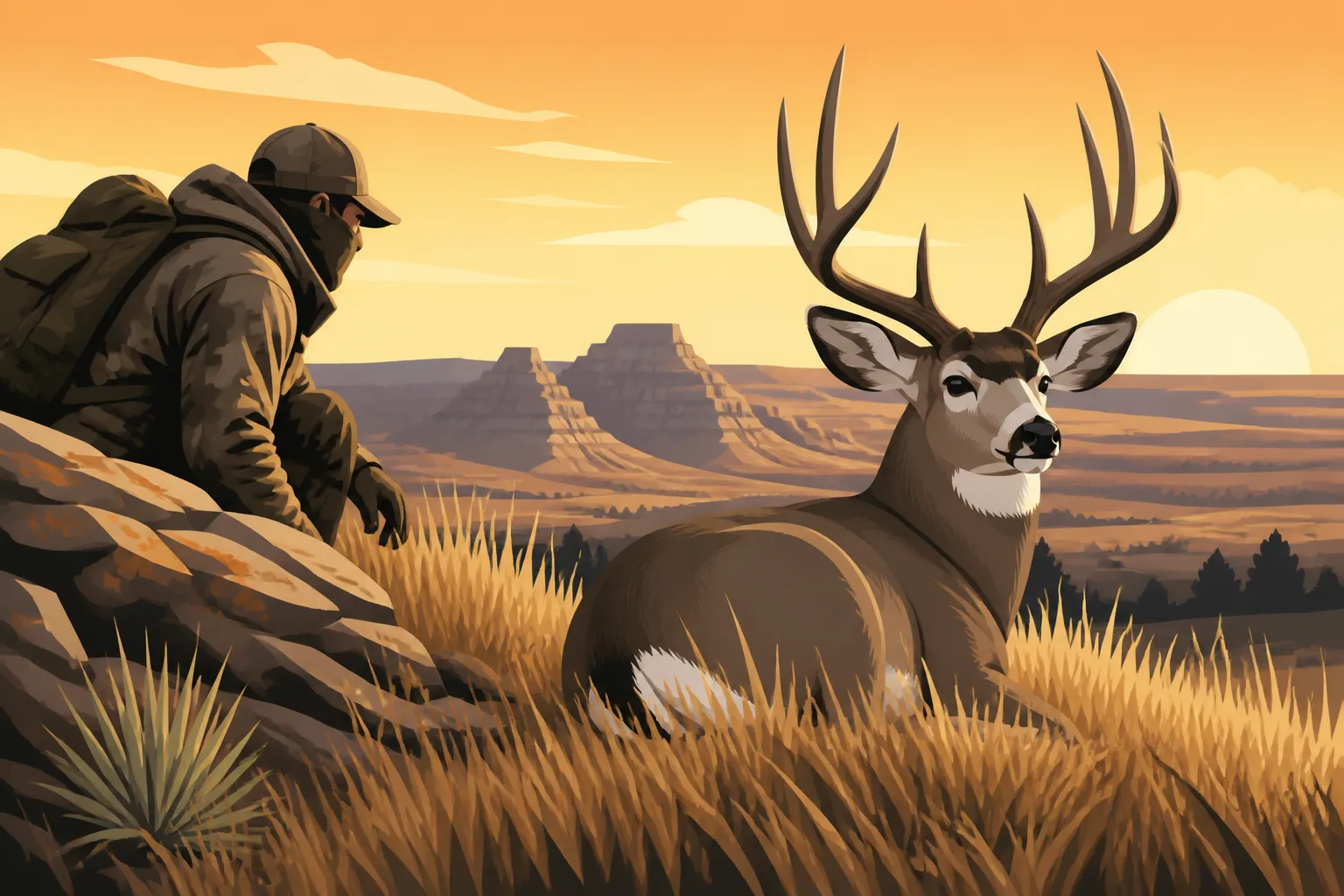
There's nothing quite like the adrenaline spike of spotting a magnificent mule deer buck bedded down on a vast South Dakota prairie or within the rugged West River breaks. However, that excitement can quickly turn to frustration when a carefully planned stalk crumbles, leaving you watching that buck bound away over the horizon. This guide is all about equipping you with the knowledge and tactics to successfully close the distance on a bedded mule deer, turning those heartbreaking blow-ups into hard-earned triumphs.
Understanding Mule Deer Bedding Habits
Successfully stalking a bedded mule deer buck begins long before you even lay eyes on him. It starts with understanding why he chooses a particular spot to bed down. These aren't random decisions; they're calculated choices rooted in survival, comfort, and safety. Ignoring these factors is like trying to solve a puzzle without all the pieces – you're just setting yourself up for failure.
Why Mule Deer Bed Where They Do
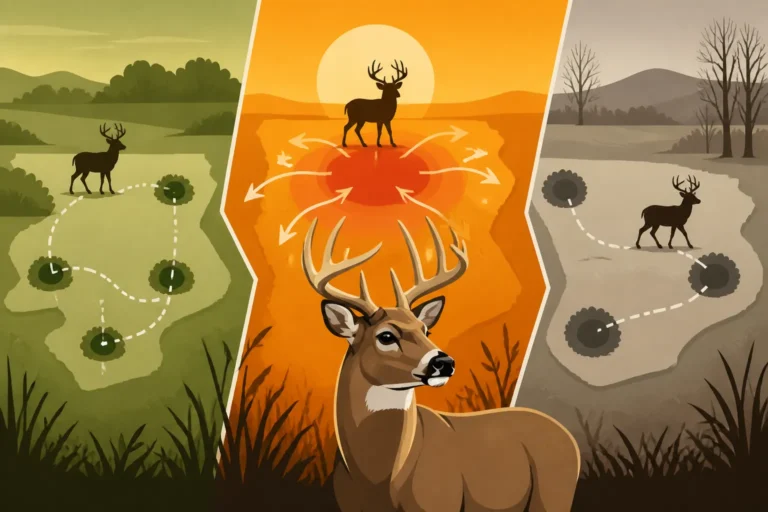
Mule deer, especially mature bucks, are masters of efficiency and security. Their bedding choices are primarily driven by three core needs: thermal regulation, security from predators (including hunters), and gaining a strategic advantage.
First, thermal regulation is huge. On a scorching South Dakota afternoon, a buck will seek out shade, often on north-facing slopes, under a lone cedar, or deep within a brushy coulee where the sun's rays struggle to penetrate. Conversely, during a cold, blustery day, they'll often be found bedded on south-facing slopes, soaking up every ounce of warmth from the sun, often out of the direct path of the biting wind. This isn't just about comfort; it's about conserving energy. If they have to burn extra calories to stay warm or cool, that's energy not going towards growing antlers or staying healthy for the rut. Understanding the weather conditions of the day is your first clue to where they might be hiding.
Second, security is paramount. A bedded buck wants to see danger before it sees him, and ideally, he wants his back to cover, making him feel less exposed. He'll typically bed with a clear line of sight downwind, using his nose to detect anything approaching from behind. This gives him maximum warning. They often choose spots that offer a 270-degree view, while a thick bush, rock outcropping, or steep bank protects their blind spot. This is why you rarely find a truly mature buck bedded in the wide open without some kind of immediate escape cover nearby. It's a calculated risk management strategy.
Finally, a strategic advantage comes into play with elevation and terrain. While they won't always be on the absolute highest point, they often pick a slight rise or a bench on a hillside that offers a commanding view. This allows them to monitor their surroundings without constantly standing up, conserving energy. They'll use terrain features like the lip of a coulee or a small knob to break up their silhouette, making them incredibly difficult to spot, even if you're looking right at them. The terrain itself becomes their camouflage, a natural fortress against observation.
Typical Bedding Locations in South Dakota
South Dakota's West River country, with its vast, broken terrain, offers a diverse range of bedding options for mule deer. Understanding these common hideouts is essential for narrowing down your search. It's not just about looking anywhere; it's about looking in the right places.
Coulees and Draws: These are perhaps the most classic mule deer bedding spots. A coulee, with its winding, often brushy bottom and steep banks, provides excellent concealment from above and offers crucial thermal protection. On a hot day, bucks will drop into the cooler, shaded bottoms. On a cold, windy day, they'll often be found bedded on a sunny, leeward slope within the coulee, shielded from the wind. They use the folds and breaks in the terrain within these draws to disappear, often just below the rim where they can peer over without exposing their full body. You could walk the rim of a coulee and never know a trophy buck is tucked away just 20 yards below you. Learning how to effectively approach and glass these features is critical, as discussed in our piece on Reading Prairie Coulees for Mule Deer.
Sagebrush Flats and Broken Terrain: Don't let the seemingly open nature of a sagebrush flat deceive you. Mule deer bucks can vanish into surprisingly sparse cover. They’ll utilize even small clumps of taller sagebrush, a subtle depression, or a minor rise to break up their outline. The broken terrain, characterized by undulating hills, small washes, and scattered rock outcroppings, is a prime location. These areas provide endless opportunities for a buck to blend in, often bedding with just their antlers or ears visible over a clump of grass or sage. They rely heavily on their natural camouflage and the vastness of the landscape to avoid detection. It's in these subtle contours that they find their security.
Cedar Patches and Shelterbelts: While less common than in other states, scattered cedar trees and the occasional man-made shelterbelt can be goldmines, especially on colder days or in areas with less natural cover. Cedars offer dense, evergreen cover that protects from wind and provides visual obstruction year-round. Bucks will bed right within these patches, sometimes allowing you to walk right past them without realizing. Shelterbelts, particularly those on private ground bordering crops, offer similar benefits and can be magnets for deer seeking sanctuary and thermal protection. They provide a dense, linear cover that deer often travel and bed within, especially if it offers a clear view of an escape route or feeding area.
The Art of Spotting a Bedded Buck
Even when you know where to look, actually spotting a bedded mule deer buck is an art form. Their natural camouflage is incredible, and they have an uncanny ability to turn themselves into part of the landscape. This is where patience, proper equipment, and a keen eye truly pay off.
Effective Glassing Techniques
Successful glassing on the open prairie or broken country of South Dakota is about much more than just randomly sweeping your binoculars around. It's a systematic approach that maximizes your chances of picking out that subtle hint of a deer amidst the vastness.
Firstly, use quality optics – good binoculars (10x or 12x) and a reliable spotting scope are non-negotiable. Don't skimp here; clear, bright glass makes an enormous difference, especially in low light or across long distances. Secondly, find a good vantage point. This often means getting to high ground, but sometimes a subtle rise that offers a unique angle into a coulee can be more effective. Once positioned, set up your tripod. Trying to hold a spotting scope steady freehand is an exercise in futility and frustration. A solid tripod eliminates shake and allows for meticulous, slow scanning.
Now, for the technique: the grid search. Instead of sweeping, divide the area you're examining into smaller, manageable sections. Pick a starting point, like a distinct rock or tree, and slowly scan horizontally, overlapping each scan line by about 10-15%. When you reach the end of that imaginary line, drop your optics slightly and scan back in the opposite direction. Repeat this process methodically, like reading a book. This ensures you don't miss anything. Pay particular attention to edges, shadows, and areas where cover meets open ground. Take your time. Spend at least 10-15 minutes, or even longer, thoroughly examining each grid. As our article on Glassing South Dakota Breaks at First Light emphasizes, slow and deliberate is key. Sometimes a buck will move an ear, blink an eye, or shift just enough to catch your attention. Apps like GoHunt can be invaluable here, allowing you to mark potential bedding areas, plan your vantage points, and even use satellite imagery to identify subtle terrain features that might hold deer.
Interpreting Body Language and Environment Cues
Mule deer are masters of stillness, but even the most disciplined buck will give off subtle clues if you know what to look for. It's about recognizing anomalies in the natural environment.
Antlers and Ears: Often, the only thing you'll see of a bedded buck are his antlers, protruding like dried branches from a patch of sage, or the distinct shape of his ears, which are larger and more expressive than those of a whitetail. These shapes are unnatural in the landscape. Look for horizontal lines (antler tines), perfectly curved arches, or the distinct funnel shape of an ear. Even if you can't make out the whole deer, seeing a flash of antler or the twitch of an ear against a monotone background can be enough to confirm his presence. Their ears are almost constantly moving, sifting the air for sounds, so that slight shift can give them away.
Flicking Tails and Subtle Movements: While bedded, a deer might flick its tail to ward off flies, twitch a leg, or shift its weight. These are tiny movements, often missed if you're rushing your glassing. That's why sustained observation is crucial. Sometimes, all you see is a momentary flash of white or a subtle ripple in the vegetation that wasn't there before. These subtle movements can also reveal the exact contour of the deer's body, helping you confirm it's not just a rock or an oddly shaped bush. If you suspect a deer, watch that spot for an extended period. Patience here is your best friend.
Disturbed Vegetation and Shine: Pay attention to the ground itself. Are there areas of flattened grass? A "mule deer bed" isn't always obvious, but a disturbed patch of earth or bent-over sage can indicate recent activity. Also, look for any unnatural shine. A deer's coat isn't perfectly matte; sometimes, the sun will catch a patch of hair or antler, creating a glint that stands out. Wet fur after a rain or dew can also reflect light differently than surrounding vegetation. Even the dark, wet ring around a buck's nose can sometimes be caught by the sun, appearing as an unnatural dark spot in the dry prairie. These tiny details are what separate successful spotters from those who walk past bedded deer all day.
Crucial Pre-Stalk Considerations
Once you've spotted that bedded buck, the real game begins. Before you take a single step towards him, you need to meticulously plan your stalk. This isn't just about being sneaky; it's about understanding the environment and using it to your advantage. Neglecting these critical pre-stalk considerations is the quickest way to end up with a blown opportunity.
Wind Direction and Scent Control
This is, without a doubt, the single most important factor in any successful stalk. Mule deer, like all deer, rely heavily on their sense of smell. They live by their nose, and a mature buck's nose is a hyper-tuned alarm system. If your scent drifts towards him, the game is over, often before you even realize it.
The Absolute Primary Factor: Always, always approach from downwind. This means the wind should be blowing from the deer towards you. If the wind is swirling or changing directions erratically, it’s often best to wait for it to stabilize or abort the stalk altogether. Trying to outsmart a deer's nose in variable wind conditions is a fool's errand. Carry a wind checker (a small squeeze bottle of powder or milkweed seeds) and use it constantly. Not just once, but every 50 yards, every time you pop up over a rise, every time you change direction. Wind can do strange things in broken terrain, swirling in draws and over ridges. What feels like a steady wind where you are might be completely different a quarter-mile away, especially down in a coulee. Our article on Wind Direction on a Prairie Stalk dives deeper into reading these subtle shifts.
Thermals and Time of Day: Understand thermals. In the morning, as the sun rises, thermals typically rise, meaning scent will carry uphill. In the evening, as the air cools, thermals fall, meaning scent will carry downhill. This can complicate a stalk, especially in deep coulees or mountainous terrain. If a buck is bedded high on a ridge in the morning, your scent might carry over him even if you're technically downwind on the ground. Conversely, if he's low in a draw in the evening, your scent might funnel right down to him. Planning your stalk to align with predictable thermal patterns can dramatically increase your chances. If conditions aren't right, waiting for an hour or two for thermals to stabilize can be the smartest move.
Topography and Cover Analysis
Once the wind is handled, your next focus is on how the land itself can help or hinder your approach. This is where a detailed look at the topography and available cover becomes crucial. You need to become one with the landscape.
Using Elevation and Draws for Concealment: The undulating terrain of South Dakota's West River country is your greatest asset. Use every fold, every rise, every depression to your advantage. You want to stay out of sight, always below the skyline. Plan your route so that you are constantly using terrain features to mask your approach. This might mean adding significant distance to your stalk, making a wide loop to get behind a ridge, or dropping into a deep draw and crawling along its bottom. Even a small swell in the prairie can provide enough cover to keep you hidden. Apps like GoHunt with their topographic and satellite imagery are absolutely essential here. You can literally map out your entire stalk route, identify key hiding spots, and pre-visualize where you might need to crawl or move slowly. This planning stage on your phone or tablet before you move a muscle is priceless.
Identifying Vegetation for Visual Breaks: Beyond the big terrain features, pay close attention to the smaller vegetation. Clumps of sagebrush, yucca plants, tall prairie grasses, or even a line of stunted cedars can provide enough visual break to conceal your presence. Think in terms of "micro-terrain" and "micro-cover." Can you belly-crawl behind that small rise? Is that patch of waist-high grass enough to hide your torso if you stay low? Plan your movements from one piece of cover to the next. The goal is to move like a ghost, flowing through the landscape, always keeping something between you and the buck's line of sight. This requires slow, deliberate movement and a constant awareness of your position relative to the bedded deer. Remember, even a small patch of grass can offer enough concealment if you're committed to staying low.
Sun Position and Shadows
While often overlooked, the position of the sun and the resulting shadows can significantly impact your stalk, either providing an advantage or revealing your presence.
Using Shadows for Concealment: Shadows are your friend. Early morning or late evening often provide long shadows that can be used to hide your movements. Plan your approach to stay within these darker areas as much as possible. A buck staring into a bright, sunlit field will have a much harder time picking out a shape moving within a deep shadow. Similarly, if you can approach with the sun at your back, it can make it harder for the deer to see you clearly due to glare. This can be especially effective when stalking across open, flat ground where other cover is sparse.
Avoiding Glare and Backlighting: Conversely, never stalk directly into the sun if the buck is looking in your direction. The glare can make it hard for you to see, and it can also create a shimmering silhouette that makes you incredibly obvious to the deer. Similarly, avoid cresting a ridge and presenting yourself as a clear silhouette against the bright sky. This is a common mistake and one that will often blow a stalk. A deer's eyes are finely tuned to detect unnatural shapes against the horizon. Always try to stay below the skyline or move across it quickly during a transition. Thinking about how light and shadow play across the landscape is an advanced stalking technique that can make all the difference, especially on clear, sunny days that are common during the South Dakota Deer Season Dates by Weapon.
Executing the Stalk: Step-by-Step
You've spotted the buck, assessed the wind, and meticulously planned your route using the terrain and cover. Now comes the moment of truth: executing the stalk. This phase demands extreme patience, precise movement, and a calm, focused mindset. It's often slow, physically demanding, and mentally taxing, but the reward is worth every ounce of effort.
Initial Approach and Entry Point Selection
The first few hundred yards of any stalk are often the most crucial. This is where you establish your commitment to stealth and ensure your initial moves don't alert the buck.
Silent Movement is Non-Negotiable: Every step must be deliberate and quiet. Before you put your foot down, look for loose rocks, crunchy dry grass, or thorny brush that could snap or scrape loudly. Shift your weight slowly, feeling for stable ground. If the terrain is very noisy, consider removing your boots and stalking in socks, if conditions allow – though in South Dakota's often thorny, prickly landscape, that's rarely practical or advisable unless you're literally on the final few yards to a shooting lane. Focus on a heel-to-toe or toe-to-heel walk that minimizes sound. Your pace should be incredibly slow, often taking minutes to cover just a few yards. Remember, a bedded buck might not see you, but he's constantly listening.
Avoiding Skylining and Exposed Positions: As you begin your approach, constantly remind yourself to stay low and never silhouette yourself against the sky. This is particularly important when cresting any rise or ridge. Instead of walking directly over the top, crawl or peer over the edge slowly, just enough to verify the buck's position and your planned route. Imagine a string stretching from the buck's eyes to your current position; if that string is interrupted by ground, you're good. If it's uninterrupted and hits you, you're exposed. If you have to cross an open area, move quickly and low, from one piece of cover to the next. This might mean crawling on your hands and knees or even belly-crawling for significant distances.
Navigating Tricky Terrain
South Dakota's prairie isn't always smooth sailing. You'll encounter obstacles that can test your patience and discipline. Learning to navigate these quietly is key.
Loose Rock, Sagebrush, and Thorns: The West River breaks are notorious for loose shale, sharp rocks, and dense patches of prickly pear cactus and various thorns. Each presents a unique challenge. When on rocky ground, focus on placing your feet on stable rocks, not loose scree. Test each step before committing your full weight. With sagebrush, try to step over it rather than through it, as brushing against it can create noise. If you must go through it, move very slowly, parting the branches with your hands to minimize rustling. Thorns are a constant battle; good, durable hunting pants and gloves are essential. If you encounter a dense patch, it might be better to detour, even if it adds distance to your stalk, rather than risk a painful and noisy encounter. This is where high-quality boots, like those often recommended for Boots for Walking Cattails All Day, prove invaluable, even in dry prairie environments.
Quiet Foot Placement: Beyond avoiding obvious noise-makers, focus on the quality of your foot placement. Each step should be deliberate, gentle, and controlled. Imagine you're walking on eggshells. Lift your feet, don't drag them. As you place your foot down, shift your weight slowly, feeling for stability and listening for any crunch or rustle. If you hear noise, freeze. Wait, listen, and then proceed even slower. Sometimes, pausing for a minute or two can allow any subtle sounds you made to dissipate, and the deer might resume its relaxed state. This methodical process makes your approach feel agonizingly slow, but it's the foundation of a successful close-quarters stalk.
The Final Approach and Shot Preparation
You're closing in. The buck is within range, or nearly so. This is the most intense part of the stalk, where a single mistake can undo hours of effort. Calm nerves and meticulous preparation are paramount.
Slow, Deliberate Movements: As you get closer, your movements need to become even more deliberate and slow. Every few steps, pause and scan the buck. Is he still bedded? Is he looking in your direction? Is anything else around him (like a doe, or another smaller buck) that you haven't accounted for? Sometimes, a buck will stand up and stretch without being alerted. This is a golden opportunity to get a shot off if he presents an ethical angle, but be ready for him to resettle quickly. Don't rush. The closer you get, the less room for error you have. You're now operating in his immediate comfort zone.
Anticipating the Stand-Up and Shot Preparation: Most bedded deer will stand up before offering a clean shot. They'll often stand, stretch, and then turn broadside to survey their surroundings. This is the moment you've been waiting for. Be ready. Have your rifle or bow ready to be brought into action smoothly. If carrying a rifle, ensure the safety is still on until you're absolutely ready to shoot. Practice your shooting positions beforehand – prone, kneeling, sitting, or even standing, using shooting sticks. Know your limitations. When he stands, don't immediately try to shoot. Instead, quickly get into a stable shooting position, acquire him in your scope, and take a deep breath. Our guide on Practicing Prone Shots on the Prairie is particularly relevant here, as prone is often the steadiest shot on open ground. If the buck is truly unaware, he might even mill around for a few seconds, giving you ample time.
Rangefinding and Angle Compensation: Before the shot, if possible, range the exact distance to the buck and any landmarks around him. On a stalk, distances can be incredibly deceiving, especially in broken country. A quick read from your rangefinder can prevent a costly miscalculation. If shooting from an elevated position or down into a deep coulee, be aware of angle compensation. Modern rangefinders often provide an "equivalent horizontal distance," which is what you should use for aiming. If yours doesn't, remember that uphill or downhill shots are effectively shorter than the actual line-of-sight distance. For example, a 300-yard shot at a steep angle might only be equivalent to a 250-yard horizontal shot. Failing to account for this can lead to a clean miss over the deer's back. This kind of precise rangefinding and aiming is critical for ethical shot placement on a Shot Placement on a Pronghorn as well, highlighting the universal nature of these skills.
Common Stalking Pitfalls and How to Avoid Them
Even the most seasoned hunter will blow a stalk now and then. It's part of the game. However, many common mistakes are preventable with a little foresight and discipline. Understanding these pitfalls can help you avoid turning a promising opportunity into a frustrating memory.
Overlooking Satellite Deer
One of the most frequent reasons a stalk gets busted is not by the target buck himself, but by other, smaller deer in the vicinity. You're so focused on the big antlers you spotted, you completely miss the pair of does or spike buck bedded nearby.
The Sneaky Spotters: Mule deer, especially does and young bucks, often act as sentinels for the larger, more cautious bucks. They might be bedded in less secure spots, but their eyes and ears are still sharp. You might successfully navigate around your target buck, only to have a doe you never saw blow out and take your trophy with her. This is why thorough glassing before the stalk is so crucial. Don't just find the buck; thoroughly scan the entire area around him for any other set of eyes, ears, or bodies. Expand your search radius significantly.
Adjusting Your Approach: If you do spot satellite deer, you have two options: either adjust your stalk route to bypass them with an even wider berth, or accept the risk and hope they stay put. If they are directly between you and your target, a wide detour might be your only choice. Sometimes, though, you can time your movements when their heads are down feeding or when they are looking away. It requires an even higher level of patience and slow movement, but it can be done. Acknowledging that multiple sets of eyes are watching can drastically change your strategy, sometimes forcing you to wait out a shift in their position or a change in lighting.
Misjudging Distances and Angles
In the vast, open landscapes of South Dakota, distances can be incredibly deceptive. What looks like 200 yards might easily be 350, and a gentle slope can hide a significant drop or rise. This directly impacts your shot accuracy.
Practicing with a Rangefinder: Never guess your range in mule deer country. Invest in a good rangefinder and use it. Practice ranging objects at various distances and angles before your hunt. Get accustomed to its use so it becomes second nature under pressure. When stalking, range key landmarks as you approach. If you know that lone cedar is 150 yards, and the buck is another 100 yards beyond it, you have a solid reference. Our advice on Rangefinding Across Open Ground applies directly to these situations, stressing the importance of this tool.
Angle Compensation and Ballistics: As mentioned earlier, don't forget angle compensation. Shooting significantly uphill or downhill effectively shortens the horizontal distance your bullet travels. If your rangefinder doesn't calculate this, familiarize yourself with a ballistic chart or app that does. A misjudgment of just 20-30 yards on a long shot, especially at an angle, can mean a clean miss or, worse, a wounded animal. Know your rifle's ballistics intimately, especially your holdovers at various distances. This allows for quick, confident adjustments when the shot opportunity arises, rather than fumbling with dials or guessing. Knowing your gear is just as important as knowing the terrain, especially if you're set up with a Rifle Setup for South Dakota Open Country designed for longer shots.
Dealing with Unexpected Obstacles
Even the best-planned stalk can be derailed by unforeseen events. The prairie is a dynamic environment, and you need to be adaptable.
Sudden Wind Shifts: The wind in South Dakota is notorious for changing its mind, especially around midday or when weather fronts are moving in. If the wind suddenly swirls or shifts and starts blowing your scent towards the buck, you have a tough decision to make. Sometimes, you can quickly adjust your route, making a wide loop to get downwind again. Other times, the shift is too drastic, and your only option is to freeze, wait, and hope it changes back, or abort the stalk entirely. Pushing a stalk with a bad wind is almost always a guaranteed bust. Pay attention to weather forecasts and any changes in the sky.
Other Hunters or Livestock: The vastness of South Dakota public land can sometimes lead to unexpected encounters with other hunters. If another hunting party approaches or moves into the area of your stalk, you need to decide quickly. Is it safer to back out and avoid interfering with their hunt, or can you continue your stalk discreetly without spooking their game or yours? Similarly, livestock – cattle or horses – can unwittingly ruin a stalk. They move, make noise, and can alarm deer. If they are in your path, try to use them as cover if they're between you and the buck, or carefully detour around them. Remember, deer are accustomed to livestock, so their presence might not instantly spook the deer, but their sudden movement or your movement among them could. Sometimes, these unexpected obstacles are simply part of the hunt, and you must make a judgment call on the fly, demonstrating true adaptability in the field.
| Stalking Condition | Ideal Scenario | Challenging Scenario | Best Approach |
|---|---|---|---|
| Wind Direction | Consistent, strong wind from deer to hunter | Swirling, light, or quartering wind | Always approach directly downwind; use wind checker constantly. |
| Terrain/Cover | Deep coulees, rolling hills, ample sagebrush cover | Flat, open prairie with sparse vegetation | Utilize every subtle fold, dip, and bush; low crawl extensively. |
| Sun/Shadows | Long shadows from low sun, sun at hunter's back | High sun, glare, or backlighting the hunter | Stay in shadows; avoid cresting skylines; approach with sun at back. |
| Visibility | Buck bedded in clear view, no hidden deer nearby | Buck partially obscured, other deer in vicinity | Thoroughly glass surroundings; use patience to confirm all deer positions. |
| Noise Level | Soft ground (wet soil, dense grass) | Crunchy dry grass, loose rocks, thorny brush | Move extremely slowly; test each step; detour around noisy obstacles. |
| Hunter's Physicality | Well-rested, flexible, capable of crawling for miles | Fatigued, stiff, limited mobility | Prioritize physical conditioning; take breaks; adjust expectations. |
Disclaimer
Hunting is an inherently dangerous activity. Always prioritize safety and adhere to all local, state, and federal hunting regulations. This article provides informational guidance only, and successful hunting outcomes are never guaranteed. The author and publisher are not responsible for any accidents, injuries, or legal infractions that may occur during a hunt. Always scout thoroughly, practice responsible firearm handling, and obtain all necessary licenses and permits before heading into the field.