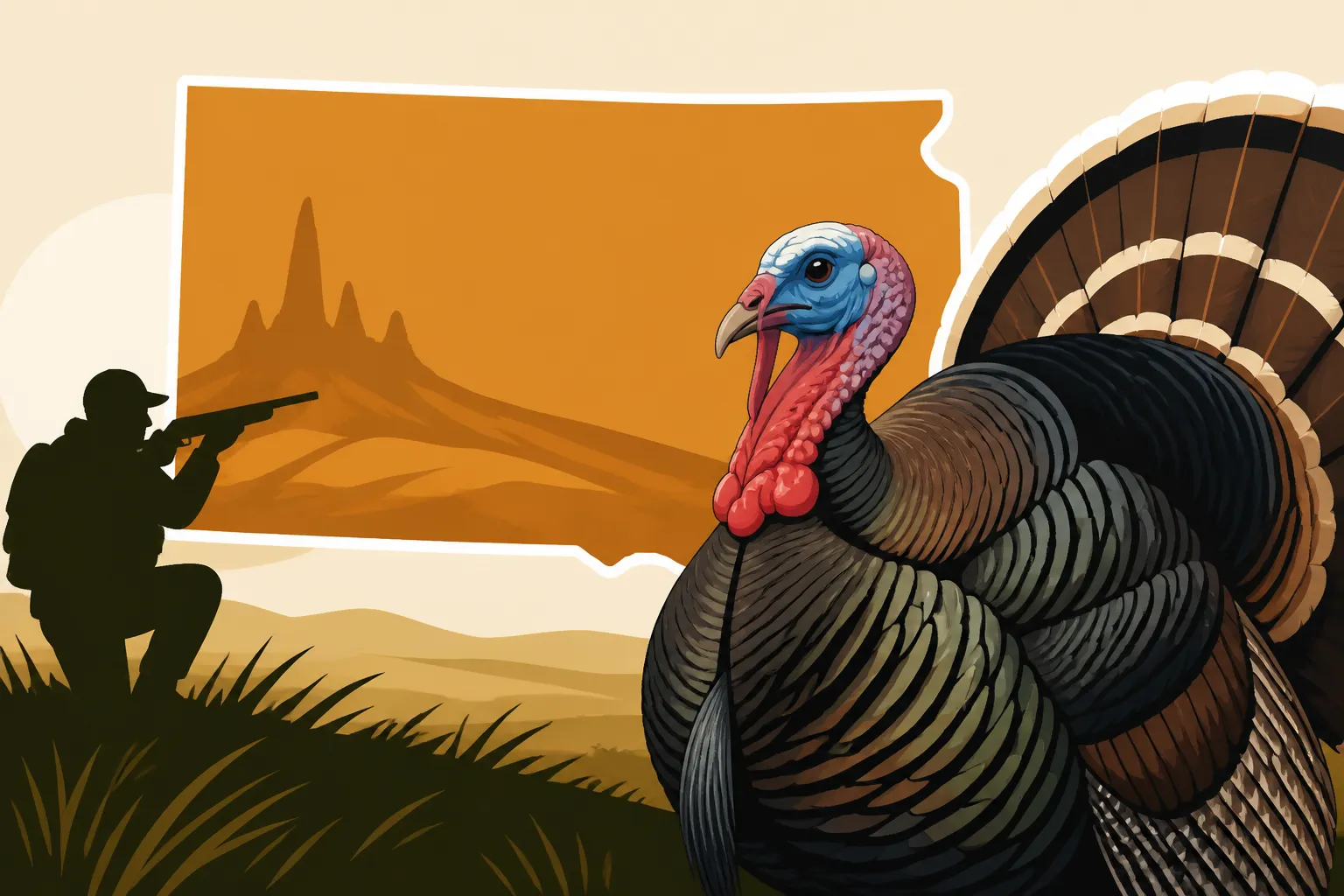
South Dakota Turkey Subspecies
Many turkey hunters dream of a grand slam, but even chasing a single subspecies can present a unique set of challenges and triumphs. In South Dakota, it's not always as simple as "a turkey is a turkey." Our diverse landscapes, from the Black Hills to the Missouri River bottoms and the vast open prairie, host different subspecies of wild turkeys, each with their own distinct characteristics and behaviors. This guide will walk you through the nuances of identifying and understanding the primary turkey subspecies you'll encounter in South Dakota, helping you become a more knowledgeable and successful hunter, no matter where you chase gobblers.
The Three Main Turkey Subspecies You'll Find in South Dakota
South Dakota is a unique place, offering hunters the chance to pursue multiple turkey subspecies. While genetically they all share a common ancestor, the environment has shaped them into distinct creatures, each with specific preferences and adaptations. Knowing these differences can dramatically impact your scouting and hunting strategy.
Merriam's Turkeys: The Black Hills Royalty
Ah, the Merriam's! For many, this is the quintessential Western turkey, and the Black Hills of South Dakota is one of their strongholds. These magnificent birds are often described as the "mountain turkeys," and for good reason. They thrive in the rugged, ponderosa pine-clad terrain of the Black Hills, blending in perfectly with the shadows and granite outcrops.
Physically, Merriam's are generally lighter in coloration than their Eastern counterparts, with beautiful creamy-white or buff-colored tips on their tail feathers and rump. Their body feathers often have a purplish and copper iridescent sheen. When a big Merriam's gobbler struts in the sunlight, those tail tips practically glow against the darker body. Their legs tend to be darker, often a deep gray or blackish hue. Historically, Merriam's have been a part of the Black Hills ecosystem for a long time, evolving to navigate the steep ridges and dense timber. This long adaptation means they are incredibly adept at using the mountainous terrain to their advantage, often roosting in the tallest pines and moving silently through the timber. Hunting them often involves significant elevation changes, stealth, and a keen eye for spotting movement among the trees. The challenge of a Black Hills Merriam's is a true test of a turkey hunter's grit, and the reward is a truly magnificent bird.
Eastern Turkeys: East River Timber Dwellers
Crossing the Missouri River, you step into the domain of the Eastern wild turkey. These birds prefer the more deciduous timber and river bottom habitats found in the eastern half of the state, particularly along the Missouri River and its tributaries. Unlike the Merriam's, Easterns are typically darker overall, with rich chestnut brown or dark chocolate tips on their tail feathers and rump. Their body feathers often display strong copper and green iridescence, giving them a glossy, almost metallic appearance in direct sunlight. Their legs tend to be lighter, a reddish-pink color, distinguishing them further from their western cousins.
Eastern turkeys have expanded their range significantly over the decades, finding ideal conditions in the lush river corridors and scattered woodlots that break up the vast prairie farmlands. These habitats provide ample mast crops, roosting trees, and dense cover for nesting and escape from predators. Hunting Easterns in South Dakota often means focusing on creek beds, shelterbelts, and mature timber stands, utilizing the thick cover for concealment and understanding how birds travel through these linear features. Their vocalizations can be incredibly loud and sharp, echoing through the timber, and often, calling them in requires a nuanced approach, blending aggressive and subtle techniques depending on the bird's mood and the terrain. If you're hunting in areas like the Missouri River timber, you're almost certainly chasing an Eastern or a hybrid. You might find similar challenges here as when you're Hunting Whitetails in South Dakota's Missouri River Timber, needing to navigate dense cover and predict how game moves along river corridors.
Hybrid Turkeys: The Prairie's Mixed Bag
Now, here's where things get interesting and sometimes a little tricky: the hybrid turkeys. These are birds that result from interbreeding between Merriam's and Eastern subspecies, and they are most commonly found in the transition zones where the ranges of the two distinct subspecies overlap. In South Dakota, this often means the central parts of the state, especially areas west of the Missouri River but outside the primary Black Hills range. You'll find them scattered across the prairie, often gravitating towards shelterbelts, isolated pockets of timber, and brushy draws.
Visually, hybrids can be a mixed bag, displaying characteristics of both parents. Their tail feather tips might be a muddy brown or a mix of creamy white and brown, sometimes appearing faded or "dirty" compared to the crisp white of a pure Merriam's or the dark chestnut of a pure Eastern. Their body coloration can also vary widely, showing a blend of the purple-copper and green iridescence. From a hunting perspective, hybrids can be quite unpredictable. They might exhibit the wariness of prairie birds, often covering vast distances, but also show a tendency to stick to the limited cover available. Their behavior might lean towards either subspecies, or something entirely unique, making scouting and adaptability paramount. Understanding the range of each subspecies can be made easier with tools like GoHunt, which often provides species distribution maps.
Distinguishing Features: What to Look For in the Field
When you're out in the field, sometimes a quick glance isn't enough to definitively identify a turkey's subspecies, especially with the possibility of hybrids. However, by focusing on a few key physical characteristics and their environment, you can become much more confident in your identification.
Feather Characteristics and Coloration
The most reliable indicators for distinguishing turkey subspecies often lie in their feather coloration, particularly the tail and rump. Merriam's turkeys, as we discussed, are characterized by their striking, light-colored tail feather tips, which are typically creamy white or light buff. This lighter coloration extends to the feathers on their lower back and rump, creating a stark contrast with the darker body feathers. When a Merriam's gobbler fans out his tail, those white bands are unmistakable. The overall iridescence on their body feathers tends to be more purplish and coppery, less green than an Eastern.
Eastern turkeys, conversely, will have tail feather tips that are a rich, dark chestnut brown. This deep, warm brown color also covers their rump feathers. When you see an Eastern strutting, the tail fan will have a much darker, almost uniform appearance compared to a Merriam's. Their body feathers often gleam with strong green and copper iridescence, especially visible in good light. These subtle variations in iridescence can sometimes be difficult to discern from a distance or in low light, but the tail and rump tips remain the most consistent visual cue. Hybrids, true to their name, can show a blend – perhaps duller white tips, or a brownish-white, or even patchy variations, making them harder to classify definitively without closer inspection.
Body Size and Gobbler Spur/Beard Variation
While not as precise as feather coloration, general size and characteristics of the gobbler's spurs and beard can offer additional clues, though these can vary significantly based on age, nutrition, and genetics within any subspecies. Merriam's turkeys are often perceived as slightly smaller and more compact than Easterns, an adaptation that might serve them well in their mountainous habitat. However, a mature gobbler of any subspecies can be a substantial bird.
The spurs on a gobbler's legs are a good indicator of age but can also show some subtle subspecies differences. Eastern gobblers are often noted for having thick, dark spurs that can grow quite long and sharp with age. Merriam's, while also developing impressive spurs, might have a slightly different curvature or appearance, though this is less consistent than feather color. Beards, too, primarily indicate age, but Eastern gobblers are renowned for growing exceptionally long and thick beards, often reaching impressive lengths. While Merriam's can also grow long beards, it's perhaps less common to see the truly massive beards compared to their Eastern counterparts. Again, these are generalizations, and a prime specimen of any subspecies can defy these subtle trends. It’s always best to combine multiple observations rather than relying on a single trait.
Habitat Clues: Where Each Subspecies Prefers to Roam
Beyond physical appearance, where you find a turkey is a huge indicator of its subspecies. This is one of the most reliable ways to make an educated guess, especially for purebred birds. The Black Hills of South Dakota are synonymous with Merriam's turkeys. If you're hunting within the Ponderosa pine forests, steep canyons, and high elevations of the Black Hills National Forest, you are almost certainly pursuing Merriam's. Their calls will echo through the timber, and you’ll see them navigating the often-challenging terrain. If you're Hunting Elk on Steep Black Hills Ridges, you're likely in prime Merriam's country too.
Move east, particularly along the fertile river bottoms of the Missouri River, Big Sioux, and James River, and you're squarely in Eastern turkey territory. These birds prefer dense, mature deciduous timber, areas with a good understory, and proximity to agricultural fields for feeding. They're at home in the cottonwood and oak stands. Any turkeys found in these lush riverine habitats are almost certainly Easterns or Eastern-dominant hybrids. The areas between the Black Hills and the main Eastern strongholds, the vast prairie lands punctuated by shelterbelts and intermittent creek drainages, are where hybrids are most likely to show up. These birds are adaptable, using whatever cover they can find – be it a small patch of trees, a brushy coulee, or even just taller grass. Scouting these varied landscapes effectively is crucial, and mapping tools like those from GoHunt can be invaluable for pinpointing potential habitat.
Understanding Turkey Behavior by Subspecies
Just as different environments have shaped their physical appearance, they've also molded the behavior of South Dakota's turkey subspecies. Understanding these subtle differences can give you a significant edge in the field, helping you anticipate their movements and respond effectively to their vocalizations.
Roosting and Roaming Habits
Merriam's turkeys in the Black Hills exhibit habits perfectly suited to their mountainous home. They often prefer to roost in the tallest Ponderosa pines, gaining elevation for safety and a good vantage point at first light. Their daily movements can cover significant ground as they traverse steep ridges and deep draws, often traveling down from high roosts to feeding areas in open meadows or along creek bottoms, and then back up to higher ground for afternoon loafing and evening roosting. They tend to stick to the timber for security but aren't afraid to cross open areas when necessary. Their nomadic tendencies mean they might not be in the exact same spot day after day.
Eastern turkeys, on the other hand, are creatures of the river bottoms and timbered creek lines. They’ll roost in tall cottonwoods, oaks, or other large deciduous trees, often along water sources. Their daily roaming habits tend to be more confined to these timbered corridors, moving between roosts, feeding areas (often agricultural fields like corn or bean stubble), and strutting zones within the woods. They are less likely to cover vast, open distances compared to Merriam's or prairie hybrids unless crossing from one woodlot to another. Knowing these patterns helps narrow down where to focus your efforts. A great example of this is understanding How Buck Movement Changes Through the Rut, where deer also stick to specific types of cover.
Vocalizations and Calling Strategies
While all wild turkeys speak the same basic language of yelps, clucks, purrs, and gobblers, there are anecdotal observations and hunter experiences that suggest subtle differences in their vocalizations and how they respond to calls. Merriam's gobblers in the Black Hills are often described as having a slightly "softer" gobble, perhaps a bit less resonant than an Eastern. They can also be quite aggressive and responsive to calls, especially when they feel they have a territorial advantage or are looking for hens. However, the mountainous terrain can play tricks with sound, making it hard to pinpoint their exact location.
Eastern turkeys are often known for their loud, booming gobblers that carry for great distances through the river bottom timber. They can be incredibly vocal, especially during the peak of the spring breeding season. Calling strategies for Easterns often involve a mix of aggressive yelping to challenge a gobbler and softer clucks and purrs to entice a wary bird. They can be very responsive but also prone to hanging up just out of sight in thick cover. Hybrid turkeys, living in transitional areas, can show a blend of vocalizations. Their gobble might be robust or slightly softer, and their responsiveness can be highly variable. Adaptability in your calling, like knowing Rattling Volume in Open Country for deer, applies to turkeys too – sometimes less is more.
Breeding Season Dynamics and Hunter Implications
The breeding season, or "rut," for wild turkeys is a fascinating time, and while the general biological drive is the same across subspecies, local conditions can influence how it plays out. For Merriam's in the Black Hills, the onset of spring weather, often characterized by later snowmelt and cooler temperatures, can slightly delay the peak of breeding activity compared to birds in warmer climates. When the weather does break, however, gobblers become intensely focused on breeding, and their responsiveness can surge. Hunters need to be prepared for varied weather conditions, from warm spring days to late-season snow squalls, which can dramatically affect bird behavior.
Eastern turkeys, especially in the East River regions, tend to follow a more predictable spring breeding cycle tied to increasing daylight and consistent warmer temperatures. The peak of gobbling and breeding can be intense, with birds actively searching for hens and readily responding to calls. However, as the season progresses and hens begin nesting, gobblers can become "henned up," making them harder to call away. Hybrid turkeys, residing in varied prairie environments, might experience breeding dynamics influenced by localized weather patterns. A sudden cold snap or heavy rain can temporarily shut down gobbling activity, making persistence and adaptability key. Understanding these regional weather impacts is crucial, just as Late-Season Hunting in South Dakota Snow affects deer and pheasants.
Hunting Strategies Tailored to Each Subspecies
Successfully hunting wild turkeys in South Dakota means adapting your approach to the specific subspecies and the terrain they inhabit. A "one size fits all" strategy simply won't cut it when you're dealing with mountain birds versus river bottom birds.
Black Hills Merriam's: Mountain Hunting Tactics
Hunting Merriam's in the Black Hills is an experience unlike any other. It’s physically demanding but incredibly rewarding. The steep terrain, dense Ponderosa pine forests, and elevation changes mean you often need to employ a "run and gun" or "spot and stalk" strategy. Merriam's turkeys have excellent eyesight and can spot movement from a long distance, making stealth paramount. You’ll spend a lot of time walking and listening, trying to locate gobblers with shock calls or subtle tree yelps at dawn. Once a bird gobbles, you need to quickly assess the terrain and move into a position that allows you to cut off his path or set up a decoy where he can see it from a distance.
Decoys can be effective, but often less critical than with Easterns in dense cover. Positioning is key – think about where the gobbler wants to come from and where he can see your setup without spotting you. Patience is also vital, as these birds might take their time traversing a hillside. Being able to glass open park-like areas or clear-cuts can help you spot birds before they hear you. It’s a hunt that demands good physical condition, a solid understanding of topography, and the ability to adapt your calling and setup on the fly. You might find some parallels here with Black Hills Elk Hunting Tactics regarding terrain navigation and silent movement.
East River Easterns: Timber and River Bottom Challenges
Hunting Eastern turkeys in South Dakota’s East River timber and river bottoms presents its own set of challenges, primarily dealing with dense cover and often more pressured birds. Here, setting up strategically is paramount. Eastern gobblers are notorious for "hanging up" just out of range, especially if they can't see a hen. Decoys become much more important in these scenarios, drawing the gobbler into visible range.
Focus on ambush points where birds are likely to travel: along the edges of agricultural fields, in the timber where natural travel corridors exist, or near roosting sites. Understanding Treestand Setups on Narrow River Timber for whitetails can provide insights into setting up in similar, confined environments for turkeys. Calling needs to be dynamic; sometimes aggressive yelping is required to provoke a gobbler, while other times soft clucks and purrs are best to coax a wary bird into view. Mobility is important, but often less about covering vast distances and more about making small, strategic moves to get ahead of or cut off a gobbling bird in thick cover. Don't be afraid to sit and wait; patience often pays off with these birds, especially during midday when they might be more inclined to travel or respond.
Prairie Hybrids: Adaptability and Scouting Are Key
Hunting hybrid turkeys on the South Dakota prairie is perhaps the most varied and unpredictable of all. These birds often inhabit fragmented habitats, using shelterbelts, isolated tree lines, creek bottoms, and even tall grass for cover. Success hinges on extensive scouting and extreme adaptability. Since cover can be sparse, using the terrain to your advantage for concealment is critical. Draws, rolling hills, and even tall CRP grass can provide crucial hiding spots.
Often, you'll need to locate birds by driving and listening, then parking and making a strategic approach on foot. Using tools like GoHunt can be incredibly valuable for e-scouting these areas, identifying potential roosting sites, travel corridors, and feeding areas before you even set foot on the ground. Once you pinpoint a bird, a long stalk might be necessary, using every fold in the ground to stay out of sight. Decoying can be effective, especially if you can get a setup where the gobbler has to commit across open ground. But be prepared for birds that might come in silent, or circle widely to try and get a visual. Being able to adapt from a run-and-gun approach to a stationary blind setup, depending on the bird's behavior and the available cover, is what makes hunting prairie hybrids so challenging and ultimately rewarding. You might even find yourself employing tactics similar to Spot-and-Stalk Antelope Hunting in South Dakota due to the open terrain.
License and Tagging Considerations for South Dakota Turkeys
Before you even think about which subspecies you're after, understanding South Dakota's licensing and tagging requirements is absolutely critical. Missing a deadline or misunderstanding a regulation can quickly turn a dream hunt into a frustrating disappointment.
South Dakota Turkey License Draw and Seasons
South Dakota's turkey hunting is primarily managed through a lottery drawing system, especially for the coveted spring seasons. Non-residents, in particular, need to be vigilant about application deadlines and available units. The state offers both spring and fall turkey seasons, with different regulations for each. Spring seasons are often divided into multiple periods, and specific units may have different quotas and draw odds. For instance, the Black Hills unit, a popular destination for Merriam's, often has its own set of rules and a separate drawing. East River units, where Easterns dominate, are also part of the draw system.
It’s crucial to refer to the official South Dakota Game, Fish and Parks (GFP) website or the current South Dakota Hunting Handbook Release for the most up-to-date information on application dates, season dates, and unit boundaries. Some seasons or units might be resident-only, so non-residents need to pay close attention to eligibility. There might also be a limited number of over-the-counter tags available for certain seasons or units, but these are often first-come, first-served and can disappear quickly. Planning well in advance is essential to navigate the South Dakota Turkey Licence Draw successfully.
Tagging Rules and Harvest Reporting
Once you've drawn a tag and successfully harvested a turkey, the legal requirements don't end there. South Dakota has specific tagging rules that must be followed immediately after the kill. Generally, this involves attaching your physical tag to the bird's leg or beard in a secure manner. This process ensures that the bird is legally possessed and helps prevent illegal harvesting. The exact method and location for tagging are usually detailed in the hunting handbook, so make sure to read those instructions carefully.
Beyond tagging, harvest reporting is a vital part of wildlife management. Many states, including South Dakota, require hunters to report their harvest within a certain timeframe, often online or via a phone system. This data helps wildlife biologists monitor turkey populations, assess harvest rates, and make informed decisions about future seasons and bag limits. Failing to report a harvest can result in penalties, so always make sure you fulfill this important responsibility. It’s part of being a responsible hunter and contributing to the conservation efforts that ensure healthy turkey populations for years to come.
Maximizing Your Chances: Planning Your Hunt with GoHunt
In today's digital age, planning a successful turkey hunt, especially in a state like South Dakota with its diverse landscapes and draw systems, can be greatly enhanced by modern tools. Platforms like GoHunt offer a wealth of information that can give you a significant advantage, particularly for non-residents or those unfamiliar with specific units.
GoHunt often provides detailed data on draw odds, unit success rates, and historical harvest information, which can be invaluable when deciding which South Dakota Turkey unit to apply for. Their mapping layers allow you to scout from home, identifying public land boundaries, potential roosting areas, water sources, and key habitat features like shelterbelts or timbered draws. This e-scouting capability can save you countless hours of driving and walking, allowing you to arrive in the field with a solid game plan. You can analyze terrain, pinpoint access points, and even identify areas with less hunting pressure by examining walk-in areas or remote public land. Just like learning to use E-Scouting Walk-In Areas Before the Season for other game, this approach for turkeys can highlight areas that align with specific subspecies' habitat preferences and help you refine your hunting strategy before you ever leave your living room.
Preserving the Resource: Ethical Hunting and Conservation
Hunting is more than just harvesting an animal; it's a deep connection to the land and a commitment to conservation. As turkey hunters in South Dakota, we have a responsibility to uphold ethical standards and contribute to the long-term health of our wild turkey populations and the habitats they call home.
Respecting Landowners and Public Land Ethics
South Dakota offers a fantastic amount of public hunting land, including national grasslands, Game Production Areas, and the highly popular Walk-In Areas. However, a significant portion of the state is private land. Whether you're hunting public or private ground, demonstrating respect is paramount. On private land, always secure explicit permission from the landowner before stepping foot on their property. A simple knock on the door, a polite conversation, and offering to share some of your harvest can go a long way in building goodwill and securing future access. Remember, landowners are key stewards of habitat. You can find more information about this in articles such as Asking a South Dakota Landowner for Permission.
On public land, ethical behavior means sharing the resource responsibly. Be mindful of other hunters, keep a safe distance, and avoid crowding prime spots. Pack out everything you pack in, and leave the area cleaner than you found it. Respecting closures, posted signs, and "foot traffic only" rules on areas like South Dakota Walk-In Areas Explained ensures continued access for all. Our actions directly reflect on the hunting community as a whole, so always strive to represent hunters positively.
Understanding South Dakota's Turkey Management Efforts
South Dakota's wild turkey populations are a testament to successful wildlife management and conservation efforts. The South Dakota Game, Fish and Parks (GFP) plays a critical role in monitoring populations, conducting surveys, setting seasons, and managing habitat. Funds from hunting licenses and excise taxes on hunting equipment directly contribute to these efforts, illustrating how hunters are directly responsible for much of the conservation work that benefits turkeys and countless other wildlife species.
Habitat projects, such as planting trees for roosting cover, improving riparian areas along creeks, and managing grasslands, are essential for supporting healthy turkey numbers. Understanding these efforts helps hunters appreciate the value of their license dollars and reinforces the importance of following regulations, which are designed to ensure sustainable populations. By staying informed through resources like the South Dakota GFP website and active hunter education, we become better stewards of the land and the wildlife we cherish.
Responsible Harvest and Meat Care
The final step in any successful hunt is responsible harvest and proper meat care. An ethical hunter strives for a clean, quick kill, minimizing any potential suffering for the animal. This means practicing with your shotgun, knowing its effective range, and understanding proper shot placement for turkeys. After the shot, confirming the bird is expired quickly and safely is always the priority.
Once harvested, proper field dressing and cooling of the bird are crucial, especially if temperatures are warm. Turkeys, like any game meat, can spoil quickly. Field dressing means removing the entrails to allow the carcass to cool down as fast as possible. If you're far from home or a cooler, consider methods to keep the bird cool, such as placing it in a game bag in a shady, breezy spot. Getting the meat on ice or in a refrigerator quickly will ensure the best possible flavor and prevent spoilage. Whether you choose to breast out your bird or pluck it whole, handling the meat with care ensures that none of your hard-earned harvest goes to waste, honoring the animal and providing delicious meals for your table. It's a key part of the experience, similar to understanding Field Dressing an Antelope Fast to preserve meat quality in the field.
| Subspecies | Tail/Rump Feather Tips | Primary Habitat | Typical Roosting Trees | Gobble Characteristic | General Behavior |
|---|---|---|---|---|---|
| Merriam's | Creamy White/Buff | Black Hills Ponderosa Pine Forests, Mountainous Terrain | Tall Ponderosa Pines | Often described as softer, can be aggressive | Roams widely, adept at navigating steep terrain, good eyesight |
| Eastern | Dark Chestnut Brown | East River Deciduous Timber, River Bottoms, Woodlots | Tall Cottonwoods, Oaks, other Deciduous | Loud, booming, strong resonance | More confined to timbered corridors, often responsive to calls, can hang up |
| Hybrid | Variable (Brownish-White, Faded) | Central Prairie Shelterbelts, Isolated Woodlots, Brushy Draws | Mixed Trees, whatever is available | Variable, can be a mix of both | Highly adaptable, unpredictable, uses sparse cover, extensive scouting key |
Disclaimer
This article is for general informational purposes only and does not constitute professional advice. Laws, prices and regulations vary by location and change over time. Consult a qualified professional for guidance on your specific situation.