Telling Sharptails From Prairie Chickens
It's a common scenario out on the South Dakota prairie: you've got a flush of what looks like grouse, and in the heat of the moment, the critical question hits you – is that a sharp-tailed grouse or a greater prairie chicken? Distinguishing between these two magnificent prairie birds can be a real head-scratcher, even for seasoned hunters. While both are incredible game birds, they often have different season dates, bag limits, and even preferred habitats, making accurate identification essential not just for bragging rights, but for staying on the right side of the law. This guide is here to walk you through the key differences, ensuring you can confidently tell a sharptail from a prairie chicken when it matters most.
The Core Differences: What to Look For Immediately
When those wings start beating and the birds break cover, your brain goes into overdrive. But with a little practice and knowledge of what to look for, you can quickly identify your target. It often comes down to a few tell-tale features that stand out even in a quick glance.
Tail Feathers: The Most Obvious Clue
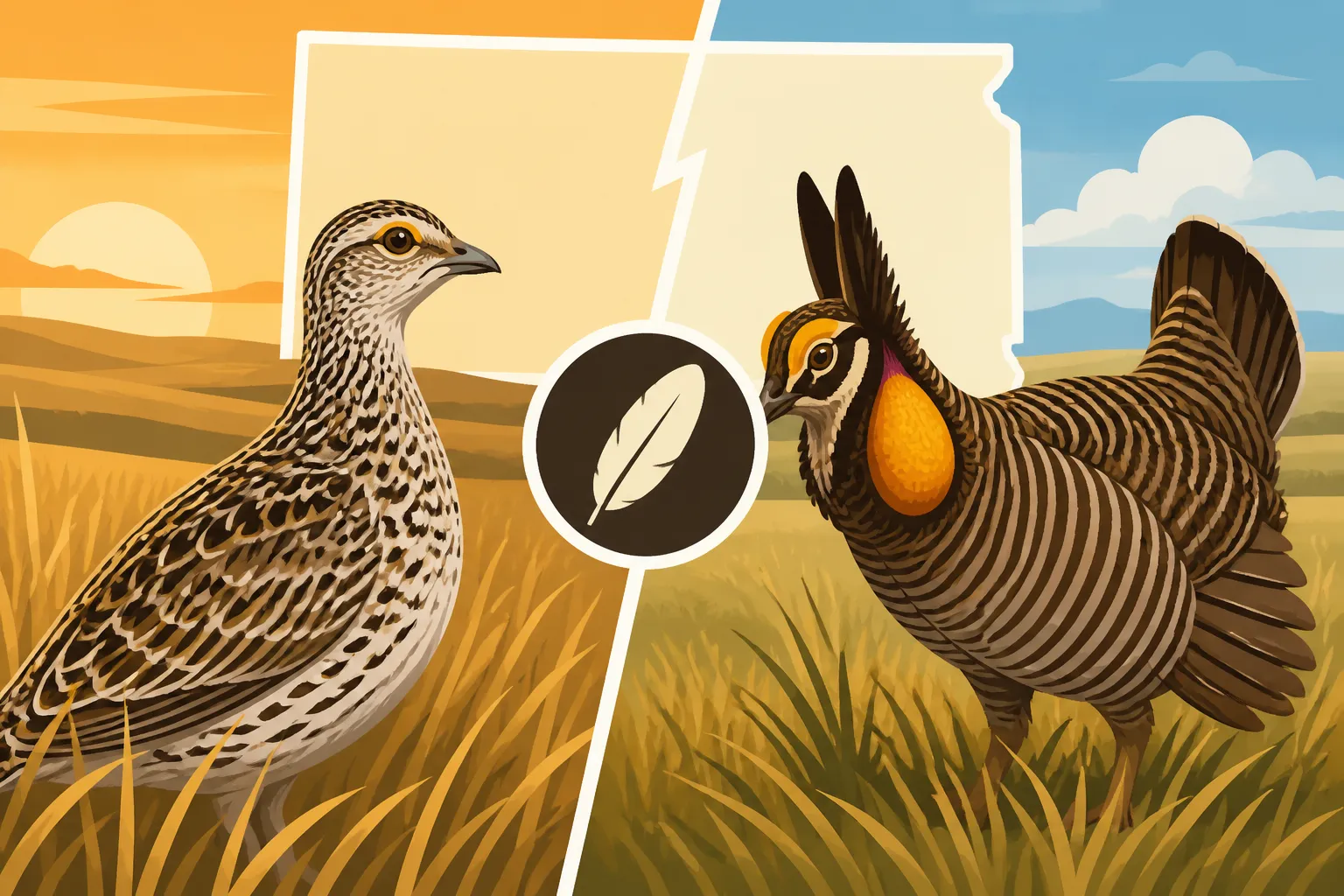
Hands down, the tail is your number one identifier, especially on a flushing bird. Think of it as their signature. A sharp-tailed grouse, true to its name, has a distinctively pointed tail. The central tail feathers are longer than the outer ones, giving it that characteristic "sharp" or wedge-like appearance. When it flushes, you'll often see this tail fanning out slightly, but the pointed shape remains obvious. The underside of the tail feathers typically has some white, but the overall shape is what you're really keying in on.
Now, imagine a greater prairie chicken. Their tail is the complete opposite – it's rounded or squared off, with all the tail feathers being roughly the same length. There's no pronounced point. When a prairie chicken flushes, its tail looks much more blunt and solid, often appearing dark without much white, or at least not the same bright white visible on a sharptail's outer tail feathers. This difference is so fundamental that once you've seen both, it's hard to unsee. It's truly the easiest and most reliable field mark.
Beyond the shape, look for specific markings on those tail feathers. Sharptails often have dark barring or mottling on their white outer tail feathers, creating a speckled or barred look, especially when fanned. Prairie chickens, on the other hand, will generally have darker, less conspicuously marked tails that lack the prominent white outer feathers of a sharptail. This combination of shape and underlying color often gives you all the information you need in a split second.
Plumage Patterns: Subtle But Significant
Once you've honed in on the tail, or if you get a slightly longer look at a bird on the ground or in flight, the body plumage offers additional clues. Both birds are mottled brown, black, and white, making them masters of camouflage in their prairie environment. However, the pattern of their barring and spots provides distinct differences. Sharptails tend to have more V-shaped or U-shaped barring on their underparts, which can appear quite intricate. Their overall appearance can sometimes seem lighter or more variegated than a prairie chicken.
Greater prairie chickens, in contrast, possess more horizontal barring across their breast and flanks. This barring is typically bolder, darker, and more uniform than what you'd see on a sharptail, sometimes giving them a darker, almost "striped" appearance, especially on the belly. Imagine thin, dark horizontal lines. If you get a chance to see them closely, perhaps through binoculars while scouting, this difference in patterning becomes much more apparent. This subtle distinction can be tough in low light or on a fast flush, but it's a good secondary characteristic to note.
Another plumage detail to consider is the amount and type of spotting or streaking on the sides. Sharptails often have more distinct spotting or "arrowhead" patterns on their flanks, blending into the V-barring on their breast. Prairie chickens lean more towards those broad, horizontal bars extending further down their sides. Knowing these general trends helps to confirm your tail feather assessment. South Dakota Prairie Grouse and Partridge covers a broader overview of these species.
Neck Feathers and Tympanum (Boomsacs)
While not always visible, especially during hunting season, the neck feathers and the inflatable air sacs (tympanum) on the males are very distinctive during mating season. Male sharp-tailed grouse have a patch of purplish-red bare skin on the sides of their neck. This patch is less prominent than that of a prairie chicken but still noticeable during their courtship displays. The specialized neck feathers that cover these sacs are less elongated and more subtle.
Male greater prairie chickens, however, are famous for their vibrant, inflatable orange-yellow air sacs on their neck, called "boomsacs." These are incredibly prominent when inflated during their booming calls on the lek. The feathers around these sacs are elongated and stiff, forming a distinctive "pinnae" that can stick up like horns when they're displaying. This is a very dramatic difference if you ever have the chance to observe them on a Grouse Lek Behaviour in Spring. During the hunting season, these sacs are usually deflated and covered by feathers, but sometimes the presence of the elongated neck feathers can still be a slight hint if you're close enough.
Even outside the booming ritual, the general feathering on the neck can offer some clues. Prairie chickens tend to have a more robust, almost stocky neck appearance, partly due to these specialized feathers, whereas sharptails can appear a bit sleeker. Of course, observing this from a distance while hunting is a challenge, but if you're lucky enough to spot them feeding or walking in open areas, you might pick up on these nuances.
Behavior and Habitat: When and Where You'll Find Them
Knowing where to look and how these birds act can be just as important as identifying their physical features. Their preferred stomping grounds and the way they interact with their environment often give away their identity before you even get a clear visual.
Flight Patterns and Sounds
When flushed, both birds burst into flight with powerful wingbeats, but there are subtle differences in their take-off and flight style. Sharp-tailed grouse tend to flush with a rapid, whirring flight, often climbing quickly and then gliding on stiff wings, sometimes covering quite a distance. Their wingbeats tend to be faster and have a higher pitch than a prairie chicken's. If you hear a quick, almost nervous cackle as they flush, it’s often a sharptail.
Greater prairie chickens, on the other hand, often have a heavier, more direct flight. While still powerful, their wingbeats might sound a bit slower and deeper, more like a rhythmic "whump-whump-whump." They tend to fly lower to the ground for a bit longer before gaining altitude, and often don't glide as much as sharptails. They can also let out a distinct squawking or cackling sound upon flushing, which is lower in tone and often sounds more urgent or guttural than a sharptail's call. Paying attention to these sounds can be incredibly helpful for Dogless Pheasant Hunting in South Dakota, and by extension, grouse hunting.
Another point to consider is how they land. Sharptails will often alight on a knoll or a fence post if available, providing a brief moment for identification before melting back into cover. Prairie chickens are more prone to dropping directly back into dense cover, making follow-up more challenging. Not always a rule, but a general tendency that can help.
Habitat Preferences and Geographical Range
This is where understanding the South Dakota landscape becomes crucial. Sharp-tailed grouse are primarily birds of the open, rolling prairie and grasslands, particularly areas with diverse native grasses, sagebrush, and scattered low shrubs. You'll find them widely distributed across the West River country and into the central parts of South Dakota. They thrive in rugged, untamed landscapes, including parts of the National Grasslands. Knowing the Sharp-Tailed Grouse Range in South Dakota helps focus your scouting efforts.
Greater prairie chickens prefer slightly different, often more specific habitats. They tend to favor tallgrass prairie, particularly areas with a mix of undisturbed native grasses, some agricultural fields (especially corn or milo for winter food), and wetlands. While there's overlap, prairie chickens are generally more associated with the taller, denser grasslands, and their primary range in South Dakota is more concentrated in the central and eastern parts of the state, particularly in counties with intact native prairie. Greater Prairie Chicken Range in South Dakota highlights these specific areas. Using tools like GoHunt to study satellite imagery and land types can give you an edge in finding these distinct habitats before you even step foot in the field.
It's entirely possible to find both species in transitional zones, where tallgrass prairie meets shorter, more open grasslands. For instance, in areas like the Fort Pierre National Grassland, you might encounter both. However, if you're deep in an expansive shortgrass prairie, you're much more likely to be seeing sharptails. Conversely, dense stands of unmolested tallgrass in the eastern part of the state are prime prairie chicken country.
Lek Behaviour in Spring
While not directly related to hunting season, observing their lekking behavior in the spring provides an unparalleled opportunity to study these birds and their differences. Both species gather on traditional breeding grounds, called leks, where males perform elaborate courtship displays. Sharp-tailed grouse leks are characterized by males performing a "dance," vibrating their tails and stomping their feet in a rapid, almost frantic manner, often accompanied by soft cooing sounds.
Greater prairie chickens, however, are famous for their deep, resonant "booming" calls, produced by inflating those large orange-yellow neck sacs. Their display involves stomping, short jumps, and a head-down posture as they inflate their sacs and boom. The sound carries for incredible distances across the prairie. This booming is distinctly different from the sharptail's cooing. If you have the chance to witness either, it's a phenomenal experience and will solidify your ability to distinguish their physical attributes. This insight into their biology is also crucial for How GFP Counts Big Game and other species, understanding their population dynamics.
Size, Shape, and General Appearance: The Overall Impression
Beyond the specific features, the overall impression these birds give you can also be a helpful identifier. Think about their general silhouette and how they carry themselves.
Body Shape and Proportions
Sharp-tailed grouse tend to appear a bit more slender and graceful than prairie chickens. They have a slightly longer neck and a more upright posture, especially when alert. Their body is streamlined, and their overall build suggests agility. When you see them running or walking, they often appear lighter on their feet.
Greater prairie chickens generally have a more robust, stockier build. They might appear more "barrel-chested" or heavy-bodied, with a shorter, thicker neck. Their head can sometimes seem smaller in proportion to their body. This more compact shape contributes to their heavier flight, as mentioned earlier. These general proportions can be a quick visual cue, especially if you're comparing two photos or seeing them side-by-side in a field guide.
Leg and Foot Characteristics
While difficult to observe in the field, especially on a flushing bird, there are subtle differences in their legs and feet. Both are ground-dwelling birds, but sharptails have feathered legs all the way down to their toes, which is a characteristic they share with other grouse species, adapted for colder climates. This feathering helps insulate them.
Prairie chickens, while also having some feathering on their legs, typically have bare tarsi (lower legs) and toes. This might not be a feature you'll rely on for a quick identification, but if you're examining a harvested bird, it's another confirming characteristic. For hunters interested in understanding every detail of their quarry, paying attention to these smaller, often overlooked physical traits can deepen your appreciation for the species.
Vocalizations Beyond the Flush
Beyond the flush, these birds have other vocalizations. Sharp-tailed grouse, especially when agitated or communicating among a covey, might make a variety of clucking and soft hooting sounds. These are generally higher-pitched and less guttural than those of a prairie chicken. Listening for these while slowly working through cover can sometimes give away their presence and even their identity before they flush.
Prairie chickens, in addition to their booming call during spring, also have a variety of clucks, cackles, and alarm calls. These tend to be deeper and coarser than a sharptail's. Imagine a series of "ka-ka-ka" sounds that have a distinct depth to them. Again, this is a more advanced identification skill that comes with experience and spending time in the field, but it can be very useful for pinpointing the exact species if you're trying to locate birds or are curious about what's calling in the distance. When you're using GoHunt to e-scout and identify potential habitats, consider also doing some audio research to learn these sounds!
Why Accurate Identification Matters
It's not just about satisfying your curiosity or impressing your hunting buddies. Knowing the difference between these two species is fundamentally important for ethical hunting, conservation, and ensuring you comply with game laws.
Bag Limits and Regulations
The single biggest practical reason to know the difference is that South Dakota often has different regulations for sharp-tailed grouse and greater prairie chickens. This can include separate daily bag limits, possession limits, and sometimes even different season dates, though often they fall under a general "prairie grouse" category. Misidentifying a bird could lead to an accidental violation, which is something no responsible hunter wants. Always check the current South Dakota Hunting and Trapping Handbook before heading afield. South Dakota Harvest Reporting Rules often require you to specify the species, further emphasizing the need for accurate identification.
Consider a scenario where the daily limit for sharptails is higher than for prairie chickens, or vice-versa. If you're confident in your identification, you can manage your harvest appropriately. Without that knowledge, you might unintentionally exceed a limit or pass up a legal bird. This is where pre-season research, perhaps using platforms like GoHunt to review regulatory maps and species information, becomes invaluable. Understanding these nuances protects both you and the resource.
Moreover, while both species are generally managed under "prairie grouse" regulations, there can be specific unit or season differences, particularly if one species' population is more sensitive than the other. Staying informed and being able to tell them apart on the fly ensures you're a responsible participant in wildlife management. This also contributes to the integrity of data collected through programs like Reading a South Dakota Harvest Report.
Conservation and Management
Each species faces its own unique conservation challenges and management strategies. Greater prairie chickens, for instance, are more dependent on expansive tracts of tallgrass prairie, a habitat that has significantly diminished across the country. Their populations can be more vulnerable to habitat fragmentation and loss. CRP Loss and South Dakota Bird Numbers impacts both, but some species more than others.
Sharp-tailed grouse, while generally more widespread and adaptable to various prairie types, still benefit from careful management and habitat protection. By accurately identifying what you're harvesting, you're contributing to better data for wildlife biologists. This data helps the South Dakota Game, Fish and Parks (GFP) make informed decisions about season lengths, bag limits, and habitat projects aimed at sustaining healthy populations for future generations. Your ability to distinguish them plays a small, but significant, role in the larger picture of South Dakota's remarkable prairie ecosystem.
Proper identification also prevents undue pressure on a more vulnerable species. If hunters consistently misidentify prairie chickens as sharptails in an area where prairie chicken numbers are low, it could inadvertently impact their recovery efforts. Being a knowledgeable hunter means being a conservationist first, and that begins with understanding the wildlife you pursue. For comprehensive information on licensing and regulations, check out South Dakota Hunter Safety Requirements.
Comparison Table: Sharp-tailed Grouse vs. Greater Prairie Chicken
| Feature | Sharp-tailed Grouse | Greater Prairie Chicken |
|---|---|---|
| Tail Shape | Pointed, wedge-like; central feathers longer | Rounded or squared; all feathers similar length |
| Tail Color | White outer feathers with dark barring | Darker, typically without prominent white outer feathers |
| Breast Barring | Finer V or U-shaped barring, more intricate | Bolder, horizontal barring, often appearing striped |
| Neck Sacs (Males) | Purplish-red bare skin, less prominent neck feathers | Prominent orange-yellow boomsacs, elongated neck feathers |
| Flight Pattern | Faster wingbeats, higher pitch, often glides | Heavier, rhythmic wingbeats, lower flight, less gliding |
| Primary Habitat | Open, rolling grasslands, native prairie, sagebrush | Tallgrass prairie, native grass/cropland mix, wetlands |
| Body Shape | More slender, longer neck, upright posture | Stockier, barrel-chested, shorter/thicker neck |
| Legs | Feathered down to the toes | Bare tarsi and toes (feathered only on upper legs) |
| Lek Sounds | Cooing, foot stomping, rapid feather vibration | Deep, resonant "booming" calls, stomping, head-down posture |
Disclaimer
This article is for general informational purposes only and does not constitute professional advice. Laws, prices and regulations vary by location and change over time. Consult a qualified professional for guidance on your specific situation.