Treestand Setups on Narrow River Timber
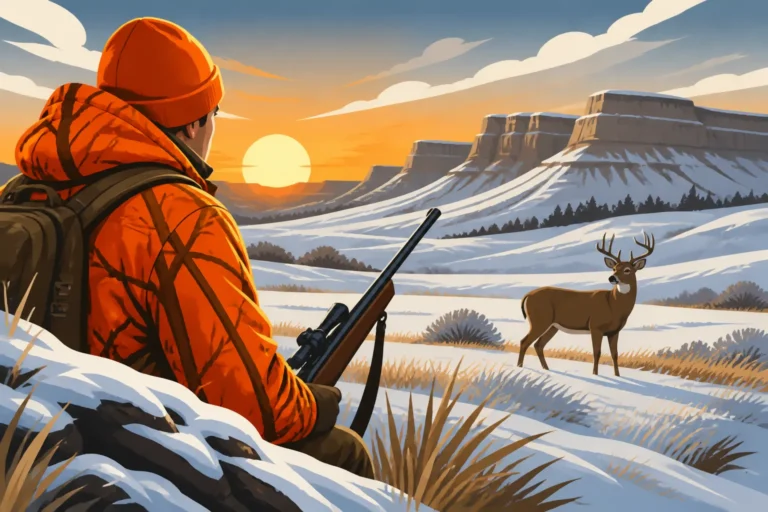
Hunting the tight confines of narrow river timber in South Dakota can be one of the most frustrating yet rewarding experiences a deer hunter can undertake. You've scouted for miles, found that perfect bend in the river, only to realize that the deer are moving through a strip of trees so narrow you question if a treestand is even viable. The struggle is real: how do you get elevated, stay concealed, and avoid blowing deer out of a corridor that offers them minimal escape routes? This comprehensive guide will walk you through the precise strategies for successful treestand setups in these challenging, yet often highly productive, river bottom environments.
Understanding the Unique Challenges of River Timber
River timber, especially the narrower strips, presents a completely different puzzle than hunting expansive forests or open prairie edges. Deer use these linear corridors for travel, cover, and feeding, but their predictable patterns can be easily disrupted if a hunter isn't meticulous. It's about recognizing the landscape's nuances and how they dictate deer behavior in a constricted space.
The Linear Nature of River Bottoms
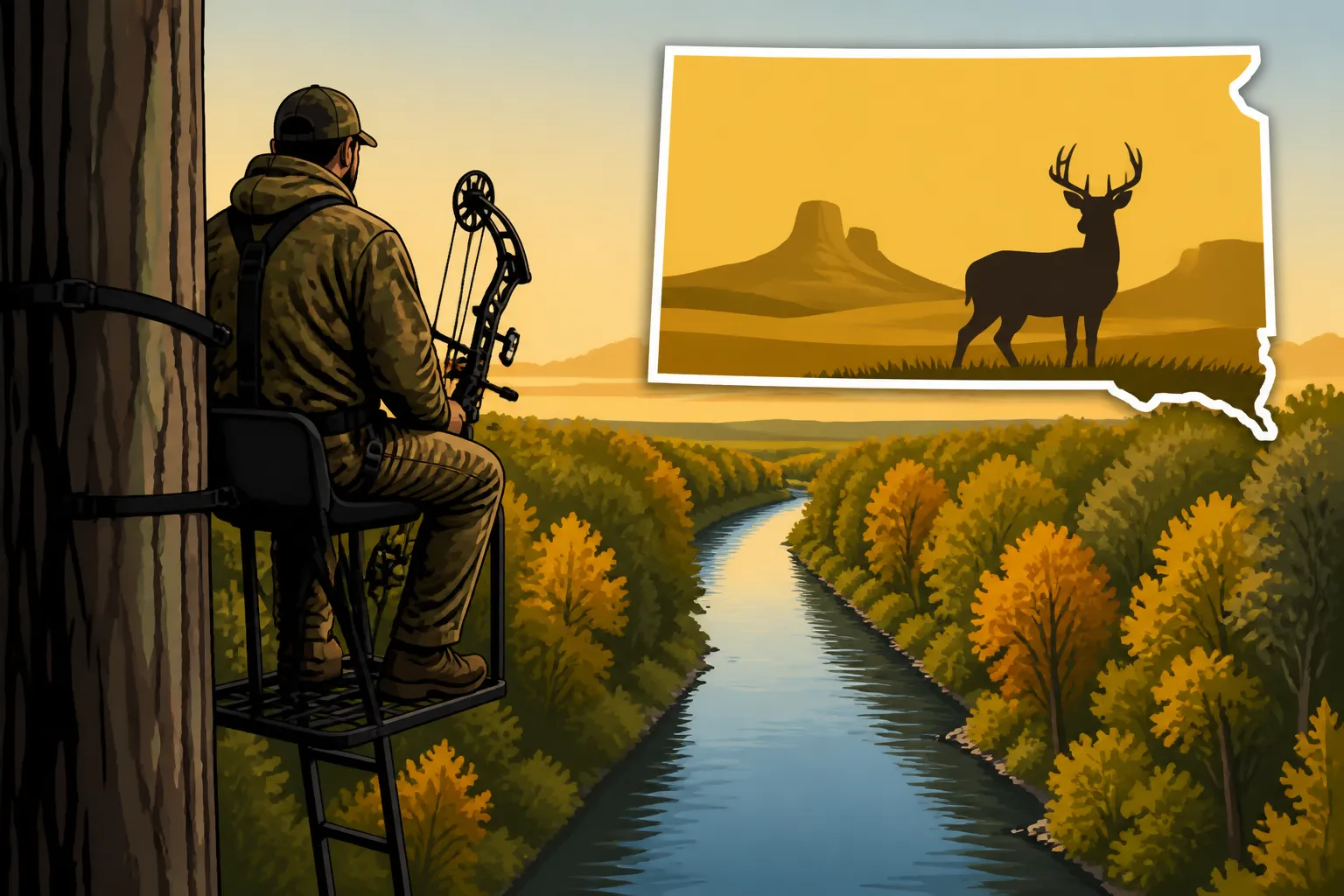
Imagine a ribbon of trees, sometimes only 30 to 50 yards wide, stretching for miles along a winding river. This is the reality of many South Dakota river bottoms, particularly along smaller tributaries or sections of the major rivers. These strips of timber act like natural highways for whitetails, connecting larger bedding areas to agricultural fields or other prime feeding locations. The challenge here is that deer are often traveling through these areas rather than residing entirely within them, making setup location crucial. Your treestand isn't just a place to sit; it's a strategically positioned intercept point. You need to consider how deer will approach, what paths they’ll follow, and how quickly they’ll move through. The linear aspect means they have fewer options for evasion once they detect a threat, but it also means you have fewer options for error. A wrong move, a misplaced stand, or an ill-timed entry can send every deer in that section packing down the line.
The timber itself can vary wildly – from dense willow thickets to mature cottonwoods and ash. The denser areas provide exceptional bedding and security cover, while more open sections might reveal trails worn deep by generations of deer. The river itself often acts as an impenetrable barrier on one side, forcing all movement to occur within the timber or along its edges. This funneling effect is what makes these narrow strips so attractive to hunters, but it also amplifies the consequences of poor planning. You’re essentially hunting a long, thin room, and every deer knows every exit.
Predicting Deer Movement in Confined Spaces
Deer movement in narrow river timber is often less about "random grazing" and more about purposeful travel. They are following the path of least resistance, leveraging the cover the timber provides. During daylight hours, you’ll typically find them moving between bedding areas within the timber (or adjacent heavy cover like a cattail slough) and feeding areas like alfalfa fields, corn stubble, or even small food plots. The challenge lies in predicting when they’ll move and where they'll be most vulnerable.
Bucks, especially mature ones, will often skirt the edges of the thickest cover, using it as a screen while scent-checking for does. They might also stick to the very center of the timber, where visibility is lowest and human encroachment is less likely. Understanding these tendencies is paramount. If the timber strip is particularly dense, deer might move slower, pausing more often to check their surroundings. In more open sections, they might hustle through, making a quick shot opportunity critical. Factors like wind direction, time of day, and even historical flood patterns can influence their chosen routes. For instance, after a major flood event, deer might shift their preferred trails to higher, drier ground within the same timber strip. Learning to read these subtle shifts is what separates a successful hunter from one who constantly feels like they're a step behind. It's not just about finding a trail; it's about finding the right trail at the right time.
Scouting and Location Selection for Success
Successful treestand hunting in narrow river timber isn't about luck; it's about meticulous scouting. Before you even think about hanging a stand, you need to become an expert on the specific piece of timber you intend to hunt. This involves a combination of boots-on-the-ground reconnaissance and modern technological aids.
Identifying Key Funnels and Pinch Points
In linear river timber, every bend, every slight rise in elevation, and every change in vegetation can create a funnel or pinch point that deer are naturally drawn to. A funnel is any feature that concentrates deer movement, forcing them into a smaller, more predictable area. This could be where the timber narrows even further, where a small ditch or creek cuts through, or where a slight elevation change creates a dry path through a low, marshy area. Think of places where the timber touches a crop field on one side and the river on the other – deer have to pass through that specific bottleneck.
Pinch points are similar but often more acute; they might be a fallen tree across a trail, forcing deer to go around, or a point where dense undergrowth narrows an otherwise open travel corridor. These are prime locations for treestand setups because they significantly reduce the guesswork of where a deer will pass. Look for multiple, well-worn deer trails converging into a single path. If you can identify a spot where deer must pass within 20-30 yards of your proposed stand site, you’ve found a potential gem. Using tools like the GoHunt mapping system can be incredibly useful for identifying these topographical features from above before you even step foot in the woods, helping you scout more efficiently and pinpoint areas that deserve a closer look.
Locating Natural Rub Lines and Scrapes
While less common in very narrow, fast-moving travel corridors, significant rub lines and active scrapes are still crucial indicators in river timber, especially in sections where bucks might slow down or pause. A rub line—a series of small trees or saplings rubbed by a buck’s antlers—indicates a buck's travel route and the general direction he's moving. Pay attention to the size of the rubs; larger, older rubs suggest a mature buck is using the area. Fresh rubs, especially during the pre-rut and rut, are a clear sign of current activity.
Scrapes, on the other hand, are communication hubs. These patches of bare earth, typically under an overhanging branch (the "licking branch"), are pawed by bucks and often urinated in. Active scrapes, especially during the rut, signify a buck's presence and his intent to breed. While scrapes are often found near bedding areas or feeding zones, an isolated, active scrape in a narrow timber strip can indicate a buck pausing to check for does traveling through. Combining the presence of active rubs and scrapes with a funnel or pinch point creates an extremely high-odds treestand location. For more insights on how these indicators change with the season, you might find information on How Buck Movement Changes Through the Rut particularly helpful.
Reading Terrain and Wind with Technology
Modern technology has revolutionized scouting, even for something as traditional as treestand hunting. Satellite imagery and topographical maps, available through apps like GoHunt, allow you to e-scout an area thoroughly before ever stepping into it. Look for subtle elevation changes, oxbows, old creek beds, or even abandoned farmsteads within the timber that might create unique habitat features or funneling effects. Identifying where the timber widens slightly to include denser bedding cover, or where it thins out into more open terrain, can guide your on-the-ground scouting.
Once you’re in the field, use your phone’s GPS to mark promising locations, trails, and potential stand trees. More importantly, understanding wind direction is non-negotiable, especially in linear cover. With deer typically moving along the timber strip, your scent will carry downwind along that same corridor, potentially alerting every deer ahead of your stand. Always consider multiple stand locations for varying wind directions. A north wind stand might be useless if the prevailing wind is out of the west. You might even need to consider a ground blind setup for certain wind directions or areas where suitable trees are scarce, though that's a different strategy. Having a plan for Wind Direction on a Prairie Stalk is just as critical in timber as it is in open country.
Optimal Treestand Placement and Setup Strategies
Once you’ve identified your prime hunting location, the real work begins: setting up your treestand. This isn't just about picking a sturdy tree; it's about meticulously planning every detail to maximize your chances of success while minimizing detection.
Maximizing Shot Opportunities with Elevation
In narrow river timber, deer are often accustomed to staying under thick canopy, which can make them less likely to look up. This works to your advantage when selecting treestand height. While standard recommendations for treestand height often suggest 15-20 feet, in dense river bottom cover, you might be able to get away with a slightly lower setup, especially if the canopy is very thick, as long as you're well concealed. The key is not just height, but also having a clear shooting lane for the most probable approach routes.
Before you climb, visualize the shot. Where will the deer be coming from? What obstacles (branches, other trees) will be between you and the deer at various distances? You might need to make some careful, strategic cuts to create clear shooting lanes, but do so sparingly and subtly. Too much trimming can look unnatural and alert deer. Consider the angles required for a clean shot at a deer traveling directly beneath your stand versus one moving at a slight angle. Often, a stand placed on the inside bend of a river provides better shot opportunities on deer traveling the outside curve, forcing them closer to you. Remember, in these tight quarters, every yard counts, and maximizing that ethical shot opportunity is paramount.
Concealment and Entrance/Exit Routes
Concealment isn't just about wearing camouflage; it's about blending into the natural environment. Choose a tree with a busy trunk, multiple limbs, or a leafy canopy that breaks up your outline. Ideally, position your stand on the side of the tree opposite the prevailing wind, using the trunk as a partial screen. Don't be afraid to use natural vegetation around the stand, like small branches or artificial camo netting, to further break up your silhouette, but make sure it doesn't impede your shot. For a perfect setup, consider a stand that allows you to move slightly around the tree to adjust for different shot angles without being seen.
Crucially, plan your entrance and exit routes with extreme care. This is often the most overlooked aspect of treestand hunting and can quickly spoil a perfect spot in narrow timber. Your route should be quiet, concealed, and, most importantly, downwind of where you expect deer to be bedded or traveling. Avoid walking directly down the main deer trails. Utilize creek beds, ditches, or the river's edge itself (if accessible and quiet enough) to approach and depart. If you are hunting public land, be aware of Hunting Pressure Patterns on Walk-In Areas and adjust your entry/exit accordingly to avoid other hunters or pushing deer in their direction. The goal is to get into your stand and out again without any deer knowing you were ever there.
Managing Scent in a Restricted Area
Scent control is always important, but in a narrow river bottom, it becomes absolutely critical. With deer confined to a linear travel corridor, your scent plume has fewer places to dissipate and is more likely to be carried directly into the path of approaching deer. This means going beyond basic scent-reducing sprays. Start with a scent-free regimen: wash hunting clothes in scent-free detergent, store them in airtight containers, and dress in the field.
Most importantly, play the wind. This cannot be stressed enough. If the wind isn't right for your stand, don't hunt it. Period. No matter how good the spot is, a swirling or unfavorable wind will ruin your hunt. Always have a secondary, or even a tertiary, stand location for different wind directions. You might even consider a mobile setup, like a saddle or lightweight climbing stand, to adapt to variable winds on the fly. For particularly challenging setups, employing ozone generators in your clothing bin or even small portable units near your stand can help, but they are never a substitute for smart wind management. Remember that deer rely heavily on their sense of smell, and in these tight corridors, they will instantly bust you if your scent is carried their way. For more specific insights into accessing river timber quietly, understanding Treestand Access Along a River could be invaluable.
Adapting to Changing Conditions and Deer Behavior
The South Dakota landscape, and specifically its river systems, is dynamic. Water levels fluctuate, seasons shift, and deer adjust their behavior accordingly. A successful hunter must be just as adaptable.
The Impact of Water Levels and Flooding
River bottoms are, by definition, influenced by water. High water levels, whether from heavy rains or snowmelt, can dramatically alter deer movement patterns. Trails that were once dry and well-used might become submerged, forcing deer to higher ground within the timber or to move along the very edges of the flooded areas. After a major flood, deer may also temporarily abandon certain sections of timber entirely until the water recedes and the ground dries out.
It's crucial to scout after significant rain or flood events. Look for new, temporary trails emerging along higher contours or on elevated islands within the timber. These new routes can become temporary superhighways for deer and offer excellent, albeit short-lived, treestand opportunities. Conversely, during periods of extreme drought, some smaller creeks or sloughs that typically act as barriers might dry up, opening new travel routes through areas previously impenetrable. Staying informed about local weather and river conditions through resources like the National Weather Service or local news can give you a significant advantage in predicting these shifts.
Rut Activity in River Bottoms
The rut transforms deer behavior, and narrow river timber can become an absolute hotspot during this time. Bucks are actively cruising, scent-checking, and pursuing does, and these linear corridors provide perfect routes for them to do so efficiently. During the peak rut, bucks might travel these timber strips during daylight hours with less caution, driven by their urge to breed. This is when those pinch points and funnels truly shine.
Does, too, will use these areas, often trying to evade aggressive bucks. This cat-and-mouse game can bring both sexes within range. Consider setting up near known bedding areas within the timber, especially if they are close to a primary travel corridor. Bucks will often cruise the downwind side of these bedding thickets. It's also a prime time to incorporate calling strategies. Light rattling or grunting can be incredibly effective in these confined spaces, as the sound doesn't travel as far as it would in open country, making it seem more immediate and convincing. You can learn more about Rattling and Grunting During the South Dakota Rut to optimize your calling strategy.
Adjusting for Hunting Pressure
One of the greatest challenges in any hunting environment, especially on public land or smaller private parcels, is dealing with hunting pressure. In narrow river timber, excessive pressure can quickly turn a productive spot into a ghost town. Deer will become nocturnal, or they'll abandon the timber strip entirely for more secure cover. Recognizing the signs of pressure—old boot tracks, discarded shells, or deer sign that suddenly vanishes—is vital.
If you suspect heavy pressure, consider hunting mid-week when other hunters are less active. You might also try an unconventional approach: hunt closer to human activity (but always safely and legally) if deer are being pushed from elsewhere. Often, deer will seek refuge in small, overlooked pockets of cover that other hunters deem too difficult or insignificant. For example, a small, impenetrable briar patch within a timber strip, often ignored, can hold a wary buck. Or, if you're exploring South Dakota's extensive Walk-In Areas, understanding Hunting South Dakota Walk-In Areas can help you find less pressured spots away from obvious access points. Don't be afraid to pull your stand and move if your spot isn't producing, especially after the first week or two of the season. Adaptability is key to staying ahead of pressured deer.
Essential Gear for Narrow Timber Setups
While the right location and strategy are paramount, having the correct gear can significantly enhance your comfort, safety, and effectiveness when hunting from a treestand in narrow river timber.
Treestand Types and Features
For narrow river timber, flexibility and stealth are often more important than sheer comfort for all-day sits, though comfort is still a factor.
| Treestand Type | Best Use Case for River Timber | Pros | Cons |
|---|---|---|---|
| Climbing Stand | Trees with straight, limbless trunks | Highly portable, versatile, allows for quick adjustments | Limited to specific tree types, can be noisy if not careful |
| Hang-on Stand | Irregular trees, multiple stand setups | Lightweight, compact, can be left in place (check regulations) | Requires climbing sticks/ladders, less portable for daily moves |
| Ladder Stand | Longer-term, semi-permanent setups | Very stable, comfortable for long sits, easy access | Bulky, difficult to move, highly visible, limited to straight trees |
| Tree Saddle | Ultimate stealth and adaptability | Lightweight, packable, allows 360-degree shooting, excellent concealment | Steeper learning curve, requires precise anchor points, not for everyone |
For hunting narrow timber, a lightweight hang-on stand combined with climbing sticks is often ideal. This setup allows you to quickly get into a variety of trees, even those with some limbs or irregular shapes. Brands like Lone Wolf, Summit, and Muddy offer excellent portable options. If you're planning multiple setups for different wind directions, having a few hang-ons already in place can save precious time and reduce noise on the morning of a hunt. A tree saddle, like those from Tethrd or Trophyline, offers unparalleled stealth and the ability to shoot around the tree, which can be a game-changer when deer come from unexpected directions in tight cover. No matter the type, choose a stand that is quiet, stable, and offers a comfortable platform for sitting or standing for extended periods.
Safety Harnesses and Ascent Methods
Safety should always be your number one priority when hunting from a treestand. Never, under any circumstances, ascend or descend a tree without being tethered to the tree with a full-body safety harness. This isn't optional; it's essential. Modern harnesses are lightweight and comfortable, making excuses for not wearing one unacceptable. Brands like Hunter Safety System and Muddy offer integrated harnesses that are easy to use.
For ascent, climbing sticks or sectioned ladder sticks are generally preferred for hang-on stands, allowing you to reach sufficient height on a variety of trees. Practice setting them up quietly in your backyard before heading to the woods. For climbing stands, ensure the tree you choose is suitable—straight, free of major limbs, and with bark that offers good grip. A lifelife, which is a rope permanently attached to the tree from the ground up to your stand, is an excellent investment. It allows you to stay connected to the tree from the moment your feet leave the ground until you're safely in your stand and vice-versa, minimizing the risk of a fall during the most vulnerable parts of your climb.
Optics and Rangefinding in Dense Cover
While long-range glassing might be more common for Spot-and-Stalk Antelope Hunting in South Dakota, good optics are still crucial in narrow river timber, especially for identifying deer in low light and dense cover. A quality pair of 8x or 10x binoculars will help you pick apart the shadows and identify a deer before it sees you. Look for binoculars with good light-gathering capabilities for those critical dawn and dusk hours.
In tight timber, distances can be deceptive. What looks like 20 yards might actually be 30 or 40. A rangefinder is an indispensable tool. Before deer even show up, range common landmarks around your stand—a specific tree, a bush, a bend in the trail. This way, when a deer does appear, you can quickly estimate its range without fumbling or making unnecessary movements. GoHunt even integrates rangefinding into its mapping software, which can be useful for pre-hunt planning. For bowhunters, knowing precise distances is absolutely vital for making an ethical shot. Even with a rifle, understanding the exact range ensures precise shot placement, especially if you need to thread a bullet through a gap in the cover.
Disclaimer
The information provided in this guide is for general educational and informational purposes only and does not constitute professional advice. Hunting involves inherent risks, and adherence to all local, state, and federal hunting laws and safety regulations is the sole responsibility of the individual hunter. Always prioritize safety, obtain proper licenses, and respect private property.