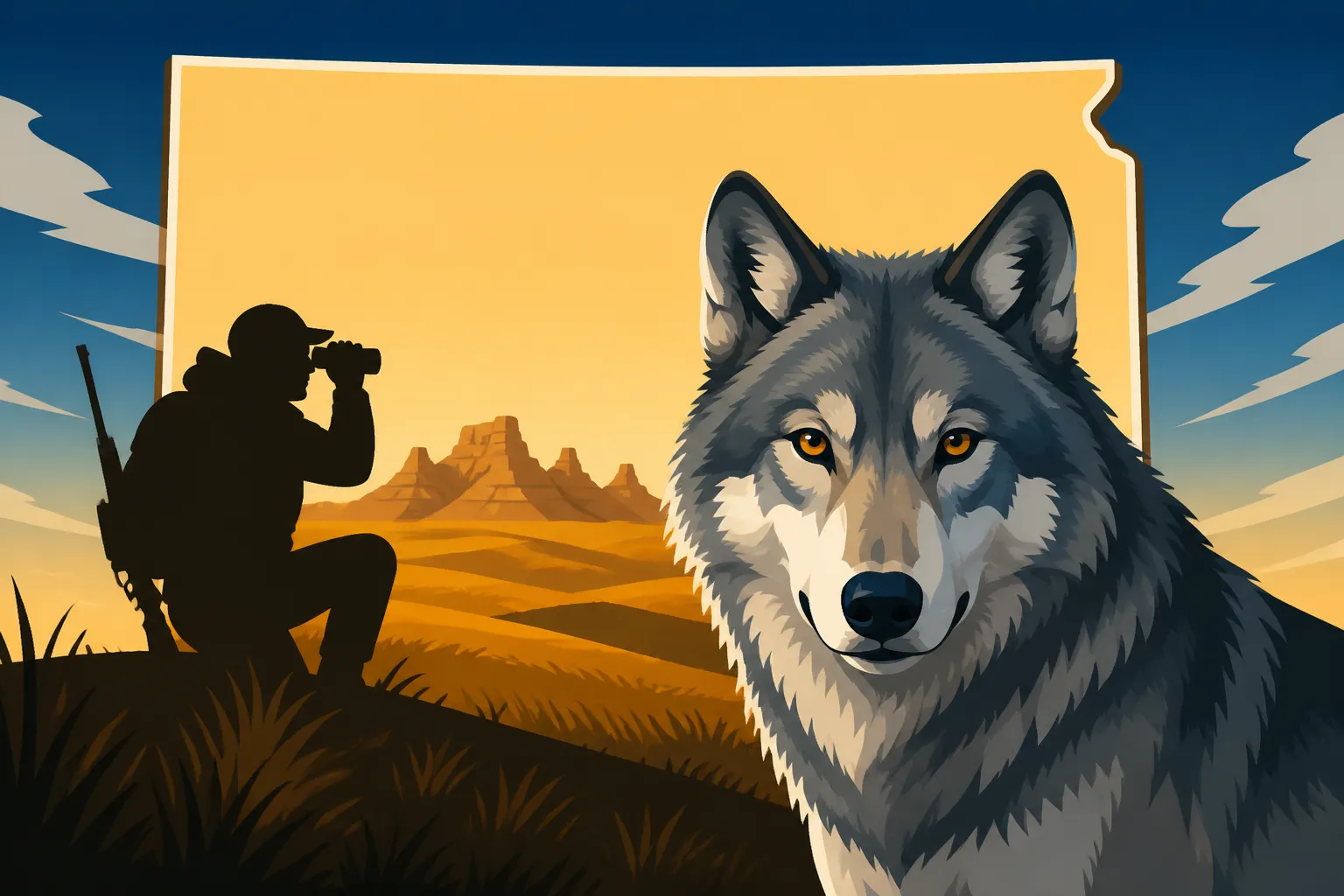
Wolf Sightings in South Dakota
For anyone who spends time outdoors in South Dakota – whether you’re hunting pheasants, chasing deer, or just enjoying the breathtaking landscapes – the idea of spotting a wolf can be both thrilling and a little perplexing. There's a lot of chatter out there, stories shared around campfires, and sometimes, genuine confusion about whether these majestic predators truly roam our prairie and Black Hills. This guide is here to cut through the myths and provide a clear, realistic understanding of wolf sightings in South Dakota, what they mean, and what to do if you think you've seen one.
The Historical Presence of Wolves in South Dakota
It’s easy to think of wolves as creatures of the far north or remote mountains, but their history on the Great Plains, including right here in South Dakota, is long and significant. Understanding where they’ve been helps us comprehend their current, albeit limited, presence.
The Era of Gray Wolves in the Dakotas
Back before widespread European settlement reshaped the American landscape, gray wolves (scientific name: Canis lupus) were an integral part of nearly every ecosystem across North America. The Dakotas were no exception. Picture vast prairies teeming with bison, elk, and deer—all part of a natural cycle that included apex predators like the wolf. These were not just transient animals; they were established residents, living in family packs and playing a crucial role in maintaining ecological balance.
However, as settlers pushed westward, bringing livestock and an agricultural economy, the narrative around wolves dramatically shifted. Wolves, seen as a threat to ranching and farming, became targets of intensive eradication campaigns. Bounties were placed on them, and methods ranging from trapping and poisoning to widespread shooting effectively extirpated the species from most of the lower 48 states, including South Dakota, by the early 20th century. It was a comprehensive and successful effort to remove them from the landscape, leaving behind an ecological void that has been felt ever since.
Recovery Efforts and Neighboring Populations
Fast forward several decades, and the conservation movement gained traction. Landmark legislation like the Endangered Species Act in the 1970s paved the way for the recovery of many species, including the gray wolf. In places like Minnesota, Wisconsin, and the northern Rocky Mountains (Idaho, Montana, Wyoming), wolf populations have made truly remarkable comebacks. These states now support thriving, breeding wolf populations, and their management often involves careful monitoring and sometimes, regulated hunting seasons.
What does this have to do with South Dakota? Well, wolves are incredibly mobile animals, especially young males looking to establish new territories and find mates. This natural dispersal from established populations in neighboring states – particularly Minnesota and potentially even Nebraska (though less common) – leads to occasional, transient individuals venturing into South Dakota. These aren't established packs setting up shop; rather, they're typically lone wolves on a journey, exploring new ground. It’s a natural phenomenon of wildlife spreading out, even into areas where habitat might not be ideal for long-term residency.
Understanding Modern Wolf Sightings
When someone excitedly tells you they saw a wolf, the first question that often comes to mind is, "Are you sure it wasn't a coyote?" It’s a fair question, because differentiating between these canids in the field is much harder than you might think, especially when a fleeting glimpse is all you get.
Differentiating Wolves from Coyotes
This is perhaps the biggest point of confusion when it comes to wolf sightings in South Dakota. Our prairies are absolutely full of coyotes, and some of them can be surprisingly large, leading many to mistakenly identify them as wolves. But there are key differences that, once you know them, can help you tell them apart.
Let’s break down the main visual cues:
| Characteristic | Coyote (Canis latrans) | Gray Wolf (Canis lupus) |
|---|---|---|
| Size | Small to medium-sized; typically 20-50 lbs, lean build. | Large; typically 60-120 lbs (can be much larger), muscular and robust. |
| Head | Narrow, pointed muzzle; relatively smaller head compared to body. | Broad forehead, blunt muzzle; large, blocky head. |
| Ears | Proportionately larger, pointed, and erect. | Proportionately smaller, rounded at the tips, often set lower on the head. |
| Legs | Slender and long; look somewhat delicate. | Long, but very thick and powerful. Large paws. |
| Tail | Bushy, often held low (between legs) when running or wary. | Bushy, often held straight out or slightly curved upwards; never tucked. |
| Coat | Typically grizzled gray or brownish-gray, with lighter belly; can vary. | Highly variable: gray, black, white, tawny; generally thicker and shaggier. |
| Tracks | More oval, usually under 3 inches long. Distinctive nail marks. | Larger, robust, often over 4.5 inches long. Toes appear tighter together. |
| Body Shape | Appears more slender, sometimes hunched. | Appears more substantial, powerful, and level-backed. |
Think of it this way: a coyote looks like a medium-sized dog, almost fox-like in its facial features, while a wolf looks like a very large, powerful dog with a broader face and much more substantial build. If you're out Coyote Calling on Open Grassland, you'll see plenty of coyotes and quickly learn their typical size and behavior. A truly large coyote might turn heads, but it still won't have the sheer bulk and massive paws of a wolf. When looking at tracks, a good rule of thumb is that if you can fit three fingers easily across the paw pad of a track, it’s probably a coyote. If you need four fingers or more, you might be looking at a wolf track. Studying Reading Snow for Deer and Predator Sign can really help hone your identification skills.
Confirmed Versus Unconfirmed Reports
The South Dakota Game, Fish and Parks (GFP) takes reports of wolf sightings seriously, but there's a world of difference between a casual observation and a confirmed presence. Most "wolf sightings" are, understandably, unconfirmed. Someone saw a large canid at a distance, or caught a glimpse in low light, and their mind immediately jumps to a wolf. This is natural! However, without solid evidence, it's very difficult for wildlife agencies to verify.
Confirmed wolf presence requires tangible proof. This might include clear photographs or video footage, DNA evidence from scat or hair samples, verified tracks by an experienced biologist, or even a carcass if one is found. In South Dakota, confirmed wolf sightings are relatively rare. When they do occur, they are almost always of transient, dispersing individuals, typically young wolves looking for new territory. They might pass through an area and move on, never establishing a permanent presence. These confirmed reports are crucial for GFP to understand potential dispersal routes and the broader movements of these animals. Tools like the South Dakota Public Hunting Atlas can sometimes offer clues to habitat connectivity that might allow such dispersal.
Where Wolves are Most Likely to be Seen (and Why)
It’s not just about if a wolf might be here, but where it might show up. Their movements are driven by instinct, prey, and the search for suitable habitat.
Dispersal Patterns and Habitat Suitability
Wolves are famous for their ability to travel vast distances. Young wolves, often around two years old, are naturally driven to leave their birth pack and seek out new hunting grounds and potential mates. This is called dispersal, and it’s how wolf populations expand into new areas. These dispersing individuals can cover hundreds of miles, often traversing landscapes that are far from ideal wolf habitat.
So, where are they most likely to pop up in South Dakota? Usually, these sightings occur in areas that border states with established wolf populations, particularly along the eastern and northeastern edges of South Dakota, adjacent to Minnesota. These transient wolves might follow river corridors or large tracts of undeveloped land. However, for a wolf to establish a permanent presence and a breeding pack, it needs more than just a travel route. It needs:
- Abundant Prey: Deer (South Dakota Mule Deer Population, South Dakota Whitetail Population), elk, and other large prey are essential.
- Large, Contiguous Habitat: Wolves need vast areas of relatively undisturbed wilderness, away from dense human populations and constant disturbance.
- Low Road Density: Roads create barriers and increase human-wildlife conflict.
- Low Human Population Density: Wolves are shy and tend to avoid humans.
Much of South Dakota, while offering some excellent hunting opportunities in places like South Dakota Game Production Areas and even Black Hills National Forest Hunting, simply doesn't meet all these criteria for sustained wolf populations across its entire expanse. The prairie, while wild in many places, is often fragmented by agriculture, roads, and human activity. This makes it challenging for a dispersing wolf to find what it needs to settle down.
The Black Hills Question
When the topic of wolves in South Dakota comes up, the Black Hills almost always enter the conversation. It's easy to imagine wolves thriving in the rugged, forested landscape of the Black Hills; after all, it looks like prime wolf country, and historically, they were there. So, are there wolves in the Black Hills today?
The consensus from wildlife biologists is that there is currently no established, breeding wolf population in the Black Hills. While occasional, unconfirmed reports surface, and it’s plausible that a transient individual could pass through, the evidence for a sustained pack is simply not there. This isn't to say it couldn't happen in the future, especially if wolf populations continue to expand in neighboring states to the west and north. However, the Black Hills, while wild, is also an isolated "island" of forest surrounded by open prairie. It experiences significant human recreational use, logging, and other activities that might make it less ideal for a shy, large carnivore to establish itself compared to, say, the vast wilderness areas of the northern Rockies. We know there are other large predators like Mountain Lions in the Black Hills, which successfully navigate this environment, but wolves have different needs when it comes to territory size and pack dynamics.
What to Do if You See a Wolf
Encountering any large wild animal, let alone one as iconic as a wolf, can be an unforgettable experience. Knowing how to react and what information to gather is important for both your safety and for wildlife conservation efforts.
Reporting and Documentation
If you believe you’ve seen a wolf in South Dakota, the best thing you can do is report it. Your report, especially if accompanied by solid evidence, contributes to the scientific understanding of wildlife movements in the state. Here's how to go about it:
- Safety First: Maintain a safe distance. Wolves are generally wary of humans and will try to avoid you, but like any wild animal, they can be unpredictable if cornered or if they feel threatened. Never approach a wolf or attempt to feed it.
- Document Everything: This is where your observation skills truly come into play.
- Date and Time: Be precise.
- Exact Location: Use GPS coordinates if you have them, or note recognizable landmarks. Modern mapping tools like those offered by GoHunt or even your phone's mapping app can help you pinpoint the precise spot where you saw the animal. This detail is crucial for wildlife managers.
- Detailed Description: Note the animal's size, color, physical characteristics (e.g., ear shape, tail carriage, head shape – refer back to the coyote comparison table!). Did it appear healthy? What was it doing?
- Photographs or Video: If you can safely get a clear photo or video, this is the gold standard for confirmation. Even a blurry picture can sometimes offer clues that a trained eye can interpret.
- Tracks or Scat: If you notice tracks or scat nearby, take photos and note their size and location. Do not collect scat unless you know how to do so safely and properly for DNA analysis, as it can carry pathogens.
- Report to South Dakota GFP: Once you have your information, contact the South Dakota Game, Fish and Parks (GFP). They have biologists who track these types of sightings. You can usually find their contact information on the GFP website. Be prepared to share all the details you’ve collected. Remember, they are interested in verified data to manage wildlife resources effectively and your accurate report is a part of that. Knowing your South Dakota Hunter Education and Licensing basics extends to being a responsible observer of all wildlife.
Coexistence and Safety
While wolf sightings in South Dakota are rare, living in a state with abundant wildlife means understanding how to coexist with all creatures, great and small. Wolves, like most wild animals, generally want nothing to do with people. They are not typically aggressive towards humans, and attacks are extremely rare.
However, a healthy respect for all wildlife is paramount. Here are some general tips for living and recreating in areas where large predators might be present:
- Make Noise: When hiking in dense cover, make noise to avoid surprising wildlife.
- Travel in Groups: Groups are generally safer than solitary individuals.
- Keep Pets Leashed: This protects your pet and prevents it from harassing or being harmed by wildlife.
- Secure Food and Garbage: Especially if camping or recreating in remote areas, properly store all food and scented items to avoid attracting animals.
- Never Feed Wildlife: This habituates animals to humans, which often leads to dangerous situations for both animals and people.
- If You Encounter a Wolf: Do not run. Stand your ground, make yourself look as large as possible, make noise, and back away slowly. If the animal does not retreat, continue to make noise and throw objects at it.
The presence of a dispersing wolf in South Dakota is a testament to the resilience of nature and the success of conservation efforts in other regions. While South Dakota may not be home to a large, established wolf population, understanding their historical presence and the dynamics of their movement helps us appreciate the complexity of our wild landscapes.
Disclaimer
This article is for general informational purposes only and does not constitute professional advice. Laws, prices and regulations vary by location and change over time. Consult a qualified professional for guidance on your specific situation.