Glassing Grids on Open Breaks
There's nothing quite as frustrating as staring out at a vast expanse of South Dakota prairie or the rolling West River breaks, knowing full well that big game is out there, but having absolutely no idea where to even begin looking. That overwhelming feeling of the landscape stretching endlessly before you, filled with countless nooks and crannies where a buck or a pronghorn could be bedded, often leads to aimless scanning and missed opportunities. This guide is here to walk you through a proven, systematic approach to glassing these immense, open areas, ensuring you maximize your chances of spotting game that would otherwise remain hidden.
Why Random Scanning Fails in South Dakota's Expansive Landscapes
We’ve all been there. You get to your glassing knob at first light, pull out your binoculars or spotting scope, and just start sweeping the horizon. It feels productive, right? You're "looking for deer" or "looking for antelope." But the truth is, this haphazard approach is often a recipe for frustration in South Dakota's vast, open country. The sheer scale of the landscape and the incredible camouflage of the animals work against you.
The Overwhelm of Immense Vistas
The open breaks of West River South Dakota, the expansive sage flats, and the subtle coulees are magnificent to behold, but they present a significant challenge for hunters. Unlike timber hunting where you're focused on smaller lanes and tighter cover, here you have views stretching for miles. Your eyes dart from one distant feature to another, trying to take in everything at once. This constant, unguided scanning is incredibly inefficient. It's like trying to read a book by just glancing at random words on different pages; you'll get no coherent story, and you'll certainly miss the critical details. You might see a distant clump of sage and then jump to a different draw, never truly dissecting any one area. This mental fatigue sets in quickly, and your brain starts to filter out what it perceives as "noise" – which, unfortunately, often includes the slight flicker of an ear or the horizontal line of a deer's back.
The Illusion of "Just Looking for a Whole Animal"
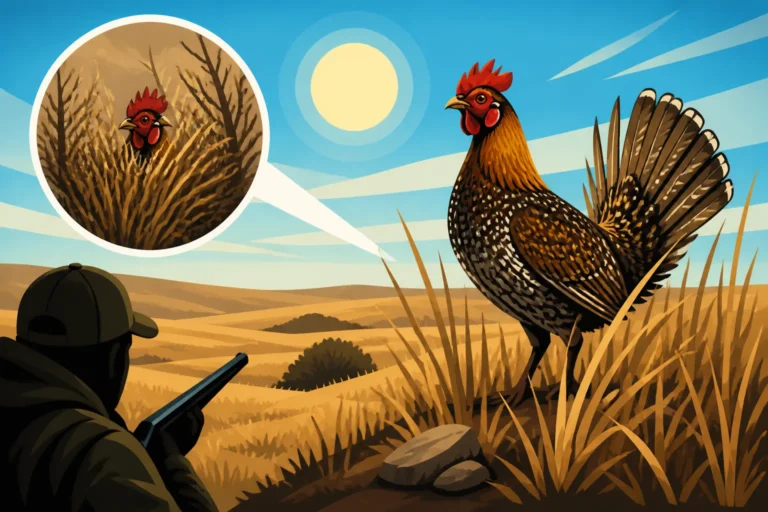
Our brains are wired to recognize complete shapes. We look for a whole deer, a whole antelope, walking or standing in plain sight. But in these open breaks, especially during midday, game animals aren't often moving. They're bedded, tucked into the smallest depressions, or using the sparse cover to disappear. Their natural camouflage is phenomenal. A mule deer bedded down blends seamlessly with the sage and dry grass, often looking like nothing more than a rock or a shadow. You're not looking for a full animal; you're looking for parts of an animal, or anomalies that suggest an animal. This is a critical mental shift. If you're simply sweeping and hoping to see an entire animal stand up and wave at you, you're going to be disappointed. You’ll glance over a hundred bedded animals without ever realizing they were there, convinced the landscape is barren when it's actually teeming with life.
Eye Strain and Missed Critiques
Randomly sweeping your optics back and forth at varying distances and speeds is a quick way to exhaust your eyes. When your eyes are tired, your ability to discern subtle details diminishes dramatically. You start to see what you expect to see – more rocks, more sage, more grass – rather than what's actually there. The subtle flick of a tail, the unique shine of an antler, or the slight shift in color where an animal's hide meets the terrain become invisible. Your brain simply can't process the overwhelming visual information effectively without a system. This leads to hunters giving up too soon, moving to a new spot, or worse, convincing themselves there are no animals in an area when in reality, they just haven't looked correctly. It's a common frustration, but it's entirely solvable with a more disciplined approach.
Implementing the Grid System for Effective Glassing
The grid system is your most powerful ally when hunting open country in South Dakota. It transforms the overwhelming task of searching miles of terrain into manageable, systematic steps. It's about being patient, methodical, and disciplined in your approach. This isn't just about looking harder; it's about looking smarter.
Setting Up Your Glassing Station Properly
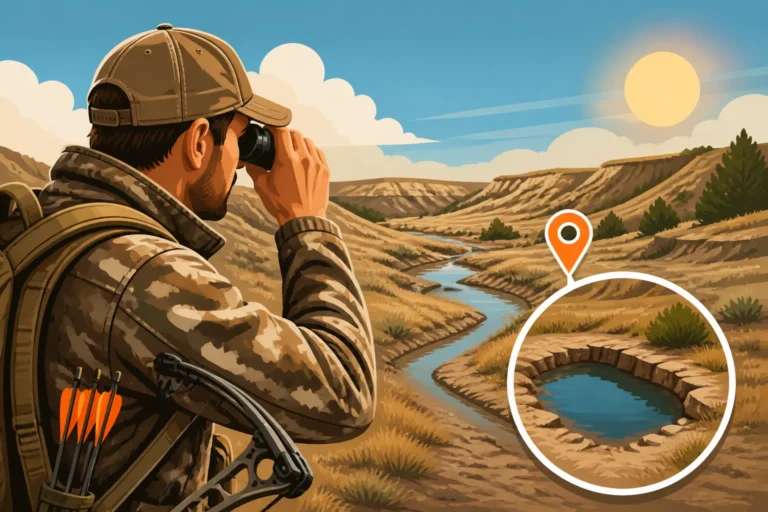
Before you even start scanning, setting yourself up correctly is half the battle. This isn't a casual affair; it's a strategic operation. First, find a good vantage point. This usually means a high point, but sometimes a lower spot that allows you to look up into certain drainages can be effective for Reading Prairie Coulees for Mule Deer. Crucially, make sure you have a stable platform. Trying to hand-hold binoculars or a spotting scope for extended periods is a recipe for shaky images and severe eye strain. A good, sturdy tripod is non-negotiable for serious glassing, especially with a spotting scope.
Once you’re set up, get comfortable. Seriously. You might be here for hours. Bring a small stool, a pad to sit on, or even just make sure your knees aren't going to ache after twenty minutes. Adjust your optics so they're at a comfortable height for your posture, whether sitting or kneeling. Ensure your binoculars or spotting scope are properly focused for the ambient light and distance. A slight adjustment can make a world of difference in clarity and your ability to pick out details. Also, consider the sun's position. Early morning or late evening often means the sun is low, creating harsh glare or casting long shadows that can obscure game. Try to position yourself so the sun is either behind you or to your side, illuminating your target area without shining directly into your optics.
The Mechanics of a Grid Search
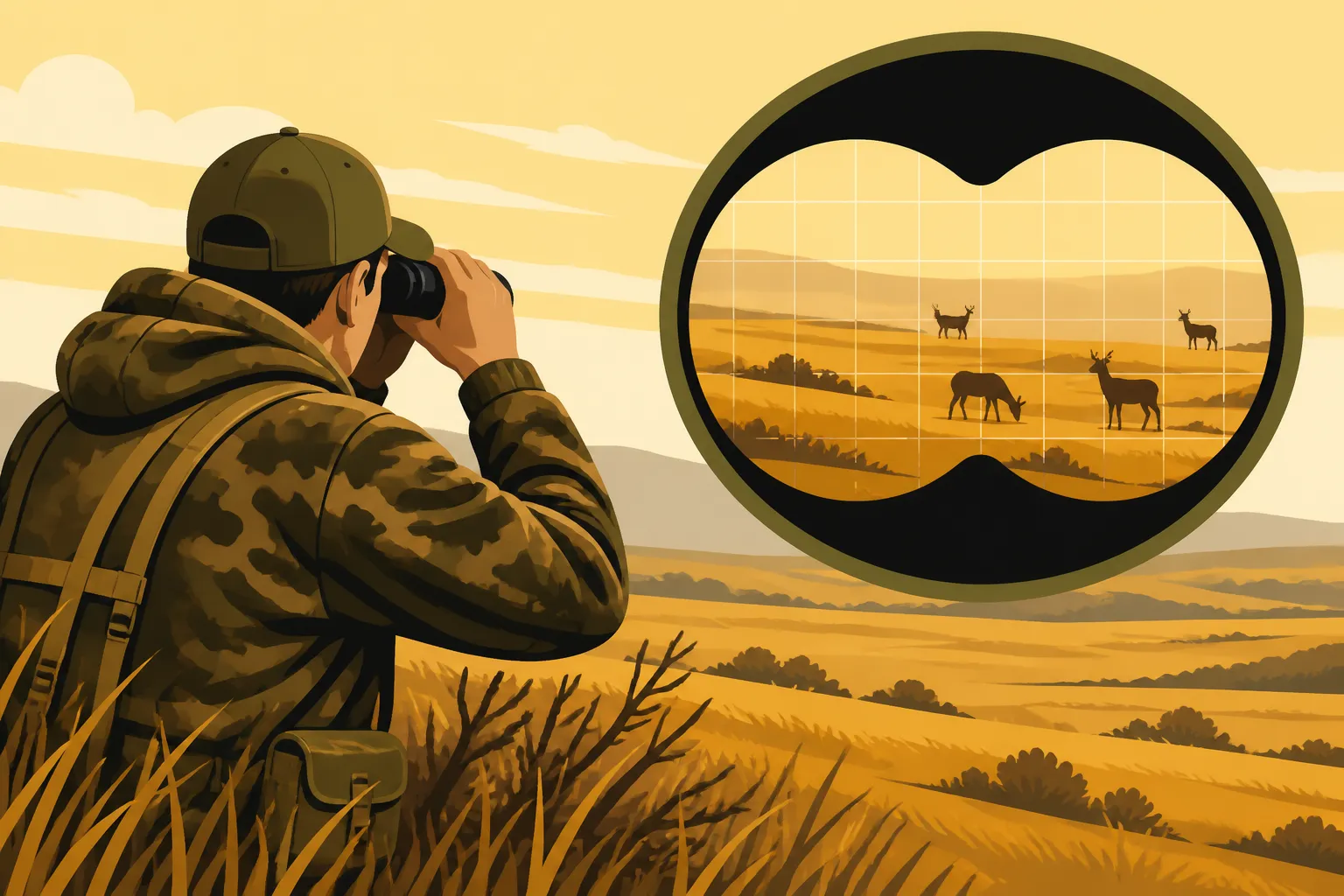
Now for the actual grid. Imagine the vast landscape before you as a massive grid. You're going to break it down into smaller, manageable "boxes" or "strips." Start by choosing a specific section of terrain, perhaps a single coulee or a distinct hillside, as your initial focus area. Don't try to scan everything at once.
With your binoculars or spotting scope on your stable tripod, pick a starting point within your chosen section – often the closest edge or a prominent feature. Begin your sweep. Instead of jumping around, move your optics slowly and deliberately, either horizontally or vertically, across a narrow strip of that terrain. For instance, start at the far left of your chosen section, just above the bottom. Slowly sweep to the right, scrutinizing every single detail. When you reach the right edge, drop your optics slightly and sweep slowly back to the left. Continue this pattern, moving down the hillside or across the coulee in these narrow, overlapping strips, like mowing a lawn.
The key here is slow. This isn't a quick glance. You're giving your eyes and brain time to process the information. Pause at any anomaly, any patch of unusual color, any shadow that seems a bit too dark or too angular. Once you've thoroughly covered that first section, move on to the next adjacent section, and repeat the grid process. This methodical sweep ensures you don't miss any ground. You're not relying on luck; you're systematically eliminating possibilities. This process is crucial when you are Glassing South Dakota Breaks at First Light or at any time of day when animals are bedded.
What to Look For Beyond Whole Animals
As we discussed, looking for a full animal is inefficient. Instead, train your eyes to spot the pieces or patterns that indicate an animal's presence.
- Horizontal Lines: In a landscape dominated by vertical grasses, sagebrush, and rolling contours, a perfectly horizontal line is often the back of a bedded animal. It might be subtle, but it will stand out once you start looking for it.
- Unnatural Shapes and Angles: Look for things that just don't quite fit the natural environment. A perfectly rounded rump, the sharp curve of an antler, or a patch of hide that's a different texture or color than the surrounding vegetation. Deer and antelope are masters of camouflage, but they are still distinct from rocks and bushes.
- Ears and Antlers: These are often the first things to catch light. Mule deer have large, prominent ears that can stick up above low cover. Antler tips, even if just a tine, can reflect light differently.
- Shades and Shadows: Animals often create distinct shadows, even when bedded. Look for areas of unusually dense or sharply defined shadow that could indicate an animal tucked away.
- Legs and Bellies: When an animal is bedded, sometimes you'll just catch a glimpse of a leg bent at an unnatural angle or the white belly fur.
- Movement, no matter how slight: Even a bedded animal might flick an ear to ward off a fly, or shift its head. This tiny movement, caught in your grid search, is often the giveaway. Be patient and give your optics time to settle on an area.
This detailed observation is especially vital when Spotting Bedded Bucks in Sage, where they truly melt into the background.
| Feature to Look For | Description | Why it Stands Out |
|---|---|---|
| Horizontal Lines | Backs of bedded animals, parallel to the ground | Contrasts with vertical grass/sage |
| Unnatural Shapes | Rounded rump, sharp antler curve, blocky form | Breaks natural, irregular patterns |
| Ears/Antler Tips | Reflective surfaces, distinct shapes | Catches light, unique silhouette |
| Color Patches | Darker hide, lighter belly, stark contrast | Breaks monochromatic landscape |
| Shadow Anomalies | Distinct, dark, animal-shaped shadows | Different from natural terrain shadows |
| Subtle Movement | Ear twitch, head turn, tail flick | Intermittent, confirms presence |
Fine-Tuning Your Grid for South Dakota's Unique Terrain
South Dakota’s open breaks aren't a uniform, flat canvas. They're a dynamic, ever-changing landscape of rolling hills, deep coulees, and subtle elevation changes. Your grid system needs to be adaptable to these specific characteristics if you want to be truly successful.
Adapting to Rolling Hills and Coulees
The West River country is famous for its "breaks" – eroded badland formations, draws, and coulees that offer critical cover and bedding areas for mule deer and antelope. When glassing these areas, your grid needs to account for the dips and rises. Instead of one continuous sweep, you might need to adjust your grid's "boxes" to follow the contours of the land.
For instance, if you're looking at a long draw, mentally divide it into segments. Systematically sweep the bottom of the draw first, then move up the first side, then the second. When you hit a small rise or a ridge within that draw, spend extra time there. Animals often bed on the leeward side of these features, out of the wind and with a commanding view. Don't let a change in elevation cause you to skip a section; often, the very spot where the terrain changes is where an animal will be tucked. Areas with thicker clumps of sage or scattered small cedars in these coulees are prime bedding habitat and warrant excruciatingly slow and thorough glassing. Remember that animals will use even the slightest depression to disappear, so pay close attention to the transitions between flat ground and sloping hillsides.
Timing Your Glassing for Optimal Visibility
The time of day, and even the weather, plays a huge role in how effective your glassing will be. Animals behave differently throughout the day, and light conditions change their visibility.
- Dawn and Dusk: These are arguably the most crucial times. Animals are often moving, feeding, or heading to and from bedding areas. The low angle of the sun creates long shadows that can both hide and highlight animals. Often, a buck's antlers or an antelope's horns will catch the first or last rays of light, making them pop against the dim background. This is a prime time for Glassing South Dakota Breaks at First Light.
- Midday: Many hunters pack up during the middle of the day, assuming animals are entirely inactive. This is a mistake, especially if you're hunting mule deer or antelope. These animals will often bed down in open country for hours, but they are still there! Midday glassing is all about patiently picking apart bedding areas. The sun is higher, reducing the harsh shadows, which can make it easier to see into the bottoms of coulees or the shaded sides of hills. This is when your grid system, and focusing on parts of animals, becomes paramount. It's often when you'll locate a buck that other hunters have walked past because they weren't disciplined enough to put in the time during the "slow" hours.
- Overcast Days: Don't underestimate an overcast day. Flat light can actually reduce glare and shadows, making it easier to see into cover and identify subtle shapes. Animals can also be more active later into the morning or earlier in the afternoon on cloudy days.
Using Technology to Enhance Your Grid
In today's hunting world, technology isn't just a gimmick; it's a powerful tool to enhance traditional skills. GPS mapping apps, like those offered by GoHunt, are invaluable for glassing the open breaks of South Dakota.
Before you even leave your truck, use an app to virtually "grid" your intended glassing area. Look at topo maps and satellite imagery to identify key features: prominent coulees, breaks, finger ridges, and patches of cover. You can even mark potential bedding areas or travel corridors. This gives you a mental map of where to focus your efforts. For example, if you see a series of small, interconnected draws that might serve as a bedding network, you know to pay extra close attention to that area when you're on the ground. This kind of E-Scouting Walk-In Areas Before the Season can save you hours of aimless hiking.
When you're actually glassing, GoHunt or similar apps can help you mark precisely where you've seen activity or interesting sign. Did you see a faint outline of what looked like a bedded buck, but then it disappeared? Mark that spot. You can then use your app to navigate back to that exact location later or to direct a hunting partner. These apps also allow you to track your progress, ensuring you're systematically covering all the ground you intended to, rather than getting distracted or skipping areas. This integration of digital mapping with your physical grid system creates an incredibly robust and efficient scouting and hunting tool. It's a game-changer for those who are serious about understanding and navigating large tracts of public land.
Common Mistakes and How to Avoid Them
Even with the best intentions and knowledge of the grid system, it’s easy to fall into old habits or make errors that cost you opportunities. Recognizing these pitfalls is the first step to avoiding them and becoming a truly effective glasser on the South Dakota prairie.
Rushing the Search and Overlooking Detail
This is, without a doubt, the most common mistake. There's a natural urge to want to see something quickly, to find that big buck right away. We get impatient. We sweep too fast, barely pausing to let our eyes truly register what they’re seeing. This superficial scanning is no better than no scanning at all. An animal that is perfectly camouflaged and motionless will simply be glazed over.
To combat this, force yourself to slow down. Think of it less as "looking for a deer" and more as "inspecting every square foot of ground." If you’re using a spotting scope, try to spend at least 30 seconds to a minute on each small section of your grid before moving on. With binoculars, your sweeps can be a bit broader, but still deliberate. When you pick up a slight anomaly – a strange shadow, an unusual shape, a patch of color that doesn't quite fit – stop. Don't immediately dismiss it. Hold your optics steady, even switch to a higher magnification if you have a spotting scope, and really scrutinize it. Try to identify what it is. Is it a rock, or is it part of a bedded animal? Often, it's only after a few seconds of concentrated focus that the animal materializes out of the landscape. Remember, patience isn't just a virtue in hunting; it's a critical skill, especially when Hunting South Dakota Walk-In Areas that might see more pressure.
Ignoring Subtle Clues and False Positives
Another common pitfall is dismissing what we think are "false positives" too quickly. Every hunter has seen countless rocks that look exactly like the back of a deer. After a while, you might start to ignore these slight clues because most of the time, they turn out to be nothing. However, that one time you ignore a subtle detail, it might just be the trophy animal you're looking for.
Instead of dismissing, investigate. If something catches your eye, even if it's just a fleeting glimpse or an instinctual feeling that something isn't quite right, take the time to confirm. Is that horizontal line a log, or a deer's back? Is that patch of brown a clump of dry grass, or a mule deer's hide? Use your rangefinder on it. If it's too far to tell, put your spotting scope on it and focus. Sometimes, what looks like a rock at 800 yards slowly reveals itself to be a bedded buck after intense scrutiny. This applies not just to animals, but to sign as well. A small group of tracks entering a thicket, a patch of rubbed-off sage, or even a small game trail disappearing over a ridge could be valuable information. Pay attention to these details, as they can tell you a lot about How Buck Movement Changes Through the Rut.
Poor Equipment Choices and Unstable Platforms
You can have the best grid system in the world, but if your equipment isn't up to snuff, you're severely handicapping yourself. Trying to glass for hours with cheap, blurry binoculars or a shaky tripod is a recipe for headaches and missed game.
Invest in the best optics you can reasonably afford. Good quality binoculars (10x to 12x magnification are excellent for scanning) and a spotting scope (20-60x or higher) with clear, bright glass will make a monumental difference. The clarity, light-gathering ability, and edge-to-edge sharpness of quality optics reduce eye strain and allow you to pick out finer details at longer distances.
Equally important is a stable tripod. A flimsy, lightweight tripod might be easy to carry, but if it wobbles every time you touch it or a slight breeze blows, it's useless for precision glassing. Look for a sturdy tripod that can securely hold your optics without shaking. Consider a fluid head for smooth, controlled panning and tilting. This stability allows you to keep the image rock-steady, letting your eyes truly focus on the details without fighting constant motion. Don't forget a comfortable neck strap for your binoculars and lens covers to protect your investment from dust and scratches, a constant threat in the dusty South Dakota wind. The right gear, thoughtfully chosen and properly used, isn't just a luxury; it's a fundamental component of effective glassing in open country.
Disclaimer
The information provided in this article is for educational and entertainment purposes only. Hunting regulations and conditions in South Dakota can change frequently. Always consult the latest South Dakota Game, Fish and Parks regulations and land access rules before planning any hunting trip. Be aware of private land boundaries, obtain proper permission when necessary, and prioritize safety above all else.