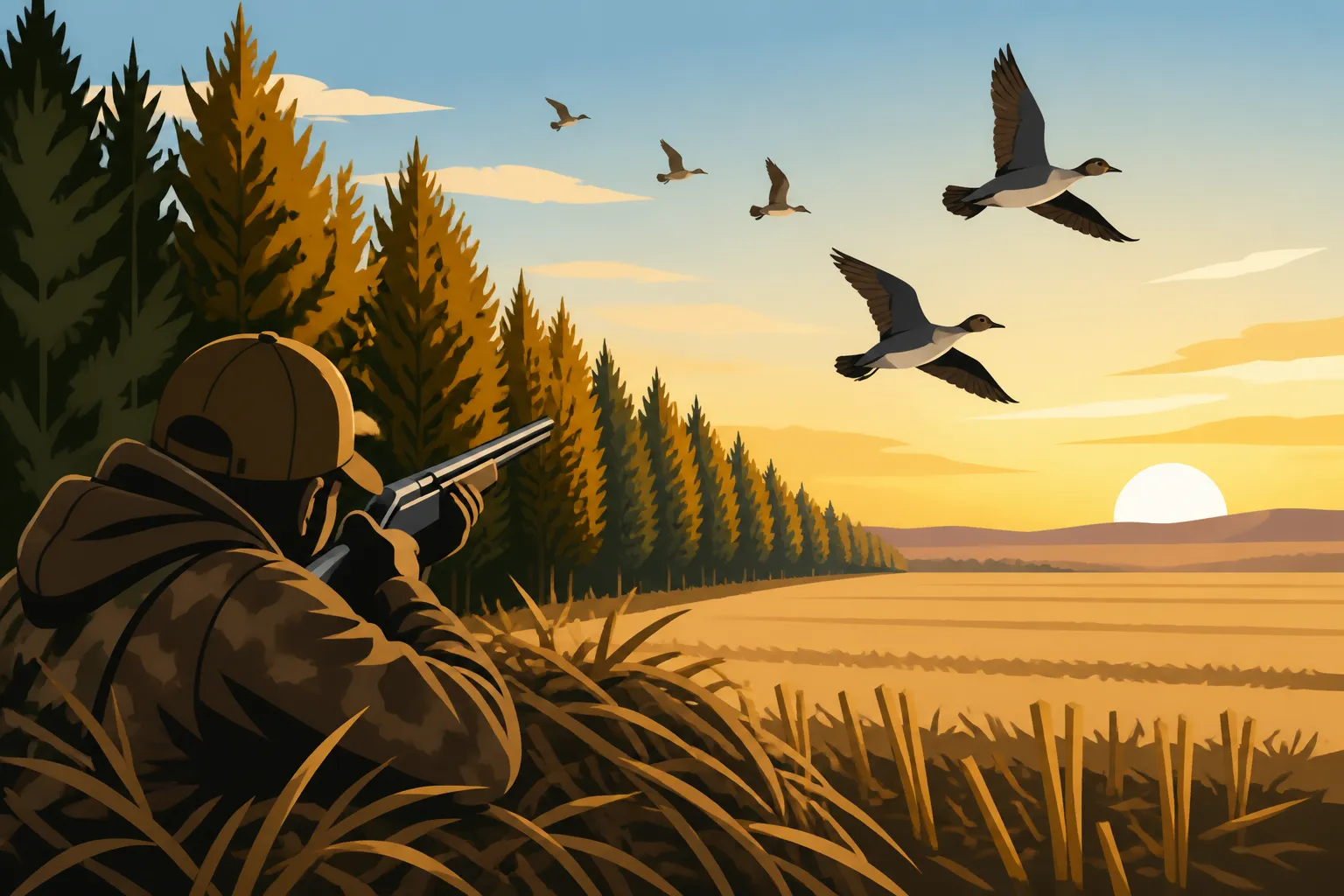
Shelterbelt Ends That Hold Late Birds
It’s late season in South Dakota, and the easy birds of October have long since vanished. The corn is picked, the grass is stomped down, and those roosters that were everywhere a few weeks ago now seem to have evaporated into the frosty air. This is the time of year when birds get cagey, seeking out the thickest, most impenetrable cover they can find. If you're struggling to locate pheasants when the temperatures drop and the wind howls, you need to turn your attention to the often-overlooked, yet incredibly productive, ends of shelterbelts. This guide will walk you through why these specific spots are so critical and how to hunt them effectively.
Why Shelterbelt Ends Are Goldmines in Late Season
As the season progresses and South Dakota's characteristic winter weather sets in, pheasants drastically change their behavior. They transition from lounging in vast expanses of milo or waist-high CRP to seeking out dense, multi-layered thermal cover that can protect them from relentless winds and biting cold. This is where shelterbelts become absolutely indispensable, and their ends are particularly magnetic for late-season ring-necks.
A shelterbelt, often planted as a windbreak around farmsteads or fields, isn't just a row of trees; it's a miniature ecosystem providing vital refuge. Imagine a solid wall of evergreens, cedars, or dense shrubs standing sentinel against a vast, open field of stubble. The birds understand this concept perfectly. The core of a shelterbelt provides some protection, but the ends are often where this protection meets the open landscape, creating unique pockets that birds gravitate towards. These sections typically feature a denser tangle of undergrowth, sometimes combined with taller trees, and they offer multiple escape routes while still providing superior thermal protection. It’s like a warm, defensible fort when everything else around is exposed.
Thermal Cover and Escape Routes
In the brutal cold of late fall and winter, pheasants are driven by two primary instincts: survival from the elements and survival from predators. Shelterbelt ends excel at providing both. The layering of different tree and shrub species creates a thick barrier that traps warmer air and blocks the wind, offering precious thermal cover. A rooster hunkered down in the thick base of a red cedar at the end of a shelterbelt can conserve energy far more effectively than one exposed in a sparse grass field. This isn't just about comfort; it's about life or death when the mercury plunges below zero and the wind chill makes it feel even colder.
Beyond thermal benefits, the ends of shelterbelts offer multifaceted escape routes. Unlike a long, linear stretch of cover where a bird might only have two directions to run or flush, the end of a shelterbelt often abuts another cover type – perhaps a ditch, a food plot, or another field edge. This junction creates a complex escape matrix. A rooster can flush into the open, sneak along the ditch, or dart into adjacent cover. When pheasants are pressured, they become incredibly adept at using these nuances of terrain and cover to their advantage. They know these spots offer options, and options mean survival. This is especially true for birds that have survived the opener and several rounds of hunting pressure. Learning to interpret this behavior is key to Late-Season South Dakota Pheasants in Heavy Cover.
Reading the Cover: What to Look For at the Ends
Not all shelterbelt ends are created equal. Some will be absolute rooster magnets, while others might be relatively barren. Learning to "read" the cover – even before you step foot on it – is a skill that will dramatically increase your success rate. This involves understanding the structure of the shelterbelt itself, considering the surrounding landscape, and leveraging scouting tools.
Identifying Prime Shelterbelt Ends
When you're looking at a map or even driving past a potential hunting spot, pay close attention to the density and type of vegetation at the very tip of the shelterbelt. The best ends often feature a combination of dense evergreens (like cedar or spruce) mixed with thick, brushy undergrowth such as honeysuckle, multiflora rose, or plum thickets. Think about anything that creates a near-impenetrable wall at ground level. This layered cover is much more attractive to pheasants seeking deep protection than a simple row of deciduous trees that have shed their leaves. A good indicator is when the cover extends slightly past the main line of the shelterbelt, forming a bulbous, extra-dense pocket.
Also, consider the orientation. A shelterbelt running east-west will have a south-facing end that can catch more sun, offering a slightly warmer microclimate on a cold day. Conversely, a shelterbelt that shields against the prevailing northwesterly winds might be more attractive regardless of direct sun exposure, simply because it blocks the bite. Keep an eye out for shelterbelts that transition directly into a marshy area, a cattail slough, or a thick block of standing corn. These transitions are bird highways and frequently hold concentrations of pheasants at the very junction.
Using E-Scouting Tools
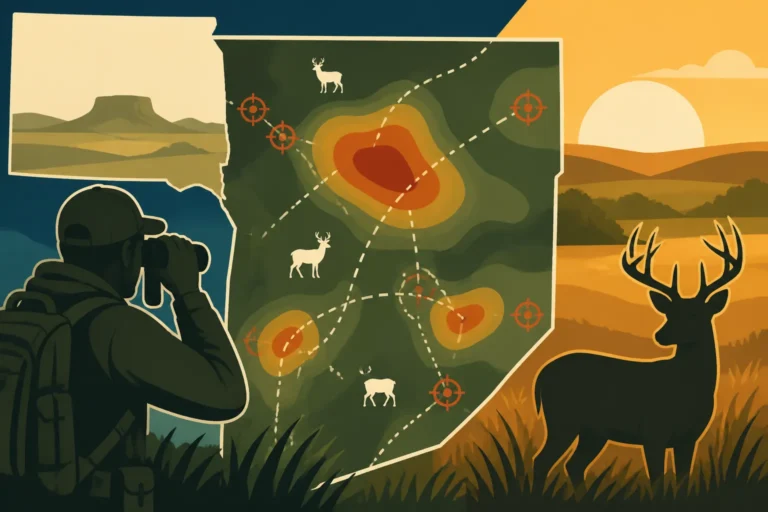
In today's hunting world, advanced mapping platforms are your best friend for identifying these prime spots from your couch. Tools like GoHunt are incredibly useful for e-scouting, allowing you to zoom in on detailed aerial imagery. You can literally trace the lines of shelterbelts, looking for those dark, dense pockets at their termini. Look for changes in vegetation texture – thicker, more chaotic patterns often indicate better cover. Many hunters, myself included, rely on the detailed aerial imagery and public land overlays provided by platforms such as GoHunt to pinpoint these crucial features before ever leaving the house.
Another layer to consider is property boundaries. Many of these prime shelterbelts are on private land, but a surprising number are accessible through programs like South Dakota Walk-In Areas Explained or Game Production Areas. Use your mapping app to identify public land or Walk-In Areas that contain these prime shelterbelts. Before you even set foot on the ground, a tool like GoHunt can be invaluable for pinpointing these crucial features and confirming public access. Pay attention to how the shelterbelt interacts with adjacent cover, particularly if it's bordering a field with standing feed or water sources.
Here's a quick reference table for shelterbelt characteristics and their late-season value:
| Shelterbelt Feature | Late-Season Value | Why It Matters |
|---|---|---|
| Dense Evergreens (Cedar, Spruce) | Excellent thermal cover, windbreak | Retains leaves all winter, creating a warm, sheltered microclimate. |
| Brushy Undergrowth (Plum, Rose) | Offers ground-level concealment and escape options | Forms a tangled barrier that protects birds from wind and predators at ground level. |
| Multi-Layered Vegetation | Superior overall protection, diverse escape routes | Multiple layers block wind, hold heat, and offer varied paths for evasion. |
| Adjacent to Standing Corn/Milo | Provides food source and secondary escape cover | Birds can feed then quickly retreat to heavy cover; offers more escape choices. |
| Adjacent to Cattail Slough/Ditch | Offers water, dense escape cover, travel corridors | Waterfowl and pheasants use these for refuge and movement, especially in winter. |
| South-Facing Exposure | Warmer microclimate, sunning opportunities | Direct sunlight can provide a significant temperature boost on cold, sunny days. |
| Bulbous, Extended Ends | Increased dense cover, larger holding capacity | Offers more space for multiple birds to hunker down in thickest parts. |
Tactics for Hunting Shelterbelt Ends Effectively
Hunting shelterbelt ends in late season requires a specific approach. These birds are educated, wary, and will use every bit of cover to their advantage. A casual walk-through usually results in an empty bag and a frustrated dog. You need a deliberate strategy, often involving multiple hunters and certainly well-trained dogs.
The Push and Block Strategy
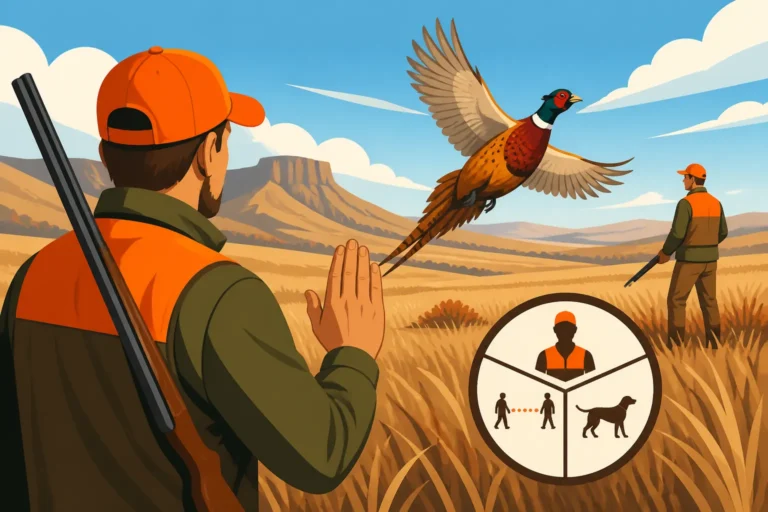
For shelterbelt ends, the classic "push and block" pheasant hunting strategy is often the most effective. This involves having one or two hunters (the "blockers") position themselves silently at the very end of the shelterbelt, essentially sealing off the primary escape route. Meanwhile, another hunter or two (the "pushers") start at the opposite end of the shelterbelt and slowly work their way towards the blockers, driving the birds.
Here's a breakdown:
- Blocker Placement: Blockers should get into position well ahead of the pushers, moving quietly and positioning themselves slightly off to the sides of the shelterbelt's end, not directly in front. You want to be hidden from the birds' view and downwind if possible. Don't stand out in the open, as a pheasant spotting you can trigger an early flush or cause them to run back past the pushers. Often, the blockers are waiting for that crucial flush, and anticipating where the birds will break is key. Proper Muzzle Discipline With Blockers Ahead is critical for safety in this setup.
- Pusher Pace: The pushers need to move slowly, deliberately, and systematically. This isn't a race. The goal is to make the birds feel pressured enough to move, but not so quickly that they burst out prematurely or double back unnoticed. If you're Zigzagging a Grass Strip for Birds, you know the kind of methodical approach needed. Work every single nook and cranny of the cover. This is especially important if you’re trying to understand Why Birds Run Instead of Flush in dense cover. Dogs are invaluable here, as they can root out birds holding tight.
- Dog Work: A good flushing dog is indispensable for working these thick areas. Dogs can get into spots a human hunter can't and have a keen nose for pinpointing hiding pheasants. They add an element of chaos that often makes birds decide to flush rather than run. However, ensure your dog is conditioned for the cold and protected from burrs. Consider their stamina, especially if you’re out on the South Dakota Pheasant Hunting Tactics for the Opener, which is usually warmer. The dense cover also means keeping your dog hydrated and free of burrs is crucial; consider Dog Water and Burrs on the Prairie.
Solo Hunting Shelterbelt Ends
If you're hunting alone, it's a tougher proposition, but still possible. You'll need to rely heavily on stealth and smart dog work. One effective solo tactic is to approach the shelterbelt end from downwind, circling wide and then entering the cover from the side or slightly behind the very tip. Hunt into the wind, working your way back towards where you started. The idea is to surprise birds that are holding tight or to push them along the shelterbelt. You won't have blockers, so be ready for flushes in any direction.
Another solo strategy involves a very slow, methodical zigzag through the densest part of the end, allowing your dog to work thoroughly. Be prepared for birds to flush ahead, behind, or to the sides. This requires quick reflexes and excellent gun handling. Remember, late-season birds will often hold incredibly tight, sometimes only flushing when you're literally a few feet away. This is where a good flushing dog becomes even more vital for Hunting Pheasants Without a Dog.
Timing and Environmental Factors
Late-season pheasants often don't move much until later in the morning after the sun has had a chance to warm things up a bit. This means that a Ten a.m. Start Times and Bird Behaviour can be quite effective for these types of hunts. When the temperatures are frigid and the wind is howling, birds will be locked down in the thickest thermal cover available. Waiting until the sun has risen and started to thaw the landscape can encourage them to move slightly or at least make them more willing to flush when pressured.
Wind direction is also critical. Always try to hunt into the wind when possible, as this gives your dog the best chance to scent birds and provides you with a slight advantage on rising birds. However, when working the ends of shelterbelts, the wind can swirl unpredictably due to the structures. Be aware of how the wind is moving through the trees and adjust your approach accordingly. Often, birds will flush with the wind to gain speed, so anticipate that fast, quartering away shot.
Hunting these shelterbelt ends is incredibly rewarding. They might not hold the sheer numbers of birds you find in wide-open CRP fields during the opener, but the birds you do find here are often trophy roosters – survivors that have outwitted many hunters before you. Dedicating your late-season efforts to these crucial pieces of cover will undoubtedly lead to more successful and memorable hunts in the South Dakota winter.
Disclaimer
Hunting carries inherent risks, including but not limited to injury or death. Always prioritize safety, follow all local, state, and federal hunting regulations, and ensure you have the appropriate licenses and permits. The information provided in this article is for informational purposes only and does not constitute professional advice. Consult with local wildlife agencies for current regulations and safety guidelines.