Pheasant Hunting Etiquette on Public Ground
South Dakota's public lands offer incredible pheasant hunting, but let's be real—they can get crowded. There's nothing more frustrating than having your carefully planned hunt disrupted by inconsiderate behavior, or worse, accidentally stepping on someone else's toes. This guide is all about navigating those shared spaces with grace and effectiveness, ensuring that your hunt, and everyone else's, is as enjoyable and successful as possible.
Why Public Land Etiquette Isn't Just "Nice," It's Necessary
Hunting South Dakota pheasants on public ground, especially popular spots like Walk-In Areas (WIAs) and Game Production Areas (GPAs), often feels like a balancing act. You've spent your time and money, traveled to a bucket-list destination, and you're eager to get after those roosters. But so is everyone else. The sheer popularity of South Dakota hunting means that you're going to encounter other hunters, and sometimes, a lot of them. Ignoring basic courtesies or not understanding how to share the land can quickly sour an otherwise perfect day afield. It’s not about rigid rules handed down from on high; it’s about mutual respect, shared enjoyment, and most importantly, safety. We all want to experience that electric flush and the thrill of a wild bird, and a little forethought can make sure we all get that chance.
The Reality of Shared Space
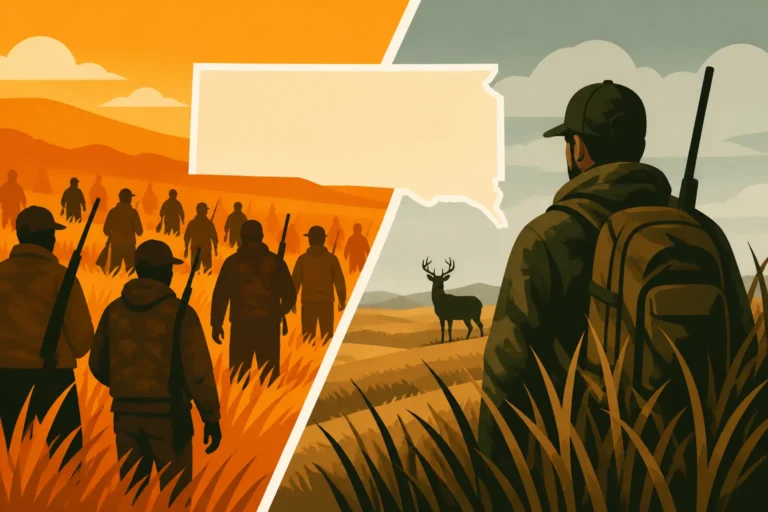
Think about it: whether you're working a cattail slough or pushing a shelterbelt, someone else might have had the same idea. It's not like the good old days when you could drive for miles and not see another truck. Today, especially during the pheasant opener, you might pull up to a promising parcel and find two or three other vehicles already there. This isn't a problem; it's simply the reality of finite, high-quality public hunting ground. The key is how you react to that reality. Do you sigh in frustration and drive away, or do you assess the situation, communicate, and adapt? Often, the latter is not only possible but can lead to new friendships and shared success. This is particularly true on areas like those covered in our article on Hunting South Dakota Walk-In Areas.
Setting the Tone for a Better Hunt
Your attitude before you even step out of the truck can dictate the entire day. If you approach a shared area with an open mind, ready to be courteous and flexible, you're much more likely to have a positive experience. Conversely, if you're already grumpy about the crowd, you'll find reasons to be frustrated, and that negativity will impact your hunt and potentially others around you. Remember, every hunter out there is a peer who loves the outdoors just as much as you do. A simple wave, a nod, or a friendly "Good morning" can go a long way in establishing a respectful atmosphere.
Practical On-the-Ground Etiquette for Public Lands
Once you’re out of the truck and surveying the scene, a whole new set of considerations comes into play. These aren't just suggestions; they're the unwritten rules that keep everyone safe and happy. From how you park to how you handle your gun and your dog, every action sends a message.
Parking and Access Point Courtesy
This is often the very first impression you make. When you pull up to a public hunting area, especially a Walk-In Area with limited parking, observe what's already there.
- Don't block gates or access points: This sounds obvious, but you'd be surprised. Farmers need access to their land, even on hunting days. Blocking a gate with your truck, even for a "quick hunt," can cause major headaches for landowners and create resentment towards hunters. Always pull completely off the road or into designated parking areas. If there’s a small turnout, try to leave enough room for other vehicles to share or turn around easily.
- Give others space: If there are already two trucks parked, and you pull up directly behind them, ready to jump out and head into the same patch of cover, it's generally a bad move. It implies you're either going to crowd their hunt or rush ahead of them. Consider finding another access point or waiting a bit before heading in. Sometimes, simply talking to the other hunters can resolve this. "Hey folks, looks like you're heading into the north end, mind if we hit the south side?" Communication is key.
- Respect private drives: Never park in or block a private driveway, even if it looks unused. Many landowners live on or near these public access points, and their personal space should be respected at all times. For more tips on this, check out our guide on Parking Away From the Cover You Hunt.
Navigating the Field with Other Hunters
Once you're walking into the cover, it’s like an unspoken dance. Your movements should ideally complement, not compete with, other groups.
- Observe existing hunting patterns: If you see another group already working a field, try to deduce their strategy. Are they driving a block of cover from one end to the other? Are they circling a small cattail slough? Avoid moving in a way that cuts them off, pushes birds out of their path, or creates unsafe shooting lanes. For instance, if a group is systematically pushing a strip, don't walk perpendicular to them and flush birds back their way.
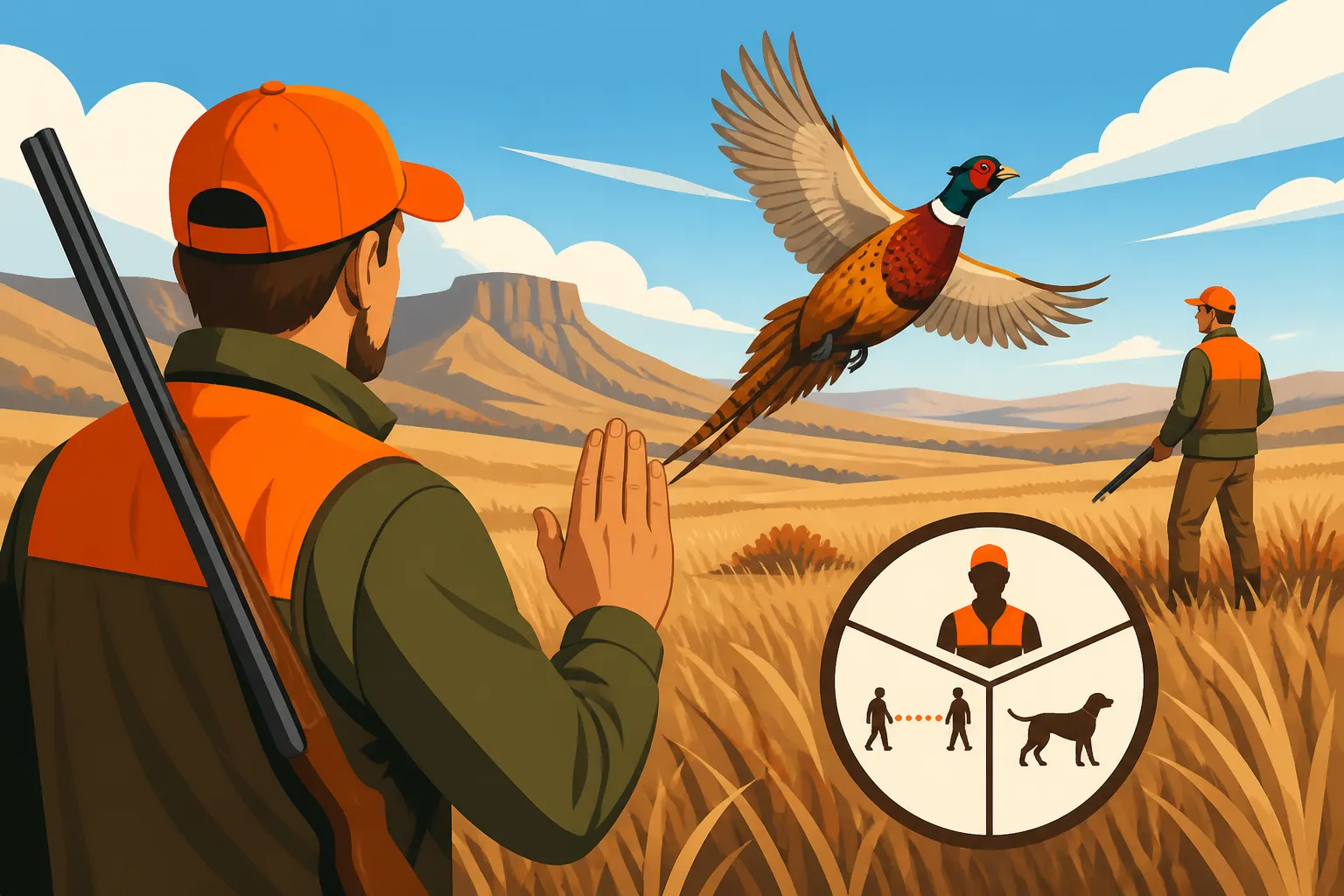
- Maintain adequate distance: This isn't just about safety; it's about giving birds room to work and everyone a fair chance. A general rule of thumb is to allow at least 100-200 yards between your group and another, especially if you're walking parallel strips. This helps prevent "bird stealing" (even if accidental) and ensures everyone has clear shooting lanes.
- Communicate verbally: Sometimes, a simple shout, "Hey, we're working the east side!" can prevent a collision or an awkward encounter. If you're coming up on another group, make your presence known from a distance to avoid startling them or their dogs.
- Mind your dog: Your canine companion is a huge asset, but can also be a source of friction. Keep your dog under control, especially when other hunters are nearby. A wild-running dog can flush birds far out of range for everyone or, worse, interfere with another hunter's shot or retrieve. Always clean up after your dog, too. No one wants to step in that. Our article on Pointing Dogs Versus Flushers on Wild Birds delves into dog control in different scenarios.
Shot Selection and Safety
Safety is paramount, always. On crowded public lands, your awareness needs to be even higher.
- Know your backdrop: Before you even think about pulling the trigger, identify exactly what's behind that flushing pheasant. Are there other hunters, vehicles, roads, or farmsteads? If there's any doubt, don't shoot. A bird in the hand is never worth risking a human life or property damage.
- Communicate shots: When a bird flushes and someone shoots, a quick "Bird down!" or "Mark!" helps everyone know what happened and where to look for a retrieve. It also alerts others to potential additional flushes in that area.
- Muzzle control: When walking through heavy cover with others, always maintain proper muzzle discipline. Your gun should be pointed in a safe direction at all times, typically either skyward or towards the ground, never at another hunter. This is fundamental and something we emphasize in Muzzle Discipline With Blockers Ahead.
Retrieving Birds and Respecting Boundaries
Once a bird is down, the hunt isn't over. The retrieve requires just as much courtesy.
- Cross property lines only with permission: This is huge. If a bird falls on private land adjacent to public ground, you must obtain permission from the landowner before stepping onto their property to retrieve it. This is not negotiable. Trespassing, even for a downed bird, can lead to charges and give all hunters a bad name. A quick knock on the door or a phone call (if you can find contact info via a mapping app like GoHunt) can often solve this.
- Assist other hunters if asked: If another hunter is struggling to find a downed bird, and your dog is resting, offering to help with a retrieve (if appropriate and safe) can foster goodwill. Karma often comes back around in the field.
Here's a quick comparison of good versus poor public land etiquette:
| Scenario | Good Etiquette | Poor Etiquette |
|---|---|---|
| Parking | Pulls fully off road, leaves space for others | Blocks gate, parks halfway in road |
| Entering Cover | Observes existing groups, enters a clear, separate area | Jumps in directly ahead of another group |
| Walking Pattern | Maintains distance, walks parallel or after other groups | Cuts off other hunters, pushes birds away from them |
| Dog Control | Keeps dog close, retrieves quickly, cleans up waste | Dog ranges wildly, interferes with others, leaves waste |
| Shot Selection | Confirms clear backdrop, no hunters in firing line | Shoots without knowing what's beyond the bird |
| Communication | Friendly nod, verbalizes intentions or bird falls | Ignores other hunters, stays silent |
| Bird Retrieval (Private) | Asks permission before crossing property line | Trespasses to retrieve downed bird |
Dealing with Conflicts and Maintaining a Positive Attitude
Even with the best intentions, you might run into situations where others aren't as courteous, or misunderstandings arise. How you handle these moments can make or break your day, and perhaps, prevent a wider issue for the hunting community.
De-escalation and Respectful Communication
It's easy to get hot-headed when you feel someone has wronged you or ruined your hunt. But remember, confronting someone aggressively rarely leads to a positive outcome.
- Assume good intent (initially): Most hunters aren't intentionally trying to be jerks. They might be new, unaware, or simply made a mistake. Approaching the situation with "Hey, I think we might be crossing paths here, maybe we can figure out a better way to split this field?" is much more effective than "What do you think you're doing, running your dog through my birds?"
- Stay calm and collected: Your tone of voice and body language speak volumes. If you're calm and respectful, it's harder for the other person to be aggressive in return. State your concerns clearly and calmly, focusing on solutions, not accusations.
- Know the regulations: Sometimes, a disagreement might stem from a misunderstanding of actual hunting regulations. Being familiar with the South Dakota Game, Fish and Parks rules, especially regarding public land use and hunting distance, can help clarify situations. An app like GoHunt, which often includes public land boundaries and sometimes even regulations, can be a valuable tool in the field.
When to Walk Away or Report an Issue
Not every conflict can be resolved with a polite conversation, and sometimes, for your safety and enjoyment, it's best to disengage.
- Prioritize your safety and enjoyment: If a situation feels unsafe, or if the other party is being belligerent and uncooperative, it's okay to simply walk away. Your hunt isn't worth a physical confrontation or prolonged argument. There's always another field, another WIA.
- Document and report serious violations: If you witness blatant poaching, unsafe gun handling that endangers others, or repeated intentional harassment, don't hesitate to report it to the South Dakota Game, Fish and Parks (GFP) conservation officers. Take notes: vehicle descriptions, license plate numbers, time, location, and a description of the individuals involved. This isn't "tattling"; it's protecting our shared resources and the future of hunting. You can find information on how to report violations in the annual GFP hunting handbooks.
Planning Your Hunt to Minimize Friction
The best way to handle public land etiquette issues is to avoid them altogether. Proactive planning, leveraging available tools, and making smart choices about when and where you hunt can significantly reduce your chances of encountering conflicts.
Pre-Season Scouting and Map Research
Modern technology has revolutionized how we can scout and plan our hunts, making it easier than ever to anticipate potential crowding.
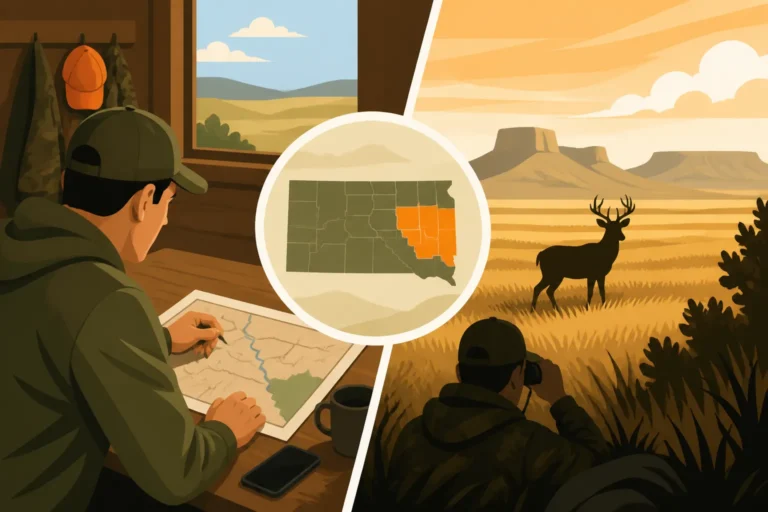
- Utilize online resources and mapping apps: Before you even leave home, spend time with the South Dakota GFP Public Hunting Atlas. This invaluable tool shows you all the Walk-In Areas, Game Production Areas, and other public lands. Combine this with satellite imagery (like what's available through platforms such as GoHunt) to identify key cover types – cattail sloughs, shelterbelts, food plots, grass strips – that might hold birds. This helps you target specific spots and visualize potential access points. For deeper insights, read our piece on Scouting South Dakota Public Ground Before the Season.
- Look for overlooked areas: Everyone flocks to the "prime" spots visible from the road. Sometimes, the best public hunting can be found a mile or two off the beaten path, requiring a longer walk or unconventional access. These less-pressured areas are perfect for a productive hunt and minimizing encounters. Learn more about reading the landscape for birds in Reading Aerial Imagery for Cattail Cover.
- Check hunting pressure patterns: Weekends, especially the opening weekend, will always be the most crowded. If your schedule allows, consider hunting weekdays. You'll likely find fewer people and more relaxed birds. Our article on Hunting Pressure Patterns on Walk-In Areas offers valuable insights into this.
Timing Your Hunt and Group Size
Strategic timing and thoughtful group composition can also contribute to a smoother public land experience.
- Midday is often overlooked: Most pheasant hunters hit the fields first thing in the morning (after the mandatory 10 AM start on the opener) or late in the afternoon. However, midday can be incredibly productive, especially if you're willing to work dense cover. Many hunters head back to town for lunch, leaving public spots surprisingly open. Birds often rest in heavy cover during this time, so a slow, methodical approach, as described in Walking Speed That Holds Roosters, can be highly effective.
- Consider smaller groups: While a large group can be effective for driving big blocks of cover, it also creates a larger footprint and can feel more intimidating to other hunters. For public lands, especially smaller parcels, a group of 2-4 hunters with a dog or two is often ideal. It’s less intrusive and easier to manage respectfully. If you have a larger group, consider splitting up to hunt different, smaller parcels. Don't forget to review Sharing a Walk-In Area With Another Party for group dynamics.
- Flexibility is your friend: If your primary plan is to hit a specific WIA, and you pull up to find three other groups already there, have a backup plan (or two, or three!). South Dakota has a vast amount of public access. Being willing to drive a few extra miles to a less pressured spot can salvage your hunt and your mood. This is where your GoHunt map comes in handy, allowing you to quickly identify alternative areas nearby.
By embracing these simple yet critical principles of etiquette, you're not just being a "good guy" in the field; you're actively contributing to a more positive, safer, and ultimately more successful hunting experience for everyone, including yourself.
Disclaimer
Please remember that hunting regulations and public land rules can change. Always consult the current South Dakota Game, Fish and Parks hunting handbook and local regulations before heading afield.