Why Birds Run Instead of Flush
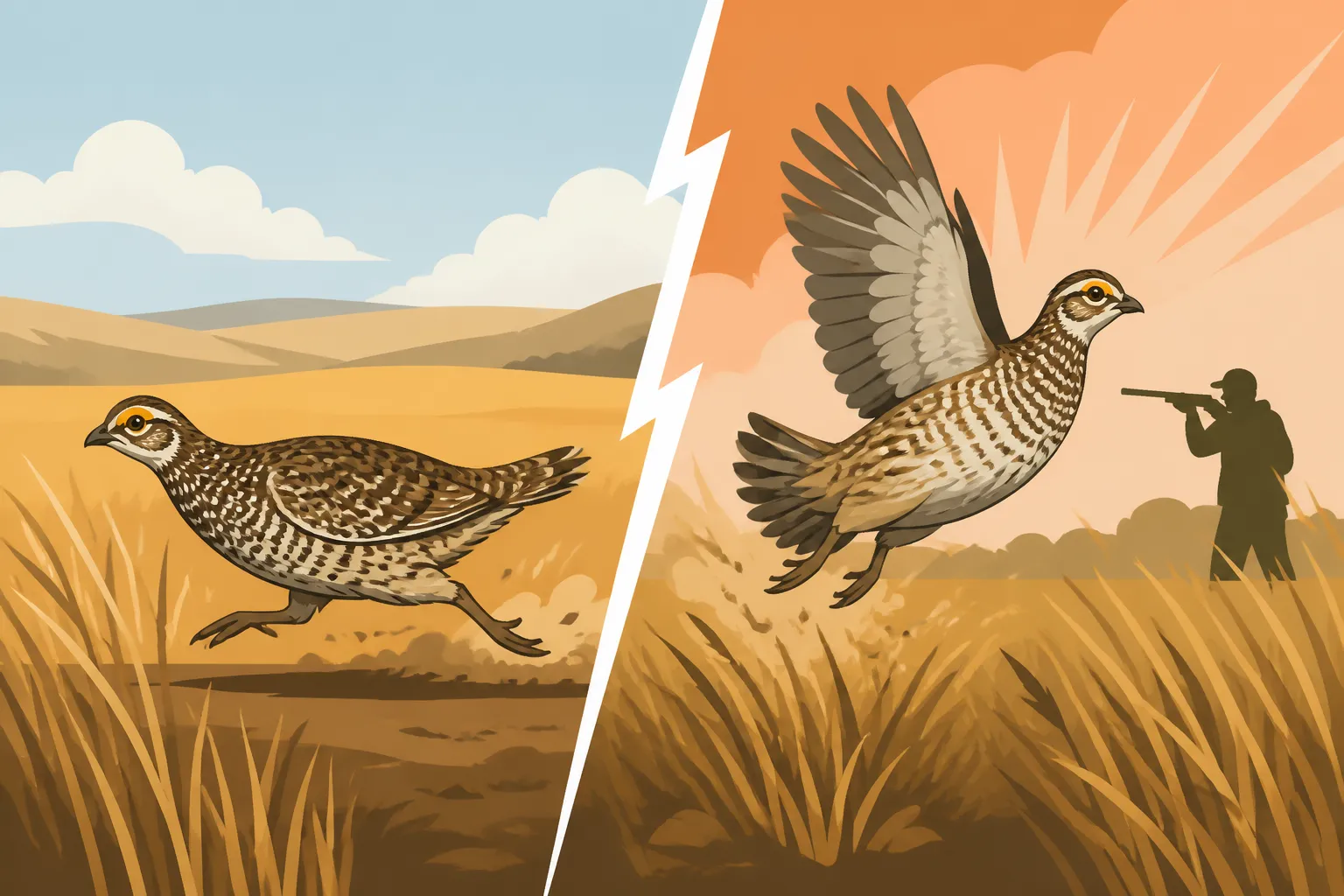
There’s almost nothing more frustrating for a pheasant hunter than walking through prime cover, hearing that tell-tale cackle, and then watching a rooster explode out of range, not flying, but sprinting across the prairie like an Olympic sprinter. We’ve all been there, swearing under our breath as a bird that should have flushed instead disappears into the horizon. It can feel like these wily birds are mocking us, but there are very real reasons why they choose to run, and understanding these behaviors is the first step to putting more birds in the bag. This guide is here to shed light on those evasive tactics and equip you with strategies to turn those frustrating runners into memorable flushes.
The Core Instinct: Why Pheasants Prefer Running Over Flushing
Pheasants are, at their heart, ground-dwelling birds. They spend the vast majority of their lives on their feet, not in the air. This fundamental aspect of their biology dictates many of their behaviors, especially when faced with perceived danger. It's not about being "smarter" than us, it's about survival instincts honed over generations in environments full of predators.
Natural Predatory Avoidance and Cover Utilization
Think about it from a pheasant's perspective. They are prey animals, constantly on the lookout for hawks, coyotes, foxes, and even domestic dogs. Their primary defense mechanism isn't flight; it's concealment and escape by foot. When a pheasant senses a threat approaching, its first instinct is to melt into the cover, using its incredible camouflage to disappear. If the threat continues to advance, running becomes the next best option. They can often outrun a dog or a slow-moving hunter through dense vegetation, offering a much more controlled escape than the exposed vulnerability of flight.
Different types of cover offer varying degrees of advantage to a running bird. In a dense cattail slough, for example, a rooster can weave and dart through the almost impenetrable stalks, putting layer after layer of vegetation between itself and the perceived danger. The sheer density makes it nearly impossible for a hunter to keep pace or even see the bird. Similarly, thick shelterbelts with tangled undergrowth provide excellent linear escape routes, allowing a bird to run the length of the tree line before possibly exiting at an unexpected point or flushing on the far end. Even tall, stiff corn rows, as discussed in Corn Rows and Running Roosters, become tunnels for escape, offering both concealment and a clear path for a quick getaway.
Environmental Factors and Pressure
The weather and the amount of hunting pressure a bird has experienced significantly influence its decision to run or flush. On a warm, calm day, especially early in the season, a pheasant might be more apt to hold tight or flush a bit sooner. They haven't been harassed much, and the dense cover feels safe. However, introduce a biting north wind, and birds will burrow deeper into cover, becoming even more reluctant to fly, preferring to stay low and out of the wind's chill. Snow cover can also make them more visible, increasing their reliance on dense thermal cover and running to avoid detection.
As the season progresses, and birds have been bumped day after day, week after week, their running tendencies intensify. This isn't just anecdotal; it's a proven adaptation to survival. Birds that flush readily don't survive long. The ones that learn to run the longest, to make hunters work hardest, are the ones that pass on their genes. This is why Late-Season South Dakota Pheasants in Heavy Cover are notoriously tough to get to fly. They've been educated, and they know the drill. This accumulated pressure essentially "trains" them to run longer and harder, making them cunning adversaries for even the most experienced hunters.
Reading the Landscape and the Birds for Running Tendencies
Successfully hunting running pheasants starts with understanding the landscape and being able to predict where a bird might try to escape. It's about thinking like a pheasant and anticipating their next move before they even make it.
Understanding Different Cover Types
Not all pheasant cover is created equal when it comes to influencing running behavior. A sprawling, open grass field with sparse cover might encourage a quicker flush if a bird feels exposed, though they might still run a short distance to the nearest patch of thick stuff. However, get into something like a large, dense block of switchgrass or a sprawling cattail slough, and you've got prime running habitat. These areas offer pheasants endless tunnels and hiding spots. The birds will use these natural highways to escape, often running in a straight line for hundreds of yards or circling back behind hunters.
Consider a large food plot on the edge of a standing cornfield. Birds entering the corn from the food plot will often choose to run the rows rather than fly, using the corn as a shield. Understanding these nuances—how birds utilize a specific cover type—is crucial. For instance, in Walking and Blocking South Dakota Cattail Sloughs, the sheer density means that methodical, strategic pushes are essential, often with blockers positioned to cut off escape routes along the edge, as birds will almost always try to squirt out the sides or the back.
The Impact of Hunting Pressure and Time of Day
Pheasant behavior is highly adaptive, and nothing influences it quite like human interaction. Birds that have been hunted hard, particularly on popular public lands like those often covered in Hunting South Dakota Walk-In Areas, become incredibly adept at avoiding hunters. They learn exactly how far to let you approach before making their move, and that move is often a long, low run. These "educated" birds become the bane of many hunters, validating the frustration we all feel. They’ll simply not offer a shot.
The time of day also plays a role in how readily a pheasant might run. Early mornings, just after birds have left their roosts, they might be slightly less wary and more focused on feeding, potentially holding tighter. However, as the day wears on, especially past mid-morning, pheasants often move to denser thermal cover for protection and rest. In these midday hideouts, they tend to be much more reluctant to fly, preferring to run or hold until the very last second. This is why understanding Where Roosters Sit at Midday is important; you need to adjust your tactics for those stubborn birds. Many hunters use aerial mapping tools like those offered by GoHunt to scout these pressure points and potential escape routes long before the hunt. This foresight allows them to visualize potential running corridors and plan better strategies for managing those elusive birds.
Practical Strategies to Turn Runners into Flushers
Facing a bird that prefers to run isn't a lost cause. With the right tactics, knowledge, and sometimes a little help from a good dog, you can significantly increase your chances of getting those frustrating runners to take wing.
Adjusting Your Approach and Walking Speed
One of the most common mistakes hunters make is walking too fast. If you're moving at a steady, brisk pace through heavy cover, a pheasant has ample time to gauge your speed and distance and decide to simply run ahead of you. They'll use the cover to stay out of sight, always just a bit further ahead, stringing you along until they can sneak out the side or the far end. The key is to slow down, sometimes to a near crawl. This deliberate, start-and-stop pace can unnerve a pheasant, making it unsure of your exact position or intent. The uncertainty can often be enough to make them hold tight or flush.
Think about Walking Speed That Holds Roosters; it's often much slower than you'd imagine, especially in dense cover like a heavy weed patch or a deep ditch. By walking slowly, you give your dog more time to work, to get birdy, and to pinpoint the bird's location. Sometimes, a slight zig-zag pattern, rather than a straight line, can also be effective. This can confuse the bird, making it hesitate and consider flushing rather than trying to anticipate your straight-line approach. When you combine slow, erratic walking with strategic pauses, you increase the chances of catching a bird off guard.
Strategic Use of Dogs and Blockers
A well-trained flushing dog is arguably the best weapon against running pheasants. Dogs can push through cover that's impenetrable to humans, and their scenting ability allows them to follow a running bird's trail, often forcing it to flush. A good flushing dog will keep pressure on the bird, closing the distance and eventually forcing it into the air. Conversely, a pointing dog, if it can get a solid point on a running bird, can sometimes hold it long enough for the hunter to get into position. The debate between Pointing Dogs Versus Flushers on Wild Birds often comes down to this very scenario: getting running birds to fly.
For longer, linear pieces of cover like shelterbelts or cattail sloughs, utilizing blockers is an incredibly effective strategy. Blockers are hunters positioned at the end or along the sides of the cover, effectively cutting off the pheasant's escape routes. As the walking line pushes birds forward, the pheasants run into the blockers, forcing them to flush within range. This tactic is especially potent when Pushing a Cattail Slough With Blockers, as the birds have nowhere left to go but up. Remember, communication between the walking line and the blockers is paramount for safety and success. When working a linear strip, like a typical South Dakota shelterbelt, having blockers strategically positioned on the downwind side is often key to success when Working South Dakota Shelterbelts for Roosters.
Terrain and Wind Advantage
Hunters who consistently get running birds to flush understand how to use the terrain and wind to their advantage. Pheasants almost always prefer to run into the wind if they can, as it aids their takeoff if they do decide to fly. However, they also prefer to run away from pressure. If you can approach from a direction that forces them to either run into the wind towards you, or to run with the wind away from you (which makes flushing harder), you can influence their behavior. By using terrain features like creek beds, ditches, or fence lines as natural funnels, you can effectively channel running birds into a kill zone.
Consider a draw or coulee that gradually narrows. By pushing birds down this funnel, you limit their options. Eventually, they will run out of cover or space to run, forcing them to flush. It's about taking away their perceived escape routes one by one. Understanding how birds will use such features, especially when there's heavy hunting pressure on public lands, can be a game-changer. Sometimes, even subtle changes in elevation or cover density can be used to your benefit, pushing birds towards an open edge or a waiting blocker.
Here's a quick reference on how different cover types influence pheasant running behavior and how you might counter it:
| Cover Type | Typical Pheasant Running Behavior | Recommended Hunter Strategy |
|---|---|---|
| Dense Cattail Slough | Runs deep, weaves, circles, uses water to hide, often runs lengthways. | Slow, methodical pushes with blockers on edges/ends. Use flushing dogs. Don't overlook the middle. |
| Thick Shelterbelt | Runs along the length, attempts to exit sides or far end, can loop back. | Push with blockers. Approach from downwind side. Work both sides simultaneously if possible. |
| Standing Corn Rows | Runs down rows, utilizes them as escape tunnels, often runs for distance. | Zig-zag through rows, use dogs, block ends. Drive birds towards open edges or a waiting blocker. |
| Tall Switchgrass/CRP | Runs long distances, can hold tight if pressured, often uses subtle dips. | Slow, deliberate walking. Work into the wind. Utilize dog to push birds forward, not sideways. |
| Open Field Edges/Ditches | Quicker to flush if exposed, but will sprint to nearest dense cover. | Approach carefully, use dogs to find hiding birds in sparse cover. Be ready for sudden flushes or long runs. |
Preparation and Gear for Confronting Cunning Birds
Successfully hunting pheasants that prefer to run requires more than just good hunting skills; it demands thorough preparation and the right equipment. Being physically ready and equipped to handle challenging cover will directly impact your ability to get those birds to fly.
Scouting and Planning
In today's hunting world, advanced scouting tools are indispensable, especially when dealing with cunning pheasants on public or unfamiliar private lands. Utilizing aerial imagery and mapping applications is no longer a luxury but a necessity. Platforms like GoHunt provide detailed satellite maps that allow you to analyze cover types, identify potential travel corridors, and predict where pheasants might run to escape. You can pinpoint dense cattail sloughs, thick shelterbelts, and even subtle changes in topography that birds might use for concealment or escape.
Before you even step foot in the field, you can use these tools to create a mental map of the area, noting where birds might be funneled, where they might try to escape, and where you should position blockers. This kind of detailed E-Scouting Walk-In Areas Before the Season can give you a significant advantage, helping you avoid walking into a situation where birds simply run out the back without ever offering a shot. Furthermore, understanding Hunting Pressure Patterns on Walk-In Areas through these mapping systems can help you find less-pressured areas where birds might be more apt to hold or flush.
Essential Gear and Physical Readiness
Hunting running pheasants, particularly in South Dakota's often challenging terrain, is physically demanding. You'll be doing a lot of walking, often through thick, heavy cover that can quickly wear you out. Therefore, proper footwear is paramount. Investing in high-quality, comfortable, and waterproof boots, as discussed in Boots for Walking Cattails All Day, is crucial. Nothing saps your morale or cuts a hunt short faster than wet, sore feet. Ensure your boots offer good ankle support, as uneven prairie terrain and hidden ditches can lead to twists and falls.
Beyond boots, consider your clothing layers. You'll be working hard, generating heat, but South Dakota weather can be unpredictable. Layers allow you to adapt to changing temperatures and activity levels. Don't forget essentials like plenty of water, especially on warmer days to ensure you're Keeping a Dog Cool on an Early Opener, and a GPS or reliable mapping app on your phone (like the GoHunt app) to navigate. Being physically fit enough to maintain a slow, steady pace for extended periods, and to quickly sprint into action when a bird finally flushes, is a critical, yet often overlooked, aspect of mastering the art of hunting running pheasants. Always prioritize safety, and remember to carry a basic first-aid kit, as traversing rough country can sometimes lead to minor scrapes or punctures from thorny bushes.
Disclaimer
Hunting carries inherent risks, and it is the responsibility of each individual to understand and comply with all local, state, and federal hunting regulations. Always prioritize safety, practice ethical hunting, and respect private property. The information provided in this guide is for informational purposes only and should not replace professional advice or official regulations.