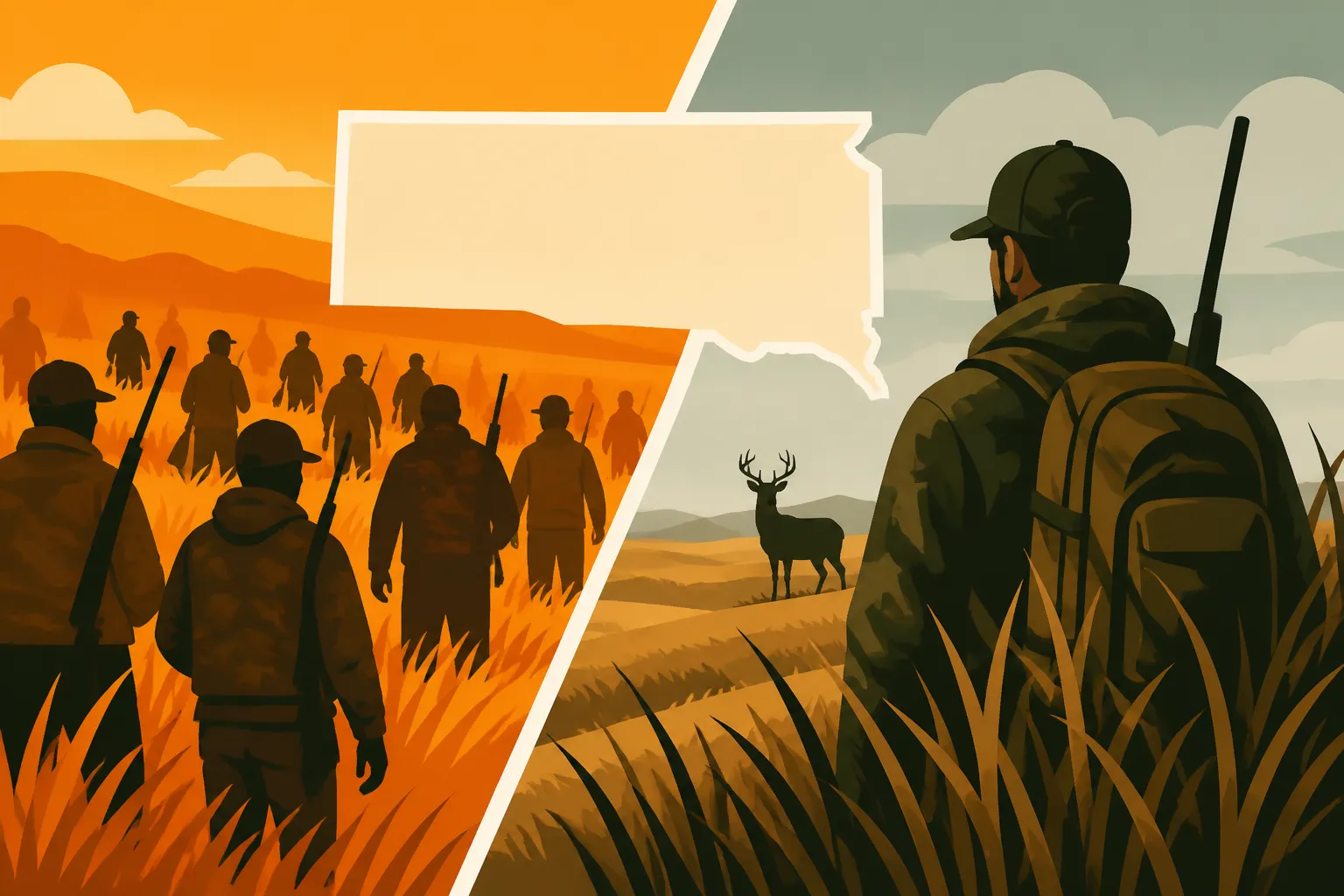
When South Dakota Walk-In Areas Get Crowded
It’s a tale as old as time for any public land hunter: you scout, you plan, you wake up early, only to pull up to your chosen spot and find a dozen other trucks already there. The frustration is real, and nowhere is it more acutely felt than on South Dakota’s renowned Walk-In Areas (WIAs), especially when pursuing the legendary ringneck pheasant. This guide dives deep into understanding when these valuable public access lands tend to get crowded and, more importantly, how you can strategize to find some peace and unpressured birds.
The Peak Crowds on Walk-In Areas: When Hunter Numbers Swell
Let's be honest, South Dakota's Walk-In Areas are a fantastic resource. They provide access to hundreds of thousands of acres of private land for public hunting, but their very popularity means they can sometimes feel like a small-town grocery store on Saturday morning. Knowing when to expect the heaviest traffic is your first step to avoiding it.
Opening Weekend Frenzy
Without a doubt, the South Dakota pheasant opener is an event. Hunters flock from all corners of the country, and for good reason—the bird numbers are often at their highest, the weather is typically mild, and the sheer excitement of a new season is palpable. This means that from the third Saturday in October through that first full week, WIAs, especially those easily accessible or well-known, will see immense pressure. Parking areas will overflow, and you'll often see multiple groups working the same field at the same time. While the camaraderie can be fun, it’s not ideal for those seeking solitude or less-pressured birds. The sheer volume of hunters hitting the fields pushes birds around, often making them run more and flush wilder.
It’s not just pheasants, either. For other species where WIAs offer access, like deer in some areas, the opening weekend of general firearms seasons will also bring a surge of activity. Hunters often rely on these easily identifiable public land spots because the access is clear and permitted, leading to concentrated efforts on the most obvious pieces of cover. If you’re planning a hunt during this period, understand that you’ll be sharing the field, and adjust your expectations and tactics accordingly.
Holiday Hunting Pressure
Another significant spike in hunter traffic occurs around major holidays. Think Veterans Day, Thanksgiving weekend, and even the week between Christmas and New Year's Day. Many hunters, especially those traveling from out of state, use these extended breaks from work or school to make longer trips to South Dakota. While the intensity might not quite match opening weekend, it's still a noticeable increase compared to a typical weekday.
During these periods, the weather can also play a role. If a cold snap or snow event occurs just before a holiday, pushing birds into heavier cover, these denser pockets within WIAs become even more attractive—and therefore, more crowded. Hunters know that tough weather often concentrates pheasants in cattails or dense shelterbelts, so these are the first places they'll hit, sometimes resulting in a parade of orange vests working the same slough. This trend is amplified in popular hunting units that are well-known for their bird numbers.
Mid-Season Weekends and Prime Times
Even outside of opening weekend and holidays, standard weekends throughout the pheasant season are considerably busier than weekdays. Most hunters have jobs and families, limiting their field time to Saturdays and Sundays. This means that any WIA that’s clearly marked and easily accessible from a gravel road will likely have trucks parked at its entrance from legal shooting time (which is 10 a.m. for pheasants, remember) until late afternoon.
Beyond just the day of the week, there are also "prime times" within any given hunting day that see more activity. The first few hours after legal shooting time, when hunters are fresh and birds are typically still working out of their roosts, are always popular. Similarly, the late afternoon, as hunters try to get in one last push before sunset, can also draw a crowd. If you're hoping to experience a WIA without constantly bumping into other groups, avoiding these specific timeframes is crucial. It’s a constant dance between wanting to be out when the birds are active and wanting to avoid the crowds, which means making strategic choices about your schedule.
Understanding Hunter Behavior and Pressure Patterns
To truly avoid the crowds, it helps to understand why hunters choose the spots they do and how their presence impacts bird behavior. It’s not just about when, but also about the underlying dynamics.
The Draw of Easy Access
The most straightforward reason many WIAs get crowded is their accessibility. Many tracts are clearly marked with distinctive yellow signs and have obvious parking pull-offs right next to a county road. For hunters who may not have extensively scouted or who are visiting from out of state, these easily identifiable parcels become prime targets. They remove the guesswork of finding legal access, which is a huge benefit for those unfamiliar with the area.
However, this ease of access often comes at a cost: increased pressure. Hunters, by nature, often follow the path of least resistance. If a WIA field is a short walk from the truck, it will likely be hunted more frequently and more thoroughly than a parcel requiring a significant trek across a different piece of public land or a long walk down a section line. This creates a predictable pattern of pressure, where the areas closest to roads and parking spots are almost always the first to be worked. Understanding this fundamental aspect of hunter behavior can help you identify less-pressured areas.
Regional Differences in Popularity
South Dakota is a big state, and hunting pressure isn't uniform. Certain regions are simply more renowned for their pheasant numbers, attracting a larger influx of hunters. The traditional "pheasant belt" of central and eastern South Dakota, particularly counties with high CRP enrollment and good habitat, will naturally see more WIA traffic than counties with sparser pheasant populations or those primarily hunted for big game.
For instance, counties like Brown, Spink, Beadle, and Kingsbury, which are consistently listed among the top pheasant producers, will have their WIAs worked harder than, say, a WIA in Harding County out west. While the latter might offer incredible Spot-and-Stalk Antelope Hunting on Open Prairie, it's not typically the first stop for a dedicated pheasant hunter. This regional popularity is influenced by historical bird numbers, available habitat, and even the density of towns that cater to hunters. Researching these regional trends, perhaps using tools like GoHunt mapping layers to analyze habitat density and WIA distribution, can help you find less-pressured hunting experiences.
The Impact of Public Information
In today's digital age, information spreads quickly. Online forums, social media groups, and even state game and fish department reports often highlight specific areas or counties that are having banner years. While this information is valuable, it can inadvertently lead to overcrowding in those very locations. When everyone knows about a hot spot, it ceases to be a secret for long.
Furthermore, readily available public hunting atlases and mapping apps, while incredibly useful, also make it easier for everyone to identify and navigate to WIAs. While onX Layers for South Dakota Land Status can be a hunter's best friend for finding property lines and public access, it also means that every other hunter with the same app has access to the exact same information. This democratized access, while good in principle, does contribute to the concentration of hunters on these easily found and identified tracts. The challenge then becomes not just finding public land, but finding unpressured public land.
Strategies for Finding Solitude and Unpressured Birds
Avoiding the masses on South Dakota's Walk-In Areas requires a bit more effort, some clever planning, and sometimes, a willingness to do what others won't. But the reward of working unpressured birds is absolutely worth it.
Timing Your Hunts Wisely
The most straightforward way to avoid crowds is to hunt when others aren't. This almost universally means hunting during the week. Tuesday, Wednesday, and Thursday are often the quietest days on WIAs, as most hunters are back at work or school. If you have the flexibility to take a day or two off during the week, you'll be amazed at the difference in hunter traffic. You might even have entire large tracts of cover all to yourself.
Beyond just the day of the week, consider your timing within the day. Instead of hitting the fields right at the 10 a.m. opener, wait an hour or two. Many hunters will have already worked the edges or the most obvious cover, and you might find birds that were pushed into deeper, less accessible spots. Similarly, hunting mid-afternoon, after the morning rush and before the evening push, can also be productive and less crowded. Remember, Why Pheasant Hunting Starts at Ten often means birds are still tucked into roosts, and a slightly later start can capitalize on their movement patterns.
The Art of E-Scouting and Map Reading
Before you ever set foot in South Dakota, you should be doing your homework. E-scouting is an invaluable tool for identifying potential areas that might see less pressure. Look for WIAs that are not directly adjacent to main highways or well-traveled gravel roads. Areas requiring a bit more driving on less-maintained roads, or those that are "landlocked" within private land and require a long walk on an easement or section line, are often overlooked.
Utilize resources like the South Dakota GFP Public Hunting Atlas and powerful mapping platforms like GoHunt or onX. Look for WIAs with irregular shapes, those that have dense cover tucked away from easy access points, or those that have larger acreage. A big WIA might have multiple access points, and hunters tend to concentrate on the first one they see. By studying the maps, you can identify alternative access points or plan a longer Walking Distance From Public Parking to get deeper into the property, leaving the short-walk spots to others. Pay close attention to Reading Aerial Imagery for Cattail Cover or dense shelterbelts that aren't immediately obvious from the road.
Deep Walks and Overlooked Corners
This is where the rubber meets the road—literally. Most hunters will only walk a certain distance from their vehicle, typically a quarter to half-mile, before turning around. The hunters who are willing to Walk In Before Legal Shooting Time and push much further into a WIA, especially through less appealing cover first, are often the ones who find unpressured birds. Focus on those deep corners of large tracts, the fingers of cover that extend far from the road, or the isolated patches of habitat that look like too much work to get to.
Consider areas that require crossing ditches, climbing small fences (where legal and permissible), or slogging through dense, thorny cover that deters others. These often hold birds that have been pushed out of more accessible areas or simply haven't seen human presence. For instance, Late-Season South Dakota Pheasants in Heavy Cover often means pushing dense cattail sloughs or thick shelterbelts that can be physically demanding. If you’re willing to put in that extra effort, both physically and mentally, you'll greatly increase your chances of having a more solitary and successful hunt. Don't be afraid to Parking Away From the Cover You Hunt and walking an extra distance.
Utilizing Tools to Avoid the Crowds
In this day and age, technology can be a tremendous asset in outsmarting the crowds. It's not just about looking at maps; it's about interpreting them intelligently and combining that with current information.
Leveraging Mapping Apps for Real-Time Data
Modern hunting apps have revolutionized how we approach public land. Services like GoHunt and onX offer layers that show public land boundaries, Walk-In Areas, Game Production Areas, and even satellite imagery. But it's how you use these tools that matters. Don't just look for the yellow WIA signs; scrutinize the topography, the vegetation, and the proximity to other pieces of public or private land. Look for natural funnels or pinch points that birds might use to escape pressure.
Beyond the basic mapping, some apps and online communities offer real-time insights or hunter reports that, while not always perfectly accurate, can give you a general idea of pressure. Pay attention to road networks, too. If a WIA is accessed by a two-track that looks less used on satellite imagery, or if it's deeper within a section that requires more driving on unimproved roads, it's a good bet it will see less traffic. Using GoHunt to analyze historical weather patterns or even recent satellite imagery can sometimes reveal areas with better cover development or less snow, which can influence bird distribution and, by extension, hunter pressure.
Checking GF&P Resources
The South Dakota Game, Fish and Parks (GF&P) department provides a wealth of information that can indirectly help you avoid crowds. Their annual reports often detail pheasant populations by county, habitat conditions, and sometimes even hunter numbers or harvest statistics for different regions. While they won't tell you exactly which WIA is crowded on a given Saturday, understanding which counties generally have higher bird numbers (and thus higher hunter interest) can guide your overall strategy.
Furthermore, GF&P occasionally issues press releases or updates on specific area closures or changes to WIA status, which is important to Checking South Dakota Area Closures before you head out. Staying informed about these broader trends and localized changes is crucial. You can also sometimes find information on Hunting Pressure Patterns on Walk-In Areas within GF&P publications, offering insights into how these areas are generally utilized throughout the season. Combining this official data with your e-scouting on GoHunt can create a powerful scouting advantage.
Comparison of WIA Crowd Levels by Timing
| Time Period | Expected Crowd Level | Typical Hunter Behavior | Strategy for Solitude |
|---|---|---|---|
| Opening Weekend | Very High | Everyone hitting visible, easy-access spots early. High competition for birds. | Hunt less popular units; focus on deep walks; consider late start. |
| Holiday Weekends | High | Travelers and locals taking advantage of time off. Concentrated in known good habitat. | Prioritize weekdays around holidays; find remote access points. |
| Mid-Season Weekends | Moderate to High | Steady weekend warrior traffic; popular WIAs still busy, especially 10 AM – 1 PM. | Hunt mid-afternoon; target larger WIAs for deeper pushes. |
| Mid-Season Weekdays | Low to Moderate | Sparse traffic; mostly locals or dedicated hunters. Much less competition. | Ideal time to hunt. Explore multiple WIAs, take your time. |
| Late Season Weekends | Moderate | Fewer hunters overall, but those out are often serious. Focus on heavy thermal cover. | Go even deeper; target dense cattails or shelterbelts. |
| Late Season Weekdays | Very Low | Almost solitary hunting. Birds are educated and require more effort, but less competition. | Prime time for quality hunts; focus on remaining cover. |
Remember, while this guide focuses on avoiding crowds, there's always an element of chance. Sometimes, you'll still encounter other hunters. The key is to be respectful, flexible, and always prioritize safety. With a little planning and a willingness to explore, you can absolutely find fantastic Hunting South Dakota Walk-In Areas with fewer people and more birds. Good luck out there!
Disclaimer
The information provided in this article is for general guidance only and does not constitute legal advice. Hunting regulations, seasons, and access rules can change frequently. Always consult the most current South Dakota Game, Fish and Parks regulations and land access rules before planning and engaging in any hunting activities. Hunters are responsible for understanding and adhering to all applicable laws and regulations.