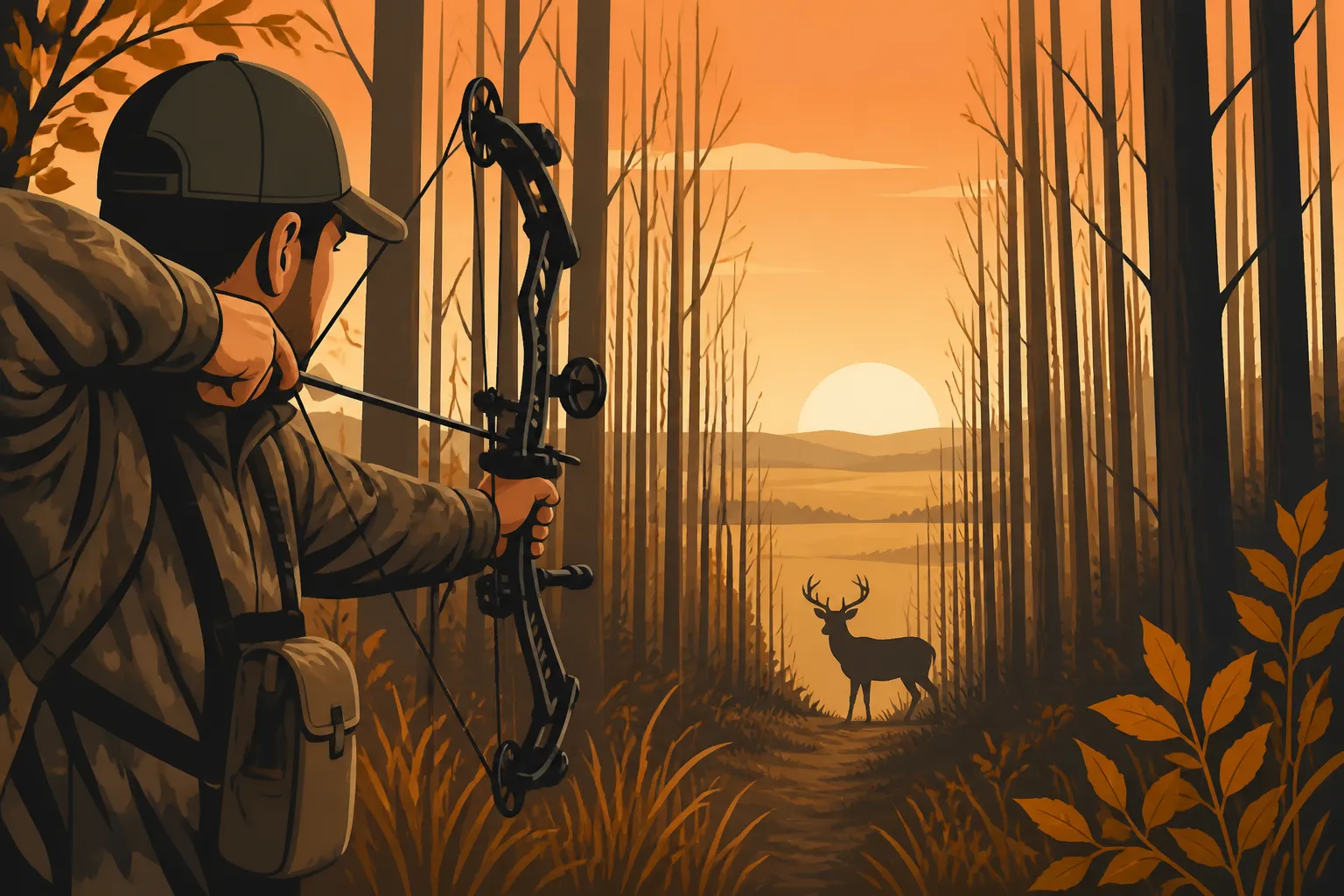
Hunting Narrow Timber Strips
Hunting narrow timber strips, whether they're river bottoms, shelterbelts, or fingers extending into crop fields, presents a unique set of frustrations for deer hunters. These linear havens often see heavy deer traffic, yet their confined nature makes successful stand placement and quiet access feel like a constant battle against swirling winds and spooked deer. It’s tough when you know the deer are using them, but you just can’t seem to get on them. This guide aims to unravel the mysteries of these tricky hunting grounds, providing actionable strategies for scouting, setting up, and effectively hunting these challenging but often highly productive areas.
Understanding the Unique Challenges of Narrow Timber
Narrow timber strips are often magnets for deer, providing cover, travel corridors, and even bedding close to food sources. However, their linear nature introduces specific difficulties that hunters must understand to succeed. Ignoring these factors can lead to endless frustration and an empty tag.
Limited Cover and Escape Routes for Deer
Unlike vast timber blocks where deer can seemingly vanish into a sea of trees, narrow strips offer limited hiding spots. Deer using these areas are often on high alert, feeling more exposed. They rely on quick exits and the linear cover to move undetected. This means they are acutely aware of disturbances and will often react much faster than deer in larger, more secure blocks of timber. You might think a long, thin strip offers protection, but from a deer's perspective, it's a double-edged sword: good for quick travel, but also a potential trap if danger approaches from multiple directions. This constant state of heightened awareness means your margin for error as a hunter is incredibly small. They often use the thickest parts of these strips for bedding during the day, making approaches even trickier.
Predictable Travel, Unpredictable Movement Speed
Deer will use these narrow timber strips, especially if they connect bedding areas to feeding grounds, or serve as safe passages between larger cover blocks. Their general travel paths might be predictable, following the line of trees. However, the speed and hesitation of their movement within these strips can be incredibly unpredictable. A buck might saunter through, browsing as he goes, or he might blow through like a ghost with purpose, especially if pressured or on his way to or from a hot doe. Understanding How Buck Movement Changes Through the Rut is critical here, as rutting bucks will often cruise these strips with increased urgency. Factors like hunting pressure, time of day, and wind direction heavily influence how a deer utilizes these confined spaces. One day they might pause at a specific rub line, the next they might blow right past it, forcing you to constantly adapt your strategy.
Wind Swirl and Thermal Currents in Confined Spaces
This is arguably the biggest headache when hunting narrow timber, particularly those along river bottoms or within draws. The confined nature of the timber, combined with topographical features like river bends or coulee walls, creates notorious wind swirls and unpredictable thermal currents. Your scent, instead of blowing cleanly in one direction, can eddy, drift, and settle in unexpected places, giving up your position to even a distant deer. Imagine standing in a tunnel – the wind doesn't just go one way, it creates all sorts of chaotic currents. This means setting up for a purely "perfect" wind can be nearly impossible. A sustained wind might give you a false sense of security, only for a subtle shift in terrain or temperature to cause a downdraft or updraft that carries your scent right into a deer's nose. Mastering how to deal with challenging winds, similar to understanding Wind Direction on a Prairie Stalk, is paramount, even in the timber.
Effective Scouting and Stand Placement Strategies
Success in narrow timber strips starts long before you ever set foot in the woods with your bow or rifle. Intelligent scouting and meticulous stand placement are absolutely non-negotiable.
E-Scouting for Key Pinch Points and Funnels
Before you lace up your boots, dive into detailed aerial imagery. Tools like GoHunt offer invaluable insights into the layout of these timber strips. Zoom in and identify natural pinch points where the timber narrows further, even if only by a few yards. Look for subtle bends in the strip, junctions with other smaller fingers of cover, or points where the timber connects to a crucial water source or a field edge. These are often high-traffic funnels. Pay close attention to any changes in elevation or terrain within the strip; even a slight rise or a shallow ditch can dictate deer movement. You're looking for areas that force deer into a tighter travel lane, or where their movement is naturally concentrated. Remember to identify potential bedding areas just off the timber strip, perhaps in an adjacent cattail slough or a dense cedar thicket, and plan your approach and exit accordingly. Reading Aerial Imagery for Cattail Cover offers similar e-scouting principles that can be applied to timber.
Boots-on-the-Ground Reconnaissance for Confirmation
E-scouting is a fantastic starting point, but nothing replaces boots on the ground. Once you've identified potential hotspots from your maps, it's time to confirm them. Walk the edges of the timber strip, carefully looking for well-worn trails, fresh rubs, and scrapes. Pay particular attention to trails that converge or funnel into the pinch points you identified from the air. Look for natural crossings – fallen logs, narrow points over a ditch, or gaps in dense undergrowth. These are high-value locations. Don't just look for any deer sign; look for consistent, fresh sign that indicates regular use. Try to distinguish between casual travel paths and the more concentrated movement patterns that suggest a primary travel corridor. Also, take note of the actual wind conditions on the ground during your scouting trips. What the weather app says might be one thing, but how the wind actually moves through that specific timber strip can be quite different.
Strategic Stand Placement for Variable Winds
This is where the rubber meets the road, especially given the challenging wind dynamics. Forget about "the perfect wind" – in narrow timber, you need options. Instead of one stand, consider having two or even three stand locations for different wind directions.
When hanging a stand, aim for the edge of the strip, looking into the timber. This allows your scent to blow out into a more open area, minimizing the chances of it swirling back into the deer's path within the timber. If you set up too far inside, your scent is trapped and more prone to swirling. Look for an ambush point that offers a clear shooting lane down a dominant trail without exposing your silhouette against the sky. A slight elevation change, a clump of cedars, or a mature oak with good branching can all provide excellent cover.
Table: Stand Placement Considerations for Narrow Timber
| Wind Direction (General) | Recommended Stand Location | Rationale | Access/Exit Strategy |
|---|---|---|---|
| Directly Parallel | On the downwind side, looking into the strip. | Scent blows away from the primary deer travel path. | Approach/exit from the back side, staying out of the timber. |
| Perpendicular | Upwind side, facing downwind into the strip. | Scent blows across the timber, potentially catching deer entering/exiting. | Careful approach along the upwind edge, using terrain for concealment. |
| Swirling/Variable | Edge of the timber, overlooking a pinch point. | Prioritize concealment and shooting lanes; accept some scent risk, rely on calls. | Very careful, slow approach well before daylight; exit during a lull in activity. |
| Thermal Dependent | Higher ground in mornings, lower in evenings. | Utilizes natural thermals (down in AM, up in PM) to carry scent away. | Strict adherence to thermal patterns, even if it means longer walks. |
Consider creating a setup where you can access the stand without blowing deer out of the timber strip itself. This might mean walking a long way around, using a ditch, or even approaching from a less obvious direction. For more specific insights, refer to Treestand Setups on Narrow River Timber, as these principles are highly applicable.
Tactics for Actively Hunting Narrow Timber Strips
Once your scouting is done and your stands are hung, it's time to put boots on the ground. However, hunting these strips effectively requires precise timing and execution.
Morning and Evening Movement Patterns
Narrow timber strips often act as transition zones. In the mornings, deer might be filtering back into secure bedding areas within or adjacent to the strip after a night of feeding. Your stand placement should anticipate this inbound movement. You want to intercept them before they reach their bedding, which means often setting up closer to the feeding source or a major crossing. Conversely, in the evenings, deer will move out of their bedding cover towards food. Your stand should be positioned to catch this outbound travel.
The key here is ultra-quiet access and exit. Approach your morning stand well before daylight, moving like a phantom. Use any available cover – ditches, fencelines, even the edge of a field – to stay out of the timber strip itself until you are right at your stand. The same goes for exiting; wait until well after dark or until deer activity has subsided. Blowing out deer while going to or from your stand is one of the quickest ways to ruin a productive spot.
Midday Cruising and Rut Activity
Many hunters make the mistake of leaving their stands too early in the morning or returning too late in the evening. In narrow timber, especially during the peak of the rut, midday can be incredibly productive. Bucks will cruise these corridors, often using them as highways to check for does without expending too much energy. This is a prime time for using calls. A few well-placed grunts or some strategic rattling can pique a buck's curiosity and pull him into range.
When deciding on rattling volume, consider the cover. In dense, narrow timber, you might not need the same aggressive rattling you'd use in open prairie. A softer, more subtle approach can be just as effective, mimicking a close-quarters tussle. Always be ready for a deer to respond quickly and appear silently. For detailed advice, Rattling and Grunting During the South Dakota Rut offers excellent strategies that can be adapted to these specific environments. If you've done your scouting right, you know these are the places where bucks are most likely to travel during daylight hours, making them ideal for all-day sits during the peak rut.
Still-Hunting and Ground Blinds
Sometimes, a treestand isn't practical, or you simply prefer a more mobile approach. Still-hunting, moving slowly and deliberately through the timber, can be highly effective in narrow strips, especially if the wind is in your favor and the cover allows for quiet movement. The key is to take a few steps, then stop and glass, scanning for any flicker of movement or a horizontal line that shouldn't be there. Use the cover to your advantage, breaking up your outline and blending into the surroundings.
Alternatively, a natural ground blind, built from fallen logs, brush, or hay bales, can provide excellent concealment. These are especially useful in areas where a treestand might be too exposed or where deer movement is too unpredictable for a fixed stand. When selecting a spot for a ground blind, look for existing cover that you can enhance. Pay attention to your backdrop – you don't want to be silhouetted. A good ground blind helps you hide your movement and break up your human form, allowing deer to pass much closer without detecting you. Remember to always face downwind if possible, or at least angle your setup to minimize scent dispersal.
Gear and Considerations for Success
Hunting narrow timber strips requires specific attention to gear and safety, maximizing your chances while minimizing risk.
Quiet Movement and Scent Control are Paramount
Given the close quarters and deer's heightened awareness in these strips, noise and scent are your biggest enemies. Every piece of clothing, every strap on your pack, every piece of gear needs to be as quiet as possible. Opt for soft, non-abrasive fabrics like wool or fleece over noisy synthetics. Ensure your bow or rifle sling doesn't creak, and that your backpack buckles silently. Your boots should offer good traction but also allow for quiet foot placement.
Scent control is not just a suggestion; it's a necessity. Shower with scent-free soap, use scent-eliminating sprays, and store your hunting clothes in airtight containers. Minimize sweat during your walk in. The wind swirling in these strips means that any scent you carry has a higher chance of being detected from multiple directions. Every little bit of effort you put into scent control will increase your odds of success. Consider layering for warmth, especially when sitting still for long periods, which also helps manage scent by trapping it closer to your body. Layering for South Dakota Wind can offer good insights into keeping comfortable and reducing movement.
Optics and Ethical Shot Placement
While shots in narrow timber might seem close, the dense cover can make target acquisition challenging. Good quality binoculars (8x or 10x) are essential for picking apart shadows, identifying deer movement, and ensuring you have a clear shot. You need to be able to positively identify your target and ensure there are no branches or twigs between you and the animal.
When the moment comes, ethical shot placement is critical. Deer can bolt instantly in these confined spaces, making follow-up shots difficult. Aim for a quick, clean kill. Practice shooting through small lanes or tight windows in your off-season. Understand your rifle's capabilities or your bow's trajectory in a variety of situations. Be prepared for a rapidly moving target. For general rifle setup, while not specific to timber, Rifle Setup for South Dakota Open Country provides a good foundation for understanding your firearm.
Safety and Regulations
Always prioritize safety in the field. When hunting from a treestand, use a safety harness from the moment your feet leave the ground until they return. Double-check your stand's security. When still-hunting or moving through thick cover, always know your target and what's beyond it. Be acutely aware of your muzzle direction, especially if hunting with others.
Beyond personal safety, it’s crucial to be familiar with South Dakota's specific hunting regulations. This includes understanding South Dakota Blaze Orange Requirements, which are mandatory for certain seasons and public land use. Always verify property boundaries, especially when hunting near the edges of these strips, to avoid trespassing. Ensure you have all necessary licenses and tags, and that they are properly filled out immediately after a harvest. Hunting responsibly means understanding and adhering to all local and state laws. Before heading out, always ensure someone knows your hunting plan, including your location and expected return time, especially if hunting alone in more remote areas.
Disclaimer
Please note: Hunting involves inherent risks, and conditions can change rapidly. Always exercise caution, adhere to all local, state, and federal hunting regulations, and prioritize safety in the field. This guide is for informational purposes only and does not substitute for proper training, experience, or professional guidance. Always verify current regulations with the South Dakota Game, Fish and Parks before any hunting activity.