Decoying Ducks on a South Dakota Prairie Pothole
Duck hunting on South Dakota's vast, open prairie can feel like an impossible puzzle when you first face it. You're looking out at countless small bodies of water, each one a potential duck haven, but knowing which one to choose and how to approach it without sending every bird packing is a real challenge. This guide is here to walk you through the nuances of decoying ducks on these iconic prairie potholes, helping you understand the birds, the habitat, and the strategies that turn frustration into fantastic hunts.
Understanding the South Dakota Prairie Pothole Environment
The heart of South Dakota's duck hunting reputation lies in its unique prairie potholes, a mosaic of wetlands left behind by retreating glaciers. These aren't your typical large lakes or wide rivers; they're small, often shallow depressions that fill with water, creating an irresistible draw for migrating waterfowl.
The Unique Landscape of Glacial Lakes Country
Imagine endless fields of corn and soybeans, punctuated by thousands of small, circular or irregularly shaped wetlands – that's the glacial lakes region of eastern South Dakota, often referred to as the "Prairie Pothole Region." This isn't flat, featureless land; it's gently rolling, with subtle changes in elevation creating natural depressions that collect rainfall and snowmelt. These potholes range dramatically in size, from tiny ephemeral puddles to larger, semi-permanent marshes covering dozens of acres.
What makes this environment so special for ducks, and therefore for hunters, is the incredible biodiversity and food source it provides. The rich, fertile soils that support agriculture also foster a bounty of aquatic invertebrates, seeds from wetland plants like smartweed and cattail, and waste grain from surrounding fields. Ducks can literally fuel their migration here, bouncing from one calorie-rich pothole to the next. The dynamic nature of these wetlands, with water levels fluctuating year to year and even month to month, creates a constantly changing buffet, making detailed scouting absolutely critical. It’s a far cry from the stable environments of larger rivers like the Missouri, where you might see vast concentrations of birds, but perhaps a more predictable daily pattern. For a deeper dive into the overall waterfowl experience here, you might enjoy reading about Waterfowl Hunting the South Dakota Prairie.
Waterfowl Behavior on Potholes
Ducks, especially dabblers like mallards, pintails, gadwalls, and various teal, are perfectly adapted to the prairie pothole lifestyle. They use these small waters for everything: resting, feeding, preening, and seeking refuge. During migration, these potholes become critical staging areas. In the early morning, ducks will often fly out to feed in crop fields, then return to the relative safety and open water of potholes to loaf and digest during the day. As evening approaches, they might hit fields again or shift to different potholes for a final feed before roosting.
Understanding this daily rhythm is paramount. Ducks on potholes are often less pressured than those on major flyways or large reservoirs, at least initially. However, they are incredibly alert, with excellent eyesight, and quickly learn to associate human presence with danger. They'll circle high, look for anything out of place, and if they detect trouble, they’ll simply move on to one of the thousands of other available potholes. You'll notice certain potholes hold birds more consistently than others, often due to better food sources, thicker cover, or simply less disturbance. Recognizing which potholes are actively being used for feeding versus those primarily for loafing can help dictate your approach and your decoy setup. Early season, when local birds are abundant, their patterns can be quite predictable. As migrating birds arrive and hunting pressure builds, their behavior becomes more wary and unpredictable, requiring more finesse and adaptability from the hunter. Learning about Duck Production on South Dakota Prairie Potholes can offer additional insights into the local bird populations.
Essential Decoy Spreads for Pothole Success
When it comes to decoying ducks on South Dakota's prairie potholes, less is often more, and realism is king. You're not trying to attract thousands of birds like on a massive lake; you're trying to convince a small flock of wary dabblers that your little slice of water is a safe, inviting spot to land.
The Power of Small, Realistic Spreads
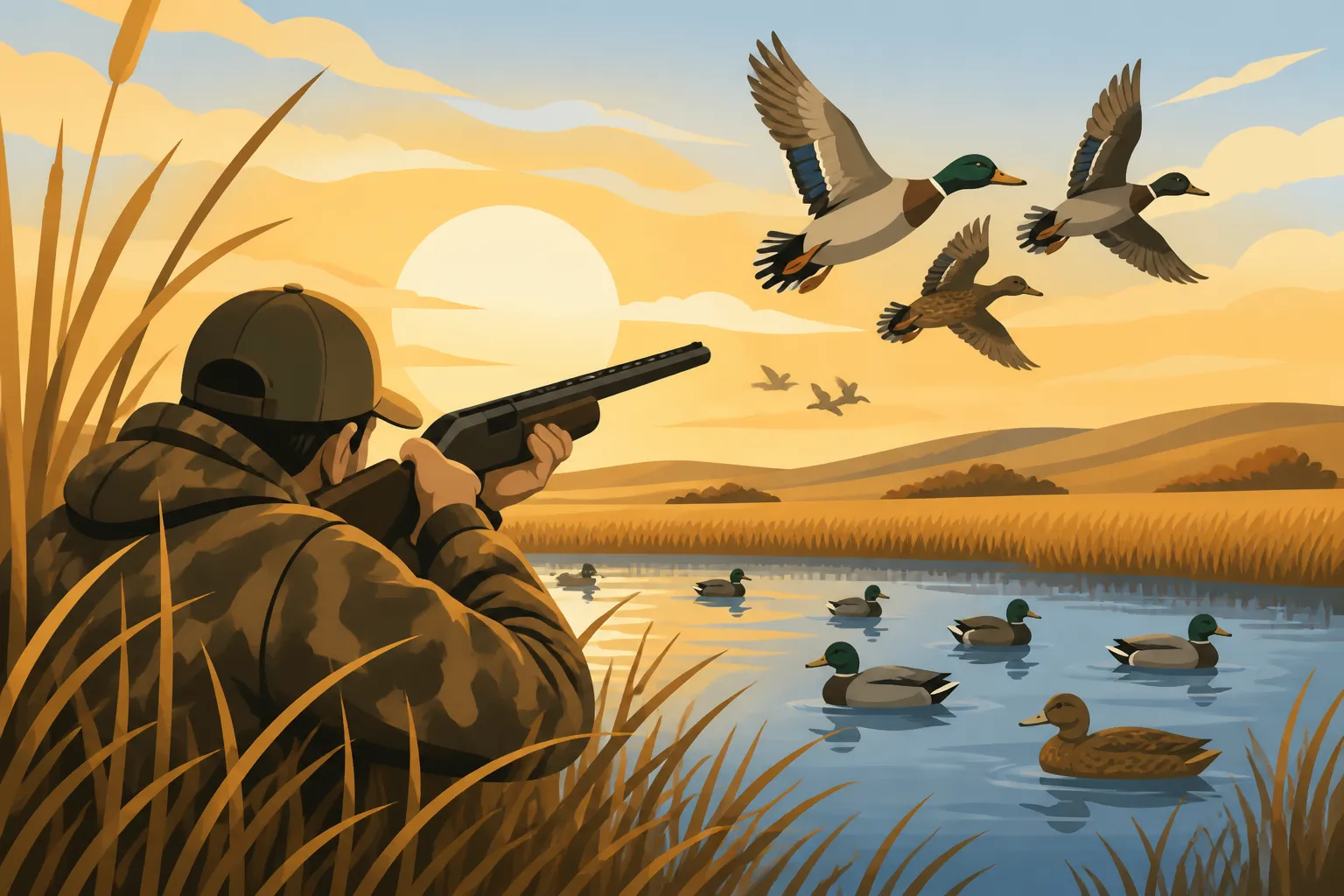
One of the biggest mistakes hunters make on potholes is bringing an arsenal of decoys designed for big water. On a 1-5 acre pothole, a spread of 100 decoys looks completely unnatural and can actually spook birds. Instead, focus on quality over quantity. A spread of a dozen to two dozen hyper-realistic decoys, mimicking the specific species you expect to see, is often far more effective. Think about it: a small flock of ducks isn't going to be spread out like a football team on a practice field. They'll be clustered, often in small groups, feeding and loafing naturally.
Your goal is to create an illusion of safety and contentment. Ducks are drawn to other ducks because it signals a safe place with food. A sparse, realistic spread suggests exactly that. It doesn't scream "hunting pressure." This approach also makes your setup and teardown much quicker and quieter, which is a huge advantage when you're moving from pothole to pothole or trying to get set up before legal shooting light. Remember, the birds have seen it all, especially by mid-season. They're looking for that subtle cue that says "this isn't a trap." This principle also applies to Decoy Spreads on a Prairie Pothole, which focuses specifically on how to set up for these smaller water bodies.
Species-Specific Decoy Choices and Placement
While many hunters default to an all-mallard spread, diversifying your decoy species can be incredibly beneficial. South Dakota potholes host a wide variety of dabbling ducks, and having a few pintail, wigeon, gadwall, or even teal decoys mixed in can add to the realism, especially if those birds are prevalent in the area. Pintails, with their distinctive long necks, often act as confidence decoys for other species. Wigeon and gadwall can be less wary than mallards, and seeing their kind in your spread might just tip the scales for an approaching flock.
Placement is crucial. Think about what real ducks do. They'll often feed in the shallows near cover, leaving a clear "landing zone" in front of your blind. A common setup involves creating a J-hook or a loose U-shape, with the open end of the J or U facing downwind, directly in front of your concealment. This funnels incoming birds right into your shooting lane. Place a few "feeder" decoys with their heads down at the shallow edges to convey a sense of calm feeding. You might put a pair of sentry decoys, heads up, at the far edges of your spread, mimicking birds on alert. If you're hunting a particular species like pintails, having a small, dedicated cluster of pintail decoys off to one side can be very effective, as they often flock together.
Motion Decoys and Natural Movement
In the often-still waters of a pothole, any movement can make your spread come alive and draw attention from a distance. Motion decoys, when used judiciously, are incredibly effective. Battery-operated spinning wing decoys, like the Mojo Outdoors Mallard, have revolutionized duck hunting, but on a pothole, one or two might be all you need. Too many, or using them when birds are directly overhead, can look unnatural. They are most effective for drawing attention from birds flying high or far off.
For more subtle, natural movement, jerk strings are fantastic. A well-placed jerk string, allowing you to create ripples and make a few decoys bob and weave, can mimic contented feeding ducks. You control the motion, so you can make it sporadic and lifelike. Even a simple rig where a few decoys are anchored to the bottom and allowed to drift and subtly turn in a light breeze can add realism. Consider placing your motion decoys on the downwind side of your spread, as ducks typically land into the wind, giving them a clear view of the "active" birds first. The key is to avoid anything that looks too mechanical or out of place, especially on calm days. A good rule of thumb is to use motion to get their attention, then let the natural look of your spread seal the deal as they get closer.
Concealment and Setup Considerations
Decoying ducks on prairie potholes means hunting in wide-open country. Unlike timber hunting or dense marsh situations, there's often minimal natural cover, making concealment your absolute top priority. You can have the best decoys and calling in the world, but if the ducks see you, the hunt is over before it begins.
Blinding Up for Close Encounters
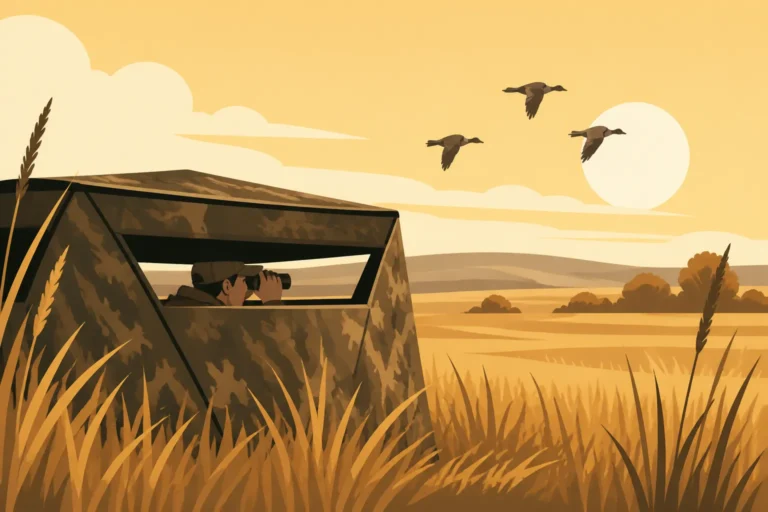
Layout blinds are the unsung heroes of pothole duck hunting. Designed to make you disappear into a field or on a low bank, they are absolutely essential here. Simply throwing on a camo jacket and hunkering down behind a clump of grass isn't going to cut it for wary South Dakota ducks. You need to become part of the landscape.
When setting up your layout blind, the goal is total concealment. First, choose a location that offers the best blend of low profile and shooting lanes into your decoy spread. Often, this means a subtle rise on the bank, a patch of slightly taller grass, or even directly in a stubble field adjacent to the water. Once your blind is in place, you must brush it in completely. This isn't just about throwing a few handfuls of grass on top. It means gathering local vegetation—stubble, cattails, weeds, anything that matches the surrounding environment—and meticulously weaving it into the blind's stubble straps and over the mesh viewing panels. From a duck's perspective high above, your blind needs to blend seamlessly. Don't leave any dark spots or unnatural shapes. Pay particular attention to the edges and the headrest area. Remember, ducks have incredible vision, and anything that screams "out of place" will send them veering off course. For more specific advice on disappearing into the field, you might find tips in Layout Blind Concealment in Stubble.
Wind, Sun, and Water Depth Dynamics
These three factors dictate almost every aspect of your pothole setup. Ignoring them is a recipe for an empty strap.
- Wind: Ducks almost always land into the wind. This is crucial for their aerodynamics and allows them to slow down gracefully. Your blind should always be set up with the wind at your back, or at least quartering to your back. This ensures that incoming ducks finish their approach directly over your decoy spread, facing you, offering the best possible shot presentation. If the wind shifts, be prepared to move your blind and adjust your spread. Failing to account for wind direction is one of the most common reasons hunters struggle to decoy birds effectively. Consider how to read the wind even on small water bodies, as discussed in Reading Wind on a Big Water Set.
- Sun: Just like deer, ducks have an advantage looking into the sun. If possible, set up with the sun at your back, putting it directly in the eyes of approaching birds. This makes it harder for them to spot your blind and gives you a clearer view of the incoming flock. Early morning hunts often mean facing east, while evening hunts might mean facing west. Sometimes, you have to choose between optimal wind and optimal sun, and generally, wind takes precedence for shot opportunities, but sun angle can be a major confidence booster for wary birds.
- Water Depth: This determines where you can place decoys and where ducks will naturally want to feed. Dabbling ducks prefer shallower water where they can tip up to feed. Place your feeder decoys in areas 6-18 inches deep. If the pothole has varying depths, identify the shallow feeding zones first. Deeper areas might hold loafing birds, but actively feeding ducks will be in the shallows. Also, ensure your blind isn't placed so close to deep water that a cripple can swim out of reach.
Access and Ethical Considerations
Getting to a prairie pothole and setting up without spooking every bird in the vicinity is a skill in itself. These areas are often surrounded by open fields, meaning your approach is highly visible. This is where careful planning, often aided by tools like GoHunt, truly pays off. Using detailed aerial maps to identify depressions, cover, and potential approach routes before you ever step foot in the field is a game-changer. You want to scout from a distance, using binoculars or a spotting scope, to confirm bird use and identify the best entry points.
Avoid driving directly to the edge of a pothole if at all possible. Park your vehicle well away, ideally out of sight over a rise or behind a tree line, and walk in, using available ditch lines, field edges, or terrain features to shield your approach. Walking slowly and quietly, especially in the pre-dawn hours, is crucial. The last thing you want is to hear a flurry of wings before you've even picked a spot.
Ethical considerations are paramount on the prairie. Always ensure you have permission if you're on private land. If you're on public ground, like a Waterfowl Production Area (WPA) or Walk-in Area (WIA), be respectful of other hunters and the resource. This means picking up all your spent shells, leaving no trace, and not "sky-busting" at ducks that are out of range, which only educates birds for everyone else. Thinking about Access Routes That Do Not Blow Out Birds can provide essential guidance here.
Calling Strategies to Complement Your Decoys
While a well-placed decoy spread is foundational, effective calling can be the magic touch that seals the deal, turning a circling flock into feet-down birds in your spread. But calling on prairie potholes isn't about blowing your guts out; it's about subtle communication and reading the birds.
Reading the Ducks and Responding Appropriately
The biggest mistake a duck hunter can make is calling too much, too loud, or at the wrong time. Think of your call as a conversation, not a monologue. The ducks are telling you what they want to hear through their body language and their own vocalizations.
- Distant Birds: When you first spot ducks high or far off, a loud, drawn-out hail call is appropriate. Its purpose is simply to get their attention and let them know there's a safe haven below. If they turn and show interest, immediately quiet down.
- Circling Birds: As ducks begin to circle, they're assessing your spread. This is where soft, realistic calling comes in. A few low greeting calls, some contented feeding chuckles, or a lonesome hen call can provide the confidence they need. Watch their wings and heads. If they're cupped up, locked on your spread, and descending, stop calling. Let the decoys do the work. Any sudden noise can spook them. If they're flying wide or appear hesitant, a soft comeback call or a series of pleading quacks might bring them back around. The key is to respond to their actions. Are they looking? Call. Are they committed? Be silent. This dynamic play is much like hunting pheasants, where understanding Why Birds Run Instead of Flush is key to success—you're trying to coax, not push.
Mastering Basic Duck Calls
You don't need to be a world champion caller to be effective on potholes, but mastering a few basic calls will go a long way. Focus on realism and variety within those basics.
- The Hail Call: This is your attention-getter. A series of loud, sharp quacks, often starting with a longer, deeper note, designed to travel across the open prairie. "QUACK-quack-quack-quack-quack!" is a good rhythm.
- The Greeting Call: Once birds are interested, this is a softer, more inviting series of quacks. "Quack-quack-quack-quack" (shorter, softer than the hail). It tells them, "Hey, come join us!"
- The Feeding Chuckle: This is arguably the most important confidence call. It's a low, raspy, contented sound that mimics ducks feeding happily. A series of short, choppy "tuk-a-tuk-a-tuk-a" sounds. This tells wary birds that everything is safe and there's food here.
- The Comeback Call: If birds are veering off or seem like they're going to pass, this is a more urgent series of quacks, slightly louder than a greeting call, trying to bring them back. "QUACK-QUACK-quack-quack!"
Beyond mallards, consider adding a pintail whistle or a wigeon whistle to your lanyard, especially if those birds are abundant. These can be excellent confidence calls for their respective species and add another layer of realism to your soundscape. Just like using your decoys, subtle variety is more effective than aggressive repetition. Many hunters find using a good quality call from brands like Rich-N-Tone or Zink to be a great investment, allowing for more realistic and versatile sounds. Practice is key, and listening to real ducks is your best teacher.
Adapting to Changing Conditions
South Dakota's duck season spans several months, and the prairie environment, as well as the ducks themselves, undergoes significant changes from the warm days of early fall to the frigid grip of late season. Successful pothole hunting demands adaptability.
Early Season Versus Late Season Tactics
The hunting experience on prairie potholes evolves dramatically through the season.
-
Early Season (September-October): In the early part of the season, South Dakota is flush with local birds and the first waves of migrants. The weather is generally mild, water levels are typically good, and natural cover like cattails and smartweed is still standing tall. Ducks are often less pressured and more responsive to calling and decoys. You might find success with smaller spreads and less aggressive calling. Teal are abundant, and often, jump shooting stock dams can be a viable tactic, as discussed in Jump Shooting South Dakota Stock Dams. However, ducks are still wary, and the abundance of water means they have many options, so scouting for actively used potholes is crucial. Consider the advice on South Dakota Duck Season Dates for planning your early hunts.
-
Late Season (November-December): As temperatures drop, water bodies begin to freeze, concentrating ducks on the remaining open water. Migratory birds are typically more educated and wary, having run the gauntlet of hunters farther north. Your tactics need to shift. Larger decoy spreads might become more effective, as ducks are seeking larger groups for safety and warmth. Motion decoys become even more important to break up frozen or still water surfaces. Aggressive calling can sometimes work on truly cold, windy days when ducks are desperate, but precision and realism are always paramount. Concealment is even more critical as natural vegetation starts to lay down. You might find yourself setting up blinds directly on ice, requiring extra care. Finding areas with natural springs or aeration systems that keep water open can be gold mines. The focus shifts from widespread availability to finding those rare pockets of open water that attract every bird in the region.
Hunting Pressure and Decoy Adjustments
Prairie ducks are incredibly intelligent and quickly learn. If a pothole has been heavily hunted, birds will become "educated" and fly wide, ignore calls, or simply avoid the area altogether. This is where adaptability and thinking outside the box really shine.
- Go Small, Go Natural: If ducks are flaring off a typical spread, try reducing your decoy numbers even further. Use only a handful of ultra-realistic decoys, maybe even just pairs. Sometimes, a tiny, unassuming spread looks less threatening than a big, obvious one.
- Change Species: If everyone else is throwing out mallard spreads, try a spread dominated by pintails or wigeon. These birds might be less wary of their own kind, or the different look might catch their eye.
- Adjust Positioning: Instead of the classic landing zone, try setting up your decoys in a more scattered, natural-looking loafing pattern. Ducks might be looking for a place to rest, not just feed.
- Move: The best way to beat pressure is to move. If a pothole isn't producing, pack up and find a new one that hasn't seen as much action. This is where detailed scouting and utilizing resources like GoHunt's mapping tools to identify remote or overlooked potholes can be invaluable. It lets you cover more ground digitally and avoid wasted trips.
Scout, Setup, and Shoot: The Pothole Hunter's Mantra
Success on South Dakota's prairie potholes boils down to a relentless dedication to these three principles:
-
Scout: This cannot be emphasized enough. You can't just pick a random blue spot on a map and expect to find ducks. You need to identify actively used potholes. Drive the back roads, use good optics, and look for ducks flying in and out, or loafing on the water. Pay attention to feeding sign in nearby fields. Resources like the South Dakota Game, Fish and Parks public hunting atlas and mapping apps like GoHunt are indispensable for e-scouting, helping you locate Waterfowl Production Areas (WPAs) and Walk-in Areas (WIAs) and assess the surrounding habitat from home. Knowing Scouting South Dakota Public Ground Before the Season is a huge advantage. Look for potholes with good food sources, thick cover nearby for loafing, and relatively undisturbed surroundings. Your scouting should ideally happen the day before your hunt, as duck patterns can change quickly.
-
Setup: Once you've identified a hot spot, execute a flawless setup. Consider all the factors: wind, sun, access route, and concealment. Brush in your blind meticulously. Place your decoys strategically, accounting for species, number, and movement. Ensure your gun is loaded and ready, and your calls are handy. The quicker and quieter your setup, the less likely you are to spook birds before the hunt even begins.
-
Shoot: This is the payoff. When ducks commit and are working into the spread, pick your bird, swing smoothly, and make a clean shot. Ethical hunting means knowing your effective range and not taking Hail Mary shots that only educate birds or lead to lost cripples. If a bird is hit, focus on retrieving it quickly. A good retrieving dog is invaluable on the prairie, as ducks can hide surprisingly well in short grass or cattails. If you don't have a dog, mark the fall carefully and be prepared for a thorough search.
The prairie pothole hunt is a uniquely rewarding experience. It's often solitary, demanding self-reliance, observation, and a deep appreciation for the landscape. By mastering the art of decoying, you'll find yourself not just hunting, but truly connecting with the wild heart of South Dakota.
Decoy Selection and Placement Summary
To help visualize your options, here's a quick reference table for decoy selection and placement on typical prairie potholes.
| Pothole Size/Type | Primary Species | Decoy Quantity (approx.) | Decoy Species Mix (Suggestion) | Motion Decoys | General Placement Strategy |
|---|---|---|---|---|---|
| Small (1-3 acres) | Teal, Mallards | 6-12 | 50% Mallard, 25% Teal, 25% Pintail | 1 spinner/jerk string | Small, tight cluster with a clear landing zone downwind. Feeder decoys near shallow edges. |
| Medium (4-10 acres) | Mallards, Pintail, Wigeon | 12-24 | 60% Mallard, 20% Pintail, 10% Wigeon, 10% Gadwall | 1-2 spinners, jerk string | Loose J-hook or U-shape, open end downwind towards blind. Small clusters within the main spread. |
| Large (>10 acres, less common) | Mallards, Divers (rare) | 24-36+ (if deeper sections) | 70% Mallard, 15% Pintail, 15% other dabblers. Add divers if deep. | 2 spinners, multiple jerk strings | Larger, more spread-out J-hook/U-shape, possibly a separate raft of confidence decoys further out. Maintain landing zone. |
| Shallow/Ephemeral | Teal, Spoonbills | 4-8 | 75% Teal, 25% Pintail/Mallard | 1 spinner (low speed) | Very tight, natural cluster. Focus on feeder positions. |
| Heavily Pressured | Any | 4-8 | Diversified, smaller quantities of less common species | Subtle jerk string only | Scattered, natural loafing pattern, avoid obvious "landing strip" gaps. |
This table provides a general guideline. Always scout your specific location and adapt based on what the ducks are telling you!
Disclaimer
Hunting involves inherent risks, including but not limited to injuries, accidents, and exposure to the elements. This guide provides general information and recommendations; however, individual hunting conditions and regulations may vary. Always prioritize safety, understand and follow all local, state, and federal hunting laws and regulations. It is the hunter's responsibility to ensure they are properly licensed, possess the necessary permits, and adhere to ethical hunting practices. The author and publisher are not responsible for any accidents, injuries, or legal infractions that may occur.