Winter Predator Hunting on Snow
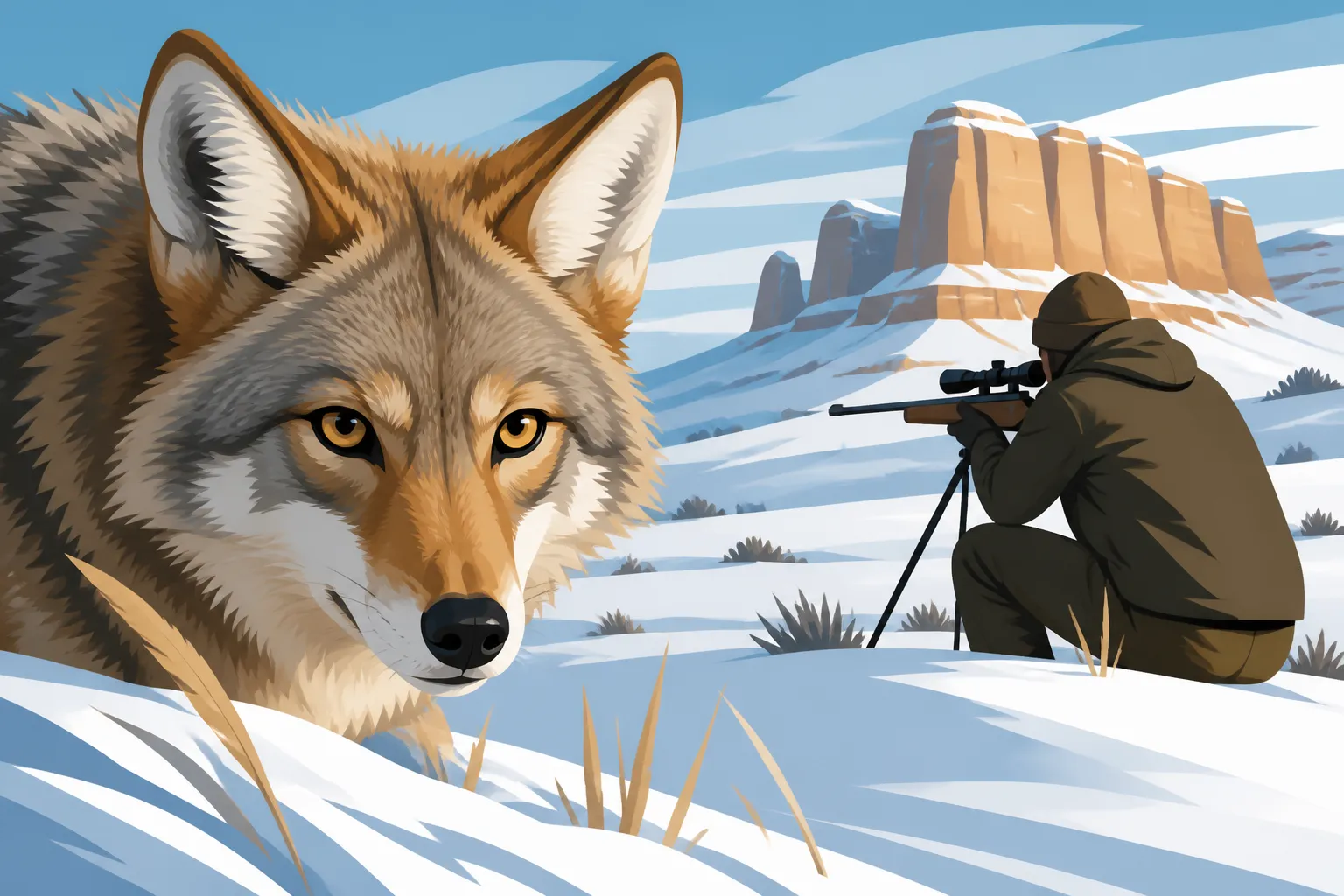
When the bitter cold of a South Dakota winter sets in, and a fresh blanket of snow covers the prairie, many hunters pack away their gear, waiting for spring. But for a dedicated few, this is when the real action begins. Winter predator hunting on snow presents unique challenges, from brutal temperatures and treacherous terrain to the wily nature of coyotes, foxes, and bobcats against a stark white backdrop. This guide will walk you through the specialized tactics, essential gear, and crucial safety measures needed to find success and stay safe while pursuing these intelligent carnivores in the harshest conditions.
Understanding Winter Predator Behavior on Snow
Hunting predators when the landscape is cloaked in snow is a completely different ballgame than chasing them in the fall. The snow itself transforms the environment, creating both obstacles and opportunities. You’re not just battling the cold; you’re also deciphering how predators react to a world painted white.
Why Predators Hunt Differently in Winter
Imagine trying to find a meal when your usual buffet is buried under two feet of snow, and every step leaves a visible trail. That's the reality for coyotes, foxes, and bobcats in a South Dakota winter. Their hunting patterns become much more opportunistic and energy-efficient. They’re less likely to wander aimlessly and more prone to sticking to established travel corridors or areas with concentrated prey. For example, a heavy snowfall might push deer into sheltered draws or thick stands of cattails, and guess who follows? The predators. They know where to find vulnerable fawns or weakened adults, or even just the easy pickings of small rodents and rabbits seeking similar cover. Their senses, particularly smell and hearing, are often heightened in the crisp, cold air, but their visual camouflage against snow can be surprisingly effective, making them tougher to spot if they're not moving.
Furthermore, food sources become scarcer, making predators more responsive to calls simulating easy meals. A hungry coyote or fox in January is often less wary than one that's well-fed in October. They're driven by the primal need for survival, and that can work in a hunter's favor. Knowing this behavioral shift is your first step to success. You're not just looking for a coyote; you're looking for a hungry, cold coyote desperately trying to make it through the winter. This urgency can make them commit to a call more readily, even if they're still approaching with extreme caution.
Key Winter Hangouts and Travel Routes
The snow, while challenging, also acts as a giant chalkboard, revealing stories of wildlife movement. Predators, especially coyotes, become creatures of habit in the winter. They'll use the path of least resistance: frozen creeks, fence lines, and the edges of large fields where snow might be shallower due to wind. You’ll find them concentrating their efforts around areas that offer both cover and potential food. This often means creek bottoms, shelterbelts, isolated tree rows, and the fringes of dense cattail sloughs – places that offer respite from the relentless South Dakota wind and concealment from prey.
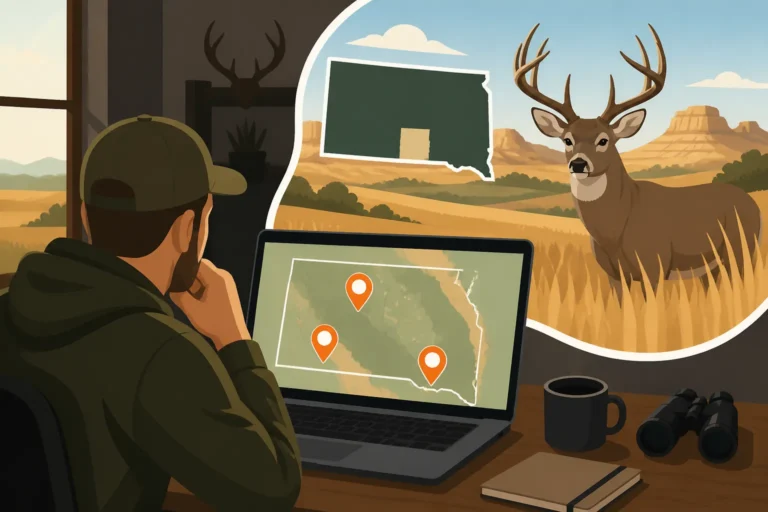
Consider a typical West River landscape: rolling hills, deep coulees, and vast expanses of grass. When snow hits, those coulees become crucial. They offer thermal cover and protection from the wind. Mule deer and whitetails will gravitate there, and so will the coyotes. Similarly, in East River country, the myriad of sloughs and wetland complexes, even when frozen, provide vital cover and habitat for small game like pheasants and rabbits, which in turn attract foxes and coyotes. Using tools like onX Hunt or even the South Dakota Game, Fish and Parks public hunting atlas to identify these features before you even step foot in the field is paramount. A good e-scouting session can reveal potential travel routes, pinch points, and cover areas that predators are likely to use, regardless of whether you're hunting private land or one of South Dakota's many Walk-In Areas. These are the places where you should focus your calling efforts and glassing. You're trying to predict their movements, not just react to them.
Essential Gear for Cold Weather Predator Hunting
Winter predator hunting in South Dakota isn’t for the faint of heart, or the unprepared. The cold isn't just uncomfortable; it can be downright dangerous. Having the right gear isn't a luxury; it's a necessity for safety and success.
Clothing Systems for Extreme Cold
Staying warm and dry is the absolute priority when you're sitting still for extended periods in freezing temperatures, often with a biting wind. Forget your fall hunting clothes; you need a dedicated winter system. This means layering, layering, layering. Start with a good moisture-wicking base layer – think merino wool or synthetic, never cotton. Next comes an insulating mid-layer, like a fleece or a puffy jacket. Your outer layer needs to be windproof and waterproof (or at least highly water-resistant) to protect against blowing snow and freezing rain. Companies like Sitka Gear or First Lite offer excellent systems designed for this kind of extreme cold, often with patterns that blend into snowy environments.
Don't forget your extremities! A good pair of insulated, waterproof boots is non-negotiable. Chemical hand warmers are your best friend, tucked into oversized mittens or a hand muff. A warm hat that covers your ears, a neck gaiter or balaclava, and even insulated pants or bibs are crucial. You'll often be walking through snow or sitting on frozen ground, so warmth from head to toe is key. Remember, you might feel warm hiking in, but once you stop and settle in for a call, the cold can seep in quickly. For more in-depth advice on keeping warm, check out our guide on Layering for South Dakota Wind.
Optics and Firearms for Snow Hunting
In the wide-open spaces of South Dakota, especially with snow on the ground, quality optics are indispensable. You need binoculars and a spotting scope that can cut through the glare of snow and pick out a coyote at long distances. Thermal optics have become a game-changer for serious predator hunters, particularly for those targeting nocturnal animals or hunting at dawn and dusk. They allow you to detect heat signatures against the cold landscape, often revealing animals that would be invisible to the naked eye or even traditional night vision. Brands like Pulsar and ATN offer a range of thermal scopes and monoculars that can significantly increase your success rate.
When it comes to firearms, precision is key. Winter conditions often mean longer shots over open terrain. A flat-shooting rifle in a caliber like .223 Rem, .204 Ruger, or .22-250 Rem is a popular choice for coyotes, offering accuracy and minimal pelt damage. For foxes, smaller calibers like .17 HMR or .22 WMR can be effective at closer ranges. Ensure your rifle is zeroed and tested in cold weather conditions, as extreme temperatures can affect bullet performance. A good bipod or shooting sticks are essential for stable shots, especially when you're bundled up or dealing with unsteady ground. Consider a durable finish on your firearm to resist moisture and corrosion, and make sure your scope is fog-proof. You don't want your sight picture ruined by condensation when a coyote is finally responding to your call.
Calling Tactics for Snow-Covered Landscapes
Calling predators in winter is an art form, and the snow adds a few extra brushstrokes to the canvas. The stillness of a snowy landscape means sounds travel further, but also that visual detection is easier.
Distress Calls and Predator Responses
When the ground is covered in snow, natural food sources are harder for predators to come by. This makes them highly attuned to the sounds of a struggling or injured animal. Rabbit distress calls are universally effective for coyotes and foxes, simulating an easy meal. Experiment with different types of rabbit calls – jackrabbit, cottontail – as predators in different areas might be more familiar with one over the other. Electronic callers like those from Foxpro or ICOtec are incredibly versatile, allowing you to cycle through a vast library of sounds, from various prey distresses to pup in distress calls, which can trigger a territorial response from adult coyotes.
Consider the volume and cadence of your calls. In still, cold air, sounds travel a long way, so starting softer and gradually increasing volume can be effective. Pause frequently to listen, scanning the landscape carefully. Predators often approach cautiously, using whatever cover the terrain offers. They might circle downwind to get a scent, so setting up with the wind in your favor is crucial. A good calling sequence might involve 30-60 seconds of distress, followed by 2-3 minutes of silence, repeating for 15-20 minutes. Be patient; sometimes it takes a while for a predator to commit. For more on this, check out our guide on Coyote Calling on Open Grassland.
Decoy Use in Snow
Adding a visual element to your calling setup can be incredibly effective, especially in a snow-covered environment where everything stands out. Motion decoys, typically a flapping bird or wiggling rabbit, can draw a predator's attention away from your hiding spot and towards the decoy. This often buys you precious seconds as they approach, fixated on what they perceive as an easy meal. The contrast of a dark decoy against the white snow makes it highly visible from a distance.
Place your decoy upwind from your calling position, approximately 50-75 yards out. This ensures that when a predator circles downwind to investigate, they will likely be distracted by the decoy as they approach, giving you a better shot opportunity. Be mindful of decoy placement relative to your backdrop; you want it visible but also want to be able to shoot past it without hitting it. Always remember to use your decoys in conjunction with your calls, creating a realistic scenario that appeals to both the predator's hearing and sight. This combination can be particularly deadly when a coyote or fox is trying to pinpoint the source of a distress sound in a wide-open, snowy field.
| Call Type | Best Season | Target Species | Typical Response | Notes |
|---|---|---|---|---|
| Rabbit Distress | All year, esp. Winter | Coyote, Fox | Investigatory, often aggressive | Most versatile, many variations |
| K-9 Howls/Barks | Fall, Winter | Coyote | Territorial, challenge | Use sparingly, can alert wary animals |
| Mouse/Vole Squeaks | All year | Fox, Coyote (close) | Curiosity, often sneaks in | Good for close-range, silent setups |
| Bird Distress | All year | Fox, Coyote | Investigatory | Good alternative to rabbit distress |
| Pup Distress | Late Winter/Spring | Coyote | Maternal/Paternal concern, aggression | Triggers strong protective instincts |
Tracking and Stalking in Snow Conditions
Snow transforms the South Dakota landscape into a tracking paradise, or a potential labyrinth, depending on your skill. Learning to read the snow tells you where animals have been, and often, where they're going.
Reading Tracks in Fresh Snow
Fresh snow is a hunter's best friend. It records every movement, turning the invisible world visible. Learning to differentiate between coyote, fox, and bobcat tracks is fundamental. Coyote tracks are generally oval, straighter, and often show claw marks. Fox tracks are smaller, more delicate, and tend to wander more, with a distinctive "zigzag" pattern. Bobcat tracks are rounder, lacking claw marks most of the time, and resemble a domestic cat's, just larger. The depth of the track can tell you how heavy the animal is, and whether it’s walking, trotting, or running.
Beyond just identifying the species, you need to "read" the story the tracks tell. Are they fresh, with crisp edges, or rounded and filled with new snow, indicating an older trail? What direction are they heading? Are they moving purposefully, or meandering? Look for signs of hunting activity, like disturbed snow where a predator has pounced on a mouse. Understanding Reading Snow for Deer and Predator Sign can give you a significant advantage. If you find tracks entering a thick piece of cover, like a plum thicket or a dense cattail slough, it's a good bet the animal might be bedded down or actively hunting inside. This is where patience and careful planning come into play.
Using Terrain for Concealment
Stalking in snow means every movement is amplified visually. Your dark silhouette against a white background screams "hunter." This makes using terrain for concealment more important than ever. Swales, drainage ditches, draws, and even small rises can provide crucial cover as you move into a calling position or stalk an animal you've spotted.
If you're trying to close the distance on a spotted predator, always try to use the terrain to break up your outline. Move slowly, deliberately, and stop frequently to glass. If the ground is totally flat and open, a low crawl might be your only option, but that's exhausting in deep snow. Instead, often the best approach is to call from a concealed position and let the predator come to you. If a stalk is necessary, pay close attention to the wind, as scent travels far in the cold, dry air. A single whiff of human scent can send a wary coyote packing for the next county. Remember, that pristine white blanket hides nothing, so your movements need to be as subtle and thoughtful as possible. Consider the advice that platforms like GoHunt provide on using topographic maps to identify such features for precise and concealed movements.
Safety Considerations for Winter Predator Hunting
Winter hunting in South Dakota is exhilarating, but the unforgiving environment demands respect and meticulous preparation. Safety should always be your top priority.
Hypothermia and Frostbite Prevention
The biggest dangers in South Dakota winter aren't necessarily the predators; they're the elements. Hypothermia and frostbite can set in rapidly, especially when you're exposed to wind chill and dampness. Prevention is key.
Firstly, dress in layers, as discussed previously, and ensure your outer layers are windproof and waterproof.
Secondly, stay hydrated and fueled. Your body burns more calories just to stay warm in the cold, so pack high-energy snacks and plenty of water (an insulated bottle will prevent it from freezing).
Thirdly, know the symptoms of hypothermia (shivering, confusion, slurred speech, loss of coordination) and frostbite (numbness, tingling, waxy skin). If you or a hunting partner experience these, seek immediate warmth and medical attention. Don't push through discomfort; it can escalate quickly. Carrying a small emergency blanket, a fire starter, and extra dry socks can be lifesavers. It's not uncommon for temperatures to drop well below zero, with wind chills making it feel even colder, so truly understand the Hypothermia Risk on Open Prairie.
Vehicle Preparedness and Navigation
South Dakota's prairie roads, even the gravel ones, can quickly become impassable with heavy snow or drifting. Getting stuck miles from pavement in sub-zero temperatures is a life-threatening situation. Always travel in a reliable 4×4 vehicle with good tires, and carry a recovery kit: shovel, tow strap, jumper cables, and traction mats. Let someone know your hunting plans, including your route and expected return time. Cell service can be spotty in many West River areas, so don't rely solely on your phone for navigation or emergencies.
Bring physical maps, a GPS device, and a fully charged power bank for your phone. A full tank of gas is also critical; you might need to run your vehicle for heat if you get stuck. Packing a large cooler with extra food, water, and emergency blankets is a smart move. Remember, a quick check of the weather forecast isn't enough; conditions can change rapidly in South Dakota. Be prepared for blizzards and extreme cold. It's always a good idea to pack a proper First Aid Kit for a Prairie Hunt, too.
Post-Harvest Care and Regulations in Winter
After a successful winter predator hunt, the work isn't over. Proper handling of your harvest and adherence to regulations are crucial.
Field Dressing and Transport in Freezing Temps
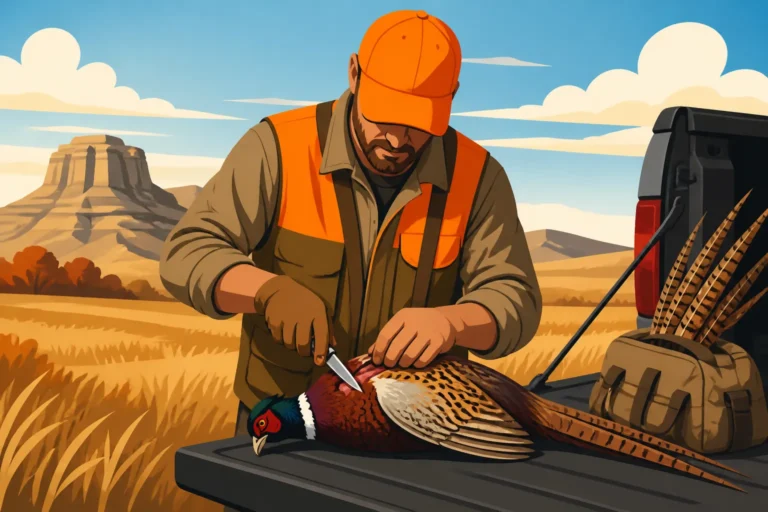
When you're dealing with freezing temperatures, field dressing a coyote or fox takes on a new urgency. Unlike deer, where cooling the meat is the primary concern, for predators, you're often focused on preserving the hide. Get the animal off the snow and out of the wind as quickly as possible. If you plan to pelt it, you need to work efficiently to prevent the hide from freezing to the carcass in a way that makes skinning difficult or damages the fur.
Once field dressed (if you choose to do so – many predator hunters do not gut coyotes if pelting them quickly), transport the animal carefully. If you're going straight to a fur buyer or taxidermist, keep the animal from freezing solid in a bent or awkward position. A large plastic tote or a dedicated game bag can help. If you're heading back to a lodge or home to skin it yourself, try to keep it from getting too dirty or caked with snow. The cold can actually work in your favor by slowing decomposition, but you still want to handle it respectfully and hygienically.
South Dakota Regulations for Predators
It’s easy to assume predator hunting has fewer rules than big game, but that’s not always the case. In South Dakota, general small game regulations apply to coyotes and foxes, but there are specific rules to be aware of. For instance, there are no closed seasons or bag limits for coyotes and foxes for residents on public or private land, but non-residents need a nonresident small game license. Bobcat hunting has specific seasons, limits, and tagging requirements, often requiring a separate license or permit, so always check the current South Dakota Game, Fish and Parks (GFP) regulations handbook.
Night hunting for coyotes is generally allowed in South Dakota with artificial lights, but always double-check the specifics, as rules can vary by county or specific public land units. For example, some walk-in areas or public lands may have restrictions on night hunting or the use of specific equipment. Never assume; always consult the latest GFP hunting handbook or website before heading out. Violations can lead to hefty fines and loss of privileges. Understanding the full scope of Night Hunting Rules for Coyotes in South Dakota is crucial for ethical and legal hunting.
Disclaimer
The information provided in this guide is for general educational purposes and is not a substitute for official regulations. Hunters are responsible for understanding and adhering to all current South Dakota Game, Fish and Parks laws, rules, and licensing requirements before engaging in any hunting activities. Seasons, regulations, and access can change, so always consult the most recent official sources.