How Fast and How Far Pronghorn Travel
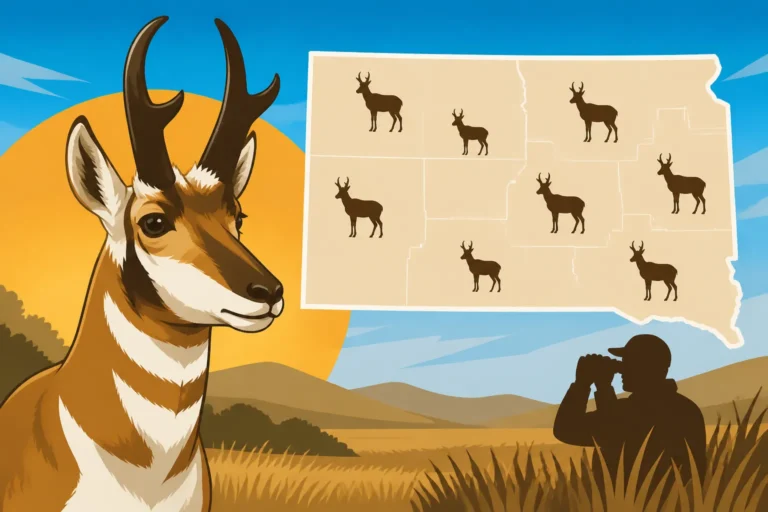
There’s a common misconception out there about pronghorn, often called antelope, and it revolves around just how fast these prairie rockets can actually run. You hear stories, you see them vanish across a wide-open field, and you start to wonder if they’re truly the fastest land animal on the continent. This guide is here to shed some light on their incredible speed and endurance, how far they typically travel in a day or a season, and what all of this means for hunters trying to outwit them on the vast South Dakota prairie.
The Pronghorn's Unrivaled Speed on the South Dakota Prairie
When you see a pronghorn buck or doe streaking across the South Dakota grasslands, it’s like watching a blur. Their ability to cover ground at blistering speeds is truly remarkable, and it's a testament to millions of years of evolution in an open, predator-rich environment. They are perfectly built for speed and endurance, a fact that becomes immediately apparent the moment you try to close the distance on a wary herd.
The Mechanics Behind Their Velocity
Pronghorn aren't just fast; they're engineered for it. Their physiology is a marvel of natural selection, designed to escape the fastest predators of North America's ancient past, like the now-extinct American cheetah. When you really dig into their build, it's clear every element contributes to their impressive velocity.
For starters, their windpipes, lungs, and hearts are disproportionately large compared to their body size. This gives them an incredible capacity for oxygen intake and blood circulation, fueling their muscles during prolonged high-speed pursuits. Imagine trying to sprint for miles—your lungs burn, your legs cramp. For a pronghorn, this enhanced respiratory and circulatory system allows them to maintain top speeds for much longer distances than almost any other animal. They possess an abundance of red blood cells, which are critical for carrying oxygen to their powerful muscles. Their muscles themselves are packed with mitochondria, the energy-producing powerhouses of cells, allowing for rapid and sustained bursts of energy.
Their skeletal structure is also optimized for speed. They have relatively lightweight bones and long, slender legs that act like powerful springs. Their hooves are designed to absorb impact and provide traction on varied prairie terrain, allowing them to turn and maneuver quickly even at full tilt. But perhaps the most defining characteristic is their unique stride. Pronghorn have an exceptionally long, elastic stride, almost like a pogo stick, allowing them to cover immense distances with each bound. They essentially "float" over the ground, minimizing contact time and maximizing forward momentum. It’s this combination of powerful musculature, efficient oxygen utilization, and specialized skeletal design that makes them so uniquely adapted to life on the run.
Dispelling the "Fastest Animal" Myth
Okay, let's address the elephant in the room, or rather, the cheetah on the savanna. Many folks, myself included sometimes, used to think pronghorn were the fastest animals on Earth. The truth is, that title still belongs to the cheetah, which can hit speeds upwards of 70-75 miles per hour over short distances. However, and this is the crucial distinction, a cheetah can only sustain that mind-bending speed for about 30 seconds before tiring out.
Pronghorn, on the other hand, might not hit 70 mph, but they can comfortably cruise at speeds of 35-40 mph for miles upon miles. They've been clocked at bursts of 55-60 mph, making them the fastest sustained runners in North America, if not the world. Think about a marathon runner versus a 100-meter sprinter. The sprinter is faster, but the marathoner has endurance that's truly astonishing. That's the pronghorn. This incredible stamina is why they're so difficult to pursue. A quick burst from a hunter isn't enough; you need to anticipate their movements, understand their travel patterns, and use the terrain to your advantage. Their incredible endurance means they can outrun almost anything that lives on the prairie, making them a formidable quarry for any hunter.
Factors Influencing Pronghorn Speed and Endurance
While pronghorn are naturally gifted runners, their performance isn't constant. Several factors can influence just how fast they run and for how long. Understanding these variables can give you a better grasp of their behavior and help you plan your hunt more effectively on the South Dakota plains.
Terrain and Environmental Conditions
The wide-open, relatively flat plains of western South Dakota are ideal for pronghorn to showcase their speed. When they have a clear line of sight and solid ground underfoot, they can really pour on the coal. However, the prairie isn't always a billiard table. Broken country with coulees, rocky outcrops, or dense sagebrush can slow them down, forcing them to navigate obstacles rather than simply run flat out. They can still move incredibly quickly through such areas, but it's not their optimal terrain for top-end speed.
Environmental conditions play a huge role too. A fresh snowfall, especially a wet, heavy one, can significantly impede their travel. Imagine trying to run a marathon in ankle-deep snow—it’s exhausting. Pronghorn face the same challenge. Muddy conditions after a rain can also make running difficult, sucking at their hooves and increasing the effort required. Conversely, dry, firm ground offers the perfect running surface. High winds, common on the South Dakota prairie, can also affect their speed, especially if they are running directly into a strong headwind. They might not slow down drastically, but it certainly requires more energy to maintain pace. When you're scouting, pay attention to the terrain and recent weather; it can give you clues about how mobile and fast the pronghorn might be on a given day.
Age, Health, and Group Dynamics
Just like humans, individual pronghorn vary in their physical capabilities. A healthy, prime-aged buck or doe will typically be faster and have more endurance than a very young fawn, an elderly animal, or one that's sick or injured. You might observe a younger animal struggling to keep up with the main herd during a fast break, or an older animal being the first to drop back when pressured.
The dynamics of the herd itself also play a critical role. When a herd of pronghorn senses danger, they often act as a collective unit. One animal might spot a threat and signal the others with its flashing white rump patch, triggering an immediate group response. In these situations, the herd tends to run together, with the fastest animals often leading the way and the others following suit. This group cohesion provides safety in numbers and allows them to maintain high speeds for longer, as the effort is shared, and they can respond to changing threats as one. However, if an individual is separated from the herd or is trying to evade a predator alone, its individual speed and endurance become paramount. A lone buck trying to make its way through a new area might be more cautious but also more likely to rely on pure speed if discovered.
A Look at Pronghorn Speed
| Speed Metric | Value | Notes |
|---|---|---|
| Top Sprint Speed | 55-60 mph (88-96 km/h) | Short bursts, typically 3-5 minutes maximum. |
| Sustained Cruising | 35-40 mph (56-64 km/h) | Can be maintained for several miles. |
| Average Daily Pace | 5-10 mph (8-16 km/h) when traveling) | Varies greatly with foraging, water, and security needs. |
| Typical Stride Length | 15-20 feet (4.5-6 meters) | Incredible ground coverage with each bound. |
| Endurance | Can run for 4-6 miles at high speed | Unmatched endurance among North American mammals, critical for survival. |
Daily and Seasonal Movements: How Far Pronghorn Really Travel
Beyond their speed, the distance pronghorn travel is equally fascinating and crucial for hunters to understand. These animals are nomads of the prairie, constantly on the move in search of sustenance, safety, and mates. Their travel patterns can range from short daily forays to extensive seasonal migrations, especially in the vast expanse of West River South Dakota.
Daily Foraging and Water Routines
On a typical day, pronghorn are focused on two main things: eating and drinking. They are selective browsers, primarily feeding on forbs, sagebrush, and various grasses. This means they are constantly moving, grazing for a while in one spot, then picking up and traveling to the next patch of appealing forage. Their daily home range can vary significantly depending on habitat quality and resource availability. In areas with abundant, diverse vegetation and accessible water, they might not need to travel as far. However, in sparser environments, they will cover more ground.
Water is a critical factor, especially in the arid regions of western South Dakota. Pronghorn need to drink regularly, often traveling several miles to reach a water source like a stock dam, a reliable spring, or even a dug-out pothole. You'll often see distinct travel lanes leading to and from these crucial water points. Understanding these daily movements, which can be identified through diligent Scouting South Dakota Public Ground Before the Season, is vital for successful hunting. Setting up on a travel corridor between a prime feeding area and a waterhole can be an extremely effective strategy. The tool GoHunt offers satellite imagery and public/private land overlays that can help you identify these critical features from your computer before you even set foot on the prairie, making your scouting efforts much more efficient.
Seasonal Migrations in South Dakota
While not as dramatic as some of the long-distance migrations of elk or caribou, many pronghorn populations in South Dakota undertake significant seasonal movements. These aren't always true migrations in the classic sense, but rather a shift in range driven primarily by winter weather and forage availability. As the brutal South Dakota winter approaches, with its deep snows and frigid temperatures, pronghorn will often move from higher elevations or more exposed areas to lower, more sheltered valleys or areas where snow cover is less severe.
For instance, herds in some parts of the Cheyenne River breaks or the more rugged terrain of southwestern South Dakota might move into more open plains or flatter agricultural fields where forage is easier to access. These movements are often an adaptation to survive the harsh conditions, helping them find exposed grasses or browse that hasn't been buried under several feet of snow. Conversely, in spring and summer, they will spread out across the landscape, utilizing the fresh growth on the open prairie. These seasonal patterns mean that the pronghorn you see in one spot during the archery season might be miles away come the late rifle season. Keeping an eye on snowfall reports and understanding general winter range movements, which you can often glean from South Dakota Game, Fish and Parks (GFP) reports, can give you an edge.
Impact of Drought and Weather Extremes
Weather extremes, especially drought, can profoundly impact how far and how frequently pronghorn travel. In dry years, water sources become scarce, forcing herds to travel greater distances between feeding areas and the few remaining reliable waterholes. This increased travel can make them more predictable in terms of funneling to specific locations but also puts more stress on the animals. It’s also during these times that Finding Water in Dry West River Country becomes an essential scouting skill, as it directly relates to where you’ll find antelope.
Severe winters, especially those with heavy, prolonged snow cover, can also force pronghorn into unusual areas as they desperately search for accessible forage. These conditions can lead to increased vulnerability to predators and can be extremely tough on the herd. We've seen how Pronghorn Winter Kill and Recovery can significantly impact populations in South Dakota, often leading to reduced tag numbers in subsequent seasons. Understanding these environmental pressures helps you not only locate animals but also appreciate the challenges they face year-round. They are tough animals, but even their incredible adaptations have limits when Mother Nature truly unleashes her fury.
The Hunter's Advantage: Understanding Pronghorn Movement for Success
Knowing how fast and how far pronghorn travel is more than just interesting trivia; it's a fundamental key to successful hunting. These insights allow you to anticipate their actions, plan your approaches, and ultimately increase your chances of getting within range of these notoriously wary animals.
Scouting and E-Scouting for Travel Corridors
The first step in using this knowledge is thorough scouting. This can be done traditionally by putting boots on the ground, glassing for hours with good optics, and looking for sign like tracks, droppings, and worn game trails. Pay close attention to how pronghorn move from feeding areas to bedding locations, and especially to and from water sources. These become their "travel corridors."
But in today's world, modern tools like the mapping features offered by GoHunt or similar applications are indispensable. E-scouting allows you to analyze satellite imagery, identify potential waterholes, distinct draws, and natural funnels that pronghorn might use to move across the landscape. You can mark these waypoints, understand property boundaries (crucial for Hunting South Dakota Walk-In Areas), and develop a mental map of where animals should be traveling. For example, if you see a large expanse of open prairie interrupted by a series of rolling draws, those draws are prime candidates for travel routes. Identifying these patterns before your hunt saves precious time in the field and helps you make a more informed decision on where to focus your efforts. These tools also allow you to study contour lines to see how animals might use subtle terrain features to stay out of sight while moving, even in what appears to be flat country.
Stalking Strategies Based on Speed and Vision
Stalking a pronghorn is arguably one of the most challenging hunts in South Dakota. Their incredible eyesight, combined with their blistering speed, makes direct approaches nearly impossible in open country. This is where understanding their movement is critical. You can't just walk straight at them. Instead, you need to use the terrain to your advantage, anticipating their direction of travel and intercepting them.
Often, this means a long, circuitous route, crawling or even belly-crawling through low vegetation or using the folds and dips in the prairie to stay out of sight. Remember their speed: if they spot you at 800 yards, they can be a mile away in minutes. So, the goal isn't necessarily to catch up to them, but to get ahead of them. A common tactic for Spot-and-Stalk Antelope Hunting in South Dakota involves finding a herd, observing their general direction of travel, and then making a wide, undetected loop to a point they are likely to pass, using draws or rises for concealment. Understanding how quickly they can cover ground helps you gauge how much of a lead you need to get, and how much time you have to complete your stalk. Even a slight elevation change or a small patch of sage can offer enough cover if you move slowly and deliberately.
Patience and Persistence: Setting Up on Travel Routes
Given their constant movement, sometimes the best strategy isn't to chase them, but to let them come to you. This is where patience truly pays off. If you’ve successfully identified key travel corridors, water sources, or feeding grounds through your scouting, you can set up a blind or position yourself strategically along these routes. This is particularly effective for Decoying Antelope Over Water or for ambushing animals as they move between different parts of their daily range.
It might mean a long sit, sometimes for hours, but the reward of a buck walking right into your setup is well worth it. This passive approach relies heavily on your understanding of where they will be and when. For instance, pronghorn often water during the cooler parts of the day, morning and evening, or at midday if temperatures are soaring. Positioning yourself near a well-used waterhole during these times can significantly increase your odds. Similarly, knowing their preferred feeding grounds means you can set up overlooking these areas, waiting for a herd to move in. Their predictable patterns of movement, despite their speed, become your greatest ally when you choose to hunt from a static position.
Conservation and Management of South Dakota's Pronghorn
South Dakota's pronghorn population is a vital part of the state's natural heritage and a prized game species. Effective conservation and management efforts are crucial to ensuring these magnificent animals continue to thrive on the prairie for generations to come. These efforts are often directly tied to understanding their movements, health, and habitat.
Population Trends and Winter Survival
The number of pronghorn across South Dakota, much like other big game species, can fluctuate significantly, with winter severity being a primary driver. We've seen cycles where mild winters allow populations to boom, only for a harsh winter with deep snow and prolonged cold to cause significant die-offs. This directly impacts South Dakota Pronghorn Population Estimate and subsequent hunting seasons, as tags are often adjusted to reflect herd health and recruitment rates. The faster and farther pronghorn can travel, the better their chances of finding forage and escaping deep snow during extreme weather events. If movement is restricted by fences or lack of open areas, their survival rates can drop dramatically.
GFP biologists continually monitor Pronghorn Numbers Across South Dakota through aerial surveys and hunter harvest reports. This data helps them make informed decisions about hunting quotas and management strategies. Understanding these trends isn't just for biologists; it helps hunters appreciate the privilege of pursuing these animals and encourages responsible hunting practices that contribute to sustainable populations. Checking GFP's annual reports or speaking with local conservation officers can provide valuable insights into current herd health and anticipated hunting opportunities.
Habitat Preservation and Migration Routes
For an animal that relies so heavily on speed and extensive travel, habitat preservation, especially the maintenance of open, contiguous landscapes, is paramount. Pronghorn are not adept at jumping fences, preferring to crawl under them. This unique behavior means that poorly placed or constructed fences can severely impede their natural movements, potentially cutting off access to crucial forage or water sources, or blocking traditional migration routes to winter range.
Conservation efforts often focus on working with landowners to install "pronghorn-friendly" fences that allow for easier passage, or on preserving large tracts of unfragmented prairie. These efforts are vital for ensuring that pronghorn can continue to exercise their remarkable ability to travel far and fast, which is essential for their survival, genetic diversity, and overall health. The more we understand how these animals move and what they need, the better we can protect their habitat and ensure healthy populations for future hunters and wildlife enthusiasts. Supporting conservation organizations and land stewardship initiatives helps directly in these efforts, ensuring the future of these iconic prairie speedsters.
Disclaimer
The information provided in this guide is for general informational purposes only and is not intended as professional hunting advice. Hunting regulations, seasons, and access rules can change frequently. Always consult the most current South Dakota Game, Fish and Parks regulations and land ownership maps before planning any hunting trip. Safety should always be your top priority in the field.