South Dakota Elk Population Numbers
Trying to pin down the exact number of elk roaming South Dakota can feel like trying to count individual blades of prairie grass after a big rain – it’s a moving target, and frankly, a bit overwhelming. Hunters often get caught up in wanting that definitive figure, but the reality is, wildlife populations are incredibly dynamic. This guide will walk you through why those exact figures are so elusive, what influences elk numbers here, and what it all means for you as a hunter hoping to chase these magnificent animals across our diverse landscape.
The Dynamic Nature of Elk Populations in South Dakota
Elk are magnificent creatures, and their presence adds an incredible dimension to South Dakota's wildlife tapestry. However, unlike some other game species, getting a precise, real-time census of the state's elk population is a monumental task. It's not like counting cattle in a feedlot; elk are masters of evasion, and their habitat is often rugged and expansive.
Why Exact Numbers Are So Elusive
First off, elk are incredibly shy and prefer dense cover, especially in the Black Hills where they call the timbered ridges home. Even in the prairie units, they often stick to the deep draws and river breaks, making direct observation difficult. Imagine trying to get an accurate count of deer in thick Missouri River bottomlands – now multiply that challenge by a much larger, more mobile animal. Their natural instincts to avoid human contact mean they aren't lining up to be counted.
Beyond their secretive nature, elk populations are constantly in flux. Births, deaths, migration patterns, and even small movements between different habitat types can shift local numbers daily. A harsh winter can take a toll, while a mild spring might lead to excellent calf recruitment. Because of these variables, wildlife managers usually work with estimates and trends, which are far more practical for long-term management than trying to capture a perfect snapshot that would be outdated almost immediately. It’s less about a precise census and more about understanding the ebb and flow of the herd's health and distribution across the state.
Understanding How Estimates Are Derived
So, if we can't get a perfect count, how do wildlife agencies, like the South Dakota Game, Fish and Parks (GFP), even know how many elk are out there? It's a combination of science and practical field observations. The primary method often involves aerial surveys, where biologists fly over known elk habitat, particularly in the Black Hills, during times of year when elk are more visible, such as after snowfalls or during specific migration periods. They're looking for groups of elk, trying to identify herd compositions (bulls, cows, calves), and mapping their general locations.
These aerial observations are then supplemented by ground surveys, reports from landowners, and perhaps most importantly for hunters, harvest data. Every elk tag filled provides crucial information about the age, sex, and health of the animals taken. When you combine all these pieces – the visual counts, hunter success rates, and biological data from harvested animals – wildlife managers can create sophisticated population models. These models aren't meant to be exact numbers, but rather robust estimates that inform management decisions, such as setting tag quotas or adjusting season structures. For instance, GFP will assess these trends to ensure sustainable hunting opportunities while maintaining a healthy herd.
Factors Influencing South Dakota Elk Numbers
Elk populations, like all wildlife, are a delicate balance influenced by a multitude of environmental and human factors. It's not just about how many calves are born; it's about whether those calves survive, whether the adults find enough to eat, and how external pressures affect their day-to-day existence.
Habitat and Environmental Impacts
One of the biggest drivers of elk numbers is, without a doubt, their habitat. In the Black Hills, the quality and quantity of forest cover, along with forage availability, are paramount. Healthy forests with a mix of dense timber for security and open meadows for grazing provide the ideal conditions. Years of drought can reduce forage quality, making it harder for cows to support calves or for bulls to grow impressive antlers. Conversely, periods of abundant rainfall can boost vegetation, leading to healthier animals and better reproduction. The massive Black Hills National Forest is critical, providing vast tracts of land for these herds to roam, feed, and find sanctuary.
On the prairie, the factors shift slightly but are no less important. Elk on the plains often rely on deep river breaks, dense cedar pockets, and vast expanses of private and public grasslands for their survival. Water sources, especially in dry West River country, become critical bottlenecks. Severe winters, with deep snow and prolonged cold, can be incredibly tough on all elk, but particularly on calves and older animals, increasing winter mortality. Understanding these environmental cycles is key to appreciating the resilience, and sometimes the fragility, of South Dakota Elk in the Black Hills and Prairie.
Disease and Predation Challenges
While habitat is crucial, disease and predation also play significant roles in shaping elk populations. In South Dakota, Chronic Wasting Disease (CWD) is a concern for deer and, though less common in elk, wildlife managers monitor for it closely. A significant outbreak of any disease can devastate a local herd, impacting fawn survival and adult mortality. Thankfully, South Dakota's elk herds have generally remained robust in this regard, but vigilance is always necessary.
Predation is another natural, yet impactful, factor. In the Black Hills, mountain lions are the primary natural predators of elk, especially calves and compromised adults. While lions are an important part of the ecosystem, a localized increase in predator numbers could exert pressure on a vulnerable elk population, particularly on smaller, isolated herds. Out on the prairie, coyotes can take a toll on newborn calves, though healthy adult elk are usually too large and formidable for most predators. Wildlife agencies monitor these dynamics to ensure that predator populations are in balance with their prey.
Hunter Harvest and Management Goals
This is where you, the hunter, come in! Regulated hunting is a critical tool for wildlife management, ensuring that elk populations remain healthy and within the carrying capacity of their habitat. Without hunting, elk numbers could grow unchecked in some areas, leading to overgrazing, habitat degradation, and increased disease transmission. The South Dakota GFP carefully sets tag quotas, often through a draw system, to manage herd size, maintain desired bull-to-cow ratios, and distribute hunting pressure.
The goal isn't just to reduce numbers, but to create a balanced, thriving herd that offers sustainable hunting opportunities year after year. For those hoping to draw an elk tag, understanding these management objectives is vital. It means that while the number of tags might fluctuate slightly each year based on population estimates and management goals, the overall intention is to foster a healthy, huntable elk population for generations. The limited nature of South Dakota Elk Draw and Units reflects this careful balancing act.
Elk Populations by Region: Black Hills vs. Prairie Herds
South Dakota is unique in that it offers two distinct types of elk hunting experiences, largely dictated by their regional populations: the established herds of the Black Hills and the more elusive groups on the open prairie. Each has its own story, challenges, and appeal.
The Iconic Black Hills Elk
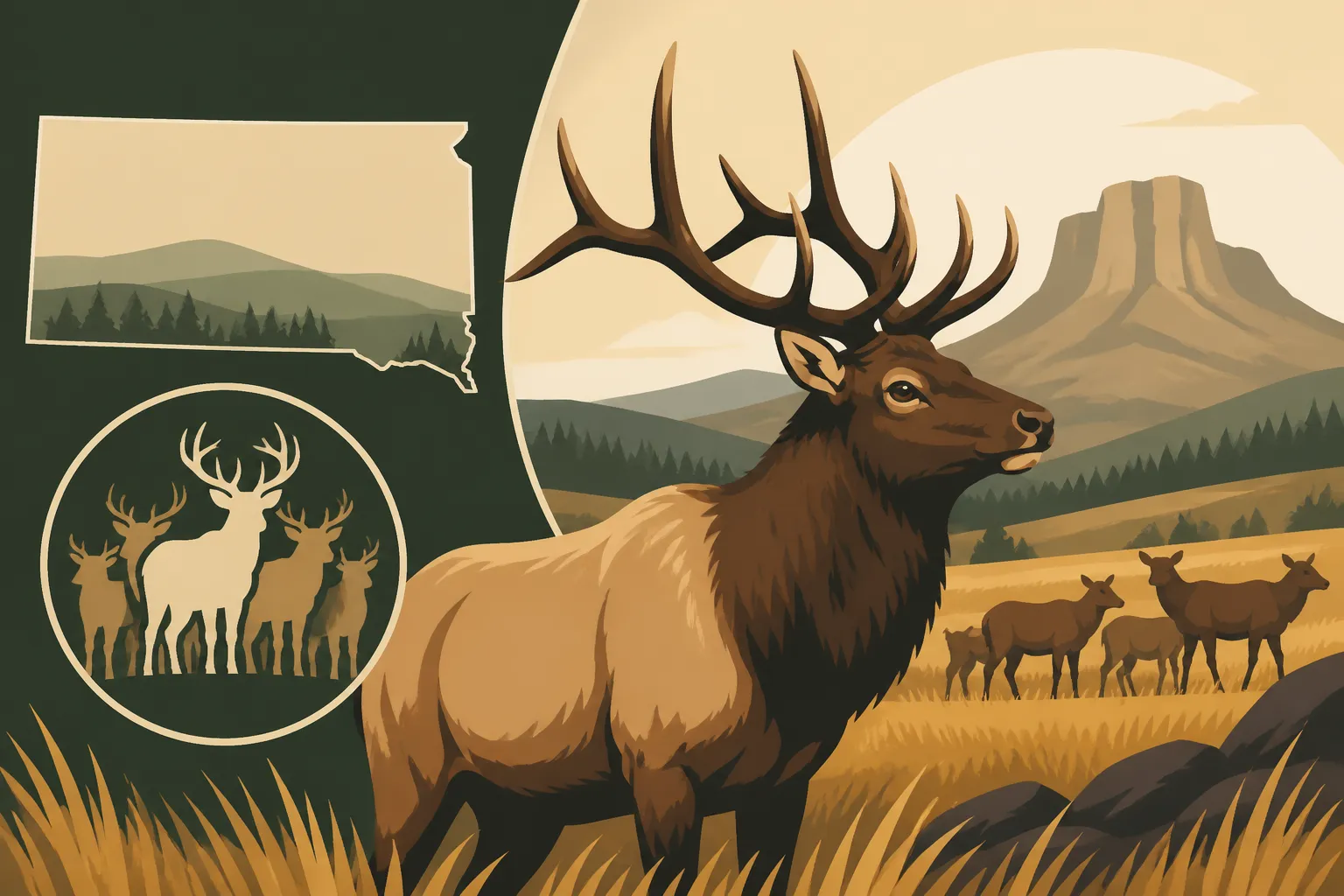
When most people think of elk in South Dakota, their minds immediately go to the majestic Black Hills. This region is, without a doubt, the stronghold for the state's elk population. These herds thrive within the mixed conifer forests, aspen groves, and open parks of the Black Hills National Forest. The terrain here is rugged, with steep draws, thick timber, and elevations that offer elk both security and a diverse food source. The historical reintroduction and subsequent growth of these herds has been a remarkable conservation success story. You can learn more about this journey in Black Hills Elk Herd History.
Custer State Park, nestled within the Black Hills, also plays a significant role. While hunting within the park itself is highly regulated and often by special draw, the park's thriving elk herd often spills out into the surrounding national forest, contributing to the broader regional population. These Black Hills elk are generally more numerous and concentrated than their prairie counterparts, making them the primary focus for most hunters seeking a South Dakota elk tag. However, the sheer density of timber and steepness of the terrain means that even with a healthy population, finding and harvesting an elk here requires dedication and specialized tactics like those discussed in Black Hills Elk Hunting Tactics.
The Resilient Prairie Elk
Away from the timbered sanctuaries of the Black Hills, South Dakota also boasts smaller, more dispersed populations of elk on the sprawling prairie. These "prairie elk" are a testament to the adaptability of the species. They often inhabit the vast river breaks and deep, cedar-lined draws of West River country, particularly along the Cheyenne and Missouri River systems. These herds are typically less numerous and can be much harder to locate due to their dispersed nature and the sheer scale of the landscape.
Hunting prairie elk is a different ballgame altogether. These animals have adapted to use every fold in the land, every remote shelterbelt, and every bit of cover to their advantage. They are often incredibly wary, as they don't have the same dense forest to disappear into. While the overall number of prairie elk is lower than in the Black Hills, these herds represent a unique hunting opportunity for those willing to embrace the challenges of open country. It’s an experience that truly embodies the spirit of hunting in the rugged West River country. For a deeper dive, check out Prairie Elk Herds in South Dakota.
What Hunters Should Understand About Elk Numbers
As a hunter, it's easy to get fixated on the "numbers" – how many elk are there, what are the draw odds, how many tags are available? But a more nuanced understanding of elk populations will serve you far better in the long run, both in your application strategy and your actual hunt planning.
Focus on Trends, Not Just Raw Counts
Instead of chasing an elusive, constantly changing raw number, smart hunters pay attention to population trends. Is the herd stable? Is it growing? Is it experiencing a downturn due to habitat loss or disease? The South Dakota GFP regularly releases reports detailing their assessments of herd health, recruitment rates (how many calves are surviving), and overall trends for each management unit. These reports, often found in the annual hunting handbook (South Dakota Hunting Handbook Release), are goldmines of information.
Understanding these trends helps you gauge the long-term outlook for elk hunting in a particular unit. For instance, if a unit's elk population has been on a gradual upward trend for several years, it might suggest increasing tag opportunities in the future. Conversely, a declining trend might mean fewer tags and tougher draw odds. These trends also inform management decisions that directly impact your hunting opportunities. For instance, resources like GoHunt can help you understand historical draw odds, which indirectly reflect herd health and tag availability, providing a valuable perspective beyond just a single year's count.
Implications for Drawing a Tag
The direct correlation between elk population numbers and your chances of drawing a tag is perhaps the most immediate concern for many hunters. Simply put, when elk populations are robust and healthy within a given unit, the GFP is generally able to issue more tags. This doesn't mean it becomes easy – South Dakota elk tags are still highly coveted, especially for non-residents. However, stronger populations typically lead to slightly better odds in the draw.
Conversely, if a population is struggling due to environmental factors, disease, or other pressures, the GFP may reduce tag quotas to help the herd recover. This means tougher draw odds. That's why closely following the annual GFP season proposals and reading the harvest and population reports is so important. It helps you make informed decisions about where and when to apply. Many resources are available, like South Dakota Big Game Draws and How to Apply, to help you navigate the system and understand how populations influence your chances. Planning ahead, and potentially building preference points, is key to increasing your odds over time.
Scouting and Adaptability
Even with the most comprehensive population data and the best draw odds, success in elk hunting ultimately comes down to your efforts in the field. South Dakota elk, whether in the Black Hills or on the prairie, require dedicated scouting and an adaptable hunting approach. Knowing there are "plenty of elk" in a unit is one thing; finding the elk you want to hunt is quite another.
Successful hunters aren't just relying on state-level population estimates; they're understanding local elk movements, feeding patterns, and bedding areas. This means countless hours with binoculars, pouring over maps, and learning the terrain. For those targeting Black Hills elk, this might involve navigating steep timbered slopes and understanding elk travel corridors. For prairie elk, it means glassing vast expanses and pinpointing where elk might seek refuge in the draws. Whether you're trying Calling Elk in Black Hills Timber or Hunting Elk on Steep Black Hills Ridges, your ability to scout thoroughly and adapt to the conditions will always be more impactful than any single population number. Even with GoHunt's data on draw odds, the real work begins when you step foot in the field.
| Feature | Black Hills Elk Herds | Prairie Elk Herds |
|---|---|---|
| Primary Habitat | Dense ponderosa pine, aspen, and oak forests; meadows | River breaks, deep draws, cedar pockets, grasslands |
| Population Density | Higher concentration, more established herds | Lower, more dispersed, and often nomadic herds |
| Terrain | Rugged, mountainous, steep slopes, thick timber | Rolling prairie, vast open spaces, abrupt breaks |
| Hunting Style | Primarily timber hunting, calling, spot-and-stalk | Extensive glassing, long-range stalking, patience |
| Visibility | Often challenging due to dense cover | Generally higher due to open country, but wary elk |
| Primary Units | Units within the Black Hills National Forest | West River units along major river systems |
Disclaimer
This article is for general informational purposes only and does not constitute professional advice. Laws, prices and regulations vary by location and change over time. Consult a qualified professional for guidance on your specific situation.