Pointing Dogs on Wild South Dakota Roosters
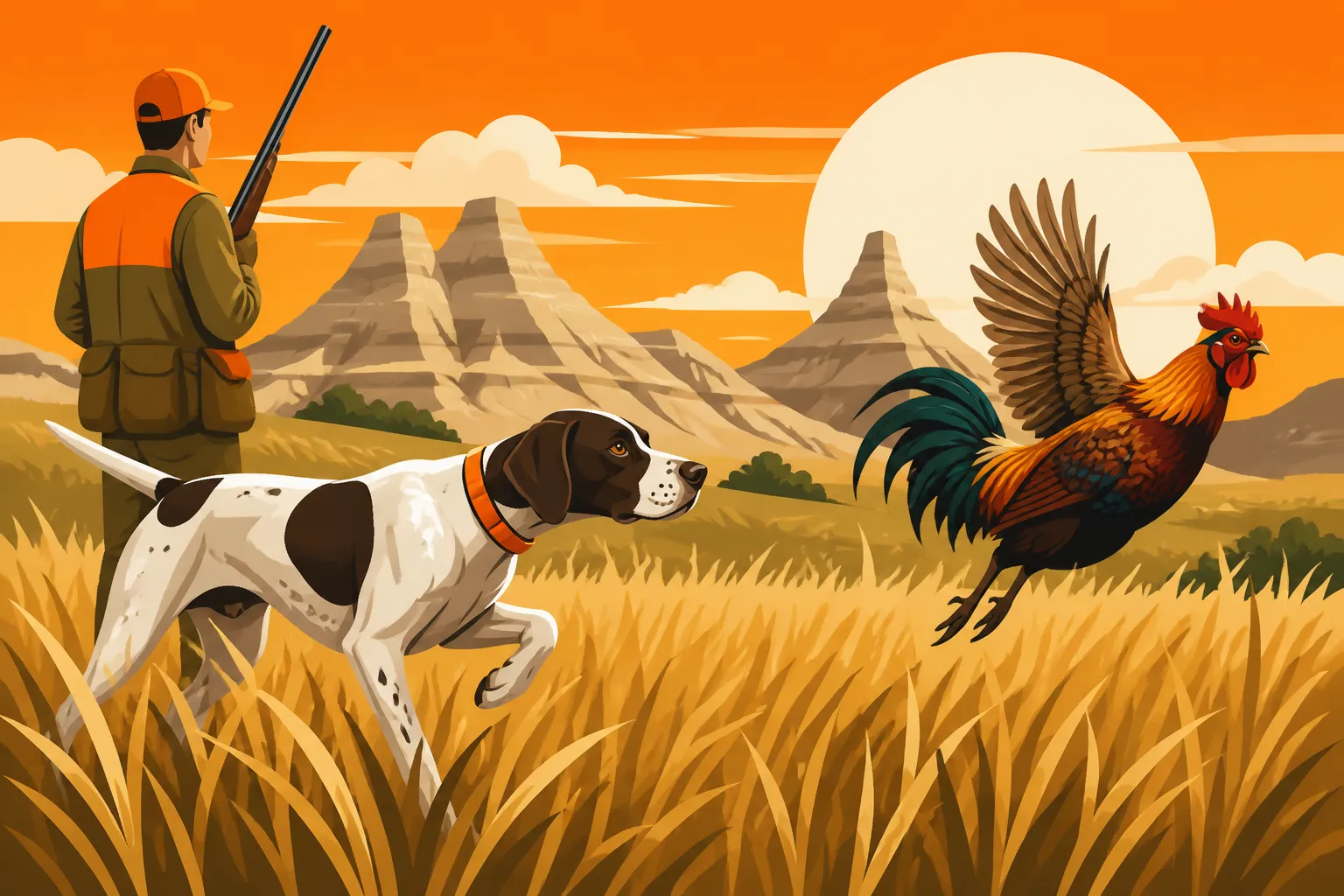
Hunting wild South Dakota pheasants with a pointing dog is an incredibly rewarding experience, but it comes with its own set of challenges. Unlike preserve birds, these wild roosters are masters of evasion, making them a true test of a dog's skill and a hunter's patience. This guide dives deep into how to effectively use your pointing dog to find, hold, and put wild South Dakota roosters in the air, giving you the knowledge to truly maximize your time afield.
Understanding Wild South Dakota Roosters and Their Behavior
Wild pheasants in South Dakota aren't your grandpa's barnyard chickens. They're cunning, athletic, and intimately familiar with their home turf. Successfully hunting them with a pointing dog starts with a deep understanding of their habits, especially when facing hunting pressure. The South Dakota Pheasant Population History shows how these birds have adapted to the landscape over time.
The Rooster's Mind: Evasion and Survival
Wild roosters, particularly those that have seen a few seasons, are experts at self-preservation. When they hear footsteps or the distant jingle of a dog collar, their first instinct isn't to hold tight. Instead, it's to run, often long distances, through the thickest cover available. This running behavior is a pointing dog's ultimate challenge. You might have a dog lock up on point, only to find an empty nest or a scent trail leading a hundred yards deeper into a cattail slough. It's frustrating, absolutely, but it's part of the game. A dog that can read subtle scent changes and adjust its point to pressure a running bird is invaluable. This is especially true on opening weekend, when the birds are jumpy and the pressure is high. Knowing how to adjust your approach based on bird movement is key to South Dakota Pheasant Hunting Tactics for the Opener.
Habitat Preferences and How They Influence Bird Holding
South Dakota's landscape offers a variety of habitats that pheasants utilize, from vast CRP grasslands to dense cattail sloughs and winding shelterbelts. The type of cover directly impacts how a rooster will react to a pointing dog. In open grasslands, birds are more likely to run, sometimes for hundreds of yards, making it tough for a dog to pin them down. Here, a wide-ranging pointer that can cover a lot of ground quickly is an asset. However, in heavy cover like walking and blocking South Dakota cattail sloughs or dense plum thickets, roosters are more likely to hold tight, especially if they feel cornered. This is where a dog with intense focus and a strong nose shines, able to penetrate the thickest stuff and lock onto a bird that's practically underfoot. Understanding these nuances can help you decide where to deploy your dog. For instance, knowing cattail sloughs as winter cover can inform your late-season strategies for hunting after a significant snow event.
The Art and Science of a Pointing Dog on Wild Birds
Using a pointing dog effectively on wild South Dakota roosters isn't just about letting them run; it's about a symbiotic relationship where dog and handler work in concert. It's a dance between instinct and training, requiring keen observation and quick decisions from both parties.
Reading Your Dog's Body Language
A good pointing dog communicates volumes without a single bark. Learning to read your dog's subtle cues—the intensity of its tail, the set of its head, the slight quiver in its body—is crucial for knowing when a bird is hot, when it's running, or when it's been bumped. A dog that suddenly shifts its body angle or takes a few hesitant steps forward after a solid point is likely indicating a running bird. This is your cue to move quickly, perhaps flanking the dog or pushing forward aggressively to cut off the escape route. Sometimes, a dog will "creep" on a bird, slowly moving forward as the bird runs ahead. This isn't a fault; it's often an intelligent response to a moving target. If you're observing a new area, using tools like GoHunt can provide satellite imagery to better understand terrain and potential bird movements, which can then inform how you interpret your dog's actions and anticipate the flush.
Adjusting to Running Birds
This is perhaps the biggest challenge with wild roosters. They run, and they run hard. A classic "picture point" where the bird holds perfectly might happen once in a blue moon. More often, you'll encounter situations where your dog locks up, only for the rooster to melt away. This is where a dog trained to "honor" (respect another dog's point) and a handler willing to hustle become critical. If your dog points, and you suspect a runner, move fast. Get ahead of the bird if possible, or push the cover from multiple angles. Sometimes, a second dog, even a flushing dog, can be used to pushing a cattail slough with blockers while the pointer focuses on pinning the bird. The interaction between pointing dogs versus flushers on wild birds is a dynamic one, each having its place depending on the cover and bird behavior, and knowing when to switch tactics can make all the difference.
Handling Pressure and Scent Conditions
Wild bird hunting exposes dogs to a myriad of scent conditions, from strong winds that dissipate scent quickly to calm, damp mornings where scent hangs heavy. A great pointing dog learns to work these conditions, adjusting its range and speed accordingly. On windy days, a dog might need to quarter into the wind more tightly to pick up scent. In damp, heavy cover, scent might be overwhelming, leading to false points if the dog isn't seasoned. Hunters often overlook the impact of weather. For instance, after a fresh snowfall, roosters might be more concentrated, and knowing hunting roosters after a blizzard can give you an edge, allowing your dog to key in on tighter pockets of scent. Proper hydration for your dog is paramount, especially on warm early season days, so always be mindful of keeping a dog cool on an early opener.
Training and Conditioning Your Pointer for South Dakota Conditions
Your pointing dog might be a champion in the park, but wild South Dakota roosters demand a different level of training and physical conditioning. This isn't just about obedience; it's about resilience and instinct refinement, honed through consistent effort.
Building Stamina and Toughness
South Dakota pheasant hunting is physically demanding, not just for you but especially for your dog. A typical day can involve miles of walking through dense cover, over uneven terrain, and in varying weather. Your dog needs to be in peak physical condition to maintain its drive and focus throughout the day. Start a conditioning regimen well before the season. This includes long walks, runs, and swimming to build muscle and endurance. Just like an athlete, your dog needs to be progressively worked up to the rigors of a full hunting day. Beyond physical fitness, your dog also needs mental toughness. Encountering multiple running birds, busting through thorny cover, or even getting dog water and burrs on the prairie can be mentally taxing. A well-conditioned dog can push through these challenges without losing its enthusiasm or its nose for the chase.
Steady to Wing and Shot
This is non-negotiable for safe and effective wild bird hunting with a pointing dog. A dog that breaks point before the flush, or chases birds after the shot, is not only dangerous but also significantly reduces your shooting opportunities. Training for steadiness must be consistent and reinforced constantly, often starting with pigeons or planted birds. The goal is for your dog to remain absolutely still on point until you release it for the retrieve. This allows you, the hunter, to get into position for the shot and ensures that other dogs in the field remain respectful of the pointing dog's work. It’s a foundational skill that pays dividends on wild, unpredictable flushes. When you're out there, remember the importance of muzzle discipline with blockers ahead if hunting with a group, ensuring everyone's safety, including your dog's safety and continued focus.
Scent Discernment and Experience
Wild roosters leave a far more complex scent picture than pen-raised birds. They run, they hide, they double back. Your dog needs extensive experience on wild birds to truly learn how to interpret these nuanced scent trails. This means getting out and exposing your dog to as many wild bird encounters as possible, even if it's just for training runs without a gun. Each exposure helps your dog develop a "nose" for wild pheasants, learning to differentiate fresh scent from old, and to track running birds more effectively. This experience also teaches them to conserve energy, walking speed that holds roosters being a balance between covering ground and not overrunning scent. Utilizing resources like GoHunt's mapping tools can help you identify areas with good habitat for these training sessions, maximizing your dog's exposure to diverse wild bird scenarios before the season even opens.
Maximizing Your Hunt with a Pointing Dog
Bringing it all together—understanding the birds, working with your dog's instincts, and ensuring proper training—is key to successful hunts. It's about strategy as much as it is about skill, ensuring every moment afield with your pointer is productive and enjoyable.
Strategic Field Work and Wind
The wind is your best friend when hunting with a pointing dog. Always try to work your dog into the wind, or at least cross-wind, allowing the dog's nose to effectively pick up scent. This means planning your field drives carefully, often requiring you to start at one end of a block of cover and work your way back, or adjusting your path through a strip. Don't be afraid to circle back or cut angles if the wind shifts or you suspect birds are running. Sometimes, even after a bird flushes, your dog might pick up residual scent from another bird, leading to a surprise secondary point. A good strategy on larger fields, especially when targeting South Dakota Pheasant Hunting Tactics for the Opener, is to have your dog quarter the field ahead of you, covering ground efficiently while staying within range of your shotgun. This strategic movement helps maximize the dog's effectiveness.
Working Different Cover Types
As discussed earlier, pheasants behave differently in various cover types. In short, sparse cover, your dog might need to range tighter, working more slowly to avoid busting birds. In thick, dense cover, you might encourage your dog to be more aggressive, pushing into the heavy stuff where roosters often hold tighter. When hunting working South Dakota shelterbelts for roosters, for instance, a dog that can dive into the thorny thickets will likely find birds that runners bypass. On vast CRP fields, a wide-ranging pointer can cover miles, making big loops to find scent, while you follow along the edges or through the middle. Adaptability is crucial. Remember, the goal isn't just for the dog to point, but to facilitate a shot, so understanding how birds might move through different covers post-point is vital for success.
Communication and Trust
The strongest asset in any pointing dog handler's toolkit is communication and trust. Your dog needs to understand your commands implicitly, whether it's "whoa," "heel," or an "over" command to change direction. More importantly, you need to trust your dog. When it locks up on point, even if you see nothing, trust that bird is there, or was there. Move in, get ready for the flush. Doubt or hesitation on your part can lead to missed opportunities or a dog that loses confidence. This trust is built through countless hours of training and shared experiences in the field. When you're truly in sync, the hunt becomes a beautiful, fluid dance between human and canine, a shared endeavor that makes every wild rooster earned all the more satisfying. And a well-organized hunt with clear communication is also essential when considering hunting pressure patterns on Walk-In Areas, ensuring everyone stays safe and effective.
| Feature / Consideration | Wild South Dakota Roosters | Pen-Raised/Preserve Birds |
|---|---|---|
| Running Tendency | High, often run long distances through dense cover before flushing. | Low to moderate, often hold tight or flush quickly, especially if recently released. |
| Scent Complexity | Highly varied and nuanced, requiring keen scent discernment and experience. | Simpler, more concentrated scent, often easier for dogs to pinpoint. |
| Holding Ability | Unpredictable; can hold tight in heavy cover or run far, depending on pressure. | Generally hold tighter, particularly in managed hunting situations. |
| Cover Preference | Utilizes diverse natural cover (CRP, sloughs, tree lines, food plots). | Found in designated release areas, often manicured or sparse cover. |
| Physical Demands | High for both dog and hunter due to rugged terrain and evasive bird behavior. | Moderate, often less strenuous walks in controlled environments. |
| Training Emphasis | Steadiness, running bird adjustments, wide range, advanced conditioning, vast field experience. | Steadiness, retrieve, closer range work often sufficient, minimal field experience needed. |
| Mental Challenge | High for dog (dealing with running birds, varied scent) and handler (reading dog/bird). | Moderate, more predictable interactions, less "problem-solving" required. |
Post-Hunt Care for Your Canine Partner
After a long day chasing wily pheasants across the South Dakota prairie, your pointing dog deserves meticulous care. Their pads can take a beating from the rough stubble and thorny cover, so inspect them thoroughly for cuts, cracks, or embedded burrs. Carry a good paw balm or wax for protection, and a field first-aid kit is essential for any minor scrapes. Dehydration is a real concern, especially during the warmer early season days, so ensure your dog has access to plenty of water throughout the hunt and immediately afterward. Electrolyte supplements can also be beneficial for recovery. Remember, a healthy, happy dog is a better hunting partner, and ignoring these details can lead to injuries or a dog that's reluctant to hit the field. This attention to detail is just as important as knowing where roosters sit at midday to plan your hunt around their resting patterns.
Disclaimer
Hunting is an inherently dangerous activity. Always prioritize safety, adhere to all local, state, and federal regulations, and practice responsible firearm handling. This guide provides general information and recommendations; individual results may vary. It is crucial to respect private property, obtain proper licensing, and stay informed about current hunting seasons and rules set by South Dakota Game, Fish and Parks.