Flushing Dogs in Heavy Cattails
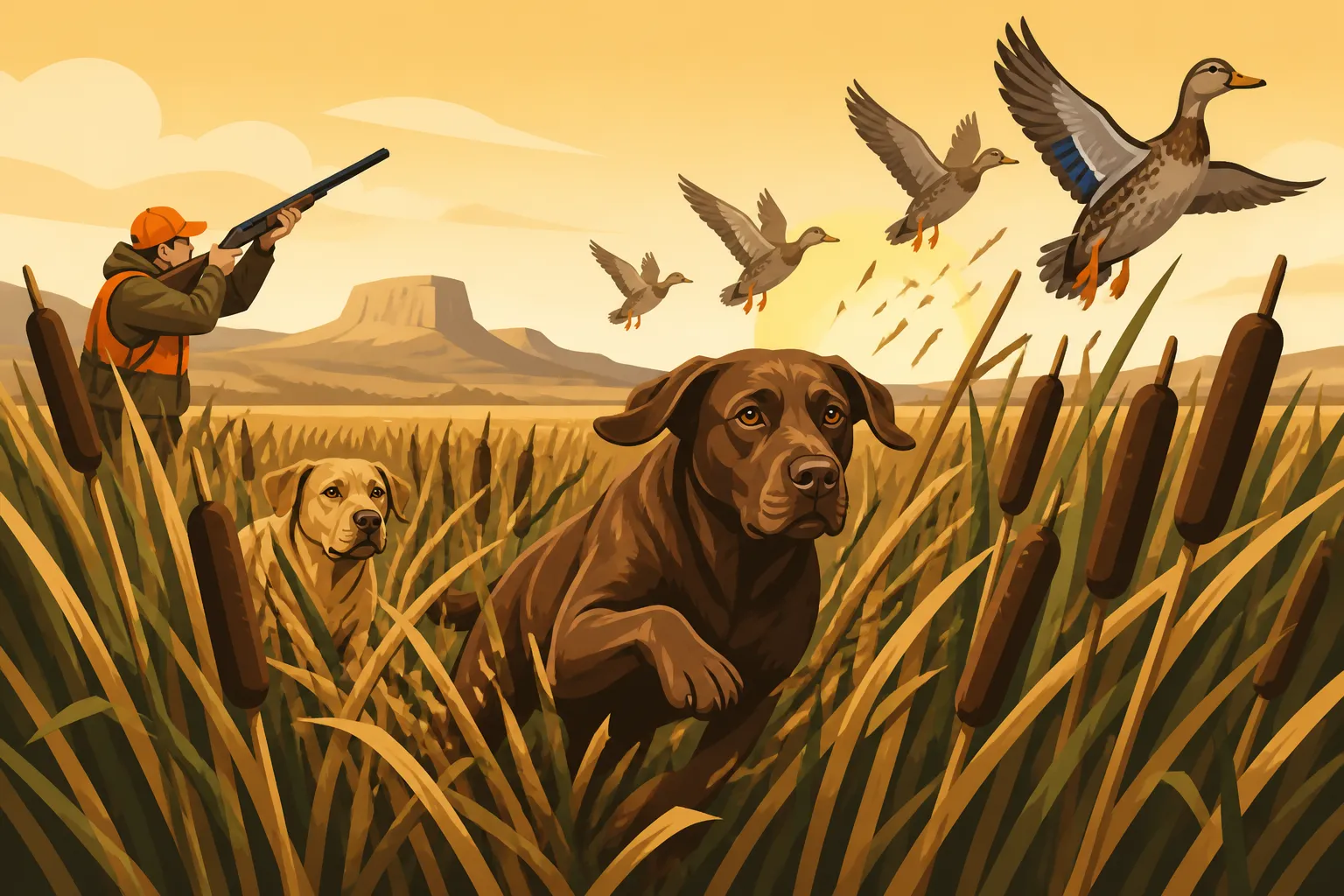
There's nothing quite like the frustration of watching a magnificent South Dakota rooster duck and weave its way through an impenetrable cattail slough, leaving you and your hunting partners scratching your heads while your dog stands there looking confused. We've all been there, and it’s enough to make you consider taking up knitting instead. But the truth is, unlocking these prime pheasant strongholds often comes down to one key element: a well-trained flushing dog that truly understands how to work heavy cattails. This guide is all about honing those skills, both yours and your canine companion's, to turn those frustrating run-arounds into triumphant flushes.
Understanding the Challenge of Heavy Cattails
Hunting pheasants in heavy cattail sloughs is a unique challenge, one that separates the truly dedicated from those who stick to easier grass fields. These dense pockets of cover aren't just obstacles; they're fortresses for pheasants, offering everything a wild bird needs to evade detection and escape hunters.
Why Pheasants Prefer Cattails
Cattail sloughs are absolutely crucial habitat for South Dakota pheasants, especially as the season progresses and the weather turns colder. Think about it from a rooster's perspective: a dense stand of cattails offers incredible thermal protection, shielding them from bitter prairie winds and heavy snow. The interlocking stalks create a labyrinthian network of tunnels and hideouts, making it incredibly difficult for predators—or hunters—to move through quickly or see what's inside. These sloughs often hold water, providing a constant source of hydration, and the edges frequently border agricultural fields, offering easy access to food. For pheasants, cattails are the ultimate safe haven, a place where they can hunker down and feel secure when other cover types might offer less protection. This is particularly true during late-season hunting in South Dakota snow, when birds are desperately seeking shelter.
The "Running Bird" Phenomenon
The biggest headache for hunters in thick cattails is the infamous "running bird." Unlike birds in lighter cover that might hold tight or flush relatively quickly, pheasants in cattails are masters of evasion on foot. They'll use those dense tunnels and hidden lanes to run far ahead of your hunting party and dog, often paralleling your line of advance. You'll hear the rustling, see the occasional flicker of color, but they simply refuse to flush within gun range. This is where hunters with pointing dogs, or those without dogs at all, often feel helpless. A pointing dog might lock up on a scent that’s long gone, or a hunter might push through, only to have the bird flush 100 yards out on the opposite side, completely out of reach. This frustrating scenario often leads to missed opportunities and birds escaping unscathed, reinforcing why birds run instead of flush.
Hunter Limitations in Dense Cover
Let's be honest, trying to push through a cattail slough as a human is a grueling workout. The thick, often muddy terrain saps your energy, and the stalks can be taller than your head, creating a claustrophobic environment where visibility is minimal. This lack of visibility isn't just an inconvenience; it's a significant safety concern. You can't see your hunting partners, you can't see your dog, and you certainly can't see a flushing bird until it's practically under your feet, often flying in an unpredictable direction. This makes safe shooting lanes nearly impossible to maintain. Furthermore, the sheer physical exertion means hunters often move too slowly, allowing the pheasants even more time to run and slip away. It's an environment that truly calls for a specialized approach, one that leverages the natural instincts of a well-trained flushing dog.
Training Your Flusher for Cattail Domination
Having a dog that wants to hunt is one thing, but having one that can effectively navigate and clear heavy cattails is another entirely. This requires specific training, patience, and a deep understanding of your dog's capabilities.
Developing Drive and Stamina
Hunting heavy cattails isn't just mentally taxing for a dog; it's a serious physical grind. Picture pushing through mud, over frozen humps, and through dense vegetation for hours on end – it requires incredible drive and stamina. Therefore, conditioning your dog is paramount. Start well before the season by taking them on long walks and runs, gradually increasing the intensity and duration. Introduce them to varied terrain, including water and brush, to build muscle and resilience. Breeds like Labrador Retrievers, English Springer Spaniels, and Golden Retrievers are naturally inclined to this type of work due to their robust build and inherent retrieving drive, but even within these breeds, individual conditioning varies. A dog with excellent drive will not give up easily when a rooster seems to vanish, continuing to push and search. Using tools like GoHunt's mapping features can even help you identify potential training grounds that mimic the type of cover you'll encounter during the season, allowing for more realistic preparation.
Controlled Flushing and Steadiness
The whole point of a flushing dog in heavy cover is to get the bird airborne within effective gun range, not to blast it out 50 yards away where you can't even get a shot off. This means teaching your dog controlled flushing and steadiness. "Controlled flushing" refers to the dog working close enough to the hunter (usually within 10-20 yards) to ensure any flushed bird presents a reasonable shot opportunity. This is achieved through consistent whistle commands and verbal cues that keep the dog quartering in front of you. "Steadiness" means the dog stops or sits on the flush, waiting for your command before retrieving. This prevents wild chases, allows you to focus on the shot, and ensures safety, especially when multiple hunters are present. Practicing these commands in progressively thicker cover, simulating real hunting conditions, is vital. You want a dog that hits the cover hard but knows its boundaries and listens when a bird goes up.
Mastering the Retrieve in Challenging Terrain
Even with a perfect flush and shot, a crippled bird in a dense cattail slough can be incredibly hard to find. This is where your dog's retrieving skills truly shine, and why they must be honed for challenging terrain. Your dog needs to develop an exceptional "nose" and persistence for tracking scent through water, mud, and tangled vegetation. Introduce retrieving drills in similar cover, hiding dummies or dead birds in challenging spots. Emphasize a strong blind retrieve – the ability for your dog to go to a location you direct, even if they didn't see the fall. This is crucial for those times when a bird falls out of sight, deep in the slough. Think about those situations when a bird dives under the water's edge or gets caught in a snag; your dog needs to be relentless and accurate in bringing it back. We’ve all seen a good dog disappear into the thick stuff only to reappear moments later with a bird firmly in its mouth – that's the result of dedicated training and a strong bond of trust.
Tactical Approaches for Hunting Cattails with Flushers
Successfully hunting heavy cattails with a flushing dog isn't just about the dog; it's about the entire hunting party adopting smart, coordinated tactics. It's a team sport, and everyone has a role to play.
Working the Edges and Pockets
While the heart of a cattail slough holds birds, pheasants often stage or attempt to escape along the edges and in smaller, isolated pockets of cover nearby. A smart strategy often involves working these areas first. Send your flushing dog along the edges of the slough, especially where it meets a grass field, a tree line, or a food plot. Birds pushed out of the main slough might try to slip into these transitional zones. These smaller pockets are also excellent places for solo hunters or smaller groups to target, as they can be easier to manage than a sprawling slough. It's about being strategic and understanding how pheasants use the entire landscape. By first focusing on these accessible areas, you can often pick up birds that haven't burrowed deep into the thickest cover yet, setting the stage for a more focused attack on the main slough. Sometimes, even just the act of walking in before legal shooting time can disturb these edge-dwelling birds enough to make them more susceptible to flushing later.
Coordinated Drives with Multiple Hunters and Dogs
For larger cattail sloughs, a coordinated drive is almost always the most effective tactic, particularly when employing multiple flushing dogs. This is where communication and planning become critical. Typically, you'll want "walkers" or "drivers" with dogs pushing through the thick cover, and "blockers" positioned downwind and at the far end of the slough. The drivers should maintain a steady, consistent pace, allowing the dogs to work thoroughly but not so fast that birds can sneak out the sides. The dogs should quarter ahead, covering the ground meticulously. The blockers' job is to cut off escape routes and be ready for birds that flush far downfield. This requires clear communication – often with whistles or hand signals – to maintain a straight line and ensure safety. For a deeper dive into this, you might find the guide on Pushing a Cattail Slough With Blockers incredibly helpful. Using mapping apps like GoHunt can be invaluable here, allowing you to plot your drive, mark blocker positions, and keep track of everyone's location in real-time, greatly enhancing safety and effectiveness. This level of coordination can turn a daunting task into a highly productive hunt.
Water Entry and Exit Points
Many prime cattail sloughs hold standing water, either seasonally or year-round. This adds another layer of complexity. Your flushing dog needs to be comfortable and proficient in working both on land and in water. Pay attention to how the slough's water level changes throughout the season; early season might mean drier conditions, while late season could bring ice. Identify natural entry and exit points for your dog, such as shallow banks or firmer ground. When working through water, ensure your dog isn't spending too much time swimming in cold temperatures, especially if it's nearing freezing. You might need to adjust your line to keep your dog in shallower sections more often. Remember, a dog that gets too cold or exhausted in the water will be less effective and at greater risk. Understanding the terrain, including its watery elements, is key to successful Walking and Blocking South Dakota Cattail Sloughs.
Gear and Safety Considerations for Cattail Hunting
Hunting heavy cattails isn't just tough on dogs; it's tough on hunters and gear too. Being properly equipped and prioritizing safety are non-negotiable aspects of a successful and enjoyable hunt.
Essential Dog Gear
For a flushing dog working heavy cattails, certain gear isn't just nice-to-have; it's essential for their safety and performance. A durable, waterproof GPS collar, like those offered by Garmin Alpha or SportDOG Tek series, is absolutely critical. In dense cover, your dog can disappear from sight in seconds, and a GPS collar allows you to track their precise location, preventing lost dogs and ensuring you know where they are relative to the gun line. Many also offer training capabilities, allowing for subtle corrections even when out of sight. Protective vests, often made of cordura or similar tough materials, can guard against cuts from sharp cattail stalks, thorns, and burrs. Some vests even offer buoyancy, which is useful in watery sloughs. Lastly, consider a bell or beeper collar, not only to locate your dog but also to give birds a heads-up, potentially making them hold a bit tighter before the flush. For the hunters, investing in quality, waterproof boots is paramount. Boots for Walking Cattails All Day are a must-have to keep your feet dry and comfortable in the often-muddy and wet conditions of these environments.
Protecting Your Dog from the Elements and Hazards
The extreme environment of a South Dakota cattail slough presents numerous hazards to your dog. During the early pheasant opener, especially if temperatures are still warm, overheating is a serious risk for a hard-working dog. Always carry plenty of water and offer it frequently. Knowing the signs of heat exhaustion and how to cool your dog down is vital. On the flip side, during colder late-season hunts, hypothermia is a concern, especially if your dog is frequently in and out of cold water. Consider a neoprene vest for insulation. Beyond temperature, the physical landscape itself is a threat. Burrs, thorns, and sharp broken cattail stalks can cause painful cuts, especially to paws and bellies. Carry a small first-aid kit for your dog, including antiseptic wipes, paw balm, and tweezers for burr removal. Regularly check your dog for injuries and burrs, particularly around the eyes, ears, and between paw pads. The article on Dog Water and Burrs on the Prairie offers excellent specific advice for these common issues. Just like we need to protect ourselves, our dogs deserve our utmost care in these tough conditions.
Hunter Safety in Dense Cover
Hunting with flushing dogs in heavy cattails demands an elevated level of hunter safety and awareness. Because visibility is so limited, clear communication among hunting partners is absolutely non-negotiable. Establish clear shooting lanes before entering the cover, agreeing on arc-of-fire responsibilities. Always know where your hunting partners are located, either by visual contact, verbal calls, or through GPS tracking apps like GoHunt that allow you to see each other's positions. Maintain adequate spacing to avoid accidental injury from stray shot or a partner's gun swing. Always wear plenty of blaze orange – more than the minimum required – to maximize your visibility to others. Keep your gun's safety on until a bird is clearly flushed and a safe shot can be taken. Remember, no bird is worth risking the safety of yourself, your dog, or your hunting companions. Safe gun handling on a bird drive in such thick cover is paramount.
Disclaimer
The information provided in this guide is for general informational purposes only and does not constitute professional advice. Hunting regulations and conditions can change rapidly. Always consult the latest South Dakota Game, Fish and Parks regulations and local authorities before engaging in any hunting activities. Safety should always be your top priority.