How Close You Can Stalk a Pronghorn
Alright, let's be real for a moment. Chasing pronghorn across the wide-open expanse of South Dakota's prairie can feel like trying to sneak up on a security camera with an extra-wide lens. These incredible animals have eyesight that would make a hawk blush, often spotting you from what feels like a different zip code. It's a humbling experience, to say the least, and it’s why so many hunters struggle to get within ethical shooting range. This guide is all about breaking down the art and science of the pronghorn stalk, helping you understand just how close you can get and, more importantly, how to do it.
Understanding the Pronghorn's Unrivaled Senses
Before you can even begin to think about getting close to a pronghorn, you have to appreciate just what you're up against. These aren't whitetails hiding in dense timber; these are creatures purpose-built for survival on the vast, treeless plains. Their primary defense isn't camouflage or hiding in thick cover—it's their ability to see danger from miles away and then sprint away at incredible speeds.
Vision and Open Country Adaptations
Let's start with their eyes, because truly, this is where the legend of the pronghorn begins. A pronghorn's eyes are huge relative to its head size, positioned high and to the sides, giving them an almost 300-degree field of vision. This means they can see nearly all around them without even moving their heads, making it incredibly difficult to approach them unseen. Their visual acuity is often compared to an 8x binocular for humans, meaning they can detect movement from distances that would require powerful optics for us to even register an animal.
Imagine standing on a vast, flat South Dakota prairie. You might see a speck on the horizon and dismiss it as a rock, but a pronghorn can discern that it's you and judge your intent, often long before you've even raised your binoculars. They are particularly adept at picking up unnatural shapes and sudden movements. A slight shift in your profile, the flash of a rifle scope in the sun, or a quick, uncalculated step can send them scattering, sometimes covering hundreds of yards in mere seconds. This incredible vision is their early warning system, and it dictates every aspect of a successful stalk.
Speed and an Expansive Flight Zone
Once spotted, a pronghorn isn't going to stand around and wait for you to make up your mind. They are the fastest land animals in North America, capable of hitting speeds over 50 miles per hour, and can sustain high speeds over long distances. This combination of exceptional vision and blazing speed means their "flight zone"—the distance at which they will flee from perceived danger—is significantly larger than that of almost any other big game animal.
For a whitetail in a river bottom, that flight zone might be 100 yards; for a pronghorn, it could easily be 500, 800, or even 1,000 yards, depending on how much pressure they've experienced. If they see something they don't like, they'll simply disappear over the horizon. This means your initial goal isn't necessarily to get into shooting range, but to first get within their flight zone without alerting them, then to carefully chip away at that distance. It’s a game of inches played over hundreds of yards, where every little advantage counts.
Hearing and Scent Considerations
While their vision is undoubtedly their superpower, it doesn't mean you can ignore their other senses entirely. Pronghorn have decent hearing, especially for sharp, unnatural sounds like a metallic clang or a loud cough. They might not pinpoint you like a deer would solely by sound, but an unexpected noise can certainly draw their visual attention directly to your position, negating all your careful efforts.
Scent, though often secondary to vision for pronghorn, still plays a role, particularly if you manage to get uncomfortably close. If you're downwind and within, say, 100-150 yards, a sudden shift in wind or an updraft could carry your scent to them. While they might not bolt purely from scent as quickly as a whitetail, it can certainly put them on high alert, causing them to stare intensely in your direction, making further movement impossible. Always consider the wind, even if you’re primarily focusing on staying out of sight.
Mastering the Art of the Prairie Stalk
Given their extraordinary senses, stalking a pronghorn demands a level of patience, strategic thinking, and physical discipline that few other hunts require. It’s a true chess match against an opponent with a significant home-field advantage. The key is to leverage the subtle contours of the landscape and move with extreme care.
Using Terrain to Your Advantage
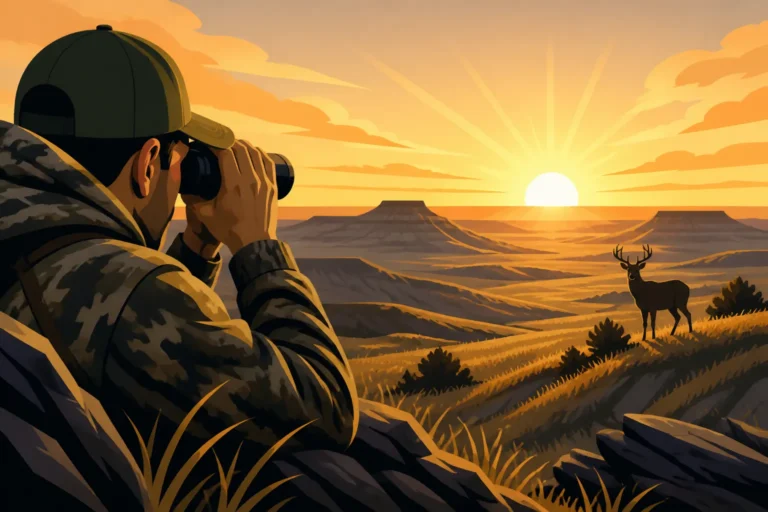
The vastness of the South Dakota prairie can be intimidating, but it's rarely perfectly flat. This is where your ability to read the terrain becomes absolutely paramount. Every subtle rise, every dry creek bed, every drainage, and even larger features like the coulees in West River country or the edges of a sprawling CRP field, becomes a potential avenue for approach. Your first step should always be to get high and glass, looking for hidden approaches. Tools like the GoHunt app, with its detailed topographic maps and satellite imagery, are invaluable here, allowing you to e-scout potential routes from a distance.
Once you’ve identified a target buck or herd, your next move is to find the lowest possible route that keeps you out of their line of sight. This might mean making a massive detour, walking far wider and longer than you initially planned. Often, you'll be using very shallow draws or the backsides of small rolling hills that, from a distance, look completely flat. These seemingly insignificant features can offer just enough cover to break up your silhouette. Remember, it’s not about finding a huge mountain to hide behind; it’s about finding a consistent, low profile. Sometimes, the only cover available might be a stand of taller sagebrush or the edge of a cultivated field, offering a precious few feet of concealment. This is a skill that improves dramatically with practice, learning to see the prairie as a series of hiding places rather than an endless expanse.
The Crawl and the Creep
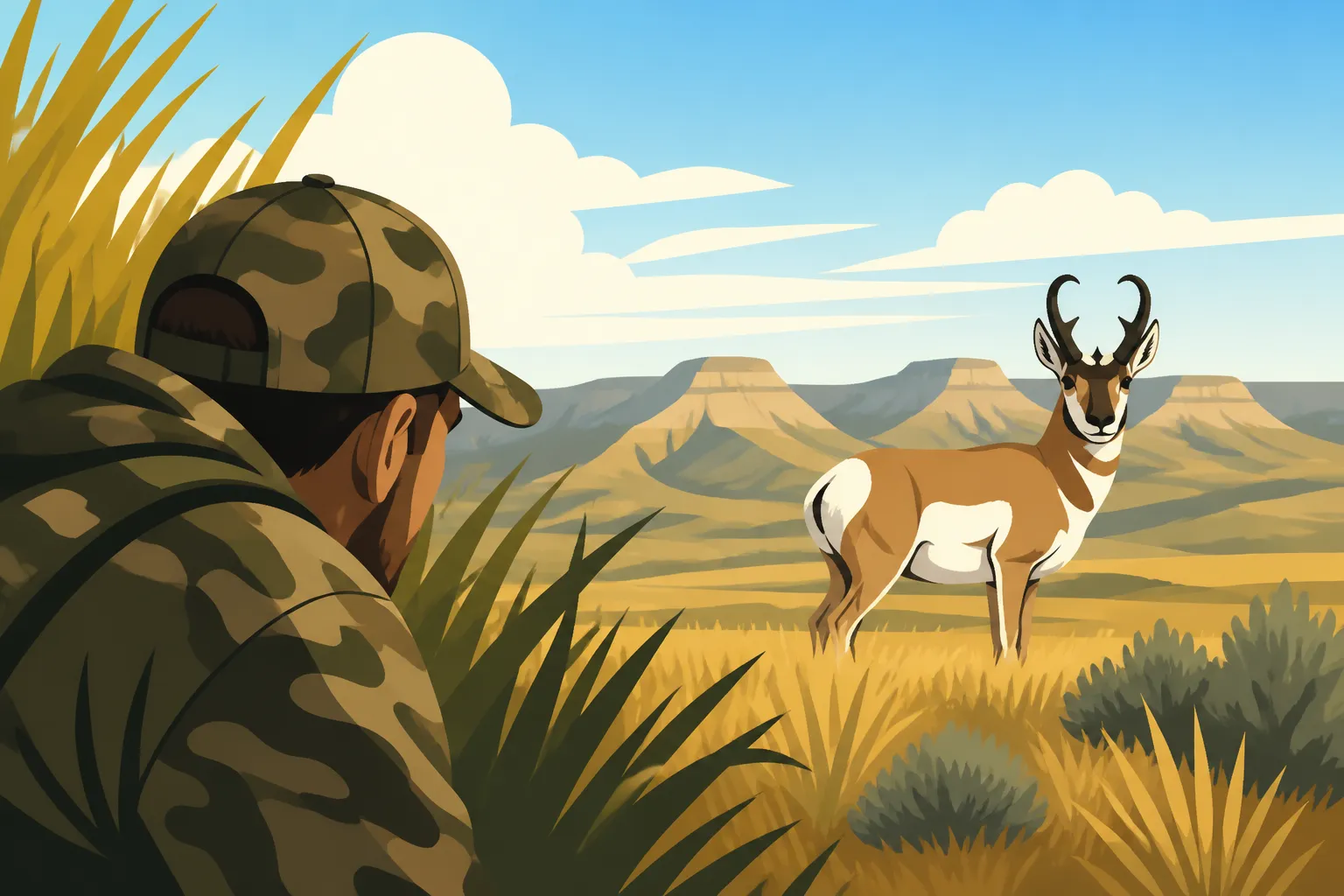
Once you've utilized all available major terrain features, the final approach often devolves into an exercise in pure willpower and physical endurance. This is where the "crawl and the creep" come into play. When you're within a few hundred yards and there's no more vertical cover, you're going to be getting very, very low. This means crawling on your hands and knees, sometimes for hundreds of yards, keeping your profile as small as possible. Knee pads are not a luxury here; they are a necessity, especially on the abrasive prairie ground.
Movement must be excruciatingly slow and deliberate. Think in terms of inches, not feet. Each movement should be fluid, without sudden jerks. Pause frequently, watching the pronghorn's reactions. If they pick their heads up and stare, freeze completely. Often, if you remain motionless, they will eventually return to grazing or bedding down, giving you another window to advance. When you absolutely must expose a part of your body to move, do so in slow motion. The goal is to blend into the landscape, mimicking a natural, non-threatening element rather than a bipedal predator. This slow, methodical approach is often the only way to cover those last, critical distances on the open plains.
Wind Direction and Sun Position
While pronghorn are largely visually oriented, ignoring the wind is a rookie mistake. As you close the distance, even a slight shift can carry your scent or sounds to the herd. Always try to approach with the wind in your face or quartering. This helps mask any subtle noises you might make and ensures your scent isn't blowing directly to them. This consideration is just as important when you're Reading Wind at Four Hundred Yards for a long shot or positioning for a closer stalk.
The sun's position is also a major factor. Approaching with the sun directly behind you can cast a long, obvious shadow, or worse, create a glare off your optics that can instantly betray your presence. Conversely, if you can keep the sun low in their eyes, it can slightly hinder their ability to spot you, giving you a precious advantage. Planning your stalk to take advantage of the sun's angle can sometimes make the difference between a successful approach and a busted hunt.
Essential Gear for a Successful Stalk
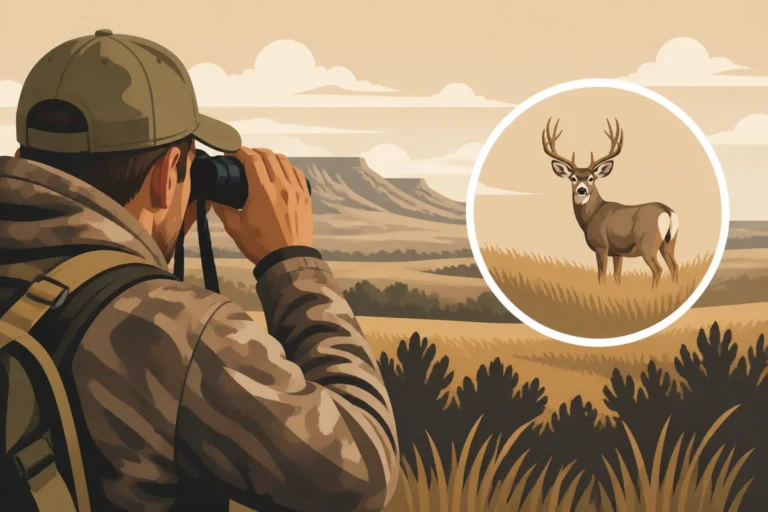
Having the right gear won't guarantee success, but it will certainly make the excruciating process of a pronghorn stalk more bearable and increase your odds. High-quality optics are non-negotiable. A good spotting scope will help you Judging a Pronghorn Buck in the Field from a distance and identify potential stalking routes. Binoculars are essential for constantly monitoring the animals as you move. A rangefinder is also absolutely critical, helping you to precisely determine distances during your approach and before taking a shot, especially when you need to be Rangefinding Across Open Ground.
Beyond optics, consider robust, quiet clothing that can handle crawling through grass, thistles, and dirt. Knee pads, as mentioned, are a must. For the shot itself, shooting sticks or a bipod are invaluable. On the open prairie, finding a solid rest can be next to impossible without them, and they are crucial for making an ethical shot after a long, exhausting stalk. Many hunters overlook practicing with these tools in field conditions, but a stable shooting platform is key, especially if you're taking a shot after a physically demanding approach. If you're looking for more info on how to manage these critical distances and shot placements, check out resources like Rifle Calibers for South Dakota Antelope and Practicing Prone Shots on the Prairie.
The Critical Last Yards: How Close is Too Close?
So you've crawled, crept, and finally made it within what feels like spitting distance. Now the real question arises: exactly how close do you need to get? This isn't a fixed number; it's a dynamic calculation based on your rifle, your skill, the conditions, and the specific animal.
Rifle Calibers and Effective Range
When it comes to pronghorn, you need a rifle that shoots flat and fast. Common choices in South Dakota include calibers like the .25-06, 6.5 Creedmoor, .270, and .30-06. These cartridges excel at reducing bullet drop over the long distances often encountered on the prairie. While these rifles are capable of accurate shots out to 400 or even 500 yards in the right hands, that doesn't mean you should always shoot that far.
The ethical range for a shot is a deeply personal decision, and it’s paramount to understand your own limitations. Just because your rifle can hit a target at 400 yards on a static range doesn't mean you can ethically do so on a live animal after a strenuous stalk, with adrenaline pumping, and in unpredictable wind conditions. Pronghorn present a relatively small target, and a marginal hit can lead to a lost animal and a terrible experience.
The Ethical Shot Distance
My personal rule of thumb, and one I often share, is that closer is always better. While some experienced hunters might comfortably take shots out to 300-350 yards, most should strive for 200-250 yards or less. If you can get within 150 yards, you've done an exceptional job, and your chances of a clean, ethical kill dramatically increase. The ethical distance is ultimately determined by your proficiency and confidence in placing a bullet accurately where it needs to go.
Before you even step into the field, you should know your rifle inside and out. Practice shooting from various field positions – prone, kneeling with shooting sticks, and off a bipod. Know your bullet's trajectory and how wind affects it. If you're unsure about your capabilities at a certain distance, get closer. Always. It’s a mark of a responsible hunter to pass on a shot that feels too far or too risky. For a more detailed look at shot placement, consider reviewing resources on Shot Placement on a Pronghorn.
Here's a quick reference table to help visualize effective stalking distances based on conditions:
| Condition Type | Cover Availability | Wind Strength/Direction | Shooter Skill Level | Likely Effective Stalking Distance Range | Key Considerations |
|---|---|---|---|---|---|
| Ideal Stalking | Ample draws/rolling hills | Light, consistent | High | 75-150 yards | Maximize low profile, slow movement. |
| Good Stalking | Moderate low cover | Moderate, consistent | Medium-High | 150-250 yards | Patience, utilize every ripple in terrain. |
| Challenging Stalking | Sparse cover | Swirling/strong | Medium | 250-350 yards (if experienced) | Requires long detours, extreme caution, excellent optics. |
| Difficult Stalking | Extremely flat/no cover | High/variable | Any | 350+ yards (high risk) | Reconsider, wait for better opportunity or different animal. |
Making the Shot Count
Once you've managed to get within your ethical shooting range, the pressure is on to make the shot count. Pronghorn are not large animals, and their vitals are relatively compact. You're aiming for the heart and lungs, typically just behind the shoulder. A shot placed precisely in this area will result in a quick, humane kill.
Focus on steadying your breathing, controlling your trigger pull, and executing the fundamentals. Use your shooting sticks or bipod. Take a deep breath, let half out, and squeeze. Don't rush. After the shot, be prepared for a follow-up shot if the animal doesn't go down immediately. Even if it does, keep your eyes on it until you're absolutely certain it's down for good. Following up a marginal shot in grass can be incredibly tough, so aim for a perfect shot the first time.
Common Stalking Mistakes and How to Avoid Them
Even the most seasoned hunters make mistakes, especially when dealing with an animal as wary as a South Dakota pronghorn. Recognizing these common pitfalls can help you avoid them and increase your chances of success.
Rushing the Stalk
This is, without a doubt, the single biggest mistake hunters make. The excitement of seeing a good buck, especially one that seems to be in a good stalking position, can make you want to sprint towards it. But rushing guarantees one thing: you'll get busted. Pronghorn are incredibly attuned to quick movements and unnatural shapes. What might feel like slow movement to you is often a dead giveaway to them.
Always remind yourself that time is on your side, or at least you need to act like it is. Take extra minutes to glass, to plan your route, and to move deliberately. If a pronghorn looks up, freeze. It might feel like an eternity, but it's far better to spend ten minutes frozen in position than to move too soon and have the animal disappear for good. Patience truly is the ultimate virtue when hunting these open-country speedsters.
Poor Observation and Reconnaissance
Before you commit to a stalk, you need to be an absolute detective. This means more than just spotting the animal. You need to understand its exact location, which direction it's facing, whether it's feeding, bedding, or moving, and what other animals are around it. Are there other pronghorn in the herd that might be positioned to see you? Are there cattle that could alert the herd with their movement? What's the topography directly around the animal? Are there any hidden dips or rises you didn't notice from your initial glassing point?
Utilizing powerful optics and taking your time to observe is paramount. Before even taking a step, get a detailed mental map of the area. I often rely on mapping software like the GoHunt app to thoroughly analyze the topography, identifying every dip, rise, and potential blind spot. This allows you to really get a sense of how the land lays before you commit to a potentially long walk or crawl. This kind of detailed scouting, even if it's just from a hilltop, is what separates a thought-out stalk from a haphazard approach. E-scouting can also be incredibly useful, especially when you're E-Scouting Walk-In Areas Before the Season to plan for any hunting trip.
Underestimating Their Vision
As mentioned, pronghorn vision is legendary for a reason. Many hunters think they are low enough when they are just barely breaking the skyline or when only a small part of their head is visible. To a pronghorn, that's often more than enough. Their eyes are designed to pick up even the most subtle anomalies in an otherwise uniform landscape.
When you think you're hidden, try to get even lower. Use the very bottom of a draw. Crawl on your belly even when you think hands and knees would suffice. If you're on a slight rise, ensure that absolutely none of your body breaks the horizon line. Remember that even the glint from your rifle scope or binoculars can give you away, so be mindful of the sun's angle. Always assume they are seeing more than you think they are.
Forgetting About Other Animals
You might be focused intently on that one big buck, but what about the doe bedded 50 yards to its left? Or the yearlings on the far side of the herd? Often, it's these "ancillary" animals that bust a stalk, not your primary target. They might be looking in a different direction, or simply be less pressured and more alert to subtle changes in their environment.
Always approach a herd as a single entity, scanning for every pair of eyes. Plan your stalk to avoid detection by any animal in the group. Sometimes, this means waiting for the entire herd to shift position, or waiting until a certain animal beds down, giving you a small window of opportunity. This also applies to other species that might be present. A nervous group of mule deer in a nearby coulee or a herd of cattle could inadvertently alert the pronghorn.
Disclaimer
Hunting involves inherent risks, including but not limited to those associated with wildlife, firearms, and the environment. This content is for informational purposes only and does not constitute professional advice. Always prioritize safety, adhere to all local, state, and federal hunting regulations, and consider seeking guidance from experienced professionals.