Rattling and Grunting During the South Dakota Rut
Hunters often find themselves frustrated by unpredictable buck movement during the crucial rut periods in South Dakota, struggling to draw in that wary whitetail buck when it seems nothing is working. This comprehensive guide will peel back the layers of effective rattling and grunting techniques, offering seasoned advice on how to use vocalizations and antler clashing to your advantage, transforming those quiet moments into thrilling encounters during the South Dakota rut.
Understanding the Rut in South Dakota
The South Dakota rut is a magical, albeit sometimes maddening, time for deer hunters. It's when the dynamics of the whitetail world shift dramatically, and bucks, usually cautious and nocturnal, become more active and less inhibited in their pursuit of does. Understanding the nuances of this period is paramount to successful calling strategies. You can't just blindly rattle and grunt; you need to know when and why a buck might respond.
Phases of the South Dakota Rut
While often spoken of as one continuous event, the rut actually unfolds in distinct phases, each requiring a slightly different approach to calling. First, there's the "pre-rut," which usually kicks off in late October to early November. During this time, bucks are starting to feel the urge, creating scrapes and rubs, and are often very receptive to challenging calls. They're establishing dominance and testing the waters. It's a fantastic time for aggressive rattling and grunting, as bucks are actively seeking out rivals.
Following the pre-rut, we transition into the "peak rut" or "seeking phase," which typically falls in mid-November in much of South Dakota. This is when the majority of does come into estrus. Bucks are on the move constantly, scent-checking, chasing, and breeding. During this frantic period, bucks might be so focused on finding does that they could be less responsive to calling if they're already with a hot doe. However, a well-timed grunt or rattle can still pull a buck away if he's actively cruising or if he believes a rival is moving in on his territory. The "post-rut," often extending into early December, sees a decrease in activity as most does have been bred. Bucks are tired, sometimes a bit beat up, and primarily focused on feeding to recover. Calling can still work, but usually requires more subtlety, targeting those later-breeding does or younger bucks still looking for action. Knowing How Buck Movement Changes Through the Rut for each phase is key to adapting your strategy.
Peak Rut Behavior in South Dakota Whitetails
During the peak rut, South Dakota whitetails exhibit behaviors that are unique and highly exploitable by callers. Bucks become very doe-focused, covering significant ground in search of receptive females. This often means they're cruising open areas, river bottoms, and timber edges more frequently during daylight hours. They're also more prone to reacting aggressively to perceived intrusions by other bucks. The dominant bucks will often challenge any newcomers, and even younger bucks, driven by instinct, will try to muscle their way in.
Their increased activity means they’re more visible, but also more distracted. You might see a buck seemingly ignoring your calls, only to have him circle downwind or suddenly appear from heavy cover. Their heightened aggression means that realistic fight sounds, coupled with convincing grunts, can trigger an immediate, often reckless, response. However, remember that deer in areas with high hunting pressure, especially on public lands or smaller private parcels, might be more call-shy. Always consider the local deer population's temperament before unleashing a full-blown sparring match.
The Art of Rattling for South Dakota Whitetails
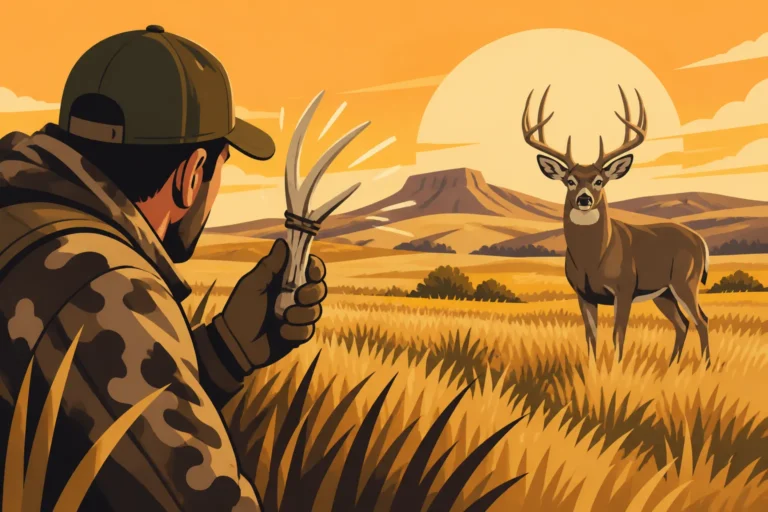
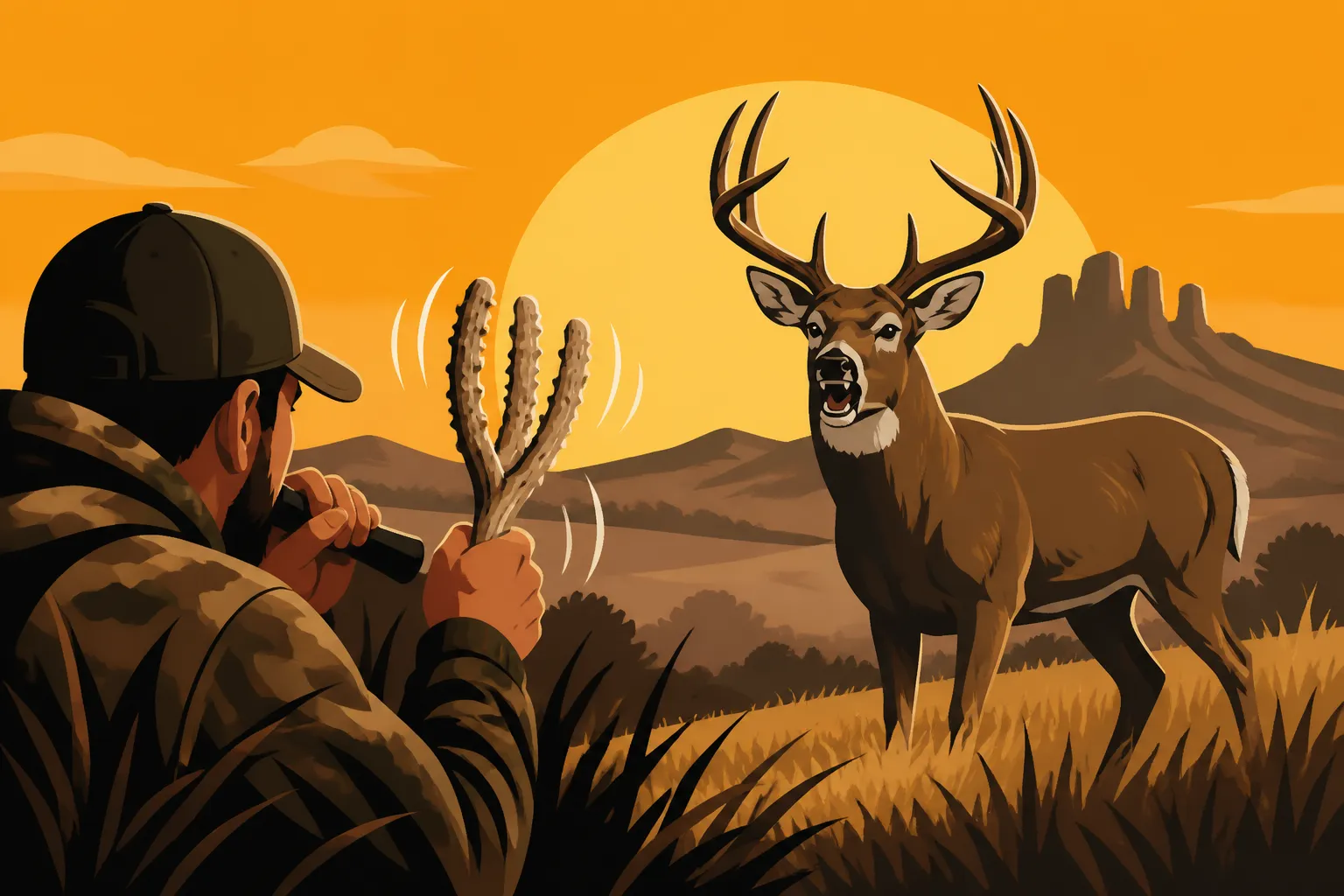
Rattling is essentially mimicking the sound of two bucks fighting, a primal challenge that can ignite a territorial response in nearby males. It’s an exhilarating tactic when it works, bringing a buck crashing through the timber or cautiously approaching across a field. But it's not just about clashing antlers together; there's a definite art to it.
Choosing the Right Rattling Antlers
The market offers a bewildering array of rattling devices, from synthetic composite horns to actual shed antlers. For a realistic sound, many seasoned South Dakota hunters swear by actual shed antlers. They provide the most natural sound, complete with the clacks, grinds, and subtle ticks of real bone-on-bone contact. Look for sheds from 100-140 inch class bucks, as they create a volume and tone that mimics the kind of fight a dominant buck would investigate. Synthetic rattling bags or "rattle boxes" can be convenient and effective, especially for light sparring sounds, but often lack the raw authenticity of real antlers for a full-blown fight sequence.
When selecting sheds, ensure they have sufficient mass and tine length to create varied sounds. It’s not just about loud crashes; subtle clicks and grinding noises are equally important in simulating a realistic encounter. Keeping them free of debris and having a wrist lanyard or good grip can prevent fumbling in the heat of the moment.
Simulating a Realistic Buck Fight
The key to successful rattling is realism. A buck fight isn't one continuous crash. It typically starts with some light sparring—a few gentle clicks and rubs as bucks size each other up. Then, as tension escalates, the clashes become harder, longer, and more aggressive, interspersed with grunts and snorts. A good rattling sequence should mirror this progression. Start soft, with gentle antler rubs and light clicks, lasting about 15-30 seconds. This might pique curiosity without alarming.
Then, transition into a more aggressive sequence: harder crashes, grinding, and really smashing those antlers together for 30-60 seconds. Imagine two mature bucks really going at it, pushing and shoving. Pause for a minute or two, listening intently, before repeating a slightly less intense, but still aggressive, sequence. A full sequence might last 3-5 minutes, followed by a 15-20 minute listening period. Patience is crucial. Bucks rarely charge in immediately; they often circle downwind to scent-check or approach cautiously. You can control the Rattling Volume in Open Country by how hard you hit them, but also consider the terrain. In thick cover, a louder, more aggressive sequence might be necessary to cut through the vegetation.
Timing and Location for Rattling Sequences
Timing your rattling is as critical as the sound itself. The pre-rut and early peak rut are generally the most productive times, as bucks are actively challenging rivals. Once the peak rut hits full swing and most does are bred, bucks might be less responsive to fight sounds, preferring to conserve energy or already paired with a hot doe. However, isolated fights can happen any time. Always consider the time of day: early mornings and late afternoons, when deer activity is naturally higher, are prime opportunities. Midday, when bucks are often cruising for does, can also be surprisingly effective, especially on days with good weather.
Location is equally vital. Rattling works best in areas where bucks are known to travel or hold up. Think about pinch points, creek bottoms, timber edges, and transition areas between bedding and feeding. Hunting Whitetails in South Dakota's Missouri River Timber provides excellent opportunities for rattling due to the natural travel corridors and dense cover that can hold deer. Position yourself downwind of where you expect a buck to approach, as they will almost always try to circle. Having a good vantage point to see approaching deer, without being silhouetted, is also important. If you can, use terrain features or dense cover to conceal your movements and position.
Effective Grunt Calling Strategies
Grunt calls are the universal language of whitetails, signaling everything from a buck's contentment to his aggressive challenge. Mastering the grunt tube can be a game-changer, drawing in curious or agitated bucks that might otherwise remain unseen. Like rattling, it's about understanding the context and delivering the right message.
Decoding Different Grunt Sounds
Not all grunts are created equal. The most common is the "basic grunt," a short, deep guttural sound (e.g., "urr-ump") that bucks use to communicate their presence, often when cruising or trailing a doe. This is an excellent all-around call, mimicking a buck that's on the move and looking for action. A "tending grunt" is often softer, longer, and more excited, sometimes ending with a snort or wheeze. This signifies a buck that's actively chasing a hot doe, creating a sense of urgency and competition. This call can be very effective in pulling in a buck that thinks another buck is about to breed a doe.
Then there's the "aggressive grunt," a sharper, more drawn-out "grrr-ump" that indicates a buck is challenging another. This is often used in conjunction with rattling to simulate a full-blown confrontation. Finally, "fawn bleats" and "doe estrus bleats" can also be produced with a grunt tube or specialized call. A fawn bleat can attract a curious doe, and sometimes a buck trailing her. An estrus bleat, a series of short, high-pitched "blaaats," mimics a hot doe and can be incredibly effective during the peak rut, pulling in bucks from surprisingly long distances. Understanding these nuances allows you to tailor your call to the specific situation you're trying to create.
When and How to Use a Grunt Tube
The grunt tube is one of the most versatile tools in a whitetail hunter's arsenal, but its effectiveness hinges on proper usage. Generally, a simple basic grunt, emitted every 15-30 minutes, can work as a locator call, letting nearby bucks know there's another deer in the area. This is particularly useful when you suspect deer are close but can't see them, or when trying to stop a cruising buck for a shot. For a cruising buck, a single, sharp "urr-ump" as he passes can often make him pause or turn his head, giving you a shot opportunity.
During the pre-rut and early peak rut, using a tending grunt or aggressive grunt in a series (2-3 grunts, perhaps followed by a pause and another 1-2 grunts) can signal competition. When a buck is Grunt Calls on Cruising Bucks that are far off, a louder, longer grunt might be necessary to get their attention. Conversely, if a buck is close, softer, more subtle grunts are usually more effective to avoid startling him. Always direct the sound away from your exact position if possible, perhaps cupping your hands around the tube to project the sound in a specific direction.
Fawn Bleats and Doe Estrus Calls
Beyond buck grunts, fawn bleats and doe estrus calls are powerful tools, particularly when bucks are highly doe-focused. A fawn bleat mimics a lost or distressed fawn. This sound can appeal to a doe's maternal instincts, drawing her in, and if a buck is trailing her, he'll likely follow. This is often a lower-risk call, as bucks are less likely to perceive it as a threat and more as a potential opportunity.
Doe estrus bleats are the ultimate siren call during the peak rut. These high-pitched, drawn-out bleats ("Maaaa-aaaa-aah") mimic a doe in heat and are irresistible to rutting bucks. Using a specialized estrus call or even a grunt tube capable of producing this sound can be incredibly effective. A common strategy is to combine a series of estrus bleats with light tending grunts, suggesting a buck is already with a hot doe. This combination creates a scenario of competition over a receptive female, which can infuriate a dominant buck and bring him in quickly. Remember, these calls are most potent during the few weeks surrounding the peak of the rut when does are actively receptive and bucks are frantically seeking them out.
Combining Calls for Maximum Impact
While rattling and grunting can be effective on their own, their true power often lies in combining them. Creating a dynamic and believable scene of deer interaction is what truly grabs a buck's attention and draws him into range. Think of yourself as a storyteller, painting a vivid picture with sound.
Layering Rattles and Grunts
The most realistic calling sequences blend rattling with various grunts to create a full narrative. Start with some light rattling to mimic initial contact, then immediately follow with a few basic grunts as if bucks are sizing each other up. As the rattling intensifies into a full-blown fight, intersperse aggressive grunts, snorts, and even wheezes. This layered approach creates the illusion of multiple deer interacting, making the scene far more believable than just rattling alone.
After an aggressive rattling sequence, don't forget the tending grunts. A few tending grunts immediately following the "fight" can suggest one buck has "won" and is now tending a doe, further enraging any bucks in the vicinity who might want to challenge for breeding rights. The key is to make it sound natural and dynamic. Practice different combinations to find what flows best and sounds most authentic. For hunters in areas with heavy timber or narrow river corridors, like those found when considering Treestand Setups on Narrow River Timber, layering these calls can be particularly effective at drawing bucks through dense cover.
Adding Visual Cues with Decoys
Sometimes, sound alone isn't enough. A visual component can dramatically enhance the realism of your calling setup. Deer decoys, especially buck or doe decoys, can act as a powerful magnet. When a buck hears a fight and then sees what appears to be a rival or a receptive doe, his cautiousness often drops significantly. Place your decoy so it's visible from where you expect a buck to approach, typically 20-30 yards out, quartering away from your shooting lane.
Consider using a buck decoy to simulate the challenger in a fight, positioning it as if it's looking towards your stand or rattling location. Or, a doe decoy can suggest a hot doe that two bucks are fighting over. When using a decoy, be especially vigilant for other hunters who might mistake it for a live animal. This is where scouting tools from companies like GoHunt can be invaluable. Their mapping features allow you to pinpoint prime calling locations, identify potential blind spots, and even mark where you've set up your decoy, helping you avoid misidentification issues and plan your approach and exit routes safely. Proper placement, considering wind direction and potential approach angles, is critical for both effectiveness and safety.
Calling Aggressive Bucks Versus Curious Bucks
Not every buck will react the same way to your calls. Understanding the difference between an aggressive buck and a merely curious one will help you tailor your approach. An aggressive buck, often a mature deer during the pre-rut or peak rut, will typically respond quickly and directly, sometimes even charging in. These bucks are looking for a fight or to assert dominance. For them, a loud, aggressive rattling and grunting sequence is usually the ticket.
Curious bucks, on the other hand, might be younger deer, or older bucks that are more cautious. They might respond by circling far downwind, pausing frequently, or even just stopping to listen from a distance. For these bucks, a more subtle approach can be better. Start with softer grunts or light sparring, then increase the intensity only if they show positive interest. If a buck hangs up at a distance, a single, soft grunt or a quick, light rattle might be enough to encourage him to take a few more steps. Always read the buck's body language; his ears, posture, and tail movements will tell you a lot about his intentions.
Factors Influencing Calling Success
Even with perfect technique, several external factors can make or break your calling efforts. Being aware of these elements and adjusting your strategy accordingly is a hallmark of an experienced caller in South Dakota's diverse hunting landscape.
Wind and Weather Considerations
Wind is arguably the most critical factor when calling. Deer rely heavily on their sense of smell, and they will almost always try to circle downwind to scent-check the source of the sound. This means you need to set up with the wind in your favor, positioning yourself so that a buck circling downwind will pass within shooting range. A slight crosswind can be ideal, as it carries your scent away from your immediate calling location but allows you to cover a broad area. For instance, understanding Wind Direction on a Prairie Stalk is just as important for calling as it is for stalking.
Weather also plays a significant role. Cold, crisp days with stable high pressure are often excellent for calling, as deer tend to be more active. Overcast days with light precipitation can also be good, as they dampen sound, requiring slightly louder calls, but also reduce visibility, which can make deer feel more secure moving. High winds or heavy rain, however, can make calling nearly impossible, as the sounds are either carried away or completely drowned out, and deer activity is usually minimal. Always check the forecast and plan your calling strategy around optimal conditions.
Hunting Pressure and Deer Response
South Dakota sees significant hunting pressure, especially on public lands and during the peak of the rut. This pressure can dramatically impact how deer respond to calls. Bucks in heavily hunted areas become "call-shy," meaning they've learned to associate calling with danger. They might respond, but from a greater distance, and they'll be much more cautious, circling widely or refusing to commit.
In these high-pressure scenarios, a less aggressive, more subtle approach is often best. Instead of booming rattles and aggressive grunts, try soft grunts, subtle tending grunts, or even just a few light clicks of antlers. Focus on short, infrequent sequences. This is where tools like GoHunt can provide crucial insights, helping you identify areas with potentially less pressure or offering maps that highlight specific Hunting Pressure Patterns on Walk-In Areas. By understanding where and when hunters congregate, you can adjust your calling tactics or even find overlooked pockets of deer that might be more responsive. Sometimes, simply avoiding calling altogether in extremely high-pressure zones and focusing on still-hunting or stand hunting is a more effective strategy.
Habitat and Terrain Effects
The type of habitat and terrain you're hunting in South Dakota dictates how your calls will carry and how deer will respond. In wide-open prairie country, sound travels much farther, so your calls need to be more measured to avoid alarming deer from too far away. Here, glassing and spotting a buck before calling is often the best approach. If you spot a buck at 800 yards, a light grunt might be enough to get his attention without him pinpointing your exact location.
In contrast, dense cover like cattail sloughs, river bottom timber, or brushy coulees absorbs sound. You'll need to call louder and more aggressively to ensure your message penetrates the thick vegetation. These areas, like the Missouri River breaks, can be fantastic for calling because they offer natural travel corridors and excellent cover for bucks. When exploring potential calling spots, E-Scouting Walk-In Areas Before the Season can help you identify ideal terrain features that funnel deer and obscure your presence. Always consider how the sound will travel and how a buck might approach given the available cover and topography.
Ethics and Safety When Calling
Using deer calls effectively is a potent tactic, but it comes with responsibilities. Safety, ethical considerations, and adherence to legal regulations are paramount, especially when mimicking deer sounds that can attract other hunters as well as game.
Situational Awareness and Safety
When you're rattling and grunting, you're actively drawing attention to your location, potentially from both deer and other hunters. Therefore, constant situational awareness is absolutely critical. Always assume any approaching movement is another hunter until you can positively identify it as a deer. Never call directly towards another hunter you know is in the area.
It is always advisable to wear blaze orange during firearms seasons in South Dakota, even if not legally required for deer hunting in your specific unit, especially when calling. This makes you highly visible to other hunters. When setting up, position yourself against a solid backdrop like a large tree or hillside to prevent being silhouetted and to protect your back. If using a decoy, ensure it is placed in an area where it cannot be mistaken for a live animal by other hunters, and consider placing orange safety markers around it if appropriate. Always have a clear field of fire and be aware of what's beyond your target.
Respecting Other Hunters
South Dakota is a popular hunting destination, and public lands or even smaller private parcels can get crowded. Respect for other hunters is essential for a positive experience for everyone. If you encounter another hunter or know someone is hunting nearby, refrain from aggressive calling sequences that might interfere with their hunt or draw a deer away from their setup. A simple, quiet wave or nod might be enough to acknowledge their presence without disturbing the peace.
Additionally, avoid calling too close to established hunting camps or obvious hunting setups. It's simply good etiquette. If you're on public land, such as a Game Production Area or a Walk-In Area, understanding general Pheasant Hunting Etiquette on Public Ground can be broadly applied to deer hunting: be mindful of others, respect boundaries, and don't intentionally spoil another hunter's opportunity. The goal is to call in a deer, not to create conflict with another person.
Legal Aspects of Calling in South Dakota
South Dakota has specific regulations regarding hunting, and while calling itself is generally legal, understanding the broader framework is important. Always carry your current South Dakota hunting license and any required tags. Be intimately familiar with the legal shooting hours for big game in your specific unit, which dictates when you can legally discharge a firearm or archery equipment. You can find this information in the annual hunting handbook or on the South Dakota Game, Fish and Parks (GFP) website, particularly regarding South Dakota Legal Shooting Hours for Big Game.
While baiting is generally prohibited for big game in South Dakota, calling is distinct from baiting and is a legal and accepted hunting practice. However, make sure you're not inadvertently running afoul of any other regulations, such as those related to landowner permission if you're on private land, or vehicle restrictions on public access areas. Stay informed by checking the latest regulations each season, as rules can change. A responsible hunter is a knowledgeable and ethical hunter.
| Rut Phase | Typical Timing (SD) | Calling Strategy | Dominant Call Types | Notes |
|---|---|---|---|---|
| Pre-Rut | Late Oct – Early Nov | Aggressive; Challenge Dominance | Loud Rattling, Aggressive Grunts, Basic Grunts | Bucks actively seeking rivals; good for drawing in mature deer. |
| Peak Rut (Seeking) | Mid-November | Varied; Locate & Challenge | Tending Grunts, Estrus Bleats, Medium Rattling | Bucks constantly cruising for does; may respond to competition or hot doe sounds. |
| Peak Rut (Chasing) | Mid-November | Focused; Create Urgency | Tending Grunts, Estrus Bleats, Basic Grunts | Bucks actively chasing and breeding; focus on 'hot doe' sounds. |
| Peak Rut (Breeding) | Mid-November | Less Responsive; Subtle Curiosity | Fawn Bleats, Basic Grunts | Bucks often paired with does; focus on drawing in curious deer or those seeking a last chance. |
| Post-Rut | Late Nov – Early Dec | Subtle; Appeal to Lingering Urge | Fawn Bleats, Light Basic Grunts | Bucks tired, few does left; might draw in younger bucks or those recovering. |
Disclaimer
Hunting is an inherently dangerous activity. This content is for informational purposes only and does not constitute professional advice. Always prioritize safety, adhere to all local, state, and federal hunting regulations, and consider taking a certified hunter education course. The author and publisher are not responsible for any incidents, accidents, or legal infractions that may occur as a result of following the information provided herein.