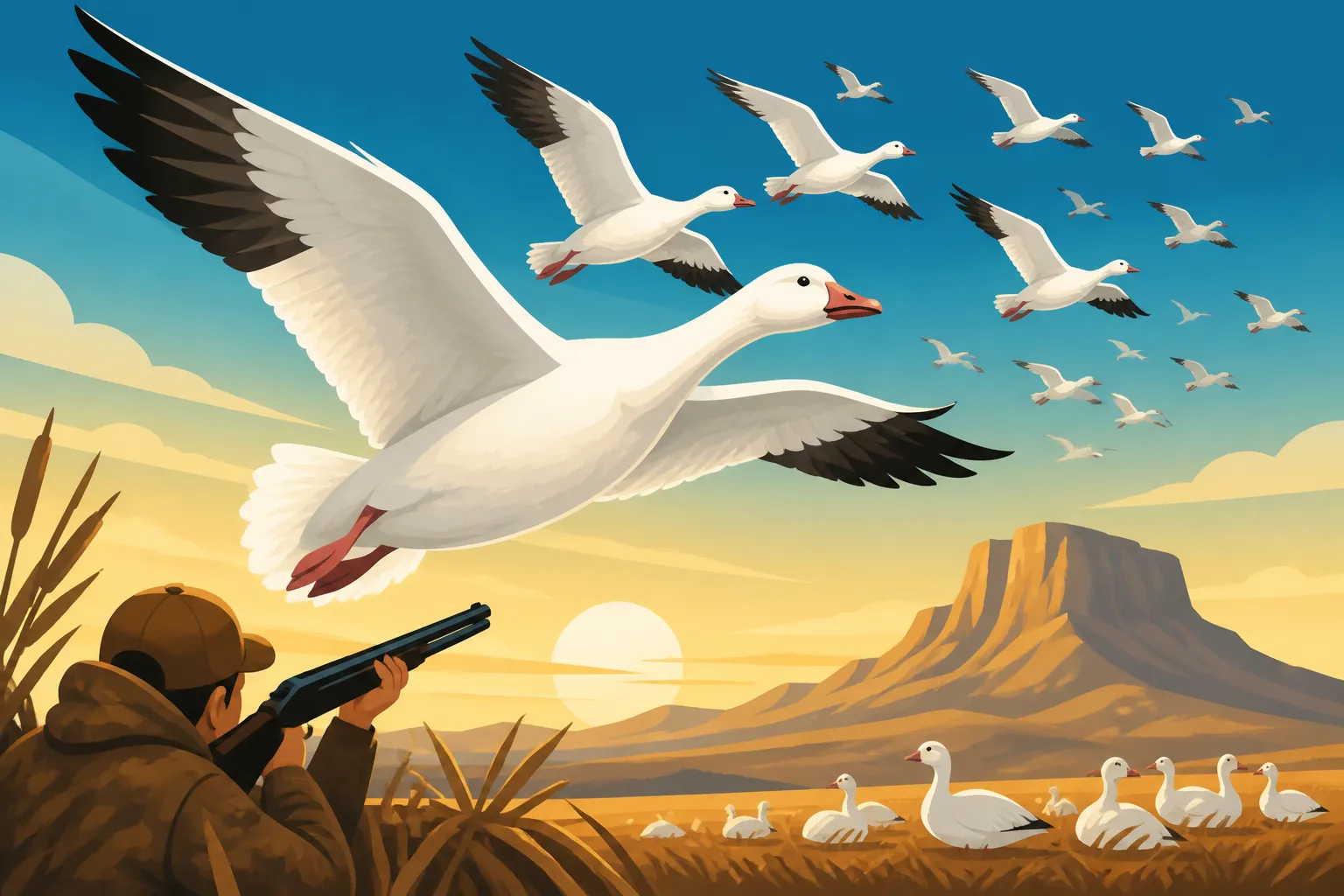
Snow Goose Spreads in Spring
The spring snow goose migration across South Dakota presents a unique challenge that can feel utterly overwhelming for even seasoned waterfowlers. You see these massive, swirling tornados of white birds in the sky, hear their incessant honking, and might feel a mix of awe and despair, wondering how anyone could possibly fool such a colossal, wary flock. This guide is here to demystify the art and science of setting up effective snow goose spreads in spring, helping you turn that despair into pure, unadulterated excitement.
The Unique Challenge of Spring Snow Goose Hunting
Spring snow goose hunting isn't just "goose hunting" with a different season; it's an entirely distinct beast. The sheer numbers, their migratory drive, and their heightened wariness combine to create an experience unlike any other waterfowl pursuit. You're not just chasing a few small family groups; you're attempting to intercept a significant portion of a continent-spanning migration.
Understanding the Spring Migration Phenomenon
Imagine millions upon millions of snow geese, light geese really, pushing north, driven by an ancient instinct to reach their Arctic breeding grounds. They’ve spent the winter feasting in southern states, and now, fueled by the melting snows, they’re on a relentless journey back. South Dakota becomes a critical stopover, a massive buffet line of corn stubble, green wheat, and other agricultural remnants, essential for refueling before the next leg. This is why you see such astronomical numbers. They arrive in waves, moving through counties, stopping to feed for a day or two, and then continuing their journey.
The reason we even have this unique "conservation order" is because their populations exploded, causing significant damage to their fragile Arctic nesting grounds. To help mitigate this ecological impact, federal and state regulations are relaxed: generous daily bag limits (often none), unplugged shotguns, and the use of electronic calls become legal. It's a high-volume opportunity, but it’s far from easy. For more on this, check out our guide on the South Dakota Snow Goose Conservation Order.
Why They Are So Wary in Spring
If you've ever hunted ducks or Canada geese, you know how cautious these birds can be. Snow geese, particularly in the spring, take wariness to an entirely new level. They've been hunted relentlessly since they left their wintering grounds. Every stop along their migratory path has introduced them to hunters, decoys, and calls. By the time they hit South Dakota, they've seen every trick in the book.
They’re also traveling in incredibly large groups. A single flock can number in the tens of thousands, and within that flock, there are thousands of pairs of eyes constantly scanning for danger. It’s the ultimate safety in numbers strategy. If one bird detects something amiss, the entire flock can flare instantly. Add to that the fact that they often feed in expansive, open fields, offering them panoramic views of any approaching threat. Successfully decoying these birds requires not just a good spread, but an understanding of their collective intelligence and their ingrained distrust of anything that doesn't look absolutely perfect.
Essential Gear for Effective Snow Goose Spreads
When it comes to spring snow geese, your gear isn't just a convenience; it's a necessity. You can't half-heartedly prepare and expect consistent results. Everything from your decoys to your concealment needs to be top-tier, or those wary birds will simply pass you by.
Decoys: Quantity and Quality
This is where the rubber meets the road. You can't just throw out a dozen duck decoys and expect to pull in a thousand snow geese. Spring snow goose hunting demands numbers, and often, thousands of them. The visual spectacle of a massive feeding flock is what these birds are looking for, and you need to replicate that on the ground.
There are several types of decoys, each with its own advantages and disadvantages:
- Full Bodies: These are the most realistic and arguably the most effective. Their three-dimensional form perfectly mimics feeding geese. However, they are incredibly expensive, heavy, and take up a lot of space. Transporting and deploying hundreds or thousands of full bodies is a monumental task, often requiring large trailers. Brands like Avian-X and Tanglefree make excellent full bodies, but be prepared for the investment.
- Sillosocks: These are a game-changer for snow goose hunting. Made from durable Tyvek fabric, Sillosocks are lightweight, fold flat for easy transport, and offer incredible movement in even a slight breeze. Their movement is crucial, as it simulates the constant motion of feeding geese. They’re far more affordable than full bodies, making it feasible to deploy spreads of 1,000 to 2,000 decoys. They pack down to a fraction of the size of traditional decoys, meaning you can carry more.
- Windsocks: Similar to Sillosocks but often with a more rigid stake and head, windsocks also provide excellent movement and are very cost-effective. They fill with wind, mimicking the shape of a goose, and their constant motion is a powerful attractant. They're a staple for building out the bulk of a large spread.
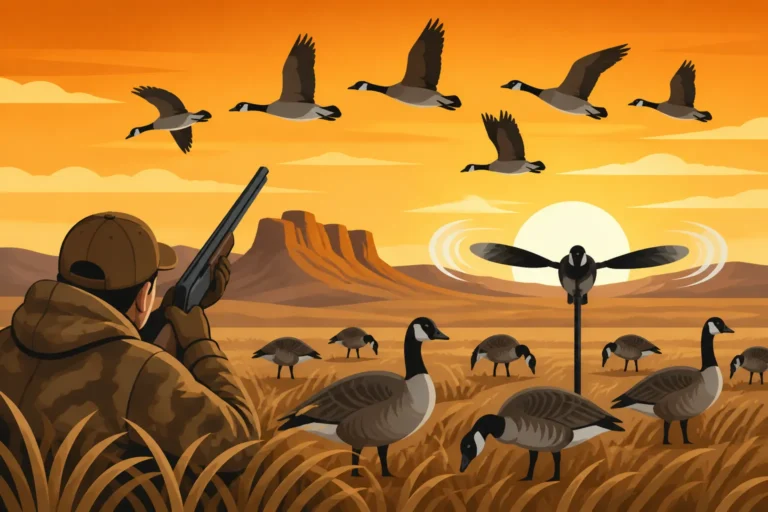
- Flyer Decoys and Rotary Machines: These add crucial aerial movement. Flyer decoys, often full-body goose decoys with flapping wings attached to a pole, create the illusion of birds descending into the spread. Rotary machines, like those from Mojo Outdoors, feature spinning wings that catch the light and simulate landing birds. These can be incredibly effective, especially on calm days when other decoys might lack movement.
A truly effective spread will often incorporate a mix of these. Full bodies or highly realistic Sillosocks can form the core of your landing zone, surrounded by a sea of windsocks and additional Sillosocks to create the impression of a massive, contented flock. You're aiming for both quantity and quality, realism and movement.
Concealment: Blinds and Layouts
You can have the most perfect spread imaginable, but if the birds see you, it's all for naught. Snow geese have incredible eyesight, and they've learned to spot anything out of place. This makes concealment paramount.
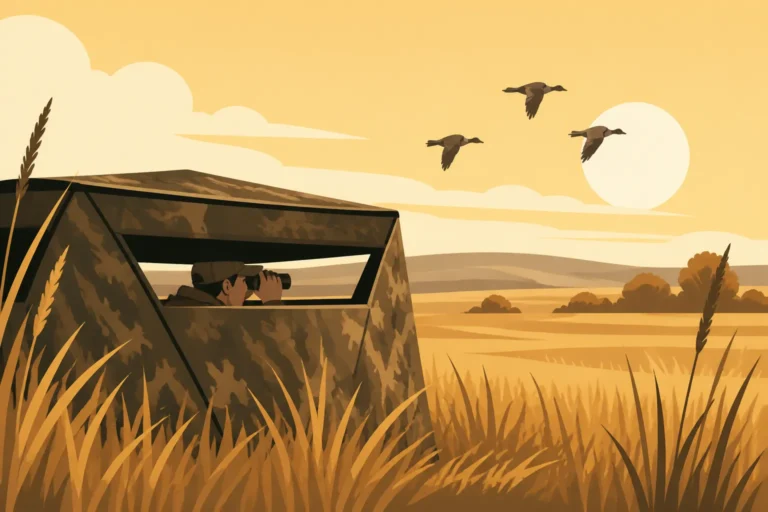
- Layout Blinds: These are the standard for field hunting and a non-negotiable for snow geese. A good layout blind, like those from Avery Outdoors or Rogers Sporting Goods, allows you to lie flat in the field, blending in with the stubble. The key is to match the blind's camouflage pattern to the specific field you're hunting (e.g., corn stubble, wheat stubble, or even bare dirt). Even more importantly, you need to brush in your blinds heavily. This means covering them with local vegetation – corn stalks, soybean stubble, even clumps of grass. Don't just set them out; make them disappear. You can learn more about effective hiding in our guide on Layout Blinds on South Dakota Stubble.
- Dog Blinds: If you're hunting with a retriever, they also need to be perfectly hidden. Many companies offer specialized dog blinds that integrate into your layout spread, keeping your dog comfortable and concealed.
- Surrounding Decoys: The ultimate concealment for your blinds often comes from strategically placed decoys around them. Blending your layout blinds into the middle of your spread, surrounded by stationary or moving decoys, helps break up their outline and makes them seem like just another part of the feeding flock. When using a scouting app like GoHunt, pay attention to the field history to help you anticipate what kind of stubble will be there, which in turn helps you pick the right camo pattern or brushing material.
Electronic Calls and Amplification
One of the great advantages of the conservation order is the legality of electronic calls (e-calls). Given the sheer volume of birds in the sky, a single mouth call won't cut it. E-calls are essential for replicating the cacophony of a thousand feeding snow geese.
- Powerful Sound Systems: You need a high-quality e-caller with powerful speakers and a strong amplifier. These birds are often high in the sky, and you need to reach them with sound. Many hunters run multiple speakers throughout their spread to create a more immersive and realistic soundscape.
- Variety of Sounds: Good e-callers come pre-loaded with a variety of snow goose sounds: feeding murmurs, excited honks, juvenile calls, and loud "come-back" calls. Mixing these up realistically is key. Start with softer feeding sounds to pique their interest, then escalate to more excited calls as they get closer, pulling them into your landing zone.
- Remote Operation: Most modern e-calls come with remote controls, allowing you to adjust volume and change sounds without moving or exposing yourself. This is critical for adapting to how birds are reacting to your spread.
Crafting Your Snow Goose Spread for Success
Setting up a snow goose spread isn't just about throwing decoys out; it's an art form that requires strategic thinking, an understanding of bird behavior, and often, a lot of sweat equity. The goal is to create an irresistible visual and auditory invitation that fools the most wary of birds.
The Anatomy of a Large Spread
Think of your spread as a visual story you're telling the geese: "This is a safe, abundant place to feed."
- Main Body (The Blob): The majority of your decoys should form a large, amorphous blob, mimicking a massive feeding flock. This blob needs to be substantial – hundreds, if not thousands, of decoys. Its purpose is to draw attention from afar and convey safety in numbers.
- Landing Zone (The Hole): Within or adjacent to your main body, you need a clear, open space for the birds to land. This "hole" is where your blinds will typically be located. It should be wide enough for multiple birds to comfortably descend, usually 20-40 yards across, and positioned downwind of your main body, so approaching birds can land into the wind. This landing zone is your kill zone.
- Family Groups: Scatter smaller, tighter clusters of 10-20 decoys around the main blob and leading up to the landing zone. These mimic small family units feeding independently and add to the realism.
- Movement, Movement, Movement: Snow geese are constantly moving when feeding. Incorporate movement wherever possible. Flapping flags (often called "snow goose flags" or "rotary flags") are manipulated by hand to simulate birds landing or taking off. Rotary machines, as mentioned, are also crucial. Even strategically placed Sillosocks will catch the wind and provide that essential subtle motion. Remember, static spreads are often ignored by spring snow geese.
Decoy Placement Strategies in Different Conditions
The wind is your best friend and worst enemy. Geese always land into the wind. Therefore, understanding wind direction is crucial for positioning your spread.
- Wind and Landing Zone: Your landing zone must be positioned so birds can approach into the wind and land directly in front of your blinds. If the wind shifts, you may need to adjust your entire spread. A common strategy is to make your "blob" mostly upwind of your blinds, with the hole directly in front, so birds come over the main body before dropping into your shooting zone.
- Open Fields: South Dakota's vast agricultural fields are prime snow goose habitat. Whether it's a harvested cornfield, soybean field, or a newly sprouted wheat field, the setup principles remain similar. You’ll want to match your blind concealment to the stubble. For more on this, consider our advice on Field Hunting Geese in South Dakota Cut Corn.
- Sheet Water: If you find a field with standing water or a shallow flooded area, it can be a magnet for snow geese. Incorporating a few floating goose decoys or even just placing your field decoys around the water's edge can be incredibly effective, mimicking birds resting and drinking.
- Snow Cover: Early spring hunts might involve snow on the ground. This provides excellent contrast for your white snow goose decoys but also makes concealment more challenging. You might need white layout blinds or extra care in brushing in.
Calling and Shooting Dynamics
Once your spread is set and birds are spotted, the real test begins. The goal is to guide them, using sound and visuals, into your shooting hole.
- Synchronizing Calls: As birds approach, use your e-caller to match their intensity. Start with general feeding chatter, and as they turn towards your spread, increase the volume and excitement. If they start to drift, hit them with some aggressive "come-back" calls to grab their attention.
- The Chaos of the Swirl: Don't be surprised if hundreds or even thousands of birds swirl directly over your spread. This is the moment of truth. Keep calling, keep flagging, and remain absolutely still in your blinds. The temptation to peek is strong, but exposure will flare them instantly.
- Ethical Shooting Amidst Volume: When the birds commit and drop into the hole, the action can be fast and furious. Ensure you're communicating with your hunting partners to shoot safely and effectively. Focus on a single bird, make clean shots, and be mindful of your shooting lanes. Even with unplugged shotguns, practice good judgment. It’s easy to get target fixation with so many birds. Always be aware of your muzzle control, especially with so many people shooting at once.
Maximizing Your Spring Snow Goose Opportunities
Spring snow goose hunting is a marathon, not a sprint. To truly succeed, you need to think beyond just the spread and consider the entire hunting experience, from scouting to logistics.
Scouting and Patterning Birds
This is arguably the most critical component of spring snow goose hunting. You can have the best spread in the world, but if you're not where the birds want to be, you won't kill geese.
- Find the Feed: Snow geese are driven by food. Spend hours driving back roads, using binoculars and spotting scopes, to locate the fields where birds are actively feeding. Pay attention to both the specific field and the general area. When they leave, they’ll often return to the same type of field nearby. Our advice on Scouting South Dakota Public Ground Before the Season and Reading Snow for Deer and Predator Sign offers excellent foundational knowledge for this kind of reconnaissance.
- Observe Flight Patterns: Watch how birds enter and exit fields. Note their flight paths and preferred landing approaches. This intelligence is invaluable for setting up your spread effectively.
- Permission is Key: Once you've identified an active field, obtaining permission from the landowner is paramount. Many South Dakota landowners are receptive to snow goose hunters, as these birds can cause significant damage to emerging crops. Be respectful, offer to help clean up the field, and always follow their rules.
- Digital Tools: Apps like GoHunt can be incredibly useful for identifying public land boundaries, parcel ownership, and even terrain features that might influence bird movement. While many snow goose hunts happen on private agricultural ground, knowing where public access points are or where to scout for alternative opportunities is always a good idea.
Field Logistics and Setup Efficiency
Setting up and tearing down a thousand-decoy spread is a massive undertaking. It’s physically demanding and time-consuming, and good logistics can make or break your hunt.
- Teamwork: This isn't a solo endeavor. Recruit a strong team of hunters who are willing to put in the work. Assign roles: some deploy decoys, others set up blinds, others handle e-callers.
- Transport: Large trailers, ATVs, or UTVs are essential for moving thousands of decoys, blinds, and gear across muddy or rough fields. You might have to park a fair distance from your chosen field, especially if it's on a South Dakota Walk-In Area, so planning your carry strategy is vital.
- Organization: Keep decoys organized in large bags or bins. Pre-rigging lines for Sillosocks and windsocks can save valuable time in the dark. The quicker you can set up, the more rest you get and the less chance you have of spooking birds with dawn activity.
Legalities and Conservation Order Rules
While the spring conservation order offers incredible flexibility, it's still crucial to understand and adhere to the regulations.
- No Bag Limits, Unplugged Guns, E-Calls: As mentioned, these are the hallmarks of the conservation order. You can shoot as many snow geese as you can, use shotguns capable of holding more than three rounds, and employ electronic calls.
- Licensing: You will still need a valid South Dakota hunting license, a small game license, and a federal duck stamp, even if it's just for snow geese. Specific regulations for the spring snow goose conservation order are typically released annually by the South Dakota Game, Fish and Parks (GFP). Always check the most current regulations before heading out.
- Cleaning and Transporting Birds: With the potential for high-volume harvests, proper game handling is crucial. Have plenty of coolers and ice on hand to cool birds quickly. Understand the rules for transporting uncleaned birds (e.g., usually one fully feathered wing must remain attached for identification). This can be a lot of work, but ensuring your meat is good is important. For tips on managing large quantities of game, consider guides like Getting Meat Cooled in Warm Weather. If you're overwhelmed by the logistics, remember that many outfitters specialize in Spring Snow Goose Guide Packages and can handle all these details for you.
Decoy Comparison for Spring Snow Goose Spreads
To help you visualize the different decoy options, here's a quick comparison:
| Decoy Type | Cost (per dozen) | Realism | Portability / Weight | Movement | Best Use |
|---|---|---|---|---|---|
| Full Bodies | $$$$ (Expensive) | Excellent | Poor (Heavy/Bulky) | None (Static) | Core of landing zone, upwind realistic clusters |
| Sillosocks | $$ (Mid-Range) | Good | Excellent (Light/Compact) | Excellent (Wind-driven) | Main body, filling out numbers, creating movement |
| Windsocks | $ (Affordable) | Fair | Excellent (Light/Compact) | Excellent (Wind-driven) | Mass numbers, perimeter, subtle motion |
| Flyer Decoys | $$$ (High) | Excellent | Fair (Bulky) | Excellent (Hand-operated/Battery) | Adds crucial aerial movement over the spread |
| Rotary Machines | $$$ (High) | N/A | Fair (Bulky) | Excellent (Battery-powered) | Creates a landing illusion, catches attention |
Spring snow goose hunting is an incredibly rewarding experience, offering unique challenges and unforgettable moments. It's a high-stakes game of wits against millions of birds, but with the right preparation and a solid understanding of spread dynamics, you can absolutely tip the odds in your favor and witness the spectacle of hundreds of geese dropping into your spread.
Disclaimer
Hunting regulations and conditions can change rapidly. Always consult the latest South Dakota Game, Fish and Parks regulations handbook before planning any hunt. Ensure you have all required licenses and stamps, and prioritize safety in the field.