Grunt Calls on Cruising Bucks
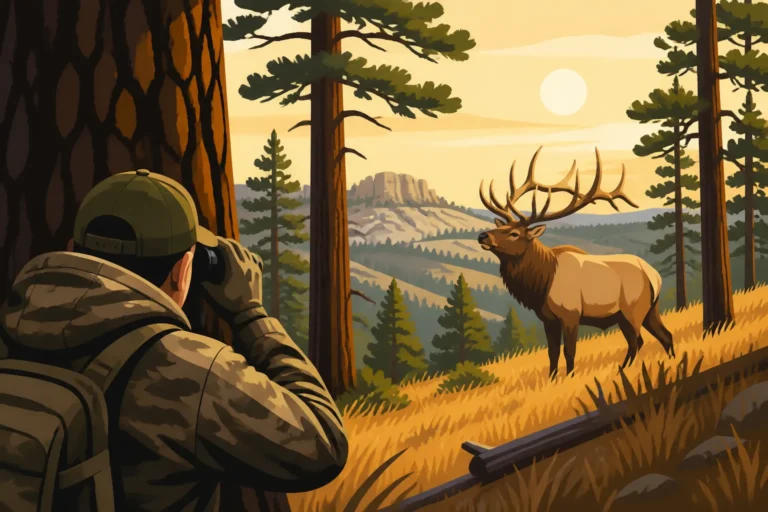
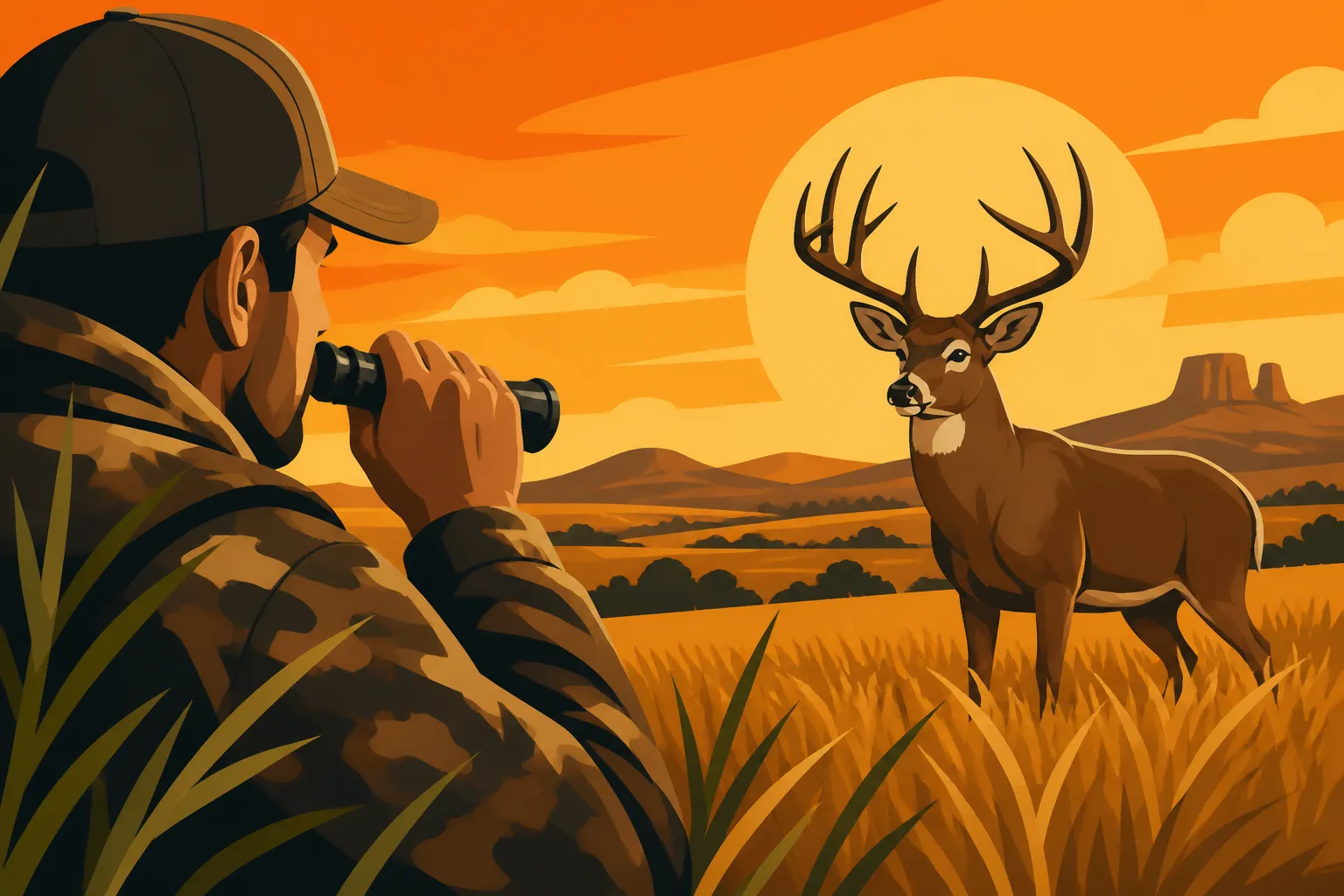
We've all been there: perched on a hill, glassing across a vast South Dakota prairie, or nestled deep in a river bottom, when suddenly, you catch a glimpse. It’s a buck, and he’s not just browsing; he’s on a mission. Head low, nose to the ground, covering ground with purpose – a true cruising buck. The frustration hits instantly because he's often just out of range, or moving so fast that by the time you adjust, he's gone. How do you stop him? How do you get him to even acknowledge your presence? This guide dives deep into the strategic use of grunt calls specifically for these elusive, moving bucks, helping you turn a fleeting observation into a genuine shot opportunity.
Understanding the Cruising Buck Mentality
The sight of a buck cruising can be both exhilarating and maddening. They appear focused, determined, and often oblivious to their surroundings, seemingly driven by an invisible force. Understanding what's truly driving this behavior is the first step in effectively intercepting them. It's not just random movement; it's a calculated, instinct-driven journey during a very specific time of year.
Why Bucks Cruise During the Rut
The primary reason bucks cruise is simple: to find receptive does. We're talking about the rut, that magical period in the fall when whitetail and mule deer hormones are raging, and the urge to breed overrides almost everything else. Bucks will cover incredible amounts of ground, often traveling several miles in a single day, scent-checking bedding areas, food plots, and traditional doe travel corridors. They're looking for estrous does or checking on those they've already encountered, hoping they're ready to be bred.
This high-octane movement makes them incredibly vulnerable, but also challenging to pin down. They're often covering ground that hunters might deem "empty" or "transition," moving between known hot spots. Their focus is singular, which means they might not be paying much attention to the subtle rustle you make, but they will respond to sounds that suggest a rival or a potential mate. This is where your grunt call becomes a critical tool. They're not just walking; they're actively seeking, making them receptive to the right auditory stimulus at the right time.
Reading a Buck's Body Language and Intent
Before you even think about blowing a grunt call, take a moment to observe. Not all cruising bucks are created equal, and their body language can tell you a lot about their current state of mind and how they might react. Is he walking with his nose low to the ground, actively scent-checking? This buck is likely on a hot trail, intensely focused on a doe, and might be harder to divert. He might just glance up, but his primary drive is elsewhere.
On the other hand, a buck cruising with his head relatively upright, scanning open fields or the edges of cover, might be more casually searching. He's still looking for does, but perhaps not locked onto a specific scent. This buck is often more susceptible to a well-timed grunt call. Watch his ears; if they swivel, even slightly, in your direction, you've got his attention, and it's time to follow up. Pay attention to his pace as well. A hurried, almost frantic walk suggests intense focus, while a steady, purposeful gait might indicate a buck more open to investigation. Tools like the GoHunt app can even help you analyze terrain features that might influence a buck's cruising path, giving you an edge in predicting where he might appear and how to set up.
Mastering the Art of the Grunt Call
A grunt call isn't just a noisemaker; it's an instrument of communication. To truly leverage its power, you need to understand the nuances of the sounds it can produce and how to deploy them strategically. It's about mimicking the natural sounds of deer and presenting them in a way that triggers a response from a cruising buck.
Types of Grunt Calls and When to Use Them
Not all grunt calls are created equal, and many modern calls offer a range of tones. The most common grunt is a "buck grunt" – a guttural, short sound that bucks make when communicating with other deer, often as a challenge or an expression of excitement. This is your bread and butter for stopping a cruising buck. You can get calls that are fixed-tone or adjustable. Adjustable calls often allow you to change the pitch to mimic a younger buck (higher pitch) or a more mature, dominant buck (deeper, more guttural).
Beyond the standard buck grunt, you might also have calls that can produce a "doe bleat" or a "fawn bleat." While primarily used to attract does, a short, subtle doe bleat followed by a buck grunt can sometimes create a more enticing scenario, suggesting a doe might be in estrus and a buck is nearby, trying to keep her close. Some calls also incorporate a "snort wheeze," which is an aggressive challenge. However, use the snort wheeze sparingly, especially on cruising bucks; it's often better reserved for bucks that are already showing interest and you want to escalate the challenge, or for bringing in a dominant buck that might be hanging up just out of range. For a cruising buck, your goal is often simply to get him to pause and investigate, not necessarily to pick a fight, at least not yet.
Proper Calling Sequences and Volume
When a buck is cruising, less is often more, at least initially. You want to pique his curiosity without alarming him. Start with a single, soft-to-medium volume buck grunt. Direct the sound away from the buck if possible, using your hand or hat to project it. The idea is to make him believe the sound came from slightly beyond him, forcing him to keep moving in your general direction to investigate. Wait for his reaction. If he stops, looks your way, or cocks his head, you've got him. Hold still, prepare for a shot, and be ready.
If he doesn't stop, or just keeps cruising, give him another grunt after about 30 seconds. This second grunt should be slightly louder, conveying a bit more urgency. Avoid rapid-fire grunting, which can sound unnatural and put a buck on edge. Imagine how deer communicate naturally – it's usually not a continuous chatter. You're trying to mimic a natural interaction, not a distressed animal. The goal is to make him think, "What was that? Is there a buck here? Is there a doe?" For more aggressive situations, combining grunts with sounds like those described in Rattling Volume in Open Country can be very effective, especially if you think the buck is competitive.
Here’s a simple table to guide your calling approach:
| Buck Behavior | Initial Call Sequence | Follow-up Strategy | Desired Outcome |
|---|---|---|---|
| Casually Cruising | 1 soft-to-medium buck grunt | Wait 30-60 sec. If no response, 1 slightly louder grunt. | Stop, look, investigate |
| Nose to Ground | 1 medium-volume buck grunt (urgent) | If no stop, 1 doe bleat then 1 aggressive buck grunt after 1 minute. | Break his focus, draw interest |
| Moving Away/Hesitant | 2-3 soft buck grunts in quick succession | Wait, if still moving, consider a snort wheeze if range allows an aggressive close. | Turn him around, confirm presence |
| Already Looking | No call, prepare for shot | If he resumes moving, 1 soft grunt to re-engage. | Freeze him for a shot |
Remember, the wind is paramount. A buck will almost always circle downwind to get a scent. Position yourself and your call accordingly. For instance, if you're working a river bottom area, where Hunting Whitetails in South Dakota's Missouri River Timber often means funnel points, you might anticipate his approach and adjust your calling angle.
Strategic Application in South Dakota Terrain
South Dakota offers diverse hunting landscapes, from the wide-open prairie breaks of the West River to the dense shelterbelts and river bottoms of the East River. Each presents unique challenges and opportunities for using grunt calls on cruising bucks. Understanding the terrain and how deer use it is key to effective calling.
Positioning for Success in Open Country
Hunting the wide-open spaces of West River South Dakota, where you might be glassing for Reading Prairie Coulees for Mule Deer, means your visibility is often excellent, but so is the buck's. Getting close enough to make a subtle call heard, or to take a shot, requires careful planning. When you spot a cruising buck from a distance, the first thing to consider is how to close the gap or set up an ambush. Use terrain features like draws, coulees, and even slight rises to your advantage. Try to get ahead of his likely travel path if possible, or position yourself where you can remain concealed.
When you do make that first grunt, remember that sound travels far in open country. A too-loud call can make him nervous and send him in the opposite direction. Start soft. If he stops and looks, that's your chance. He might turn directly toward you, or he might angle to circle downwind. Always be prepared for him to circle. Knowing Wind Direction on a Prairie Stalk is not just for stalking; it's vital for calling too. If you can anticipate his downwind approach, you can set up to intercept him before he catches your scent. Using a rangefinder before he gets close will help you confirm distances. Sometimes, the only thing that stops a buck on the wide-open prairie is the sound of a rival, so timing and subtlety are everything.
When to Be Aggressive, When to Be Subtle
The decision to be aggressive or subtle with your grunt call depends heavily on the buck's behavior, the hunting pressure in the area, and the type of cover. In high-pressure areas, especially on public lands where other hunters might be calling or pushing deer, bucks can become call-shy. In these scenarios, extreme subtlety is often best. A soft grunt, barely audible, might be just enough to make a cruising buck pause and investigate without sending him into a full-blown retreat. Sometimes, just one quick, quiet grunt is all it takes to stop a buck long enough for a shot.
Conversely, if you're hunting during the peak rut, and a buck is aggressively scent-checking or following a doe, a more aggressive approach might be warranted. A series of two or three quick, urgent grunts, perhaps followed by a short pause and another grunt, can mimic a buck hot on the trail of a doe or challenging a rival. This is particularly effective if you can't see the buck clearly, but know he's in thick cover like a cattail slough or a dense shelterbelt. The goal is to draw him out. However, if a buck hesitates, or appears nervous after a more aggressive sequence, immediately back off. It's better to lose an opportunity by being too subtle than to spook a deer by being too aggressive. Understanding How Buck Movement Changes Through the Rut is crucial here; early rut might call for more subtle 'searching' grunts, while peak rut often allows for more aggressive 'challenge' grunts.
Common Mistakes and Troubleshooting
Even with the best intentions and the right gear, using grunt calls on cruising bucks can be fraught with missteps. Learning to identify these common mistakes and having a troubleshooting plan can significantly increase your success rate. It’s all about adapting to the moment and understanding the animal you’re pursuing.
Overcalling and Under-calling
One of the most common pitfalls for hunters new to grunt calling is either overcalling or under-calling. Overcalling means blowing the call too frequently, too loudly, or using unnatural sequences. This almost always spooks deer. Imagine a deer in the woods constantly grunting – it just doesn’t happen. Deer communicate, but not incessantly. A buck will quickly perceive constant grunting as unnatural or a sign of distress, and he’ll give a wide berth. Remember, for a cruising buck, you often just need to stop him or divert him slightly. A simple, well-timed grunt is often all that's required.
On the flip side, under-calling is also a missed opportunity. This happens when a hunter makes a single, soft grunt and then gives up, assuming the buck didn't hear it or isn't interested. A cruising buck is often covering ground, and that first soft grunt might have been just out of his hearing range or he might have been momentarily distracted. If you don't get an immediate reaction from that first soft grunt, wait a minute or so, then try a slightly louder, more urgent grunt. Persistence, within reason and within the bounds of natural deer behavior, can pay off. It’s a delicate balance, and you need to be constantly assessing the buck's reaction. Sometimes, checking resources like South Dakota Whitetail Hunting in River Bottoms can offer clues on how to apply calling pressure in specific environments.
Dealing with Unresponsive or Spooked Bucks
It's going to happen: you let out what you thought was a perfect grunt, and the buck either ignores you completely or, worse, throws his tail up and blows out of there. Don't beat yourself up; it's part of hunting. If a buck is completely unresponsive, he might be locked onto a specific scent trail, or he might have heard other hunters calling nearby and become wary. In these cases, sometimes the best move is no move at all. Let him go, and focus on the next opportunity. Trying to force a reaction with aggressive calling after he's shown disinterest can solidify his decision to leave the area.
If a buck spooks and runs, your chances are usually toast for that particular encounter. The key here is to learn from the mistake. Was the call too loud? Was your concealment compromised? Did the wind shift and carry your scent? Analyzing what went wrong helps you avoid repeating it. For future encounters with potentially spooky deer, especially if they are coming from a known bedding area or a funnel point that might be near a South Dakota Game Production Area Rules where pressure can be higher, try to incorporate more visual elements if possible, like a decoy, or simply rely on careful Spot-and-Stalk Antelope Hunting in South Dakota tactics, which emphasize stealth over calling. A buck that's been spooked by a call will remember it, so adjust your strategy immediately if you see a negative reaction. Sometimes, the most effective call is silence, and allowing the deer to follow its natural instincts into your ambush.
Disclaimer
Please remember that hunting regulations and seasons can change. Always consult the latest South Dakota Game, Fish and Parks regulations before heading afield. This content is for informational purposes only and does not constitute legal advice. Safe hunting practices are paramount.