Aging Venison Before Cutting
You’ve just taken down a beautiful deer on the South Dakota prairie or within the Black Hills, and now the hard work really begins. Many hunters rush straight from the field to the butcher, or even worse, break down the carcass immediately, missing out on a crucial step that can dramatically improve the eating quality of their venison. Understanding how to properly age your deer meat before cutting it can transform a tough, gamey cut into tender, flavorful steaks and roasts that will be the envy of any dinner table. This guide will walk you through the essential principles and practical methods for aging venison, ensuring your hard-earned harvest reaches its full culinary potential.
Why Aging Venison Matters for South Dakota Hunters
For generations, hunters have understood that wild game often benefits from a period of rest after harvest. This isn't just an old wives' tale; there's real science behind it. When we talk about "aging venison," we're not talking about letting it rot. We're talking about a controlled process that allows natural enzymes within the meat to break down muscle fibers, resulting in a more tender product. This is particularly important for wild game, which often has less fat marbling than domestic livestock and can be tougher due to the animal's active lifestyle.
Understanding the Science of Tenderness
Immediately after a deer is harvested, its muscles are soft. However, as the carcass cools, a process called rigor mortis sets in. The muscles contract and stiffen, often reaching their peak stiffness within 12 to 24 hours. If you cut and cook the meat during this phase, it will be incredibly tough. Aging allows these muscle fibers to relax and lengthen again. Endogenous enzymes, naturally present in the muscle cells, begin to break down the complex proteins and connective tissues. Think of it like a natural tenderizer at work, slowly and gently dissolving the components that make meat chewy. This enzymatic breakdown is what primarily contributes to the improvement in tenderness that makes all the effort worthwhile. Without this crucial step, you could process even the most perfectly shot buck and still end up with a less-than-ideal eating experience.
Flavor Development Through Controlled Decomposition
Beyond tenderness, aging also plays a significant role in developing the flavor profile of your venison. During the aging period, moisture slowly evaporates from the outer surface of the meat. This concentrates the remaining flavors, leading to a richer, more intense "venison" taste. Additionally, as the enzymes break down proteins and fats, they create new flavor compounds. This isn't the same as gamey flavor, which often comes from improper field care, stress in the animal, or allowing organs to rupture. Instead, it's a desirable, complex savory depth that many connoisseurs appreciate. It’s a subtle but distinct difference, often described as more nutty, earthy, or even slightly cheesy, much like a well-aged steak. This careful balance of moisture loss and enzymatic activity is what separates truly excellent venison from merely good venison.
The Critical Factors for Successful Venison Aging
Aging venison isn't complicated, but it does require attention to a few critical details. These factors are paramount, and neglecting even one can turn a potential culinary masterpiece into a spoiled mess. Getting the basics right from the moment the animal hits the ground is crucial for setting yourself up for success. Whether you're hunting West River Mule Deer Hunting in South Dakota or South Dakota Whitetail Hunting in River Bottoms, proper care begins the second you retrieve your animal.
Temperature Control: The Golden Rule
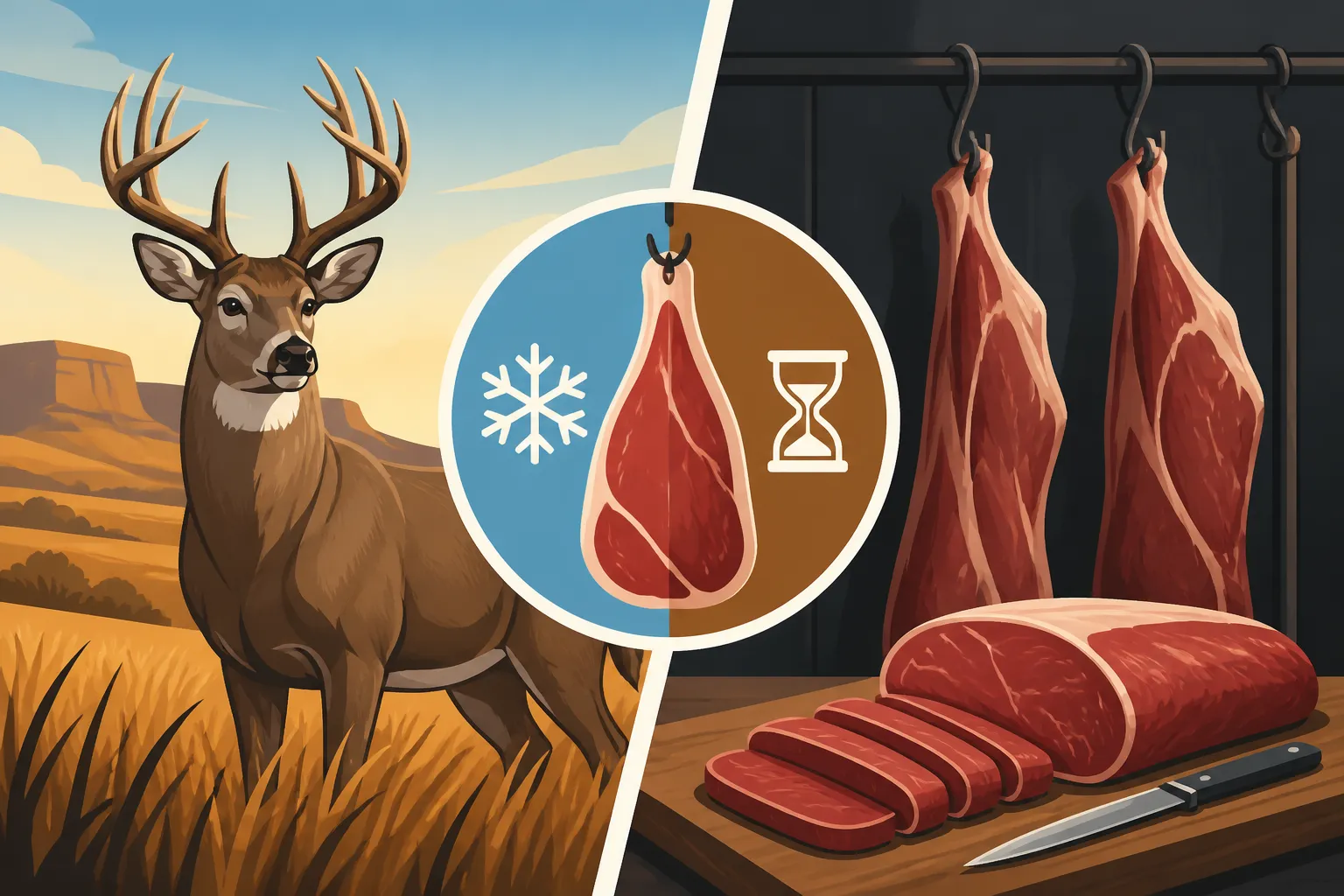
The single most important factor in aging venison is maintaining a consistent, cool temperature. Ideally, you want to keep the carcass between 34 and 40 degrees Fahrenheit (1 to 4 degrees Celsius). Temperatures much above this range risk rapid bacterial growth and spoilage, while temperatures below freezing will halt the enzymatic tenderization process. This means getting the deer cooled down as quickly as possible after harvest. In South Dakota's often unpredictable weather, especially during early deer seasons, this can be a real challenge. An early October deer taken on a warm afternoon needs immediate attention. Skinning the deer promptly, gutting it cleanly, and then either packing the cavity with ice or getting it into a cooler or refrigerated space are non-negotiable steps. Hanging a deer in a garage that fluctuates wildly with the daily ambient temperature is a recipe for disaster. Investing in a good meat thermometer and a dedicated space, or planning your hunt around anticipated cooler weather, is essential.
Humidity and Airflow: Preventing Spoilage
Beyond temperature, both humidity and airflow play vital roles in successful aging. You want good air circulation around the entire carcass to help dry the outer layer, creating a protective "pellicle." This dry crust acts as a barrier against bacteria, much like a natural rind on a dry-aged steak. If the humidity is too high and there's poor airflow, moisture can collect on the surface, promoting bacterial growth and sliminess – a sure sign of spoilage. Conversely, extremely low humidity can dry the meat out too quickly, leading to excessive weight loss and a tougher, leathery texture on the outside that has to be trimmed heavily. A well-ventilated space, perhaps with a small fan circulating air, is ideal. Many hunters use old refrigerators with shelves removed, allowing for airflow around the hanging halves or quarters.
Cleanliness and Carcass Prep
You cannot age a dirty carcass. Any contamination from dirt, hair, gut contents, or bacteria will only multiply during the aging process, leading to spoilage. Start with impeccable field dressing. Avoid cutting into the stomach or intestines. If any gut contents spill, clean them immediately and thoroughly. Once back at camp or home, skin the deer as soon as possible. This allows the carcass to cool faster and removes a major source of bacteria and hair. Trim away any bloodshot meat, excess fat, and fascia that won't contribute to tenderness or flavor. A quick wipe-down with a clean cloth, perhaps slightly dampened with vinegar (which helps inhibit bacterial growth), can also be beneficial, but avoid washing the meat with water, as this can introduce moisture and promote bacterial issues. The goal is a clean, dry surface, which is the foundation for safe and effective aging.
Practical Methods for Aging Deer Meat at Home
So, you've taken care of your South Dakota deer in the field and want to age it properly. Now what? Most hunters don't have access to professional meat lockers, but there are several practical ways to achieve excellent results right at home. The key is simulating the controlled environment that professional butchers use.
The Refrigerated Cooler Method
For many hunters, especially those with limited space or who harvest smaller deer, the large cooler method is incredibly effective. After thoroughly field dressing and skinning your deer, break it down into manageable quarters or even smaller primal cuts. Place these cuts into large, clean coolers. Crucially, you'll need plenty of ice. Layer the meat with ice, ensuring constant contact. The melting ice not only keeps the meat cold but also creates a "wet aging" environment, which is different from traditional dry aging but still highly effective for tenderness.
Drain the meltwater frequently, often twice a day, and replenish the ice. This process keeps the meat submerged in cold water, inhibiting bacterial growth while the natural enzymes do their work. The cooler should ideally be kept in a cool place, like a basement or garage, but the ice is the primary temperature regulator. This method typically takes 5 to 7 days for proper tenderization, and it's a fantastic option for ensuring even cooling and tenderness, especially for those challenging early season hunts where outside temperatures are still warm. Be sure to use food-grade ice and keep everything meticulously clean.
Using a Dedicated Meat Refrigerator or Walk-in
If you're a serious hunter and frequently process your own game, investing in a dedicated meat refrigerator or even building a small walk-in cooler can be a game-changer. This provides the most control over temperature and humidity, allowing for true dry aging. A commercial-grade refrigerator, often a used restaurant cooler, can be modified by removing shelves to allow hanging. The goal here is to maintain that consistent 34-40°F range with good air circulation. You can hang whole deer halves or quarters, which exposes more surface area to the air and allows for more even drying and pellicle formation.
With a dedicated setup, you have the luxury of precise temperature monitoring and can even control humidity to some extent. This method often yields the best results in terms of both tenderness and flavor concentration, as the slow, controlled drying contributes to that rich, savory taste. It also makes processing much easier when the time comes, as the meat is firm and easier to cut. Many hunters who consistently harvest deer in areas like the Black Hills Elk Hunting Tactics country or West River Mule Deer Hunting in South Dakota find this investment pays off significantly in meat quality.
When Dry Aging Isn't Feasible: Wet Aging Alternatives
Sometimes, circumstances simply don't allow for ideal dry aging conditions. Perhaps it's unseasonably warm, you don't have a suitable space, or you're just not comfortable with the dry aging process. In these cases, wet aging is an excellent alternative. Wet aging essentially involves vacuum-sealing the individual cuts or primal sections of meat shortly after cooling, typically within 24-48 hours of harvest. The meat then ages in its own juices within the vacuum-sealed bag in a standard refrigerator.
While it doesn't offer the flavor concentration of dry aging (because there's no moisture loss), wet aging is incredibly effective at tenderizing the meat. The enzymes still work their magic, breaking down muscle fibers, and the sealed environment prevents dehydration and spoilage. It's a very forgiving method and requires less specialized equipment than dry aging. Simply get the meat cool, cut it into primal sections (e.g., backstraps, hindquarters, front shoulders), vacuum seal, and place in your home refrigerator for 7-14 days. Just be sure to check for any loss of seal in the bags; if a bag loses its vacuum, the meat should be processed immediately.
How Long to Age Your South Dakota Deer
This is often the most asked question, and unfortunately, there's no single perfect answer. The ideal aging time is a balance, depending on several factors. Too short, and you don't get the full benefit; too long, and you risk spoilage.
| Factor | Shorter Aging Time | Longer Aging Time |
|---|---|---|
| Temperature | Above 40°F (risky) | Consistently 34-38°F |
| Animal Age | Fawn, yearling | Mature buck/doe |
| Fat Cover | Lean (no cover) | Good fat layer |
| Humidity | Very low (drying) | Controlled high |
| Cleanliness | Any contamination | Pristine carcass |
| Personal Taste | Less "gamey" flavor | More intense flavor |
Factors Influencing Aging Time (Animal Age, Fat Cover, Temperature)
The age of the animal is a significant factor. A young fawn or yearling deer will naturally be more tender and may only require 3-5 days of aging to reach optimal tenderness. A mature buck, especially one that has been through the rigors of the rut in areas like the Missouri River Hunting Access in South Dakota timber, will likely have tougher muscle fibers and benefit from a longer aging period, perhaps 7-14 days. The presence of fat cover is also important. Fat acts as a protective layer, preventing the meat from drying out too quickly and offering some insulation, which helps maintain a stable internal temperature. A deer with good fat cover can typically be aged longer than a very lean animal without risking excessive trim loss.
Of course, the consistent temperature you maintain throughout the process remains paramount. If you can hold the carcass steadily at 35-37°F, you have a wider window for aging. If your temperatures fluctuate or creep towards 40°F, you'll need to err on the side of caution and shorten the aging period. Think of it as a sliding scale; the better your control, the longer you can safely push the aging window for maximum benefit.
Recognizing When Venison is Perfectly Aged
Knowing when your venison is "done" aging comes with a bit of experience, but there are clear indicators. For dry-aged meat, you'll notice a firm, dry, dark crust (the pellicle) on the exterior of the carcass. This crust might look a bit unappetizing, but it's a good sign and will be trimmed away before cutting. The underlying meat should be bright red and firm, not slimy or mushy. There should be a pleasant, slightly musky or nutty aroma, not a foul or sour smell. Any greenish discoloration, excessive stickiness, or off-putting odors are immediate red flags, indicating spoilage, and that section of meat should be discarded.
For wet-aged meat, inspect the vacuum-sealed bags. The meat will often have a slightly darker, purplish color, which is normal due to the lack of oxygen. When you open the bag, there might be a very slight, lactic acid smell – a bit like cheese or yogurt – which dissipates quickly after the meat is exposed to air. If there's any strong sour, sulfur, or truly foul odor, or if the meat is slimy after patting dry, it's a sign of spoilage. Trust your nose and your eyes; they are your best guides.
Common Mistakes to Avoid During the Aging Process
Several common pitfalls can ruin your aging efforts. The biggest is inconsistent temperature. Letting the meat get too warm for even a few hours can initiate bacterial growth that no amount of subsequent cooling can reverse. Another mistake is insufficient air circulation, which leads to surface moisture and bacterial slime. Don't crowd your cooler or hanging space; give the air room to move around the meat. Getting Meat Cooled in Warm Weather is one of the biggest challenges for South Dakota hunters, so plan accordingly.
Skipping the initial cleanliness steps is also a major error. Aging starts with a pristine carcass. Don't try to age meat that wasn't properly gutted, skinned, or cleaned in the first place. Finally, some hunters try to age meat for too long, pushing the limits without adequate control. While professional dry-aging facilities might age beef for weeks, venison is leaner and generally benefits from shorter periods. For home aging, sticking to the 5-14 day window is usually safest and most effective. By avoiding these common errors, you'll greatly increase your chances of enjoying perfectly aged venison from your South Dakota hunt.
Disclaimer
This article is for general informational purposes only and does not constitute professional advice. Laws, prices and regulations vary by location and change over time. Consult a qualified professional for guidance on your specific situation.