Whitetail Range Along South Dakota Rivers
Hunting whitetail deer in South Dakota's river bottoms presents a unique set of challenges and immense rewards. It’s not like glassing open prairies for mule deer; here, you're often battling dense cover, fluctuating water levels, and intricate terrain that makes spotting a mature buck a true test of woodsmanship. This guide will dive deep into understanding whitetail range along South Dakota's rivers, helping you unravel the mysteries of these secretive deer and boost your hunting success.
Understanding South Dakota's River Systems and Whitetail Habitat
South Dakota is bisected by the mighty Missouri River, but it also features a network of smaller, equally vital river systems that provide crucial habitat for whitetail deer. These riparian corridors, often a stark contrast to the surrounding prairie or agricultural land, are magnets for wildlife, offering everything a whitetail needs to thrive: cover, food, and water.
The Missouri River Corridor: A Whitetail Stronghold
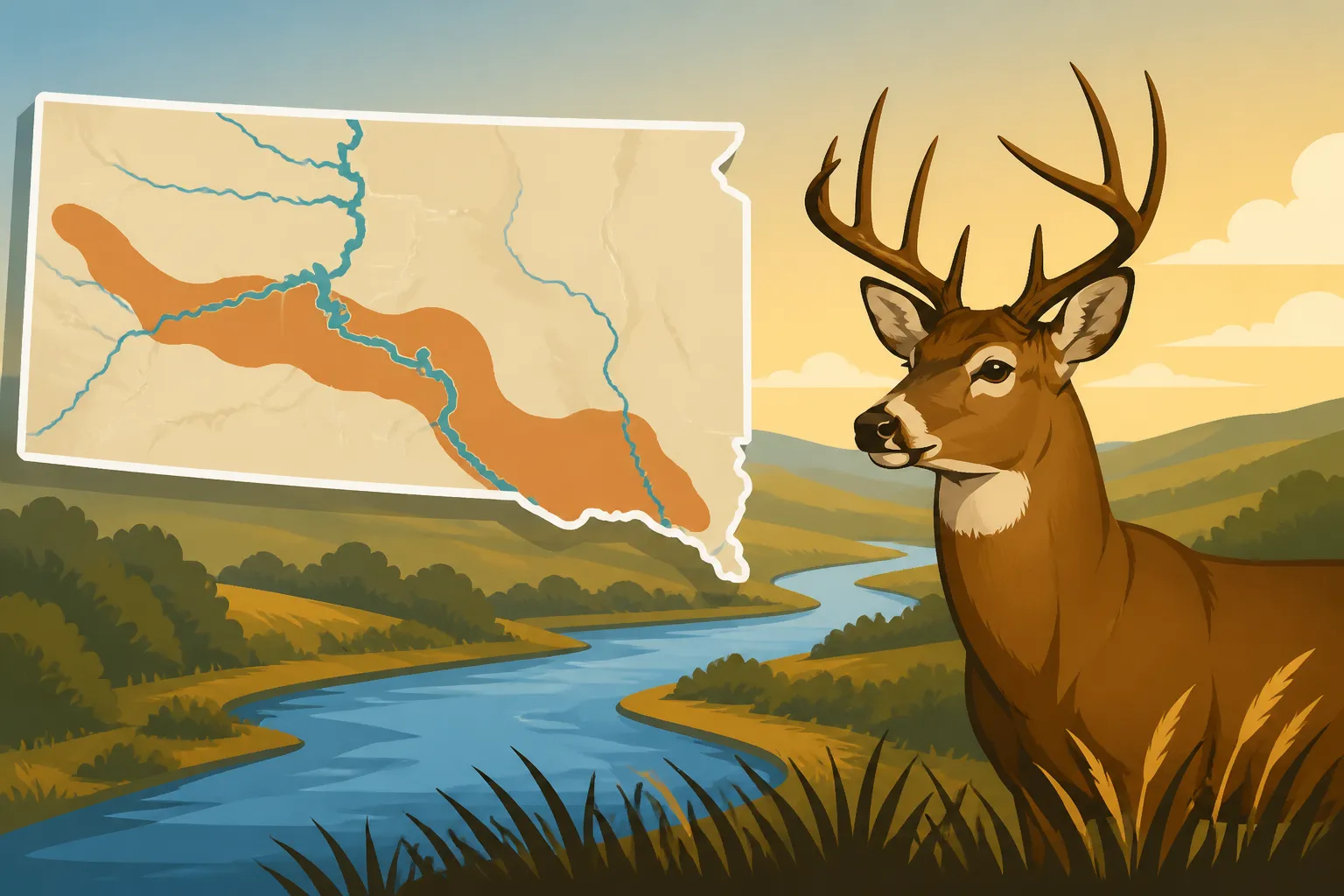
The Missouri River, with its extensive timbered bluffs, islands, and floodplains, is arguably the most significant whitetail habitat in the state. From the North Dakota border all the way down to Nebraska, the river forms a massive, linear oasis. The sheer scale of the Missouri River system means habitat varies widely. You'll find everything from mature cottonwood galleries and dense willow thickets to cedar breaks and even pockets of oak and ash timber, especially along the more rugged sections. This diverse cover provides thermal protection from harsh winters and crucial concealment during hunting season.
The Missouri River's impact on whitetail density can't be overstated. The river itself acts as a natural highway for deer movement, and the adjacent fertile soils support a robust array of food sources, including agricultural crops like corn and soybeans in adjacent fields, as well as natural browse. Hunters often find that deer movement patterns are heavily influenced by the river's contours, oxbows, and tributary junctions. Learning to read these landscape features, perhaps with tools like the maps available through services like GoHunt, is paramount to understanding where deer will travel, feed, and bed within this vast system.
East River Tributaries: Hidden Gems
While the Missouri gets all the glory, the eastern side of South Dakota is crisscrossed by several lesser-known but incredibly productive river systems. Rivers like the James, Big Sioux, Vermillion, and their numerous tributaries, while generally smaller and less timbered than the Missouri, still create vital habitat corridors in an otherwise heavily agricultural landscape. These rivers often feature narrow bands of riparian timber, brushy draws, and cattail sloughs that provide critical cover and travel routes.
These East River systems, though perhaps not as dramatic as the Missouri, are often overlooked by hunters focused on the "big river," making them potential hidden gems. Deer here adapt to smaller patches of cover, often utilizing drainage ditches, shelterbelts, and even overgrown fence lines that lead into the river bottom. Understanding Whitetail Density Along River Corridors in these areas means recognizing that while populations might be less dense per square mile of river, the deer are concentrated within those limited strips of cover, making them predictable if you know what to look for. The challenge, of course, is gaining access to these pockets, as much of the surrounding land is private farmland.
West River Rivers and Creeks: Survival in Arid Lands
West of the Missouri River, the landscape generally transitions to rolling prairie, badlands, and national grasslands. Here, rivers and creeks like the Cheyenne, White, Grand, and Moreau become even more critical arteries for whitetail survival. These systems often carve deep, rugged coulees and breaks into the landscape, creating pockets of timber (primarily cottonwood, willow, and some cedar) and dense brush that contrast sharply with the open, arid plains.
In this dryer environment, the presence of perennial water and shade makes these river and creek bottoms irreplaceable for whitetails. Deer concentrations are often directly tied to these water sources and associated cover. A single stringer of timber along a creek might hold multiple bucks during the rut, offering a challenging but rewarding hunt. Unlike the expansive forests of the Missouri, these West River systems require a keen eye for subtle changes in topography and vegetation. Reading Prairie Coulees for Mule Deer offers insights that are also highly applicable to understanding how whitetails use these western river breaks.
Factors Influencing Whitetail Distribution in River Bottoms
Whitetail deer don't just randomly inhabit river bottoms; their presence and density are governed by a complex interplay of environmental factors. Understanding these influences can help hunters predict where deer are likely to be found, even in unfamiliar terrain.
Food Sources and Agricultural Proximity
One of the primary drivers of whitetail distribution in river bottoms is the availability of food. Riverine habitats inherently offer natural browse, forbs, and mast (like acorns in areas with oaks), but in South Dakota, the proximity to agricultural fields significantly amplifies the attraction. Corn, soybeans, alfalfa, and winter wheat provide a high-energy diet that allows deer to grow larger and healthier, and sustain higher populations. Deer will often bed deep within the river bottom cover during the day and move out into adjacent fields to feed, especially at dawn and dusk.
The transition zones between river timber and crop fields are often prime areas for setting up stands or planning stalks. This is where you might find heavily used trails, rub lines, and scrapes. However, hunters must be mindful of property lines when hunting these edges. Tools that show land ownership, like those offered by onX Layers for South Dakota Land Status, can be invaluable in these situations, ensuring you're always on legal hunting ground. Observing what crops are planted in specific fields year-to-year will also help you anticipate changes in deer movement.
Cover Density and Thermal Protection
Beyond food, secure cover is non-negotiable for whitetails, especially in a state known for its harsh winters and open landscapes. River bottoms, with their dense thickets, mature timber, and even cattail sloughs, offer invaluable thermal protection from biting winds and heavy snows. These areas provide places for deer to bed down safely, out of sight from predators and hunters, and shielded from the elements.
The specific type and density of cover can vary. Along the Missouri, you might find vast expanses of timber, while smaller East River systems might offer only narrow strips of brush. In either case, deer will gravitate towards the thickest, most impenetrable cover available. This often means Late-Season South Dakota Pheasants in Heavy Cover might share their wintering grounds with whitetail deer, as both seek refuge from the cold. Understanding this need for security helps pinpoint bedding areas and escape routes. When scouting, look for dense stands of willow, cedar, dogwood, or even overgrown multiflora rose — anything that provides a thick canopy or tangled undergrowth.
Water Access and Elevation Changes
While rivers provide direct water access, the subtleties of elevation changes within the river corridor are equally important. Whitetails prefer bedding areas that offer a combination of cover, a vantage point, and an escape route. On bluffs overlooking the Missouri River, deer might bed on benches or points that allow them to see approaching threats from multiple directions. Along smaller rivers, even a slight rise in elevation within a dense thicket can serve the same purpose.
Water levels also play a significant role, particularly in the larger reservoirs of the Missouri River. Fluctuating water can create or destroy island habitat, open up new travel corridors, or push deer into tighter areas. In drier western regions, where water is scarcer, even small, spring-fed seeps or potholes within a creek bottom can concentrate deer activity. Always consider how water affects movement: deer will often follow the path of least resistance, which usually means staying close to the water source but avoiding outright submersion.
Seasonal Movements and Whitetail Habits Along Rivers
Whitetail deer are creatures of habit, but their patterns along river systems are highly dynamic, shifting significantly with the changing seasons. Understanding these seasonal adjustments is critical for effective hunting.
Early Season and Pre-Rut Behavior
During the early archery season, from late September through October, whitetails are generally in their predictable summer patterns. They are primarily focused on feeding to build up fat reserves for the coming rut and winter. River bottoms offer consistent access to water and lush forage, making them prime locations. Deer movement is often concentrated around dawn and dusk, as they move between bedding areas within the dense river cover and feeding areas in adjacent agricultural fields.
The pre-rut period, typically in late October, sees a noticeable increase in buck activity. Bucks begin to rub trees and create scrapes, marking their territory and communicating their presence. These signposts are often found along travel corridors within the river timber, particularly where trails bottleneck or where cover transitions into more open areas. Hunters during this time might focus on pinch points where deer are funneled, or near established food sources. Scouting for fresh rubs and scrapes is a fantastic way to identify areas of heightened buck activity before the full chaos of the rut begins.
The Peak Rut and Post-Rut
The rut, usually peaking in early to mid-November in South Dakota, is when whitetail behavior becomes most erratic and exciting. Bucks are actively seeking does, often abandoning their predictable feeding and bedding patterns to cover extensive ground. River bottoms become high-traffic zones as bucks cruise the timbered corridors, checking for estrous does. This is a fantastic time for hunters to capitalize on increased daytime movement. Tactics like Rattling and Grunting During the South Dakota Rut can be incredibly effective, as bucks are highly responsive to calls that might signal another buck in their territory or a doe in heat.
Following the rut, as deer recover from the strenuous breeding season, they shift back to prioritizing food and cover. The post-rut, from late November through December, often sees deer focusing heavily on high-energy food sources and seeking the thickest available thermal cover. River bottoms, particularly those with dense timber and access to waste grain in fields, become essential survival grounds. This period can offer excellent hunting opportunities for those willing to brave the colder weather, as deer become more visible during daylight hours as they desperately try to refuel.
Wintering Habits and Survival
South Dakota winters can be brutal, and river bottoms are absolutely vital for whitetail survival during this period. The dense timber provides crucial thermal cover, protecting deer from frigid winds and deep snow. Deer will often yard up in the most protected sections of the river, minimizing their movement to conserve energy. Access to leftover waste grain in harvested fields, or natural browse that remains available, becomes critically important.
Understanding these wintering habits can inform future hunting seasons. Areas that hold large concentrations of deer during the harshest months are likely key bedding and travel corridors throughout the year. Snow can be a great tracker, revealing heavy trails that show where deer are traveling from bedding to feeding. Hunters looking to understand deer behavior in late season conditions should consider reading about Late-Season Hunting in South Dakota Snow for insights into how whitetails adapt to extreme cold and deep snow. It's a tough time for deer, and identifying these critical wintering grounds is crucial for effective long-term management and hunting strategy.
Scouting and Hunting Strategies for River Bottom Whitetails
Hunting whitetails in South Dakota's river bottoms requires a thoughtful approach, combining meticulous scouting with adaptive hunting strategies. The dense cover and often challenging terrain demand careful planning.
E-Scouting and On-the-Ground Reconnaissance
Before you even step foot in the woods, thorough e-scouting is your first line of defense against wasting time. Utilizing satellite imagery, like that found on platforms such as GoHunt, allows you to identify potential travel corridors, bedding areas, and feeding zones from the comfort of your home. Look for bottlenecks where timber narrows, oxbows that create natural funnels, or areas where dense cover meets agricultural fields. Pay close attention to subtle elevation changes, as deer will often use these for bedding with a tactical advantage.
Once you have a few promising spots identified, it’s time for on-the-ground reconnaissance, ideally outside of hunting season to minimize disturbance. Walk the river bottom, looking for heavily used trails, old rub lines, and scrapes. Identify potential stand sites that offer good concealment and a clear shooting lane for the prevailing winds during hunting season. Finding Shelterbelt Ends That Hold Late Birds can also clue you into areas deer might use for cover, as pheasants and deer often share similar needs for dense, protective habitat. Don't forget to scout for water crossings, especially if the river or creek is shallow enough for deer to traverse.
Stand Placement and Wind Considerations
Selecting the right stand placement in a river bottom is paramount. Given the often linear nature of the habitat, deer movement is often predictable along the timbered edge or through established trails. Look for locations that intercept deer moving between bedding and feeding, or along major travel corridors during the rut. For example, a bend in the river that creates a natural choke point can be an excellent location. When considering Treestand Setups on Narrow River Timber, remember that deer can appear and disappear quickly in thick cover, so a stand that offers multiple shooting lanes and a good vantage point is key.
Wind direction is, without exaggeration, everything when hunting whitetails. The swirling winds that can occur in river bottoms, especially along bluffs or deep coulees, make scent control and strategic entry/exit routes absolutely critical. Always hunt with the wind in your favor, and have a backup plan for different wind directions. Consider having multiple stand locations to adapt to changing conditions. A single hunt with the wrong wind can educate a mature buck for the entire season, or even longer.
Still Hunting and Tracking in Thick Cover
River bottoms are often ideal for still hunting, especially in the off-hours between morning and evening feeding excursions. Moving slowly and deliberately through the timber, pausing frequently to glass and listen, can be incredibly effective. The dense cover provides ample opportunities for concealment, allowing you to approach deer without being detected. However, it requires immense patience and a keen eye for deer sign and movement.
When hunting in snow, tracking can be a highly effective strategy. Fresh snow will reveal not only deer trails but also their direction and speed of travel. Following a fresh set of tracks, particularly those of a mature buck, can lead you directly to their bedding area. This is a slow, methodical process that requires understanding deer behavior when they are being followed. Knowing how to interpret tracks, rubs, and scrapes, even those made in prior weeks, helps paint a picture of deer activity within the river bottom. For more on late-season tactics, consider Hunting Roosters After a Blizzard as the principles of navigating and interpreting sign in heavy snow can apply to deer as well.
Conservation and Management of Riverine Whitetail Populations
Effective management and thoughtful conservation practices are crucial for sustaining healthy whitetail populations along South Dakota's river systems. These efforts ensure that future generations can continue to enjoy the challenge and reward of hunting these magnificent animals.
Habitat Preservation and Restoration
The ongoing health of South Dakota's riverine whitetail populations is directly tied to the quality and quantity of their habitat. Efforts to preserve existing timbered corridors, restore degraded riparian zones, and manage invasive species are vital. Practices like planting native trees and shrubs along riverbanks help stabilize soil, improve water quality, and provide additional food and cover for deer and other wildlife.
Many conservation organizations and state agencies, like the South Dakota Game, Fish and Parks (GFP), work to enhance these critical habitats. Landowners can also play a huge role by enrolling in conservation programs that protect and enhance riparian areas. These efforts not only benefit whitetails but also support a vast array of other wildlife, from songbirds to waterfowl. Hunters often contribute to these efforts through licence fees and organizations like Pheasants Forever or Ducks Unlimited, whose work frequently benefits shared habitat.
Disease Monitoring and Management
Whitetail deer populations, particularly in high-density areas like river bottoms, are susceptible to various diseases. Epizootic Hemorrhagic Disease (EHD) and Chronic Wasting Disease (CWD) are two concerns in South Dakota. EHD, carried by biting midges, can cause significant localized deer die-offs, especially during dry years when deer congregate near remaining water sources in river bottoms. CWD, a neurological disease, is a long-term threat that requires ongoing monitoring and management to prevent its widespread impact on deer herds. Hunters are an important part of the solution; reporting sick or dead deer to the GFP helps wildlife managers track disease outbreaks. For more information on this critical topic, refer to EHD Outbreaks in South Dakota Deer.
Hunters can assist in disease management by adhering to carcass transport regulations, particularly when hunting in CWD-positive areas, and by voluntarily testing harvested deer. Understanding the signs of these diseases and cooperating with wildlife agencies ensures the long-term health and sustainability of the whitetail resource.
Public Access and Landowner Relations
Access to prime river bottom hunting grounds can be a significant challenge, as much of the land is privately owned. While South Dakota offers excellent public access through programs like the Walk-In Area (WIA) program, many prime riverine areas remain exclusively private. Navigating this requires a combination of using public land tools and fostering good landowner relationships. The South Dakota Public Hunting Atlas is an indispensable resource for locating WIA properties, Game Production Areas, and other public lands along river systems.
When seeking access to private land, always approach landowners respectfully and well in advance of the season. Offer to help with chores, respect their property, and leave gates as you found them. A good relationship with a landowner can unlock years of fantastic hunting opportunities. Remember that hunting is a privilege, and maintaining ethical conduct, whether on public or private land, is vital for ensuring continued access and a positive reputation for hunters.
South Dakota River Systems Whitetail Habitat Characteristics
To further clarify the distinctions and opportunities, here's a comparative overview of key river systems in South Dakota and their typical whitetail habitat characteristics.
| River System | Primary Location | Typical Cover | Agricultural Proximity | Public Access (General) | Whitetail Density (General) | Hunting Challenge Level |
|---|---|---|---|---|---|---|
| Missouri River | Central/Western Border | Extensive timber, bluffs, islands, dense willows, cedar breaks | High | Moderate to High | High | Moderate to High |
| James River | East River | Narrow timber strips, cattails, brushy draws | Very High | Moderate | Moderate to High | Moderate |
| Big Sioux River | Eastern Border | Mix of timber, urban fringes, dense brush, small woodlots | High | Low to Moderate | Moderate | High (Access) |
| Cheyenne River | West River | Rugged breaks, cottonwood stringers, sparse cedars, sagebrush | Low to Moderate | Moderate to High | Moderate | Moderate |
| White River | West River | Deep coulees, sparse cottonwood, willow, brush | Low | Moderate | Moderate | Moderate |
This table provides a generalized overview; specific sections of each river can vary greatly. For instance, the lower Big Sioux has more timber than its upper stretches. Always consult detailed maps and conduct on-the-ground scouting for precise information.
Disclaimer
The information provided in this article is for general guidance and educational purposes only. Hunting regulations, seasons, and land access rules can change frequently. Always consult the most current South Dakota Game, Fish and Parks regulations and land access maps before planning any hunting activity. Responsible and ethical hunting practices are essential for the conservation of wildlife and the future of hunting.