Prairie Elk Herds in South Dakota
When most hunters think of elk in South Dakota, their minds immediately drift to the rugged Black Hills, picturing dark timber, steep draws, and the majestic bugles echoing through the ponderosa pines. It’s a natural assumption, given the Black Hills are where the state’s primary elk populations reside. However, what many don't realize is that scattered across the vast, rolling prairies of South Dakota, there are smaller, often more elusive herds of elk that call the open country home. These prairie elk present a truly unique challenge and opportunity for the dedicated hunter, a far cry from their mountain-dwelling cousins, and understanding their world is key to appreciating this hidden facet of the state's hunting landscape.
The Hidden Herds of the Prairie
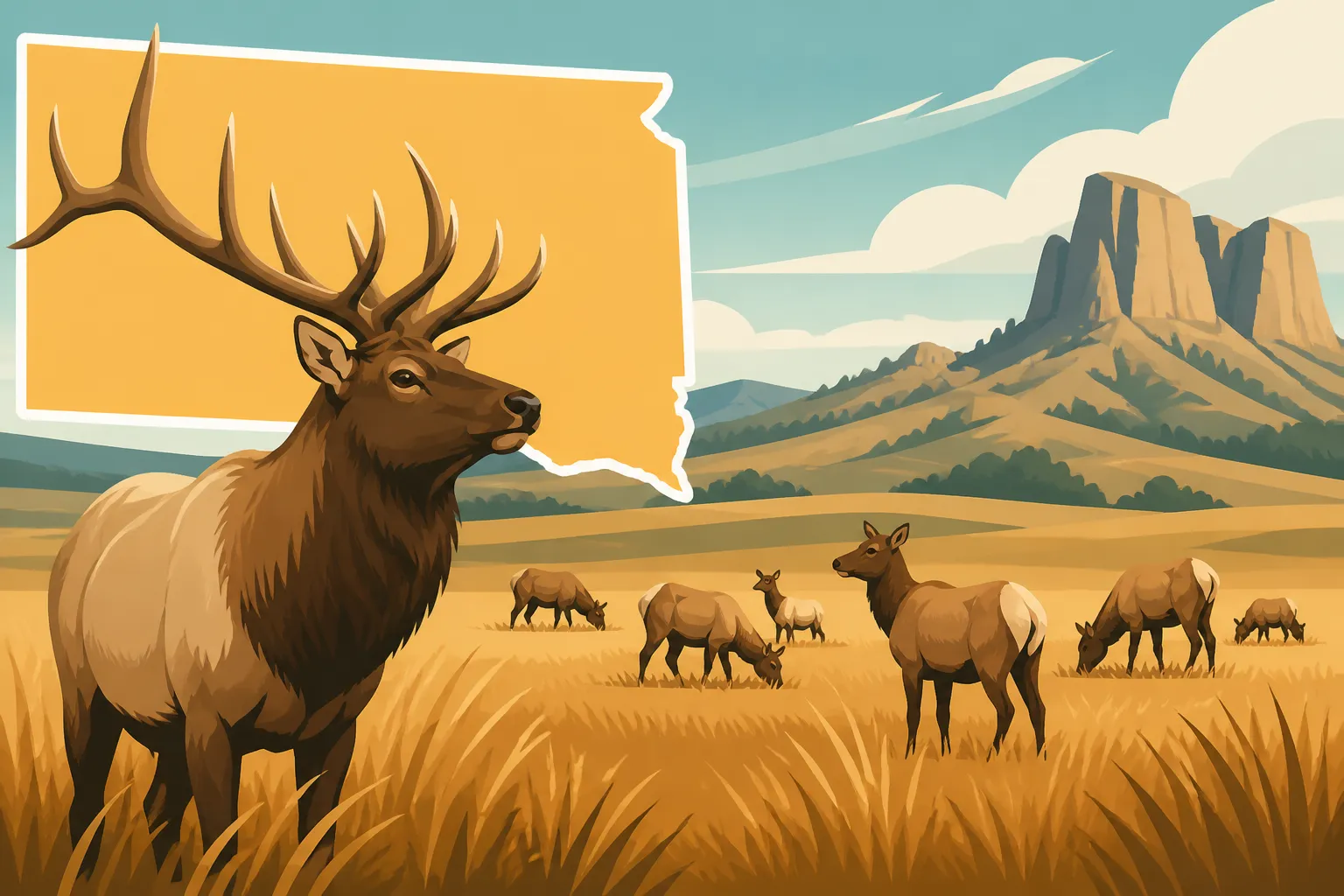
The idea of elk on the prairie often strikes people as contradictory. Elk are symbols of wilderness, of mountains and forests. Yet, South Dakota's prairies, particularly in the western half of the state, hold pockets of these incredible animals, thriving in an environment that seems, at first glance, ill-suited for them. It’s a testament to their adaptability and the surprising diversity of the prairie ecosystem.
Dispelling the Black Hills Myth
For generations, the Black Hills have been synonymous with elk in South Dakota. When people talk about "South Dakota Elk in the Black Hills and Prairie," the emphasis almost always falls heavily on the Black Hills. And for good reason—it’s where the largest, most consistently managed herds are found, offering significant hunting opportunities, albeit highly sought-after. But to overlook the prairie elk is to miss a crucial, fascinating part of the story. These aren't just a few stragglers who wandered too far; these are established herds, albeit smaller and more dispersed, that have carved out a niche in the grasslands and river breaks.
The history of these prairie herds isn't always as clear-cut as the reintroduction efforts in the Black Hills. Some believe they are remnants of historical populations that managed to cling on in isolated areas, while others suggest they are animals that dispersed from the Black Hills or even from neighboring states like North Dakota and Nebraska, finding suitable habitat and deciding to stay. Regardless of their exact lineage, their presence is a stark reminder that nature often finds a way, even in places we might not expect. They represent a wild, untamed spirit, surviving against the odds in an environment that demands constant vigilance and cunning.
The surprise factor when hunters stumble upon these animals in seemingly endless grasslands is truly something special. It challenges preconceived notions of what "elk country" should look like. Instead of dense timber, you're looking at a patchwork of tall grasses, sagebrush, and perhaps a distant line of cottonwoods along a hidden creek. This unexpected reality makes their pursuit even more intriguing, adding a layer of mystery and excitement to the hunt that is hard to replicate. You're not just hunting elk; you're hunting elk in a place they "shouldn't" be, making every sighting and every stalk feel like a significant accomplishment.
Key Prairie Elk Strongholds
While "prairie elk" refers to any herds outside the main Black Hills management unit, there are indeed specific regions where these animals are more likely to be encountered. One of the most well-known areas for prairie elk is in the far northwest, particularly around the Slim Buttes and Cave Hills regions, extending into parts of the Grand River National Grassland. Here, the landscape transitions from classic rolling prairie into more broken country featuring buttes, deep draws, and pockets of unique pine and juniper stands that provide crucial cover and forage.
Further south, the vast expanse of the Buffalo Gap National Grassland and the associated river breaks of the Cheyenne River also hold scattered elk. These areas, characterized by their immense scale, offer enough seclusion and diverse habitat to support small, resident herds. The Missouri River breaks, particularly along Lake Oahe and Lake Sharpe, can also host transient or resident elk, utilizing the steep, timbered canyons and open grasslands bordering the river for shelter and grazing. These riverine habitats provide a different kind of cover than the buttes, relying on the dramatic topographical changes and dense brush in the ravines.
The typical habitat in these areas is a mosaic. You’ll find vast tracts of native prairie, rich with grasses and forbs, that provide excellent grazing. Interspersed are deep, brushy coulees, cedar breaks, or isolated stands of cottonwood and ash in river bottoms that offer crucial bedding cover and protection from the elements. Water sources, whether natural springs, stock ponds, or the mighty Missouri River itself, are also vital, especially during dry periods. These elk have learned to use the subtle folds and undulations of the terrain to their advantage, disappearing into seemingly flat landscapes with an uncanny ability, making them incredibly difficult to spot and even harder to approach. It truly showcases how resilient and adaptable these animals are, thriving where many might think it impossible.
Life on the Open Range: Adaptations and Challenges
Living on the open prairie means these elk face a completely different set of environmental pressures and have developed unique behaviors to survive. They are not the same animals you’d find bugling in dense timber; they are ghosts of the prairie, constantly aware, constantly moving.
Behavioral Differences in Prairie Elk
One of the most striking differences in prairie elk is their heightened wariness. Without the dense cover of a forest to rely on, their primary defense mechanism is their keen senses and their ability to detect threats from a great distance. They're often spotted in vast, open spaces, but getting close enough for a shot is another matter entirely. These elk typically exhibit much longer flight zones than their Black Hills counterparts. A sudden movement or sound that might go unnoticed in thick timber can send a prairie herd scattering across miles of open ground.
Their movement patterns also differ significantly. While Black Hills elk might hold tight in a bedding area for much of the day, prairie elk are often on the move, grazing widely, or utilizing the subtlest terrain features to disappear. They will often travel much further between feeding and bedding areas, making them incredibly elusive. They learn to use every contour, every dry wash, every rise and fall of the ground to stay hidden. You might see a cow elk's back cresting a ridge, only for her to vanish into a shallow depression you didn't even notice. This makes scouting and predicting their movements a true art form.
When it comes to diet, prairie elk are master foragers. While they certainly appreciate lush grasses, they also adapt to browse on sagebrush, various forbs, and even the leaves and twigs of shrubs found in the draws. This diverse diet allows them to sustain themselves in areas where pure grazing might be less consistent. You'll observe them acting more like large deer in their feeding habits, nibbling on a variety of plants as they move. Their vocalizations, while still present, might also be less frequent or intense than the classic, echoing bugles heard in timber, as excessive noise in wide-open spaces can draw unwanted attention.
Environmental Pressures and Herd Dynamics
Prairie elk herds, like all wildlife, are heavily influenced by the environment around them. South Dakota's prairies are known for their extremes – scorching summers and brutal, snowy winters. These fluctuations directly impact the health and size of the elk populations. Severe winters, with deep snow and prolonged cold, can make foraging incredibly difficult, leading to increased mortality, especially among calves and older animals. Conversely, prolonged droughts can reduce the availability of lush forage and water, stressing the animals and potentially impacting reproduction.
Another significant pressure point is the interaction with agriculture and private land. Much of the South Dakota prairie is privately owned, used for ranching and farming. Elk, being large grazers, can cause damage to fences, haystacks, and crops, leading to understandable frustrations for landowners. This human-wildlife conflict often dictates where elk can comfortably reside and can lead to management actions like special depredation hunts to mitigate damage. Balancing the desire for healthy elk populations with the needs of agricultural producers is a constant challenge for wildlife managers.
Predation dynamics also play a role, though perhaps less overtly than in the Black Hills. While mountain lions are primarily associated with the Black Hills, occasional sightings and confirmed kills do occur on the prairie, especially in areas with significant broken country. Coyotes are ever-present on the prairie and can certainly prey on young calves, while eagles might also pose a threat to newborns. However, the open nature of the prairie also means that elk can often outrun or outmaneuver predators in plain sight, making their speed and endurance a crucial survival trait. Understanding these complex interactions is vital for agencies like South Dakota Game, Fish and Parks (GFP) as they develop strategies for managing these unique herds.
The Elusive Pursuit: Hunting Prairie Elk
Hunting prairie elk is not for the faint of heart, nor for those seeking instant gratification. It requires immense patience, sharp skills, and an intimate understanding of both the animal and the vast landscape it inhabits. It’s a hunt where you truly earn your success, often over several seasons of dedication.
Drawing a Coveted Prairie Elk Tag
First and foremost, securing a prairie elk tag in South Dakota is an achievement in itself. Unlike the Black Hills, which has multiple units and a relatively higher number of tags, prairie elk units are often characterized by extremely limited tag numbers. This makes the draw odds incredibly low, often requiring years, if not decades, of accumulating preference points. It's truly a long game, and many hunters apply for years without success. When you're dreaming of a prairie elk, you're signing up for a marathon, not a sprint.
The South Dakota GFP manages these units carefully, often with very few "any elk" tags and perhaps a few more antlerless tags in specific areas to manage herd numbers or address depredation issues. Non-residents face even steeper odds, as the number of available tags is heavily skewed towards residents. This competitive nature means that every application needs to be strategic. Resources like GoHunt can be invaluable here, providing detailed analysis of past draw odds, success rates by unit, and even application strategies that can help you make the most informed decision. Understanding the nuances of the "South Dakota Elk Draw and Units" is paramount, whether you're a seasoned applicant or just starting your journey.
Many aspiring prairie elk hunters will dedicate themselves to buying a South Dakota preference point year after year, slowly building their chances. It’s a testament to the allure of these unique hunts that so many are willing to wait so long for even a slim possibility. When a tag is finally drawn, it's not just a piece of paper; it represents years of hope, planning, and a deep respect for the challenge that lies ahead. The scarcity adds immense value and gravitas to the hunt, ensuring that those who pursue it are truly committed to the experience.
Unique Hunting Tactics for Open Country
Once you've beaten the odds and drawn a prairie elk tag, the real work begins. Forget traditional timber-hunting tactics; prairie elk demand a different approach. The most crucial tool in your arsenal will be high-quality optics – powerful binoculars and a spotting scope are non-negotiable. You'll spend countless hours glassing, meticulously dissecting the landscape from vantage points, searching for a speck of brown that might resolve into an elk. This is a game of distant observation, long before any thought of a stalk.
E-scouting is also incredibly important for these vast, often roadless areas. Using satellite imagery to identify potential bedding areas in draws, hidden water sources, and travel corridors between public and private land can save immense amounts of time and effort. Look for those subtle changes in topography, the small pockets of trees, or the deeper, brushier coulees that could hold animals. This extensive prep work is vital because once you’re on the ground, the sheer scale of the landscape can be overwhelming.
When it comes to the actual hunt, patience is key. Stalking an animal across open ground requires incredible skill, using every ripple and fold of the terrain to stay out of sight. A long-range rifle setup for South Dakota open country is often essential, as shot opportunities can be extended. Practicing prone shots on the prairie and understanding how to read wind at four hundred yards becomes critical. These elk are constantly looking, listening, and smelling, and the wind is your most important ally and potential adversary. You'll often find yourself having to abort a stalk if the wind shifts or if the elk moves into an unfavorable position, waiting for another opportunity that might be hours or even days away. It’s a true test of stealth, endurance, and mental fortitude.
| Characteristic | Black Hills Elk Hunting | Prairie Elk Hunting |
|---|---|---|
| Primary Habitat | Dense ponderosa pine forests, steep canyons | Rolling grasslands, sagebrush flats, river breaks, buttes |
| Typical Cover | Heavy timber, brush, deep draws | Subtle terrain folds, isolated tree pockets, deep coulees |
| Hunting Tactic | Calling (bugling, cow calls), still-hunting, tracking | Extensive glassing, long-range scouting, careful stalking |
| Visibility | Limited, often close-quarters encounters | Vast, long-distance spotting, but difficult to approach |
| Animal Behavior | May hold tight in cover, more vocal during rut | Extremely wary, travel widely, use terrain for concealment |
| Shot Distance | Variable, often shorter due to timber | Generally longer, demanding precision |
| Draw Difficulty | Challenging, but more tags available in various units | Extremely difficult, very few tags, high preference points |
| Physical Demand | Steep climbs, navigating thick timber | Long walks over rolling terrain, potentially extreme weather |
Conservation and Future Outlook
The continued presence of prairie elk in South Dakota is a testament to the state’s diverse habitats and ongoing conservation efforts. These herds, though small, represent a valuable and unique component of the state's wildlife heritage, requiring careful management to ensure their survival and potential growth.
Management Strategies for Prairie Herds
The South Dakota Game, Fish and Parks (GFP) plays a critical role in managing these distinct prairie elk populations. Their strategies involve extensive monitoring, conducting aerial surveys to estimate herd sizes, track health, and understand movement patterns. This data is crucial for setting annual harvest quotas that balance population objectives with social tolerance and the limited availability of public hunting land. Managing these migratory animals across a patchwork of public and private land is a constant challenge, as elk often move freely between different ownerships, necessitating careful coordination.
One significant aspect of prairie elk management is addressing human-wildlife conflicts, particularly depredation on agricultural lands. When elk damage crops or fences, GFP often works with landowners to implement solutions, which can include hazing, fencing assistance, or issuing special depredation permits. The goal is always to find a balance that allows elk to persist while minimizing negative impacts on agricultural operations. This often requires open communication and collaboration with local communities and landowners, who are vital partners in ensuring the long-term viability of these herds. Their willingness to host elk on their property directly influences the success of management plans.
Furthermore, habitat conservation is paramount. While elk are adaptable, they still require specific habitat components like adequate forage, water, and secure bedding cover. Protecting and enhancing these areas, especially on public lands like the National Grasslands and Game Production Areas, is a key component of GFP's strategy. This might involve controlled burns to rejuvenate grasslands or managing timber pockets for optimal cover. Understanding "South Dakota Elk Draw and Units" also includes grasping the unique challenges GFP faces in these diverse landscapes.
The Future of Prairie Elk Hunting
The future of prairie elk hunting in South Dakota is both promising and challenging. On one hand, the resilience of these animals and the dedication of wildlife managers suggest that these unique herds will continue to persist. As public interest in non-traditional hunting experiences grows, the allure of pursuing an elk in such a distinct environment will undoubtedly attract more attention. Continued monitoring and adaptable management strategies will be key to responding to environmental changes and population fluctuations, ensuring sustainable hunting opportunities.
However, significant challenges remain. Habitat fragmentation due to agricultural expansion and rural development could further restrict available elk range and increase human-wildlife conflicts. Climate change, bringing more extreme weather events, could also impact forage and water availability, stressing herds. The highly sought-after nature of the tags, with their low odds, means that prairie elk hunting will likely remain an exclusive, once-in-a-lifetime type of experience for most hunters, rather than a widespread opportunity.
Ultimately, the future success of these herds and the hunting experiences they provide hinges on continued conservation efforts, strong partnerships between wildlife agencies, landowners, and the hunting community. Hunters who pursue these animals are often among their most passionate advocates, understanding the immense value of these wild, free-ranging elk. By supporting sound management practices and respecting the landscape, we can help ensure that the elusive prairie elk continue to roam the open country of South Dakota for generations to come, offering a truly unforgettable challenge for those patient enough to earn a tag. Perhaps one day, you too will be scouting a "Prairie Elk Herds in South Dakota" unit, using tools like GoHunt to e-scout "Scouting a South Dakota Unit From Home" from afar, or even just researching "Prairie Elk Units in South Dakota" and dreaming of your chance.
Disclaimer
The information provided in this article is for general informational purposes only and does not constitute legal or professional advice. Hunting regulations, seasons, and licensing requirements are subject to change. Always consult the latest South Dakota Game, Fish and Parks (GFP) official regulations and publications before planning any hunting activity. Accuracy of information, including draw odds and unit specifics, may vary and should be verified with official sources.