South Dakota Blaze Orange Requirements
Navigating the myriad rules and regulations for hunting in South Dakota can feel like a maze, and one area that often causes a fair bit of head-scratching is the blaze orange requirement. It’s not always as straightforward as just throwing on a bright vest; there are specific nuances depending on what you’re hunting, when, and how. This guide is here to untangle all that confusion, ensuring you're not only legal but, most importantly, safe in the field.
The Undeniable Importance of Blaze Orange for Hunter Safety
Let's be brutally honest: no one wants to be mistaken for game, and yet, hunting accidents involving misidentification still happen, even to experienced folks. That's why blaze orange, or hunter orange as it's often called, isn't just a suggestion; it's a critical piece of safety gear designed to make you stand out to other hunters, plain and simple. While some might grumble about feeling "too visible" to game, the reality is that the safety benefits far outweigh any perceived stealth disadvantage, especially when we're talking about specific types of hunting.
Why Humans See It, and Deer Don't (Quite)
The science behind blaze orange is fascinating and incredibly practical. Human eyes, with our trichromatic vision, are highly sensitive to the vibrant, fluorescent wavelengths of blaze orange. It essentially screams "human!" to anyone else in the field, even in low light or dense cover. This distinct visibility is a game-changer, drastically reducing the risk of accidental shootings. On the flip side, deer, elk, and other big game animals primarily see in dichromatic vision, similar to a human who is red-green colorblind. This means they perceive the world in shades of blue, yellow, and gray. To a deer, that bright orange vest you’re wearing often blends into the background of browns, yellows, and grays, making it appear as a dull gray or brownish-yellow swatch. What truly spooks game isn't the color, but rather movement and scent. So, while you might feel like a neon sign, the deer are likely more concerned with the way you're walking than the color of your jacket.
Real-World Scenarios Where Blaze Orange Saves Lives
Think about a classic South Dakota pheasant hunt: a line of hunters pushing a cattail slough, dogs working hard, and pheasants flushing wild and fast. In this scenario, with birds potentially flying in any direction and hunters spread out, clear visibility is paramount. Without blaze orange, a quick, instinctual shot at a flushing bird could inadvertently endanger another hunter moving through the dense cover. Similarly, during the excitement of a deer drive, where multiple hunters are strategically placed to move deer, proper blaze orange ensures everyone knows exactly where their fellow hunters are positioned, minimizing the chance of an accidental shot into a blocking position or at a deer running towards another hunter. It's about creating a visual safety buffer around every individual in the field, a silent agreement that everyone is watching out for each other.
South Dakota's Specific Blaze Orange Requirements
South Dakota's regulations for blaze orange are quite clear, but they do vary depending on the specific game you're pursuing and the method you're using. It's crucial to understand these distinctions because what’s legal for pheasants isn't necessarily legal for archery deer, and ignoring these rules can lead to citations, or worse, dangerous situations.
Upland Game Hunting Regulations
For those heading out to chase the legendary ring-necked pheasants, or even prairie grouse and partridge, blaze orange is almost universally required. The law typically states that hunters must wear at least one article of outer clothing above the waist that is fluorescent orange. This means a cap, vest, jacket, or coat that is solid blaze orange and clearly visible from all sides. It’s not just about wearing some orange; it's about making sure it's prominent and unobstructed. This applies across the board, whether you're hunting public lands like the extensive South Dakota Walk-In Areas Explained or private ground. The rationale here is simple: upland hunting often involves multiple hunters, dogs, and unpredictable bird flushes in varied cover, making maximum visibility a top priority. When you're driving a field, or even just working a shelterbelt, knowing where your partners are is non-negotiable for safety.
Big Game Hunting Requirements
Big game hunting in South Dakota—which includes deer, antelope, and elk—has different rules, primarily separating archery seasons from firearm seasons.
- Archery Season (Deer, Antelope, Elk): During designated archery seasons, blaze orange is generally not required for hunters actively pursuing big game with a bow. The reasoning is often tied to the close-range nature of archery hunting, where camouflage is deemed more critical for success. However, if you're out archery hunting during a period when a firearm season for any species is open, you might want to consider wearing orange as a precaution, even if not legally mandated for your specific hunt. Safety first, always. Many archers still opt for a blaze orange hat when walking in or out of their stand, removing it once they are settled in their spot.
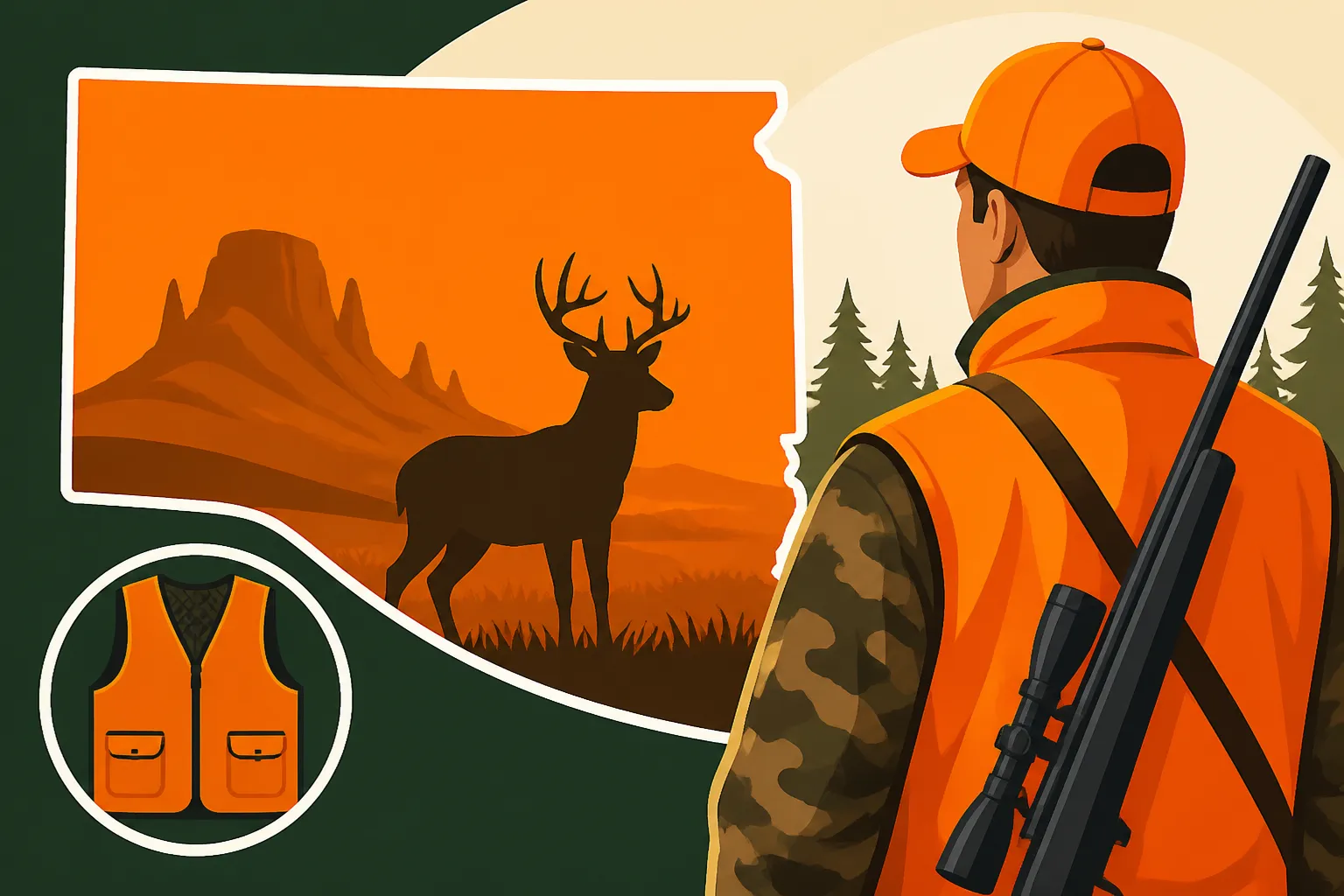
- Firearm Season (Deer, Antelope, Elk): This is where blaze orange becomes a legal necessity for all big game firearm hunters. During any firearm season for deer, antelope, or elk, hunters must wear at least one article of blaze orange above the waist. Similar to upland hunting, this article must be visible from all sides. For example, during the West River deer rifle season, everyone afield pursuing deer with a firearm needs to be sporting that distinctive orange. This is especially vital when considering the vast, open landscapes and rolling breaks where long shots are common, and hunters can be spread out over considerable distances. Understanding the specific South Dakota Deer Licence Types by Region and their associated season dates is key to knowing when these requirements apply.
Table: South Dakota Blaze Orange Requirements Overview
| Hunting Activity | Weapon Type | Blaze Orange Required? | Specifics | Notes |
|---|---|---|---|---|
| Pheasant & Upland Game | All | Yes | At least one article of outer clothing (cap, vest, jacket, coat) above the waist, visible from all sides. Solid blaze orange. | Critical for group hunts and dense cover. Applies to both public and private land. Refer to South Dakota Pheasant Season and Licences for dates. |
| Big Game (Deer, Antelope, Elk) | Archery | No | Not required when actively pursuing big game with a bow during archery-only season. | Optional for safety during periods when firearm seasons for any species are open. |
| Big Game (Deer, Antelope, Elk) | Firearm | Yes | At least one article of outer clothing (cap, vest, jacket, coat) above the waist, visible from all sides. Solid blaze orange. | Absolutely essential during any big game firearm season. This includes the various deer, antelope, and elk seasons. Consider a Rifle Setup for South Dakota Open Country with this in mind. |
| Turkey | All | No | Not typically required, as camouflage is preferred for turkey hunting. | Be aware of other hunters, especially if hunting near areas with open firearm big game seasons. |
| Waterfowl | All | No | Camouflage is standard for waterfowl hunting. | Waterfowl hunting typically involves blinds and concealment. |
Navigating Exceptions and Practical Considerations
While the general rules for blaze orange are fairly cut and dry, there are always those "what about…" moments that crop up. Understanding these finer points and integrating practical advice will keep you safe and legal, without adding unnecessary stress to your hunt. It's not just about avoiding a ticket; it's about being a responsible, ethical hunter.
The "When" and "Where" of Non-Required Orange
One common area of confusion revolves around species where blaze orange isn't explicitly mandated, like turkey or waterfowl hunting. When you're hunkered down in a blind calling a gobbler, or hiding in layout blinds in a cut cornfield for geese, camouflage is your best friend. In these situations, blaze orange would actually work against your hunting strategy. However, let’s consider the bigger picture: even if you’re camouflaged for turkeys, if you’re traversing public land during an active firearm deer season, you’re still sharing the woods. Many experienced hunters will wear a blaze orange vest or hat when walking to and from their turkey or waterfowl blinds, only removing it once they are fully set up and concealed. This provides a crucial layer of safety during transit, especially in areas with mixed-species hunting pressure. Remember, your personal safety often goes beyond the letter of the law.
The Role of Hunter Education and Youth Hunters
South Dakota takes hunter safety seriously, and proper blaze orange use is a core component taught in hunter education courses. For young hunters, especially those participating in the South Dakota Youth Pheasant Season or other mentored youth hunts, wearing blaze orange is not just a requirement but a habit that should be instilled from day one. Many states, including South Dakota, have specific provisions for youth hunters, and sometimes these regulations are even more stringent to ensure their safety. If you're mentoring a young hunter, make sure they understand why they wear orange, not just that they have to. Resources like the official South Dakota Hunter Safety Requirements and South Dakota Hunter Safety Online Course are invaluable for both new and seasoned hunters to review regularly.
Sizing Up Your Blaze Orange Gear
Beyond simply having a blaze orange item, consider its quality and fit. Your vest or jacket needs to be truly visible from all angles, meaning it should fit well over your other layers without being obscured by your pack or a poorly fitting coat. Look for materials that resist fading from sun exposure, as a dull, sun-bleached orange loses much of its effectiveness. During a cold late-season hunt, you’ll be layering up, so ensure your orange garment is sized appropriately to go over your heaviest insulated jacket. Many outdoor brands offer excellent blaze orange options, from lightweight mesh vests for early season South Dakota Pheasant Hunting Tactics for the Opener to heavy-duty, windproof jackets for colder hunts. Before you even head out, take a moment to ensure your orange is vibrant and unobstructed – it's a small check that can make a monumental difference. Furthermore, using tools like GoHunt or the South Dakota Game, Fish and Parks website to cross-reference regulations often means you’re using current data to inform your gear choices.
Common Misconceptions and Best Practices for Hunters
Even with clear rules, misconceptions about blaze orange persist. Clearing up these myths and adopting best practices will not only keep you compliant with South Dakota law but, more importantly, foster a safer hunting environment for everyone.
Dispelling the "Deer See Orange" Myth
One of the most enduring myths is that big game animals see blaze orange and are immediately spooked by it. As we touched on earlier, this isn't how their vision works. Deer lack the cones in their eyes that detect red and orange light. Instead, they see those colors as shades of yellow, green, and grey. So, your bright orange vest likely appears as a muted, dull color against the natural backdrop, blending in far more than you might imagine. What truly alerts them to your presence is movement, scent, and sound. A still hunter in blaze orange is far less noticeable to a deer than a poorly camouflaged hunter fidgeting in the brush. The real enemy of stealth is not blaze orange; it's lack of discipline in the field. Therefore, there's no need to fear that your blaze orange is blowing your big game hunt, especially during seasons where it's required for safety. Embrace the orange, and focus on your hunting technique.
When More Orange Is Better Than Less
While South Dakota regulations specify a minimum requirement (at least one article above the waist, visible from all sides), there are many situations where opting for more blaze orange is simply a smart choice. If you're hunting in heavy cover, especially in areas with known high hunter traffic or when visibility is poor due to fog or rain, consider wearing both a blaze orange vest and a cap. If you're participating in a large group pheasant drive, having every member prominently display orange, perhaps even on their dog's vest, adds another layer of security. The goal is maximum visibility to other human hunters. This is especially true on large tracts of public land, such as the Buffalo Gap National Grassland, where hunters can be spread out and unexpected encounters are always a possibility.
Checking the Regulations Annually
Hunting regulations are not static; they can change from year to year. New rules might be introduced, or existing ones might be modified. What was true last season might not be entirely accurate this season. That’s why it’s a critical best practice to review the current South Dakota Hunting and Trapping Handbook before every season. Don't rely on memory or what your buddy told you five years ago. The South Dakota Game, Fish and Parks website is always the most up-to-date resource. Taking a few minutes to read through the regulations, perhaps even using online tools from reputable sources like GoHunt to confirm specific season dates and requirements, ensures you're always operating within the current legal framework. This simple annual check is a cornerstone of responsible hunting and ensures you understand all the specifics, including legal shooting hours, bag limits, and of course, blaze orange requirements for all your planned hunts, from chasing pheasants to Black Hills Elk Hunting Tactics.
Disclaimer
Please note: This article provides general information based on current South Dakota hunting regulations. Hunting laws and regulations can change, and it is the hunter's responsibility to consult the most current South Dakota Game, Fish and Parks (GFP) hunting handbook and official resources before engaging in any hunting activity. This content is not a substitute for official legal advice or current state regulations.