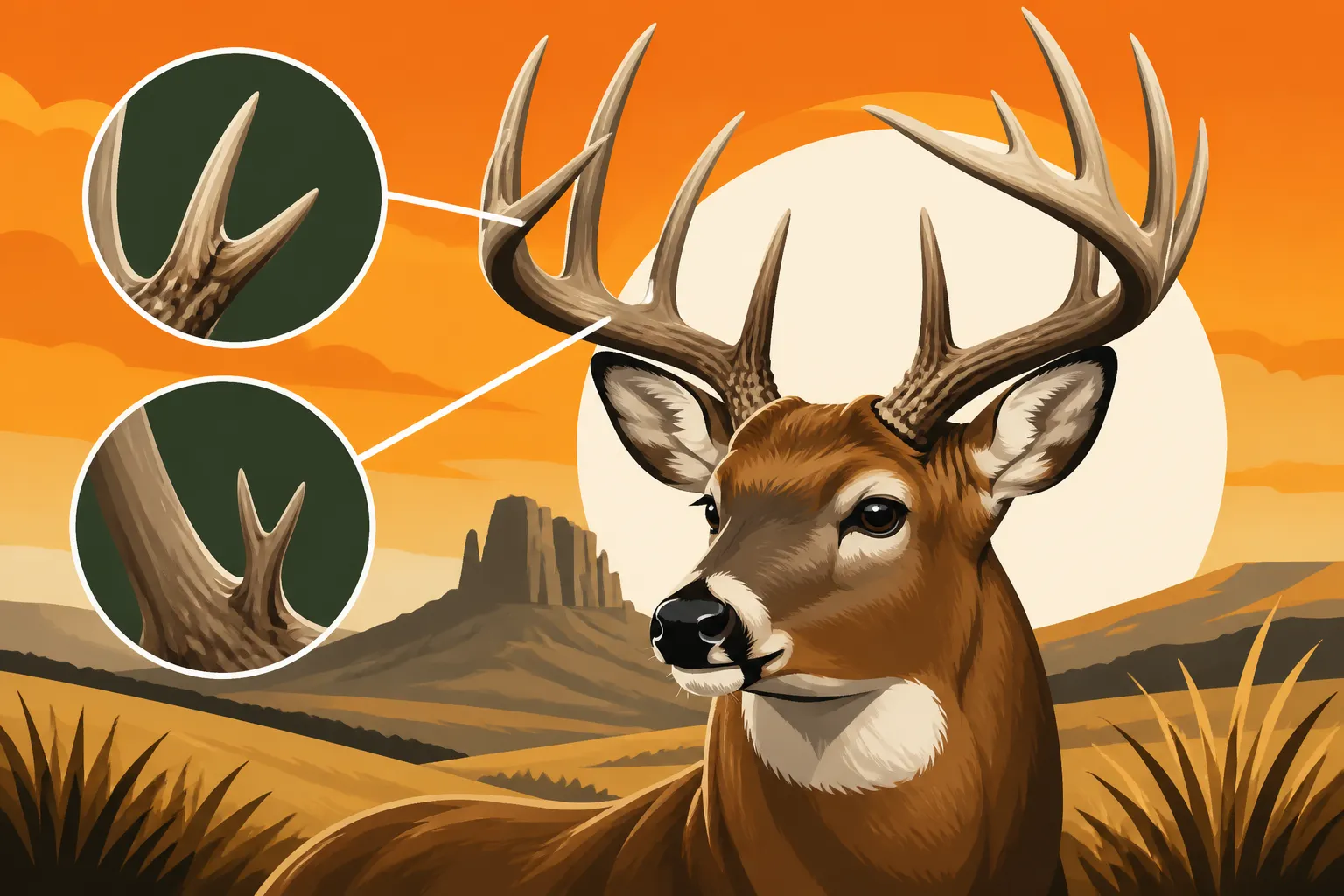
Cutters and Prongs on a Good Buck
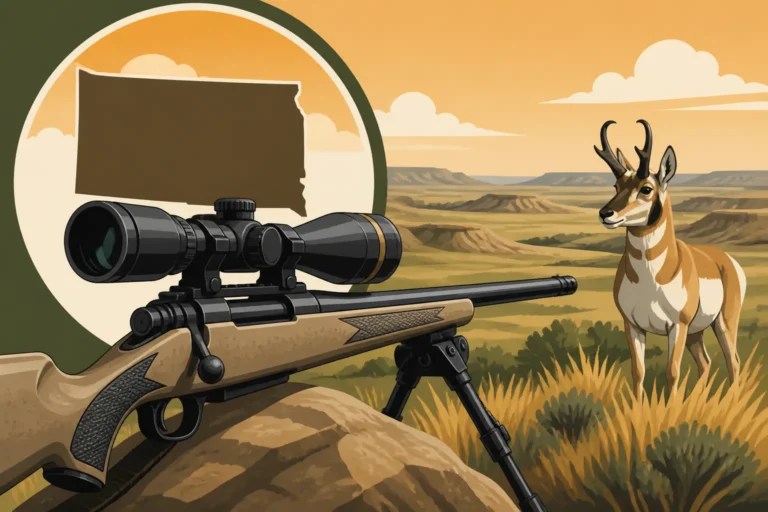
There’s nothing quite like the sight of a South Dakota pronghorn buck out on the vast prairie, standing against the horizon, its dark horns gleaming. But as a hunter, that exhilarating first glimpse quickly turns into a scramble to assess if it’s the buck you’re after. It's incredibly challenging to make a split-second decision when that animal is a quarter-mile away, shimmering in the heat haze. This guide is all about helping you understand the critical features—specifically the "cutters" and "prongs"—that indicate a truly good buck, giving you the confidence to make the shot count.
Understanding Pronghorn Antelope Horn Anatomy
Unlike deer or elk, whose antlers are bone and are shed annually, pronghorn have true horns. These horns are fascinating structures, composed of a permanent bony core that remains attached to the skull, over which a keratinous sheath grows and is shed each year. This unique growth pattern gives pronghorn horns their distinct appearance and makes judging them a particular skill. Understanding this anatomy is the first step to truly appreciating what makes a "good buck" in the field.
The Unique Growth Cycle of Pronghorn Horns
It's a common misconception that pronghorn are like deer, shedding their entire headgear. Instead, each year, typically in the fall after the rut, the outer, black keratinous sheath of the horn detaches from the bony core. It’s quite a sight if you ever get to witness it! A new sheath then begins to grow, pushing up from the base. This annual regeneration means that while the bony core dictates the overall shape and length potential, the actual visible horn you're judging is essentially a fresh growth each year. This also means that a buck's horn development can be influenced by annual nutrition, weather, and age, making every year a bit different. As you learn more about Pronghorn Horn Growth and Shedding, you'll appreciate the subtleties involved in their development.
Defining Cutters, Prongs, and Mass
When hunters talk about judging a pronghorn, they often throw around terms like "cutters" and "prongs" as if everyone inherently knows what they mean. Let's break it down, because these aren't just abstract ideas; they are distinct physical features crucial for assessing a buck's trophy potential.
- Cutters: These are the forward-facing, often sharp, points that extend from the front edge of the main horn shaft, usually about halfway up or a little higher. They are designed for fighting, giving the pronghorn its characteristic sparring ability during the rut. A prominent cutter indicates maturity and a solid horn structure.
- Prongs: This term often gets confused with "cutters." The main prong is the entire fork or projection that extends backward and upwards from the main horn shaft, creating the distinctive "forked" appearance of a pronghorn horn. The cutter is usually a smaller, more acute point on the front of this main prong or even slightly below it on the main beam. A well-developed prong has good length and often shows a noticeable sweep.
- Mass: This refers to the overall thickness or circumference of the horn. It's measured at various points along the horn, typically above the base, above the prong, and at the tip. Mass is a huge—and often underestimated—component of a buck's final score, contributing significantly to its overall impressiveness. A buck with great length but thin horns won't score as high as one with slightly shorter horns but exceptional mass.
Evaluating Cutters for Trophy Potential
The cutter is a fascinating part of a pronghorn's horn, both visually striking and indicative of a mature animal. When you're out Spot-and-Stalk Antelope Hunting in South Dakota, trying to make a quick decision, the cutter can often be the first thing that really stands out and catches your eye, signaling a buck worth a closer look.
What Makes a Good Cutter
A truly "good" cutter isn't just present; it's prominent. We're looking for length and thickness that really sets it apart from the main beam. Ideally, a great cutter will be at least a few inches long, often extending forward aggressively, sometimes even looking like a small knife blade. The depth of its protrusion from the main horn is key. A longer, thicker cutter usually means the buck is mature and has good genetics, or at least has had good conditions for horn growth that year. Think about it: a small, barely noticeable bump isn't a cutter. You want something that looks like it could actually cut. This feature contributes directly to the aesthetic appeal and, indirectly, to the overall score, as prominent cutters often correlate with better mass and length elsewhere on the horn.
Field Judging Cutters from a Distance
This is where the rubber meets the road, or more accurately, where your binoculars meet the prairie haze. Field judging cutters from a distance is tough, no doubt about it. The best advice I can give is to get into the habit of really studying every buck you see, even those you know you won't shoot. Use your optics—a good spotting scope is invaluable for really dissecting horn characteristics.
When you spot a buck, focus immediately on the front of its horns. Look for that sharp, forward projection. Ask yourself:
- How far does it extend? Is it just a slight bulge, or does it really stick out?
- How wide is it? Does it have some thickness to it, or is it paper-thin?
- Is it symmetrical? Do both horns have equally impressive cutters, or is one side noticeably weaker?
Often, hunters get "horn fever" and only see what they want to see. Take a deep breath. Use your binos or scope to really define that cutter. If you're comparing a few bucks, mentally (or even physically, with your thumb and forefinger on the scope) "measure" the cutter against the ear length, or the length of its muzzle. These natural reference points can help you gauge proportions. A strong cutter, combined with good overall horn development, can quickly elevate a buck from "average" to "trophy" status.
Assessing Prongs and Mass for a Quality Buck
While cutters are exciting, the prongs and the often-overlooked mass measurements are equally, if not more, critical when evaluating a South Dakota pronghorn for its trophy potential. Many hunters, especially those new to antelope hunting, focus purely on length, but a truly impressive buck has it all: good length, strong cutters, well-formed prongs, and significant mass.
The Importance of Prong Length and Location
The prong is what gives the pronghorn its name, and a well-developed prong makes a buck instantly recognizable as a quality animal. When we talk about prong length, we're looking at how far that backward-sweeping fork extends from the main horn beam. Ideally, you want a prong that is at least as long as the ear, if not longer. A common mistake is to confuse the "cutter" as the main prong. Remember, the prong is the entire backward-arching structure.
Beyond sheer length, consider its location and sweep.
- Location: Is the prong situated high on the horn, closer to the tip, or does it break off lower down? Higher prongs tend to give a more balanced appearance and contribute to a better score.
- Sweep: Does the prong sweep back gracefully, or is it blunt and stubby? A nice, deep sweep adds to the aesthetic and suggests a mature, well-formed horn.
- Symmetry: As with cutters, strive for symmetry. While no animal is perfectly symmetrical, grossly mismatched prongs can detract from a buck's overall appearance and score.
When you're glassing from a distance, maybe planning your Spot-and-Stalk Antelope on Open Prairie approach, try to envision the full curve of the horn and where the prong fits into that. It's not just the tip of the prong, but the entire length and curvature that matters. This is where tools like GoHunt can be incredibly helpful when you're doing your pre-season scouting and research. You can study historical harvest photos or unit data to get a better sense of what typical horn development looks like in specific South Dakota units, which helps you calibrate your eyes before you even step foot in the field.
Mass: The Underestimated Scoring Factor
If there's one aspect of pronghorn judging that hunters consistently underestimate, it's mass. Basal circumference, quarter point measurements, and overall thickness throughout the horn contribute significantly to the Boone and Crockett or Pope and Young score. You could have a buck with decent length, but if its horns are pencil-thin, it won't score nearly as well as a slightly shorter-horned buck with incredible mass.
Think about it visually: a horn that carries its thickness well up toward the tip, rather than tapering drastically, will always look more impressive and score higher.
- Basal Mass: This is the circumference right at the base of the horn. A thick base is almost always a good sign of a mature animal.
- Mass Above Prong: Pay attention to how much thickness the horn retains after the prong branches off. Does it remain beefy, or does it become spindly?
- Carrying Mass: Does the horn maintain its mass all the way to the tip, or does it quickly diminish? Bucks that "carry their mass" well are highly desirable.
It's hard to judge mass perfectly from afar, but you can certainly get a sense of it. Look for horns that appear robust, solid, and blocky rather than thin and reedy. Compare the horn's thickness to the buck's ear width – a good general rule is that the horn should appear thicker than the ear at its base. The more you practice Judging a Pronghorn Buck in the Field, the better you'll get at discerning this crucial feature.
Putting It All Together: Field Judging a South Dakota Pronghorn
So, you've got the definitions down, and you understand the individual components. Now, how do you combine all this knowledge into a coherent field judgment when a buck flashes across the plains, perhaps during an exciting Decoying Antelope Over Water scenario? It's about seeing the whole picture, not just focusing on one aspect.
The Composite Picture: Looking Beyond One Feature
Hunting is often about making quick decisions under pressure. It's easy to get fixated on one impressive feature—like a super long main beam or an exceptionally sharp cutter—and let that blind you to other aspects of the buck's horns. A truly trophy-class buck usually excels in all categories: length, cutters, prongs, and mass.
Here’s a mental checklist to run through when you spot a potential shooter:
- Overall Length: Does the horn extend noticeably past the ear when viewed from the side? How far past?
- Cutters: Are they clearly visible, long, and sharp? Do they project forward aggressively?
- Prongs: Are they long, sweeping back significantly, and well-located on the horn?
- Mass: Do the horns look thick and heavy, especially at the base and carrying that thickness throughout?
- Symmetry: Do both horns appear relatively similar in terms of these features?
It’s a lot to process in a short amount of time, especially with your heart pounding. But with practice, this becomes second nature. Remember, a buck with an exceptional feature in one area but weak in others might not score as high as a buck that is "good" to "very good" in all areas. For serious trophy hunters aiming for the record books, understanding Boone and Crockett Minimums for Pronghorn is essential, and this requires a holistic view of the animal’s headgear.
Practice Makes Perfect: Tips for Improving Field Judging Skills
There's no substitute for time behind the glass. The more pronghorn you look at, the better your eye will become. Even if you're not hunting, spend time watching them. Use your binoculars and spotting scope to pick apart every buck you see.
- Study Photos and Videos: Before the season, pore over photos and videos of harvested pronghorn, especially those with official scores. Try to guess the score and identify the key features before looking at the official data.
- Use Visual Aids: If you can, carry a small, credit-card-sized reference card with key measurements (e.g., ear length, eye-to-nose length) for a mature buck, to help you gauge proportions in the field.
- Digital Tools: Utilize hunting apps like GoHunt that provide satellite imagery, public land overlays, and often harvest data for specific units. This can help you understand the potential quality of bucks in the areas you’re considering, even before you start your Scouting South Dakota Public Ground Before the Season. Knowing what a good buck looks like in your target unit can set realistic expectations.
- Hunt with Experienced Mentors: If possible, hunt with someone who has extensive experience judging pronghorn. Their insights can be invaluable.
- Confirm After the Harvest: After you've taken a buck, take the time to really examine its horns. Compare what you saw in the field to what you hold in your hands. This feedback loop is crucial for improving your skills for next time. Knowing how to precisely measure after the shot for Scoring a Pronghorn Buck can also reinforce what you learned about field judging.
Here’s a quick reference guide to help distinguish between a young buck and a mature buck based on these features:
| Feature | Young/Immature Buck | Mature/Quality Buck |
|---|---|---|
| Overall Length | Horns often just reach or slightly exceed ear length. | Horns extend well past ear length, appearing taller. |
| Cutters | Small bumps, barely noticeable, or non-existent. | Prominent, sharp, aggressive, several inches long. |
| Prongs | Short, stubby, or poorly defined; low on the beam. | Long, sweeping, well-defined, generally higher up. |
| Mass (Base) | Thin, often appear "pencil-necked" at the base. | Thick, heavy base, appearing robust. |
| Mass (Carry) | Tapers quickly and significantly towards the tip. | Carries thickness well up towards the tip. |
| Overall Shape | More upright, less "character" in the horns. | Wide, great divergence, more distinct features. |
Ultimately, the best buck is the one that makes you happy. But by understanding cutters, prongs, and mass, you'll be better equipped to identify a truly special South Dakota pronghorn when the moment of truth arrives. Happy hunting, and good luck out on that prairie!
Disclaimer
Hunting involves inherent risks. Always prioritize safety, follow all South Dakota Game, Fish and Parks regulations, and ensure you have the appropriate licenses and tags. This guide is for informational purposes only and does not replace professional instruction or local regulations. Hunters are responsible for their own actions and decisions in the field.