Buffalo Gap National Grassland Hunting
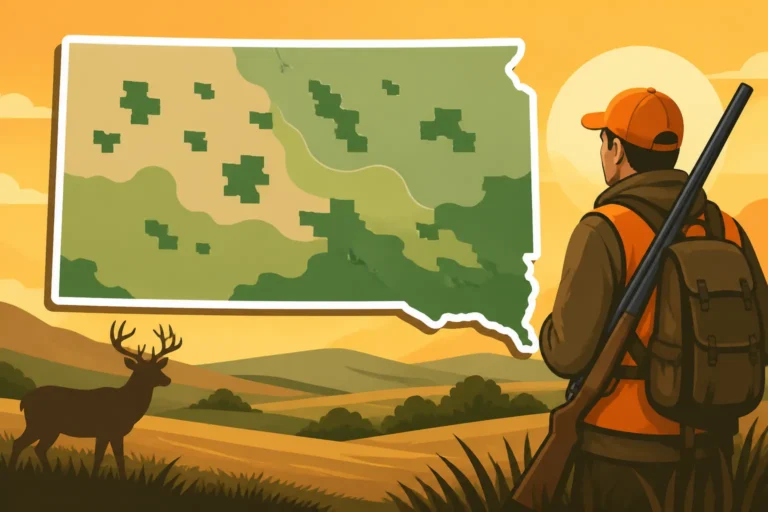
Many hunters feel overwhelmed by the sheer scale of public land in South Dakota, especially a place as vast and seemingly uniform as the Buffalo Gap National Grassland. It's easy to get lost in the endless rolling hills and draws, wondering where to even begin looking for game. This comprehensive guide aims to demystify hunting in Buffalo Gap, offering practical advice and tactical insights to help you plan a successful and enjoyable trip to this iconic South Dakota hunting destination.
Understanding the Buffalo Gap National Grassland Landscape for Hunters
The Buffalo Gap National Grassland isn't just a patch of public ground; it's a colossal expanse of mixed-grass prairie, badlands formations, and hidden draws that can challenge even the most seasoned hunter. For those accustomed to timber or smaller parcels, the sheer openness and lack of obvious cover can feel daunting. But beneath that seemingly simple facade lies a rich, complex ecosystem that supports a fantastic variety of game. Getting to know its character is the first step to unlocking its secrets.
The Sheer Scale and Diverse Terrain
When you first pull onto a gravel two-track in Buffalo Gap, you're immediately struck by the horizon. It stretches forever, seemingly unbroken, but don't let that fool you. This isn't flat, monotonous prairie. Buffalo Gap is characterized by rolling hills that often hide deep, winding coulees, sharp breaks that transition into badlands terrain, and scattered pockets of sparse timber or brush along drainages. It’s an incredibly dynamic landscape. Understanding this topography is crucial, as game species often use these subtle changes in elevation and cover to their advantage. A gentle rise might conceal a dozen draws, each a potential bedding area or travel corridor. The scale means you’re often covering miles on foot or by vehicle, and what looks close on a map can be a significant trek. This vastness can be intimidating, but it also means there are always new areas to explore and less pressure in the far reaches. The sheer size of the Buffalo Gap National Grassland, which often feels boundless, demands a different approach than typical smaller hunting blocks.
Consider the diverse geological features here. You'll find areas dominated by smooth, grassy hills, perfect for glassing vast distances. Then, abruptly, you might drop into intricate badlands formations – a labyrinth of eroded pinnacles, steep ravines, and clay buttes. These "breaks" are rugged, difficult to traverse, but often hold hidden pockets of mule deer that vanish into the folds of the earth. In other sections, the prairie gives way to more riverine environments, with Box Elder Creek and similar waterways creating deeper cuts and providing more substantial cover. These variations in terrain dictate not only where game will be found but also how you approach your hunt. Hunting Buffalo Gap for Mule Deer often involves utilizing these subtle changes in elevation and cover to get within range, requiring keen observation and a patient stalk. Don't fall into the trap of thinking it's all one type of ground; the micro-habitats within Buffalo Gap are what make it so exciting and productive. For more general information on this type of land, check out National Grasslands Hunting in South Dakota.
Key Game Species to Pursue
Buffalo Gap is a true mixed-bag destination, offering opportunities for several highly sought-after species. The most popular draw, without a doubt, is the mule deer. These majestic creatures thrive in the broken country and open spaces of West River South Dakota, using the draws and sage pockets for cover and feeding. While not as numerous as whitetails in some other parts of the state, the mule deer here often boast impressive antlers, thanks to good genetics and the nutrition provided by the grassland. Finding them usually involves extensive glassing and covering a lot of ground, but the reward of spotting a big buck tucked into a coulee is unmatched. For an in-depth look, see Mule Deer on the West River Breaks.
Beyond mule deer, the prairie also holds healthy populations of pronghorn antelope. These incredibly fast animals are a quintessential sight on the open plains, and Buffalo Gap offers ample opportunities for Spot-and-Stalk Antelope on Open Prairie. Their keen eyesight and speed make them a challenging quarry, but the wide-open landscape often allows for long-range glassing and strategic approaches using terrain features. For bird hunters, the grasslands are home to significant numbers of sharp-tailed grouse and occasional greater prairie chickens. These native prairie birds offer a unique upland hunting experience, requiring miles of walking and a good bird dog to locate and flush them from the dense grass. While pheasants are less common than in the traditional East River pheasant belt, isolated pockets can be found, particularly near agricultural interfaces or dense cattail sloughs if any exist within or adjacent to the grassland's boundaries. Waterfowl, too, can be found on scattered stock dams or larger water bodies, especially during migration, offering a diverse hunting experience. For details on these fast prairie runners, read Pronghorn Antelope on the South Dakota Prairie.
Navigating Public Access and Regulations
The beauty of hunting the Buffalo Gap National Grassland lies in its designation as public land, administered by the U.S. Forest Service. This means vast tracts are open for responsible hunting, but understanding how to access it and what rules apply is paramount. It’s not simply a matter of driving up and stepping out; successful and legal hunting requires a bit of homework. The last thing you want is to find yourself questioning if you're on the right side of a boundary or violating a minor, but important, regulation.
Interpreting Maps and Boundaries
In a landscape as expansive and often indistinct as Buffalo Gap, good navigation is your best friend. Relying solely on physical maps can be challenging, as the scale can be deceiving and subtle terrain features might not be accurately represented on older paper versions. This is where modern mapping applications become absolutely invaluable. Tools like onX Hunt are a game-changer for navigating public land. With their detailed layers, you can clearly see property boundaries, land ownership, roads, trails, and even terrain contours right on your phone or GPS device. This allows you to verify in real-time that you are indeed on National Grassland property and not inadvertently trespassing onto a private ranch. The peace of mind this provides is immeasurable, letting you focus on the hunt rather than constantly second-guessing your location. Before you head out, make sure your maps are downloaded for offline use, as cell service can be spotty to non-existent in many remote areas of Buffalo Gap.
Beyond just land ownership, these digital maps can help you understand the lay of the land in intricate detail. You can identify potential access points, often unmarked two-tracks or old trails that aren't on standard road maps. You can also spot subtle elevation changes, draws, and water sources that might hold game. For instance, a small, isolated stock dam that's barely a speck on a paper map becomes a clearly identifiable feature on a onX Layers for South Dakota Land Status application, indicating a potential spot for thirsty antelope or waterfowl. Even recognizing distinct topographical features to use as landmarks for navigation is made easier. Pre-scouting from home using these tools, marking waypoints for promising areas, and planning your routes are critical steps that will save you countless hours and frustrations in the field. Don't underestimate the power of a good map; it's practically a guide in your pocket for this kind of hunting.
General Hunting Regulations and Considerations
Hunting on the Buffalo Gap National Grassland falls under South Dakota Game, Fish and Parks (GFP) regulations, just like any other public or private land in the state. However, the unique nature of the National Grassland means there are often specific nuances to be aware of. First and foremost, you'll need the appropriate South Dakota hunting licenses and tags for the species you intend to pursue. For big game like mule deer and antelope, this typically involves participating in the state's draw system, especially for non-residents. Make sure you understand the application deadlines and requirements well in advance. For upland birds, a general small game license is usually sufficient.
Beyond licensing, pay close attention to general hunting rules: shooting hours, bag limits, and legal methods of take. Buffalo Gap is often a mix of open range and sometimes fenced sections, so understanding "road hunting" laws and regulations about shooting from or across roads is important. Also, be mindful of any specific regulations from the U.S. Forest Service that might apply to the Grassland, such as rules regarding dispersed camping, vehicle use (many roads are minimum maintenance and can be impassable when wet), or the use of ground blinds and tree stands. While tree stands are less common here due to the lack of extensive timber, ground blinds are a viable option for antelope or even deer. Always check the current South Dakota Hunting Handbook and any local Forest Service advisories before your hunt to ensure you're fully compliant. The wide-open nature of the Buffalo Gap means shot distances can be long, so ensure your Rifle Choice for West River Mule Deer or similar calibers for antelope are appropriate and you've practiced shooting at extended ranges.
| Game Species | Typical Habitat in Buffalo Gap | Primary Hunting Method Recommended | Key Considerations |
|---|---|---|---|
| Mule Deer | Broken breaks, coulees, draws, sparse brush, badlands formations | Spot-and-stalk | Extensive glassing, long walks, wind awareness |
| Pronghorn Antelope | Open prairie, rolling hills, near water sources | Spot-and-stalk, blind at water | Excellent eyesight, extreme speed, using terrain to hide |
| Sharp-tailed Grouse | Mixed-grass prairie, taller native grasses, plum thickets | Walk-up with dogs | Covering miles, strong dog needed, early morning/late evening |
| White-tailed Deer | River bottoms (if present), heavier brush along waterways, agricultural edges | Still hunting, stand hunting | More limited habitat, focused near specific cover |
| Waterfowl | Stock dams, prairie potholes, larger impoundments | Decoying, jump shooting | Requires scouting water sources, seasonal |
Tactics for Buffalo Gap's Primary Game
Hunting in Buffalo Gap demands a different set of skills and strategies than dense forest hunting or even heavily managed private land. It's a game of vast distances, keen observation, and often, incredible patience. Success here isn't about pushing through thick timber; it's about seeing the landscape, understanding how game uses it, and then executing a well-planned approach.
Spotting and Stalking Mule Deer and Antelope
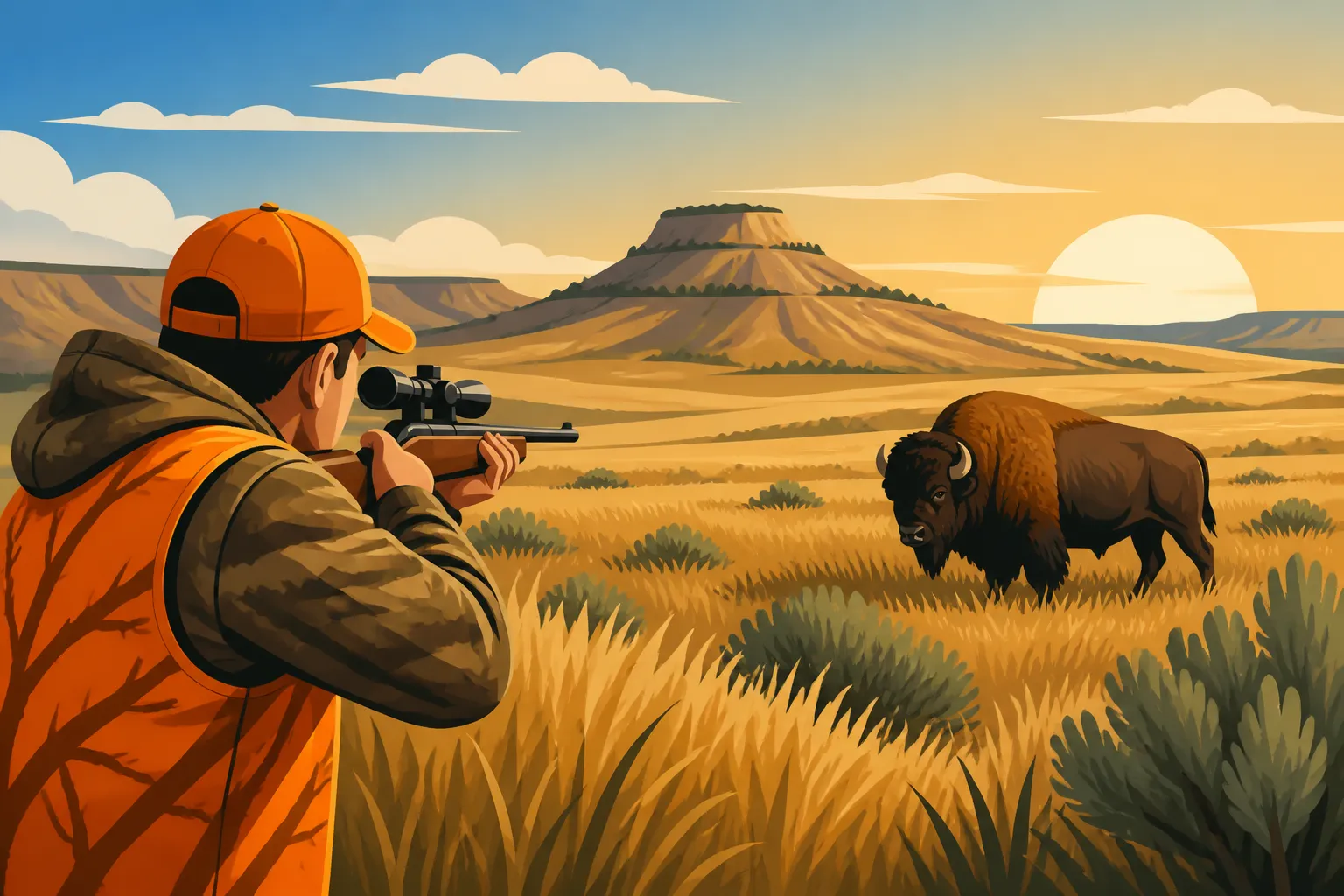
The prevailing tactic for big game in Buffalo Gap is undeniably spot-and-stalk. This vast, open environment truly plays to its strengths. Your most important tools will be high-quality binoculars, a spotting scope, and a sturdy tripod. Don't skimp on optics here; you'll spend hours behind them. Find a good vantage point, often a high ridge or butte, and systematically break down the landscape, especially at first light and last light. Glassing South Dakota Breaks at First Light can reveal deer and antelope feeding or moving between bedding areas. Focus on the edges of draws, the bases of hills, and any pockets of cover that could conceal an animal. Be thorough and patient; what looks like a rock at 800 yards could very well be an ear, a patch of hide, or an antler tip.
Once you spot an animal you want to pursue, the real challenge begins: the stalk. This is where your knowledge of the terrain and wind becomes paramount. You'll need to use every fold, every subtle rise, and every patch of sagebrush to stay out of sight. Keep the wind in your face or crosswind, as both mule deer and antelope have incredible noses. Plan your route meticulously, always considering escape routes for the animal and potential hang-ups in your approach. Moving slowly, staying low, and taking advantage of every bit of cover is key. On the open prairie, a successful stalk might mean crawling on your hands and knees for hundreds of yards, so be prepared for some gritty work. The exhilaration of finally getting into shooting range after a long, deliberate stalk is truly what makes hunting in Buffalo Gap so rewarding.
Chasing Upland Birds and Waterfowl
Upland bird hunting in Buffalo Gap, primarily for sharp-tailed grouse, is a physically demanding but incredibly rewarding experience. Forget the easy flushes of pheasants next to a cornfield; grouse hunting here is about covering serious ground. These birds prefer large expanses of native prairie with a good mix of tall grasses, forbs, and scattered plum thickets. A good dog, preferably a wide-ranging pointer or a tireless flusher, is an absolute necessity. You'll literally walk for miles, crisscrossing likely habitat, often following the contours of draws and ridges. When a covey flushes, they often do so explosively, and you'll need quick reflexes. Unlike pheasants that might run, grouse often hold tight until the last moment, then burst into the air with a distinct cackle, making for challenging wing shooting. For more information on this type of hunting, see South Dakota Prairie Grouse and Partridge.
For waterfowl, Buffalo Gap offers opportunities on its numerous stock dams and prairie potholes, which are crucial water sources for all wildlife. These are typically smaller bodies of water scattered across the grassland. Scouting is key here; you need to identify active water sources that ducks and geese are using for roosting or feeding. Jump shooting can be effective, especially if you can approach a dam unseen, using the natural contours of the land for cover. Alternatively, setting up a small decoy spread on a well-used stock dam, particularly in the morning or late afternoon, can be productive. Remember that water levels can fluctuate significantly based on rainfall, so what was a bustling wetland one year might be a dry basin the next. Always pay attention to waterfowl regulations, including season dates and bag limits, which can vary by species.
Essential Gear and Preparation for a Buffalo Gap Hunt
A trip to Buffalo Gap isn't just about showing up with a rifle and some shells. The conditions can be unforgiving, and being unprepared can quickly turn an exciting adventure into a miserable ordeal, or worse, a dangerous situation. Think self-sufficiency and durability. The nearest town might be hours away, and assistance even longer.
Packing for the Prairie Environment
Layering is not just a suggestion; it's a critical strategy for hunting in Buffalo Gap. The weather can change dramatically within a single day. Crisp, cold mornings can give way to warm afternoons, only to be followed by a sudden cold front or an intense thunderstorm. Start with a moisture-wicking base layer, add insulating layers like fleece or down, and top it with a waterproof and windproof outer shell. Layering for South Dakota Wind is essential, as the constant breeze can cut through inadequate clothing like a knife. Even in October, you can experience everything from 80-degree sunshine to freezing rain. Sturdy, broken-in hunting boots are non-negotiable. You’ll be covering miles over uneven terrain, through prickly pear cactus, and potentially wet ground. Look for boots with good ankle support and waterproofing.
Beyond clothing, a reliable pack is vital. It needs to comfortably carry all your essentials for a full day afield: plenty of water, high-energy snacks, a first-aid kit, game bags, a knife, a headlamp, and navigation tools. Don’t forget shooting sticks or a bipod, as stable shooting platforms are scarce in the open country, and long shots are common. A rangefinder is also a must-have for accurately judging distances in the vastness of the prairie. Binoculars and a spotting scope, as mentioned earlier, are your eyes on the prairie. Carrying extra ammunition, a small repair kit for your rifle, and a way to quickly field dress and cool game are also important considerations. Remember, the sun can be intense even on cooler days, so a wide-brimmed hat, sunglasses, and sunscreen are wise additions to your pack.
Staying Safe and Self-Sufficient
Safety in Buffalo Gap starts with good planning and a strong emphasis on self-reliance. Always let someone know your detailed hunt plan, including where you intend to hunt and when you expect to return. Leaving a Trip Plan Before a Hunt is a non-negotiable step. Cell phone service is unreliable at best across much of the Grassland, so don't count on it for emergencies. Consider carrying a satellite communication device like a satellite messenger (e.g., Garmin inReach) for emergency communication or to send check-in messages. These devices can literally be lifesavers if you get injured or stranded. A well-stocked First Aid Kit for a Prairie Hunt should include supplies for cuts, scrapes, blisters, snake bites (though rare, they occur), and any personal medications.
Vehicle preparation is also critical. Many of the roads in Buffalo Gap are gravel or dirt two-tracks that can become extremely muddy and impassable with even a moderate amount of rain. A 4×4 vehicle with good tires is highly recommended. Carry a shovel, tow strap, extra water, and a full-size spare tire. Getting Stuck on a Prairie Two-Track is a common frustration, and being prepared to self-rescue or wait for assistance can make all the difference. Beyond the practical, always practice ethical hunting, respect property boundaries, and be a good steward of the land. Pack out everything you pack in, and leave no trace. This vast, beautiful landscape is a privilege to hunt, and it's our responsibility to keep it pristine for future generations. For context on the overall size, check out Buffalo Gap National Grassland Acres. And be mindful that Cell Coverage in West River Country is often very poor.
Planning Your Buffalo Gap Adventure
A successful Buffalo Gap hunt isn't just about what happens in the field; it's significantly shaped by the preparation and planning that goes into it beforehand. From timing your trip to understanding where you'll lay your head at night, these details matter.
Timing Your Hunt for Success
When you decide to hunt Buffalo Gap can drastically impact your experience and success. For mule deer and antelope, the early archery seasons offer a chance to hunt before rifle pressure sets in and while animals are still in summer patterns, though warmer weather can make game care challenging. The rifle seasons, typically in October and November, align with cooler temperatures and often the early stages of the mule deer rut, increasing activity. For antelope, the rifle season is usually quite short, so timing your trip precisely is crucial. If you're applying for a specific big game draw, services like GoHunt can provide valuable insights into draw odds and help you choose the best units and hunt dates based on historical data. They can tell you how many preference points hunters needed in past years or give you a realistic expectation for antelope tags. This kind of intel is gold when you're navigating competitive draws for this type of hunt.
Upland bird seasons typically open in September for sharp-tailed grouse and extend well into the fall. Early season hunts can mean warmer weather and more cover, while late season often means birds are concentrated in heavier cover due to less forage and more hunting pressure. If you're pursuing waterfowl, your timing will be dictated by migration patterns, which can vary year to year. Generally, late October and November see significant duck and goose movements through the region as birds push south with colder weather. Researching historical weather patterns and migration reports for South Dakota can help you pinpoint optimal times. Always verify exact season dates and regulations with South Dakota GFP, as they can change annually.
Camping and Accommodation Options
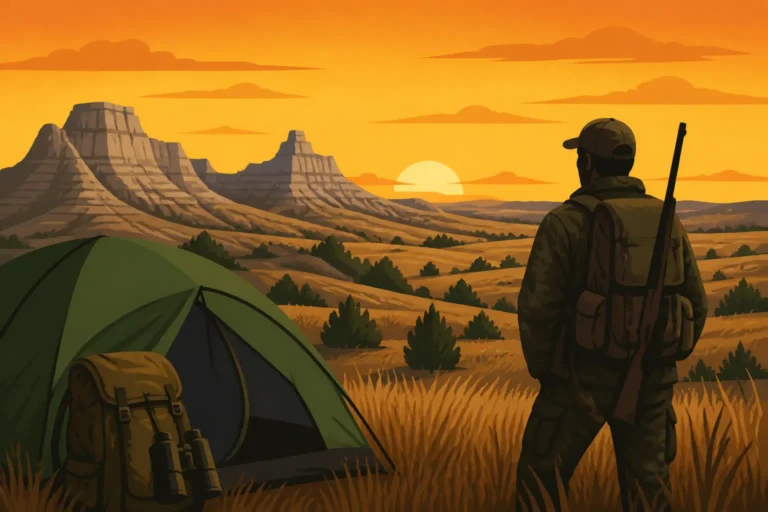
One of the great appeals of hunting the Buffalo Gap National Grassland is the opportunity for dispersed camping. This means you can often set up camp almost anywhere within the Grassland, provided you follow Leave No Trace principles and any specific Forest Service regulations regarding fires, vehicle parking, and length of stay. Dispersed camping offers an immersive experience, allowing you to wake up in the heart of your hunting grounds. It's truly a minimalist adventure, demanding self-sufficiency, but incredibly rewarding. Look for established pull-offs or existing primitive campsites that show signs of previous use to minimize your impact. Be sure to check Camping Rules on Buffalo Gap before you go, especially regarding fire restrictions, which are common during dry periods.
If roughing it isn't your style, or if you prefer a base camp with amenities, there are also developed campgrounds managed by the Forest Service within or adjacent to the Grassland, though these are few and far between. These typically offer basic facilities like vault toilets and picnic tables. For those who prefer more creature comforts, nearby towns such as Wall, Interior, or Scenic (depending on which section of Buffalo Gap you're hunting) offer motels, restaurants, and gas stations. However, these towns are small, and accommodations can book up quickly, especially during peak hunting seasons. Planning your logistics, whether it's where you'll camp each night or which motel you'll call home, is just as important as planning your hunting strategy to ensure a smooth and enjoyable trip.
Disclaimer
This article is for general informational purposes only and does not constitute professional advice. Laws, prices and regulations vary by location and change over time. Consult a qualified professional for guidance on your specific situation.