Fort Pierre National Grassland Hunting
The vast, open spaces of South Dakota offer incredible hunting, but sometimes figuring out where to start on massive public tracts can feel overwhelming, especially when you're dreaming of diverse opportunities beyond just pheasants. This guide is all about helping you unlock the potential of the Fort Pierre National Grassland, a truly special piece of public land where you can chase everything from deer and antelope to prairie grouse and coyotes, providing practical advice for navigating its unique landscape and regulations.
Understanding the Fort Pierre National Grassland Landscape
The Fort Pierre National Grassland is more than just a big patch of grass; it’s a living, breathing ecosystem that supports a remarkable variety of wildlife. Before you even set foot on it, having a solid grasp of its unique geography and the types of habitats it offers will give you a significant advantage in planning your hunt and understanding where the game might be.
Geography and Ecosystems
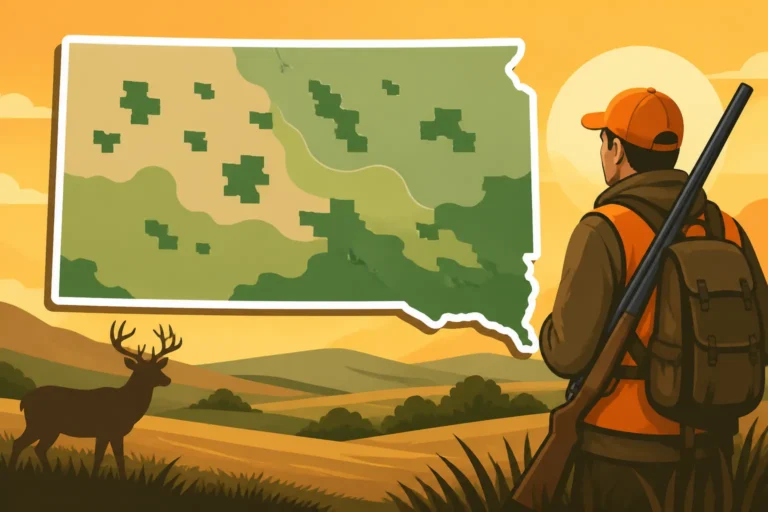
Stretching across central South Dakota, primarily in Stanley and Lyman counties, the Fort Pierre National Grassland encompasses over 200,000 acres managed by the U.S. Forest Service. When you look at an aerial map, you’ll immediately notice it's not a flat, monotonous expanse. Instead, it's a tapestry of rolling prairie, cut by countless draws, coulees, and small creek bottoms. These seemingly minor undulations are hugely significant to the wildlife, offering shelter from the brutal prairie winds, escape routes, and vital bedding areas.
Within these draws, you'll often find dense stands of cedar trees and other brushy cover, which become absolute magnets for deer, especially during harsh weather or the rut. Further out on the open prairie, vast seas of native grasses, including big bluestem, switchgrass, and indiangrass, provide phenomenal nesting cover for prairie grouse and grazing for antelope. Water sources, though sometimes scattered, are also critical. Ponds, stock dams, and the occasional flowing creek act as magnets for all species, particularly during dry periods. Understanding these micro-ecosystems is like reading a secret map – it tells you where to find pockets of deer in a sea of grass, or where a covey of sharptails might be hunkered down out of the wind.
Wildlife Found on the Grassland
The diversity of the landscape directly translates into a fantastic variety of hunting opportunities. The Fort Pierre National Grassland is most famous, perhaps, for its strong populations of both mule deer and white-tailed deer. You'll find mule deer often sticking to the open, broken country of the larger draws and cedar breaks, while whitetails tend to prefer the heavier cover found in the deeper ravines and along the brushier creek bottoms. Being able to distinguish between them is crucial, not just for regulations but for understanding their preferred habits. For more on these magnificent animals, check out Mule Deer on the West River Breaks and White-Tailed Deer Across South Dakota.
Beyond deer, the grassland is prime pronghorn antelope country. These speedsters of the prairie prefer the wide-open spaces where their incredible eyesight gives them a distinct advantage. You’ll often spot them grazing on distant ridges or moving between waterholes. For bird hunters, the Fort Pierre is a fantastic destination for prairie grouse, specifically sharp-tailed grouse and occasionally greater prairie chickens. They thrive in the native grasslands, often found in the higher, drier areas, especially near breaks or un-grazed pockets. If you’re interested in targeting them, reading up on Sharp-Tailed Grouse Range in South Dakota can provide excellent insights. Lastly, it's a haven for predators, with healthy populations of coyotes always on the prowl, offering exciting calling opportunities throughout the seasons.
Navigating Access and Regulations
Hunting public land successfully often hinges on knowing how to access it and what rules govern your activities. The Fort Pierre National Grassland, while expansive, has specific considerations that hunters need to be aware of to ensure a legal and enjoyable experience. It's not just about showing up; it's about being prepared and informed.
Public Access Points and Roads
The vast majority of the Fort Pierre National Grassland is open to public hunting, but getting around it requires a bit of savvy. The area is crisscrossed by a network of two-track dirt roads and designated county roads. Many of these two-tracks are gravel or well-maintained dirt, but after a rain or during a thaw, they can become impassable muddy quagmires. Always check local road conditions, and ideally, have a four-wheel-drive vehicle. It's important to remember that not every faint trail is a legal public access route; some might lead to private inholdings. This is where tools like onX Hunt become absolutely invaluable. By using the app's layers, you can clearly see the public land boundaries, private parcels, and designated public roads, helping you avoid accidental trespass and find the best points to park and walk in.
There are also specific rules about motorized vehicle use on the grassland. While some two-tracks are open to vehicles, many areas are designated for foot traffic only, especially as you get deeper into prime habitat. Always look for signage and consult official Forest Service maps for Motor Vehicle Use. Knowing these rules beforehand can save you a lot of headache and potential fines. Planning your walk-in routes from legal parking areas is a critical part of a successful Fort Pierre hunt.
Essential Regulations for the Grassland
Beyond the general state hunting regulations, there are often specific rules that apply to federal lands like the national grasslands. These can include regulations regarding camping, campfires, and even specific weapon restrictions in certain areas. While the general South Dakota hunting season dates and tagging requirements apply, always double-check the U.S. Forest Service guidelines for the Fort Pierre Grassland itself. For instance, dispersed camping is generally allowed, but there might be restrictions on campfire bans during dry conditions, or requirements for packing out all trash.
When it comes to tagging and harvest reporting, you'll adhere to South Dakota's statewide rules. For instance, all deer and antelope harvested need to be tagged immediately and reported within a specific timeframe. Understanding South Dakota Harvest Reporting Rules is vital for staying legal. Furthermore, while the grassland offers diverse opportunities, be mindful of specific unit boundaries for deer and antelope tags; your tag will specify the unit where it's valid, and these units often overlap with or encompass parts of the grassland. Another excellent resource for keeping up with all these nuances is services like GoHunt, which often compile state-specific and land-specific regulations, making it easier to digest all the information you need.
Targeting Key Species on the Grassland
The Fort Pierre National Grassland isn't just a place to hunt; it's a dynamic hunting ground where different species demand different approaches. Knowing the terrain and the habits of the animals will dramatically increase your odds of success. Let's break down how to effectively pursue some of the grassland's most popular game.
Mule Deer and Whitetail Tactics
Hunting deer on the Fort Pierre Grassland is a unique challenge that rewards patience and good optics. For both mule deer and whitetails, glassing is your absolute best friend. Find a high point, even if it's just a slight rise in the prairie, and use your binoculars or spotting scope to systematically pick apart the draws and coulees below. Mule deer often prefer the more open, rolling breaks and will bed down where they can see danger approaching, often in the sparse cedars or even just a deep furrow in the grass. They tend to stick to the larger drainages, using the contours of the land for cover. You might spend hours glassing before you spot a patch of hide or an antler tine. Once you do, using the terrain to close the distance on a stalk is critical. The rolling nature of the prairie can hide a hunter surprisingly well, allowing you to stay out of sight for long stretches.
Whitetails, conversely, are often found in the denser, brushier creek bottoms and the more heavily wooded draws. They are masters of using cover, even thin strips, to remain hidden. When hunting whitetails here, consider still-hunting into the wind along these brushy corridors or setting up on pinch points where a draw narrows or connects two patches of cover. During the rut, both species become more active, and using rattling antlers or grunt calls can sometimes be effective, especially for whitetails seeking out does. Understanding the nuances of their movements and preferences, whether in the river bottoms or the open breaks, can make all the difference.
Pronghorn Antelope Hunting Strategies
Pronghorn antelope are truly creatures of the open prairie, built for speed and possessing incredible eyesight – often cited as being equivalent to 8x binoculars. Hunting them on the Fort Pierre National Grassland is an exhilarating challenge. Spot-and-stalk is a common method, but it demands extreme patience and meticulous use of terrain. You'll often spot them miles away, and then the real work begins: using every dip, swell, and fold in the landscape to get within rifle range. This can mean crawling hundreds of yards, making sure you stay hidden from their ever-vigilant eyes.
Decoying can also be a highly effective tactic, particularly for curious bucks during the rut. A buck decoy can sometimes bring a dominant buck charging in to defend its territory, or a doe decoy might entice a lonely buck closer. Another strategy is setting up a blind near known water sources, especially during dry periods. Antelope need to drink, and if you can find an isolated stock dam or waterhole in the vastness of the grassland, it can be a hotspot. Remember that Shot Placement on a Pronghorn is crucial for a clean harvest, and due to their keen senses, getting close enough for an ethical shot often requires skill and determination.
Prairie Grouse and Coyote Hunting
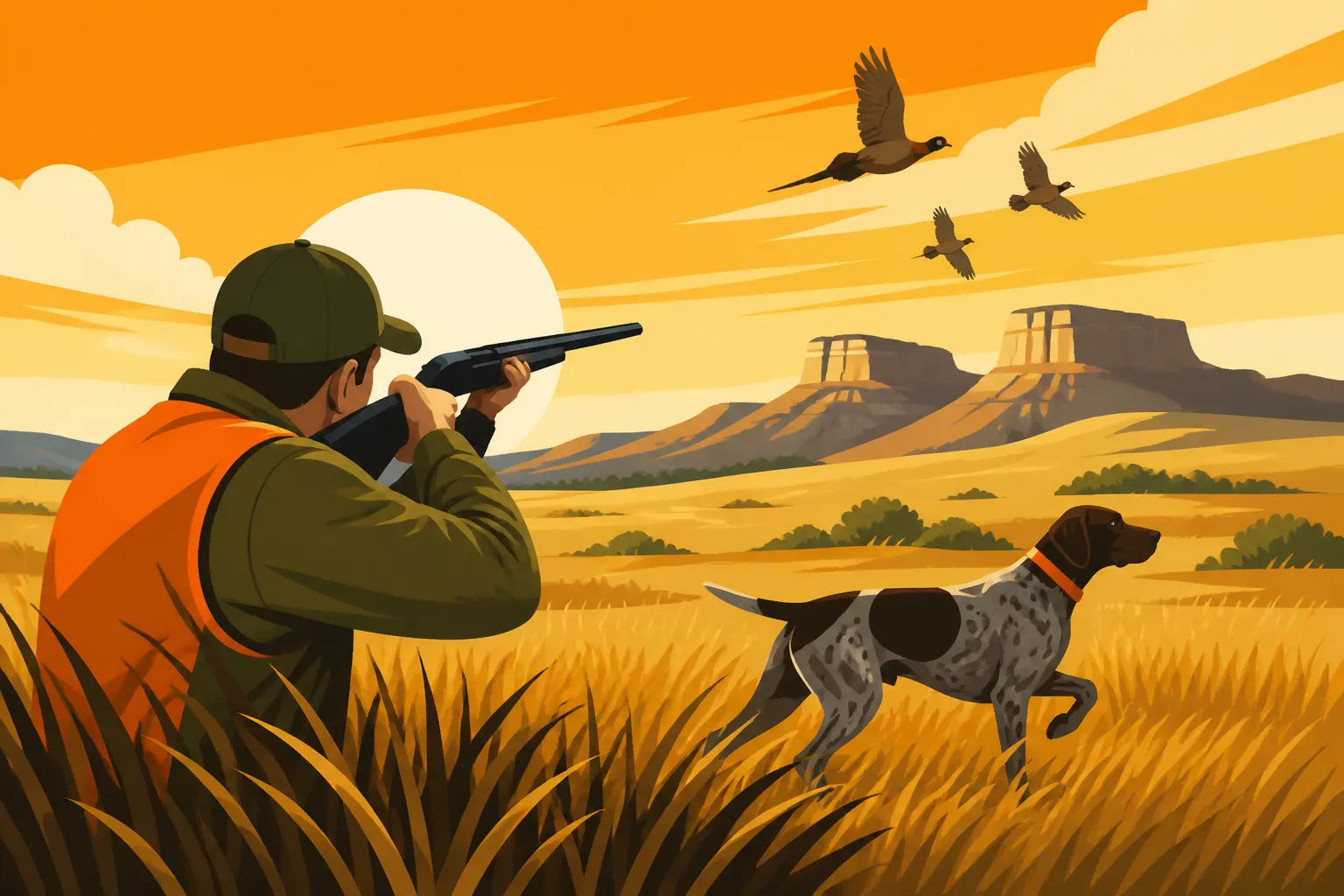
For bird hunters, the Fort Pierre National Grassland offers a classic prairie experience with sharp-tailed grouse and occasionally greater prairie chickens. These birds thrive in the native grasslands, and finding them often involves walking large tracts of cover, particularly areas with diverse grass heights and some scattered brush for escape cover. Dogs can be incredibly helpful here, as grouse can hold tight and flush explosively. Focus your efforts on the fringes of draws, areas with taller grass, and where the prairie meets a change in topography. Early mornings and late afternoons are often the best times, as birds move to feed.
Coyote hunting is another popular pursuit on the grassland, offering year-round opportunities. The wide-open spaces are perfect for calling tactics. Setting up on a high point with a good view, then using distress calls (rabbit, fawn, bird) or even howls, can bring coyotes in from a long distance. Always be mindful of your backdrop and shooting lanes, as coyotes can approach surprisingly quickly. Knowing how to read the wind and set up downwind is crucial, as their sense of smell is legendary. For more in-depth advice on calling these wary predators, check out Calling Coyotes on South Dakota Grassland.
Planning Your Fort Pierre Grassland Hunt
A successful hunt on the Fort Pierre National Grassland isn't just about showing up with a gun and a license; it's about meticulous preparation, understanding the environment, and choosing the right time to go. The prairie is a demanding mistress, and being prepared is key to both enjoyment and success.
Essential Gear and Preparation
When heading out to the Fort Pierre Grassland, your gear needs to be robust and reliable. First and foremost, good quality optics are non-negotiable. A pair of 10x binoculars is a minimum, and a spotting scope can be invaluable for picking apart distant hillsides for deer and antelope. Navigation is another critical component. While traditional maps are good, a GPS unit or a smartphone with a reliable hunting app like onX Hunt is essential. These apps, with their detailed satellite imagery and property line overlays, allow you to navigate off-trail, mark waypoints, and ensure you stay on public land. Downloading offline maps for your chosen hunting area on onX Hunt before you lose cell service is a smart move, as cell coverage can be spotty in West River country.
Layering your clothing is also paramount for South Dakota's unpredictable prairie weather. Mornings can be crisp, mid-day surprisingly warm, and evenings can bring a biting wind. Layering for South Dakota Wind is an art form. Durable, comfortable boots are a must, as you’ll be doing a lot of walking across uneven terrain. Pack plenty of water, high-energy snacks, a first-aid kit, and an emergency shelter. Always let someone know your hunting plan, including where you're going and when you expect to return. The vastness of the grassland, while beautiful, demands respect and thorough preparation.
Timing Your Hunt for Success
The timing of your hunt can significantly impact your experience on the Fort Pierre National Grassland. Early season (late August/September) for archery deer and antelope can offer pleasant weather, but game might be spread out and less pressured. As seasons progress into October, the cooler temperatures typically make for more comfortable hunting and often increase game movement. The whitetail rut usually peaks in early to mid-November, providing excellent opportunities for active bucks. For mule deer, the late season can be fantastic if snow pushes them into more accessible draws or concentrates them around specific food sources. Late-Season Hunting in South Dakota Snow presents unique challenges but also unique rewards.
Weather plays a monumental role. A sudden blizzard can shut down roads and make travel treacherous, but it can also concentrate deer and pheasants in heavy cover, making them easier to find if you can access the areas. Conversely, a prolonged dry spell might make water sources critical focal points for antelope. Hunting pressure is another factor. Opening weekends, particularly for pheasant and deer, can see more hunters. If you're looking for solitude, consider hunting weekdays or later in the season. Hunting Pressure Patterns on Walk-In Areas insights can also apply to other public lands like the National Grasslands; getting further away from vehicle access points usually means fewer encounters with other hunters.
Respecting the Resource and Other Users
Hunting on public lands like the Fort Pierre National Grassland is a privilege that comes with responsibilities. Upholding ethical standards, ensuring safety, and practicing good land stewardship are crucial for maintaining access and preserving the hunting tradition for future generations.
Practicing Ethical and Safe Hunting
Safety should always be your top priority. On the open prairie, where visibility can be vast but also broken by draws, clear communication with your hunting partners is essential. Always know where everyone in your party is, maintain proper muzzle discipline, and be absolutely certain of your target and what lies beyond it before taking a shot. Remember the Safe Gun Handling on a Bird Drive principles, even when deer hunting alone. Respecting other hunters is equally important; if you see another party working an area, give them ample space. Public land is for everyone, and courteous behavior goes a long way.
Ethical hunting also means making clean, quick kills. Practice your shooting regularly, especially for longer shots that might be necessary on the open prairie for species like antelope or mule deer. If you make a marginal shot, commit to a thorough follow-up and blood trailing effort to recover the animal. It's our responsibility to ensure no game is wasted. Moreover, know and adhere strictly to all bag limits and tagging requirements. These rules are in place for a reason – to manage the wildlife populations sustainably.
Conservation and Land Stewardship
As hunters, we are often the staunchest conservationists, and on the Fort Pierre National Grassland, this means leaving the land better than we found it. Practice "Leave No Trace" principles: pack out all your trash, including spent shell casings, and avoid disturbing sensitive areas. Be mindful of your vehicle's impact on two-tracks, especially in wet conditions, to prevent creating ruts or damaging habitat.
Proper carcass disposal is also a key aspect of responsible hunting, particularly with concerns about Chronic Wasting Disease (CWD). While CWD prevalence in the Fort Pierre area fluctuates, it's always wise to follow state guidelines on Carcass Transport Rules for CWD. Often, this means leaving brain and spinal cord material at the kill site or at designated disposal points, and only transporting deboned meat, clean skull plates, or capes. By doing our part, we help ensure the Fort Pierre National Grassland remains a vibrant and healthy ecosystem for all its wildlife and for hunters to enjoy for years to come.
| Species | Preferred Habitat Features | Primary Hunting Methods | Key Challenge |
|---|---|---|---|
| Mule Deer | Larger draws, cedar breaks, rolling prairie | Spot-and-stalk, extensive glassing | Locating in vastness, long stalks |
| White-tailed Deer | Brushy creek bottoms, dense draws, heavy cover | Still-hunting, stand hunting, rattling | Utilizing thick cover, limited visibility |
| Pronghorn Antelope | Open prairie, slight rises, near water sources | Spot-and-stalk, decoying, waterhole blinds | Extreme eyesight, open terrain for stalking |
| Sharp-tailed Grouse | Native grasslands, diverse grass heights, brushy fringes | Walking extensive cover, flushing dogs | Locating coveys, explosive flushes |
| Coyote | Throughout all habitats, especially open areas | Calling (distress/howls), ambush | Keen senses (smell/hearing), quick approach |
Disclaimer
This article is for general informational purposes only and does not constitute professional advice. Laws, prices and regulations vary by location and change over time. Consult a qualified professional for guidance on your specific situation.