South Dakota Trespass Law and Posted Land
There's a unique frustration that many hunters feel in South Dakota, especially those new to the state or just getting started: the fear of inadvertently trespassing. With a patchwork of public and private lands, and varying rules on what "posted" actually means (or doesn't mean!), it can feel like you're constantly walking on eggshells. This guide will meticulously break down South Dakota's trespass laws and clarify everything you need to know about posted and unposted land, empowering you to hunt confidently and ethically.
Understanding South Dakota's Trespass Law
South Dakota's trespass law is designed to protect private property rights, and as hunters, it's our responsibility to understand and respect these boundaries. It's not always as simple as seeing a "No Trespassing" sign, and many seasoned hunters have found themselves in a sticky situation because they didn't fully grasp the nuances.
What Constitutes Trespass
At its core, trespassing in South Dakota means entering or remaining on private land without the express permission of the landowner or their agent. This isn't just about setting foot on someone's property; it also applies to vehicles, ATVs, and even your hunting dog if it's intentionally sent onto private property. The law is quite clear: if you don't have permission, you shouldn't be there. It doesn't matter if you just "didn't see a sign" or "thought it was public." The onus is on the hunter to know exactly where they are. This can be particularly frustrating when you're caught up in the heat of a flush or stalking a trophy buck, but ignorance of the law is never an excuse.
It's important to remember that permission isn't just a verbal agreement. While verbal permission is often accepted, having something in writing can save a lot of headaches later on, especially if there's a dispute or if a new landowner takes over. Many landowners appreciate a simple note or text message exchange confirming access. When you're out there, you're not just representing yourself; you're representing all hunters, and a trespass incident can sour a landowner's view on allowing hunting for everyone.
Penalties and Consequences
The consequences for trespassing in South Dakota can range from a slap on the wrist to severe penalties, depending on the specifics of the offense and whether it's a repeat occurrence. For a first offense of simple trespass, you might face a misdemeanor charge, which can include fines. However, if you are hunting, fishing, or trapping on private land without permission, the penalties can quickly escalate. This is often categorized as a Class 2 or Class 1 misdemeanor, carrying higher fines and potentially jail time.
Beyond the immediate legal and financial repercussions, there are other significant consequences. You could lose your hunting privileges, not just in South Dakota but potentially in other states as well through interstate compacts. Imagine putting in years for a coveted draw only to have your license revoked. Furthermore, a trespass conviction creates a negative mark on your record, which can impact future hunting opportunities or even employment. And, perhaps most importantly for the hunting community, a trespass incident can damage the crucial landowner-hunter relationship, making it harder for other hunters to gain access in the future. It's a ripple effect that we all want to avoid.
The "No Trespassing" Sign vs. Unposted Land
This is where a lot of confusion, especially for out-of-state hunters, often arises. In many states, if land isn't explicitly posted with "No Trespassing" signs, it's considered "open" or implies consent for recreational use. South Dakota is NOT one of those states. In South Dakota, all private land is considered closed to hunting unless you have explicit permission from the landowner. The presence or absence of a "No Trespassing" sign simply indicates a landowner's preference for how they want to communicate this rule.
A "No Trespassing" sign or clearly painted property boundaries (often purple paint on posts or trees) simply serves as an additional, very clear warning. If you see these, there's absolutely no ambiguity: stay out unless you have explicit, documented permission. However, the lack of such a sign does not grant you permission. You still need to seek out the landowner and obtain their consent. This fundamental difference is vital to understand to avoid accidentally breaking the law. It places the responsibility firmly on the hunter to verify permission, rather than on the landowner to post every inch of their property. For more detailed information, check out South Dakota Posted Land Signage Rules.
Navigating Posted and Unposted Private Land
Hunting in South Dakota involves a constant awareness of property boundaries. It's a skill that develops with experience, but even veterans need to stay vigilant and utilize the tools available. The key is to understand the legal framework and cultivate respectful habits.
Posted Land: The Clear Message
When land is posted with "No Trespassing" signs or marked with purple paint, the message is unmistakable. These signs are typically placed at corners, along property lines, and at common entry points. A landowner uses these methods to clearly communicate that entry is prohibited without their explicit permission. While, as we discussed, all private land implicitly requires permission, posted land leaves absolutely no room for misunderstanding. It's a proactive measure by landowners to safeguard their property and privacy.
Disregarding these signs is a blatant act of trespass and will almost certainly result in legal action. It signals a complete lack of respect for the landowner's wishes and the laws of the state. Even if you have a compelling reason to enter, such as retrieving a wounded animal, these signs mean you absolutely must obtain permission before crossing the boundary. A quick phone call or a respectful knock on the door can often resolve such situations amicably, whereas pushing ahead without permission will only escalate the issue.
Unposted Land: The Implicit Rule
This is the biggest pitfall for many hunters unfamiliar with South Dakota law. Unlike some other states, unposted private land in South Dakota is not open for hunting or any other recreational use without permission. The absence of a "No Trespassing" sign does not equate to an invitation. This is a critical distinction and often the cause of accidental trespass. You might drive past a beautiful looking field or shelterbelt that appears completely untended, with no signs in sight, and assume it's fair game. That assumption would be incorrect and could lead to legal trouble.
The responsibility falls entirely on the hunter to identify the landowner and secure permission before entering any private property, regardless of whether it's posted. This requires diligence, often involving pre-season scouting, checking plat maps, and making contact with property owners. It's a system built on respect for private property rights, and adherence to it is crucial for a positive hunting experience in South Dakota. Remember, just because it looks like good pheasant cover doesn't mean you can walk in.
Asking for Permission: Best Practices
Securing permission to hunt on private land is a skill, an art form even, that can unlock incredible hunting opportunities. The approach you take can make all the difference. Always start with respect. A polite, well-dressed hunter asking in person, rather than making a cold call, often has a better chance. Introduce yourself clearly, explain why you're there, and be upfront about what you're hoping to hunt. Having a copy of your license or a business card can help establish trust.
Be prepared for a "no." Landowners have many reasons for denying access, from ongoing livestock operations to other hunters already having permission, or simply a desire for privacy. Accept their decision graciously and thank them for their time. If they say yes, clarify the terms: where can you hunt, when, what game species, can you bring a dog, are there specific entry points? Follow these rules to the letter. Consider offering to help with a chore, like closing gates or checking fences. Little gestures of appreciation can go a long way in building a long-term relationship. This is explored further in Asking a South Dakota Landowner for Permission and Gifts and Thanks for Landowner Access.
Tools and Technology for Land Identification
In today's hunting world, especially with South Dakota's varied landscape, you don't have to rely solely on guesswork or knocking on every door. There are invaluable resources available, both traditional and high-tech, that can help you understand exactly where you stand.
The South Dakota Public Hunting Atlas
The South Dakota Game, Fish and Parks (SDGFP) Public Hunting Atlas is an indispensable resource for anyone hunting in the state. This interactive online map, also available as a physical print guide or a downloadable app, clearly delineates public hunting lands. These include Game Production Areas (GPAs), Walk-In Areas (WIAs), National Grasslands, and other public access points. It's updated regularly, making it the most authoritative source for public hunting information.
Before you even step foot in the field, spend time poring over the atlas. Identify potential hunting areas, cross-reference them with aerial imagery, and plan your approach. The atlas is crucial for finding areas like Hunting South Dakota Walk-In Areas or understanding National Grasslands Hunting in South Dakota. While it primarily shows public land, by process of elimination, it helps you identify private tracts. Always download the most current version or ensure your app is updated, as boundaries and WIA enrollments can change from year to year. You can learn more about its utility in Using the South Dakota Public Hunting Atlas Online.
Mapping Apps: Your Digital Lifeline
Modern mapping applications have revolutionized how hunters navigate complex landscapes, and they are especially vital in a state like South Dakota. Tools like onX Hunt are an absolute game-changer. These apps overlay property ownership information, including landowner names and parcel boundaries, directly onto satellite imagery and topographical maps on your smartphone or GPS device. Imagine being able to see exactly where the public land ends and private property begins, right there in your hand, even when you're miles from cell service.
onX Hunt also offers specific layers that highlight various public land types, like Walk-In Areas, and can even show designated road rights-of-way. This incredible level of detail helps prevent accidental trespass by providing real-time awareness of your exact location relative to property lines. While onX is perhaps the most popular, other mapping solutions exist, and some hunters might also use platforms like GoHunt for broader scouting and planning, though onX Hunt excels specifically at property boundary identification in the field. These apps are an investment that pays dividends by keeping you legal and allowing you to focus on the hunt, not the worry of where you can step. Understanding onX Layers for South Dakota Land Status can dramatically improve your field navigation.
Property Lines in the Field: How to Be Sure
Even with all the technological aids, verifying property lines in the field can still be challenging. GPS signals can drift, especially in dense cover or deep canyons, and a few feet can make all the difference. Always carry a physical map or have your digital maps downloaded for offline use, as cell service is spotty in many remote areas of South Dakota. Look for physical markers on the ground—fences, old survey pins, changes in vegetation, or those tell-tale purple paint marks.
When in doubt, err on the side of caution. If a property line seems ambiguous, or your GPS is bouncing, it's always safer to assume it's private and avoid entering until you can confirm. This might mean rerouting your walk, or making a mental note to follow up with the landowner later. It's far better to miss an opportunity than to face a trespass charge. Taking the time to study Finding Property Lines in South Dakota before your hunt can help you identify these subtle cues more readily.
| Resource Type | Primary Use Case | South Dakota Specifics | Key Benefit |
|---|---|---|---|
| Public Hunting Atlas | Identifying general public hunting areas | SDGFP produced, shows WIAs, GPAs, National Grasslands | Official and comprehensive public land data |
| Mapping Apps (e.g., onX Hunt) | Real-time property line identification | Overlays landowner info, public land types, boundaries | Prevents accidental trespass in the field |
| County Plat Books | Detailed landowner names and parcel numbers | Available from county offices, older but accurate | Great for pre-scouting landowner contact info |
| Physical Maps | Backup navigation, overview planning | Topo maps, road maps | Reliable without battery/signal, broad overview |
| Landowner Contact | Securing direct permission | Personal approach often best, clarify terms | The only way to legally hunt private land |
Common Trespass Scenarios and How to Avoid Them
Even with the best intentions and meticulous planning, certain situations can arise in the field that blur the lines between legal and illegal. Knowing these common scenarios and how South Dakota law addresses them is crucial for staying out of trouble.
Retrieving Game: When Your Bird or Buck Crosses the Line
This is perhaps one of the most agonizing scenarios for a hunter. You've made a good shot on a pheasant, a deer, or an antelope, and the animal runs onto adjacent private land where you do not have permission. Your instinct is to pursue it, but what does the law say? In South Dakota, you do not have the right to trespass on private land, even to retrieve legally shot game. You must obtain permission from the landowner before entering their property.
This means you might have to track down a landowner at a difficult time, or even make the difficult decision to let the animal go if permission cannot be secured. It's a tough pill to swallow, but violating trespass laws to retrieve game is still a violation. If you are fortunate enough to connect with the landowner, be courteous, explain the situation clearly, and follow any instructions they give you. Often, landowners are understanding if approached respectfully. For a deeper dive into this, see Retrieving Game From Private Land.
Road Right-of-Way Hunting: Understand the Nuances
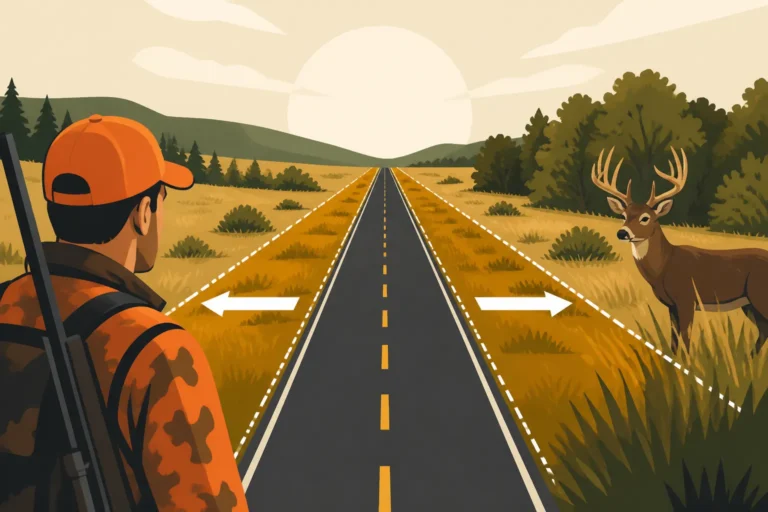
Hunting from a road right-of-way can be a confusing topic, and the rules vary significantly from state to state. In South Dakota, you generally can hunt within the road right-of-way, provided it is a public road and you are not shooting across private land where you do not have permission, or at specific posted refuges. However, the legal width of a right-of-way can be tricky to determine and often extends beyond the maintained shoulder. This means you could be standing in what appears to be a ditch, but you are legally still within the right-of-way.
The critical distinction is that the road right-of-way itself is public property, but the land immediately adjacent to it is almost always private. You cannot step off the right-of-way onto private ground without permission. Additionally, discharging a firearm from within a vehicle or across a public highway is illegal. Always consult the current hunting regulations handbook for specific rules on Hunting South Dakota Road Ditches, especially regarding target backdrops and proximity to residences. Just because you're on a public road doesn't give you license to shoot indiscriminately.
Corner Crossing and Landlocked Public
Corner crossing is a particularly contentious issue that has garnered national attention. This refers to the act of stepping from one corner of public land to another public land corner where they meet, without touching the private land that forms the other two corners of the intersection. In South Dakota, the stance has been clear: "corner crossing" over private land, even if you don't physically touch the ground, is considered trespass. This effectively landlocks many parcels of public land that are otherwise completely surrounded by private holdings, without direct road access.
While debates continue, the current interpretation of the law in South Dakota means you cannot corner cross to access landlocked public property. To legally hunt these isolated public parcels, you would need to obtain permission from the surrounding private landowners to cross their property, or find an alternative legal access point if one exists. This is a source of immense frustration for many hunters, especially those relying on public access. Understanding Corner Crossing Rules in South Dakota is vital before attempting to access such areas.
Building Relationships with Landowners
At the end of the day, gaining consistent, ethical access to private land in South Dakota often boils down to one thing: relationships. Cultivating a positive rapport with landowners is not just about getting permission for a single hunt; it's about fostering goodwill that benefits the entire hunting community.
Respect and Communication: The Foundation
The bedrock of any good landowner-hunter relationship is mutual respect and clear communication. When you approach a landowner, remember you are a guest on their property. Be polite, articulate, and listen more than you talk. Ask specific questions about where they prefer you hunt, what times are best, and any specific areas to avoid (like livestock pastures, farmsteads, or sensitive areas). Always leave gates as you found them, whether open or closed. If you notice anything amiss on their property—like a downed fence or suspicious activity—politely inform them.
After the hunt, follow up. A quick thank you, perhaps a small gift (more on that below), or even just a note explaining how your hunt went, reinforces positive interactions. If you harvested game, offer a portion of the meat. Good communication isn't just about asking for permission; it's about being a responsible, considerate presence on their land. It shows you value their property as much as the hunting opportunity it provides.
Offering Assistance or Gifts: Building Trust
Beyond simply asking for permission, consider how you can add value to the landowner. Many farmers and ranchers are incredibly busy, and an offer of help can be genuinely appreciated. Perhaps you could help mend a fence, clear some brush, or even offer to keep an eye on things when you're out hunting. These acts of service demonstrate that you're not just there to take, but also to contribute.
If physical labor isn't feasible, a thoughtful gift can go a long way. This doesn't have to be expensive; homemade jams, a gift basket of local goods, or even a gift card to a local restaurant can show sincere appreciation. For those landowners who might be struggling, a genuine offer of help with chores around the farm can be far more valuable than anything you could buy. The key is sincerity and thoughtfulness. This topic is expanded in Gifts and Thanks for Landowner Access.
Long-Term Access: Earning a Spot
Earning long-term access to private land is the ultimate goal for many hunters. This isn't usually granted after a single interaction; it's built over years of consistent, respectful behavior. If you prove yourself to be a trustworthy and responsible hunter, a landowner may offer you continued access, sometimes even without needing to ask each season. This is an invaluable privilege that should never be taken for granted.
To maintain this trust, always uphold your end of the bargain. Continue to communicate, inform them when you'll be on their property, and share your hunting success (or lack thereof). If you see other hunters on their property without permission, you can discreetly inform the landowner. Becoming a reliable steward of their land helps solidify your standing as a welcomed guest. Remember, once you gain that long-term trust, you become a de facto ambassador for all hunters, ensuring those crucial private land opportunities remain available.
Disclaimer
This article is for general informational purposes only and does not constitute professional advice. Laws, prices and regulations vary by location and change over time. Consult a qualified professional for guidance on your specific situation.