Right-of-Way Width on South Dakota Roads
The world of hunting in South Dakota is full of incredible opportunities, but it also comes with its fair share of nuanced regulations that can leave even seasoned hunters scratching their heads. One of the most common sources of confusion, and frankly, frustration, revolves around hunting within the road right-of-way on South Dakota roads. It's not as simple as "if it's not posted, you can hunt it," and misunderstanding the rules can quickly lead to trouble with landowners, wardens, or even put someone in harm's way. This guide is here to untangle the complexities, dive into what "right-of-way width" actually means, and help you navigate this sometimes tricky aspect of prairie hunting safely and legally.
The Basics of South Dakota Road Right-of-Way Hunting
South Dakota stands out in many states for explicitly allowing hunting within certain road rights-of-way. However, this isn't a blanket permission slip for every roadside ditch you see. There are very specific conditions, and overlooking any of them can turn a promising hunt into a regrettable incident. Understanding these foundational rules is paramount to hunting ethically and legally.
Understanding the Legal Framework
At its heart, South Dakota law allows hunting small game and predatory animals (like coyotes) in the right-of-way of a public highway if the adjacent private land is not posted with "No Hunting" or "No Trespassing" signs. It sounds straightforward, right? But the devil is in the details. A "public highway" generally includes state and county roads, and sometimes township roads, but it doesn't automatically mean every two-track or field access lane. The crucial part is that the private land adjacent to that right-of-way must be open to hunting. If the farmer next to the road has their property clearly marked with signs, then the road ditch right next to it becomes off-limits for hunting, even if the ditch itself is technically public access.
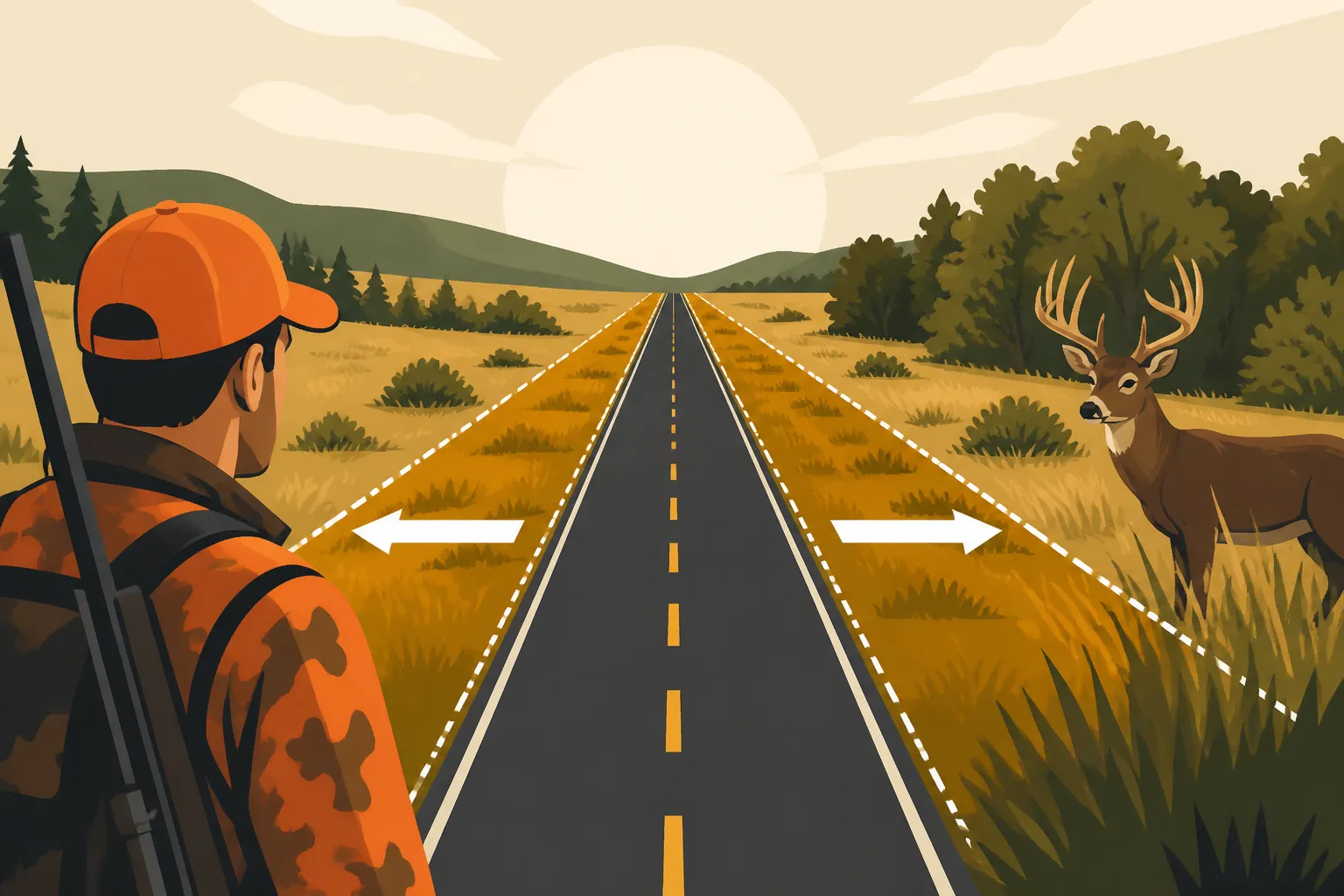
Furthermore, there are strict rules about how you can actually hunt. You absolutely cannot shoot from a vehicle, nor can you discharge a firearm across a public highway. These aren't suggestions; they are hard and fast laws designed for public safety. This means you must be out of your vehicle, and your shot must be fired along the right-of-way, not perpendicular to it if that shot would cross the maintained roadway or go onto posted private land. It's a fine line to walk, and it demands careful attention to your surroundings and the exact boundaries. For a broader overview of road hunting laws, you might find South Dakota Road Hunting Laws helpful.
Why Right-of-Way Hunting is So Contested
It's no secret that hunting road rights-of-way sparks a lot of debate and strong opinions, especially among landowners. For a farmer or rancher, their land often comes right up to the edge of the road, and the idea of someone hunting in their ditch can feel like an invasion of privacy or a safety hazard, even if it's technically legal. This is where empathy and respect truly come into play. Many landowners worry about stray pellets, the safety of their livestock, or simply the presence of strangers so close to their homes and fields.
The "don't shoot across the road" rule is often misunderstood, leading to dangerous situations. A hunter might think they are legal if they are standing in the right-of-way, but if their shot path crosses the paved or graveled portion of the road, it's a violation. This rule is in place to protect motorists and others using the highway. It also extends to ensuring your projectile doesn't land on posted private land beyond the road. All of these factors contribute to the tension around this particular type of hunting. It's why taking the extra steps to be certain of your location and the landowner's wishes, even when not legally required to ask for permission for the ditch, is always the best policy.
Deciphering Right-of-Way Widths
This is the million-dollar question for many hunters: how wide is the right-of-way? It's easy to assume a standard width, but South Dakota's landscape and history mean that uniformity is often a pipe dream. Pinpointing the exact width of a right-of-way is perhaps the most challenging aspect of legal road hunting.
The "Standard" Width and Its Exceptions
Historically, many section line roads and public highways in South Dakota were established with a 66-foot right-of-way. This typically means 33 feet from the center line of the road on either side. If you've ever heard someone say "33 feet from the center," this is likely what they're referring to. For many rural gravel roads, this might encompass the maintained roadway, the ditches, and a strip of grassy shoulder beyond the ditch. On these roads, if the adjacent private land isn't posted, this 33-foot strip is technically open to hunting small game and predators.
However, this 66-foot standard is far from universal. Roads created or improved at different times might have different widths. County roads, for instance, could have varying widths based on county ordinances or specific historical easements granted during their construction. State highways are often much wider, incorporating multiple lanes, shoulders, and deeper ditches, but the hunting rules for these can be even more complex due to traffic volume and the "no shooting across the highway" rule. Sometimes, the right-of-way might extend beyond what visually appears to be the ditch, perhaps to a fence line, but other times a fence line might actually be inside the right-of-way, confusing matters further. It's this inconsistency that makes precise identification so crucial.
Identifying the Edge: How Do You Know Where It Is?
This is where the rubber meets the road, quite literally. You can't just guess. While physical cues like fence lines, utility poles, or the edge of a cultivated field might give you a general idea, they are often misleading. A farmer might have put a fence up a few feet inside the property line, or a utility easement could exist within the right-of-way without defining its full extent. Relying solely on these visual cues is a recipe for accidental trespass.
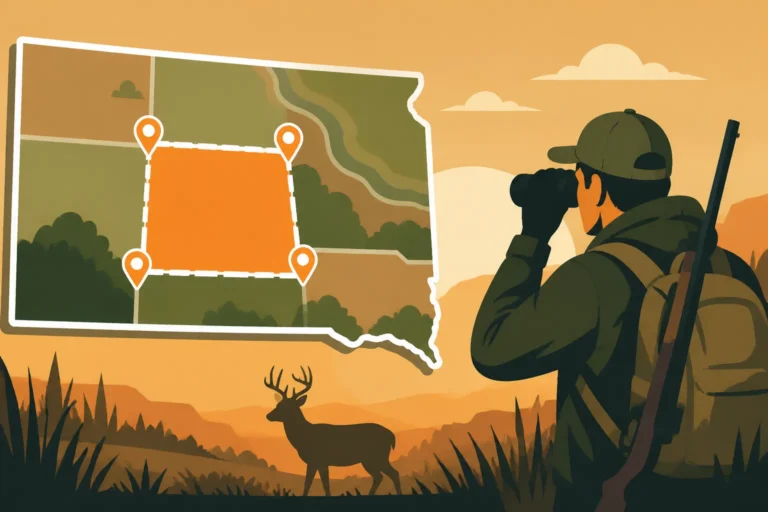
This is precisely where modern technology becomes an invaluable tool. Applications like onX Hunt are specifically designed to help hunters visualize property boundaries, including public road rights-of-way. These apps use GPS data and parcel information to overlay property lines onto detailed maps, often showing the statutory width of road rights-of-way as part of the public access. While these tools are incredibly helpful, they are still a representation, and it's always wise to remember that official county plat maps or discussions with county highway superintendents or local government officials are the ultimate authority. Without using a mapping tool, you might be blindly guessing where the boundary lies, and that's a risk no hunter should take. Another platform that can aid in overall hunt planning, though less specific to individual right-of-way lines, is GoHunt, which offers broad mapping and planning features.
Practical Advice for Hunting South Dakota Road Rights-of-Way
Given the complexities and potential for conflict, approaching right-of-way hunting with a clear strategy and a strong sense of responsibility is essential. It's not just about knowing the law; it's about applying it respectfully and safely.
Using Technology to Stay Legal
As mentioned, onX Hunt is a game-changer for navigating land ownership and right-of-way boundaries. When you open the app, you can often see different colored overlays indicating public land, private land, and sometimes even the distinct right-of-way for roads. Many of these apps will show the road bed itself as public, and the adjacent strips that constitute the right-of-way may also be marked as public access. Pay close attention to these layers. If the private land adjacent to the right-of-way is shown as "posted" or "private," then even if the ditch is technically within the right-of-way, you cannot hunt it if your actions could be construed as disturbing or shooting over the private land. onX Layers for South Dakota Land Status provides more detail on how these mapping tools work.
Remember, while these tools are fantastic, they are not infallible. They rely on public records which can have occasional discrepancies or might not reflect the absolute latest changes. Use them as your primary guide, but if you have any doubt, err on the side of caution. It's far better to walk away from a potential hunting spot than to risk a citation, a confrontation, or worse. Always double-check your position against the map, especially when moving, as your perception on the ground can sometimes differ from the precise GPS coordinates.
Respecting Landowners and Avoiding Conflicts
This cannot be stressed enough: just because something is legal doesn't always make it right or wise. South Dakota is a state built on neighborly respect, and maintaining good relationships with landowners is crucial for the future of hunting. If you're hunting a road right-of-way and see a "No Hunting" or "No Trespassing" sign on the adjacent private land, that should be your immediate signal to move on. Even if the signs are technically a few feet off the absolute property line, they convey a clear message from the landowner: they do not want hunters near their property. Respect that. Remember, the law states the adjacent private land must be unposted.
Engaging with landowners, even if you’re only hunting the ditch, can sometimes prevent misunderstandings. A polite wave, a quick stop to introduce yourself, or simply choosing a different area if you see working farm equipment or residences nearby can go a long way. Retrieving game that falls onto posted private land is another sticky situation. Unless you have prior permission, crossing a fence or boundary to retrieve a downed bird or animal is trespassing. Always plan your shots to ensure game falls within the legal hunting area. For more on this, check out South Dakota Posted Land Signage Rules and consider the value of Asking a South Dakota Landowner for Permission even for ditches if you have any lingering doubts.
Common Pitfalls and Key Considerations
Hunting within road rights-of-way is a privilege that comes with significant responsibility. Being aware of the common misunderstandings and safety concerns can help you avoid problems and contribute positively to the hunting community.
The "Unposted" Myth and Ambiguity
One of the biggest misconceptions is that if you don't see a sign, the adjacent land is automatically "unposted" and therefore fair game for right-of-way hunting. This is a dangerous assumption. Posting laws vary, and a sign might be obscured, fall down, or simply not be visible from your vantage point. The responsibility to know the land status falls squarely on the hunter. Furthermore, what constitutes "posted" can sometimes be debated; some landowners might argue that certain types of boundaries or previous verbal warnings are sufficient. The spirit of the law, however, refers to clearly visible signage.
The reality is that posted land can change. A field that was open last year might be leased or posted this year. Always assume private land is closed unless you have definitive information otherwise, either from clear signage indicating openness, or from a reliable map source. Never take an ambiguous situation as an invitation to hunt. When in doubt, it’s always better to seek clarity or find another spot.
Safety First: Public Roads and Projectiles
Public highways are for public travel, and while South Dakota offers this unique hunting opportunity, safety must always be your absolute top priority. Shooting along a right-of-way means you are often very close to active roadways, residences, and possibly livestock. Always be acutely aware of your surroundings. Are there vehicles approaching? Are there houses or farm buildings within your potential shot path? Are there cattle in the adjacent pasture? Your projectile, whether a shotgun pellet or a rifle bullet, does not stop at your target. It continues on, and you are responsible for where every single pellet or bullet ends up.
This isn't just about legality; it's about ethics and preventing tragic accidents. The "no shooting across the public highway" rule is a critical safety measure. Always identify your target clearly and ensure you have a safe backdrop. Never take a risky shot for fear of a missed opportunity. This principle applies to all hunting, of course, but it takes on particular importance when you are operating in such close proximity to public infrastructure and potentially occupied private land. Reviewing general safety guidelines like Safe Gun Handling on a Bird Drive can always be beneficial, regardless of the specific hunting scenario. A moment of carelessness can have lifelong consequences, and preserving the privilege of hunting in South Dakota depends on all of us exercising extreme caution.
Disclaimer
This article is for general informational purposes only and does not constitute professional advice. Laws, prices and regulations vary by location and change over time. Consult a qualified professional for guidance on your specific situation.