Rifle Calibers for South Dakota Antelope
Choosing the right rifle caliber for hunting South Dakota antelope can feel like a daunting task, especially when you consider the vast, open landscapes and the notoriously keen eyesight of these incredible animals. Many hunters wrestle with balancing a flat trajectory, sufficient stopping power, and manageable recoil, all while knowing that a long shot in a stiff prairie breeze is a very real possibility. This guide is designed to cut through the noise, helping you understand the unique demands of South Dakota antelope hunting and select a rifle caliber that will give you the best chance for a clean, ethical harvest.
Understanding the Unique Challenges of Antelope Hunting in South Dakota
Antelope hunting isn't like hunting deer in the timber. South Dakota's prairie country presents a distinct set of obstacles that demand a specific approach, especially when it comes to your rifle and ammunition. Ignoring these factors can lead to missed opportunities and, worse, a wounded animal.
The Landscape: Wide-Open Spaces and Long Shots
Picture this: you've spent hours glassing, finally spotted a magnificent buck, and now you're trying to close the distance. But instead of dense woods or rolling hills, you're faced with miles of short grass, sagebrush, and only the subtlest changes in elevation for cover. This is the reality of much of South Dakota's prime antelope country. From the Buffalo Gap National Grassland to the vast private ranches, concealment is minimal, and animals often spot you long before you get within what many consider "typical" deer hunting range.
This means that shots beyond 200 yards are common, and quite often, you might find yourself needing to take a shot at 300, 400, or even further if a stalk falls apart or terrain simply doesn't allow for a closer approach. This isn't about promoting irresponsible long-range shooting, but acknowledging the reality of the environment. A rifle caliber that excels at covering these distances with minimal bullet drop is not just a luxury; it's practically a necessity for consistent success. The wind, which seems to blow perpetually across the prairie, only compounds this challenge, pushing bullets off course with surprising authority.
Antelope Anatomy and Behavior
Pronghorn antelope, often mistakenly called "speed goats," are not built like a tank. They're relatively delicate animals, weighing between 90-150 pounds, with a vital zone that's compact and sits a bit forward compared to a whitetail deer. This means precision is absolutely paramount. While they aren't "hard to kill" in the sense of requiring heavy-hitting rounds, they do demand accurate shot placement.
Their behavior also plays a significant role. Pronghorns are incredibly vigilant, possessing eyesight comparable to an 8x binocular. They're often found in small herds, and with so many eyes watching, getting close can be a true test of your stalking skills. When spooked, they don't just run a little; they bolt, often covering vast distances at incredible speeds, making follow-up shots difficult or impossible. This emphasizes the need for a caliber that can deliver a quick, humane kill with the first well-placed shot, minimizing tracking and ensuring the animal doesn't travel far. The last thing any hunter wants is to be tracking a marginally hit animal across miles of open prairie.
Key Characteristics of an Ideal Antelope Cartridge
Given the unique demands of South Dakota's open country and the antelope's nature, certain characteristics become critical for your chosen rifle caliber. It's not just about what cartridge can kill an antelope, but what cartridge does it most effectively and reliably under typical hunting conditions.
Flat Trajectory and High Velocity
When you're looking at a pronghorn that might be 350 yards away across undulating prairie, even a slight misjudgment of range can mean the difference between a clean kill and a frustrating miss. A cartridge that delivers a relatively flat trajectory out to these extended ranges minimizes the impact of these unavoidable range estimation errors. High muzzle velocity is the primary driver of this flat trajectory. Bullets that leave the barrel faster spend less time in the air, meaning gravity has less time to pull them down.
For instance, a rifle shooting a bullet with a muzzle velocity of 3,000 feet per second (fps) will typically shoot much flatter than one launching a bullet at 2,600 fps over the same distance. This reduces the "holdover" a hunter needs to apply, simplifying the shot process in a high-pressure situation. While modern ballistic calculators and rangefinders help immensely, having a flatter-shooting round in your hands provides a greater margin for error, which can be invaluable when the pressure is on and a trophy buck is in your crosshairs. When you're trying to judge a Pronghorn Buck in the Field, having confidence in your rifle's trajectory is key.
Adequate Energy for a Clean Kill
While antelope aren't massive animals, they still require adequate energy transfer to ensure a quick and humane harvest. This isn't necessarily about sheer knockdown power, but rather delivering enough kinetic energy to disrupt vital organs effectively. Too little energy, and the bullet might not expand properly or penetrate deep enough, leading to a prolonged and painful experience for the animal.
The sweet spot for antelope typically involves bullets weighing between 80 and 150 grains, traveling at high velocities. The combination of velocity and bullet weight creates kinetic energy. You want enough energy to reliably penetrate through hide, muscle, and bone into the compact vital zone, ensuring rapid incapacitation. However, going excessively heavy on bullet weight can sometimes compromise trajectory, so it's a careful balance. Most popular deer cartridges have more than enough energy for antelope, but selecting a bullet designed for rapid, controlled expansion at high velocities is critical. This ensures that the energy is efficiently transferred within the animal.
Wind Drift Resistance
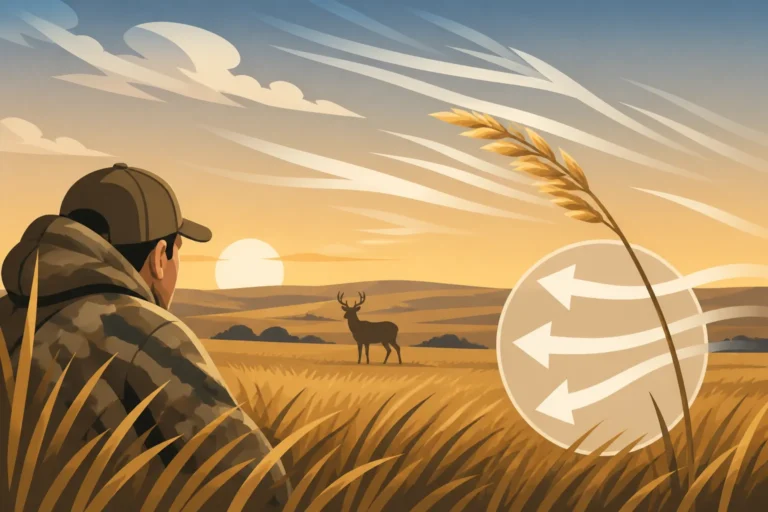
If you've ever hunted in South Dakota, you know the wind is not a theoretical concept; it's a constant, often blustery companion. A seemingly gentle breeze can become a significant factor at longer ranges, pushing lighter, less aerodynamic bullets far off target. This is where a bullet's ballistic coefficient (BC) comes into play. Bullets with higher BCs are more aerodynamically efficient, meaning they cut through the air better and are less affected by wind.
Choosing a bullet with a good BC for your chosen caliber is just as important as the caliber itself. When you're trying to make a shot at 400 yards and the wind is blowing at 15-20 mph, even a small amount of wind drift can result in a miss or, worse, a poor hit. Many hunters overlook this crucial detail, focusing only on trajectory. But for South Dakota antelope, managing wind drift is often the most challenging aspect of long-range shooting. Understanding Wind Calls on Long Prairie Shots is an art form, but a good high-BC bullet gives you a better canvas to work with. Tools and resources found on platforms like GoHunt can be incredibly helpful for understanding how different bullet choices will perform in varied wind conditions, allowing you to fine-tune your load selection.
Recommended Rifle Calibers for South Dakota Antelope
When it comes down to brass tacks, a few calibers consistently rise to the top for South Dakota antelope hunting. These have proven their worth over countless seasons, offering the right blend of trajectory, energy, and wind performance.
The Go-To Choices: .243 Win, 6.5 Creedmoor, .270 Win
These three cartridges are arguably the most popular and effective for antelope across the West, and South Dakota is no exception. They strike an excellent balance for most hunters.
- .243 Winchester: This classic has been taking antelope for decades. It's known for its mild recoil and blistering velocity with lighter bullets (80-100 grains), making it a joy to shoot accurately. Its flat trajectory is excellent out to 300-350 yards. While some argue it's on the lighter side for deer, it's absolutely lethal on pronghorns with good bullet placement. The manageable recoil also encourages more practice, which is always a good thing. However, wind drift can be a bit more pronounced with its lighter bullets compared to heavier options. For hunters who want minimal recoil, especially younger hunters or those sensitive to kick, the .243 remains a superb choice.
- 6.5 Creedmoor: The darling of the shooting world, the 6.5 Creedmoor has quickly become a favorite for good reason. It launches heavy-for-caliber, high-BC bullets (120-147 grains) at respectable velocities, offering an incredibly flat trajectory and exceptional resistance to wind drift. Its recoil is very manageable, similar to or slightly more than a .243. For hunters prioritizing long-range performance and wind bucking capability without heavy recoil, the 6.5 Creedmoor is an outstanding performer. Platforms like GoHunt often feature extensive ballistics data for various 6.5 Creedmoor loads, making it easier to select the perfect ammunition for your hunt.
- .270 Winchester: A long-time favorite of Western hunters, the .270 Win is a powerhouse for antelope. It typically pushes 130-150 grain bullets at very high velocities, resulting in an incredibly flat trajectory and ample energy for pronghorns and deer alike. Recoil is a step up from the .243 or 6.5 Creedmoor but still very manageable for most shooters. If you're looking for a versatile cartridge that handles both antelope and deer with authority, the .270 is hard to beat. Its proven track record speaks volumes about its effectiveness in open country.
Stepping Up: .25-06 Rem, .280 Rem, 7mm Rem Mag
For those who want a bit more oomph, anticipate consistently longer shots, or simply prefer a more powerful cartridge, these options offer increased performance.
- .25-06 Remington: Often overlooked, the .25-06 is a fantastic antelope cartridge. It launches 100-120 grain bullets at extremely high velocities, offering one of the flattest trajectories available. It's essentially a necked-down .30-06 case, providing excellent speed with mild-to-moderate recoil. For pure flat-shooting performance on antelope, it's tough to beat. The .25-06 is a great choice for hunters who want .270-like trajectory with slightly less recoil.
- .280 Remington: A cartridge with a cult following, the .280 Rem offers performance very similar to the .270 Winchester but with a wider range of bullet weights in the 7mm (.284") diameter. It can handle bullets from 120 grains all the way up to 175 grains, offering incredible versatility. It's a superb choice for antelope, providing excellent trajectory and energy, and can easily pull double duty for larger big game like mule deer or elk if you also plan for Black Hills Elk Hunting Tactics. Recoil is similar to the .270.
- 7mm Remington Magnum: When you need to reach out and touch something with authority, the 7mm Rem Mag answers the call. It pushes high-BC, heavy 7mm bullets (140-175 grains) at magnum velocities, resulting in an exceptionally flat trajectory and phenomenal wind bucking capabilities. Recoil is noticeably more stout than the standard cartridges but manageable for experienced shooters. If you're consistently shooting beyond 400 yards in blustery South Dakota conditions, this cartridge provides a significant advantage. It's often chosen for Spot-and-Stalk Antelope Hunting in South Dakota where longer shots are frequently part of the plan. Using a platform like GoHunt to dial in your custom ballistic profile for a 7mm Rem Mag can truly optimize your long-range accuracy.
Other Viable Options and Considerations
While the above are primary recommendations, several other cartridges can certainly get the job done, provided you select the right bullet.
- .22-250 Remington (with bullet restrictions): This cartridge is incredibly fast and shoots extremely flat. However, many states, including South Dakota, have minimum bullet energy or diameter requirements for big game. South Dakota generally requires a minimum of .22 centerfire and expanding bullets. While technically legal, using specialized heavy-for-caliber bullets (like 60-70+ grain bonded or monolithic bullets) is critical for ethical performance on antelope. Many hunters prefer a larger diameter for a wider wound channel and greater margin for error.
- .308 Winchester: A perennial favorite for its accuracy, moderate recoil, and widespread availability, the .308 Win is perfectly capable of taking antelope. While its trajectory isn't as flat as some dedicated prairie cartridges, its terminal performance with 150-165 grain bullets is excellent. With modern rangefinders and knowing your bullet drop, the .308 is effective out to 300-400 yards.
- .30-06 Springfield: The venerable .30-06 is perhaps the most versatile cartridge ever developed. It can handle everything from prairie dogs to moose, and antelope are no exception. With 150-165 grain bullets, it delivers excellent energy and trajectory for antelope. Like the .308, its trajectory might not be "laser flat," but its power and reliability are undeniable.
- Bullet Choice: Regardless of the caliber you choose, the bullet itself is arguably more important. For antelope, you want a bullet designed for controlled expansion at high velocities, ensuring it doesn't fragment prematurely on impact but also doesn't pass through without expanding. Look for bonded core bullets, monolithic copper bullets, or those with interlocked cores. Brands like Hornady (ELD-X, SST), Nosler (AccuBond, Ballistic Tip), Barnes (TTSX), and Federal (Trophy Bonded Tip) offer excellent options.
Bullet Selection and Practical Hunting Advice
Choosing a caliber is just the first step. To be truly successful and ethical when hunting antelope in South Dakota, you need to think about your ammunition, your training, and how you approach the hunt.
Choosing the Right Bullet Construction
The adage "the bullet is more important than the headstamp" holds especially true for antelope. Given their lighter body mass and relatively thin skin, you want a bullet that expands rapidly upon impact but still holds together to penetrate into the vitals. Avoid varmint bullets that are designed for explosive fragmentation, as these might create a superficial wound without reaching the vitals on a larger animal like an antelope.
Instead, opt for controlled-expansion hunting bullets. These are designed to mushroom reliably, creating a wider wound channel and transferring energy effectively, without coming apart. Examples include bonded bullets (where the lead core is chemically bonded to the copper jacket), monolithic copper bullets (which retain nearly 100% of their weight), or tipped bullets with strong internal construction. Consider bullet weights on the lighter to mid-range for your chosen caliber to maximize velocity and flat trajectory, but not so light that their ballistic coefficient suffers dramatically. A 130-grain bullet in a .270 Win, for instance, offers a great balance. Always test different loads in your rifle to see what it shoots most accurately.
Practice, Practice, Practice
No matter how good your caliber is on paper, it's worthless if you can't shoot it accurately under hunting conditions. South Dakota antelope hunting often means shooting from improvised rests, prone positions, or using shooting sticks. You absolutely need to practice these scenarios. Don't just shoot from a bench rest; practice shooting from a bipod, from sticks, and especially from the prone position, as this is often the most stable on the open prairie. Knowing your Practicing Prone Shots on the Prairie is paramount to success.
Familiarize yourself with your rifle's trajectory out to 400-500 yards. This doesn't mean you should shoot that far, but knowing your bullet's drop at various distances instills confidence. Practice shooting in windy conditions if possible, and learn how to compensate for it. The more you practice, the more intuitive shooting becomes, and the less "buck fever" will affect your shot. Your own skill, more than any specific caliber, will be the greatest determinant of your success.
Utilizing Technology: Rangefinders and Ballistic Calculators
In the open country of South Dakota, technology is your friend. A high-quality laser rangefinder is an absolute must. Estimating distance by eye on the flat prairie is notoriously difficult and can lead to costly errors. Range every animal, every landmark, and every potential shot angle you can. Knowing the exact distance is the first step to making an accurate shot.
Complementing your rangefinder is a ballistic calculator. Many modern rangefinders integrate this, or you can use smartphone apps or online tools like those offered by GoHunt. Input your specific load's data, muzzle velocity, and current environmental conditions (temperature, altitude) to get precise holdover and windage solutions. Don't just rely on a chart taped to your stock; practice using these tools quickly and efficiently in the field. This preparation can dramatically improve your hit probability on those longer shots across the wide-open expanse, ensuring you know your Rangefinding Across Open Ground capabilities.
Remember, a responsible hunter knows their limits. If the shot is too long, the wind too strong, or the angle too steep, sometimes the best decision is to pass and try for a closer opportunity.
Here's a quick comparison of some popular antelope calibers:
| Cartridge | Bullet Weight (gr) | Avg. Muzzle Velocity (fps) | Trajectory (in. @ 300 yds, 200 yd zero) | Avg. Wind Drift (in. @ 300 yds, 10 mph) | Typical Recoil (ft-lbs) | Best Use Case |
|---|---|---|---|---|---|---|
| .243 Win | 95-100 | 3000-3100 | -6 to -8 | 9-12 | 9-11 | Low recoil, good trajectory, younger hunters |
| 6.5 Creedmoor | 130-140 | 2700-2800 | -7 to -9 | 6-9 | 12-14 | Excellent BC, low wind drift, moderate recoil |
| .25-06 Rem | 100-120 | 3100-3200 | -5 to -7 | 8-11 | 13-15 | Very flat trajectory, low-moderate recoil |
| .270 Win | 130-150 | 3000-3100 | -6 to -8 | 7-10 | 16-18 | Classic all-around, flat trajectory, good energy |
| .308 Win | 150-165 | 2700-2800 | -9 to -11 | 8-11 | 18-20 | Versatile, accurate, readily available, moderate recoil |
| .30-06 Sprg | 150-165 | 2800-2900 | -8 to -10 | 7-10 | 20-22 | Powerful, versatile, slightly more recoil |
| 7mm Rem Mag | 150-160 | 3050-3150 | -6 to -8 | 6-9 | 23-26 | Long-range power, excellent BC, stout recoil |
Note: All ballistic data is approximate and will vary based on specific bullet type, barrel length, load, and atmospheric conditions. Values are for comparative purposes only.
Disclaimer
The information provided in this article is for educational and informational purposes only and does not constitute professional advice. Hunting regulations and best practices can change, and it is the responsibility of each individual hunter to verify all current local, state, and federal laws and regulations before hunting. Always prioritize safety, ethical hunting practices, and respect for wildlife and private property.