Prairie Dog Shooting Basics
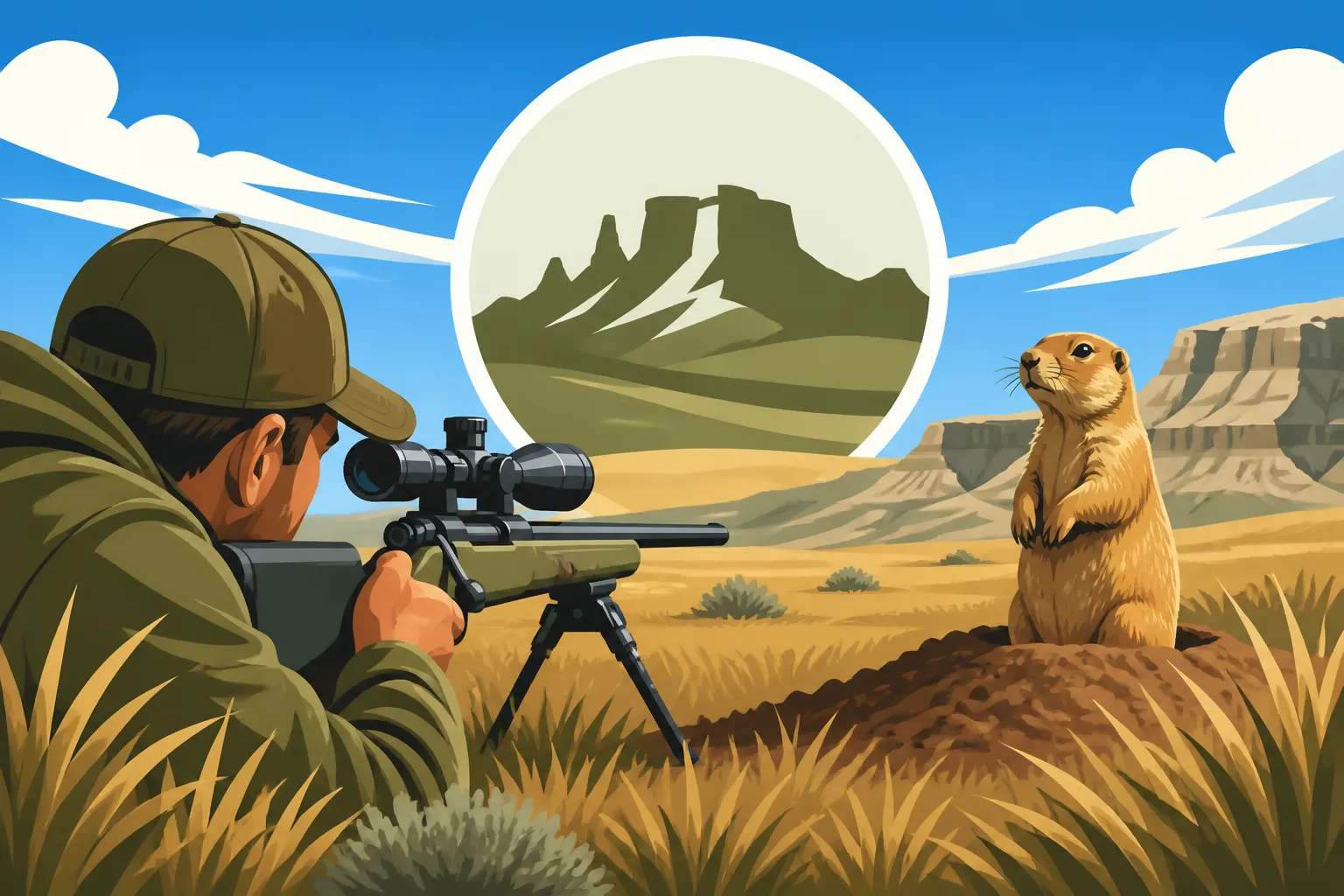
Stepping onto the wide-open South Dakota prairie, rifle in hand, with the sun beating down and the wind whipping at your hat, can be an exhilarating experience. But if you’re new to prairie dog shooting, it can also feel a bit overwhelming, trying to figure out the right gear, where to go, and how to actually hit those tiny targets popping up at seemingly impossible distances. This comprehensive guide is designed to cut through the confusion, helping you understand the basics of prairie dog hunting so you can approach your first outing with confidence and ethical intent.
Understanding Prairie Dog Behavior and Habitat
Before you even load a round, knowing a bit about the critters you're pursuing makes all the difference. Prairie dogs aren't just random targets; they're intelligent, social animals with predictable behaviors.
The Social Structure of a Prairie Dog Town
Prairie dogs, specifically the Black-tailed Prairie Dog common in South Dakota, live in highly organized colonies, often referred to as "towns." These towns are complex networks of burrows, tunnels, and mounds, which serve as their homes and lookout posts. Within a town, prairie dogs live in family units called "coteries," each with its own territory. This social structure means the town is always vigilant.
You’ll notice that as soon as you approach a town, a scout or two will pop up on a mound, letting out sharp barks. This isn't just a friendly greeting; it's a warning system. That first bark quickly spreads through the entire colony, sending most of the town scurrying back into their burrows. It's a frustrating but fascinating dynamic. You might set up, only to find the entire town has gone quiet. Patience is key. Wait them out, and they'll eventually start to reappear, driven by hunger or curiosity, but always with a heightened sense of alert. Understanding this vigilance helps you plan your approach and shooting strategy, teaching you to be patient and make your first shot count.
Where to Find Prairie Dog Towns in South Dakota
South Dakota, particularly the expansive West River country, is renowned for its abundant prairie dog populations. These rodents thrive in short-grass prairie environments, making areas like the Buffalo Gap National Grassland, Fort Pierre National Grassland, and Grand River National Grassland prime locations. These vast federal lands offer thousands of acres of public access, perfect for those looking to experience prairie dog shooting.
It's not just federal lands, though. Many private ranches across West River South Dakota also harbor extensive prairie dog towns. Gaining access to private land often requires some polite legwork, talking to landowners, and securing permission well in advance. Tools like the South Dakota Public Hunting Atlas can be invaluable for identifying land ownership boundaries, helping you differentiate between public access and private holdings where you'll need to ask permission. Whether public or private, always respect the land, leave no trace, and ensure you have clear understanding of where you can and cannot shoot, especially regarding distances from roads, residences, and livestock. When exploring the wide-open spaces, remember that areas with good prairie dog populations often overlap with prime National Grasslands Hunting in South Dakota opportunities for other game, so be aware of all regulations.
Essential Gear for Prairie Dog Shooting
Hitting a prairie dog, which can appear as little more than a speck at 200, 300, or even 500 yards, requires specialized gear. This isn't your grandfather's squirrel rifle hunt.
Rifle and Ammunition Choices
Selecting the right rifle and ammunition is paramount for success and ethical shooting. You're looking for accuracy, flat trajectory, and minimal wind drift.
- Small Caliber, High Velocity: Many seasoned prairie dog hunters gravitate towards cartridges known for their speed and precision.
- .223 Remington: A widely popular choice, the .223 offers a good balance of cost, availability, and performance. It's effective out to 300 yards for many shooters, especially with light, varmint-specific bullets. It's a great starting point for those new to long-range varminting.
- .204 Ruger: This cartridge is a prairie dog legend. It pushes tiny, light bullets at incredible velocities (often over 4,000 feet per second), resulting in a very flat trajectory and minimal wind deflection out to impressive distances. The recoil is negligible, allowing you to often spot your own hits.
- .22-250 Remington: A classic wildcat cartridge that went mainstream, the .22-250 delivers even more punch than the .223, extending your effective range significantly. It's a favorite for those wanting to stretch shots out to 400+ yards, though it comes with more recoil and often higher ammo cost.
- .17 HMR: While not a long-range powerhouse, the .17 HMR is excellent for closer engagements, typically under 150 yards. It's quiet, has virtually no recoil, and provides incredible accuracy for teaching fundamentals without breaking the bank. It’s also great for areas where excessive noise might be a concern.
When it comes to ammunition, look for varmint-specific rounds. These usually feature lighter, rapidly expanding bullets (like hollow points or ballistic tips) designed for explosive fragmentation upon impact. This ensures humane kills and minimizes ricochets. Avoid heavy, thick-jacketed hunting bullets meant for larger game, as they might over-penetrate or ricochet more readily. Much like selecting a Rifle Choice for West River Mule Deer, your prairie dog rifle should be tailored to the open, windy conditions you'll encounter.
Here's a quick comparison of popular calibers for prairie dog shooting:
| Caliber | Muzzle Velocity (FPS) | Effective Range (yards) | Recoil | Bullet Weight (grains) | Pros | Cons |
|---|---|---|---|---|---|---|
| .17 HMR | ~2,550 | 50-150 | Very Low | 17-20 | Inexpensive, accurate, low noise | Limited range, wind sensitive |
| .223 Remington | ~3,200 | 150-300 | Low | 35-55 | Common, affordable ammo, versatile | More rainbow trajectory than faster rounds |
| .204 Ruger | ~4,225 | 200-400+ | Very Low | 32-40 | Extremely flat, minimal wind drift | Less common ammo, barrel burner concerns |
| .22-250 Rem | ~3,600 | 250-500+ | Moderate | 40-55 | Excellent long-range power & accuracy | Higher recoil, more expensive ammo |
Optics, Rests, and Rangefinding
Accuracy is everything when you're shooting tiny targets at distance, and your optical and support systems are just as important as your rifle.
- High-Magnification Scopes: Forget your 3-9x deer scope. For prairie dogs, you'll want something with a much higher top end, like a 4-16x, 6-24x, or even 8-32x. The extra magnification helps you pinpoint those small targets and see subtle changes in mirage that affect your shot. Look for scopes with clear glass, good light gathering, and precise, repeatable adjustments for windage and elevation. A fine reticle is also crucial for precise aiming.
- Shooting Rests: Stability is paramount. You'll spend hours lying prone, so a solid rest is non-negotiable.
- Bipods: A common choice, bipods attach to your rifle's forend and provide a stable front rest. Harris bipods are a popular choice and are robust for prairie use.
- Shooting Sticks: These offer versatility for shooting from a seated or kneeling position, which can be useful when terrain or vegetation prevents a prone setup.
- Sandbags/Rear Bags: Essential for supporting the rear of your rifle, allowing for fine elevation adjustments and rock-solid stability. Don't skimp here; a good rear bag makes a huge difference.
- Rangefinders: You absolutely need a reliable laser rangefinder. Guessing distances on the open prairie is a recipe for missed shots. Prairie dogs often blend into the terrain, and what looks like 200 yards might actually be 275. Being able to precisely range your target and then dial in your scope (or use holdovers from a ballistic app) is critical. Products from companies like GoHunt, which often integrate mapping and rangefinding tools, can be incredibly helpful for planning your attack and understanding the distances you'll be dealing with. Master the art of Rangefinding Across Open Ground to ensure consistent hits.
Comfort and Safety Essentials
Prairie dog hunting often means long hours under the relentless South Dakota sun, potentially in very remote areas. Being comfortable and safe isn't a luxury; it's a necessity.
- Ground Mats and Chairs: Lying prone on hard, uneven ground for extended periods will wear you out fast. A good shooting mat with padding, or a low-profile shooting chair, can drastically improve your comfort and focus.
- Shade: The sun can be brutal. A small pop-up canopy or a large umbrella provides much-needed relief from direct sunlight, reducing fatigue and allowing you to hunt longer.
- Hydration and Nutrition: Pack plenty of water, more than you think you'll need, especially on hot days. Electrolyte drinks are a good idea too. Snacks like energy bars, nuts, and jerky will keep your energy up.
- Sun Protection: Sunscreen, a wide-brimmed hat, and sunglasses are non-negotiable. The prairie sun reflects off the ground, amplifying UV exposure.
- Hearing Protection: Repeated rifle shots will damage your hearing. Always wear earplugs or electronic earmuffs. Electronic muffs allow you to hear conversations and environmental sounds while still protecting your ears from harmful muzzle blast.
- Eye Protection: Safety glasses are crucial to protect your eyes from debris, wind, and potential ricochets. Remember, even small caliber bullets can send fragments flying.
- First Aid Kit: Always carry a basic first aid kit for cuts, scrapes, and other minor injuries. Include blister treatment, as you might do more walking than anticipated.
- Communication: Cell service can be spotty in remote West River areas. A satellite messenger or a fully charged cell phone (with a power bank) is a good idea, especially if you're hunting alone.
- Appropriate Clothing: Dress in layers to adapt to changing temperatures and protect yourself from the elements. Lightweight, breathable long sleeves are often better than short sleeves for sun protection. Pay attention to how to deal with the inevitable winds; mastering Layering for South Dakota Wind is key to comfort on the prairie.
Strategies for Effective Prairie Dog Shooting
Once you have your gear sorted, it's time to think about how to actually approach the hunt. It's more than just aiming and pulling the trigger.
Setting Up Your Shooting Position
Your shooting position dictates your accuracy. The goal is maximum stability, which usually means getting low and solid.
- Prone is King: Whenever possible, shooting from the prone position offers the most stability. Lie down, get comfortable, and use your bipod and rear bag to create a rock-solid platform. Make sure your body is aligned behind the rifle to absorb recoil straight back, allowing for quicker follow-up shots or spotting your impacts. Practicing Prone Shots on the Prairie at home or a local range will build critical muscle memory.
- Utilizing Natural Rests: Look for any natural depressions, small rises, or even large rocks that can help you get a steadier rest, especially if prone isn't feasible due to tall grass or terrain.
- Vehicle as a Rest (with Caution): In many areas, especially on private land or established prairie dog towns, it's common and legal to shoot from the hood or roof of your vehicle. However, always exercise extreme caution. Ensure your vehicle is safely parked, engine off, and never, ever shoot over the cab if there’s someone inside or near. Use sandbags or a quality shooting rest designed for vehicle use to protect your finish and enhance stability.
- Wind, Wind, Wind: The South Dakota prairie is almost always windy. Wind is your biggest enemy. Learn to read it. Look at grass movement, mirage through your scope, and even bring small flags to stake out at various distances to give you visual cues. Wind calls are constantly changing and will necessitate continuous adjustments to your aim. A 10 mph crosswind can easily push a .223 bullet several inches off target at 300 yards. This is where truly mastering skills like Reading Wind at Four Hundred Yards becomes invaluable. Always error on the side of caution with wind, as a clean miss is always better than a poor hit.
Shot Placement and Follow-Up
Ethical shooting means aiming for quick, humane kills. Prairie dogs are small, so precision is everything.
- Target the Kill Zone: For prairie dogs, the primary kill zone is the head or the chest cavity, roughly the size of a golf ball. A hit in these areas ensures rapid incapacitation. Avoid body shots aimed at the mid-section, as these can result in wounded animals that make it back to their burrows to suffer.
- Spotting Your Impact: This is where the right scope and calm shooting technique come into play. If your scope has enough magnification and your rifle is stable, you should be able to see the bullet impact or "splash" in the dirt around the prairie dog. If you miss, seeing the splash tells you if you were high, low, or off to the side, allowing for immediate correction on a follow-up shot if the prairie dog hasn't disappeared. Sometimes a companion with a spotting scope can be an invaluable "spotter," calling out corrections for you.
- Dealing with Runners: Not every shot is perfect. If a prairie dog is hit but begins to run for its burrow, take a quick, ethical follow-up shot if possible. Sometimes, a well-placed second shot can anchor a wounded animal before it disappears forever. This is why having a fast, smooth cycling action (like a bolt-action) and quick reacquisition of the target is beneficial.
Ethical Considerations and "Cease Fire" Moments
While prairie dogs are generally considered varmints and pest control, ethical hunting practices still apply. Respect for the animal and the environment is paramount.
- Knowing When to Stop: A large prairie dog town can seem like an endless shooting gallery, but constantly hammering a town can deplete it too quickly. Over-pressuring a town can make the remaining animals extremely skittish and nearly impossible to hunt ethically. Many experienced shooters practice a "cease fire" rule: if you've shot a certain number of animals from a specific area of the town, or if the animals become too educated and aren't presenting clear, ethical shots, move to a different area or even a different town. This allows the local population to recover and maintain its vigilance without becoming impossible to hunt. This concept extends to all hunting, much like understanding Hunting Pressure Patterns on Walk-In Areas for pheasants.
- Respecting Property and Backstops: Always know what’s beyond your target. Prairie dog bullets can travel long distances and ricochet unpredictably off the ground or rocks. Ensure you have a safe backstop (a hill, a bank, or simply open ground for a very long distance) and that there are no roads, houses, livestock, or people in your line of fire. Never shoot towards skylines.
- Leave No Trace: Pack out everything you pack in. This includes spent shell casings, food wrappers, and any other trash. Leaving a clean hunting site is a sign of respect for the land and for future hunters. Good land stewards are always welcomed back. Many resources, including those from GoHunt, emphasize responsible outdoor practices for all types of hunting.
Planning Your South Dakota Prairie Dog Trip
A successful prairie dog hunt in South Dakota requires a bit of homework before you even hit the road.
Permits, Seasons, and Regulations
Unlike big game or upland birds, prairie dogs are classified as unprotected varmints in South Dakota. This means there is no closed season, no bag limit, and you can generally hunt them year-round. However, this doesn't mean you don't need a license.
- Hunting License Required: All hunters, including non-residents, need a valid hunting license to hunt prairie dogs on public or private land in South Dakota. For non-residents, a general hunting license or a small game license is typically sufficient. Always check the most current South Dakota Game, Fish and Parks (SDGFP) regulations handbook or their website before your trip, as rules can occasionally change.
- Public vs. Private Land Rules: While the general rules for prairie dogs are lenient, specific regulations can apply to certain public land units (like National Grasslands or some State Parks, though prairie dogs are rarely hunted in parks). On private land, you must have permission from the landowner. Always clarify any specific rules the landowner might have regarding shooting times, areas, or calibers.
Finding Public Land Access and Private Land Permission
This is often the most challenging part of any hunt, and prairie dogs are no exception.
- National Grasslands: These are your best bet for consistent public access. The Buffalo Gap, Fort Pierre, and Grand River National Grasslands offer extensive opportunities. Use Bureau of Land Management (BLM) maps or resources like the SDGFP Public Hunting Atlas. Many popular digital mapping apps also integrate public land layers, like those offered by GoHunt, which can be indispensable for navigating these vast areas and ensuring you're on legal ground. Learn how to effectively use the South Dakota Public Hunting Atlas to your advantage.
- Walk-In Areas and Game Production Areas: While primarily managed for larger game or upland birds, some Walk-In Areas (WIAs) or Game Production Areas (GPAs) might contain small prairie dog towns. Always double-check the specific rules for these areas on the SDGFP website or app, as some may have restrictions on target shooting or certain firearm types.
- Private Land: This often yields the best results, as private landowners (especially ranchers) view prairie dogs as agricultural pests that compete with livestock for forage and create tripping hazards for horses and cattle.
- Asking Permission: The best approach is to knock on doors, be polite, and be prepared to show respect for their land. Offer to share some meat (though prairie dog meat isn't typically consumed, the gesture is appreciated) or simply offer to help control a pest problem.
- Leveraging Resources: Websites and apps like GoHunt can provide landowner names and boundaries, making it easier to identify who to talk to. Be clear about your intentions, assure them you'll be safe, and always follow their specific instructions. Building a good relationship with a landowner can secure access for years to come. For more general advice on this, check out Finding Private Land Access in South Dakota.
Best Times to Hunt and Weather Considerations
Timing your trip and being prepared for the elements will greatly enhance your experience.
- Seasonality: While technically year-round, the prime prairie dog shooting season runs from late spring through early fall (May to September). This is when prairie dogs are most active outside their burrows. They tend to hibernate or be less active during the colder winter months.
- Time of Day: Prairie dogs are most active during the warmest parts of the day, typically from late morning through mid-afternoon. They emerge to feed and bask in the sun. Early mornings and late evenings can be slower.
- Weather Impact:
- Heat: Summer can be brutally hot on the prairie. Plan for extreme heat, bring extra water, and consider hunting earlier or later in the day to avoid the peak heat.
- Wind: As discussed, wind is a constant factor. It affects bullet trajectory and makes spotting hits harder. Plan for it, practice in it, and be patient.
- Rain/Thunderstorms: Summer thunderstorms can pop up quickly and violently. Monitor weather forecasts closely. Muddy roads can become impassable after even a moderate rain, potentially stranding you in remote areas.
- Mirage: On hot days, heat waves rising from the ground create "mirage," which can make targets appear distorted or wavy through your scope. Learning to read mirage is a crucial skill for long-range shooting.
- Warm Weather Considerations: While prairie dogs aren't typically field dressed for consumption, any items you bring with you that are perishable will need care, much like taking care when Field Dressing in Warm October Weather.
Enjoy your time on the South Dakota prairie, chasing those elusive little varmints. Remember, it's about the challenge, the experience, and the respect for the land and its creatures.
Disclaimer
Please note that hunting regulations, seasons, and licensing requirements can change. Always consult the most current South Dakota Game, Fish and Parks (SDGFP) regulations handbook or visit their official website before planning any hunting trip to ensure compliance with all applicable laws. This guide is for informational purposes only and does not constitute legal advice.