South Dakota Archery Antelope Season
Hunting antelope with a bow in South Dakota is a dream for many, but navigating the season dates, draw odds, and specific regulations can feel like trying to stalk a wary pronghorn across an open prairie—confusing and often frustrating. This guide is designed to cut through that complexity, providing you with a clear, comprehensive look at the South Dakota archery antelope season, from applying for a tag to putting proven tactics into practice.
Understanding the South Dakota Archery Antelope Season
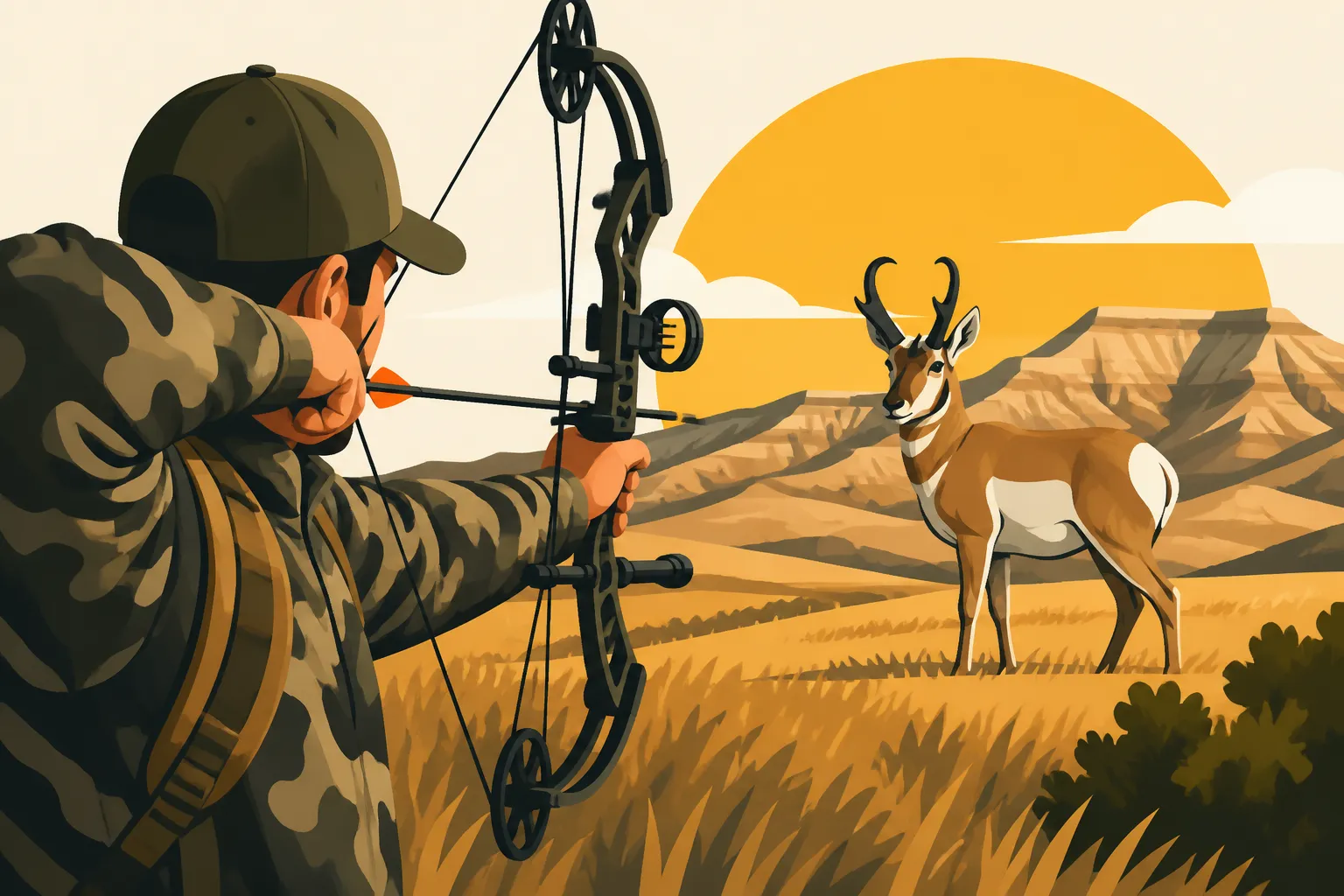
The South Dakota archery antelope season offers a unique and challenging experience, distinct from the firearms season. It’s a chance to pursue these incredibly keen-eyed animals in their natural habitat, relying on stealth, patience, and precise shot placement. But before you even start dreaming of that perfect stalk, you need to understand the fundamental structure of the season itself.
Key Dates and Season Structure
The archery antelope season in South Dakota typically opens much earlier than the firearms season, usually kicking off in mid-to-late August and running through the end of September, with some units extending into early October. This early start means you're often hunting in warmer weather, which has its own set of challenges, particularly concerning meat care. Unlike some other big game seasons, the archery antelope season is generally statewide, though specific units might have slightly different start or end dates, or antlerless opportunities. It’s crucial to consult the current South Dakota Game, Fish and Parks (GFP) hunting handbook for the exact dates each year, as they can shift slightly.
The beauty of the archery season is that it provides a longer window to hunt compared to the typically much shorter firearms season. This extended period allows archers to pick their hunting days more strategically, perhaps waiting for cooler weather fronts or specific antelope movement patterns. However, it’s important to remember that during the early part of the season, bucks are often still in larger bachelor groups, and their patterns might be more predictable around water sources, making them vulnerable to waterhole ambush tactics. As the season progresses towards the rut, typically in late September, their behavior shifts, becoming more focused on does and territory, which can open up new opportunities for decoy-based hunts.
License Requirements and Application Process
Before you can even think about drawing back on a pronghorn, you’ll need to secure the correct licenses. For non-residents, this usually means a non-resident small game license and a habitat stamp are prerequisites, in addition to the actual archery antelope tag. The most critical piece of the puzzle is the archery antelope tag itself, which, for non-residents, is almost always allocated through a lottery draw system. Residents also apply through a draw, though their odds are generally much better.
The application period for archery antelope tags typically runs from late May through early June. Missing the application deadline is a common and painful mistake, so mark your calendar for the South Dakota Antelope Application Deadline well in advance. When applying, you’ll usually rank your preferred units (or combinations of units) as first, second, and third choices. The South Dakota draw system is known for its preference point structure, which can be a game-changer, especially for non-residents hoping to increase their odds over time. Understanding South Dakota Preference Points Explained is vital if you plan to hunt the state for multiple years. You’ll be applying for either an "Any Antelope" tag (meaning either-sex) or a "Doe/Fawn" tag. Most archers are looking for an "Any Antelope" tag for the chance at a buck.
Drawing an Archery Antelope Tag
The draw is often the biggest hurdle for anyone hoping to hunt big game in South Dakota, and archery antelope is no exception, particularly for non-residents. It requires strategic planning and a good understanding of the odds.
Non-Resident Draw Odds and Strategy
Let’s be honest: drawing a non-resident archery antelope tag in South Dakota can be tough. The number of tags available to non-residents is limited, and demand is high. While specific draw odds fluctuate year to year based on applicant numbers and tag allocations, it’s rarely a "sure thing," even with preference points. This is where tools like GoHunt become incredibly valuable. Platforms like GoHunt track historical draw data, allowing you to research unit-specific odds and determine which units might require more preference points versus those that are easier to draw. They can help you make informed decisions about where to apply.
For instance, some units might have a 100% draw rate for applicants with X number of points, while others remain a long shot even with a significant point advantage. If you're a non-resident, accumulating preference points is often the most reliable long-term strategy. You can typically purchase a point without applying for a tag during the point-only purchase period, banking it for future years. When applying, consider party applications with trusted hunting partners; sometimes applying as a group can affect your odds, though it often pools your points, meaning the application goes into the draw with the highest point total among the party members. Pay close attention to the impact of your Second Choice in the South Dakota Antelope Draw. While your first choice is always primary, understanding how second and third choices are considered can occasionally lead to an unexpected tag.
Resident Draw Odds and Considerations
Residents, thankfully, face much more favorable draw odds for archery antelope tags. While it's still a draw, the number of tags reserved for residents means a much higher chance of success, especially for "Any Antelope" tags. Many residents can draw a tag with zero or very few preference points, making it a more accessible hunt year after year.
Resident hunters often have a wider array of units to choose from with good success rates. Additionally, some residents who own or lease land may qualify for South Dakota Landowner Licence Preference, which can further improve their chances or allow them to hunt specific areas. Even without landowner preference, many units offer excellent resident odds, giving local archers ample opportunity to pursue these exciting animals close to home. It’s always wise for residents to review the GFP draw reports for their preferred units to get the most accurate picture of their chances.
Essential Gear and Tactics for Archery Antelope
Hunting pronghorn with archery equipment presents unique challenges that demand specific gear and well-honed tactics. Their incredible eyesight and the wide-open nature of their habitat make them one of North America's most difficult animals to consistently get within bow range.
Bow Setup and Broadhead Choice
Your bow setup needs to be precise and powerful enough for antelope. While they aren't the largest big game animal, they are incredibly tough, and broadside shots can be surprisingly narrow due to their sleek bodies. A bow set to your comfortable draw weight, delivering at least 55-60 pounds of kinetic energy, is generally recommended. Speed is helpful, but accuracy is paramount. Practice shooting at various distances, especially out to 60 yards, as shots on antelope in open country can often stretch beyond typical deer ranges.
For broadheads, both fixed-blade and mechanical designs can be effective. Fixed-blade broadheads known for their strength and penetration, like those from G5 or QAD, are excellent choices. If opting for mechanical broadheads, choose models with a proven track record for reliability and a wide cutting diameter, such as Rage Hypodermic or Grim Reaper Fatal Steel. Regardless of your choice, ensure your broadheads are razor sharp and your arrows fly true. Precision is key; a marginal shot on an antelope can lead to a long, frustrating tracking job across miles of prairie. Work on your form and shot execution, especially when fatigued or under pressure. Mastering Shot Placement on a Pronghorn is crucial, aiming for the vitals just behind the shoulder.
Another critical piece of gear is a reliable rangefinder. In the vastness of the prairie, distances are notoriously deceptive. A rangefinder with a reliable angle compensation feature is invaluable, ensuring you get an accurate distance even when shooting from an elevated position or across broken terrain. Mastering Rangefinding Across Open Ground will drastically increase your success.
Spot-and-Stalk and Decoying Strategies
Spot-and-stalk is the classic, most thrilling, and arguably most difficult method for archery antelope. It requires immense patience, excellent glassing skills, and an intimate understanding of terrain and wind. Start your hunt early, often before first light, by getting to a high vantage point. Use high-quality binoculars (10×42 or 12×50) and a spotting scope on a tripod to systematically glass the landscape for antelope. Once you spot a buck you want to pursue, the real chess match begins.
The core of successful Spot-and-Stalk Antelope Hunting in South Dakota involves using every bit of terrain feature to your advantage. Draws, coulees, CRP grass, even small rises in the ground, become your cover. Crawling is often involved, sometimes for hundreds of yards. Always pay attention to the wind direction, as a pronghorn's nose is almost as good as its eyes. A scent-blocking spray or detergent can give you a slight edge. Learn to be incredibly slow and deliberate in your movements. Understanding how to use Using Draws to Hide a Stalk can be the difference between success and being spotted from a mile away.
Decoying is another highly effective tactic, especially during the rut when bucks are aggressive and territorial. A full-body antelope decoy, or even a silhouette, can draw a curious or aggressive buck within bow range. This usually involves one hunter holding the decoy while another stalks behind, or using it as a distraction for a solo hunter. For successful Antelope Decoy Setups Over Water, understand that the decoy should mimic a challenger buck or a receptive doe. Position yourself downwind and out of sight, letting the decoy do the work of drawing the buck close.
Finally, for those who prefer to let the antelope come to them, setting up a ground blind over a waterhole can be extremely productive, especially in hot, dry conditions. Antelope need to drink, and they often visit waterholes in predictable patterns. A pop-up ground blind offers excellent concealment, but remember to set it up well in advance to allow the antelope to become accustomed to its presence. For successful Blind Hunting a Prairie Waterhole, make sure you are fully brushed in and have shooting lanes cleared.
Field Care and Trophy Considerations
South Dakota’s archery antelope season often falls during warm weather, sometimes with daytime temperatures exceeding 80 or even 90 degrees Fahrenheit. This means proper and swift field care is paramount to prevent meat spoilage. As soon as you recover your antelope, get to work. The absolute priority is to Field Dressing an Antelope Fast, removing all the entrails to allow the carcass to cool as quickly as possible.
Once field dressed, skinning the animal immediately will further accelerate cooling. If you’re far from your vehicle, quartering the animal and placing the meat in game bags will help with transport and cooling. Get the meat out of the sun and into coolers with ice as quickly as you can. A common mistake is to let the carcass sit too long without proper cooling, leading to "gamey" meat. This swift action is key to Getting Meat Cooled in Warm Weather and ensuring you have delicious table fare.
When it comes to trophy considerations, Judging a Pronghorn Buck in the Field can be tricky. Unlike deer, where antler mass and width are key, pronghorn scoring focuses on horn length, circumference (mass), and prong length. Look for bucks with tall horns that extend well above the ears, good mass that carries up, and a distinct, long prong. Practice Judging Pronghorn Horn Length by observing many animals through your binoculars or spotting scope. Pay attention to how the horn flares out at the base and where the prong breaks.
Navigating South Dakota's Antelope Country
The vastness of South Dakota’s prairie can be intimidating, but understanding where antelope live and how to access that land is key to a successful hunt.
Public vs. Private Land Access
South Dakota has a good amount of public hunting land, but for antelope, particularly the West River areas where they are most prevalent, a significant portion of prime habitat is on private ground. This often leads to the frustrating reality that the biggest challenge isn't necessarily finding antelope, but finding accessible antelope.
However, don't despair! The South Dakota Game, Fish and Parks (GFP) has excellent resources like the South Dakota Public Hunting Atlas, which is available online and as a downloadable app. This atlas clearly marks Walk-In Areas (WIAs), Game Production Areas (GPAs), and other public lands. Using tools like the onX Hunt app with its onX Layers for South Dakota Land Status is almost essential for confidently identifying public boundaries and knowing exactly where you stand. GoHunt also offers robust mapping solutions that highlight public and private parcels, helping you plan your approach.
For many, Finding Private Land Access in South Dakota will be a critical component of their archery antelope hunt. Farmers and ranchers often own significant portions of antelope habitat. Respectful communication, a good attitude, and offering to help with chores can sometimes open doors. Always ask for permission well in advance of the season, and be prepared for polite "no's." Even if you hunt public land, understanding adjacent private property lines is crucial to avoid trespassing.
Key Antelope Units and Habitat
Antelope are primarily found in the western half of South Dakota, often referred to as "West River" country. This region is characterized by vast expanses of shortgrass prairie, sagebrush flats, and rolling breaks, which is exactly the kind of open habitat pronghorn thrive in. Counties like Harding, Perkins, Butte, Meade, and Fall River often boast the highest antelope densities.
While antelope can be found across many West River units, some units consistently produce more tags and offer better opportunities due to higher populations or more accessible public land. Historically, the far northwestern corner of the state tends to be a stronghold. GoHunt's unit profiles can provide valuable insights into specific unit success rates, population trends, and public land percentages. Researching Where South Dakota Antelope Concentrate will help you narrow down your focus when applying for a tag. Look for areas with a mix of grassland for grazing, sagebrush for cover, and scattered water sources. The openness of the country means that while you can spot animals from far away, getting close with a bow is a true test of your field skills.
Understanding the terrain and the typical movement patterns of antelope in these habitats will give you an edge. They often feed in open areas at dawn and dusk, resting in slight depressions or behind sparse cover during the heat of the day. Their incredible vision means they'll spot any out-of-place movement long before you ever see them.
South Dakota Archery Antelope Season Overview
Here’s a quick overview of some key aspects of the South Dakota archery antelope season:
| Aspect | Detail (General) | Non-Resident Notes | Resident Notes |
|---|---|---|---|
| Season Dates | Mid-August to end of September/early October (varies slightly by unit/year) | Same dates, but tag limited via draw. | Same dates, better draw odds. |
| Application Period | Late May to early June | Critical deadline, often requires multiple preference points for a buck tag. | Generally easier draw, fewer points needed. |
| Required Licenses | Archery Antelope Tag, Small Game License, Habitat Stamp | All required. Non-resident fees are higher. | All required. Resident fees are lower. |
| Draw System | Preference Point System (points increase draw odds) | Accumulating points is key for higher-demand units. | Many units drawn with 0-1 point. |
| Primary Hunting Area | West River (Northwestern counties especially) | Significant private land; public access often requires detailed map study (e.g., GoHunt, onX). | Wider access to private land, sometimes through personal connections or landowner tags. |
| Common Tactics | Spot-and-Stalk, Decoying, Ground Blind over Water | High skill required for spot-and-stalk due to pressure and open terrain. | More opportunities for consistent scouting and setting blinds. |
| Meat Care | CRITICAL due to warm weather. Field dress, skin, and cool immediately. | Plan for immediate processing or reliable cooler transport for long drives. | Easier access to local processors or home cooling facilities. |
Disclaimer
Please note: Hunting regulations, season dates, and license requirements are subject to change. Always consult the most current South Dakota Game, Fish and Parks (GFP) hunting handbooks and official regulations before planning and embarking on any hunt. This guide is for informational purposes only and does not constitute legal advice or an official interpretation of regulations.