Finding Private Land Access in South Dakota
The challenge of finding great hunting spots in South Dakota can often feel like an uphill battle, especially when you envision acres of prime habitat teeming with pheasants or a trophy buck disappearing into a thick tree line, only to realize it's all behind a "No Trespassing" sign. It's a common frustration, and one that every hunter, resident or nonresident, eventually encounters. This comprehensive guide will peel back the layers of private land access in South Dakota, offering practical strategies, legal insights, and ethical considerations to help you respectfully and successfully navigate the state's predominantly private hunting landscape.
The Reality of South Dakota's Land Ownership Landscape
South Dakota is an agricultural state, pure and simple. Drive through the prairies, and you'll see endless fields of corn, soybeans, and wheat, interspersed with pastures, hayfields, and vital shelterbelts. This agricultural dominance means that a vast majority of the land is privately owned, often by families who have worked that ground for generations. Understanding this fundamental truth is the first step in unlocking private land opportunities.
Why Private Land Dominates the Hunting Scene
It's easy to look at a map and feel discouraged by the limited splotches of public land. But consider the history: South Dakota was settled by homesteaders, farmers, and ranchers, who claimed and cultivated the fertile prairie. Their livelihoods depend on these lands, and naturally, they want to control access. For hunters, this translates into a unique challenge. While public access exists – and is fantastic in its own right – the sheer scale of private land means that a significant portion of the state's wildlife populations, especially pheasants, deer, and even some antelope, spend much of their lives on private property. This isn't inherently bad; private landowners often do an incredible job of managing habitat, whether intentionally through conservation programs or simply by leaving dense cover and food sources adjacent to their crops.
The frustration often stems from seeing birds pour out of a private field when you're hunting nearby public ground, or watching a monster whitetail vanish into a timber patch that you know is off-limits. It feels like the best hunting is always just out of reach. But instead of seeing this as a barrier, savvy hunters learn to view it as an opportunity – an opportunity to engage with landowners, build relationships, and gain access to ground that might otherwise go unhunted, or at least, less pressured. It simply requires a different approach than what you might be used to in states with extensive national forests or BLM lands.
Understanding the "Posted" Sign Culture
In South Dakota, "No Trespassing" signs are a ubiquitous part of the landscape. These signs aren't just suggestions; they carry legal weight. South Dakota law is clear: entering private land without permission constitutes criminal trespass. It’s not just about hunting; it’s about any entry. This strict adherence to private property rights is deeply ingrained in the culture here, and for good reason. Landowners are protecting their property, their livestock, their privacy, and often, their hunting privileges for themselves and their families.
The challenge for hunters, particularly nonresidents or those new to the state, is navigating this posted landscape. A field might look inviting, full of cover and bird sign, but if it's posted, it's off-limits. This also means you can't assume that because a field isn't explicitly fenced or cultivated, it's public. Always err on the side of caution. If there's no clear "Public Hunting" signage (like the yellow Walk-In Area signs), assume it's private and requires permission. Understanding South Dakota Trespass Law and Posted Land is absolutely critical before you ever step foot off a public road. A simple mistake can not only ruin your hunt but also damage your reputation and that of all hunters.
Many landowners will simply post a few signs at common access points, considering the entire perimeter implicitly posted. Others will meticulously line their fences with them. Regardless of the density of the signs, the message is the same: respect the boundary. Violating these rules is not only illegal but also makes it harder for every other hunter trying to gain legitimate access. It erodes trust and reinforces negative stereotypes about hunters, which is the last thing we want to do as ethical sportsmen.
Essential Tools for Identifying Land Ownership
Before you can even think about asking for permission, you need to know who owns the land you're interested in. Gone are the days of knocking on every farmhouse door and hoping for the best. Modern technology has revolutionized the process, making it much easier to identify property boundaries and landowner information from the comfort of your home or truck.
The Power of Digital Mapping Apps
If you're serious about hunting in South Dakota, especially on private land, a good digital mapping application is not just a luxury, it's an absolute necessity. These apps, like onX Hunt, have become indispensable for countless hunters. They overlay detailed property boundaries, landowner names, and land status (public, private, Walk-In Area, Game Production Area, etc.) onto satellite imagery and topographic maps. This information is a game-changer because it eliminates guesswork and gives you the vital information you need to make an informed approach.
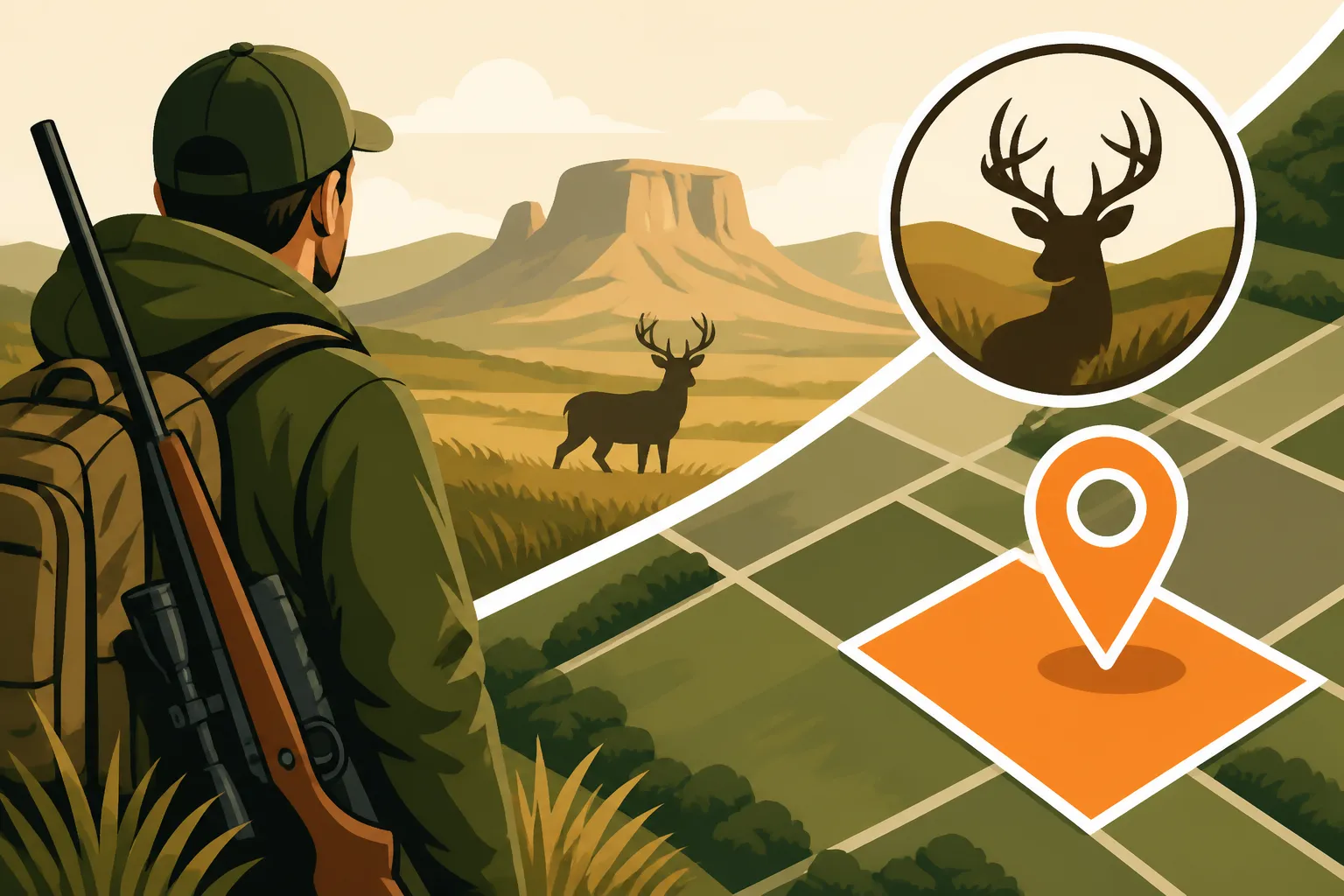
With onX Hunt, for example, you can literally drive down a county road, see a promising slough or tree line, tap your phone screen, and immediately see the landowner's name and parcel boundaries. This allows you to quickly identify who to contact. Beyond just ownership, these apps often include layers for public hunting lands, national grasslands, road right-of-ways, and even specific hunting unit boundaries. You can drop waypoints, mark areas of interest, track your movements, and share locations with hunting partners. Another excellent resource that hunters use for this detailed information is GoHunt, which also provides comprehensive mapping and data relevant to Western hunting, though perhaps with a broader focus than just local property lines.
The ability to verify exactly where you are standing in relation to a property line is invaluable, not only for asking permission but also for ensuring you stay on the correct side of the law once you have it. This precision avoids accidental trespass and allows you to plan your hunt meticulously. Imagine knowing precisely where a cattail slough ends and a private cornfield begins while you're executing a pheasant drive; this is the kind of critical information these apps provide, making your hunting safer and more effective.
Harnessing County Assessor and GIS Resources
While mapping apps are fantastic for on-the-go information, county assessor and GIS (Geographic Information System) websites can offer another layer of detail, especially if you're doing extensive pre-season scouting or want to cross-reference information. Every county in South Dakota maintains public records of property ownership, tax parcels, and often, interactive GIS maps. These resources allow you to search by parcel number, address, or even by zooming in on a map to find property owner names and mailing addresses. Finding Property Lines in South Dakota using these methods can feel a bit more cumbersome than a dedicated hunting app, but it's often more current and authoritative for official records.
The benefit of using county resources is that they are the primary source of the data that mapping apps draw from. So, if you ever have a question about the accuracy of an app or just want to dig deeper, the county website is your next stop. It’s also particularly useful if you’re trying to find mailing addresses for landowners you intend to send a letter to, as phone numbers are rarely available through these public portals. This type of research can be tedious, requiring you to navigate different county websites, each with its own interface. However, for a dedicated hunter planning a significant trip, investing this time can pay dividends in the form of multiple permission slips.
Using these governmental resources shows a level of diligence and respect that can impress a landowner if you mention your research process. You aren't just blindly knocking; you've done your homework. While they might not be as user-friendly as onX Hunt, these official records are invaluable for hunters who want to be absolutely sure of property lines and ownership details. Think of them as your backup, or your deep-dive tool when planning from afar.
Strategies for Approaching Landowners
Once you've identified a promising piece of private land and know who owns it, the real work begins: asking for permission. This is where many hunters falter, either by not asking at all, or by approaching in a way that’s counterproductive. Building trust and rapport is key.
Timing and Etiquette of the Ask
When you approach a landowner, timing is everything. Showing up unannounced during the peak of pheasant season, or worse, in the middle of harvest or planting, is almost guaranteed to get you a "no." Farmers and ranchers are incredibly busy people, and interruptions during critical periods are unwelcome. The best time to ask for permission is typically in the off-season – think late winter, spring, or early summer. This gives you time to establish a relationship before the pressure of hunting season even begins.
When you do make an approach, whether in person or by phone, consider your demeanor. Be polite, respectful, and understand that you are asking for a privilege, not asserting a right. Dress neatly, even if you’re just in clean casual clothes – avoid showing up in full camo, covered in mud, with your gun visible. That can be intimidating. If you're going door-to-door, consider leaving your hunting vehicle out of sight, down the road a bit, and walking up to the house. Introduce yourself clearly, state your purpose, and be prepared for a "no." A "no" isn't a personal rejection; it's often due to existing commitments, past bad experiences, or simply a desire for privacy. Thank them for their time regardless.
If you opt for a phone call, keep it concise and respectful. Introduce yourself, mention how you got their number (if applicable), and briefly explain your interest. Always offer to come by in person at their convenience if they prefer to talk face-to-face. This shows a willingness to work around their schedule and respects their boundaries. Remember, it's a negotiation, but you are not on equal footing; you are the one asking for a favor.
Crafting Your Pitch: What to Say and Offer
When you get the chance to speak with a landowner, be clear, concise, and honest about what you're looking for. Don't be vague. Specifically state what you want to hunt (e.g., "I'm looking to hunt pheasants," or "I'd love to try for a whitetail buck"), how many hunters will be in your party, and for what duration (e.g., "just myself and my son for an afternoon," or "a couple of days next November"). Have your hunting license and ID ready to show if asked.
Beyond just asking, consider what you can offer in return. This isn't always about money. Sometimes, a farmer could use help with small chores, like checking fences, retrieving lost cattle, or even just keeping an eye on things. Offering to pick up trash you find on their property, or reporting any suspicious activity you notice while hunting, can be invaluable. If you're successful, offering to share some of the game meat, or giving a small gift (a gift basket, a gift certificate to a local store, or simply a card of thanks) can go a long way in solidifying a positive relationship. The key is to convey that you are a responsible, ethical hunter who will respect their land as if it were your own.
Highlighting your commitment to safety is also a strong selling point. Mentioning that you're an experienced hunter, that you'll be careful with gates and fences, and that you understand and will follow all hunting regulations can ease a landowner's concerns. Reassure them that you won't block access roads, leave gates open, or drive through fields. Building trust takes time, but a well-articulated, respectful pitch demonstrates that you're serious about being a good guest. Asking a South Dakota Landowner for Permission is an art form, not a science.
Building Long-Term Relationships
Gaining permission once is great, but cultivating a long-term relationship with a landowner is the ultimate goal. This opens doors for future hunts and builds a network of access that is invaluable. Consistent communication is key. If you say you'll call before you come out, then call. If you say you'll let them know how you did, follow up. Even a simple text or call after your hunt, thanking them and reporting your success (or lack thereof), keeps the lines of communication open.
Beyond the hunt itself, simple acts of kindness and respect resonate deeply in rural communities. If you notice a fence down, let them know. If you see a piece of equipment left out, mention it. Pick up every single spent shotgun shell and piece of litter, even if it wasn't yours. Leave the land better than you found it. Remember, you're not just representing yourself; you're representing all hunters. A positive experience with one hunter can lead to a more open attitude towards others; a negative one can shut down access for years.
Consider sending a holiday card or a small thank-you gift at the end of the year, even if you only hunted their property once. These gestures show you appreciate their generosity and remember them beyond just the hunting season. Over time, you might find yourself becoming a trusted friend, invited back year after year, and perhaps even given access to new areas of their property as that trust grows. It’s about being a good neighbor and a responsible sportsman, not just a hunter looking for a place to shoot.
Alternative Private Land Access Methods
While directly asking for permission is a primary route, it's not the only way to gain access to South Dakota's private lands. There are other methods, each with its own set of advantages and disadvantages, that cater to different budgets, time commitments, and hunting styles.
Hunting Leases: Pros and Cons
Hunting leases involve paying a landowner for exclusive access to their property for a specified period, usually a season or a year. This can be an attractive option for hunters seeking guaranteed access, less competition, and the ability to manage the property for optimal hunting conditions. For landowners, it provides a consistent income stream and often ensures responsible management by the lessee. In South Dakota, leases are common for both pheasant and big game hunting, particularly for prime ground.
The main "pro" of a hunting lease is predictability. You know exactly where you can hunt, and often, you have a good idea of the game available because you've scouted it extensively. This eliminates the uncertainty of knocking on doors or hoping public land isn't too crowded. It also allows you to make investments in habitat improvements, like planting food plots or improving cover, which can significantly enhance your hunting success over time. However, the "cons" are primarily cost. Leases can be expensive, especially for prime locations with healthy game populations. The cost varies widely based on acreage, game quality, and demand. South Dakota Hunting Lease Costs can range from hundreds to thousands of dollars per season, per hunter, or per group.
Another potential drawback is that you are often tied into a contractual agreement, which might have specific rules about guests, dates, and even harvest limits. You also become responsible for managing the land, including ensuring gates are closed, no damage occurs, and potentially dealing with trespassers. For a group of hunters who are committed and share the costs, a lease can be an excellent way to secure high-quality hunting in South Dakota. For individual hunters or those on a tighter budget, it might be out of reach.
Guided Hunts and Outfitters on Private Ground
For many nonresident hunters, or those looking for a high-success, low-stress experience, booking a guided hunt through an outfitter is the most common way to access South Dakota's private lands. Most reputable outfitters in the state operate on vast tracts of leased or owned private land, often specifically managed for hunting. They provide everything from guides and dogs to meals and lodging, taking care of all the logistics. This is particularly prevalent in the pheasant hunting industry, where hunters seek the classic South Dakota experience without the hassle of finding their own ground.
The convenience factor is huge. You show up, and everything is arranged. Outfitters have often spent years cultivating relationships with landowners and managing hundreds or thousands of acres to ensure excellent hunting opportunities. This can translate to higher success rates, particularly for species like pheasants where habitat control is key. For big game, outfitters might have access to private land known for holding mature deer or antelope, which can increase your odds of drawing a coveted tag or finding a trophy animal. If you're planning a trip with friends or family and want to maximize your hunting time and minimize logistical headaches, a guided hunt is a strong contender. Booking a South Dakota Pheasant Hunt often means booking a year or more in advance due to demand.
However, the cost is significantly higher than a DIY hunt or even a lease. You're paying for expertise, access, and convenience, and those services come at a premium. It's essential to thoroughly research any outfitter, check references, and understand exactly what is included in the package before booking. While it provides access to private land, it's a very different experience than personally securing permission from a landowner.
Landowner Preference and Owner-Operator Tags
South Dakota recognizes the significant role landowners play in providing habitat and managing wildlife. To encourage this, the state offers certain preferences and specialized tags for landowners, which can indirectly impact how private land is accessed. For instance, in some big game draws (like deer or antelope), bona fide landowners may receive preference points or special allocations of tags. This program aims to ensure that those who manage the land and contribute to the wildlife resource have a better chance of harvesting game on their own property. Landowner Licence Set-Asides in South Dakota are a clear example of this policy.
For the average hunter, this might seem like it further restricts access, but it's important to understand the intent. It's a way to incentivize landowners to keep their land open to wildlife. While you might not qualify for these tags yourself, understanding their existence explains why some landowners might be less inclined to grant permission for certain species, reserving those opportunities for themselves or their immediate family under these programs.
On the other hand, some landowners who obtain these tags may not be avid hunters themselves, or they might have more tags than they can use. This could potentially open a door for a careful, respectful approach if you can demonstrate your value as a responsible hunter who can help them manage their tag allocation, perhaps by helping with an antlerless harvest. However, this is a delicate situation and would require a well-established relationship and a clear understanding of the landowner's intentions.
Legalities and Best Practices for Private Land Access
Navigating private land in South Dakota isn't just about courtesy; it's about adhering to the law. Understanding the legal framework for access is paramount to being a responsible hunter and avoiding costly mistakes.
Understanding Written vs. Verbal Permission
In South Dakota, verbal permission from a landowner or their agent (someone authorized to act on their behalf) is generally sufficient to legally hunt on private land. This is a common practice in many rural areas, where a handshake and a conversation are often enough. However, relying solely on verbal permission can lead to misunderstandings or disputes, especially if there's a change in land ownership, a memory lapse, or a misunderstanding of specific boundaries or dates.
For your own protection and peace of mind, always strive for written permission, even if it's just a simple note or text message explicitly stating who has permission, for what activity, on which dates, and on what specific parcel of land. This provides undeniable proof of access if you encounter another hunter, a law enforcement officer, or a new landowner. A simple hunting app like onX Hunt often has features that allow you to generate a digital permission slip that the landowner can sign, making the process easy and documented.
If written permission isn't feasible, make sure the verbal agreement is crystal clear. Reiterate what you understood back to the landowner to confirm. For example, "So, to be clear, you're saying I can hunt pheasants on the section north of your house, starting tomorrow, for three days, but stay out of the pasture with the red cattle?" The more specific, the better. And always carry the landowner's contact information with you while you're hunting, so you can reach them if needed.
Respecting Boundaries and Posted Rules
The easiest way to lose private land access, and potentially face legal consequences, is by disrespecting property boundaries. This is where your digital mapping tools truly shine. Even with permission, you might be granted access to only a specific field or section of a landowner's property. Straying onto an unpermitted area, even accidentally, is a violation of trust and potentially a trespass. This often occurs when game animals lead you across an invisible line.
Beyond physical boundaries, landowners often have specific rules that accompany their permission. These might include: "no driving off the main track," "close all gates," "don't hunt before 10 AM," "no hunting near the house," or "only hunt with shotguns, no rifles." These rules are non-negotiable. It's your responsibility to ask about any specific conditions and adhere to them meticulously. Landowners often have very personal reasons for these rules, whether it's livestock safety, privacy for their family, or simply a way of managing the property.
Ignoring these rules, even seemingly minor ones, can quickly sour a relationship and lead to revoked permission. Imagine a farmer finding a gate left open, leading to cattle escaping onto a highway, or discovering tire tracks tearing up a wet field. These actions reflect poorly on you and confirm a landowner's worst fears about granting access to strangers. Be vigilant, double-check your location frequently with your mapping app, and always honor the precise terms of your access.
Retrieving Game from Neighboring Properties
One of the trickiest situations a hunter can face on private land is when a legally harvested animal runs onto an adjacent property where you do not have permission. The ethical and legal imperative is clear: you must obtain permission from the neighboring landowner before you can enter their property to retrieve your game. Even if you can see the animal lying dead just across the fence, entering without permission is considered trespass. Retrieving Game From Private Land without permission is a serious offense.
This can be a frustrating scenario, especially when adrenaline is high, and you're eager to recover your animal. However, rushing in without permission can quickly turn a successful hunt into a legal nightmare. The best course of action is to immediately contact the landowner of the adjacent property. If you have their number (which your mapping app might provide), call them. If not, you might need to try knocking on their door. Explain the situation calmly and politely ask for permission to retrieve your animal. Offer to leave your firearm at the fence line and enter unarmed, demonstrating your respect and non-threatening intent.
Be prepared for the possibility that they might say no, or that they might want to accompany you. Respect their decision either way. If you cannot obtain permission, your options become extremely limited, and you might have to consider the animal unrecoverable. This unfortunate situation underscores the importance of not only asking for permission on the property you intend to hunt but also potentially inquiring about permission for adjacent properties for game retrieval before your hunt begins, if practical. It's an uncomfortable reality, but one that every ethical hunter must face.
The Importance of Reputation and Community
In a state like South Dakota, where communities are often small and interconnected, your reputation as a hunter precedes you. How you conduct yourself on private land doesn't just affect your personal access; it has ripple effects across the entire hunting community.
How Your Actions Impact Future Access
Word travels fast in rural South Dakota. A landowner who has a negative experience with one hunter—whether it's property damage, disrespect, or unsafe behavior—is likely to share that story with neighbors, friends, and family. This can quickly lead to widespread distrust and a blanket refusal to grant access to any hunter, effectively shutting down opportunities for everyone. Conversely, a positive experience can open doors, not just for you but potentially for other responsible hunters whom that landowner might eventually trust.
Think of yourself as an ambassador for hunting every time you step onto private land. Every action you take, every word you say, contributes to the landowner's perception of hunters as a whole. Leaving a gate open, driving recklessly on a field road, littering, or ignoring agreed-upon boundaries are serious transgressions. These actions validate landowners' fears and reinforce negative stereotypes, making it harder for honest hunters to secure permission.
This is why ethics and respect are paramount. Your personal conduct directly influences the future of hunting access in South Dakota. By consistently demonstrating responsibility, courtesy, and gratitude, you not only ensure your own opportunities but also contribute positively to the overall relationship between hunters and landowners, which is vital for the long-term health of our hunting traditions.
Networking within the Hunting Community
While much of the focus is on engaging with landowners, don't underestimate the power of networking within the broader hunting community itself. Joining local conservation groups, attending sportsman's events, or participating in online forums (with discretion and respect) can lead to unexpected opportunities. You never know who might have a connection, know a landowner willing to grant permission, or simply offer valuable advice based on their own experiences.
Local gun clubs, Pheasants Forever or Ducks Unlimited chapters, and even community social events can be places where you meet like-minded individuals, some of whom may be landowners themselves or have relationships with them. By actively engaging and proving yourself to be a responsible and ethical hunter, you might find informal invitations or introductions that would otherwise be impossible to obtain. These relationships are often built on mutual interests and shared values, making them incredibly strong foundations for future access.
Being a part of this community also means contributing. If you're always asking for access but never offering to help with habitat projects or clean-up days, your reputation might suffer. Show genuine interest in the local area, its wildlife, and the people who live there. It's not always about direct favors, but about being a contributing member of the broader conservation and hunting landscape.
Giving Back to South Dakota's Wildlife
Ultimately, securing private land access isn't just about what you can get; it's about what you give back. Participating in conservation efforts, supporting wildlife habitat projects, and practicing ethical hunting contribute directly to the health of South Dakota's wildlife populations, which benefits both public and private land. Landowners often appreciate hunters who are visibly invested in the resource, not just the harvest.
Consider donating your time or resources to organizations that work on habitat improvement, whether it's planting trees, restoring wetlands, or creating food plots. Many landowners are receptive to working with conservation groups that can help them enhance their property for wildlife. By being involved, you demonstrate a commitment that extends beyond pulling a trigger. This kind of dedication builds immense goodwill and reinforces your image as a responsible steward of the land and its resources.
Supporting South Dakota's wildlife management efforts, through license purchases, advocating for sound conservation policies, or simply reporting poaching, also plays a crucial role. A healthy, abundant wildlife population benefits everyone, and landowners are often the first to see the results of good management (or the consequences of poor practices). By being an active part of the solution, you strengthen the foundation upon which all hunting opportunities, private or public, are built. It creates a cycle of respect and opportunity that benefits both hunters and the rich natural heritage of South Dakota.
Here's a quick comparison of different private land access methods:
| Access Method | Description | Pros | Cons | Best For |
|---|---|---|---|---|
| DIY Permission | Directly asking landowners for permission to hunt. | Free/low cost, builds relationships, flexible dates. | Requires significant time and effort, high rejection rate possible. | Patient hunters, those willing to build local connections. |
| Hunting Lease | Paying a landowner for exclusive hunting rights for a season/year. | Guaranteed access, less pressure, can manage habitat. | Can be expensive, contractual obligations, potential for conflicts. | Groups of hunters, those seeking consistent, private access. |
| Guided Hunt/Outfitter | Booking a hunt with a professional service on private land. | High success rates, all-inclusive, minimal planning needed. | Most expensive option, less personal control over the hunt. | Nonresidents, first-timers, those prioritizing convenience/success. |
| Landowner Tags | (Indirect) Landowner draws own tags, may grant access to others. | Potential for unique opportunities if relationship exists. | Highly dependent on landowner, limited by draw system. | Hunters with pre-existing landowner relationships. |
Disclaimer
This article is for general informational purposes only and does not constitute professional advice. Laws, prices and regulations vary by location and change over time. Consult a qualified professional for guidance on your specific situation.